
Russian horology
Imperial workshops in St Petersburg, the Soviet watch industry and its mass-produced calibres form the Russian tradition.
CentresSt Petersburg · Moscow · Chistopol · Petrodvorets
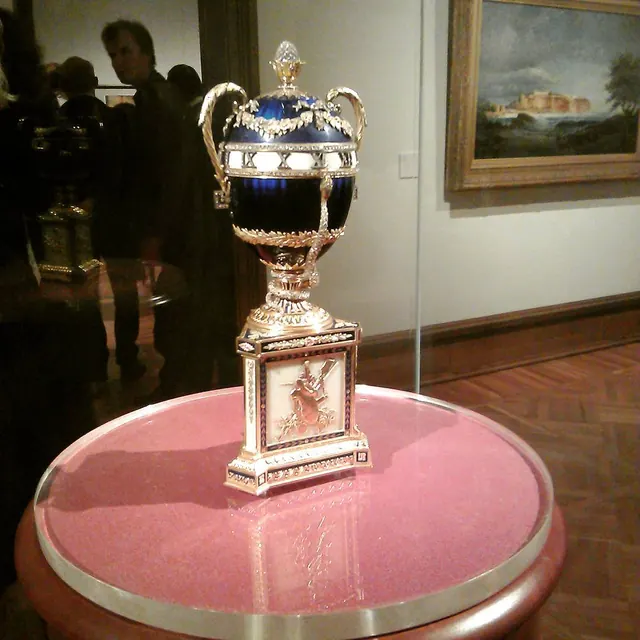
Imperial workshops
In the 18th century Ivan Kulibin, a self-taught mechanic at the St Petersburg Academy of Sciences, made the celebrated 'egg-figure' automaton clock presented to Catherine the Great in 1769.
Soviet industry
From 1930 the First Moscow Watch Factory, set up with machinery bought from American firms, began large-scale production; later factories at Chistopol (Vostok), Petrodvorets (Raketa) and elsewhere produced millions of watches. The Poljot 3133 chronograph derived from the Valjoux 7734.
Court, Academy and imperial suppliers
Peter the Great's reforms brought foreign clockmakers to St Petersburg, and the court and the Academy of Sciences commissioned clocks, automata and instruments. Ivan Kulibin (1735–1818), the best-known Russian mechanic of the age, ran the Academy's instrument workshops from 1769; his egg-shaped clock with a miniature automaton theatre and music is in the State Hermitage Museum. In the 19th century the firm of Pavel Buhre (Paul Buhré), founded in St Petersburg in 1815, supplied watches to the court and the army, many of them made in its Swiss workshops.
The Soviet watch industry
The First State Watch Factory in Moscow, later known as Poljot, began production in 1930 with machinery and know-how bought from the Dueber-Hampden company of Canton, Ohio. Other factories followed: Chistopol (Vostok, whose predecessor was evacuated there in 1941), Petrodvorets (Raketa, which grew out of a lapidary works founded under Peter the Great), Penza (Zarya), Uglich (Chaika) and Minsk (Luch). By the 1970s the Soviet Union was among the world's largest watch producers, and robust calibres such as the Vostok 2409 and 2414 families and the Poljot 3133 chronograph are now widely collected.
How to recognise it in an object
- Dials in Cyrillic ('Сделано в СССР' — made in the USSR) or, for export, in Latin script ('Made in USSR', brands such as Sekonda or Poljot).
- The Soviet state quality mark, a pentagon, appears on some watches of the 1960s–1980s.
- Beware of redials and assembled watches: military and commemorative dials have been widely reproduced or fitted to unrelated cases.
General guidance: confirm any attribution against the maker's marks and the source record. Identification centre →
Makers
From the catalogue
70 records · Russia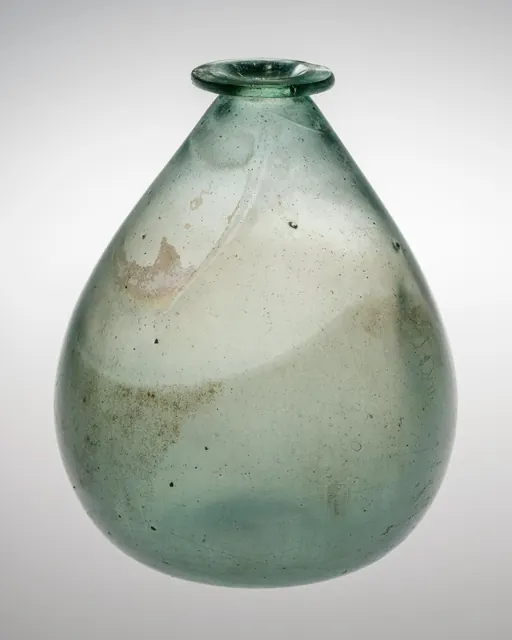
Instruments · 1750-1790, second half of the 1700s
Hourglass, Russia, 1750-1790, second half of the 1700s
Suomen kansallismuseo
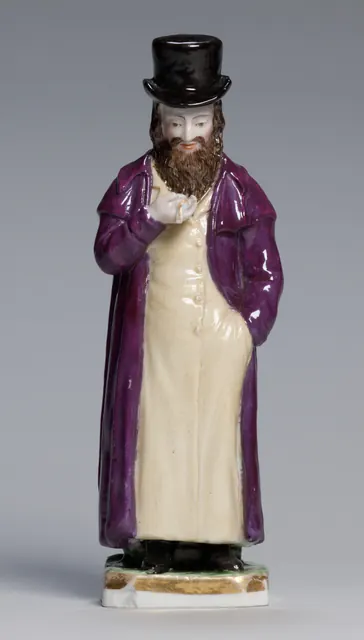
Pocket Watches · c. 1820
Man Holding a Watch (The Buyer)
Cleveland Museum of Art
Clocks · 1895
Blue Serpent Clock
Art collection of the Prince
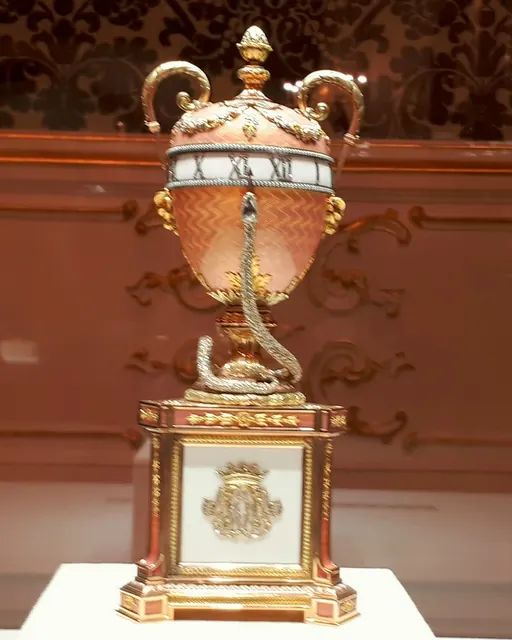
Clocks · 1902
Duchess of Marlborough
Fabergé museum in Saint Petersburg
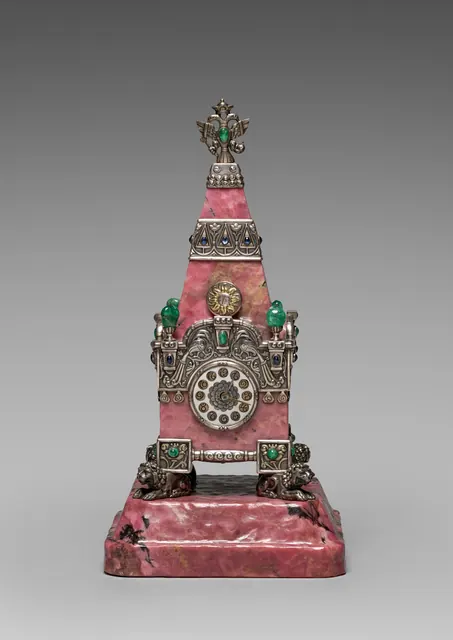
Clocks · c. 1913
Kremlin Tower Clock
Cleveland Museum of Art
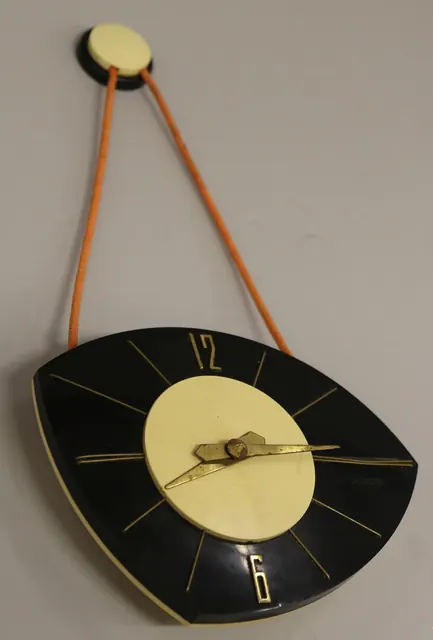
Clocks · 1950s–1960s
Wall clock by Orjolin kellotehdas "Jantar", Russia, 1950s–1960s
Työväenmuseo Werstas
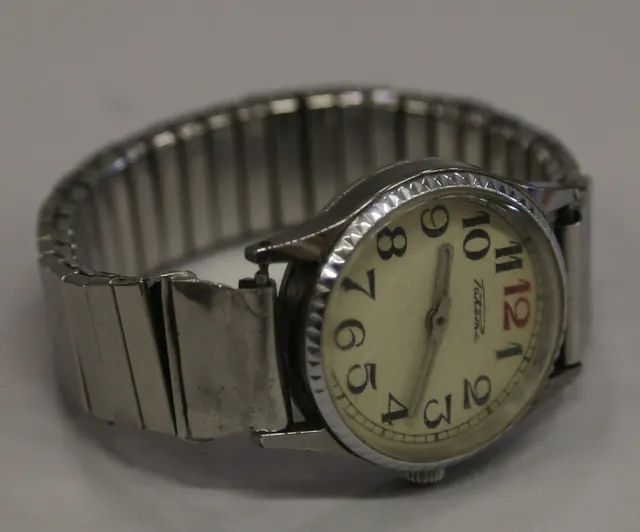
Wristwatches · 1960s–1970s
Wristwatch by Takema, Russia, 1960s–1970s
Työväenmuseo Werstas
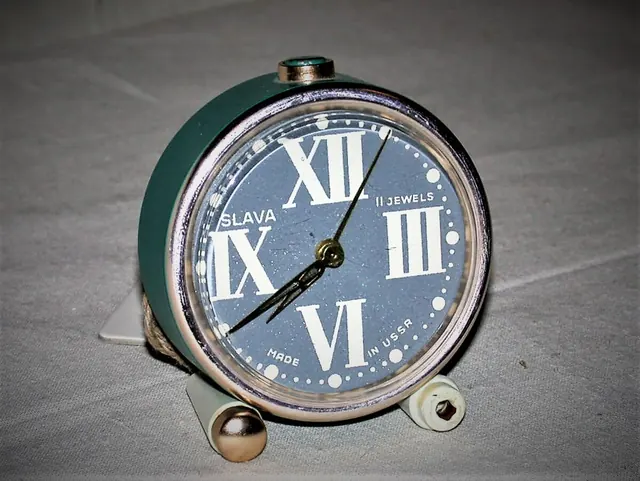
Clocks · 1960 - 1970s
Alarm clock, Russia, 1960 - 1970s
HKM / Kulttuurihistoriallinen
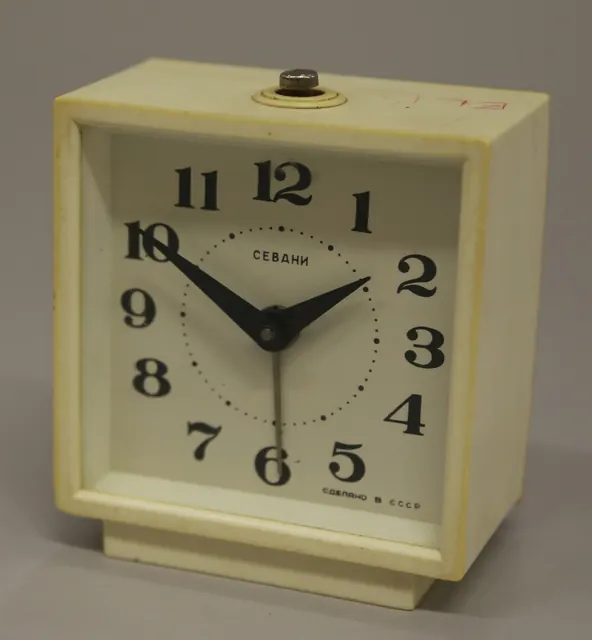
Clocks · 1960s–1970s
Alarm clock by Sevani, Russia, 1960s–1970s
Työväenmuseo Werstas
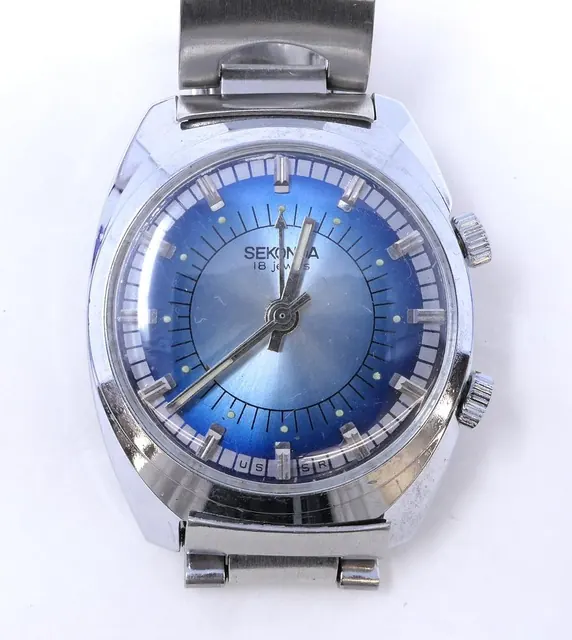
Wristwatches · 1962–1968
Chrome-plated cased centre-seconds jewelled lever wrist-watch with alarm and and stainless steel bracelet
British Museum
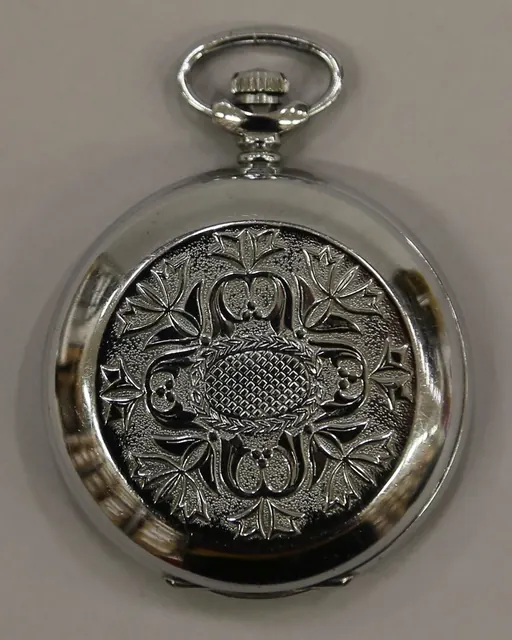
Pocket Watches · 1970s
Pocket watch by Molnija, Russia, 1970s
Työväenmuseo Werstas
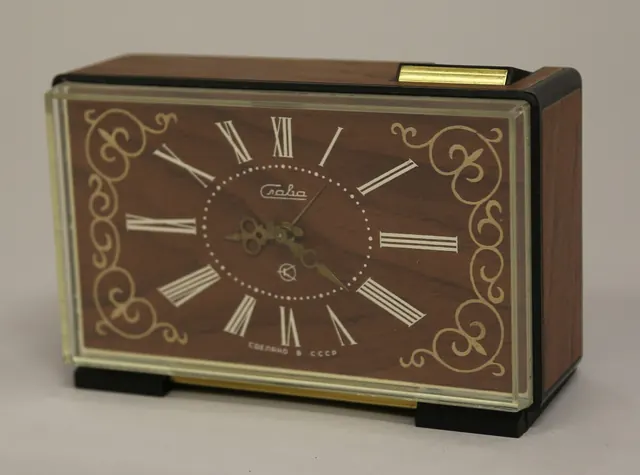
Clocks · 1970s
Alarm clock by Slava, Russia, 1970s
Työväenmuseo Werstas