Jeweller and goldsmith (firm)
House of Fabergé
Also recorded as: Fabergé · Faberge · House of Faberge · Carl Fabergé · Peter Carl Fabergé · K. Fabergé
St Petersburg goldsmiths whose imperial Easter eggs and enamelled desk clocks are among the best-known objets d'art of the late Russian empire.
Gustav Fabergé founded a jewellery business in St Petersburg in 1842. Under his son Peter Carl Fabergé (1846–1920) it became one of the largest and most famous goldsmiths in Europe, with a branch in Moscow, a workshop system of independent workmasters such as Michael Perchin, Henrik Wigström and August Holmström, and an appointment to the imperial court. Between 1885 and 1916 the firm made the series of Easter eggs presented by Alexander III and Nicholas II to the empresses.
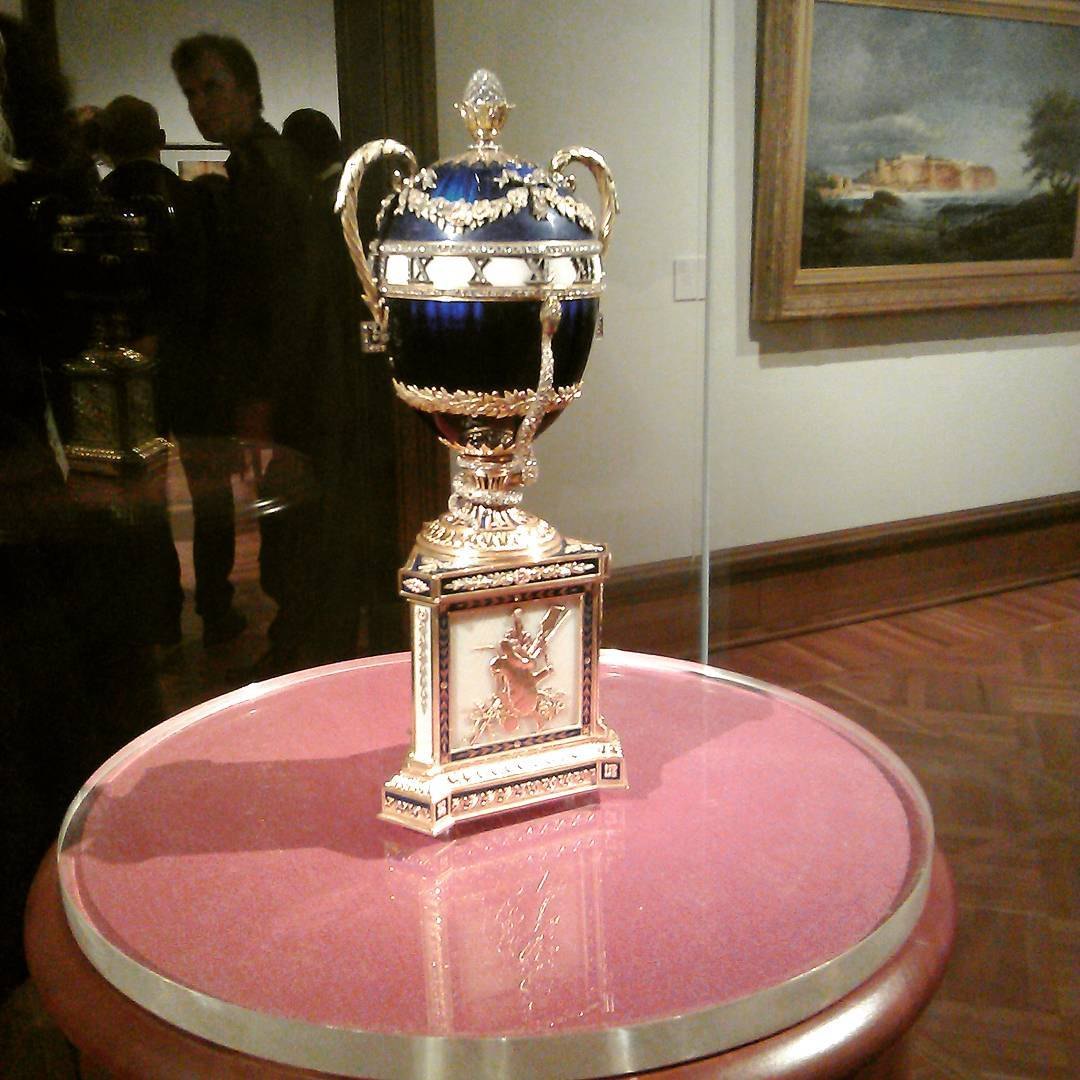
Fabergé made many desk and table clocks in gold, silver and translucent guilloché enamel, as well as eggs containing or forming clocks, such as the Blue Serpent Clock egg and the Kelch Chanticleer egg. The clock and watch movements in Fabergé objects were usually bought in from Swiss and other makers. The firm was nationalised after the revolution of 1917 and closed in 1918.
How to recognise the work: pieces made in Russia before 1918 are marked FABERGÉ (or K. Fabergé in Cyrillic), usually with the initials of the workmaster and Russian assay marks giving the metal standard in zolotniks — 56 or 72 for gold, 84 or 88 for silver — with a woman's head in a kokoshnik headdress as the assay mark from 1896. The marks are struck on the case or frame; the movements inside the desk clocks were bought from Swiss and other makers.
After the revolution Carl Fabergé's sons Alexander and Eugène founded Fabergé & Cie in Paris in 1924 and marked their work FABERGÉ, PARIS to tell it apart from the Russian production. The name itself later passed to others: it was used from the late 1930s in the United States for perfumes and toiletries, licensed for watches, eggs and jewellery made by the German firm Victor Mayer from 1989, and sold with its trademarks in 2007. A modern 'Fabergé' watch is therefore not a product of the original house.
- Country
- Russia
- City / centre
- St Petersburg; Moscow
- Founded
- 1842–1918
- Status
- Historical firm
- Key people
- Gustav Fabergé (1814–1893); Peter Carl Fabergé (1846–1920); Michael Perchin; Henrik Wigström; August Holmström
Innovations & specialities
- Guilloché enamel desk clocks
- Imperial Easter eggs (1885–1916), some containing clocks or watches
Works by House of Fabergé in the catalogue
All 14 records →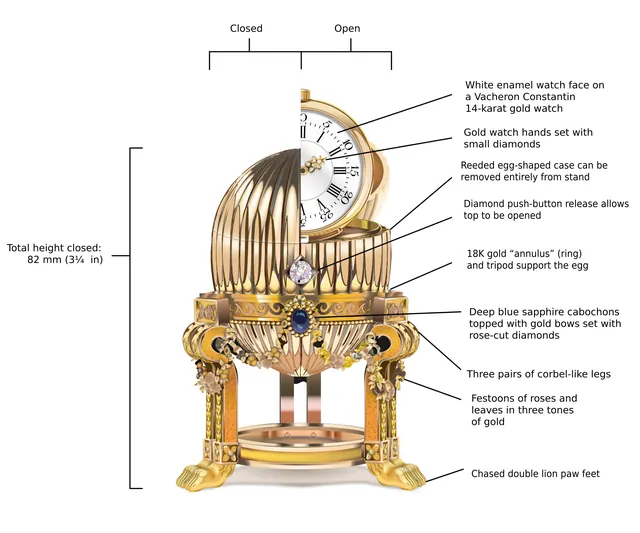
Clocks · 1887
Third Imperial
Private collection (data via Wikidata)
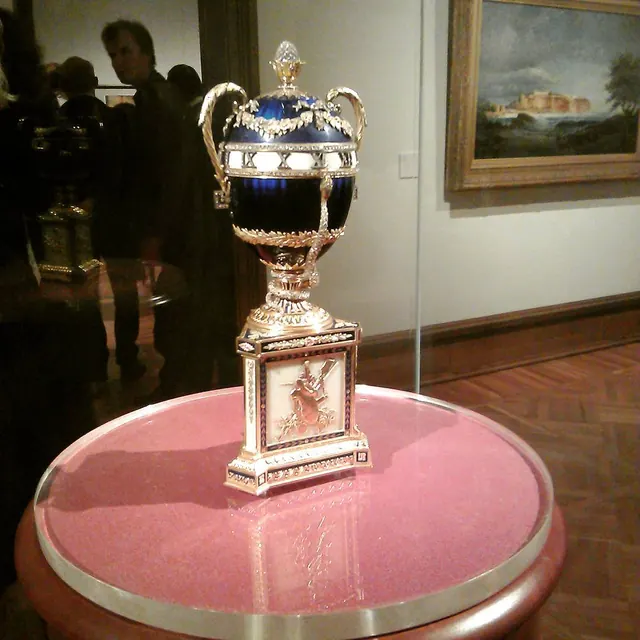
Clocks · 1895
Blue Serpent Clock
Art collection of the Prince
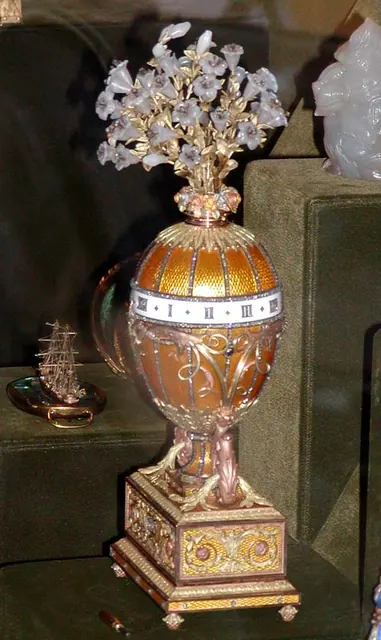
Clocks · 1899
Bouquet of Lilies Clock
Moscow Kremlin Museums
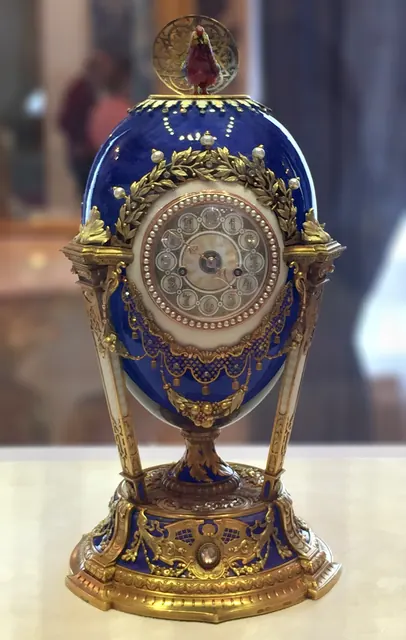
Clocks · c. 1900
Clock by Michael Perkhin, c. 1900
Fabergé museum in Saint Petersburg
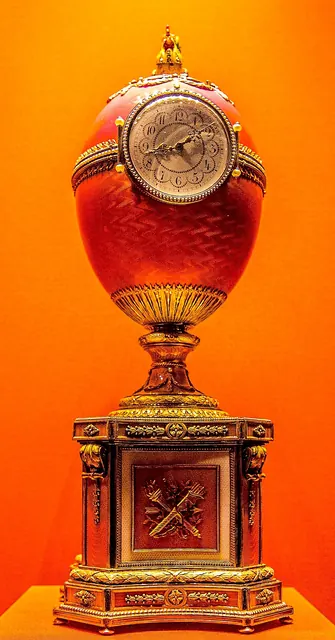
Clocks · 1902
Clock by Michael Perkhin, 1902
Hermitage Museum
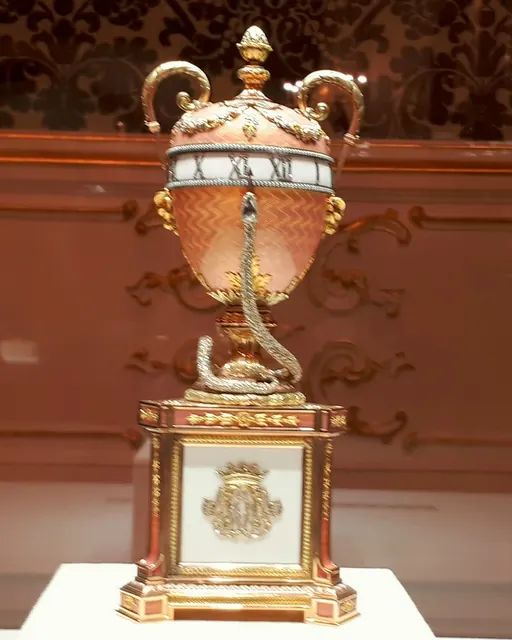
Clocks · 1902
Duchess of Marlborough
Fabergé museum in Saint Petersburg
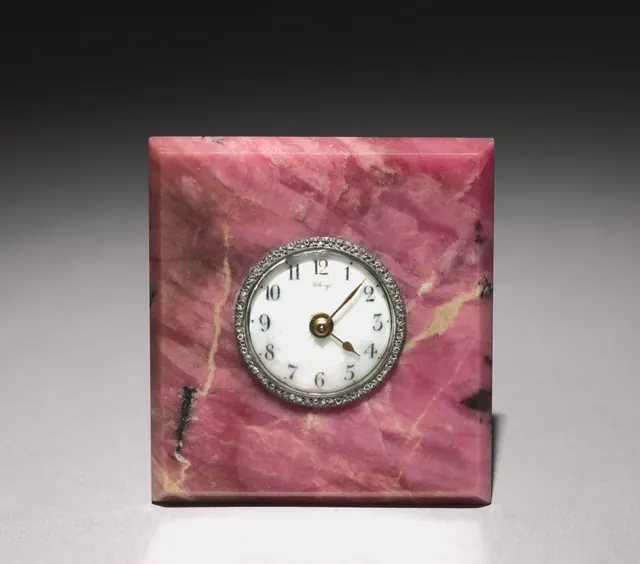
Clocks · c. 1905–15
Clock by Henrik Wigström, Russia, c. 1905–15
Cleveland Museum of Art
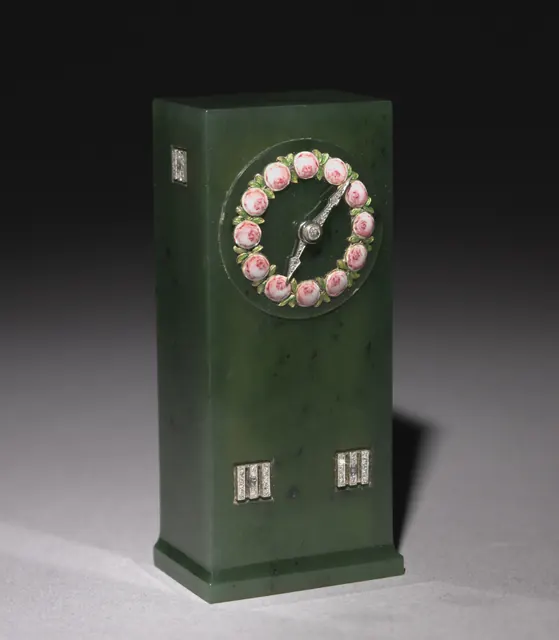
Clocks · 1908–17
Clock by Henrik Wigström, Russia, 1908–17
Cleveland Museum of Art
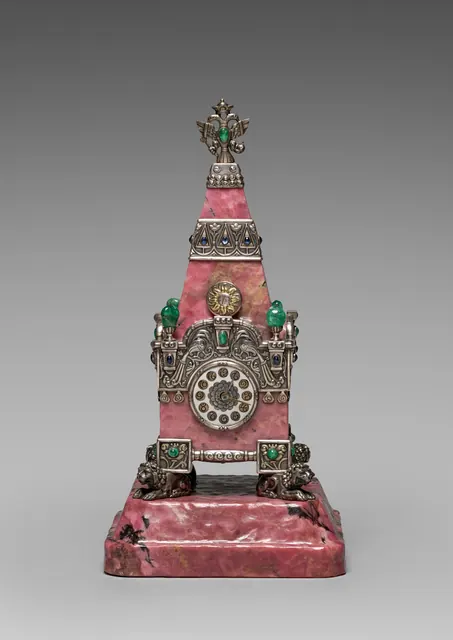
Clocks · c. 1913
Kremlin Tower Clock
Cleveland Museum of Art
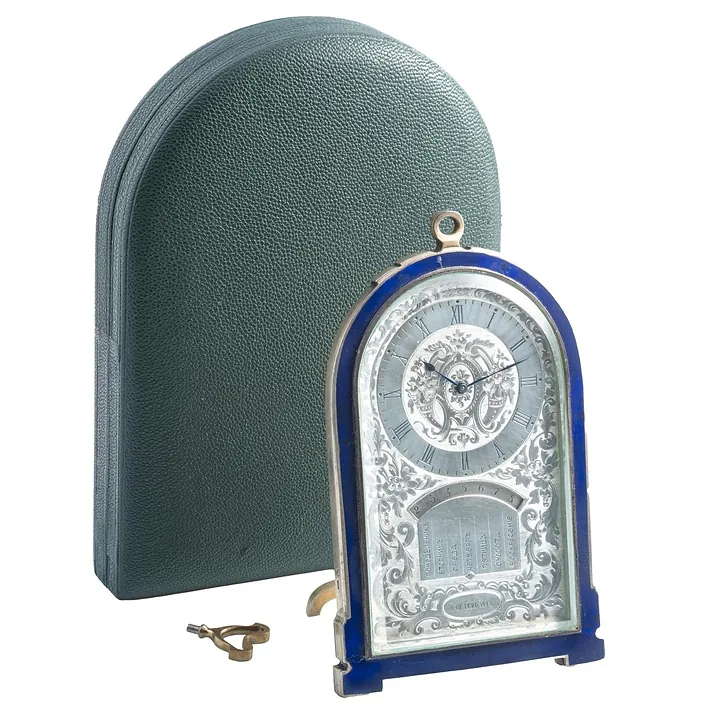
Clocks · c. 1915
Fabergé clock, c. 1915
Antiquorum auction archive, Geneva
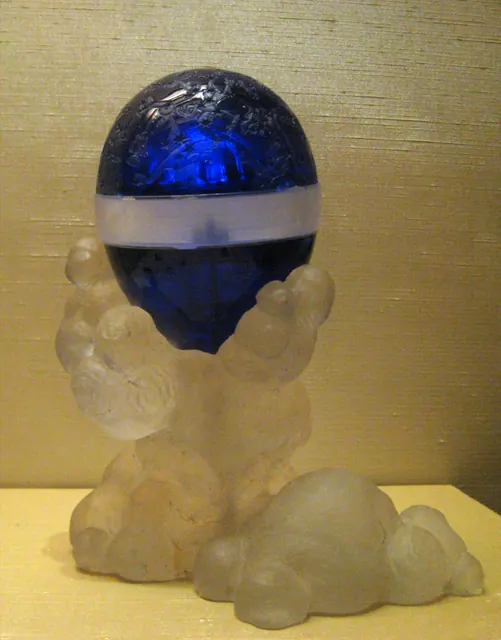
Clocks · 1917
Constellation egg
Fersman Mineralogical Museum
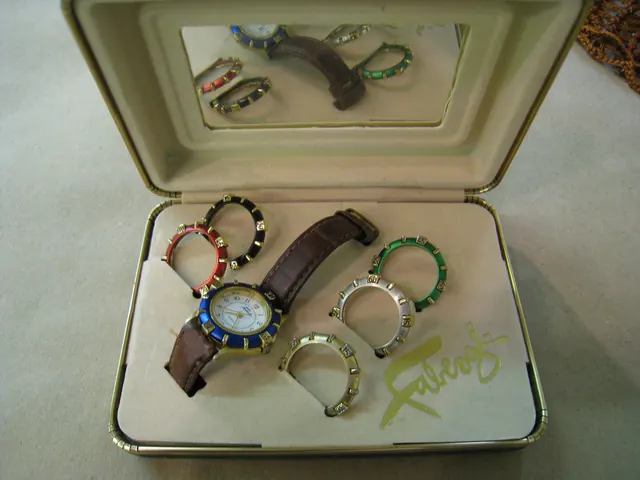
Pocket Watches · c. 1970
Watch by M.Z. Berger and Co., Inc
Yale University Art Gallery, New Haven
Linked through the Atlas maker authority list, which reconciles the spellings used by different institutions. Attributions are as stated by each holding institution or auction house.