
Italian horology
Italy produced some of Europe's earliest public striking clocks and the Astrarium of Giovanni de' Dondi; Galileo laid the foundations of the pendulum.
CentresPadua · Milan · Florence · Venice · Rome
Medieval public clocks
A public clock in Milan struck the hours by around 1336, and Italian cities competed for prestigious tower clocks.
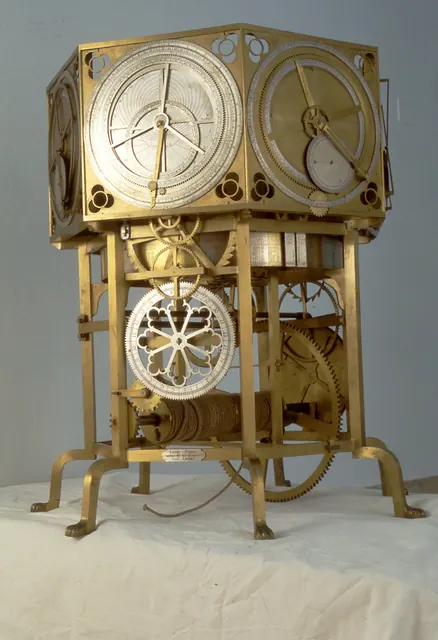
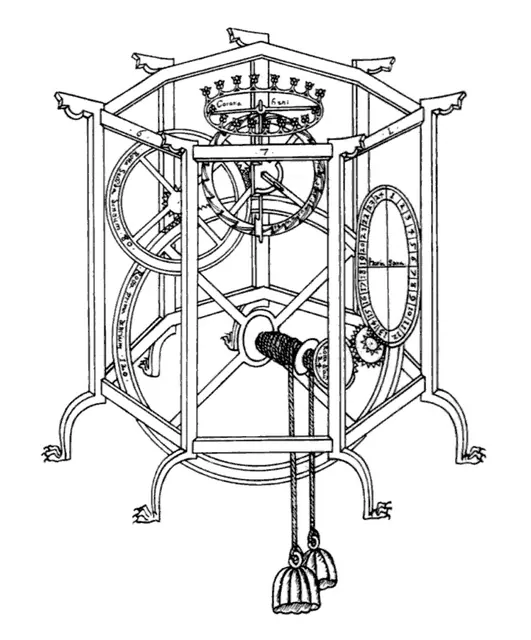
Dondi's Astrarium
Giovanni de' Dondi completed his Astrarium in 1364: a seven-faced astronomical clock showing the Sun, Moon and five planets, with a perpetual calendar of movable feasts, described in his Tractatus astrarii.
Galileo
Galileo's study of the pendulum and his 1641 design for a pendulum escapement, partly built by his son Vincenzo, prepared the way for Huygens. Italian night clocks with illuminated dials were made in Rome in the 17th century.
Night clocks and the Campani brothers
In 17th-century Rome the brothers Giuseppe, Matteo and Pietro Tommaso Campani made silent night clocks in which a lamp behind a pierced dial lit the hour numerals as they travelled across a semicircular scale; Pietro Tommaso devised a silent escapement for one made for Pope Alexander VII. Matteo also claimed a pendulum clock of his own design, and Giuseppe was celebrated for telescope lenses.
Italian hours and later centres
Until the late 18th century many Italian clocks counted 'Italian hours', numbering 24 hours from sunset, and six-hour dials, with the numerals I–VI repeated, were widespread in Italy. Milan, Turin and Venice had clock and watch trades in the 18th and 19th centuries, and in the 20th century Panerai of Florence supplied diving instruments and watches to the Italian navy.
How to recognise it in an object
- Six-hour dials, with Roman numerals I–VI repeated, on clocks.
- Night clocks: a dark ebonised case with a painted scene and a semicircular slot through which pierced numerals glow from a lamp behind.
- Historic Panerai watches: large cushion cases, luminous 'sandwich' dials and, from the 1930s to the 1950s, movements bought from Rolex.
General guidance: confirm any attribution against the maker's marks and the source record. Identification centre →
Timeline
- 10 BCEAugustus erects an Egyptian obelisk as the gnomon of a giant sundial in Rome
- c. 1336A public clock in Milan strikes each of the 24 hours
- 1364Giovanni de' Dondi completes the Astrarium, a seven-faced astronomical clock — Giovanni de' Dondi
- 1574Second astronomical clock of Strasbourg Cathedral completed by Dasypodius and the Habrecht brothers
- c. 1583 (traditional)Galileo observes the isochronism of a swinging lamp in Pisa — Pendulum
- 1641Galileo designs a pendulum clock escapement, partly built by his son Vincenzo
Makers
From the catalogue
178 records · Italy, Roman Empire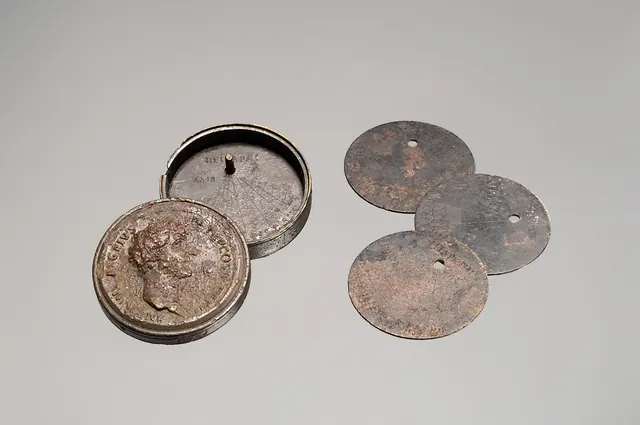
Instruments · second half of the 2nd century AD
Roman sundial, second half of the 2nd century AD
Fine Arts Museum Vienna
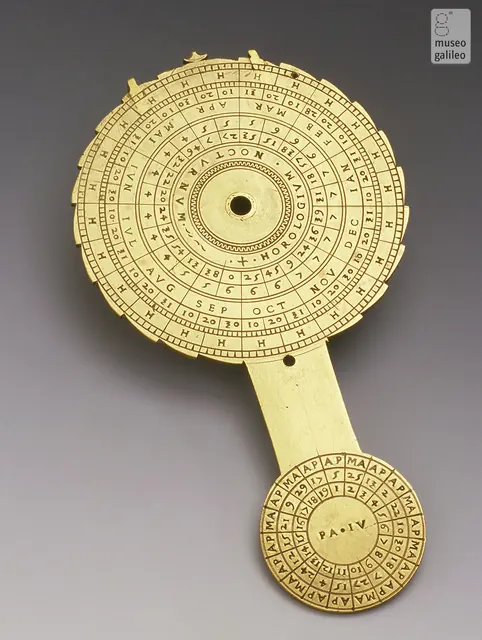
Instruments · 1520
Nocturnal and sundial by Eufrosino della Volpaia, Italy, 1520
Museo Galileo, Florence
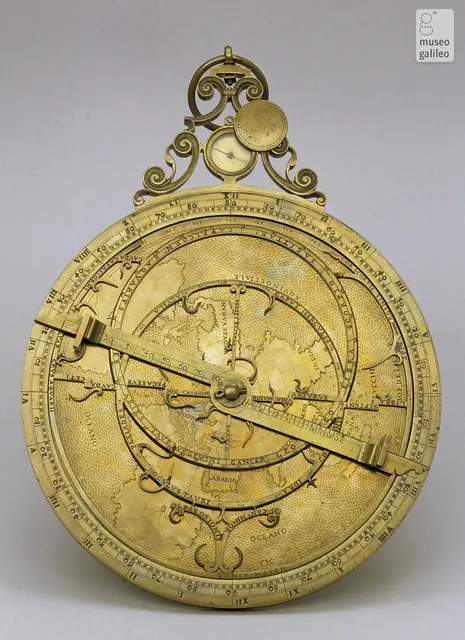
Instruments · 1568
Plane astrolabe, Italy, 1568
Museo Galileo, Florence
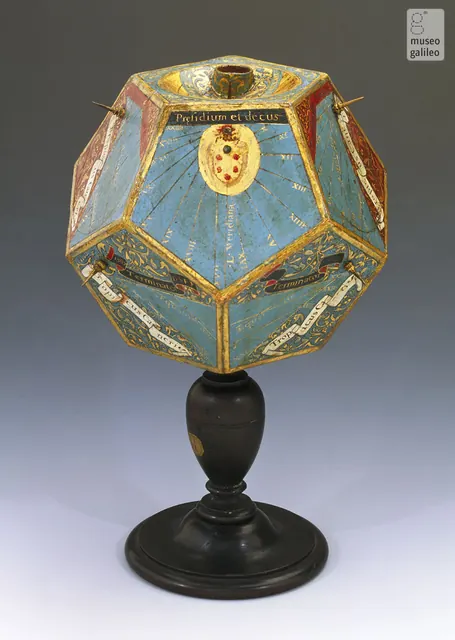
Instruments · 1587
Polyhedral dial by Stefano Buonsignori, Italy, 1587
Museo Galileo, Florence
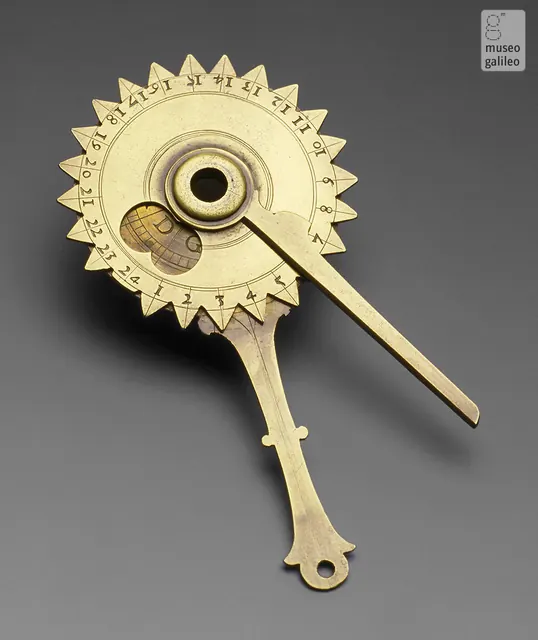
Instruments · first half 17th century
Nocturnal, Italy, first half 17th century
Museo Galileo, Florence
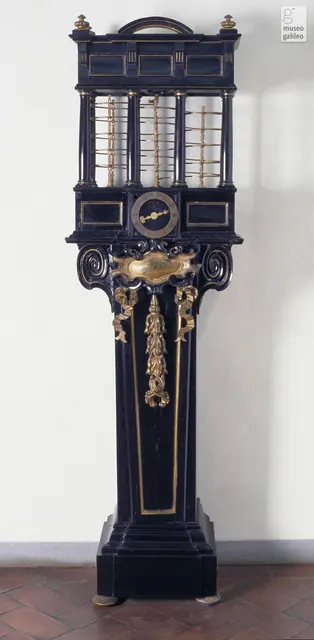
Clocks · c. 1660-1680
"Perpetual motion" clock, Italy, c. 1660-1680
Museo Galileo, Florence
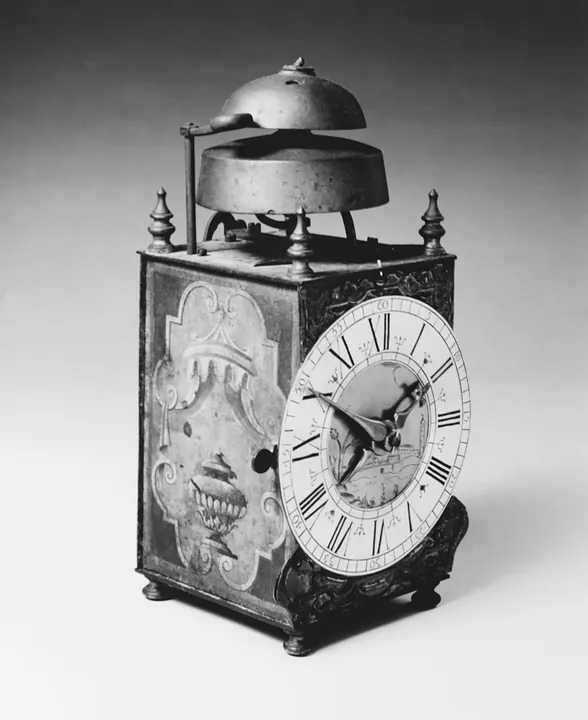
Movements & Components · 1745
Clock movement by Filippo Polvini, Italy, 1745
The Metropolitan Museum of Art, New York
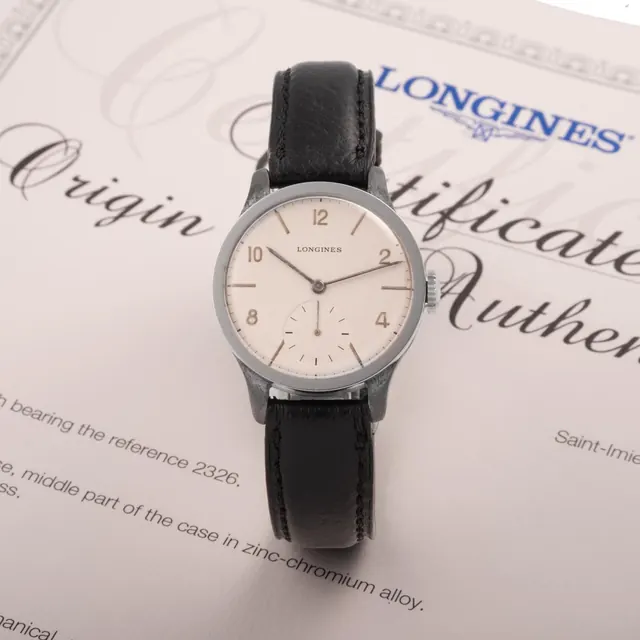
Wristwatches · sold to Ostersetzer, agent for Italy in May 1943
Longines wristwatch, ref. 2326/, sold to Ostersetzer, agent for Italy in May 1943
Antiquorum auction archive, Geneva
Wristwatches · 1970s
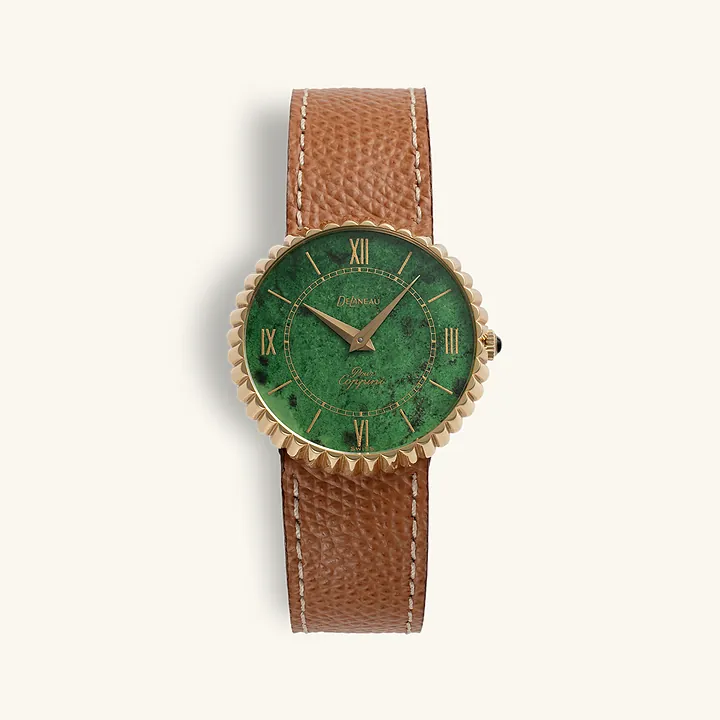
DeLaneau “Tortiera” Pour Coppini Florence, 1970s
Watches of Knightsbridge (dealer), London
Wristwatches · 1999
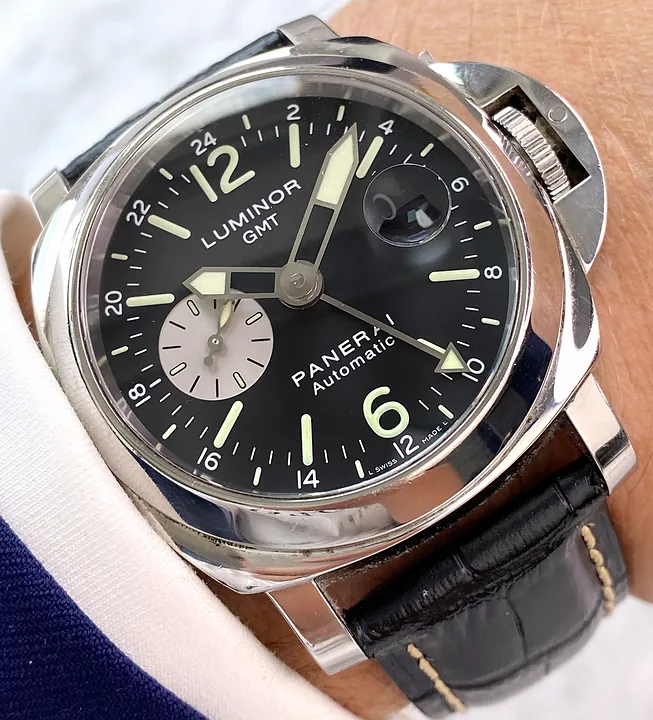
Panerai Luminor OP6633 GMT Automatic, ref. PAM00088, 1999
Vintage Portfolio (dealer), Vienna
Wristwatches · 2006
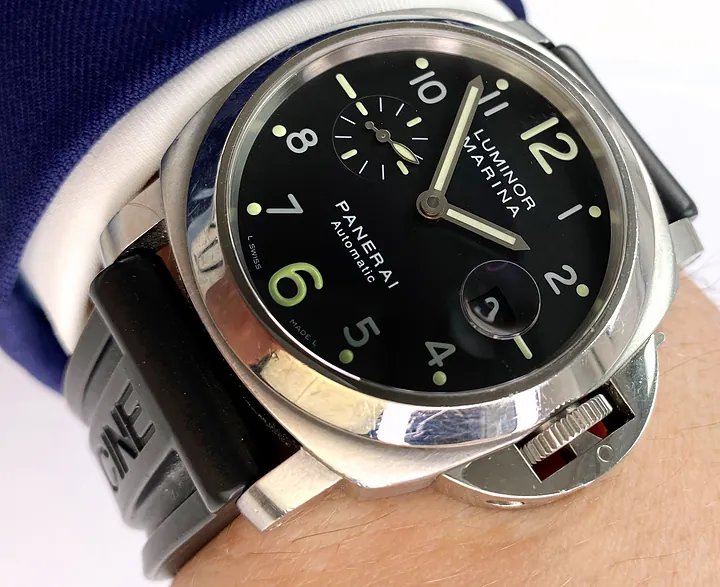
Panerai Luminor Marina Automatic, ref. PAM00164, 2006
Vintage Portfolio (dealer), Vienna
Wristwatches · c. 2009
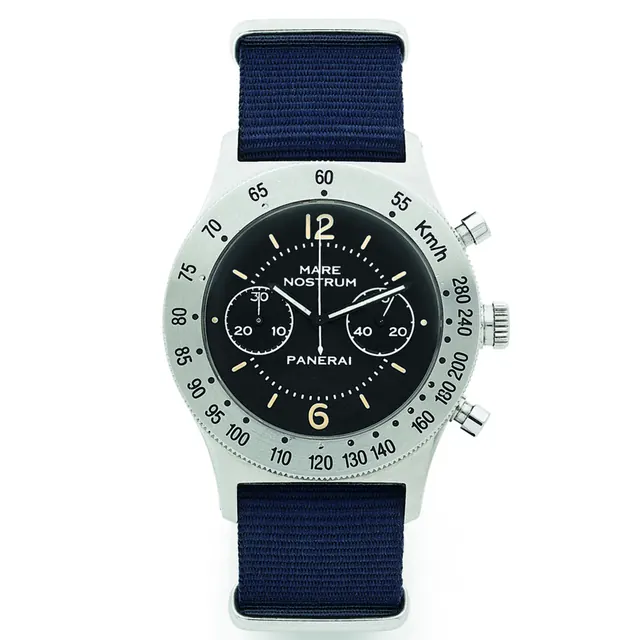
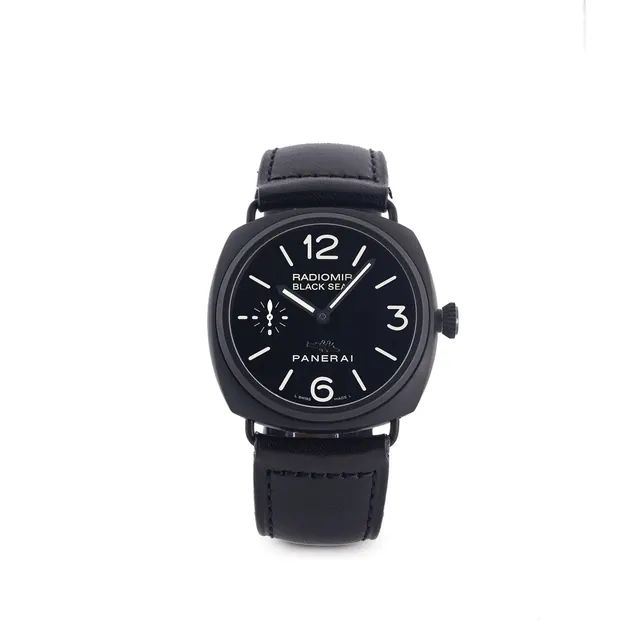
Panerai wristwatch, ref. PAM00292, Radiomir Black Seal Limited Edition of 1000 Pieces, circa 2009
Antiquorum auction archive, Geneva