
Austrian horology
Vienna produced the slender Vienna regulator and elegant Biedermeier clocks, and the Habsburg Kunstkammer preserved Renaissance masterpieces.
CentresVienna · Prague (Habsburg court)
Kunstkammer clocks
Emperor Rudolf II's court at Prague attracted Jost Bürgi and other makers, and Habsburg collections preserved some of the finest Renaissance clocks and automata.
The Vienna regulator
From around 1800 Viennese makers produced precise, weight-driven wall clocks in glazed cases — the Vienna regulator — and Biedermeier table clocks, later copied industrially in Germany.
Viennese clockmaking
By the early 19th century Vienna had one of the largest clockmaking trades in Europe, drawing craftsmen from across the Habsburg lands. The precision wall regulator — a long seconds pendulum, deadbeat escapement and slim glazed case — is credited to Viennese makers around 1800, and the best, by makers such as Philipp Fertbauer and Ignaz Marenzeller, have month-going movements in refined Biedermeier cases. From the mid-19th century factories in Silesia and the Black Forest, led by Gustav Becker, turned the 'Vienna regulator' into a mass-market wall clock.
The imperial collections
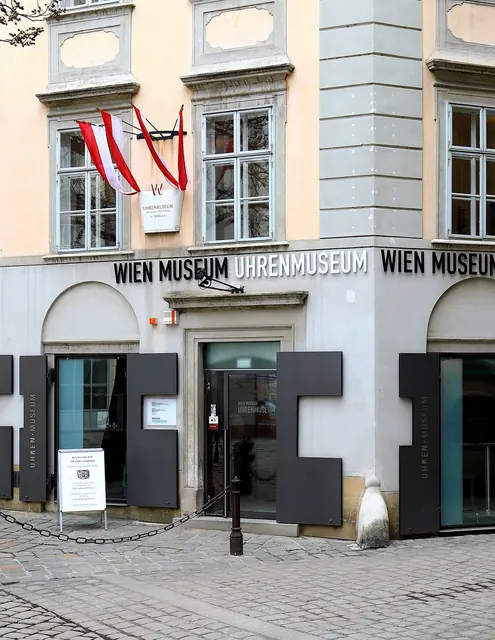
Habsburg Kunstkammer pieces — automata, astronomical clocks and rock-crystal table clocks — are now divided among the Kunsthistorisches Museum, the Technisches Museum and the Uhrenmuseum Wien. The Uhrenmuseum opened in 1921 in the Obizzi Palace, building on the collection of its first director, Rudolf Kaftan, and holds the astronomical clock of the Augustinian monk David a Sancto Cajetano.
How to recognise it in an object
- Vienna regulators: a slim glazed wall case, a long pendulum with a brass bob, and an enamel dial often made in two parts; early examples are weight-driven with one weight for a timepiece, more for striking.
- Dials signed 'in Wien'; later factory clocks from Silesia and Germany usually carry a trademark on the movement, such as Gustav Becker's anchor and crown.
- Biedermeier portico clocks with alabaster, wooden or gilt columns and the pendulum swinging between them.
General guidance: confirm any attribution against the maker's marks and the source record. Identification centre →
Makers
From the catalogue
93 records · Austria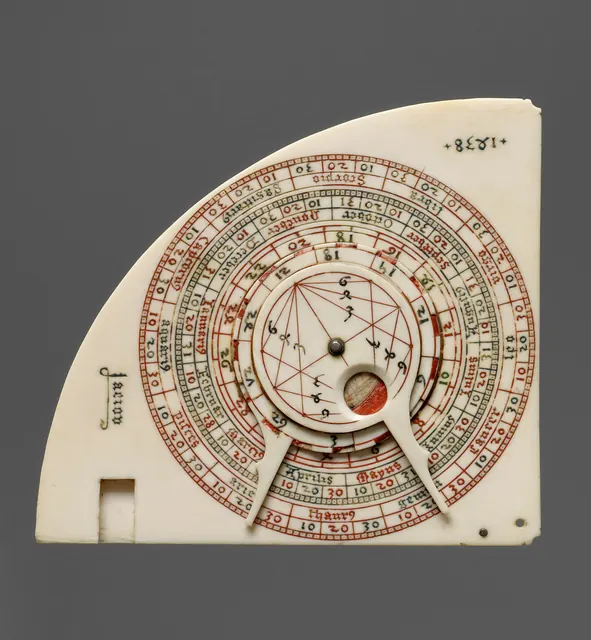
Instruments · dated 1438
Quadrant, Austria, dated 1438
Fine Arts Museum Vienna
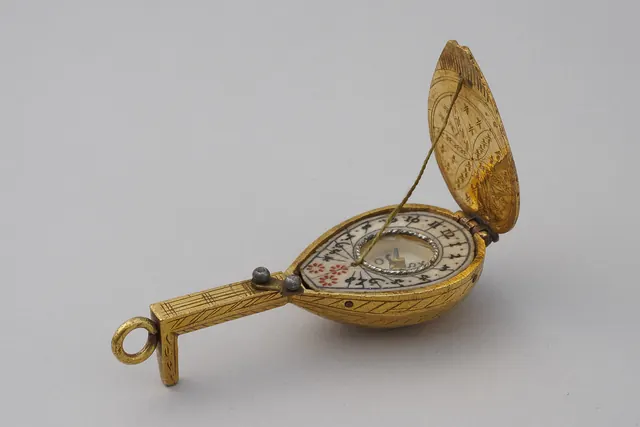
Instruments · second half of the 16th century
Sundial, Austria, second half of the 16th century
Fine Arts Museum Vienna
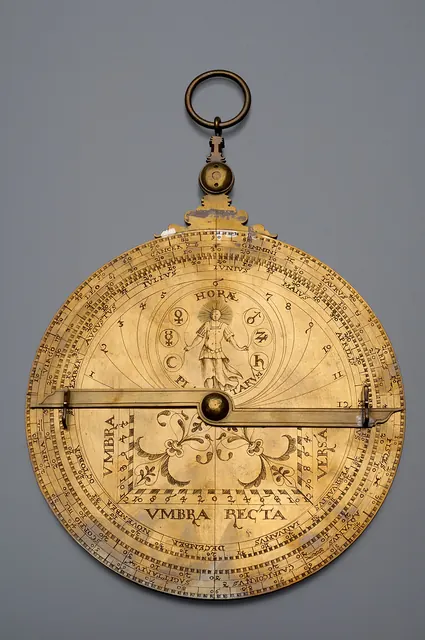
Instruments · c. 1580
Astrolabe, Austria, c. 1580
Fine Arts Museum Vienna
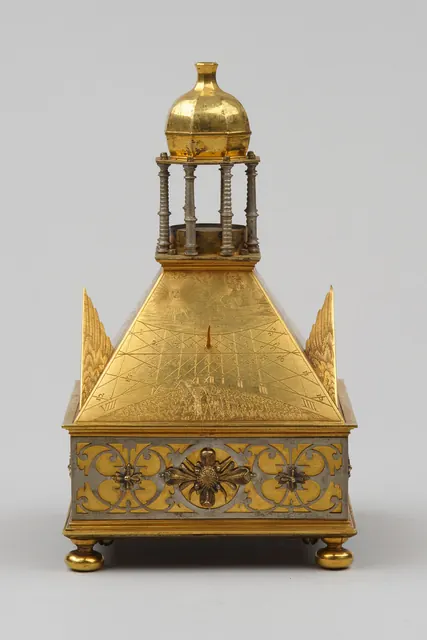
Instruments · c. 1650
Sundial attributed to Johann Melchior Volckmair, Austria, c. 1650
Fine Arts Museum Vienna
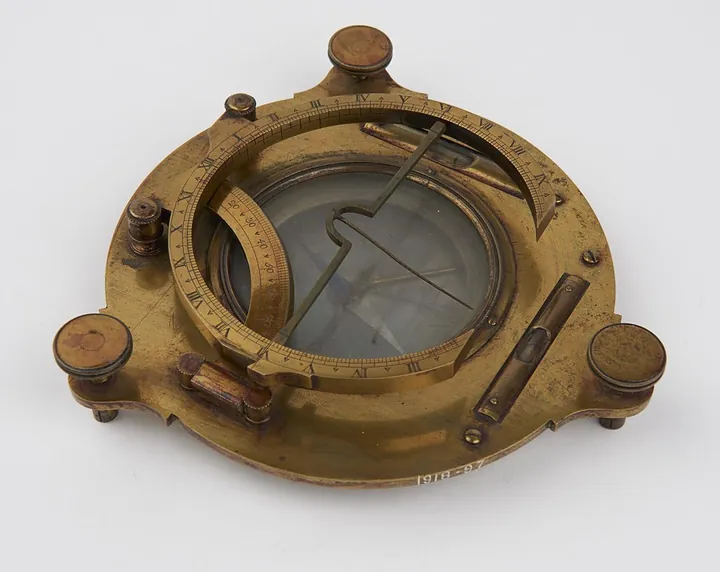
Instruments · 1701–1800
Universal sundial, by Sadtler of Vienna, 1701–1800
Science Museum Group, London
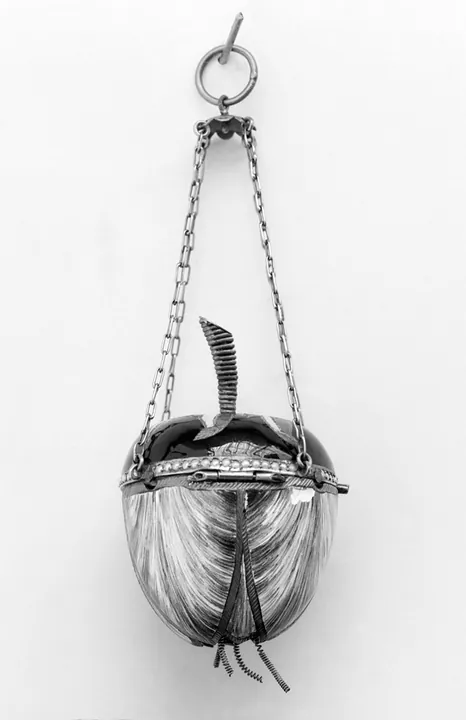
Pocket Watches · 19th century
Watch in the form of a tulip
The Metropolitan Museum of Art, New York
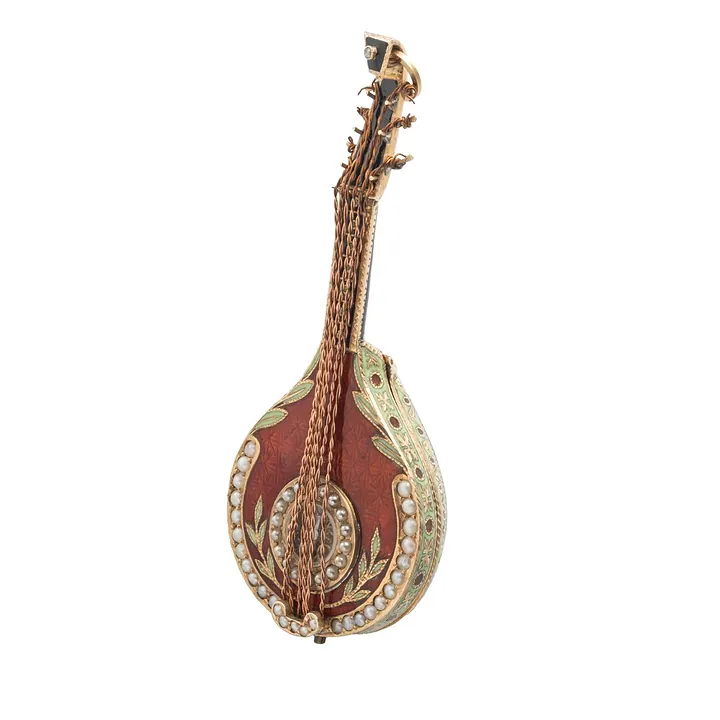
Pocket Watches · c. 1810
Freres Les Raffard watch, c. 1810
Antiquorum auction archive, Geneva
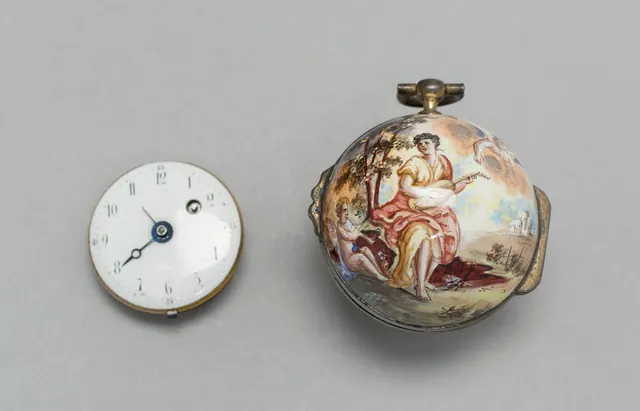
Pocket Watches · Mid 19th century
Watch by Austria Vienna, Austria, Mid 19th century
Art Institute of Chicago
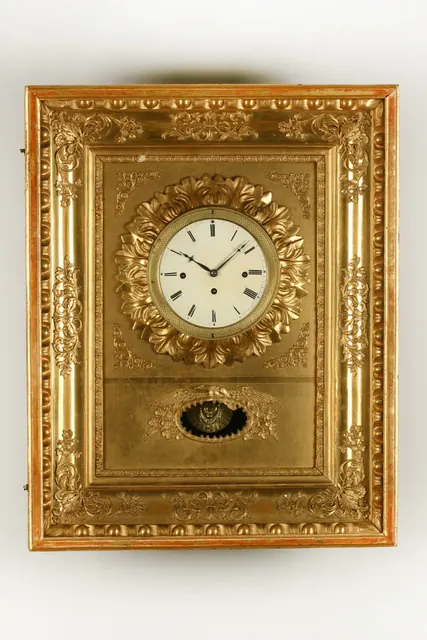
Clocks · c. 1840
Wall clock by Anton Olbrich, Austria, c. 1840
German Clock Museum
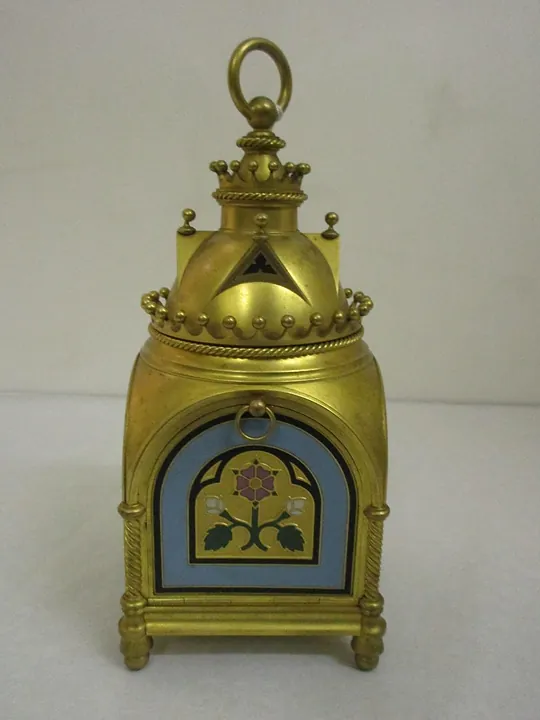
Clocks · c. 1867
Clock and key, gilt metal with champleve enamel, Dziedzinsky and Hanusch, Austria, c. 1867
Victoria and Albert Museum, London
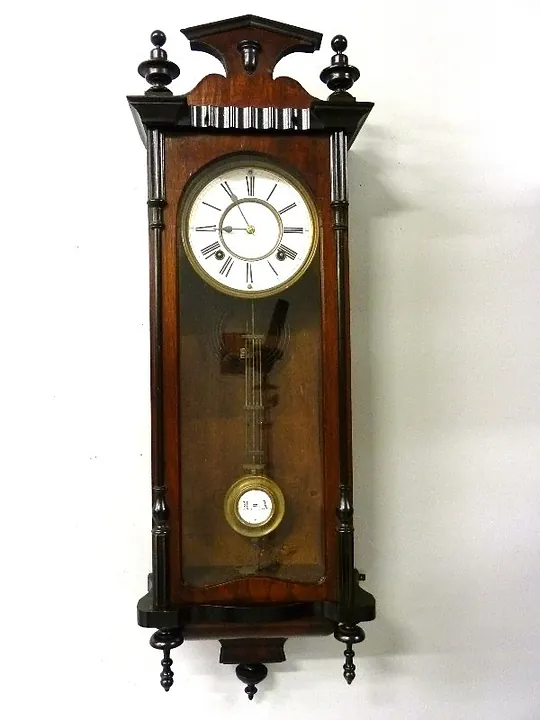
Clocks · c. 1880
Circa 1880's VIENNA (RA) Wall Regulator Signed
LiveAuctioneers auction archive
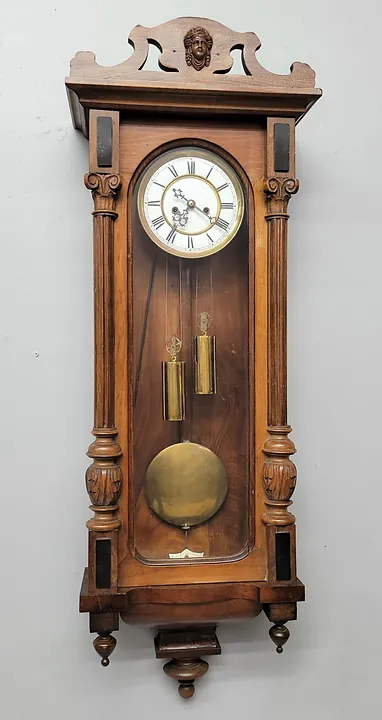
Clocks · c. 1890
Circa 1890's Signed Gustav Becker Two Weight Vienna Regulator with porcelain dial, brass weights, &
LiveAuctioneers auction archive