
Clocks · Clock
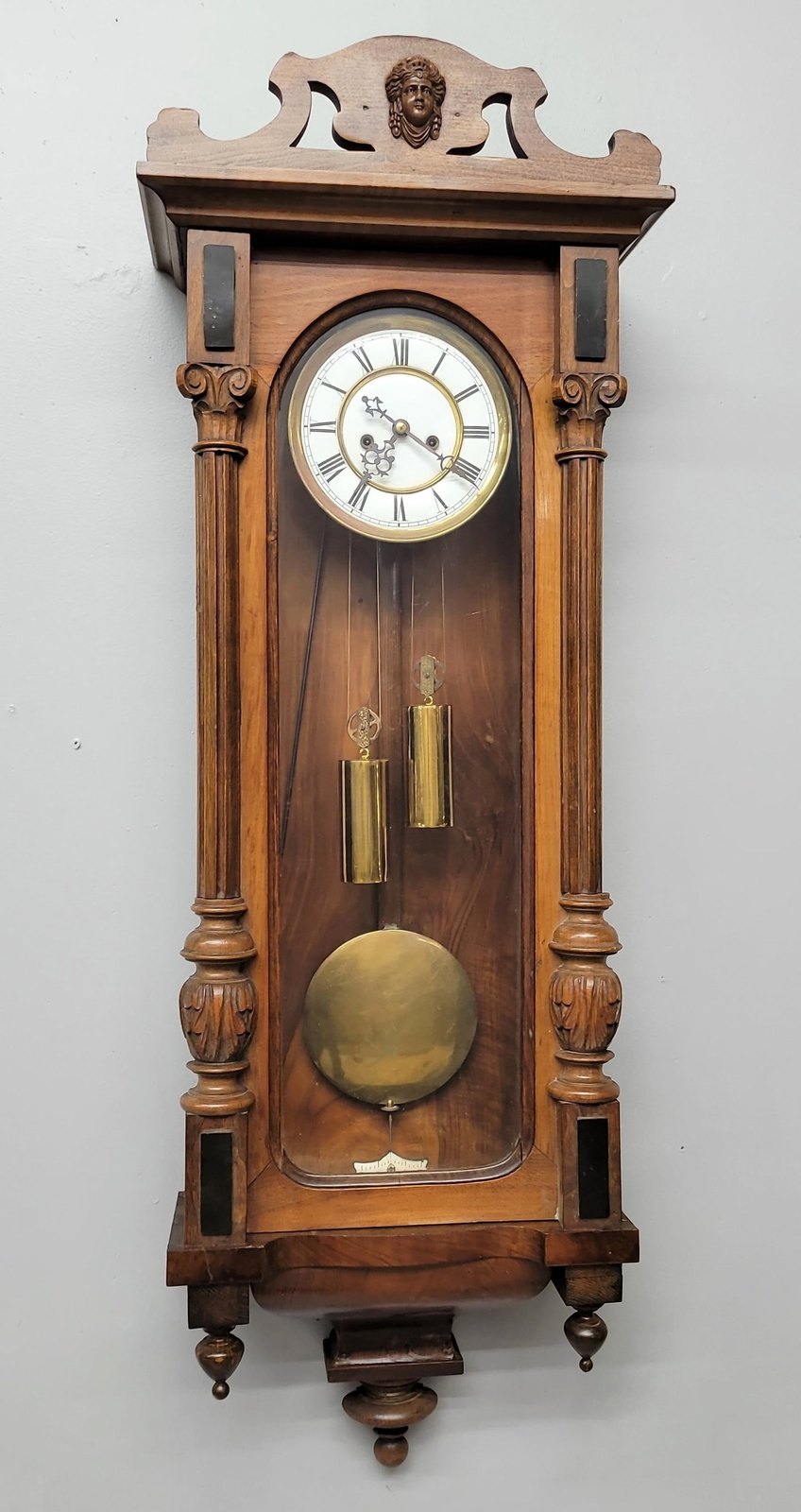
Circa 1890's Signed Gustav Becker Two Weight Vienna Regulator with porcelain dial, brass weights, &
- Maker / attribution
- Becker (maker)
- Date
- c. 1890
- Historical period
- Industrial Revolution (1850 – 1900)
- Country of origin
- Austria
- Object type
- Clock
- Materials / technique
- brass, porcelain
- Auction house
- LiveAuctioneers auction archive
- Lot
- Item 174085443
- Credit line
- Auction lot record: lot 307, 51st Year Fine Antique and Lighting Auction, Jay Anderson Auction (2024), via LiveAuctioneers
- Catalogue title (original)
- Circa 1890's Signed Gustav Becker Two Weight Vienna Regulator with porcelain dial, brass weights, & (English)
View the source record (auction lot) ↗ (opens another website in a new tab)Suggest a correction
Record summary
Catalogued by LiveAuctioneers auction archive (lot Item 174085443), this is a clock by Becker, made in Austria, dated c. 1890. The Atlas places it in the Industrial Revolution period (1850 – 1900) of its Clocks collection. Materials and techniques recorded by the source: brass, porcelain. The record is illustrated with 4 photographs.
Assembled from the source record's structured fields. Dates and attributions are given as the source states them; where a field is missing the Atlas leaves it blank rather than estimating.
Catalogue description
Lot description — Jay Anderson Auction
Circa 1890's Signed Gustav Becker Two Weight Vienna Regulator with porcelain dial, brass weights, & time & strike movement. Has the key. Hgt 45" w 16" d 7.5". Found in St Paul MN estate.
Historical context
Industrial Revolution (1850 – 1900)
American interchangeable-parts manufacture; railroad time standards; Swiss and German factory systems.
Factory production transformed the clock into an everyday object. American makers (Seth Thomas, Ansonia, Waterbury) and German factories (Junghans, Gustav Becker, Lenzkirch) sold millions of shelf, wall and alarm clocks worldwide; France produced standardised Paris movements and carriage clocks; electric time distribution began.
Read the period in the timelineMore clocks from this periodEarlier: Precision & Scientific Horology
Atlas type guide
Regulators, wall and Vienna clocks
A regulator is a precision pendulum clock used as a time standard in observatories, workshops and railway offices. Typical features are a deadbeat or Graham escapement, a temperature-compensated pendulum (mercury jar, gridiron or later invar), maintaining power and a regulator dial that separates hours, minutes and seconds. George Graham's deadbeat escapement (c. 1715) and his mercury pendulum, together with Harrison's gridiron, set the pattern for two centuries.
Wall clocks span a much wider range: the elegant Viennese Laterndluhr and Dachluhr of the Biedermeier period, the Dutch stoelklok and staartklok, English 'dial' clocks used in schools, offices and railway stations, and mass-produced spring and weight wall clocks from Germany (Gustav Becker, Junghans, Kienzle) and America.
What to look for
- Deadbeat escapement and compensated pendulum (gridiron rods, mercury jar or wood rod).
- A regulator dial with a large central minute hand and separate hour and seconds dials.
- Vienna regulators: glazed cases, slender pendulum, small weights, enamel two-piece dials.
- German factory trademarks stamped on the backplate (e.g. Gustav Becker anchor and crown, Junghans star).
Dating clues
- Graham-type deadbeat regulators: from c. 1720.
- Viennese Laterndluhr: c. 1800–1850.
- German factory 'Vienna-style' regulators: c. 1870–1930; Gustav Becker serial numbers allow close dating.
General guidance written by the Atlas editors about this kind of object. It is not a statement about this particular piece; for that, rely on the source record above and on physical examination.
Read next:Deadbeat escapementAnchor (recoil) escapementGrasshopper escapement
Related records
Clocks · c. 1885
Gustav Becker two weight wall clock, circa 1885
LiveAuctioneers auction archive
Clocks · c. 1880
Gustav Becker Vienna regulator clock, c. 1880
LiveAuctioneers auction archive
Clocks · c. 1880
19th C Regulator Clock, Style of Becker, c. 1880
LiveAuctioneers auction archive
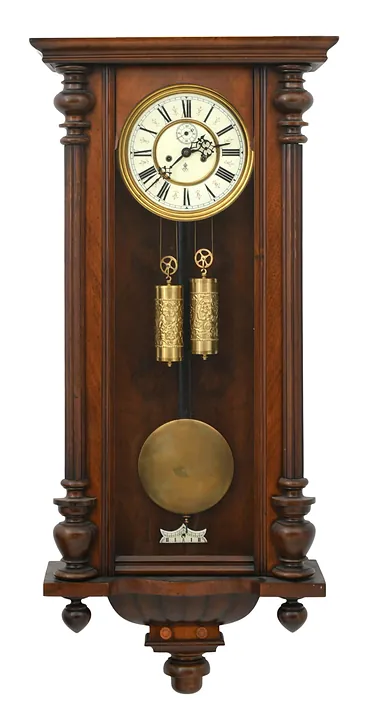
Clocks · c. 1890
Gustav Becker Two-Weight Vienna Regulator Clock, c. 1890
LiveAuctioneers auction archive
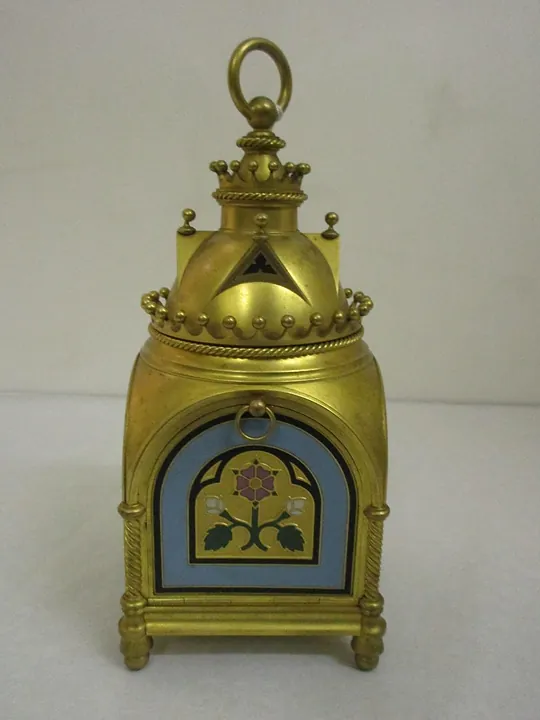
Clocks · c. 1867
Clock and key, gilt metal with champleve enamel, Dziedzinsky and Hanusch, Austria, c. 1867
Victoria and Albert Museum, London
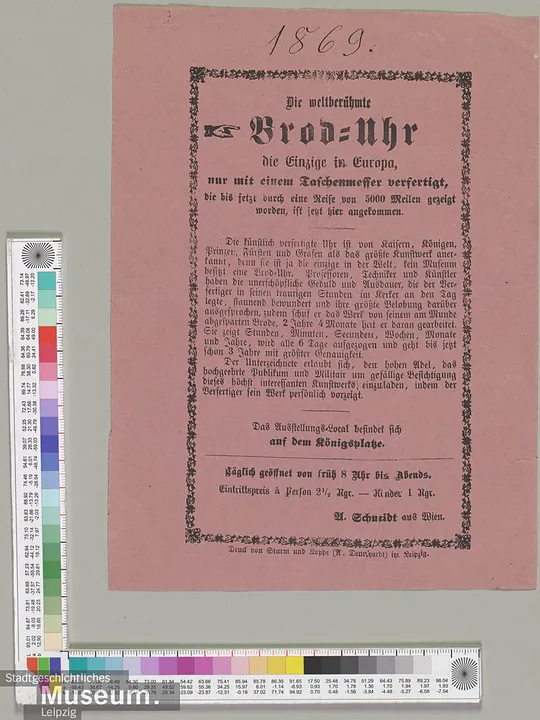
Clocks · 1864–1874
Clock by Sturm und Koppe (A. Dennhardt), Austria, 1864–1874
Museum of City History Leipzig
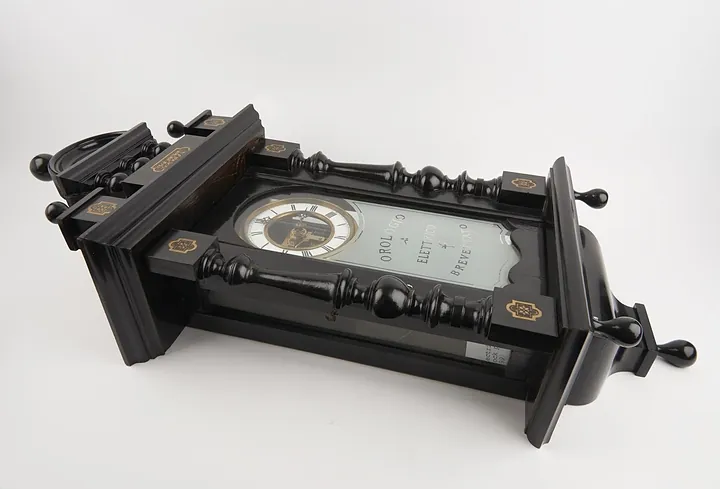
Clocks · 1899
Clock, Austria, 1899
Science Museum Group, London
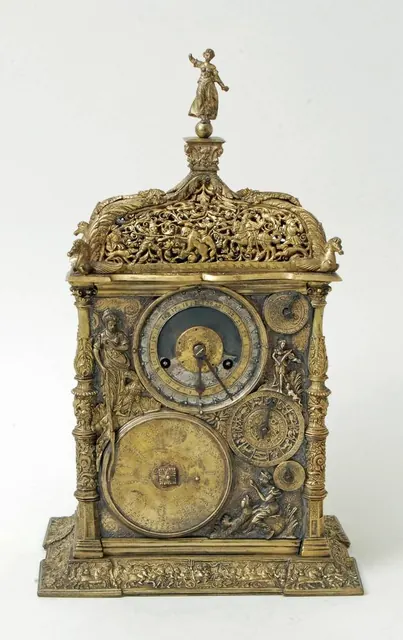
Clocks · 1873, after the original (Augsburg, 1564) in the Kunsthistorisches Museum, Vienna
Copy of Jeremias Metzger's 1564 table clock, Vienna, 1873
Dresden State Art Collections. Museum of Decorative Arts