
Ottoman timekeeping
Ottoman astronomers wrote on mechanical clocks, muvakkithanes kept time at mosques, and European makers built clocks for the Ottoman market.
CentresIstanbul · Galata · Bursa
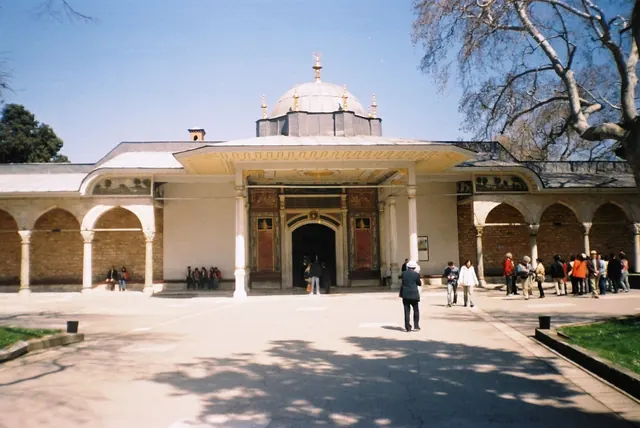
Taqi al-Din
The astronomer Taqi al-Din wrote a treatise on mechanical clocks in 1559 and founded an observatory in Istanbul in 1577, demolished in 1580.
Muvakkithanes
Timekeeping houses attached to mosques kept clocks and instruments to regulate prayer times, using 'alaturka' time counted from sunset.
Clocks for the Ottoman market
English, Swiss and French makers produced clocks and watches with Ottoman numerals for export; Galata had a community of European clockmakers. The Topkapı Palace preserves the imperial collection.
Alaturka time and the muvakkit
In the Ottoman system the 'alaturka' day began at sunset, so clocks had to be reset every few days as sunset moved through the seasons. The muvakkit, the timekeeper of a mosque, used sundials, astrolabes, quadrants, tables and clocks to fix the times of prayer, and the muvakkithane was his workplace. Watches made for Ottoman buyers often have dials with Ottoman (Eastern Arabic) numerals, and some carry two scales, one for alaturka and one for European ('alafranga') time.
European makers and Ottoman taste
In the 18th and early 19th centuries London makers such as George Prior and Markwick Markham produced verge watches for Ottoman clients, often in pair, triple or quadruple cases of tortoiseshell, shagreen or enamel, with Ottoman numerals on the dial; Swiss and French makers took much of the market in the 19th century. Clockmakers in Galata and Istanbul repaired and made clocks, and the court bought and received spectacular musical clocks, many still in the Topkapı Palace collection.
How to recognise it in an object
- Eastern Arabic (Ottoman) numerals on the dial, and Turkish inscriptions or a tughra on the case.
- Several nested outer cases of tortoiseshell, shagreen or enamel on English verge watches.
- Dials divided for alaturka time, which had to be reset to sunset.
General guidance: confirm any attribution against the maker's marks and the source record. Identification centre →
Timeline
- 1559Taqi al-Din writes a treatise on mechanical clocks in Ottoman Istanbul
From the catalogue
5 records · Ottoman Empire / Turkey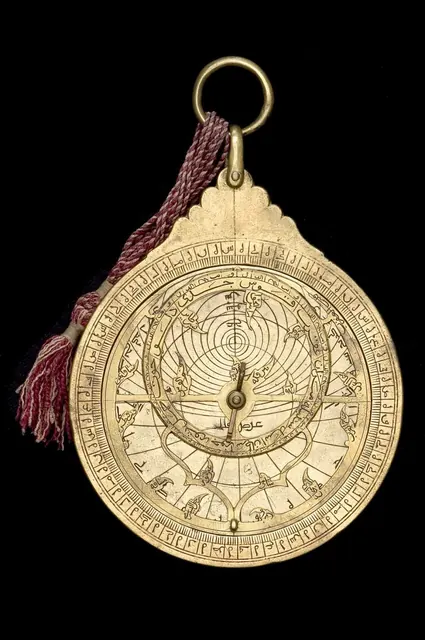
Instruments · 17th century
Astrolabe, Ottoman Empire / Turkey, 17th century
History of Science Museum, University of Oxford
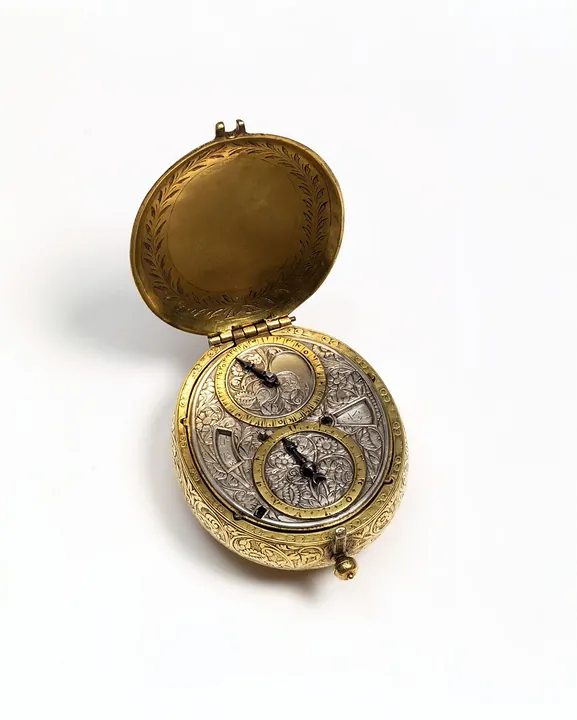
Pocket Watches · c. 1670
Gilt metal and silver watch with movement by Jean Pattru (the name inscribed in Arabic), probably Turkey, c. 1670
Victoria and Albert Museum, London
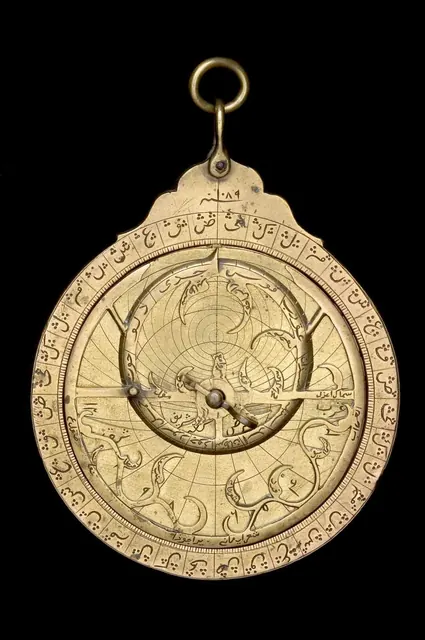
Instruments · 1678–1679
Astrolabe, Ottoman Empire / Turkey, 1678–1679
History of Science Museum, University of Oxford
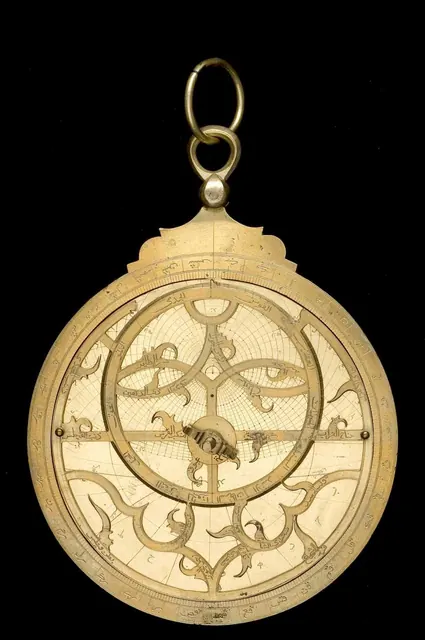
Instruments · 1713–1714
Astrolabe, Ottoman Empire / Turkey, 1713–1714
History of Science Museum, University of Oxford
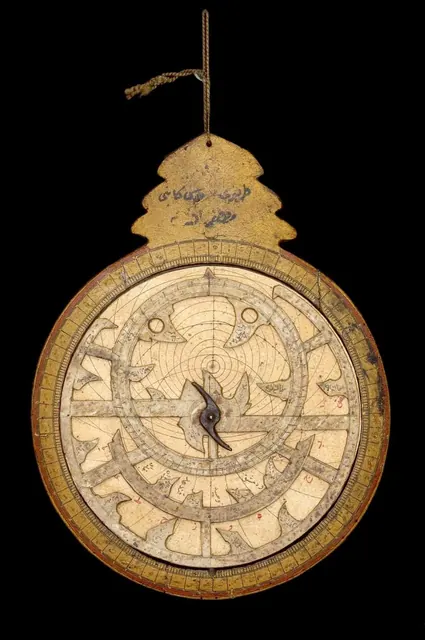
Instruments · c. 1800
Astrolabe, Ottoman Empire / Turkey, c. 1800
History of Science Museum, University of Oxford