
Scandinavian horology
Swedish Mora clocks, Danish precision instrument makers and Scandinavian chronometer makers working in London form a distinctive northern tradition.
CentresMora (Dalarna) · Stockholm · Copenhagen
Mora clocks
From the 18th century farming families around Mora in Dalarna made longcase clocks with distinctive waisted, painted cases — a rural industry comparable to the Black Forest's.
Precision makers
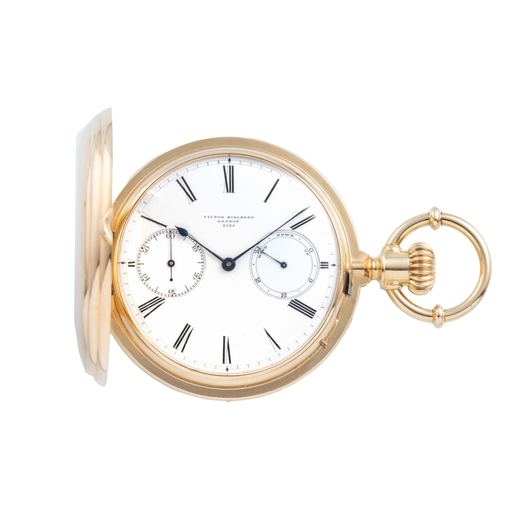
Swedish-born Victor Kullberg worked in London and became one of the most successful chronometer makers of the late 19th century; Danish makers such as Jens Olsen built the World Clock in Copenhagen City Hall (completed 1955).
Clocks of farm and island
Mora clocks were made by many hands: in the villages around Mora, families specialised in movements, cases or painting, and the movements were usually of iron and brass with a simple striking train. Pedlars sold them across Sweden and Finland in the 19th century, and the tall, curving case with its round head became a national symbol. In Denmark the island of Bornholm produced its own longcase clocks from the 18th century, in a style close to English and Dutch clocks, with painted dials often signed by makers in Rønne.
Science and precision
Scandinavia's reputation also rests on precision. The Danish astronomer Ole Rømer, working in Paris, used timings of Jupiter's moons to show in 1676 that light travels at a finite speed. Urban Jürgensen (1776–1830), trained in Copenhagen and in Paris and London workshops, founded a family of chronometer and watchmakers whose firm continued in Le Locle and Copenhagen. Jens Olsen's World Clock in Copenhagen City Hall, with some 15,000 parts, shows sidereal time, planetary positions and a celestial-pole cycle of 25,753 years.
How to recognise it in an object
- Mora clocks: a tall pine case with a waisted body and a round head, often painted white, grey or blue with carved and gilt ornament, and a plain painted or enamel dial.
- Bornholm clocks: a straight longcase similar to English clocks, with a painted dial.
- Watches signed 'Jules Jürgensen, Copenhagen' were mostly made by the family's Swiss workshops in Le Locle; the name was later used by an unrelated brand, so check the date and movement.
General guidance: confirm any attribution against the maker's marks and the source record. Identification centre →
Makers
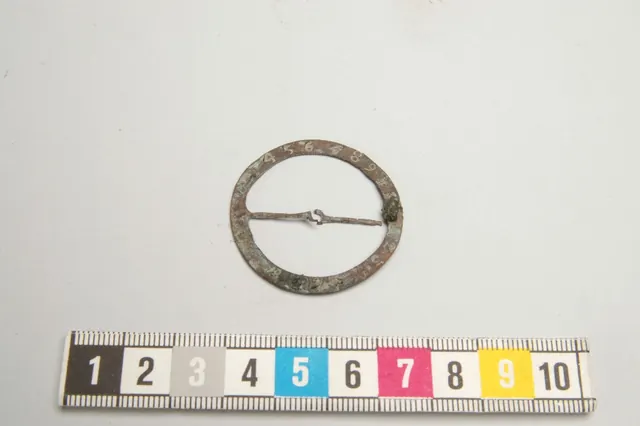
Instruments · Middle Ages (1100 AD - 1500 AD)
Sundial, Sweden, Middle Ages (1100 AD - 1500 AD)
Swedish History Museum
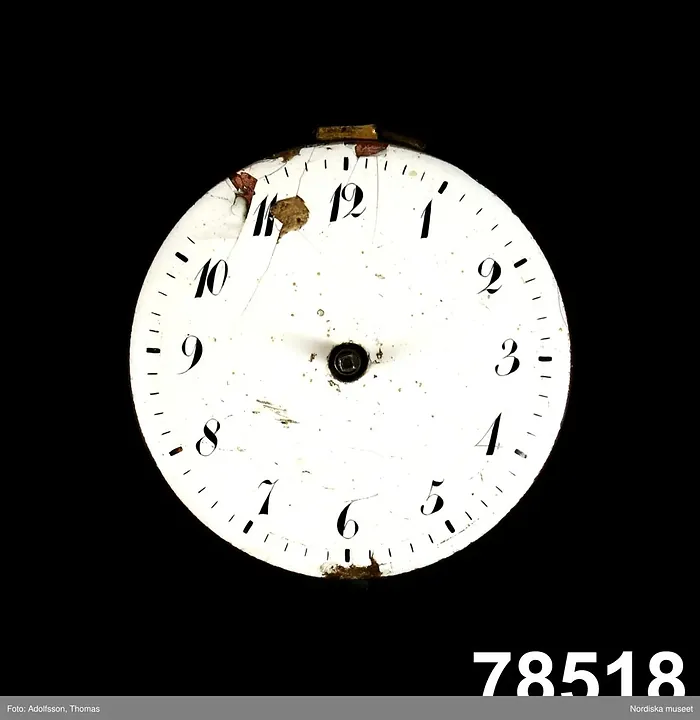
Movements & Components · 1700–1799
Watch movement, Sweden, 1700–1799
Nordic Museum Foundation
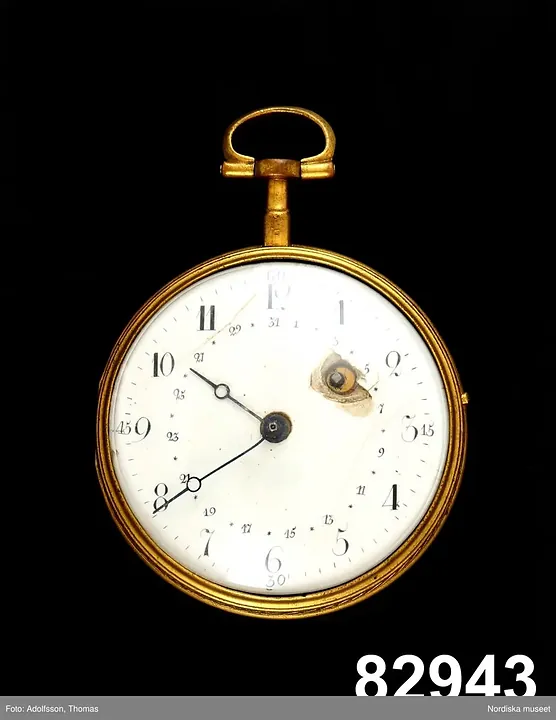
Pocket Watches · 18th century (attributed; the source's 1947 date refers to a publication)
Pocket watch by Joakim Hovenschiöld, Sweden, 18th century (attributed) (no. NM0082943)
Nordic Museum Foundation
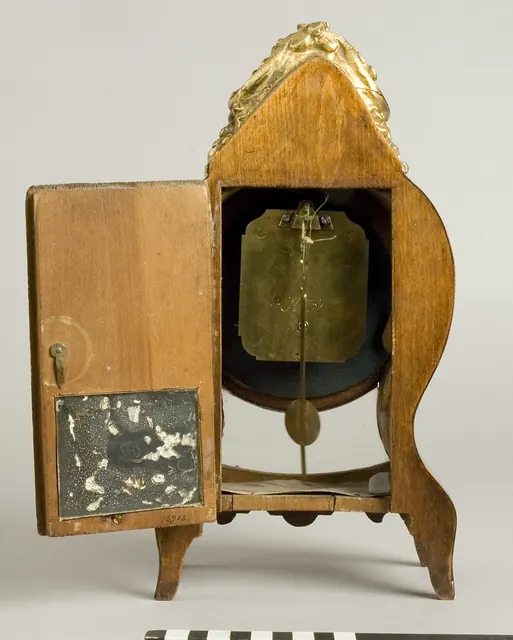
Clocks · 1760–1780
Clock by Daniel Åberg, Sweden, 1760–1780
Skansen
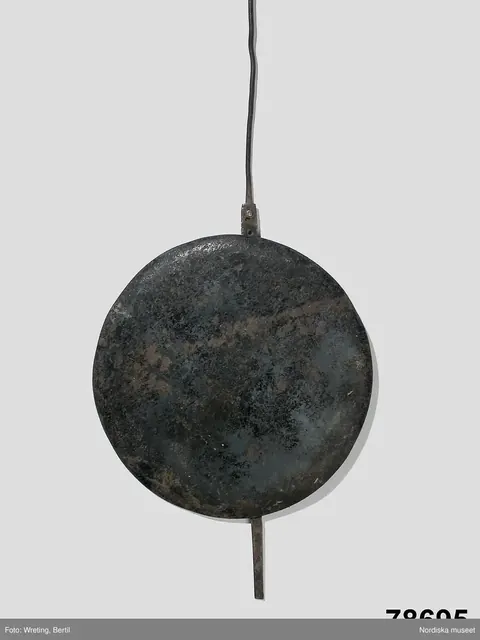
Movements & Components · 1797
Urverk by Jonas Pharmansson, Sweden, 1797
Nordic Museum Foundation
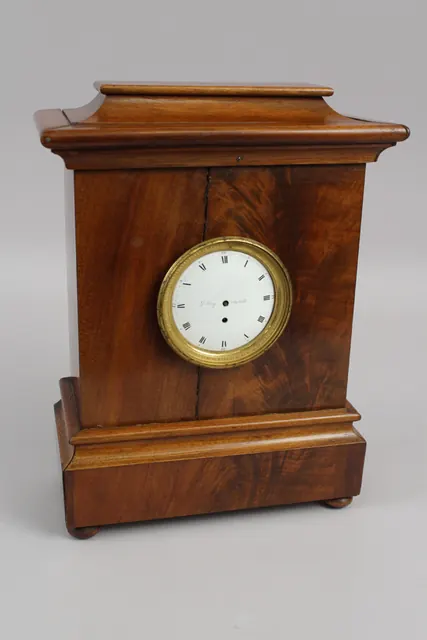
Clocks · c. 1810
Table clock by Gustaf Berg, Sweden, c. 1810
HKM / Kulttuurihistoriallinen
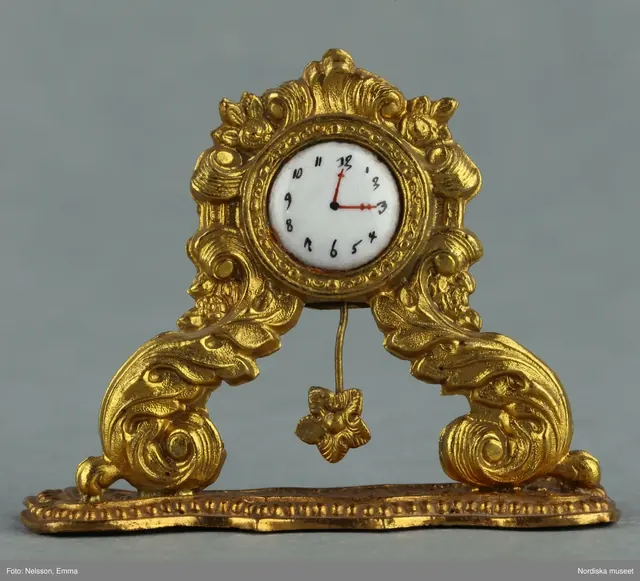
Clocks · 1860
Table clock by Ella von Rosen, Sweden, 1860
Nordic Museum Foundation
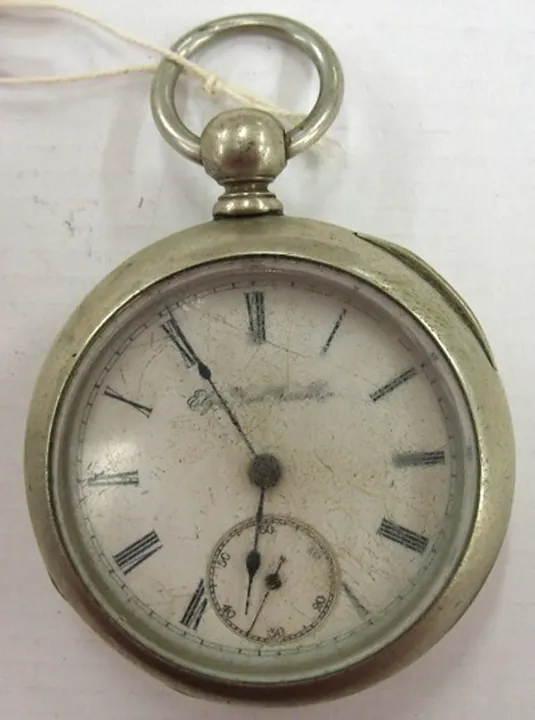
Pocket Watches · 1900–1925
Pocket watch, Sweden, 1900–1925 (no. VM21543_3)
Vänersborgs museum
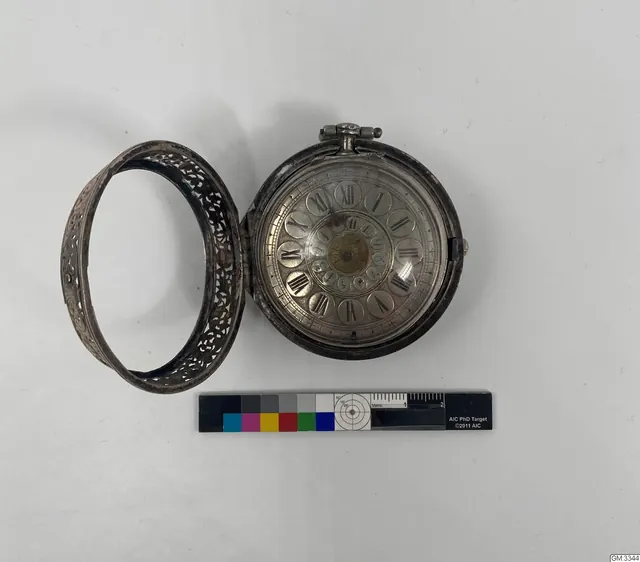
Pocket Watches · 1905
Pocket watch, Sweden, 1905
Museum of Gothenburg
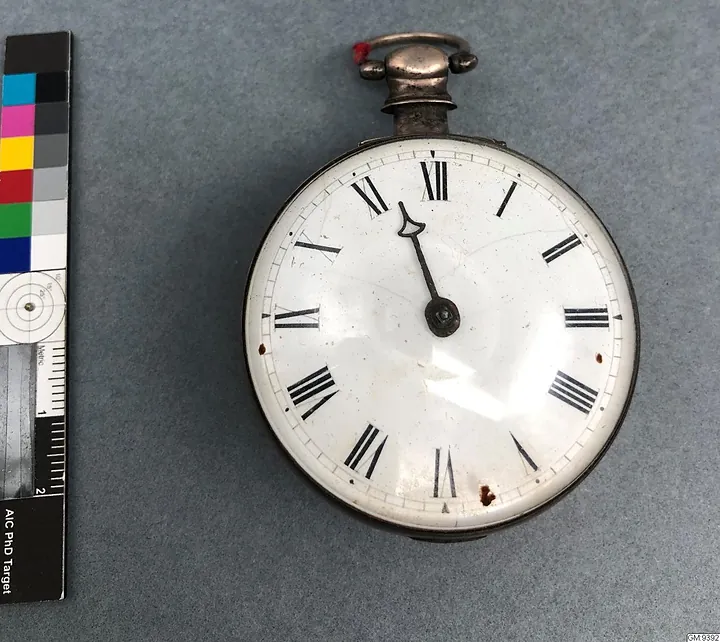
Pocket Watches · 1928
Pocket watch by Gorden, Sweden, 1928
Museum of Gothenburg
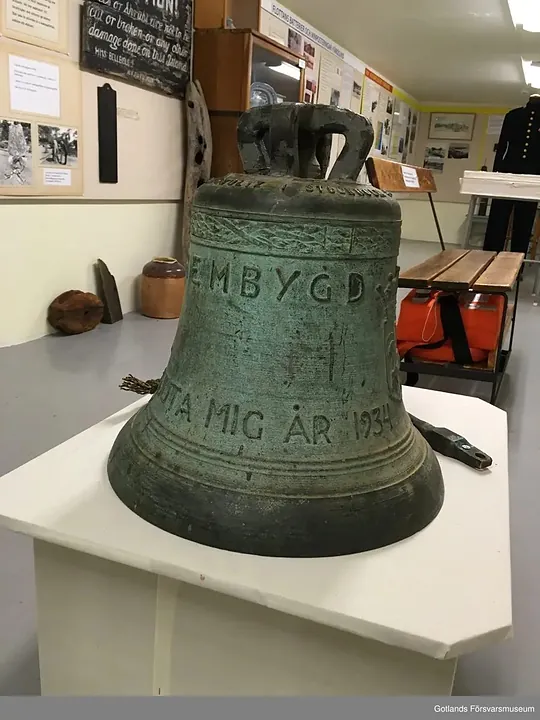
Pocket Watches · 1934–1962
Pocket watch, Sweden, 1934–1962
Gotland Defense Museum
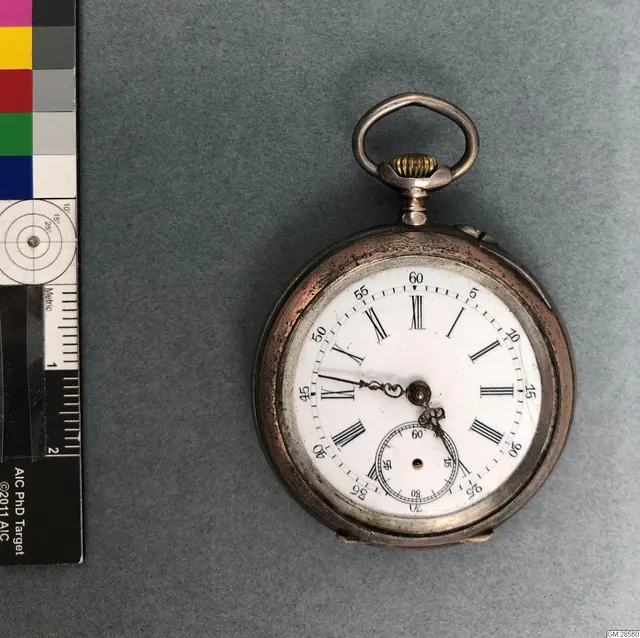
Pocket Watches · 1972
Pocket watch, Sweden, 1972
Museum of Gothenburg