
Persian timekeeping
Persian astronomers and instrument makers produced outstanding astrolabes and celestial globes; Safavid and Qajar courts collected European clocks and watches.
CentresIsfahan · Maragha · Shiraz · Tehran
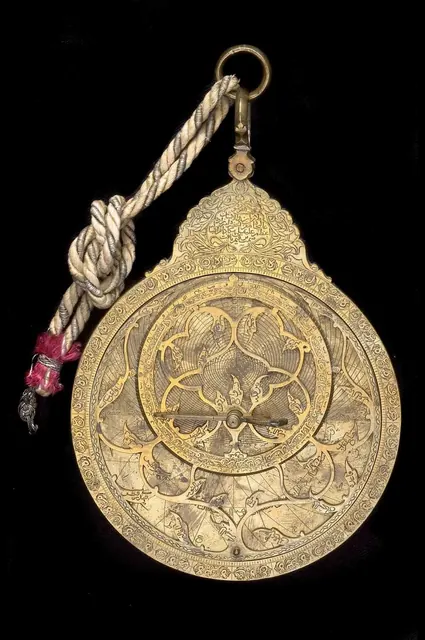
Observatories
The Maragha observatory founded by Nasir al-Din al-Tusi in 1259 was one of the major astronomical institutions of the medieval world; its tradition shaped instruments and tables across the Islamic world.
Isfahan astrolabes
Under the Safavids, Isfahan workshops produced astrolabes of exceptional decoration and precision, many now in European and American museums.
European clocks at court
European clocks, often made for the eastern markets, were valued diplomatic gifts at the Safavid and Qajar courts; Otto Kurz's European Clocks and Watches in the Near East surveys the trade.
Astrolabes as clocks
The astrolabe was the Persian astronomer's clock: by sighting the Sun or a star and turning the rete, the user could read the hour by day or night. Seventeenth-century makers such as Muhammad Mahdi al-Yazdi and, around 1700, Abd al-A'imma of Isfahan made some of the most richly decorated astrolabes ever produced, with plates for many latitudes and inscriptions in fine nasta'liq script.
Clocks at the Qajar court
Mechanical clocks reached Persia as diplomatic gifts and through trade with the East India companies. Under the Qajar dynasty (1789–1925) the court in Tehran collected European clocks and watches, and the Shams-ol-Emareh, a tower built at the Golestan Palace in the 1860s, carries public clock dials. Watches made for the Persian market have dials with Persian numerals.
The solar year
In 1079 the Seljuk sultan Malik-Shah commissioned a reform of the solar calendar from a group of astronomers that included Omar Khayyam. Their Jalali calendar began the year at the spring equinox, Nowruz. The Iranian solar hijri calendar adopted officially in 1925 keeps that starting point, so fixing the moment of the equinox has long mattered for civil timekeeping as well as for astronomy.
How to recognise it in an object
- Persian (Eastern Arabic) numerals on dials and Persian inscriptions in nasta'liq script on cases.
- Astrolabes signed and dated in the hijri calendar, with plates engraved for cities from Mecca to Isfahan.
General guidance: confirm any attribution against the maker's marks and the source record. Identification centre →
From the catalogue
61 records · Iran (Persia)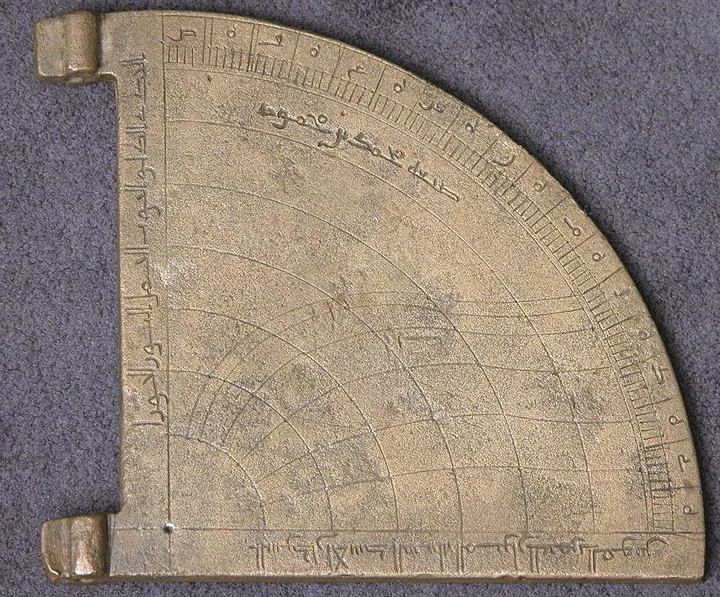
Instruments · 10th century
Quadrant by Muhammad ibn Mahmud, Iran (Persia), 10th century
The Metropolitan Museum of Art, New York
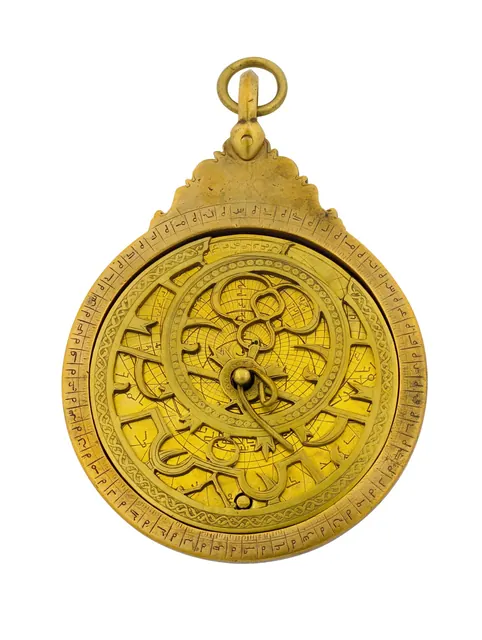
Instruments · 1433–1434
Islamic astrolabe, Iran, 1433–1434
Adler Planetarium, Chicago
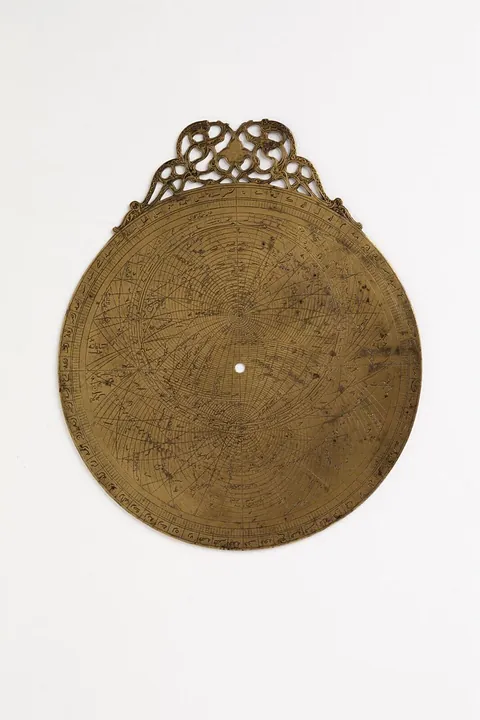
Instruments · 17th century
Astrolabe, Iran (Persia), 17th century
Victoria and Albert Museum, London
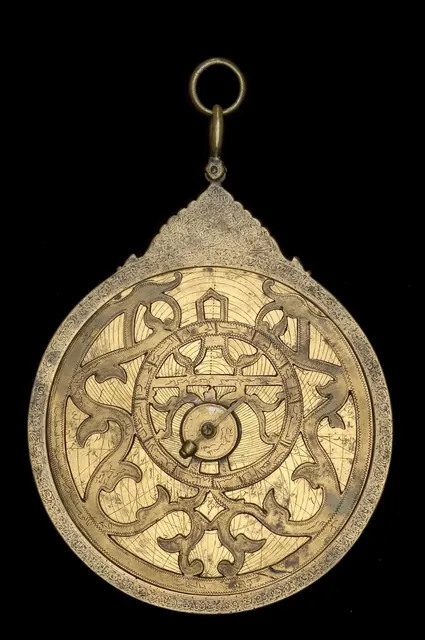
Instruments · c. 1650
Astrolabe by Muhammad Mahdi al-Khadim al-Yazdi, Iran (Persia), c. 1650
History of Science Museum, University of Oxford
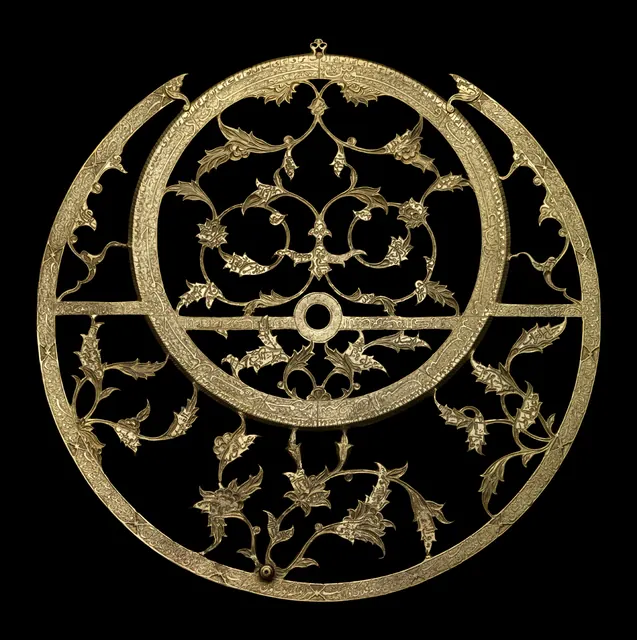
Instruments · 1659-60
Astrolabe, Iran (Persia), 1659-60
Royal Museums Greenwich
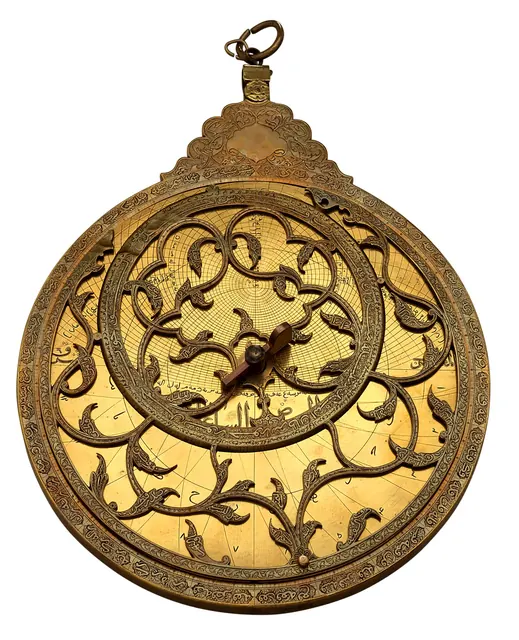
Instruments · 1682–1708
Islamic astrolabe, Isfahan, 1682–1708
Adler Planetarium, Chicago
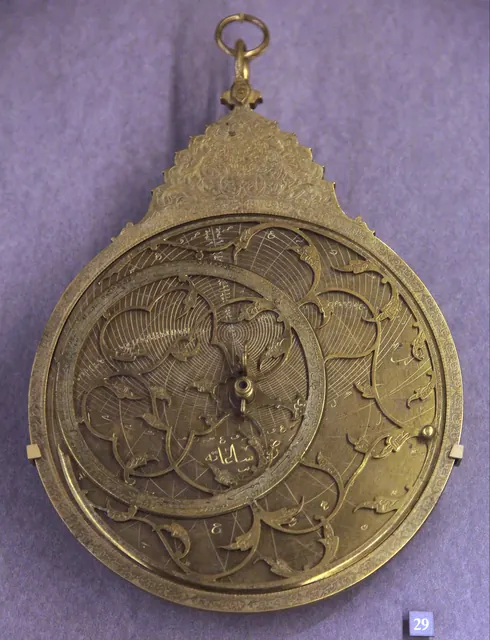
Instruments · 1700–1720
Astrolabe, Iran (Persia), 1700–1720
Department of Decorative Arts of the Louvre
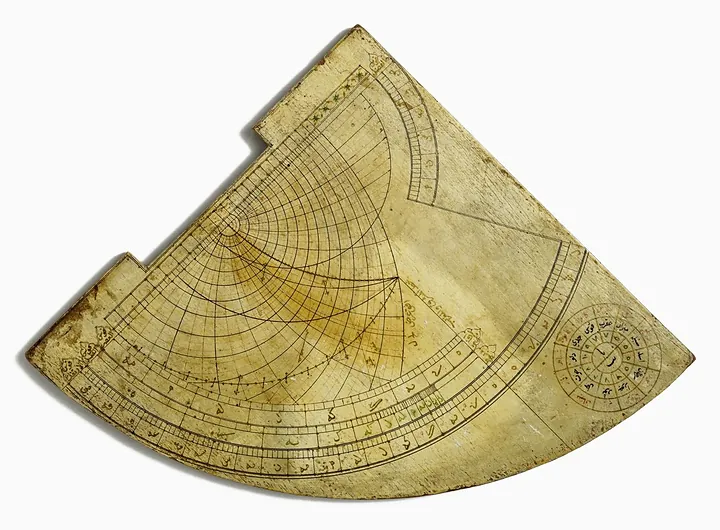
Instruments · 1701–1800
Wooden horary quadrant (25-cm radius) with painted scales and leather case, Islamic script, unsigned, Persia, 1701–1800.
Science Museum Group, London
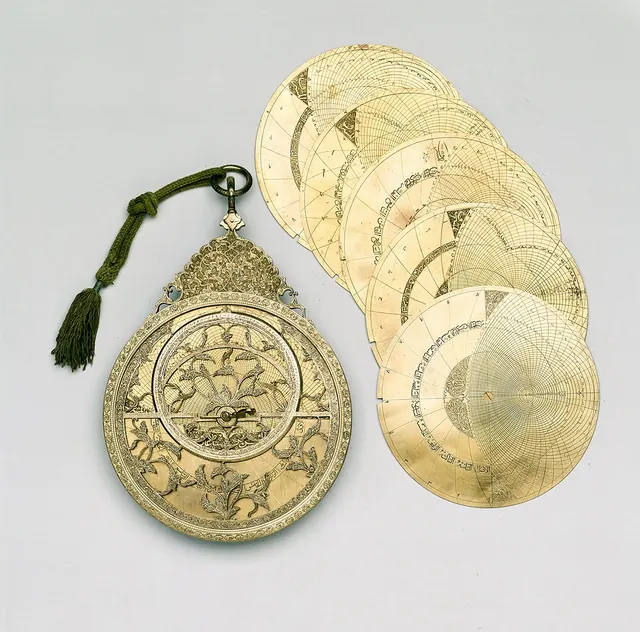
Instruments · 1707-08
Astrolabe, Iran (Persia), 1707-08
Royal Museums Greenwich
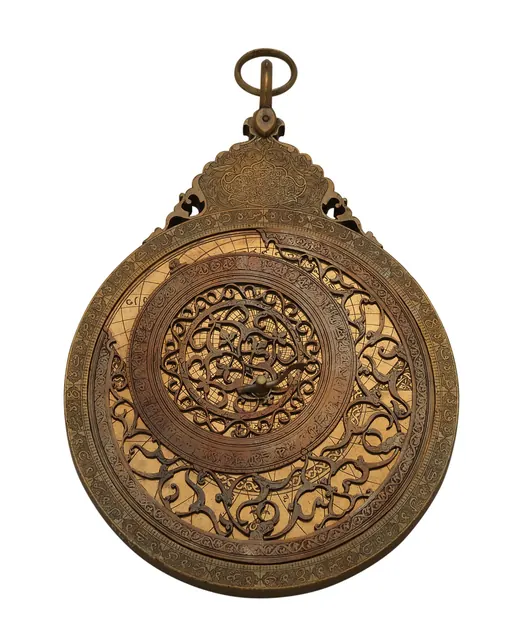
Instruments · 1715
Islamic astrolabe, Isfahan, 1715
Adler Planetarium, Chicago
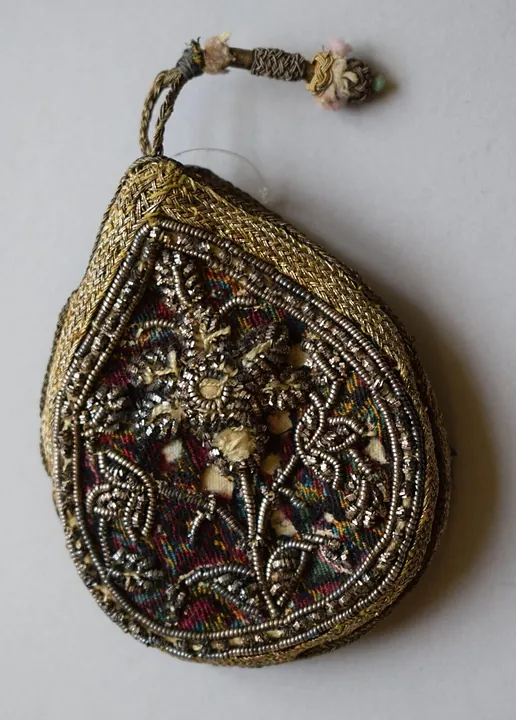
Movements & Components · 1800–1899
Watch case of embroidered wool with metal threads, Iran, 1800–1899
Victoria and Albert Museum, London
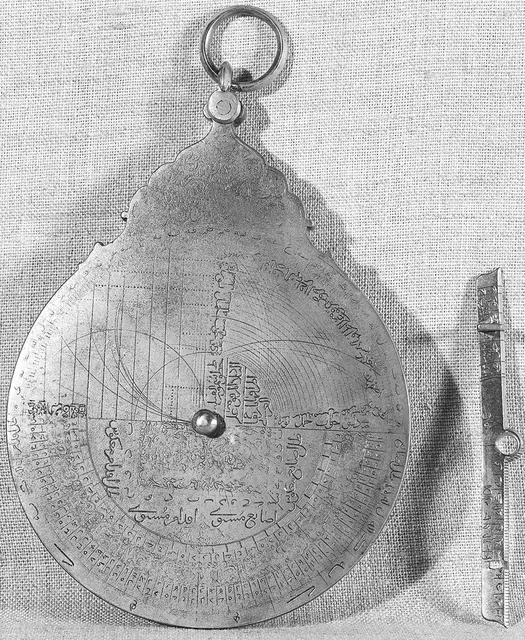
Instruments · 1850
Astrolabe, Iran (Persia), 1850
Royal Museums Greenwich