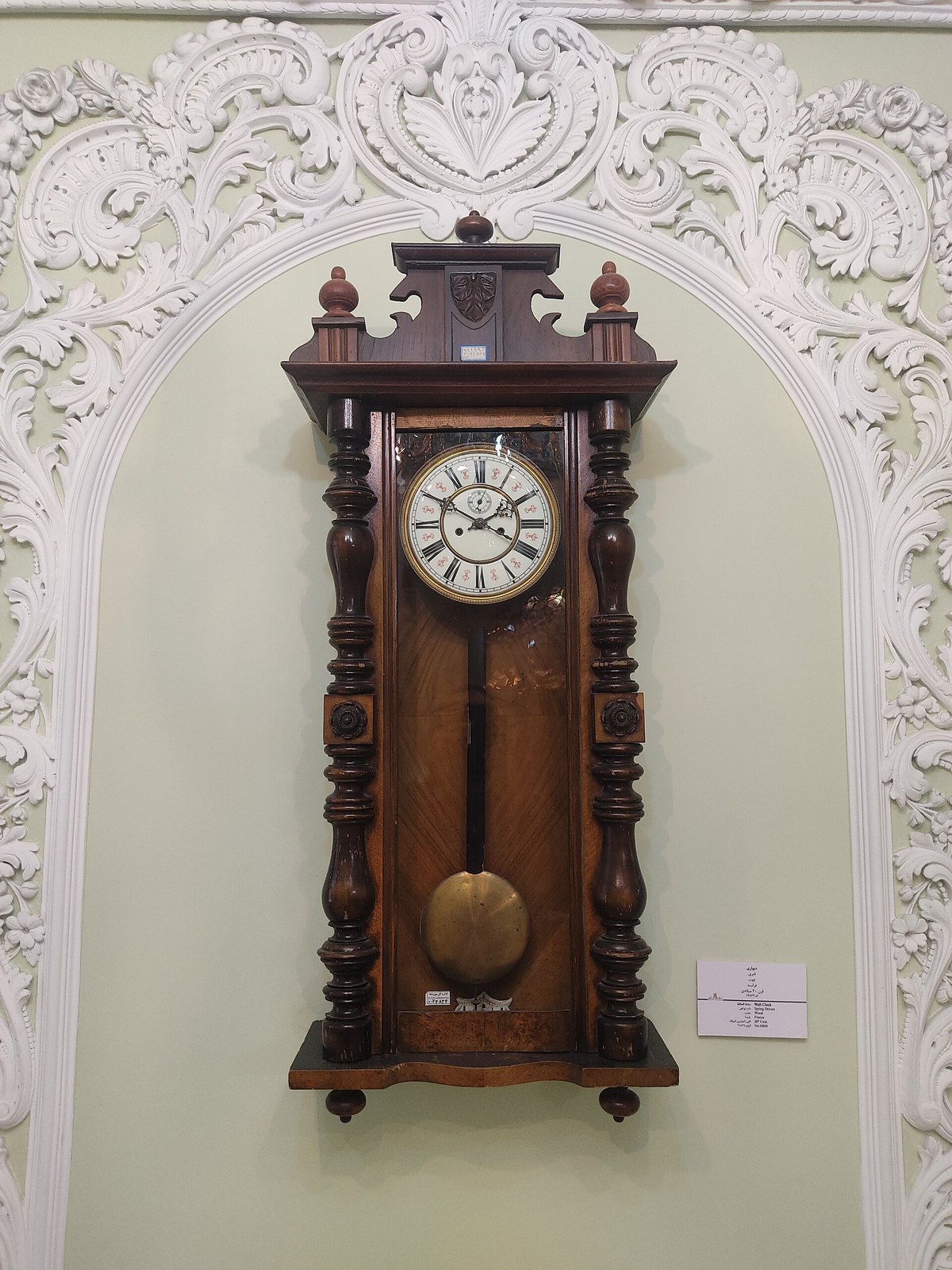
Museum
Zaman Museum (Time Museum, Tehran)
Tehran, Iran
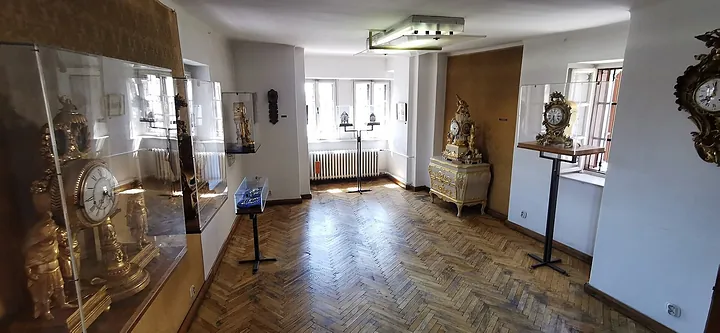
Tamashagah Zaman (تماشاگه زمان): mechanical clocks, pocket watches and wristwatches, with demonstrations of earlier time-measuring methods in the garden of the Hossein Khodadad House.
The museum occupies a richly decorated house in Tehran's Zafaraniyeh district. Industrialist Hossein Khodadad bought and remodelled the property in the 1960s; it later became a museum devoted to time. Its collection includes clocks from the 17th to the 20th century, including European timepieces collected in Iran. Sources place the museum's opening in 1999–2000; this is not the construction date of the house.
- Type
- Museum
- Location
- Tehran, Iran
- Founded
- 1999–2000
- Specialities
- Mechanical clocks and watches · Early time-measuring demonstrations · Calendars and Iranian collecting
- Official website
- timemuseum.ir (opens another website in a new tab)
Opening hours, admission and accessibility change; please check the official website before visiting.
Why it matters for horology
Zaman brings Iran into the international history of clock collecting. The clocks described in its collection include English, French, Swiss and German pieces, a reminder that an object's present location does not establish where it was made. The decorated house is part of the visit, but its plasterwork should not be mistaken for evidence about the dates of the clocks inside. Garden demonstrations introduce sundials and timekeepers using water, sand or combustion; these are explanations of operating principles, not proof that every example is an ancient original. Inside, mechanical clocks and portable watches show how timekeeping became both a practical instrument and an object of display. Calendars add another dimension: measuring a duration, naming a civil date and regulating a clock are related tasks, but not the same one.
Specialities
- Mechanical clocks and watches
- Early time-measuring demonstrations
- Calendars and Iranian collecting
What to look for
- Garden timekeepers
- Compare the shadow of a sundial with devices that measure an interval through flowing water or burning material. Read labels to distinguish demonstrations and reconstructions from historic objects.
- Mechanical clocks
- Look for the difference between weights and springs as power sources, and between a pendulum and a balance as regulators. Ornamental cases may conceal comparatively familiar European mechanisms.
- Watches and collecting
- Pocket and wristwatches connect personal timekeeping with Iranian collectors and donors. Treat an owner's biography separately from the watch's maker, production date and later repairs.
From the catalogue: Persian timekeeping
61 records →These records come from other collections and dealers, not from Zaman Museum (Time Museum, Tehran); they show the kind of objects this institution's field covers.
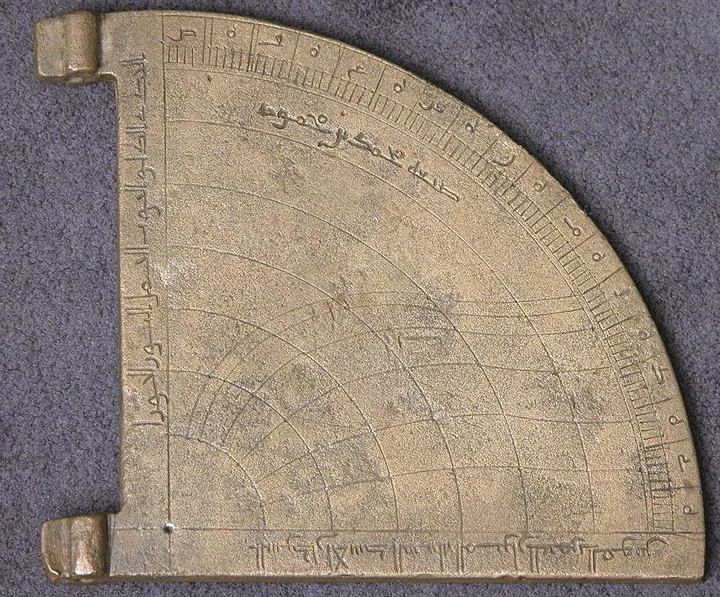
Instruments · 10th century
Quadrant by Muhammad ibn Mahmud, Iran (Persia), 10th century
The Metropolitan Museum of Art, New York
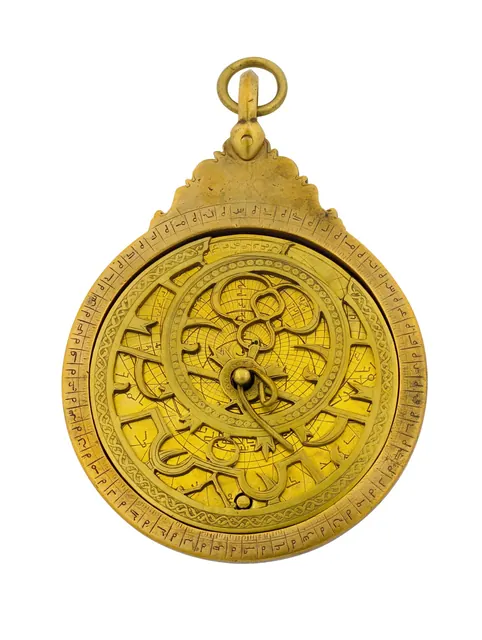
Instruments · 1433–1434
Islamic astrolabe, Iran, 1433–1434
Adler Planetarium, Chicago
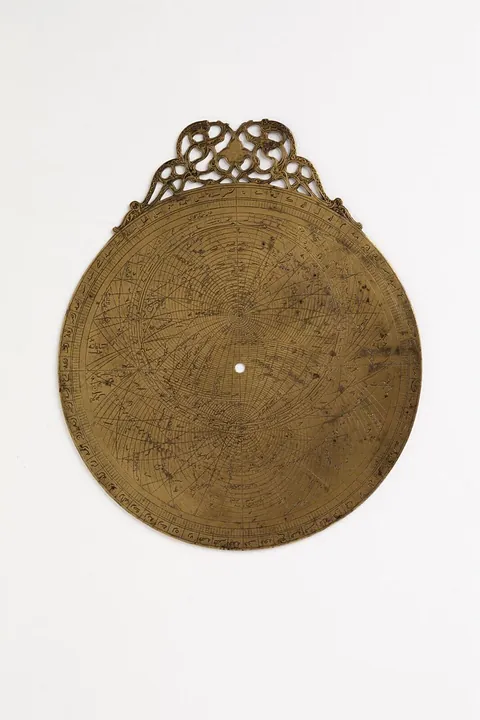
Instruments · 17th century
Astrolabe, Iran (Persia), 17th century
Victoria and Albert Museum, London
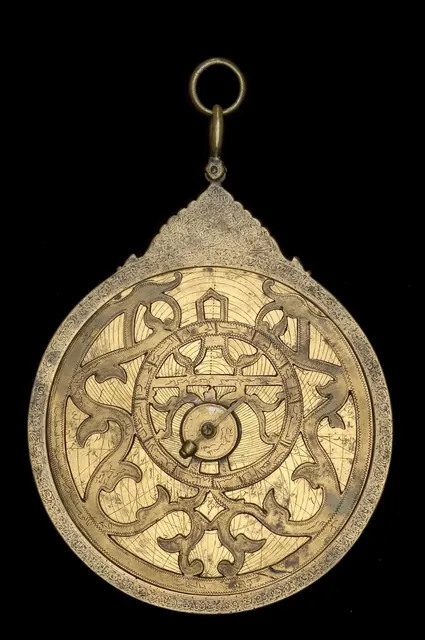
Instruments · c. 1650
Astrolabe by Muhammad Mahdi al-Khadim al-Yazdi, Iran (Persia), c. 1650
History of Science Museum, University of Oxford
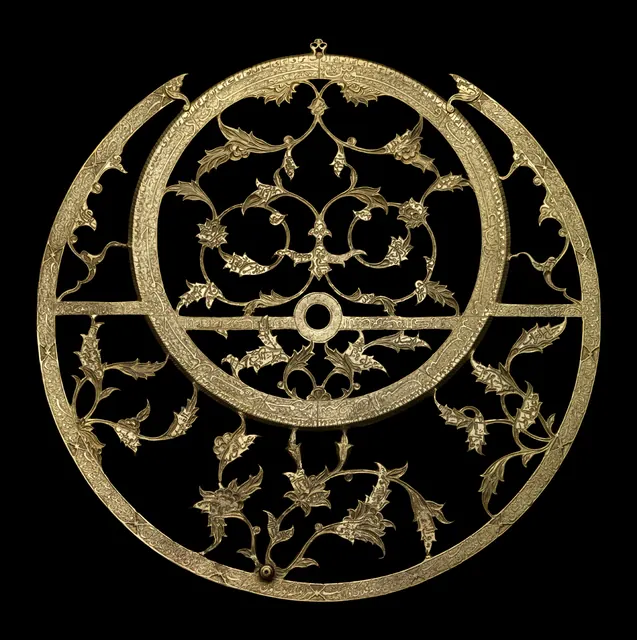
Instruments · 1659-60
Astrolabe, Iran (Persia), 1659-60
Royal Museums Greenwich
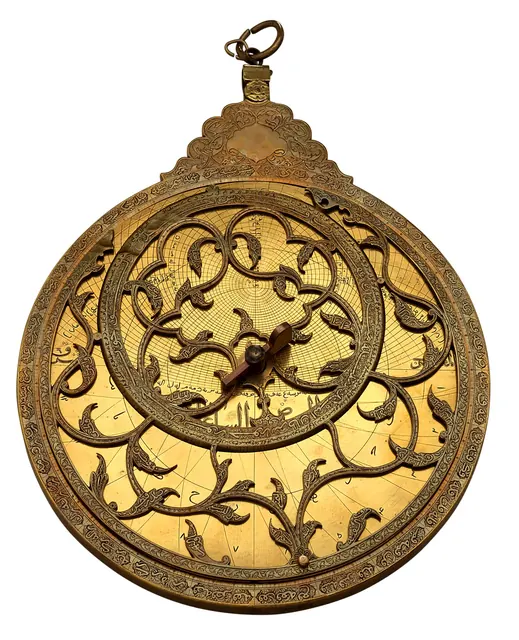
Instruments · 1682–1708
Islamic astrolabe, Isfahan, 1682–1708
Adler Planetarium, Chicago
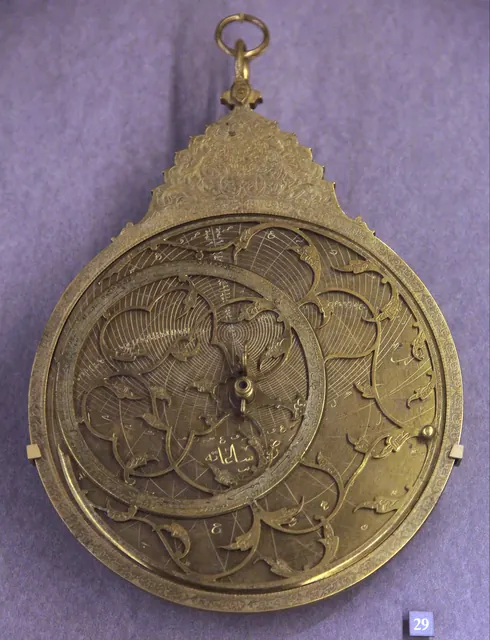
Instruments · 1700–1720
Astrolabe, Iran (Persia), 1700–1720
Department of Decorative Arts of the Louvre
Instruments · 1701–1800
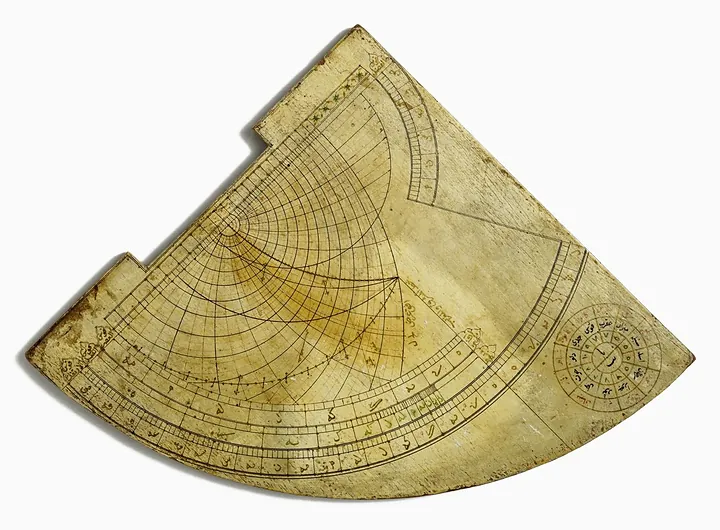
Wooden horary quadrant (25-cm radius) with painted scales and leather case, Islamic script, unsigned, Persia, 1701–1800.
Science Museum Group, London