Museum
Museum of Clocks — House at the Good Shepherd
Bratislava, Slovakia
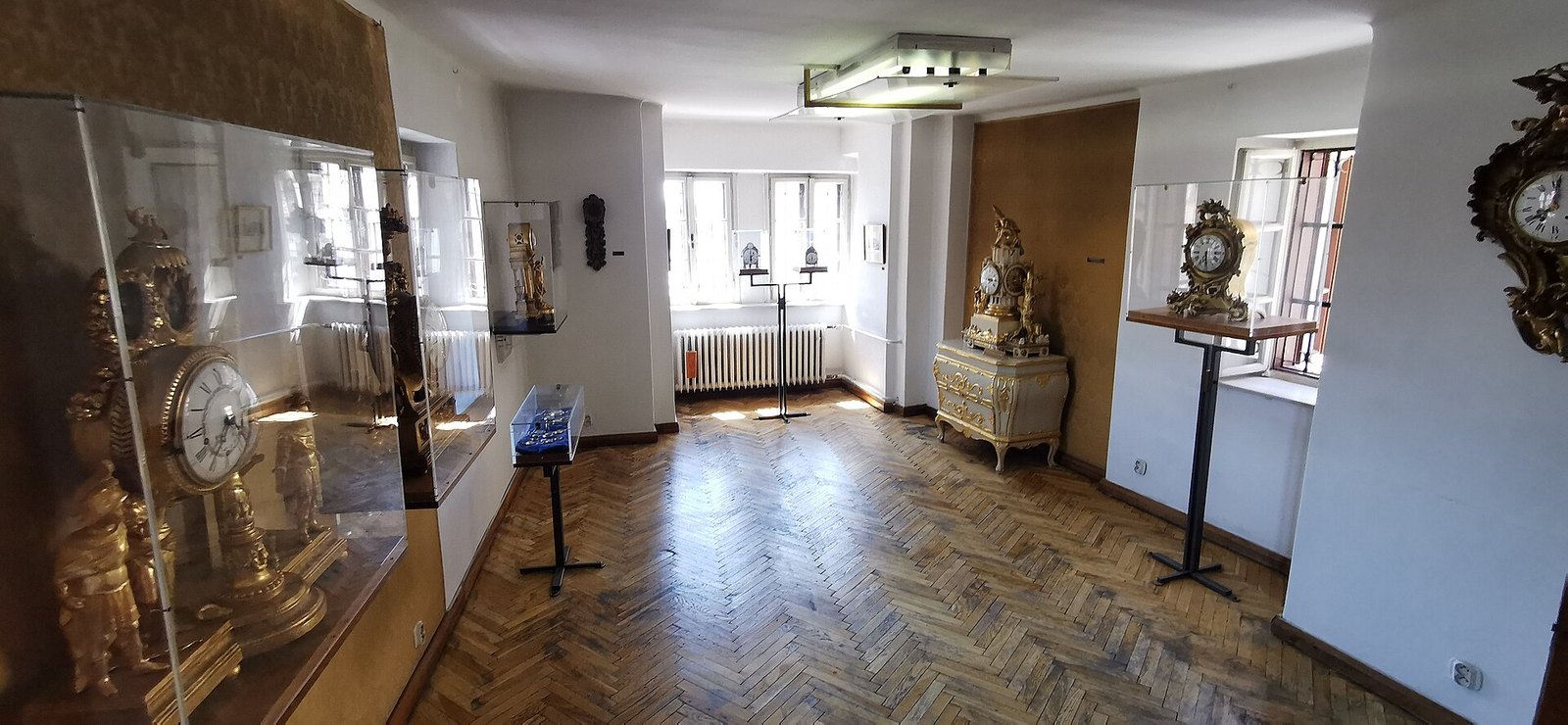
Bratislava clockmakers, late-17th–19th-century clocks, portable sundials, picture clocks and tower-clock mechanisms in a narrow Rococo house below the castle.
The House at the Good Shepherd was built in 1760–1765 as a combined commercial and residential building. Adapted by Bratislava City Museum, it has housed the clock exhibition since 1974. Many exhibits come from local workshops, documenting an urban clockmaking tradition rather than simply a collection of imported decorative pieces.
- Type
- Museum
- Location
- Bratislava, Slovakia
- Founded
- 1974 (exhibition)
- Specialities
- Bratislava clockmakers · Picture and cabinet clocks · Sundials and tower clocks
Opening hours, admission and accessibility change; please check the official website before visiting.
Why it matters for horology
Bratislava's clock exhibition is unusually closely tied to the workshops of its own city. The range from late-17th-century clocks to 19th-century picture clocks shows both technical change and the demands of local households. The small House at the Good Shepherd adds a second historical layer: commercial and residential rooms were adapted for a museum long after the house was built. The building's Rococo appearance is therefore not a date for every object displayed within it. Portable sundials, hourglasses and tower-clock mechanisms broaden the story beyond mantel decoration. Access is seasonal and the city museum describes the premises as having steps and not being wheelchair accessible; current opening arrangements and access requirements should be checked with the operator before a journey.
Specialities
- Bratislava clockmakers
- Picture and cabinet clocks
- Sundials and tower clocks
What to look for
- Local workshop signatures
- Study the names and places recorded on dials and labels. Bratislava's historical multilingual setting makes precise transcription preferable to silently modernising every maker's address.
- Picture and cabinet clocks
- Look for the relationship between a painted scene and a concealed clock or musical mechanism. The artwork, case and movement may require separate descriptions and dates.
- Tower and portable timekeeping
- Contrast the large mechanism of a public clock with a portable sundial or hourglass. These objects served different users and did not measure time by the same principle.