
Beginner · Lesson 6 of 10 · 15 min read
How a grandfather clock works — and why it stops or won't chime
A grandfather (longcase) clock is a weight-driven clock with a pendulum about a metre long. This lesson explains the weights, the pendulum, the escapement and the striking and chiming trains, and then answers the questions owners ask most: why the pendulum stops, why the chime is silent, how to set the hands, and how to move one safely.
By the end of this lesson you will be able to:
- Explain what the weights, pendulum and escapement of a longcase clock each do
- Tell a thirty-hour clock from an eight-day clock, and a striking clock from a chiming one
- Put a clock in beat and regulate it
- Diagnose the common reasons a grandfather clock stops or stays silent
A grandfather clock is the everyday name for a longcase clock: a weight-driven pendulum clock in a tall case that stands on the floor. The tall case is not decoration. It exists to hide and protect two things that need room: weights that drop slowly over a day or a week, and a long pendulum that swings once a second. Understand those two and almost everything about how the clock behaves, and why it stops, follows.
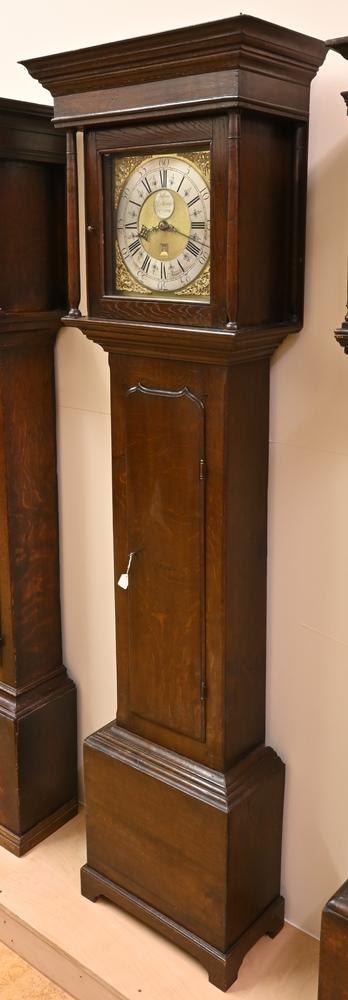
Why 'grandfather'?
The name comes from a song. In 1876 the American songwriter Henry Clay Work published 'My Grandfather's Clock', about a clock that 'stopped, short, never to go again, when the old man died'. The song was a huge success, and the tall clocks it described became 'grandfather clocks'. Before that, English speakers called them longcase clocks, and Americans tall-case or tall clocks; museums and collectors still use those terms. Smaller floor-standing clocks are sometimes sold as 'grandmother' clocks, and very small ones as 'granddaughter' clocks, but these are trade names for size, not different mechanisms.
1. Power: the weights
A longcase clock is driven by gravity. Each weight hangs from a gut line, cable or chain wrapped around a barrel or running over a sprocket in the movement. As the weight falls, it turns the barrel, and the barrel turns the wheels. Weights give an almost perfectly constant force, which is one reason weight-driven clocks keep good time. Winding lifts the weights back up.
| Type | Weights | How it is wound | What you hear |
|---|---|---|---|
| Thirty-hour | One weight drives both going and striking | Pull the rope or chain daily; no winding holes in the dial | Hours struck on a bell |
| Eight-day striking | Two: going (time) and striking | Crank key in two winding holes, about once a week | Hours struck on a bell or gong |
| Eight-day chiming | Three: going, striking and chiming | Crank key in three winding holes, once a week | Quarter chimes (often Westminster) plus the hours |
Thirty-hour clocks usually use the endless rope or chain devised by Christiaan Huygens, which lets one weight drive both trains and keeps the clock going while it is wound. Eight-day clocks need heavier weights and a longer drop, which is why their cases are tall and their dials have winding holes. On modern three-weight chiming movements the weights often differ in weight and are marked for left, centre and right; if they are hung on the wrong pulleys the chime may run slowly or stop. Check for markings on the bottoms of the weights before assuming they are interchangeable.
2. Timekeeping: the pendulum
The pendulum decides the clock's rate. A pendulum's period depends almost only on its length, so a pendulum of about 99.4 cm (to the centre of oscillation) takes exactly one second for each swing: the 'seconds pendulum' of the standard longcase clock. The pendulum hangs from a thin suspension spring at the back of the movement and is kept swinging by small pushes from the escapement through a vertical arm called the crutch.
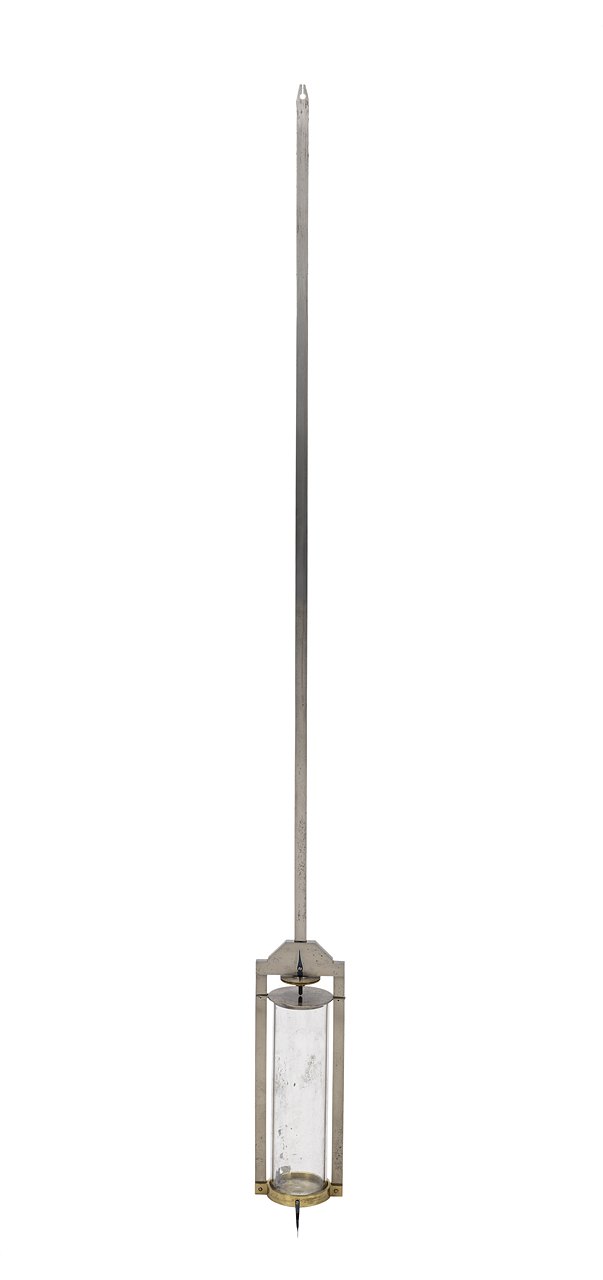
At the bottom of the rod is the bob, a heavy disc, and below it a rating nut. Screwing the nut up raises the bob, shortens the pendulum and makes the clock gain; screwing it down makes it lose. One full turn of a typical nut changes the rate of a seconds pendulum by about twenty seconds a day, so small adjustments go a long way. The Atlas regulation calculator works out how far to move it for a given error.
3. Releasing the power: the anchor escapement
Between the wheels and the pendulum sits the escapement. In almost all longcase clocks it is the anchor escapement, so named because its pallets look like a ship's anchor. It was introduced in England around 1670; it is often credited to William Clement, though Robert Hooke and Joseph Knibb have also been proposed, and the evidence is debated. The anchor rocks with the pendulum. With every swing one pallet lets a tooth of the escape wheel go and the other catches the next tooth, giving the familiar tick and tock. Each release lets the whole train advance a fraction of a turn, and each tooth gives the pendulum a tiny push to keep it swinging.
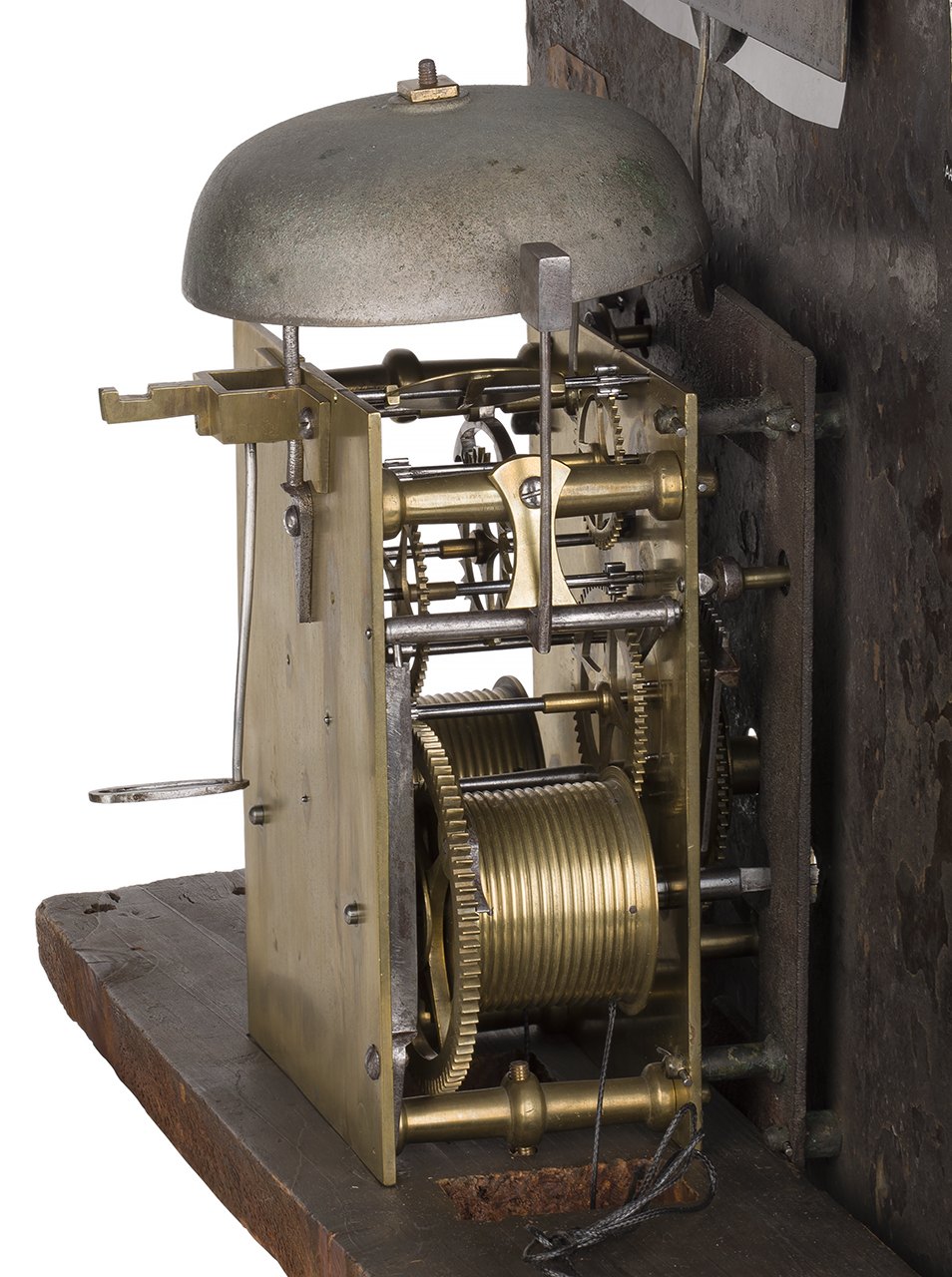
Because the anchor escapement lets the escape wheel push back slightly against the pallets (recoil), you can see the seconds hand of many longcase clocks kick back a little at each beat. That is normal. Precision regulators instead use George Graham's deadbeat escapement, in which the seconds hand stops dead.
4. Sounding the time: striking and chiming
The striking train is a separate set of wheels driven by its own weight. Each hour, a pin on the going train releases it, and a hammer strikes a bell or gong the right number of times. Two systems count the blows. Older and thirty-hour clocks often use a count wheel (locking plate), a wheel with notches at increasing intervals. Most eight-day clocks from the late 17th century onwards use rack striking, in which a stepped cam called the snail, turning with the hour hand, sets how far a toothed rack can fall, and the rack then counts the blows. Rack striking has a useful property: the strike always matches the hands. With a count wheel, the strike can get out of step with the hands if the clock is set carelessly.
Chiming clocks add a third train that plays a tune on bells, tubes or rods at each quarter. The most common tune is the Westminster chime, made famous by the Great Clock of the Palace of Westminster (Big Ben) from 1859; the melody itself was composed for the church of Great St Mary's in Cambridge in 1793. Many chiming clocks offer a choice of tunes, such as Westminster, Whittington or St Michael's, and a lever to silence the chimes at night.
Why does my grandfather clock stop?
Most stops have simple causes, and most can be checked without opening the movement. Work through them in this order.
- It is out of beat. Listen: the tick and the tock should be evenly spaced. If it limps (tick-tock … tick-tock), the escapement is giving uneven pushes and the pendulum dies away within minutes or hours. Many modern movements have a self-adjusting (friction) crutch: swing the pendulum firmly to one side, past where it wants to go, and let it find its own beat. On older clocks the crutch is bent very slightly towards the side of the longer gap; this is best left to someone experienced.
- It is not level, or it rocks. A tall clock on carpet or an uneven floor moves when you walk past. Level the case side to side and front to back, and fix it to the wall if possible; that alone cures many stops.
- Something is touching. The pendulum may be rubbing the weights (especially the chiming weight when it is low), the case back, or a loose cable. The hands may be touching each other or the glass, or the seconds hand may catch on the dial.
- A weight has run down or a cable has jumped off its pulley or barrel. Wind the clock fully and check that each cable lies neatly in the grooves of its barrel.
- It was moved. Moving a clock, even across the room, usually puts it out of beat and out of level.
- It needs cleaning. Old oil thickens and collects dust; worn pivot holes add friction. A clock that stops repeatedly after the checks above, or that only runs with a heavier weight, needs a service. Many restorers suggest a full clean and overhaul every five to ten years, depending on the clock and the room.
Why won't it chime or strike?
- Check the chime/silent lever or the selector on the dial. It is often left on 'silent'.
- The chiming or striking weight may have run down even though the time weight has not. Wind all three.
- The weights may be on the wrong pulleys: the chiming weight is usually the heaviest.
- If it strikes the wrong hour, many clocks let you move the hour hand on its own (it is a friction fit) to match the last hour struck. Do this gently.
- If it chimes at the wrong time, the minute hand may have slipped on its arbor; on many clocks it can be moved back to the 12 when the chime finishes.
Moving a grandfather clock
Moving a longcase clock safely is mostly about taking the weight out of it. Stop the pendulum and unhook it from the suspension, lifting it clear without bending the suspension spring. Unhook the weights, noting which goes where. On cable-driven clocks, keep the cables wound on their barrels with a little tension (rolled paper or foam wedged in the movement works) so that they do not tangle. Remove the hood and carry the case upright with the movement either secured or removed. On arrival, level the case first, fix it to the wall if possible, hang the weights, then the pendulum, and set it in beat.
What is my grandfather clock worth?
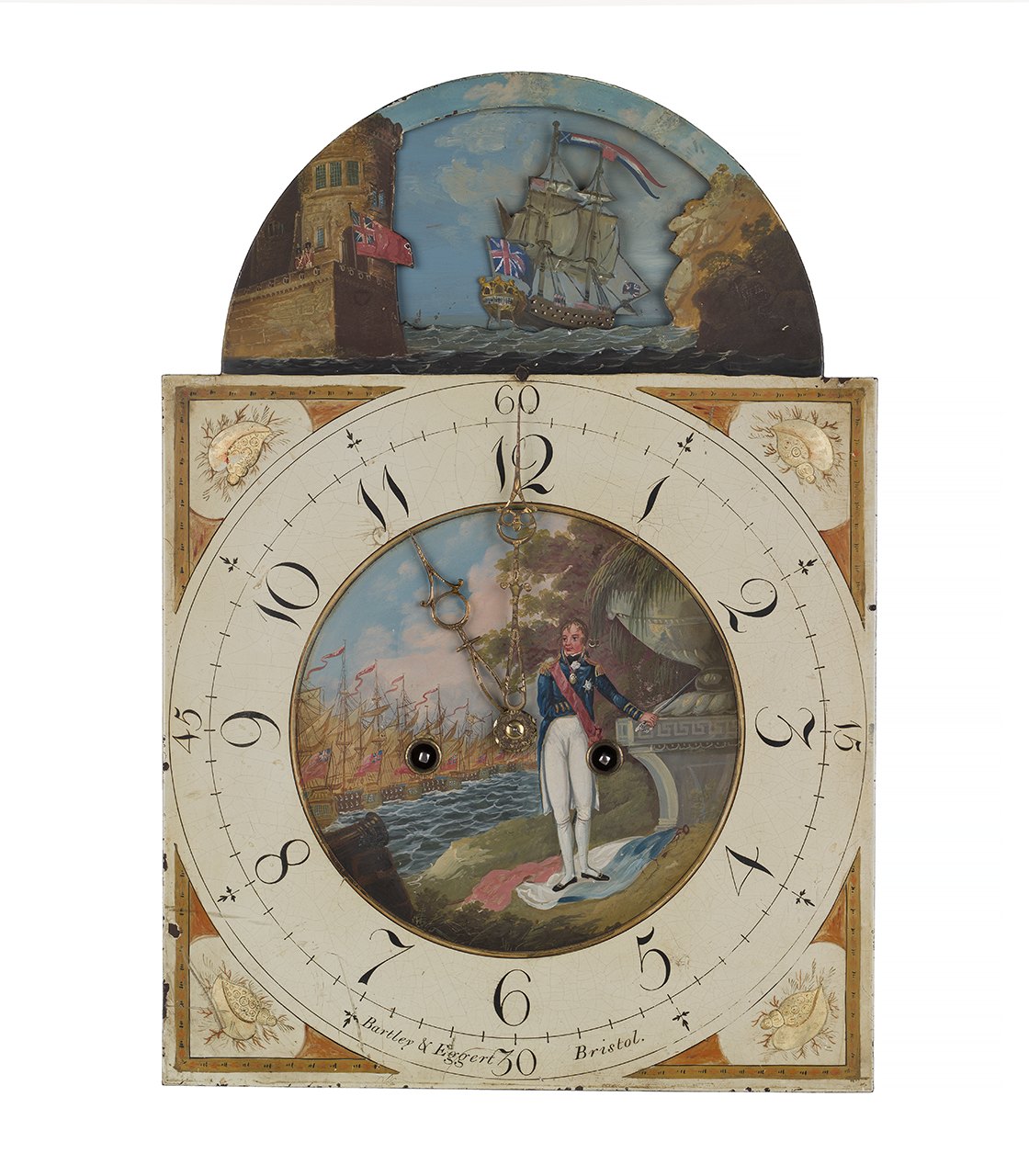
The Atlas cannot value clocks, but the same questions decide value at every auction. Who made it, and where? Is the movement original to the case, or a 'mariage' of parts from different clocks, betrayed by extra holes, a dial that does not fit the hood, or a seat board that has been altered? Is it a thirty-hour or an eight-day clock, striking or chiming? Is the dial engraved brass (generally earlier in English clocks) or painted? Has the case been cut down or refinished? Signed London clocks by well-known makers, fine marquetry and walnut cases, and complications such as moon phases and calendars all matter. The catalogue holds hundreds of longcase clocks from museums and auction archives, which is a good place to compare a clock with documented examples.
Practise
Regulate a pendulum clock in the Tools →
See it in the collection
See longcase clocks in the catalogue →
Check your understanding
Lesson quiz
0 of 5 answered