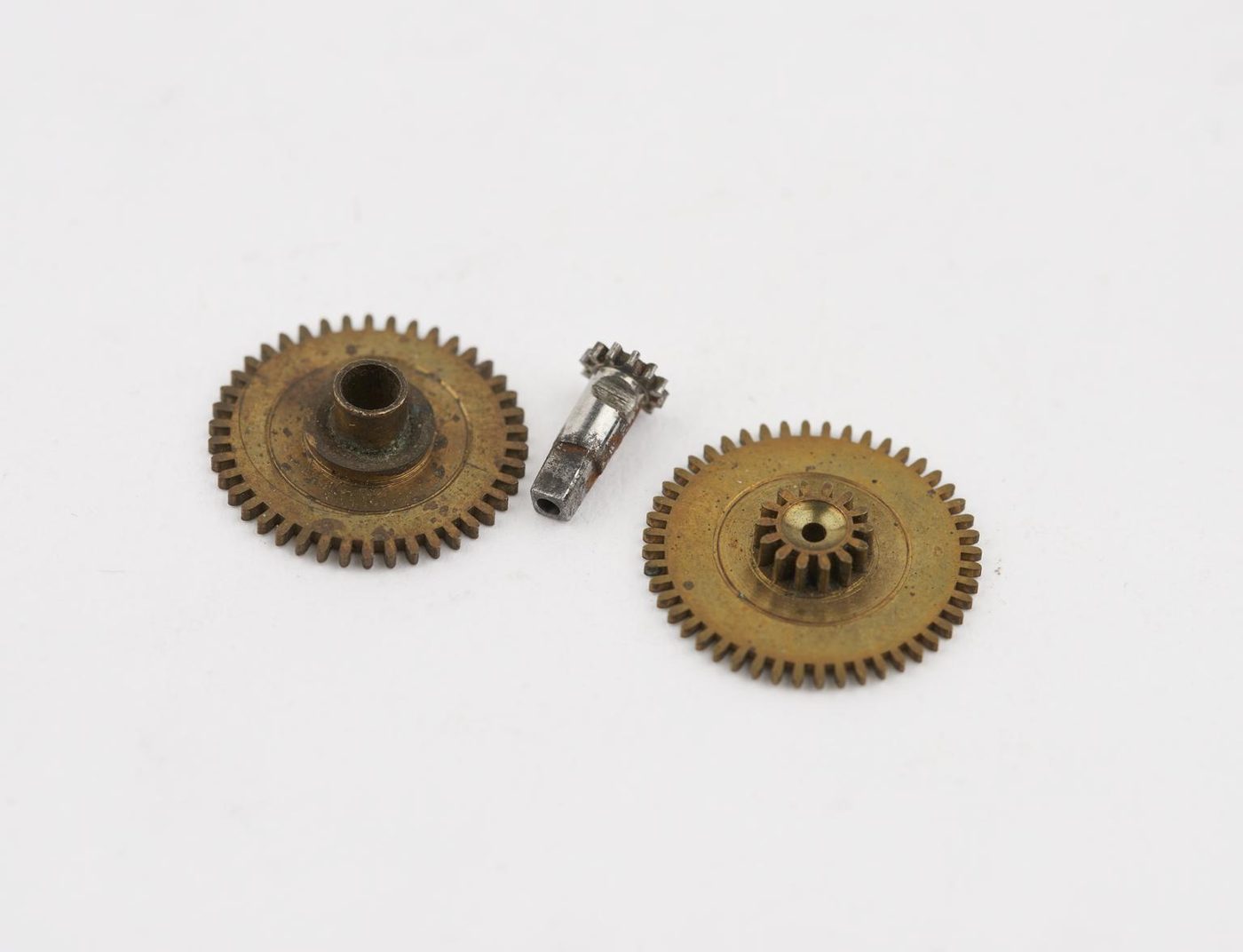
Component
Motion work
Also known as: Zeigerwerk · Minuterie
How it works
A small gear set under the dial: the cannon pinion (carrying the minute hand, friction-fitted so the hands can be set), the minute wheel and the hour wheel, together giving the 12:1 reduction between minute and hour hands.
Why it was invented
It derives the hour hand from the minute hand and allows the hands to be set without disturbing the going train.
- Invented
- c. 1680s (in watches with minute hands)
- Credited to
- No single inventor documented
- Historical period
- Early Modern Horology
History and development
Single-hand clocks and watches had no need of it; the minute hand became normal after the balance spring and pendulum improved accuracy in the late 17th century.
Related mechanisms
In the catalogue
Open in the catalogue →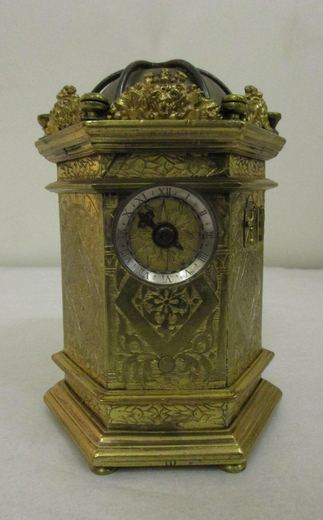
Clocks · 1580-1600
An hexagonal table clock, engraved gilt brass, French, late 16th century
Victoria and Albert Museum, London
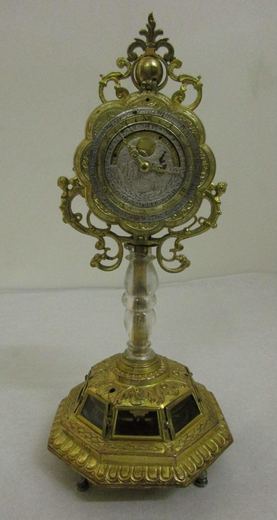
Clocks · 1600-1625
Small monstrance clock with rock crystal case South German or Austrian, early 17th Century.
Victoria and Albert Museum, London
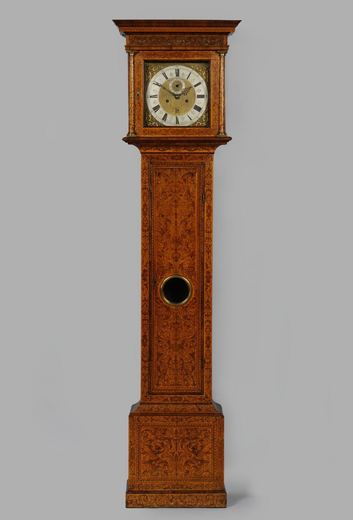
Clocks · ca. 1700
Longcase clock by James Beverly, England, ca. 1700
Victoria and Albert Museum, London
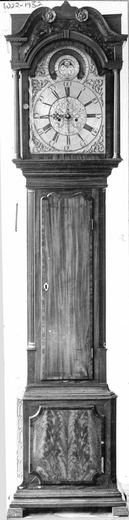
Clocks · 1760
Mahogany astronomical long case clock, made by John Benson, Whitehaven, Cumbria, about 1760
Victoria and Albert Museum, London
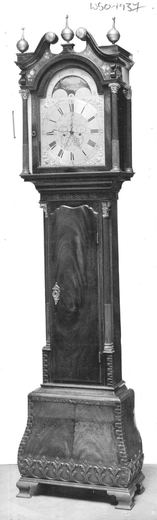
Clocks · ca. 1775
Longcase clock, England, ca. 1775
Victoria and Albert Museum, London
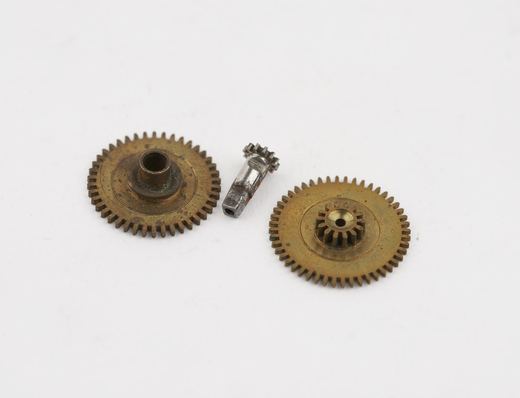
Pocket Watches · 1900-1912
Set of (3) wheels used in motion work of a watch, purchased from J.C. Stevens, Covent Garden, London, United Kingdom, 1900-1912
Science Museum Group, London
Records are linked when the holding institution's description names this mechanism; check each source record for confirmation.