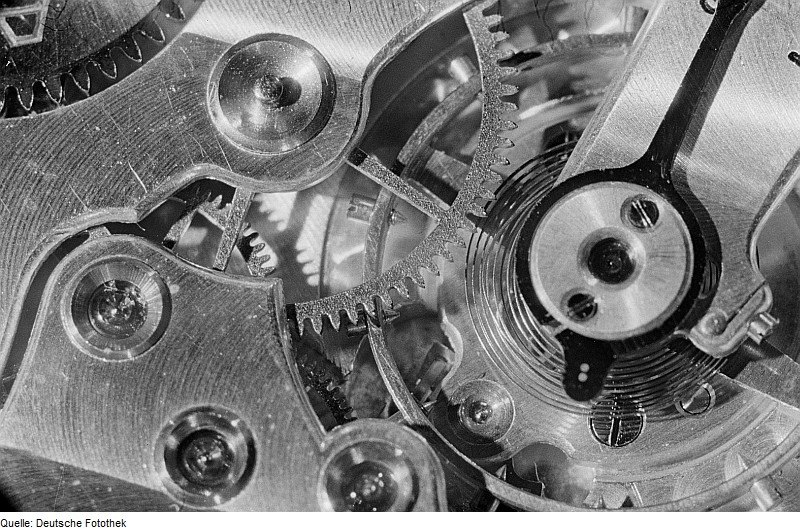
Component
Gear train (going train)
Also known as: Wheels and pinions · Räderwerk · Rouage
How it works
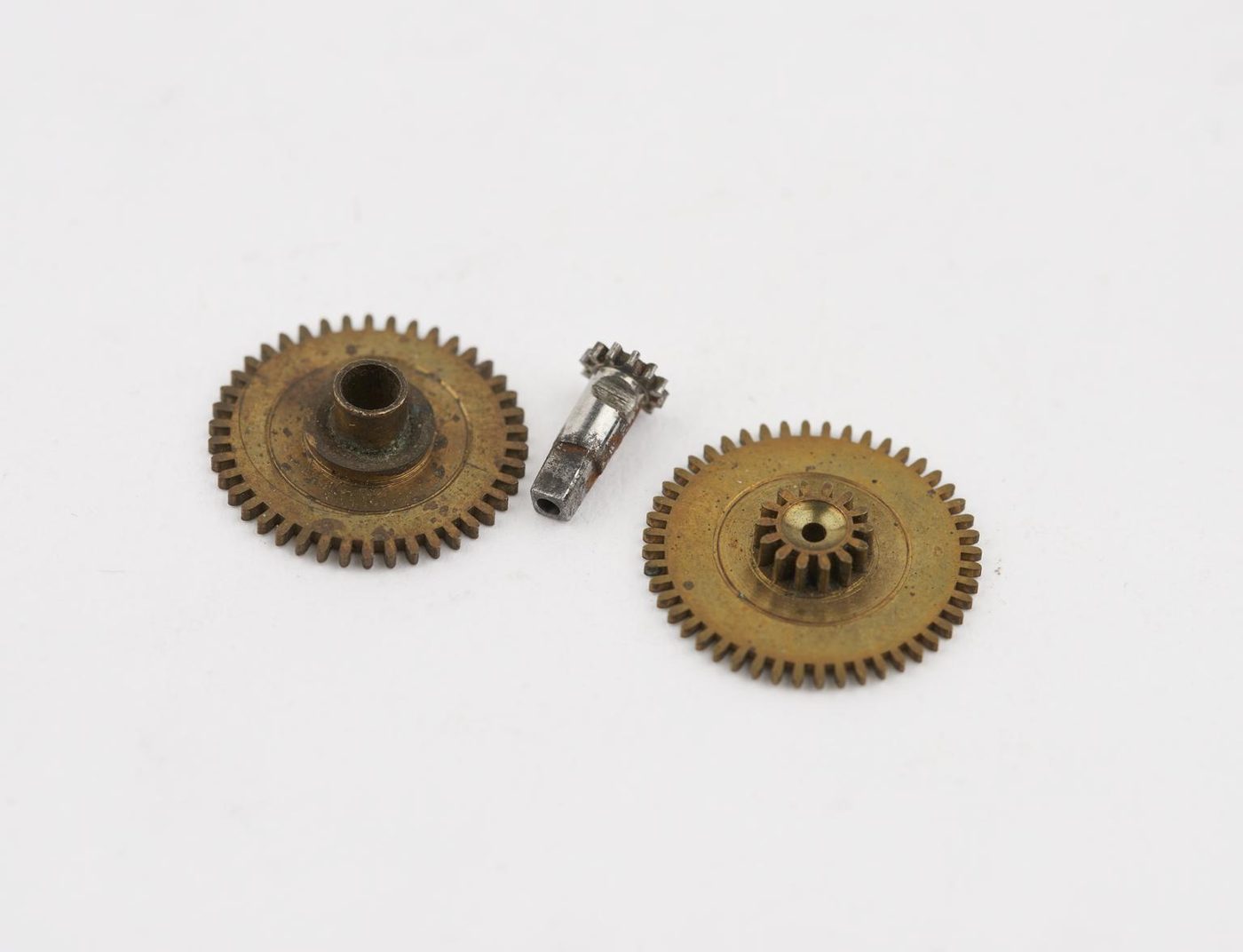
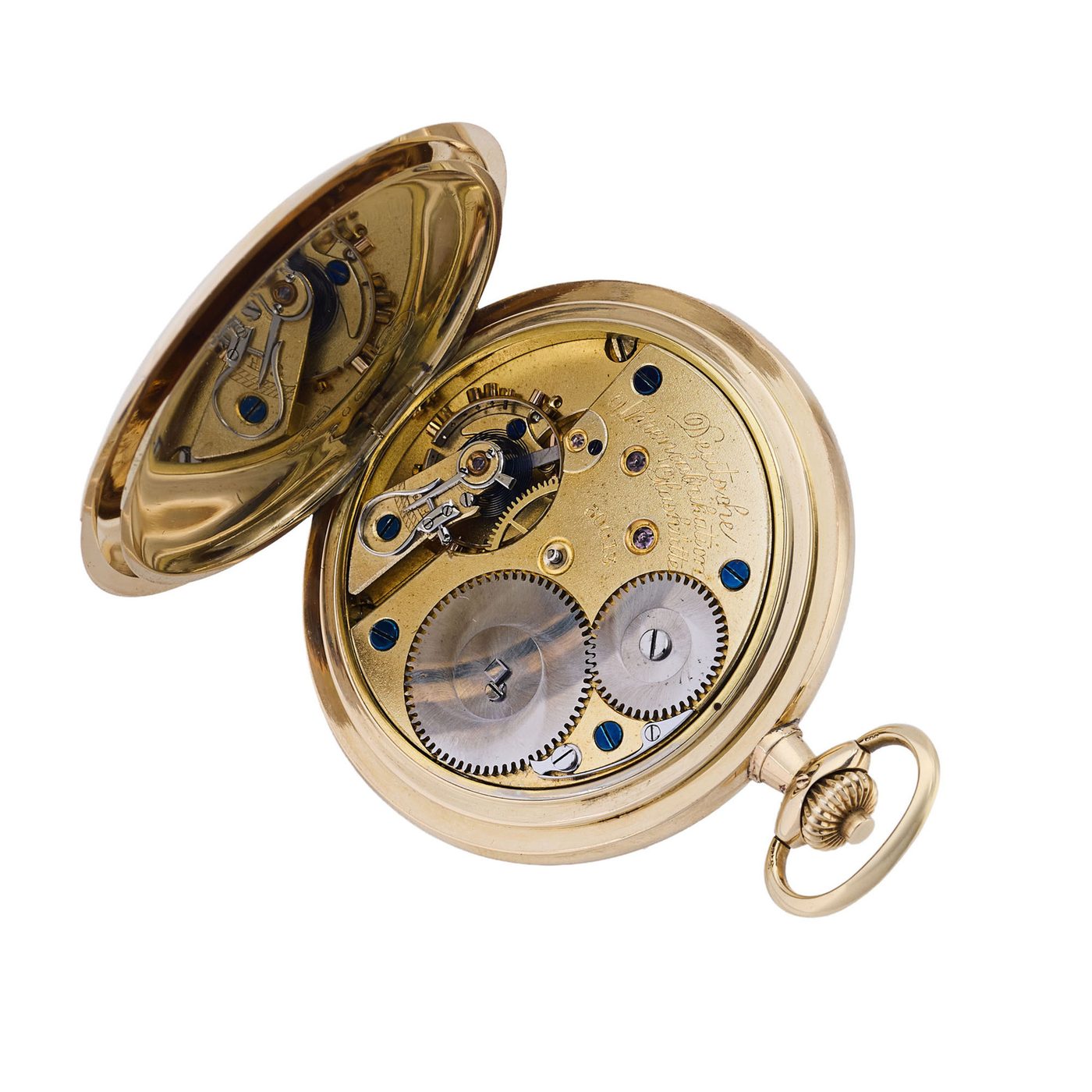
A series of wheels (large, many teeth) driving pinions (small, few 'leaves') transmits and multiplies the motion of the barrel to the escapement. In a typical watch the centre wheel turns once an hour, the fourth wheel once a minute (carrying the seconds hand) and the escape wheel several times a minute.
Why it was invented
It converts the slow, powerful turning of the barrel into the fast, gentle motion the escapement needs, and sets the ratios that make the hands read hours, minutes and seconds.
- Invented
- c. 1300 (mechanical clock)
- Credited to
- No single inventor documented
- Historical period
- Medieval Period
- Example ratio
- Centre 1 rev/h → fourth wheel 60 rev/h (×60)
- Rule of thumb
- Pinion leaves: 6–12 in watches
History and development
Clockmakers cut teeth by hand with files until wheel-cutting engines became common in the 18th century; epicycloidal tooth forms for watch trains were analysed by Camus and others in the 18th century. Industrial production standardised train layouts — the 'Swiss lever' 4-wheel train, the small seconds at six o'clock, and the indirect or direct centre seconds.