
Beginner · Lesson 5 of 10 · 16 min read
How a mechanical watch works: hand-wound and automatic
A mechanical watch runs on a coiled spring, a train of wheels and a tiny oscillating balance. This lesson follows the energy from the crown to the hands, explains what an automatic rotor adds, and answers the questions people most often ask before buying or winding one.
By the end of this lesson you will be able to:
- Follow the path of energy from mainspring to hands
- Explain what the balance, hairspring and lever escapement each do
- Describe how automatic winding works and how it differs from hand winding
- Give practical advice on winding, accuracy and care
Open the back of a mechanical watch and you see a small, busy city: a toothed wheel turning steadily, a wheel with a spoked rim swinging back and forth several times a second, and perhaps a half-moon weight that swings freely when you move your wrist. Nothing in it is electronic. Every movement of the hands comes from energy you put in, either by turning the crown or by wearing the watch. This lesson follows that energy step by step.
1. Power: the mainspring and barrel
The energy store is the mainspring, a long ribbon of hardened alloy coiled inside a toothed drum called the barrel. Winding coils the spring tightly around the barrel's central arbor; as it unwinds, it turns the barrel, and the teeth on the barrel's rim drive the rest of the movement. Almost all modern watches use this going barrel. Older English watches often used a fusee and chain to even out the spring's pull, a mechanism explained in the lesson on constant force.
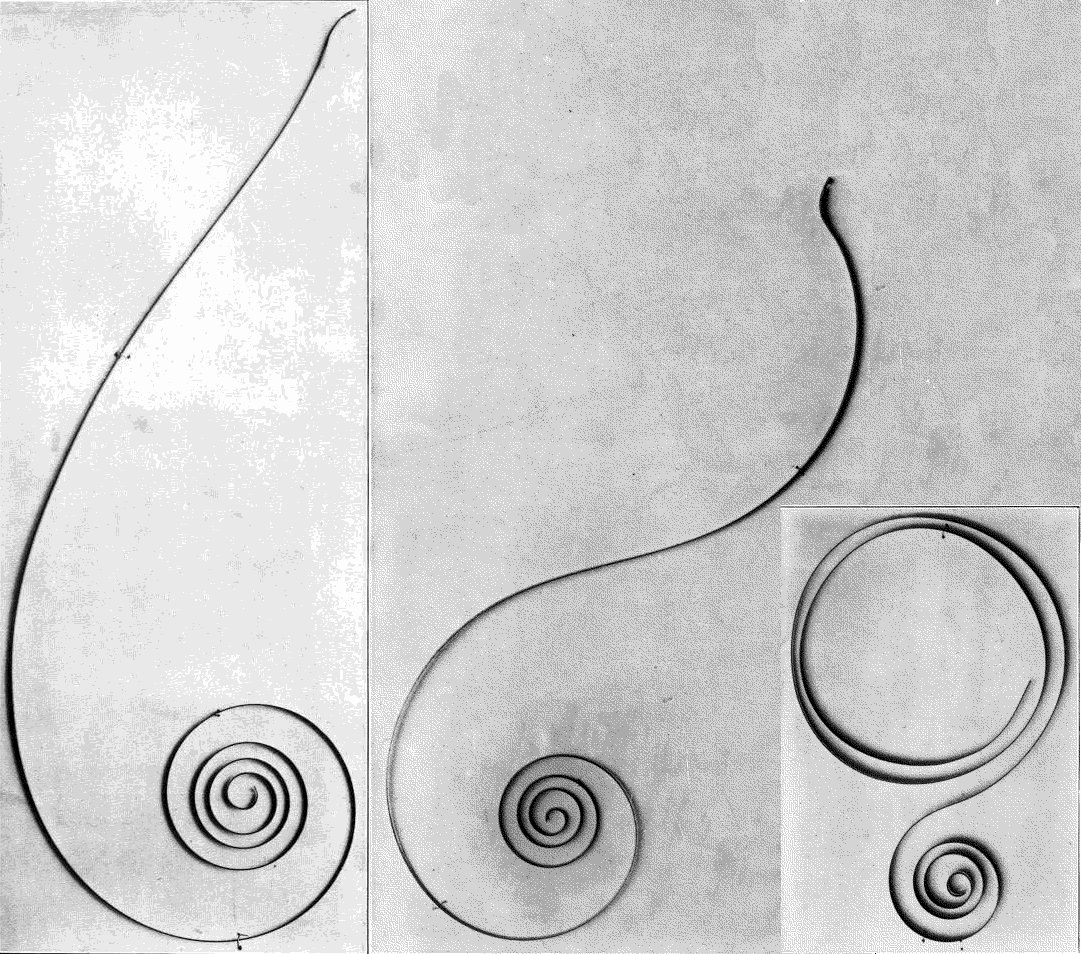
How long a fully wound watch runs is its power reserve. Many classic hand-wound and automatic calibres run for about 40 hours; some modern movements are designed for three days or more by using longer springs, two barrels in series or more efficient trains. A power-reserve indicator on the dial, where fitted, shows how much energy remains.
2. Transmission: the gear train
From the barrel, energy passes through a chain of wheels and pinions (small, many-leaved gears). Each step multiplies speed. In a typical layout the centre wheel turns once an hour and carries the minute hand; the third wheel turns faster; the fourth wheel turns once a minute and often carries the seconds hand; the escape wheel turns faster still. The hour hand is driven separately by the motion work, a small 12-to-1 reduction under the dial.
| Part | What it does | Typical speed |
|---|---|---|
| Barrel | Holds the mainspring and drives the train | About 1 turn every 6–8 hours |
| Centre wheel | Carries the minute hand (in a centre-seconds layout, still turns once an hour) | 1 turn per hour |
| Third wheel | Intermediate step-up | Several turns per hour |
| Fourth wheel | Carries the small seconds hand in many watches | 1 turn per minute |
| Escape wheel | Delivers impulses to the balance through the lever | Several turns per minute |
| Motion work | Reduces minute-hand motion 12:1 for the hour hand | Hour hand: 1 turn per 12 hours |
Wheels turn on pivots set in jewels — synthetic rubies, made cheaply after Auguste Verneuil's flame-fusion process was announced in 1902. Jewels reduce friction and wear at the points that matter most. A jewel count on the movement is a claim worth checking rather than a measure of quality: a well-made 17-jewel movement has every functional jewel it needs.
3. Regulation: balance, hairspring and escapement
Left to itself, the mainspring would spin the train in seconds. The escapement stops that. In nearly every modern mechanical watch it is the Swiss lever escapement: an escape wheel with club-shaped teeth, a pivoted lever (the pallet fork) with two jewelled pallets, and a balance wheel with a fine spiral hairspring. The balance swings one way, a pin on it flicks the lever, the lever unlocks the escape wheel for one tooth, the tooth pushes the lever, and the lever passes a small push back to the balance. Then everything locks again until the balance returns. Each unlocking is one beat, the tick you hear.
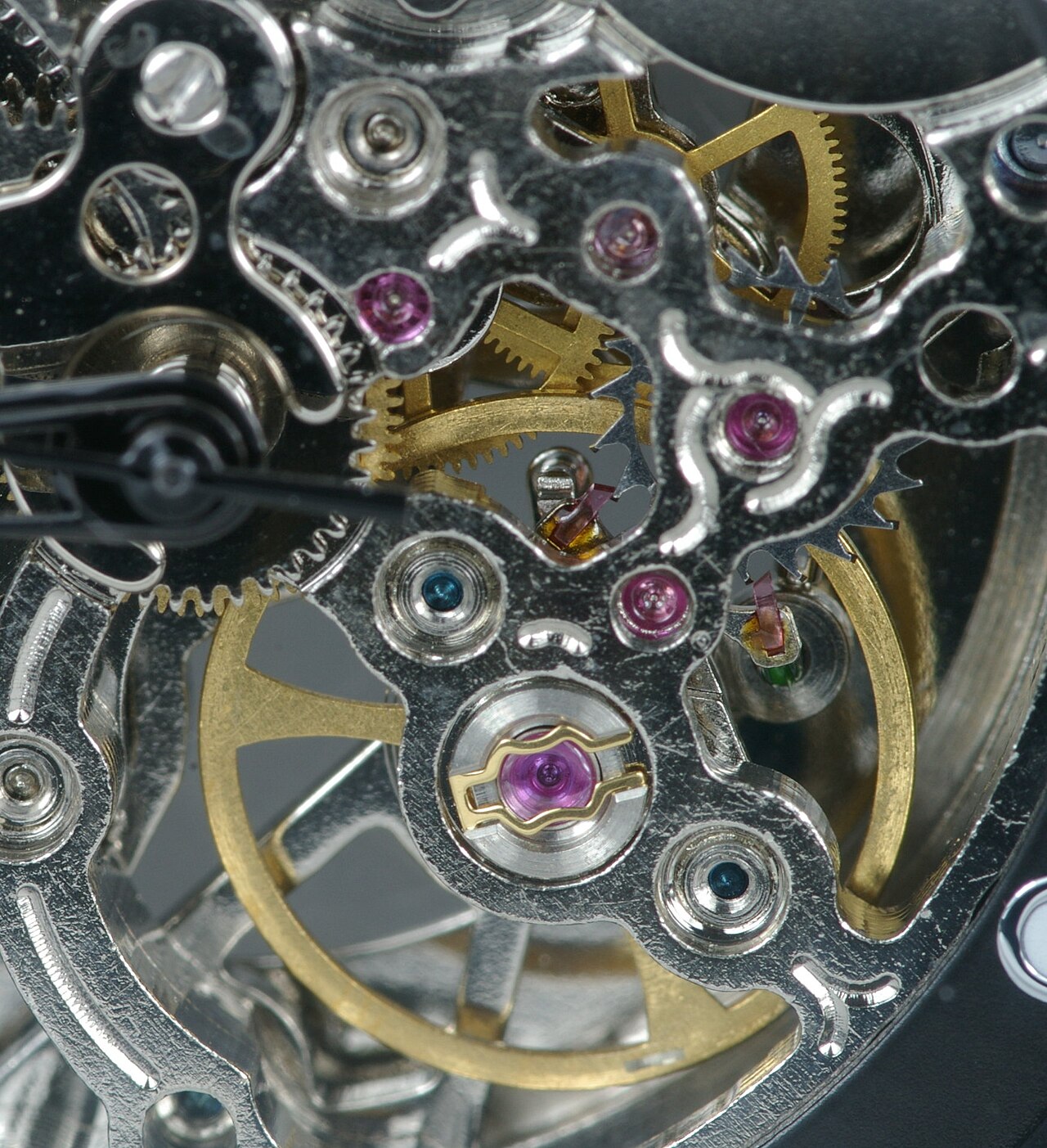
The balance and hairspring are the timekeeping heart. Like a pendulum, the balance has a natural rate of swing set by its moment of inertia and the stiffness of the spring. Watches are described by the number of beats per hour: 18,000 (2.5 Hz) was common in older watches, 21,600 (3 Hz) and 28,800 (4 Hz) in most modern ones, and 36,000 (5 Hz) in a few high-beat calibres. A faster balance is less disturbed by knocks and wrist movement but uses more energy.
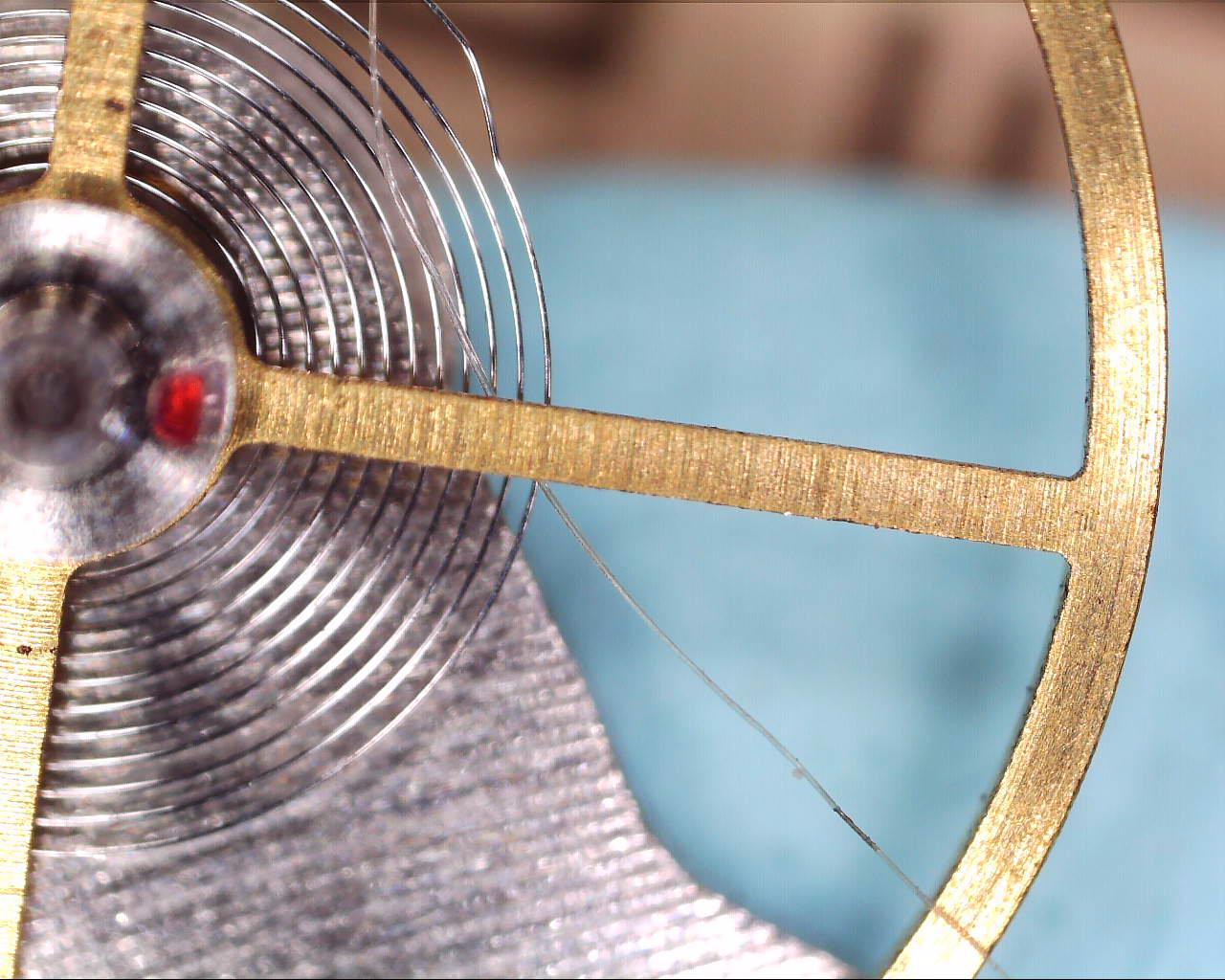
Fine adjustment is done with a regulator that slightly changes the active length of the hairspring, or in many higher-grade watches by turning small screws or weights on the balance rim itself. Shock protection — sprung settings for the balance pivots, of which Incabloc (1934) is the best known — lets the delicate balance staff survive the knocks of daily wear.
4. Winding and setting: the crown
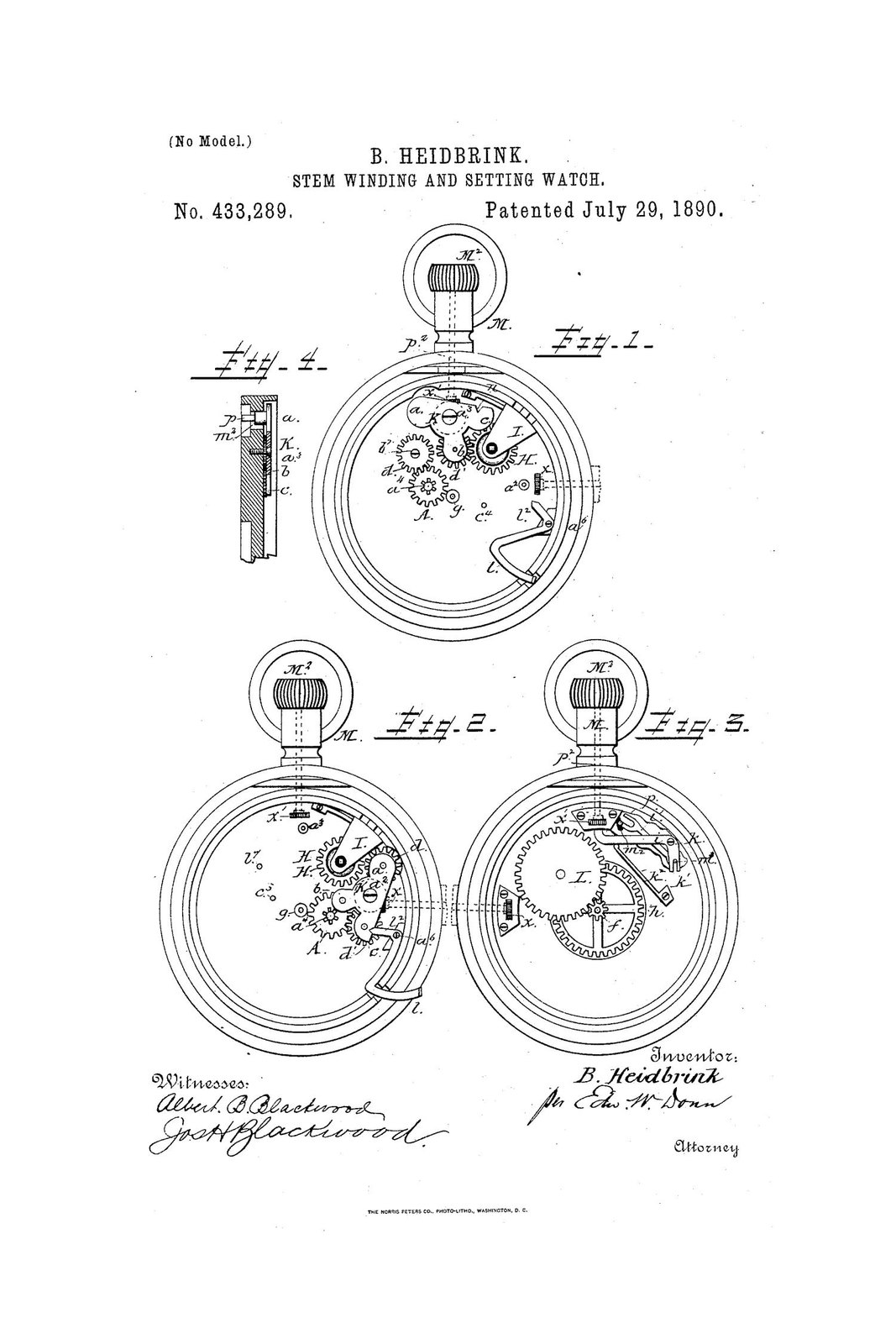
Before the mid-nineteenth century most watches were wound and set with a separate key. Keyless work, operated through the crown, spread from the 1840s onwards; Adrien Philippe's 1845 design, later used by Patek Philippe, is among the best known. Pull the crown out and a sliding clutch disconnects winding and engages the motion work so the hands can be set. Many modern watches also stop the balance while the crown is pulled out (hacking seconds), so the seconds hand can be synchronised with a time signal.
5. What an automatic adds
An automatic, or self-winding, watch is still a mechanical watch. It simply adds a weight that swings as the wearer moves and winds the mainspring through a set of reduction wheels. Weighted self-winding pocket watches were made in the late eighteenth century; Abraham-Louis Perrelet is usually credited, though the attribution is debated and Hubert Sarton described a rotor design in 1778. John Harwood's self-winding wristwatch, patented in 1923–24 and sold from 1928, used a weight swinging between buffers. Rolex introduced the Oyster Perpetual's full-circle rotor in 1931, and after the Second World War ball-bearing rotors winding in both directions became standard.
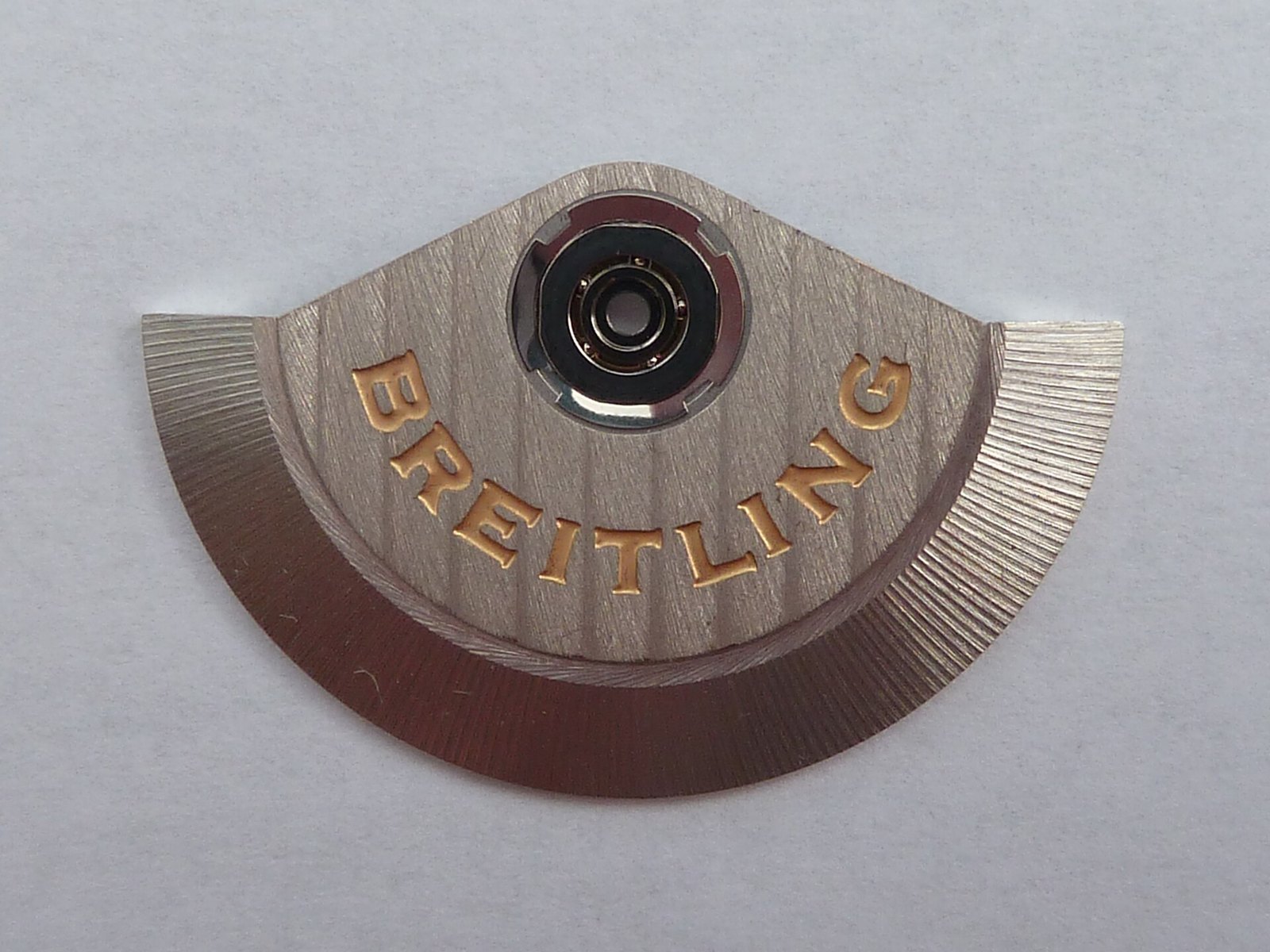
Because an automatic can never be wound by hand to a stop, its mainspring is fitted with a slipping bridle: when fully wound, the outer end of the spring slips around the barrel wall instead of breaking or overpowering the movement. That is why you cannot overwind an automatic.
| Hand-wound | Automatic | |
|---|---|---|
| Energy source | Turning the crown, usually daily | Wrist movement (most can also be hand-wound) |
| Thickness | Often thinner — no rotor | Rotor adds height |
| View of the movement | Unobstructed through a display back | Partly covered by the rotor |
| If unworn | Stops when the reserve runs out | Also stops; a watch winder or a few crown turns restarts it |
| Typical use | Dress watches, classic designs, collectors who enjoy winding | Daily wear, sports and diving watches |
How accurate is a mechanical watch?
A mechanical watch's rate depends on position, temperature, the state of wind and the condition of its oil. Certified chronometers tested by the Swiss COSC must average between −4 and +6 seconds a day across several positions and temperatures; many good watches keep within about 5–10 seconds a day in normal wear. A watchmaker measures rate, amplitude and beat error on a timing machine, and the Atlas tools page has calculators for each.
- Wind a hand-wound watch at about the same time each day, gently, until you feel resistance — then stop.
- Set the date away from midnight on watches with a calendar; avoid changing it while the date mechanism is engaged (roughly 21:00–03:00 on many calibres).
- Keep it away from strong magnets, which can make the hairspring's coils stick together and the watch run very fast.
- Water resistance depends on gaskets, which age; have it checked before swimming.
- Servicing intervals vary by maker; a watch running erratically or with a much shorter reserve is due for one.
Practise
Change balance inertia and gear teeth in the Lab →
See it in the collection
See wristwatches in the catalogue →
Check your understanding
Lesson quiz
0 of 4 answered