
Beginner · Lesson 8 of 10 · 15 min read
How to open a pocket watch without damaging it: snap backs, hinges, screw cases and hunter covers
Most damage to old watches happens the moment someone tries to open them. How to recognise the kind of case you have — snap-on, hinged, screw, hunter, pair case or front-opening — open it with the right tool, reach the winding square or setting lever, and know when to stop and take it to a watchmaker.
By the end of this lesson you will be able to:
- Recognise the main kinds of pocket-watch case from the outside
- Open snap-on, hinged and screw backs and hunter covers safely
- Find the winding and setting points of key-wound and lever-set watches
- Read the marks inside a case and know when not to open a watch
There are good reasons to open a pocket watch. The maker's name and serial number are usually on the movement, the case maker's marks and hallmarks are inside the back, a key-wound watch can only be wound with its back open, and a railway watch cannot be set without opening its front. But a watch case is a precision fitting made of thin gold or silver, and it is easily dented, scratched or sprung out of shape. Watchmakers see the same damage again and again: knife cuts around the edge of a case back, crushed hinges, covers that no longer close and movements scratched by a slipping screwdriver.
The secret is simple: work out how the case opens before you touch it. Pocket-watch cases open in only a handful of ways, and each one shows itself from the outside if you know what to look for. This lesson goes through them in turn, from the most common to the most unusual, and ends with what to look for once the watch is open.
Before you start
- Work sitting at a table covered with a soft cloth, in good light, so that a dropped watch or a loose crystal has nowhere to fall.
- Wash and dry your hands; skin oils mark polished gold and silver and can leave fingerprints that etch into steel parts.
- Have the right tools ready: a case knife (a short blunt blade made for opening watches), a wooden cocktail stick or plastic opener, a soft rubber ball or a rubber jar-opening pad for screw cases, and a loupe if you want to read marks.
- Never use a kitchen knife, a screwdriver or a coin. They slip, and when they slip they cut the case or plunge into the movement.
- Do not breathe on or touch the movement once it is exposed, and close the case again promptly to keep out dust.
Step 1: recognise the case
Turn the watch over and look closely at the edge of the back, where it meets the middle of the case, and at the edge of the front bezel round the crystal. You are looking for three things: a small hinge, a tiny projecting lip or nick for a fingernail, or fine milled grooves and a flat seam that would suggest a thread. The table below shows what each sign usually means.
| Case | How to recognise it | How it opens | Common mistake |
|---|---|---|---|
| Snap-on (press-fit) back | No hinge; a thin seam all round; a small lip or flat nick at one point | Lift at the lip with a fingernail or case knife; the back snaps off | Prising all round the seam, which leaves cuts |
| Hinged back | A small hinge on the edge; a lip on the opposite side | Lift at the lip; the back swings open on the hinge | Prising on the hinge side, which bends the hinge |
| Screw back or screw bezel | No hinge and no lip; often a finely milled edge or a very tight seam | Grip with a rubber pad and turn anticlockwise | Trying to prise it, which only scratches |
| Hunter front cover | A solid lid over the dial; crown usually at 3 o'clock relative to the dial | Press the crown; the lid springs open | Pulling the lid open with a nail |
| Inner dust cover (cuvette) | Found under a hinged back: a second, thinner cover with its own lip | Lift at its own lip once the outer back is open | Thinking the watch has no movement inside |
| Pair case | A plain or decorated outer case; the watch inside is a complete watch in its own case | Open the outer case at its catch or lip and lift the watch out | Forcing the inner case open while it is still in the outer |
| Front-opening (hinged movement) | Back has no lip, or only a winding hole; older English and continental watches | Open the front bezel; the movement swings out on a hinge, released by a small catch | Prising the back, which is not meant to open |
Snap-on and hinged backs
These are the commonest backs on nineteenth- and twentieth-century pocket watches. On a hinged back the hinge is easy to see as a short raised section on the edge; the lip to open it is directly opposite. On a snap-on back there is no hinge, and the lip may be very small — sometimes no more than a flat spot where the back slightly overhangs the middle. Find it before you begin: running a fingernail round the seam will usually catch it.
- Hold the watch face down in your palm on the cloth, with the lip towards you.
- Slide a fingernail or the edge of a case knife into the lip only, keeping the blade almost flat against the case.
- Twist the blade gently, as if turning a key, rather than levering down; the back should lift with a small click.
- On a hinged back, swing it open no further than it wants to go. Forcing it past its stop strains the hinge pin.
- To close, line the back up, and press it home with the flat of your thumb over the lip — not with the watch's dial on a hard surface.
Inner dust covers: the cuvette
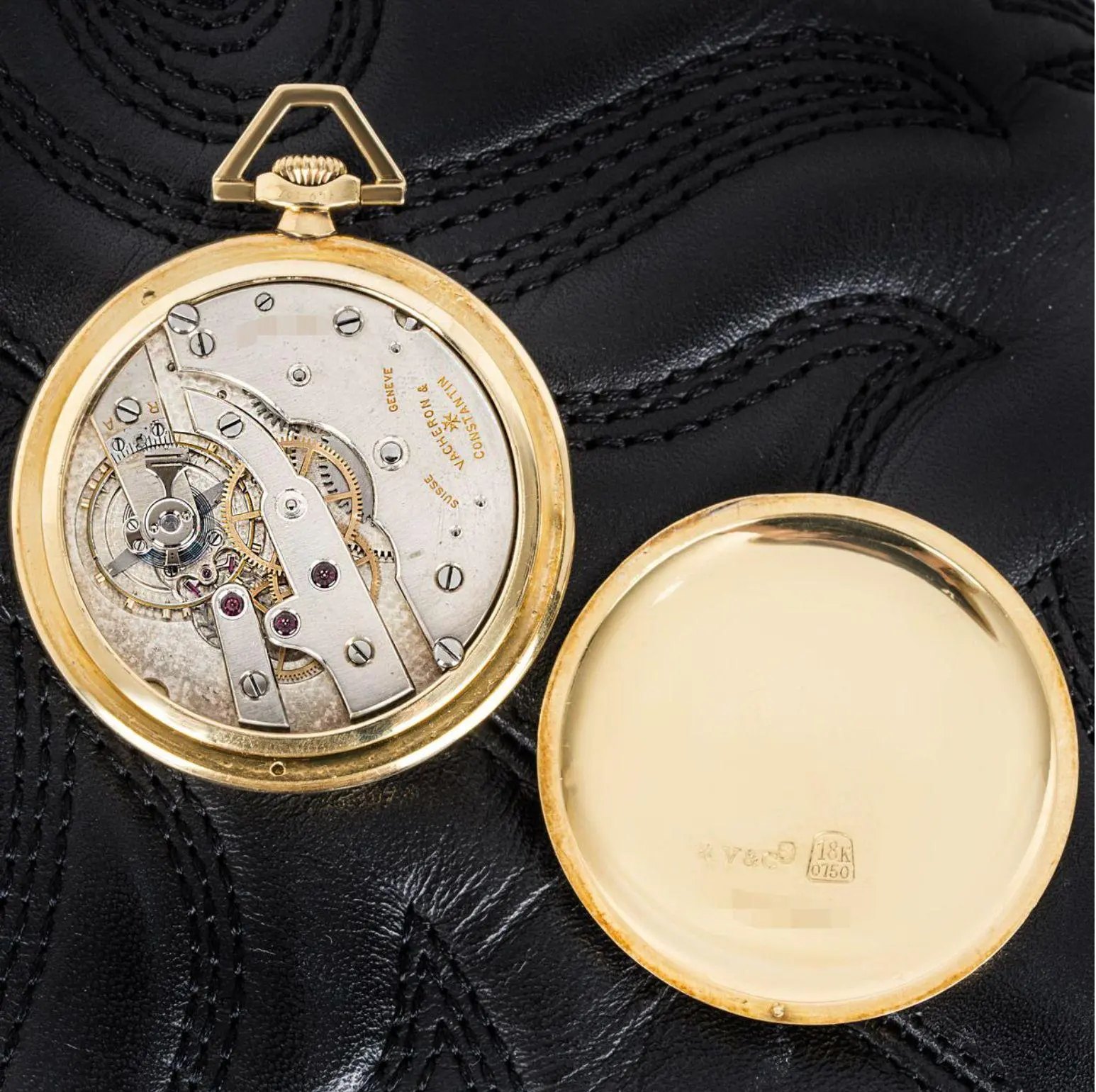
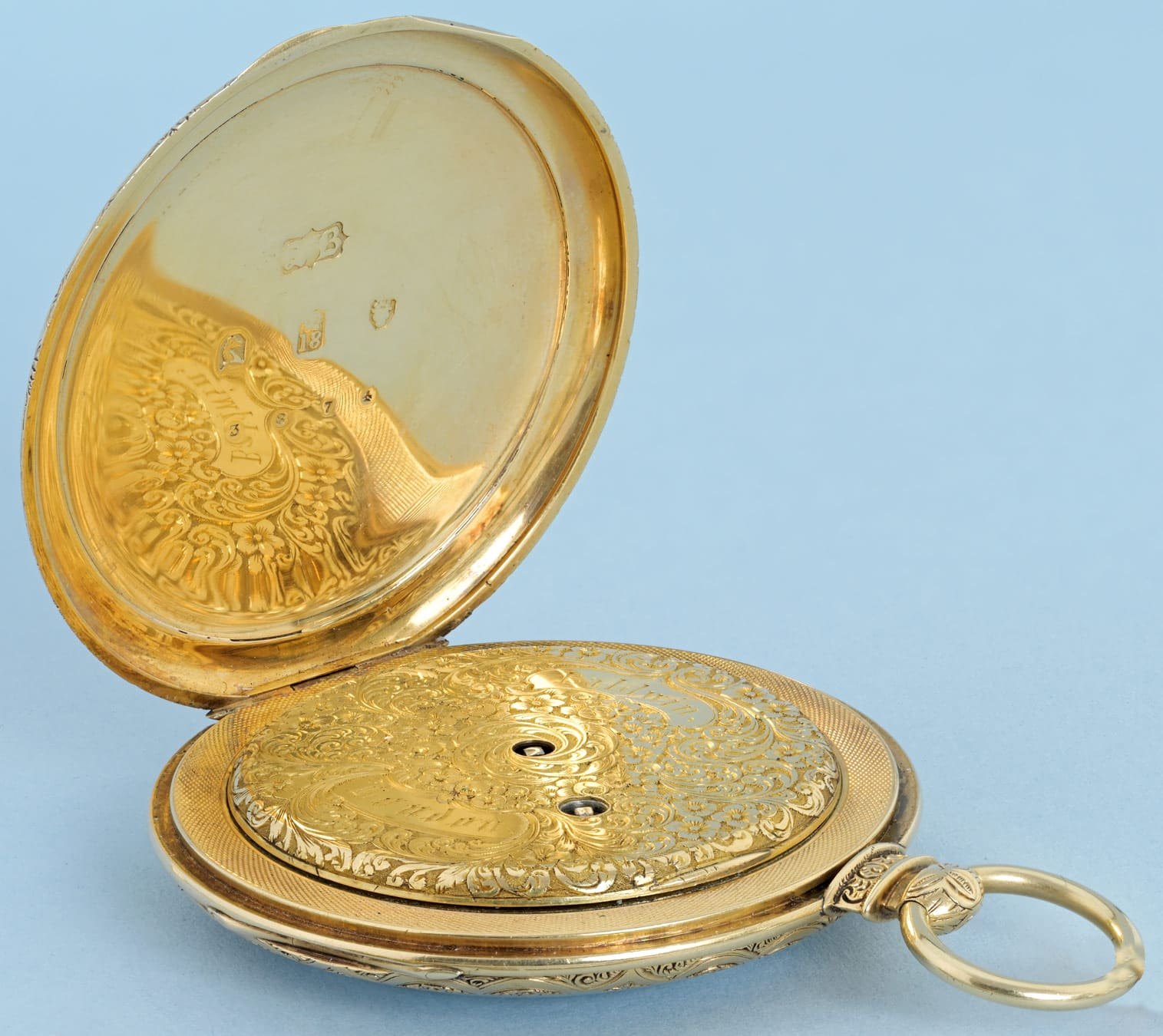
Many good watches, especially Swiss, French and American watches of the nineteenth and early twentieth centuries, have a second cover inside the back, called a cuvette or dust cover (Americans often say 'dome'). People opening a watch for the first time are often puzzled to find what looks like a blank gold or silver disc instead of the movement. The cuvette is usually hinged at the same side as the back and has its own small lip. It is often engraved with the maker's or retailer's name, a serial number, prize medals or the word 'Swiss' or 'Remontoir', and on key-wound watches it has holes through which the watch is wound and set without exposing the movement.
Screw backs and screw bezels
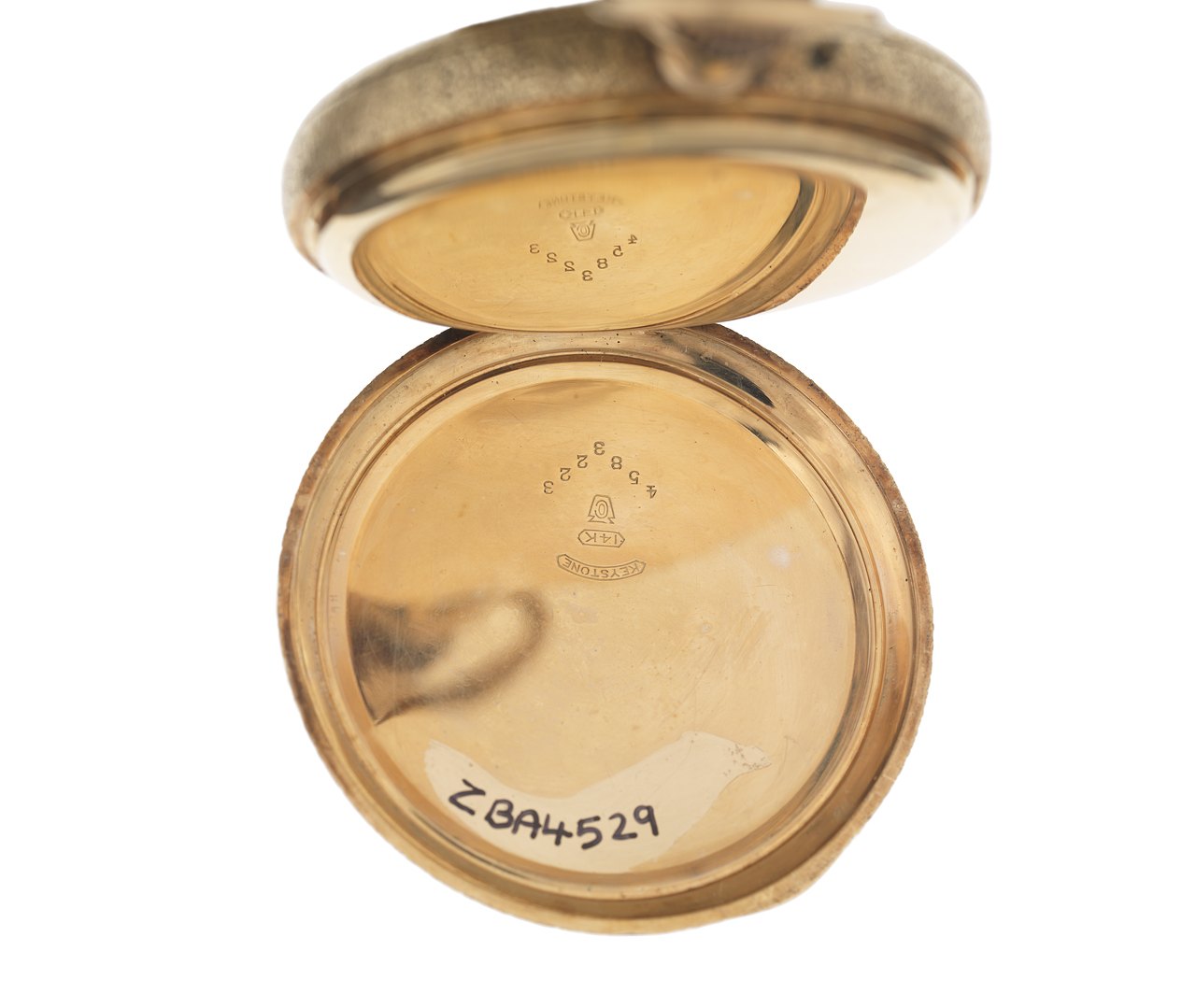
From the late nineteenth century many cases, particularly American gold-filled and silver cases, were made with a threaded back and bezel to keep out dust. A screw back has no hinge and no lip. Its edge may be finely milled for grip, and the seam between back and middle is very tight. Do not try to prise it: lay the watch face down on the cloth, press a soft rubber ball or a rubber pad firmly on the back and turn anticlockwise. Old threads can be stiff with dirt; if it does not move with firm hand pressure, stop rather than reaching for pliers. When refitting, turn it clockwise gently until it seats — over-tightening strips the thread in thin cases.
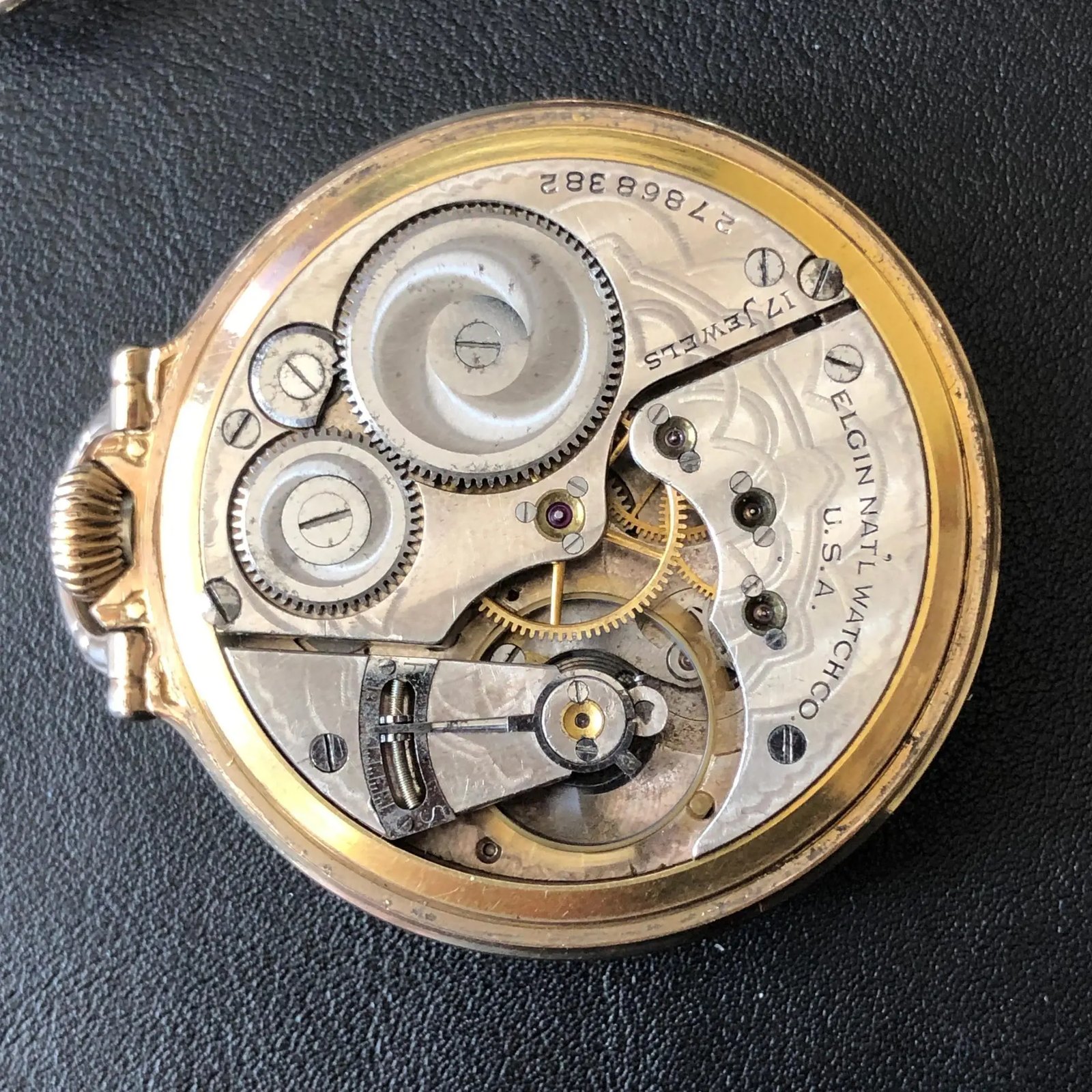
Some American cases go further and have no opening back at all for reaching the movement. In these swing-out or swing-ring cases the front bezel and crystal are removed, and the movement, held in a ring, swings out from the front. If the back of an American watch will neither prise nor turn, try the front.
Hunter covers
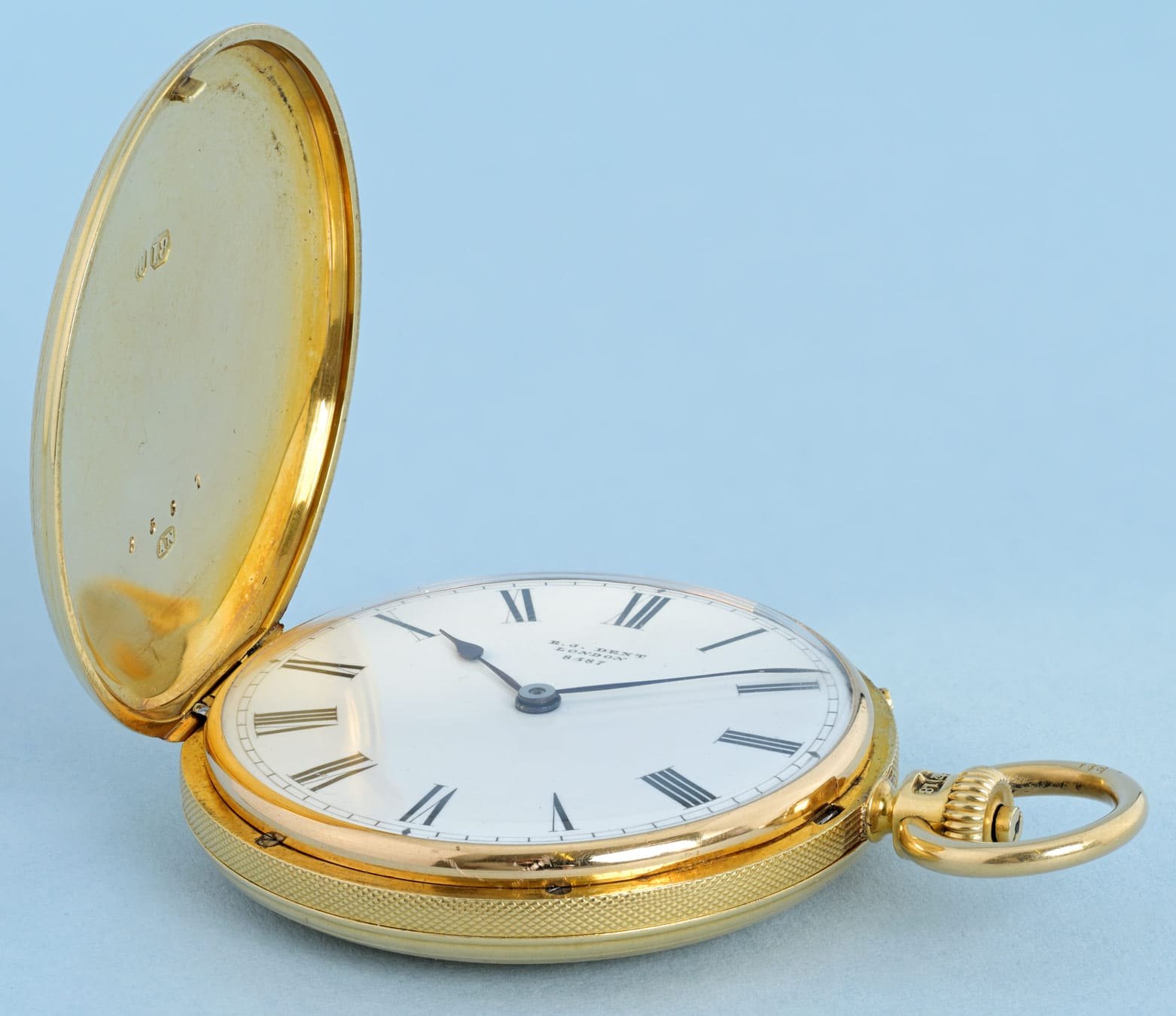
A hunter, or hunting case, has a solid hinged lid over the dial. It is opened by pressing the crown, which pushes a catch and lets a spring lift the lid. The right way to handle it protects both the spring and the catch, which wear quickly if the lid is snapped shut.
- Hold the watch in your palm with the lid upwards and your thumb lightly over it.
- Press the crown firmly; let the lid rise under your thumb rather than flying open.
- To close, press the crown in again and hold it, lower the lid onto the rim, then release the crown so the catch engages without being forced over.
- Never wind or set a hunter with the lid open and swinging; it can be bent back on its hinge.
Pair cases and front-opening watches
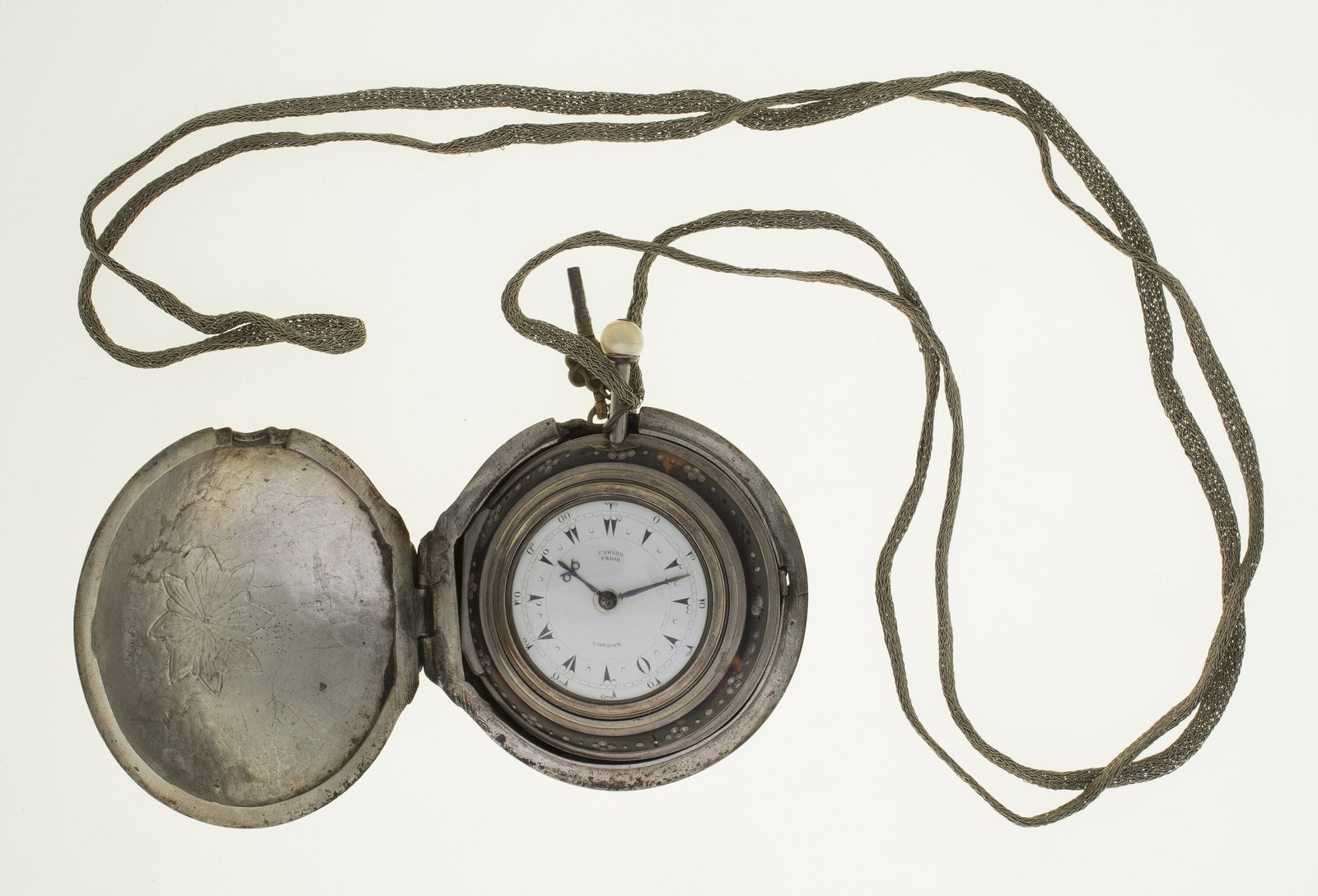
Until the early nineteenth century most English watches, and many Dutch, Swiss and French watches made for export, were pair-cased: the watch in its own inner case was carried inside a separate outer case, which could be plain silver or gold, pierced, enamelled, or covered in leather, tortoiseshell or shagreen. Watches made for the Turkish market often had three or even four cases. To open one, find the catch or lip of the outer case, usually beside the pendant, open it and lift the inner watch out by its bow. Do not try to open the inner case while it is still inside the outer.
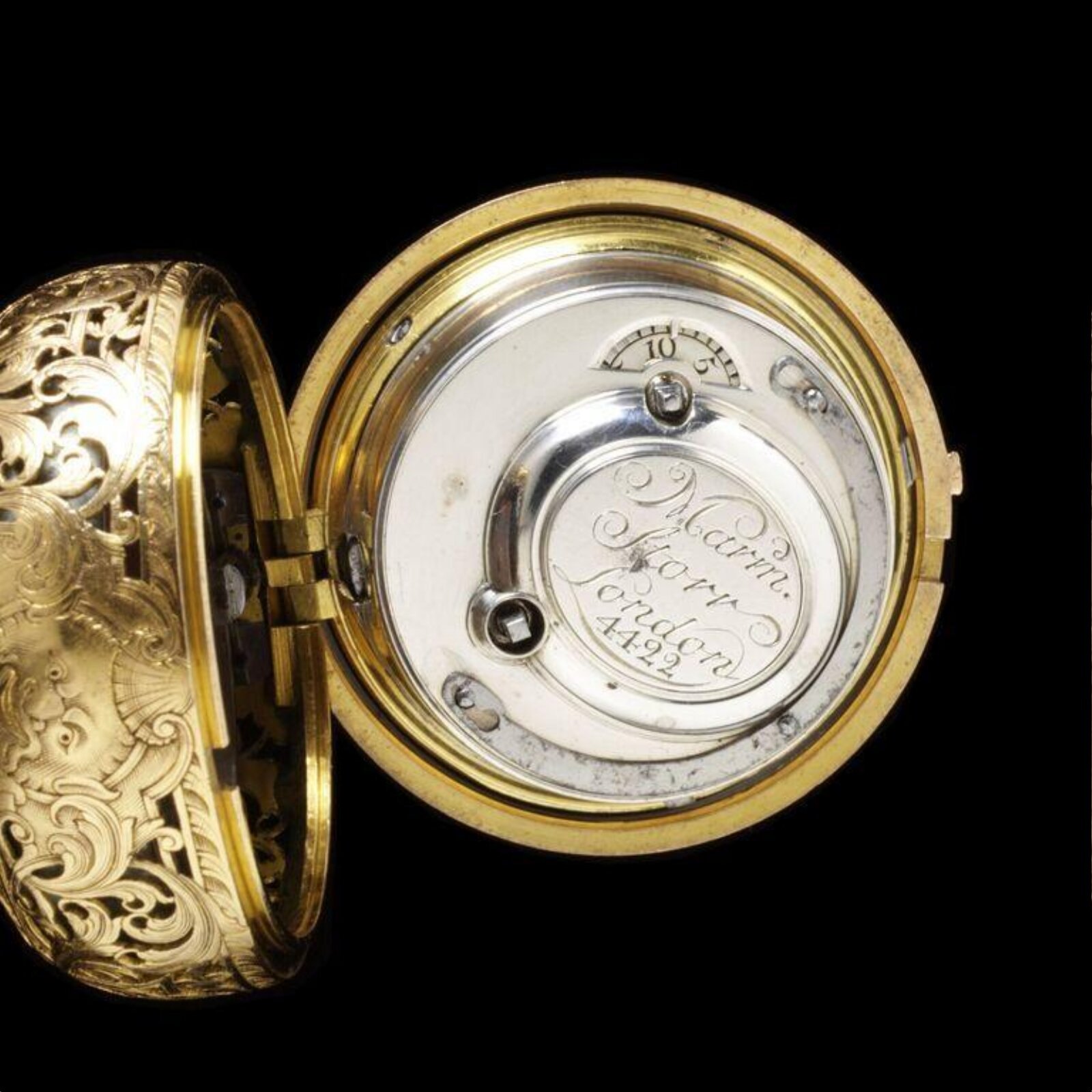
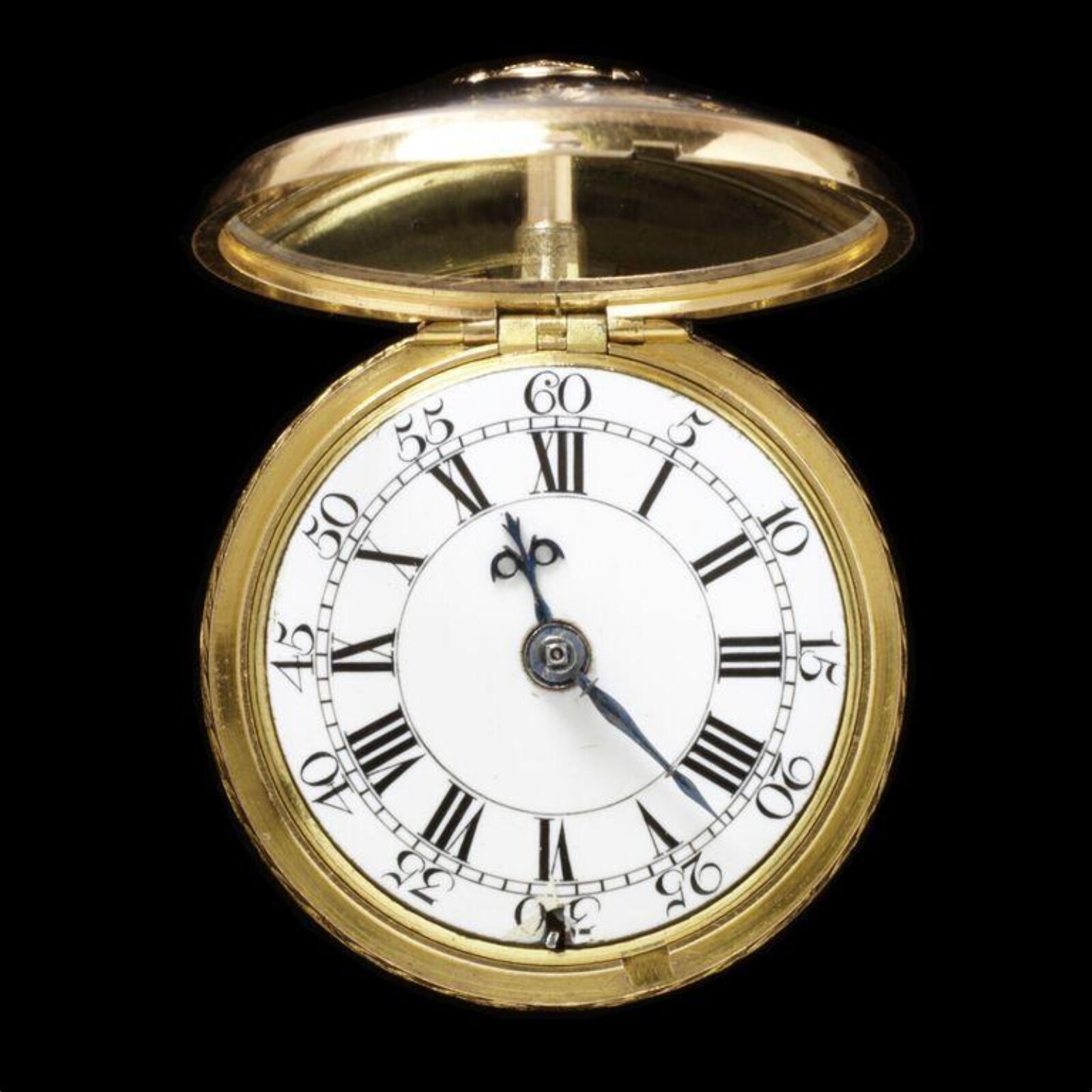
Many of these watches are wound through a hole in the back of the inner case, with the key fitted to the winding square inside. But the movement itself is often not reached through the back at all. In a great many English and continental watches of the eighteenth and early nineteenth centuries the movement is hinged to the case near twelve o'clock: you open the front bezel with its glass, then press or lift a small catch near six o'clock and the movement, dial and all, swings forward out of the case. Never lift the dial or movement by the hands, and never let it swing out unsupported.
Winding and setting: keys, crowns and levers
Opening a watch is often only the means to winding or setting it. How you do that depends on the period and the case.
| Kind of watch | Winding | Setting the hands |
|---|---|---|
| Key-wound, English | Key on the winding square through the back, or through the inner case | Usually with the key on a square at the centre of the dial, after opening the bezel |
| Key-wound, Swiss and French | Key through a hole in the cuvette | Often from the back too, on a second square through the cuvette |
| Keyless, pendant-set | Turn the crown | Pull the crown out, or on some early keyless watches press a small pin beside the pendant while turning the crown |
| Keyless, lever-set | Turn the crown | Open the front bezel and pull out a small lever at the edge of the dial; push it back before closing |
A winding key must fit the square snugly: a loose key rounds the corners of the square and eventually will not grip at all. Keys were made in numbered sizes, and many watches were sold with a key to match. Turn the key in the direction it moves freely with a series of clicks; that is the winding direction, and if it will not move the other way, do not force it. Wind until you meet firm resistance, then stop.
Lever setting was a safety measure. North American railways from the 1890s required watches that could not be set by accident in the pocket, and lever setting — where the hands can only be moved after the bezel is opened and a lever pulled — met that rule. On such watches the crown only winds; turning it with the lever pushed home will not move the hands.
What you will see inside
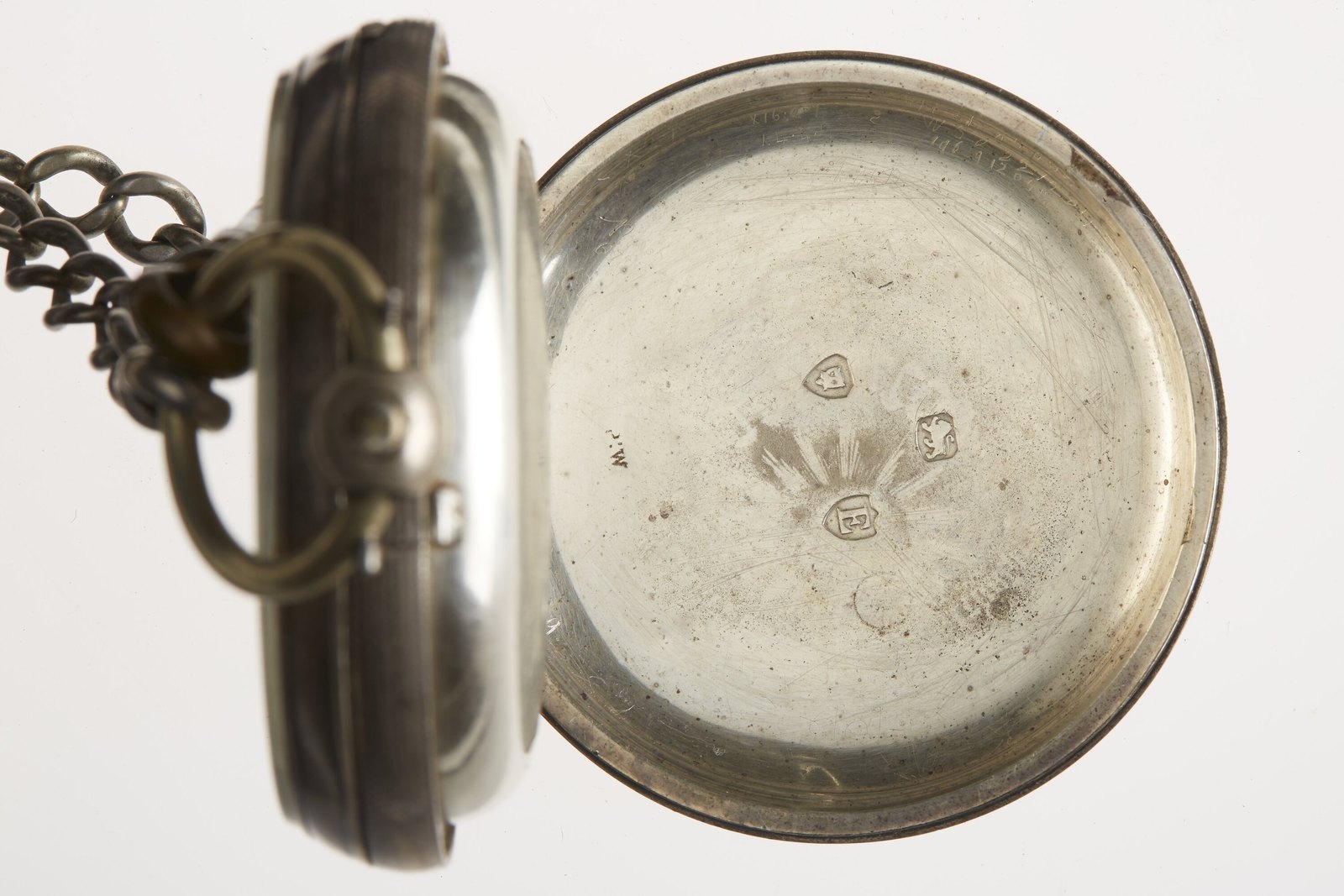
Once the case is open, look before you touch. The inside of the back and the cuvette usually carry the case maker's mark, the case serial number, the gold or silver standard and, on British cases, a full set of hallmarks with a date letter. The movement normally carries its own maker's name, a serial number and sometimes a calibre or grade. Matching numbers on case and movement suggest they have always been together; different numbers may mean the watch has been recased. Our lesson on dating a pocket watch explains how to read these marks.
- Engraved names and dates inside the covers are presentation or repair inscriptions, not dates of manufacture.
- Scratched numbers and initials on the inside of the back are often watch repairers' marks, recording jobs over decades.
- Paper repair tickets or watch papers were sometimes kept inside the outer case; leave them in place and photograph them.
Battery watches
If your pocket watch has a winding key or a crown that winds it, it has no battery. Quartz pocket watches only appear from the 1970s. Most have a snap-on back with a lip, or a screw back, opened exactly as described above; the battery type is printed on the battery itself. Note how the battery sits before removing it, lift it out with plastic tweezers rather than metal ones, and do not touch the circuit.
When not to open a watch
- Enamelled, painted or gem-set cases, where a slipping tool would do irreparable damage.
- Rare or early watches, and any watch you suspect is valuable: a specialist will open it in seconds without harm.
- Cases that are dented, bent or corroded, or a crystal that is cracked or loose.
- Any cover that resists after you have correctly identified the kind of case: dirt, a bent rim or a damaged hinge needs a watchmaker.
Practise
Identify a pocket watch step by step →
See it in the collection
See pocket watches with their covers open →
Check your understanding
Lesson quiz
0 of 4 answered