
Beginner · Lesson 7 of 10 · 14 min read
Pocket watch or wristwatch? How watches were worn, and why the wristwatch took over
From pendants and chatelaines to Albert chains, trench watches and the modern wristwatch: how people have carried their watches for five centuries, what the words 'fob', 'hunter' and 'Albert' mean, and how to wear a pocket watch today.
By the end of this lesson you will be able to:
- Describe how watches were carried from the sixteenth to the twentieth century
- Explain the terms fob, chatelaine, Albert chain, hunter and half hunter
- Explain why the wristwatch replaced the pocket watch
- Wear and handle a pocket watch sensibly today
A watch has always been a portable clock, but where it is carried has changed with clothing, work and war. The question 'pocket watch or wristwatch?' sounds modern, yet it sums up a long history: watches moved from the neck to the belt, into the pocket, onto a chain across the waistcoat and finally onto the wrist. Knowing how a watch was worn also explains much of its design — its bow and pendant, its covers, the position of the crown and even its size.
Before the pocket: pendants and girdles
The first spring-driven watches of the sixteenth century were too thick and too precious to put away. They were worn on a cord or chain around the neck as pendants, or hung from the girdle, and were jewels as much as instruments. Pocket-sized flat watches spread in the seventeenth century, helped by changes in dress: the long waistcoat, which entered English court fashion in the 1660s, is often credited with giving the watch a pocket of its own.
The eighteenth century: fobs, seals and chatelaines
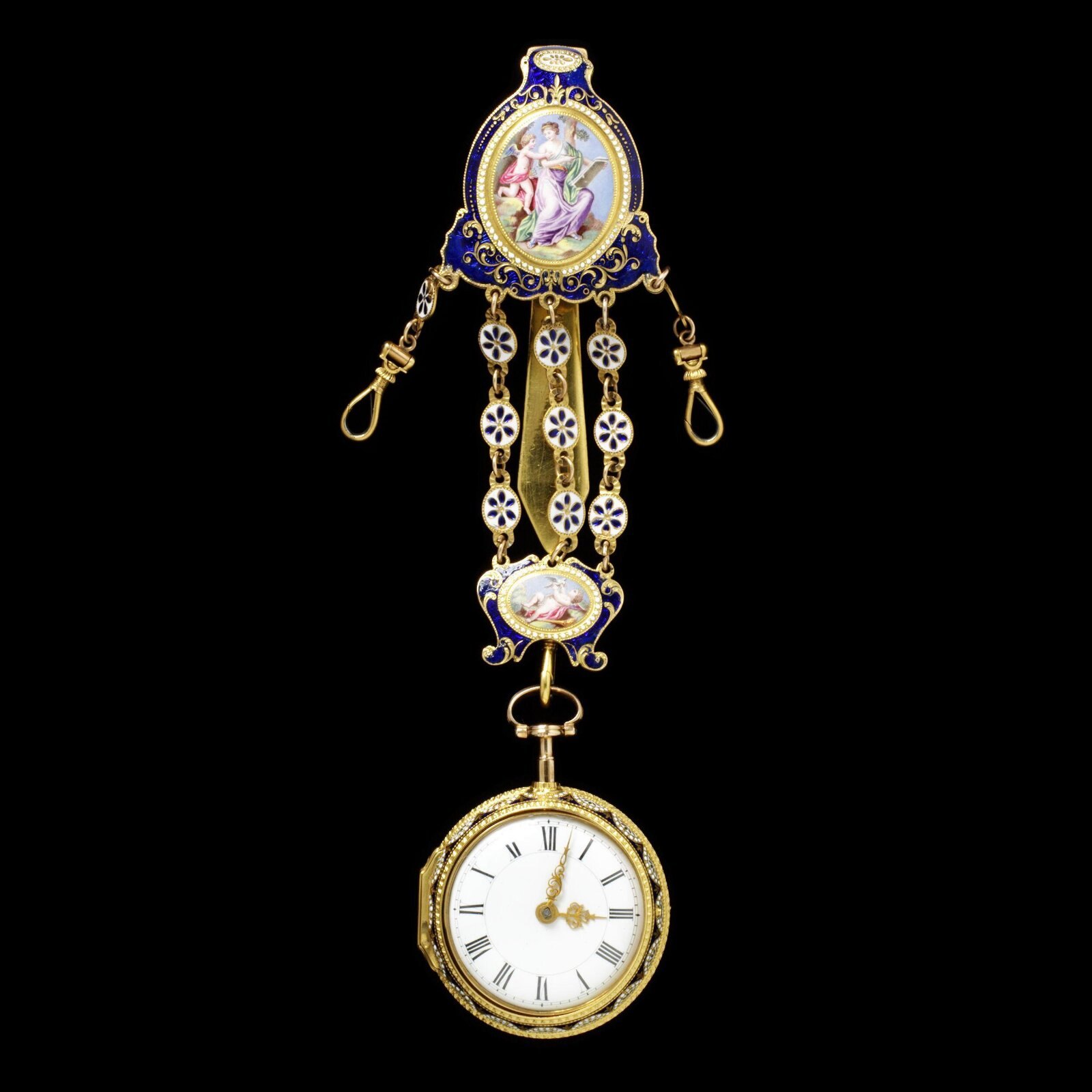
In the eighteenth century a man usually carried his watch in a small pocket at the waistband of his breeches, called the fob. A short chain or ribbon hung outside the pocket carrying the winding key and one or more seals for sealing letters, so the ornaments — later called fobs themselves — were on display while the watch was hidden. Women often wore a chatelaine: a decorated clasp hooked to the waist, from which chains carried a watch, its key and small useful objects such as a seal, scissors or a needle case. The watch and chatelaine were frequently made as a matching set.
The nineteenth century: the waistcoat and the Albert chain
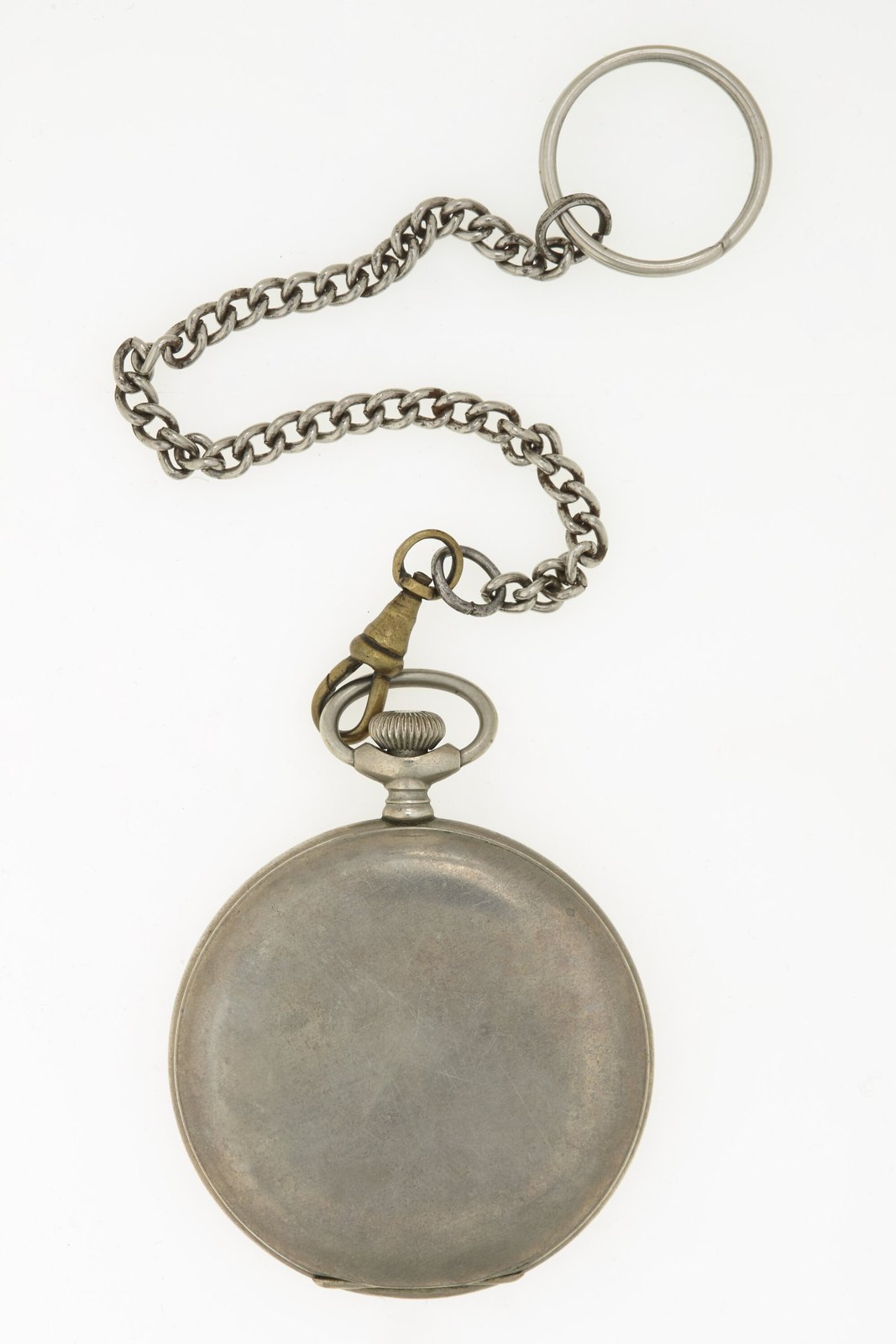
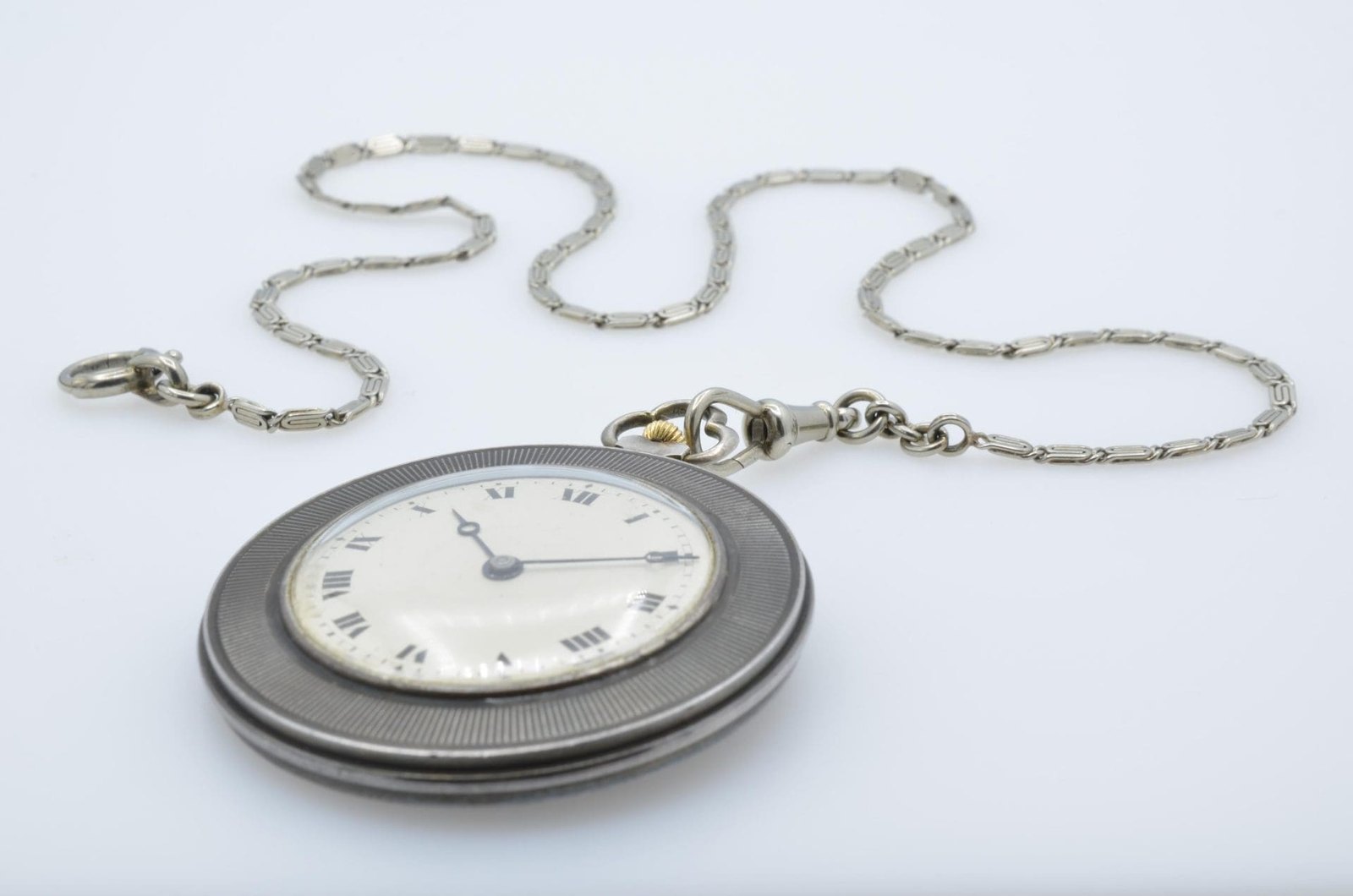
As fashion moved to trousers and a buttoned waistcoat, the watch went into a waistcoat pocket and the chain moved to the front. The classic arrangement, popularly named the Albert after Queen Victoria's consort, has a swivel or bolt ring clipped to the watch's bow at one end and a T-bar passed through a waistcoat buttonhole at the other. A 'double Albert' crosses the waistcoat with a watch in one pocket and a small case — for matches, coins or a pencil — in the other. Ladies' watches were often worn on a long guard chain around the neck, or pinned to the dress with a brooch.
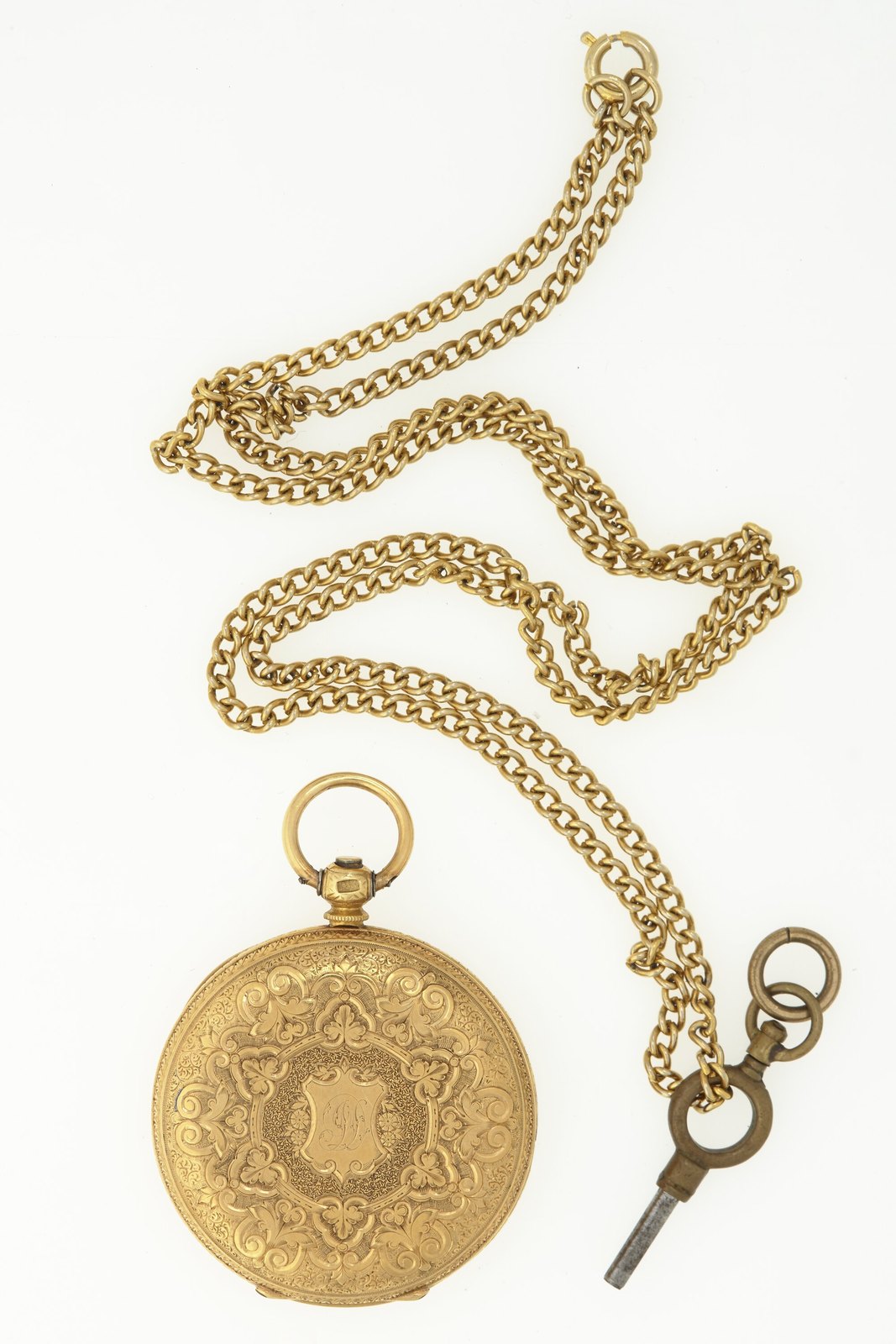
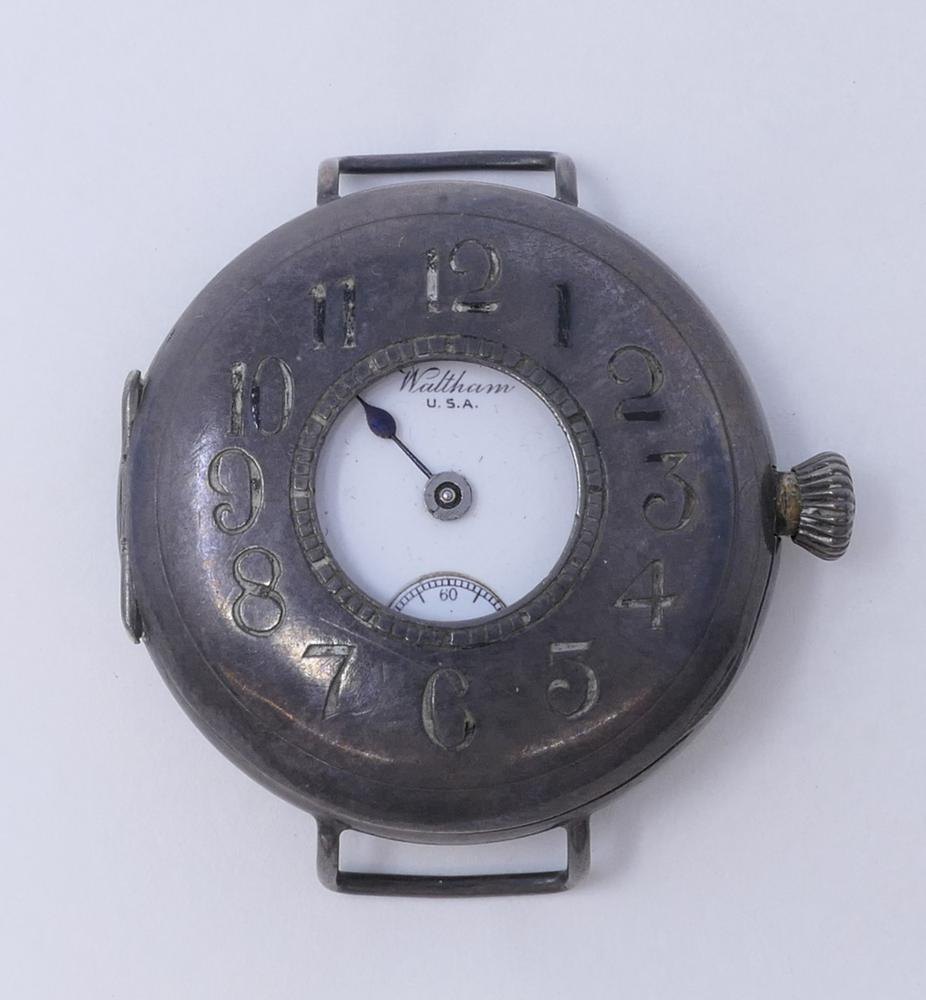
Two forms of case dominated. The hunter, or hunting case, has a hinged metal cover over the dial that springs open when the crown is pressed; it protected the crystal and dial in a pocket or in the saddle. The half hunter has a small window in the cover and a ring of numerals on it, so the time can be read without opening the watch. The open-face watch has no cover at all and was preferred where the time had to be read quickly — on the railways, for example.
| Term | Meaning | Notes |
|---|---|---|
| Bow | The ring at the top of the case | Where the chain is attached |
| Pendant | The neck that joins the bow to the case | Holds the crown on keyless watches |
| Hunter (hunting case) | A case with a solid cover over the dial | Crown usually at 3 o'clock relative to the dial |
| Half hunter | A cover with a central window | Time can be read with the cover closed |
| Open face | No cover over the dial | Crown at 12; standard for railway watches |
| Albert | A waistcoat chain with a T-bar | 'Double Albert' crosses both pockets |
| Fob | Originally the small waistband pocket; later the ornament on the chain | A 'fob watch' now often means a nurse's watch |
| Chatelaine | A waist clasp with chains for a watch and small tools | Mainly eighteenth and nineteenth centuries |
The first wristwatches
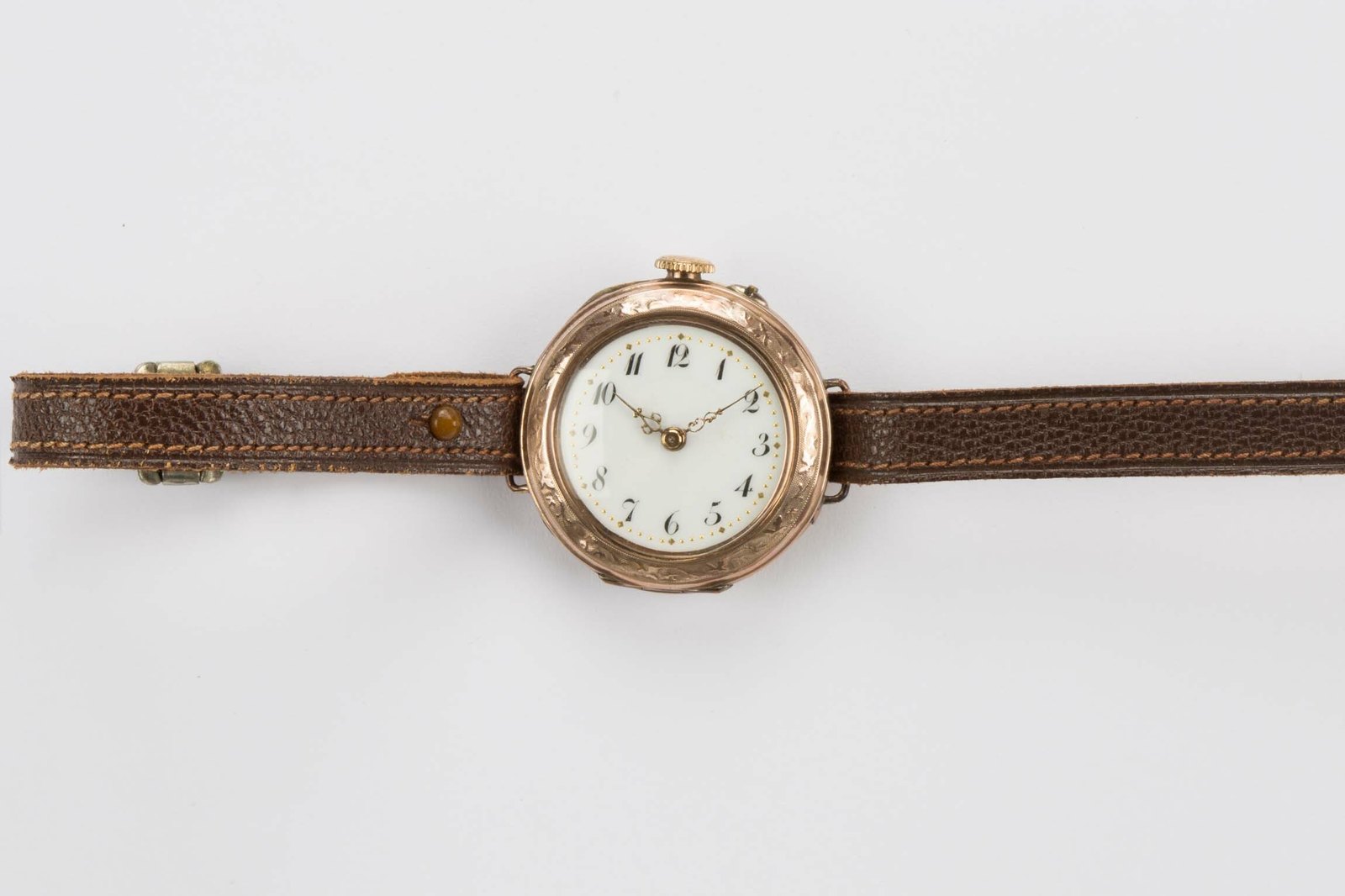
Watches worn on the wrist are much older than the twentieth century, but for a long time they were mainly jewellery for women. Breguet's records describe a watch on a bracelet made for Caroline Murat, Queen of Naples, ordered in 1810 and delivered in 1812, and through the nineteenth century jewellers sold small watches set in bracelets. Men, by contrast, wore pocket watches, and many considered a watch on the wrist effeminate.
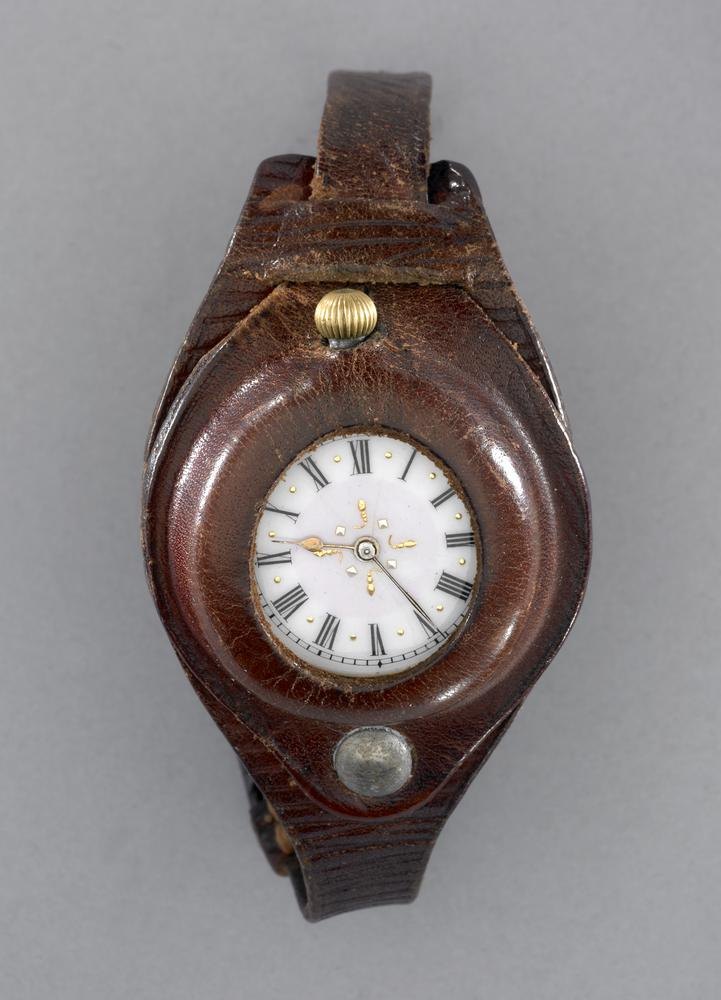
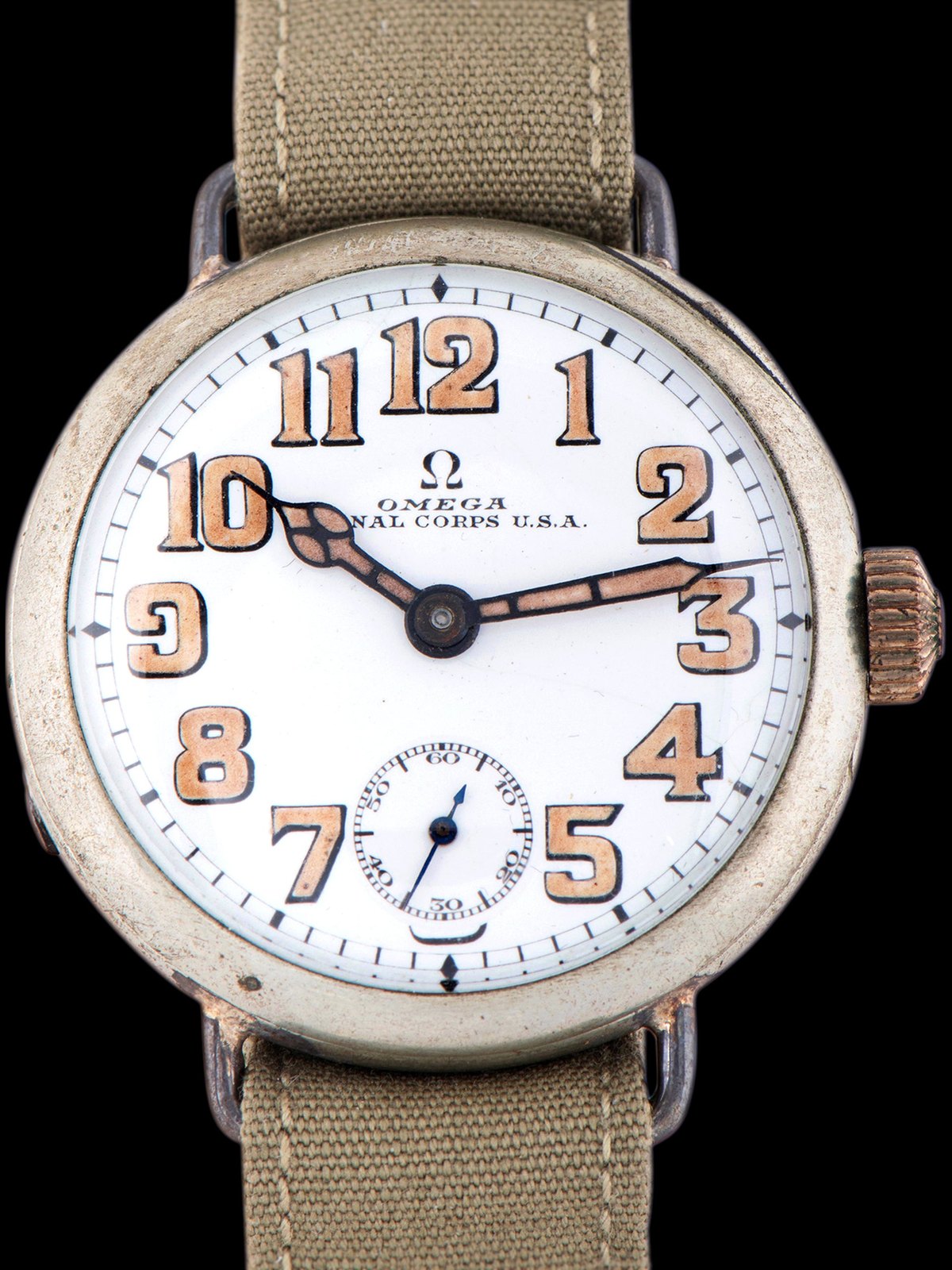
Practical needs changed that. Soldiers, cavalry officers, motorists and aviators needed to read the time with their hands busy. From the late nineteenth century leather 'wristlets' were sold that held a small pocket watch in a cup on a strap; then cases were made with wire lugs soldered on for a strap. Cartier dates its Santos watch, with integrated lugs, to 1904, made for the aviator Alberto Santos-Dumont. During the First World War such watches became standard equipment for officers, with luminous numerals and sometimes a pierced metal shield, the shrapnel guard, over the crystal. Collectors call these 'trench watches'.
Why the wristwatch won
- Convenience: a glance at the wrist is faster than finding, opening and replacing a pocket watch, especially when working, driving or flying.
- War: millions of men used wristwatches between 1914 and 1918 and kept the habit afterwards.
- Better engineering: water-resistant cases, unbreakable crystals, shock protection and self-winding made the wristwatch reliable in daily use from the 1920s to the 1950s.
- Fashion: lighter suits without waistcoats left nowhere convenient for a pocket watch and chain.
During the 1920s and 1930s the wristwatch became the normal men's watch in Europe and North America. The pocket watch did not disappear: railway staff, conductors and many professionals carried them for decades, and they remained the watch for formal evening dress. But by the middle of the century the pocket watch had become a traditional or ceremonial object rather than an everyday one.
Pocket watch or wristwatch: how they compare
| Pocket watch | Wristwatch | |
|---|---|---|
| Typical size | Often 40–55 mm or larger | Usually 20–45 mm; men's watches of the mid-twentieth century are often 33–36 mm |
| Position of the crown | At 12 o'clock (open face) or 3 o'clock (hunter) | Usually at 3 o'clock |
| Protection | Covers, pocket and chain | Case, crystal and strap; water and shock resistance later |
| Reading the time | Take out, open, read | Glance at the wrist |
| Positions it meets | Mostly vertical, crown up, in the pocket | Many positions through the day |
How to wear and handle a pocket watch today
- Wear it in a waistcoat pocket with a chain to a buttonhole, or in the small fifth pocket of jeans, which is commonly called the watch pocket.
- Always use a chain or fob strap: most pocket watches are damaged by being dropped.
- Hold the watch in one hand to wind it, and wind until you feel firm resistance — never force it.
- Open a hunter cover by pressing the crown, not by prising the cover; close it gently with the crown pressed so the catch is not worn.
- Keep it away from magnets and loose coins in the same pocket, which scratch the crystal and case.
Practise
Look up pocket-watch terms in the glossary →
See it in the collection
Compare pocket watches and early wristwatches →
Check your understanding
Lesson quiz
0 of 4 answered