Clockmaker
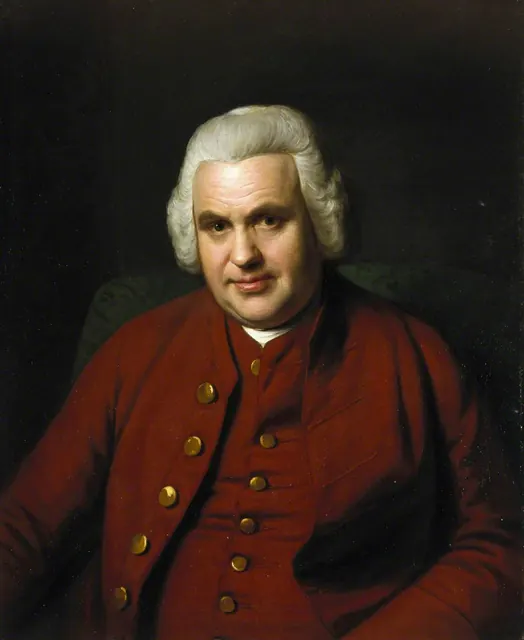
William Clement
Also recorded as: Clement, William · Wm Clement · Wm. Clement · William Clement, London
Former anchor-smith turned London clockmaker, one of the first to use the anchor escapement in clockwork.
According to the Victoria and Albert Museum, William Clement was born at Rotherhithe and first made anchors for local shipbuilders before turning to clockmaking in Southwark. He joined the Clockmakers' Company as a brother in 1677 and was its Master in 1694.
Clement is one of the makers credited with introducing the anchor escapement around 1670, which allowed a pendulum to swing through a small arc and so made the long seconds pendulum practical. The turret clock he made for King's College, Cambridge, dated 1671, is often cited as the earliest surviving example; the scientist Robert Hooke has also been credited with the invention, and the question of priority remains open.
- Country
- England
- City / centre
- London (Southwark)
- Life / active
- 1638–1704
- Status
- Historical individual
- Key people
- William Clement
Innovations & specialities
- Early anchor escapement (c. 1670; priority disputed with Robert Hooke)
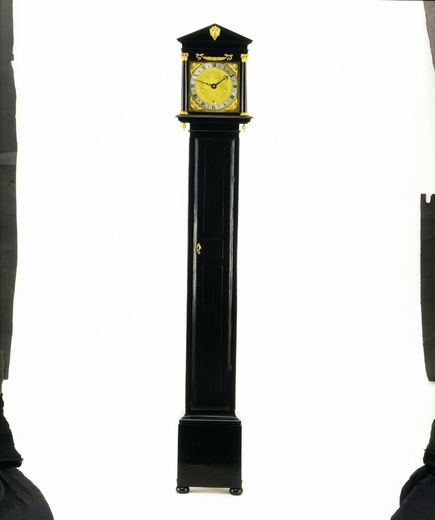
- Longcase clocks with long pendulums
Works by William Clement in the catalogue
Open in the catalogue →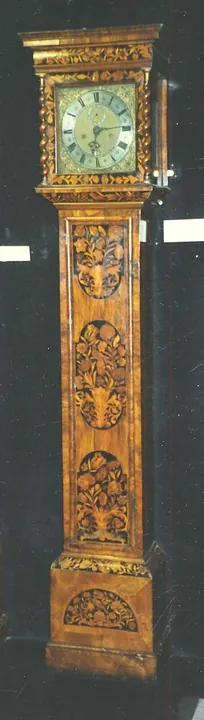
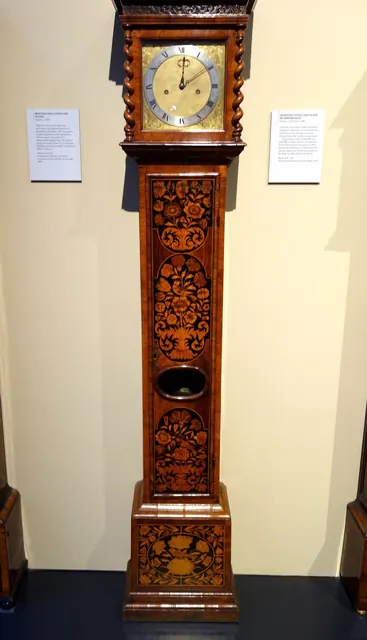
Clocks · c.1685
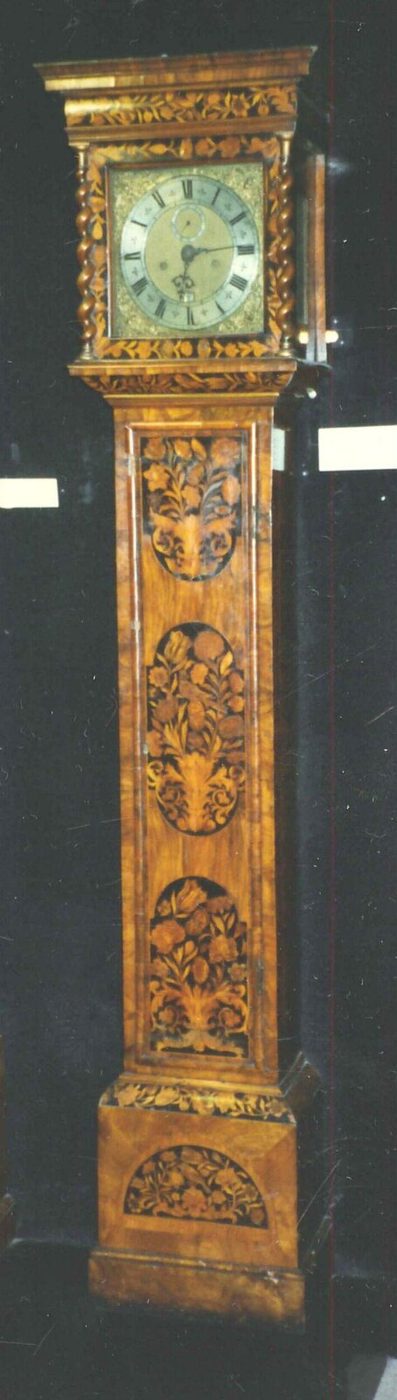
Long case clock, marquetry of walnut and other woods, inscribed ‘William Clement, London’, made about 1685
Victoria and Albert Museum, London
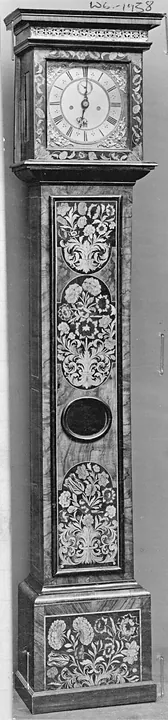
Clocks · c.1690
Long case clock, marquetry of walnut and other woods, made by William Clement, London, about 1690
Victoria and Albert Museum, London
Linked through the Atlas maker authority list, which reconciles the spellings used by different institutions. Attributions are as stated by each holding institution or auction house.
Read and see more
Magazine features
- Pendulum Clocks: History, Types and How to Identify an Antique Pendulum Clock
From Galileo's unfinished design and Huygens's first clock of 1657 to the Vienna regulator on the parlour wall and the free pendulum that kept the world's time. How a pendulum clock works, why it was the most accurate machine on earth for 270 years, and how to recognise and date the main types.
- Who Invented the Clock? A History of Timekeeping from Sundials to Atomic Clocks
No single person invented the clock. Shadow clocks and water clocks are more than three thousand years old, the first escapement-regulated machines were Chinese astronomical clocks, the weight-driven mechanical clock appeared in Europe in the late thirteenth century without a known inventor, and the pendulum, quartz and the atom each reinvented accuracy. Here is who did what, and when.
- The Grandfather Clock: A History of the English Longcase Clock, 1658–1850
The grandfather clock began as the English longcase. Within a generation of the pendulum's arrival in London, English makers had turned a laboratory novelty into the most accurate domestic clock in the world — and then into a piece of furniture made in almost every market town. How to read the case, the dial and the movement of a longcase clock, with examples from five museum collections.
Academy lessons
- How a grandfather clock works — and why it stops or won't chime
15 min · A grandfather (longcase) clock is a weight-driven clock with a pendulum about a metre long. This lesson explains the weights, the pendulum, the escapement and the striking and chiming trains, and then answers the questions owners ask most: why the pendulum stops, why the chime is silent, how to set the hands, and how to move one safely.
- Escapements explained: from the verge to the detached lever
18 min · The escapement is the most studied mechanism in horology. This lesson follows its main families in roughly historical order and explains what each one improved.