
Horological History · Explainer
Who Invented the Clock? A History of Timekeeping from Sundials to Atomic Clocks
No single person invented the clock. Shadow clocks and water clocks are more than three thousand years old, the first escapement-regulated machines were Chinese astronomical clocks, the weight-driven mechanical clock appeared in Europe in the late thirteenth century without a known inventor, and the pendulum, quartz and the atom each reinvented accuracy. Here is who did what, and when.
Atlas Editorial · · 13 min read
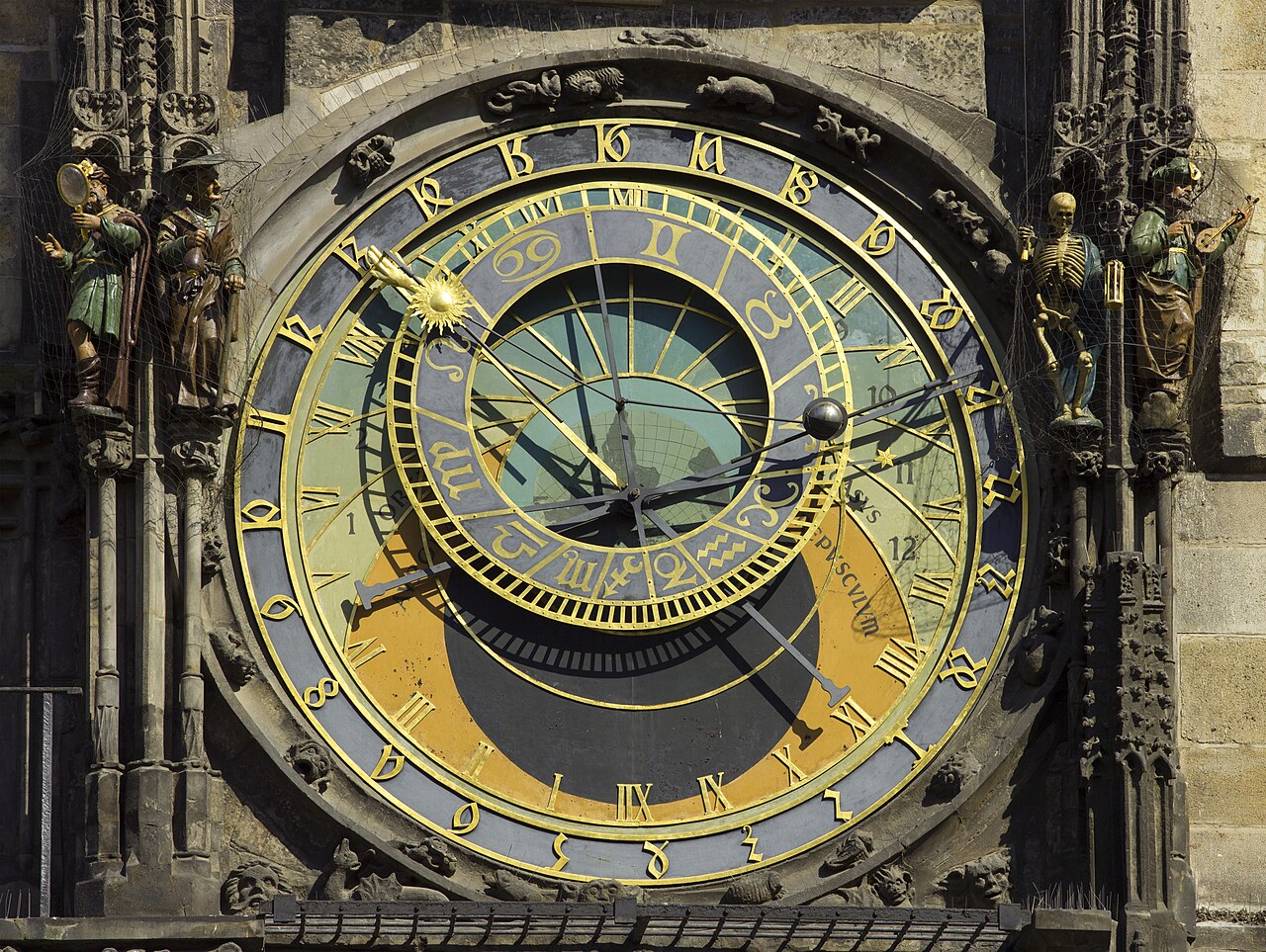
Godot13 · CC BY-SA 4.0 · source (opens another website in a new tab)
'Who invented the clock?' is one of the most common questions anyone asks about timekeeping, and the honest answer is that nobody did — or rather, that many people did, over three and a half thousand years, in Egypt, Greece, China, the Islamic world and Europe. A clock is any device that keeps track of time by a regular process. The Sun's shadow, dripping water, a swinging weight, a vibrating crystal and the oscillation of an atom have all served, and each was turned into a clock by different people, many of whose names are lost.
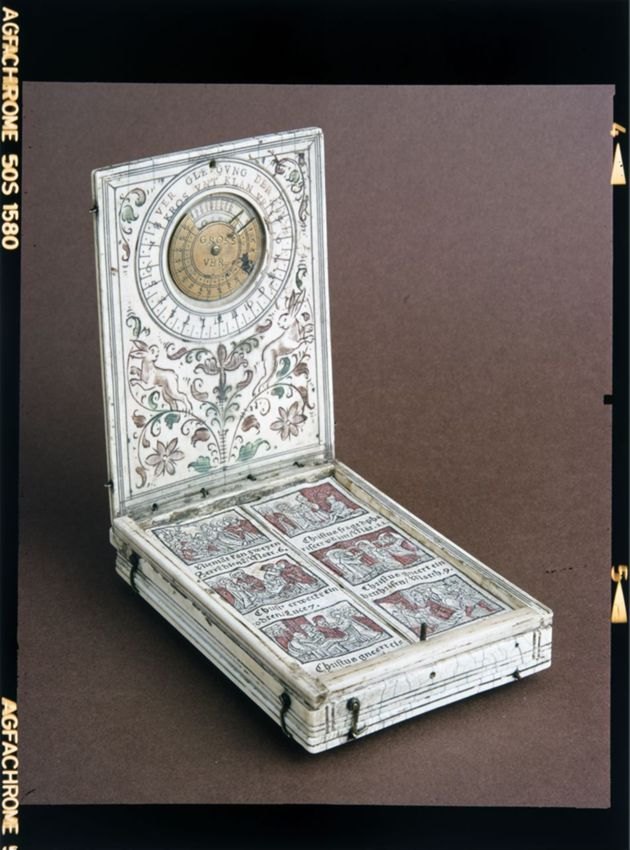
What people usually mean by the question is the mechanical clock: a machine driven by a weight or spring whose motion is held back, step by step, by an escapement. That clock appeared in Europe in the last decades of the thirteenth century. No document names its inventor, and historians do not expect to find one. This feature follows the main steps from sundials to atomic clocks, says who is credited with each, and marks where the credit is disputed. The catalogue photographs show surviving examples from museum collections.
Before machines: shadows and water
The oldest clocks measured the Sun. Egyptian shadow clocks and sundials of about 1500 BCE divided the daylight into hours, and Egyptian astronomers divided the night by the rising of stars. Their hours were 'temporal': daylight was divided into twelve parts whatever the season, so a summer hour was longer than a winter one. Temporal hours lasted, in most of the world, until mechanical clocks made equal hours practical, and in Japan into the nineteenth century.
Sundials need sunshine, so for the night and for cloudy days people measured time by water. An outflow water clock (clepsydra) is a vessel with a small hole near the bottom and hour marks inside; as the water runs out, the falling level shows the time. The oldest that survives was made at Karnak for Amenhotep III in about 1380 BCE. Because water runs out faster when the vessel is full, makers sloped the sides of the vessel to even out the rate — an early example of the long effort to make a clock run at a steady speed.
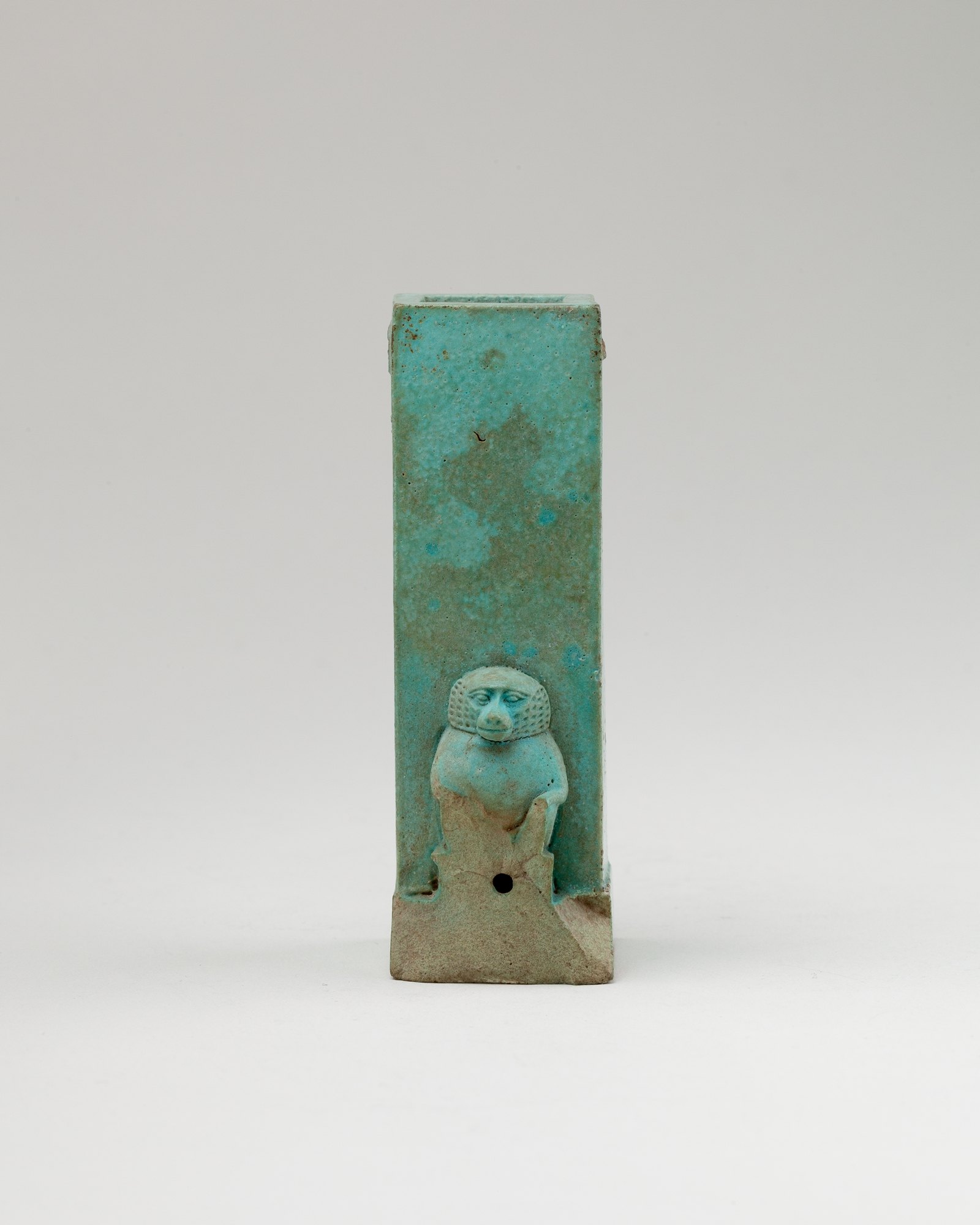
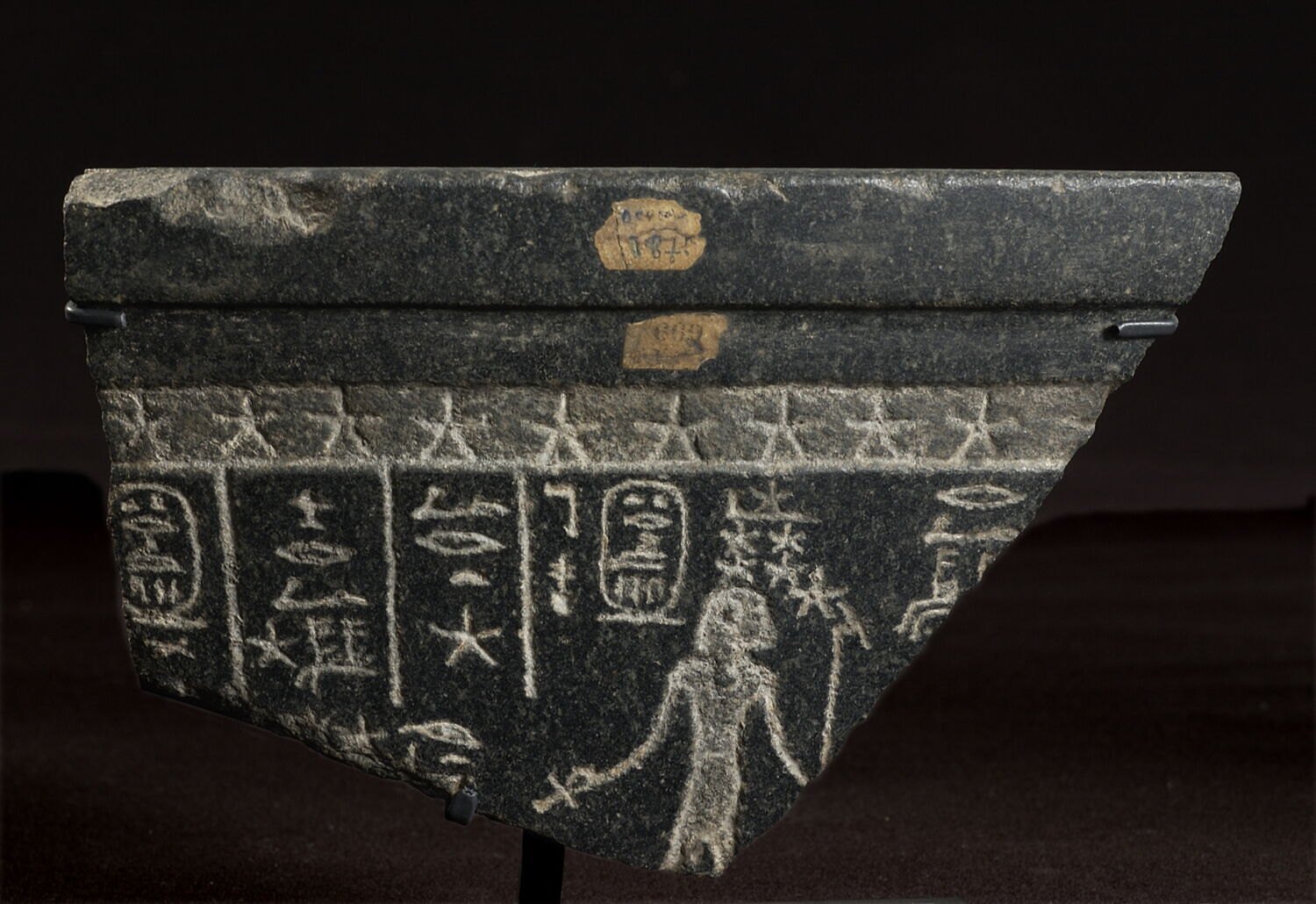
Greek engineers made water clocks into machines. Around 270 BCE Ctesibius of Alexandria added a float regulator that kept the water level constant, so that the outflow was steady, and drove pointers and figures from a float. The Tower of the Winds in Athens, of about 50 BCE, combined sundials on its faces with a water clock inside. Water clocks remained the most sophisticated timekeepers in the world for more than a thousand years, and reached their greatest elaboration in China and in the Islamic world.
Gears and escapements: China and the Islamic world
The idea at the heart of every mechanical clock — a steady drive interrupted at regular intervals by a mechanism that lets it advance one step at a time — first appears in China. In 725 the Buddhist monk and astronomer Yi Xing and the engineer Liang Lingzan built a water-driven armillary sphere with a linkage that advanced it in steps. Su Song's great astronomical clock tower at Kaifeng, completed in 1088–1092, used a water wheel whose buckets filled one by one; a balance mechanism released the wheel to turn by one bucket at a time. Su Song described the tower in detail, with illustrations, in his Xin Yixiang Fayao.
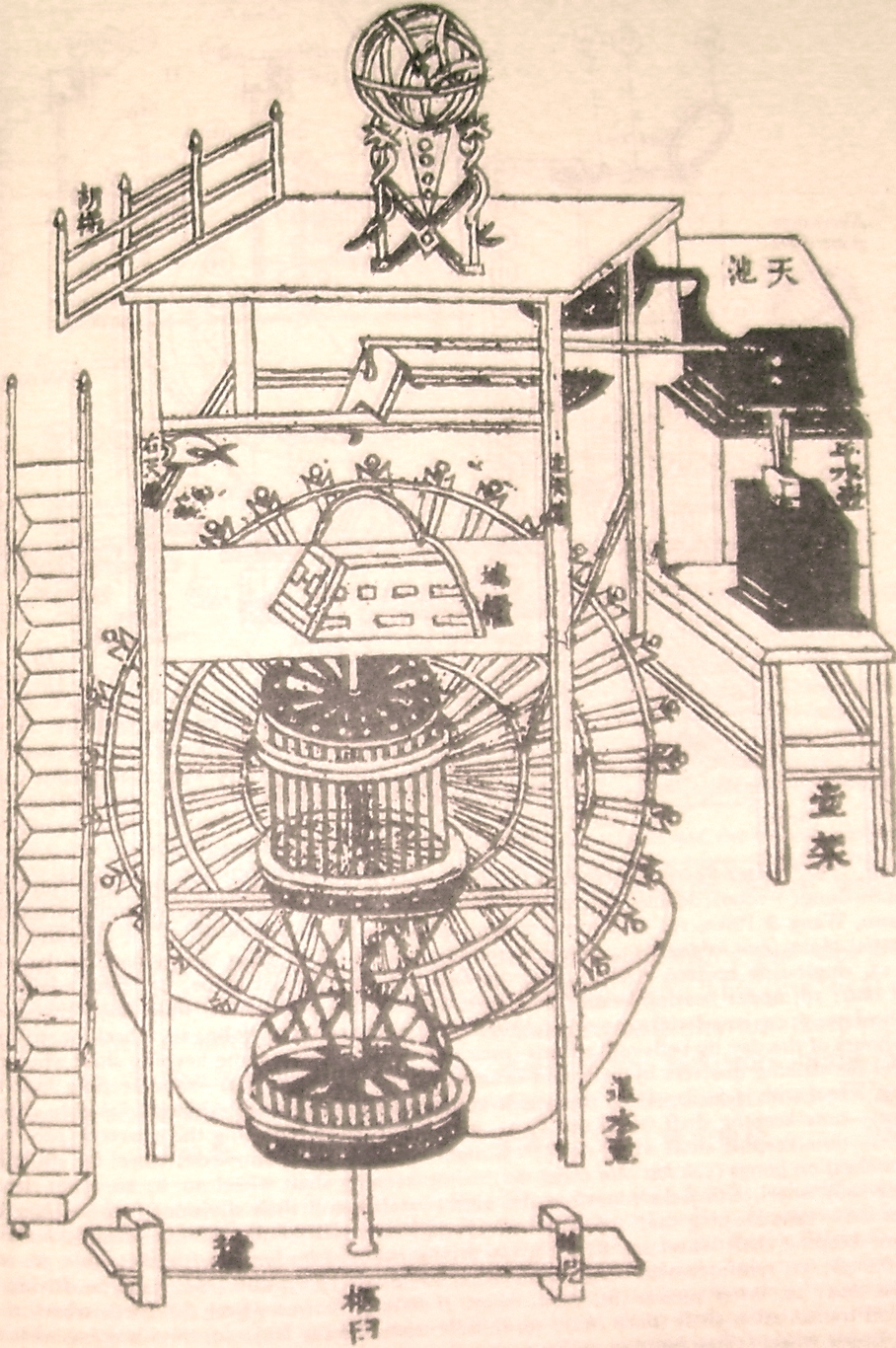
Joseph Needham, who with Wang Ling and Derek de Solla Price brought these machines to Western attention in Heavenly Clockwork (1960), called the Chinese mechanism a water-wheel escapement and argued that it was a missing link in the history of the clock. Whether knowledge of it reached Europe is unknown. Its regulator was the flow of water, not the swing of an oscillating part, so most historians treat it as a distinct ancestor rather than the direct origin of the European clock.
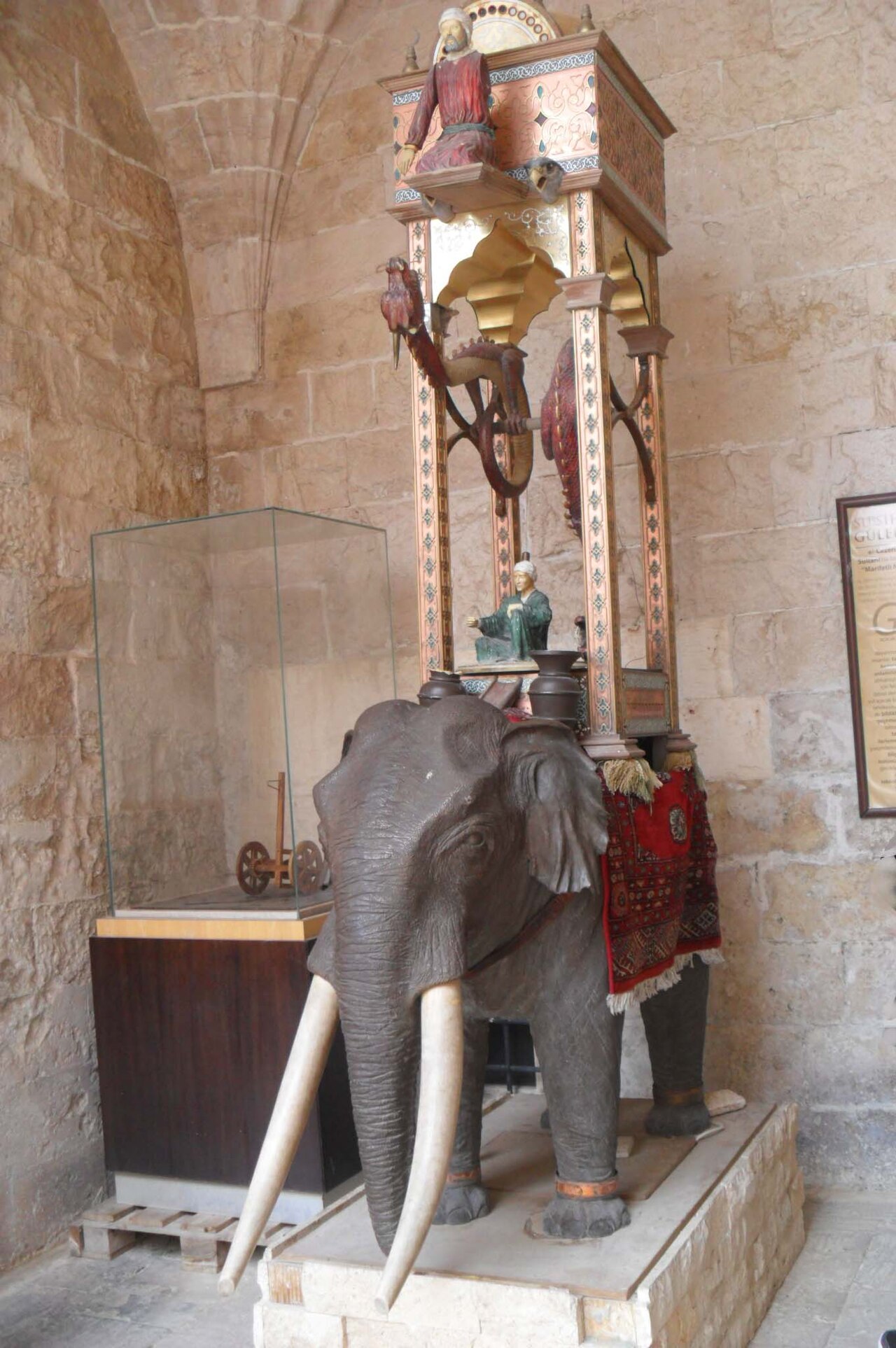
In the Islamic world the water clock became an elaborate automaton. In 807 envoys of the caliph Harun al-Rashid presented Charlemagne with a striking water clock. In 1206 Ismail al-Jazari, engineer to the Artuqid court at Diyarbakır, completed his Book of Knowledge of Ingenious Mechanical Devices, which describes water clocks with moving figures, including the famous elephant clock, in enough detail for modern reconstructions to be built. Our feature on clocks before Europe tells both stories in detail.
The mechanical clock: Europe, late thirteenth century
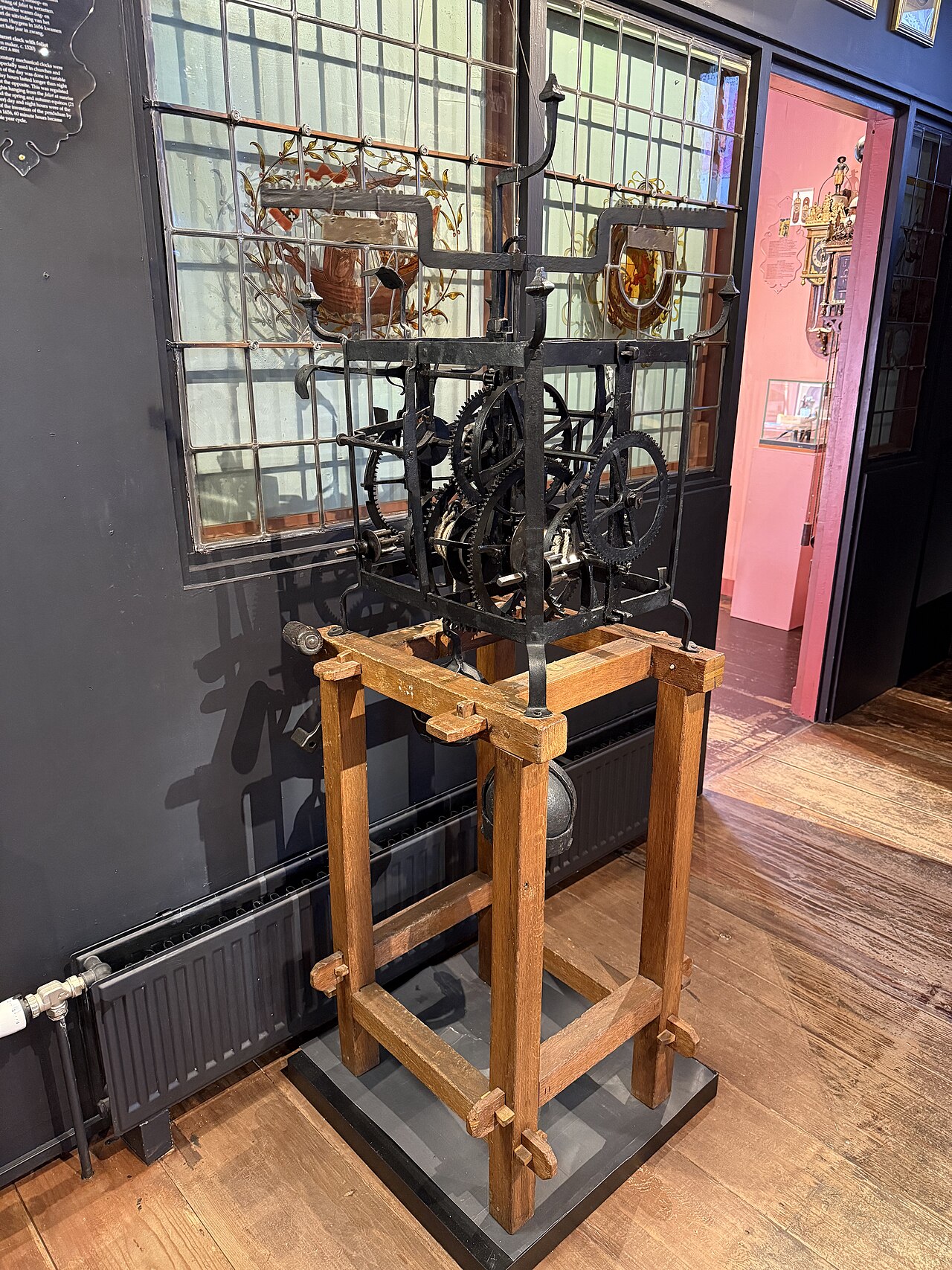
The weight-driven mechanical clock appears in European sources between about 1270 and 1300. In 1271 the English astronomer Robertus Anglicus wrote that clockmakers were trying to make a wheel that would turn exactly once a day, but could not quite perfect their work — a remark often read as evidence that the escapement had not yet been found. Within a few decades, cathedral and monastery accounts in England, Italy and France record clocks being built and repaired. The inventor is not named in any of them, and the new machine may have been developed in several places at once by monastic and cathedral clockmakers who needed to ring the hours of prayer.
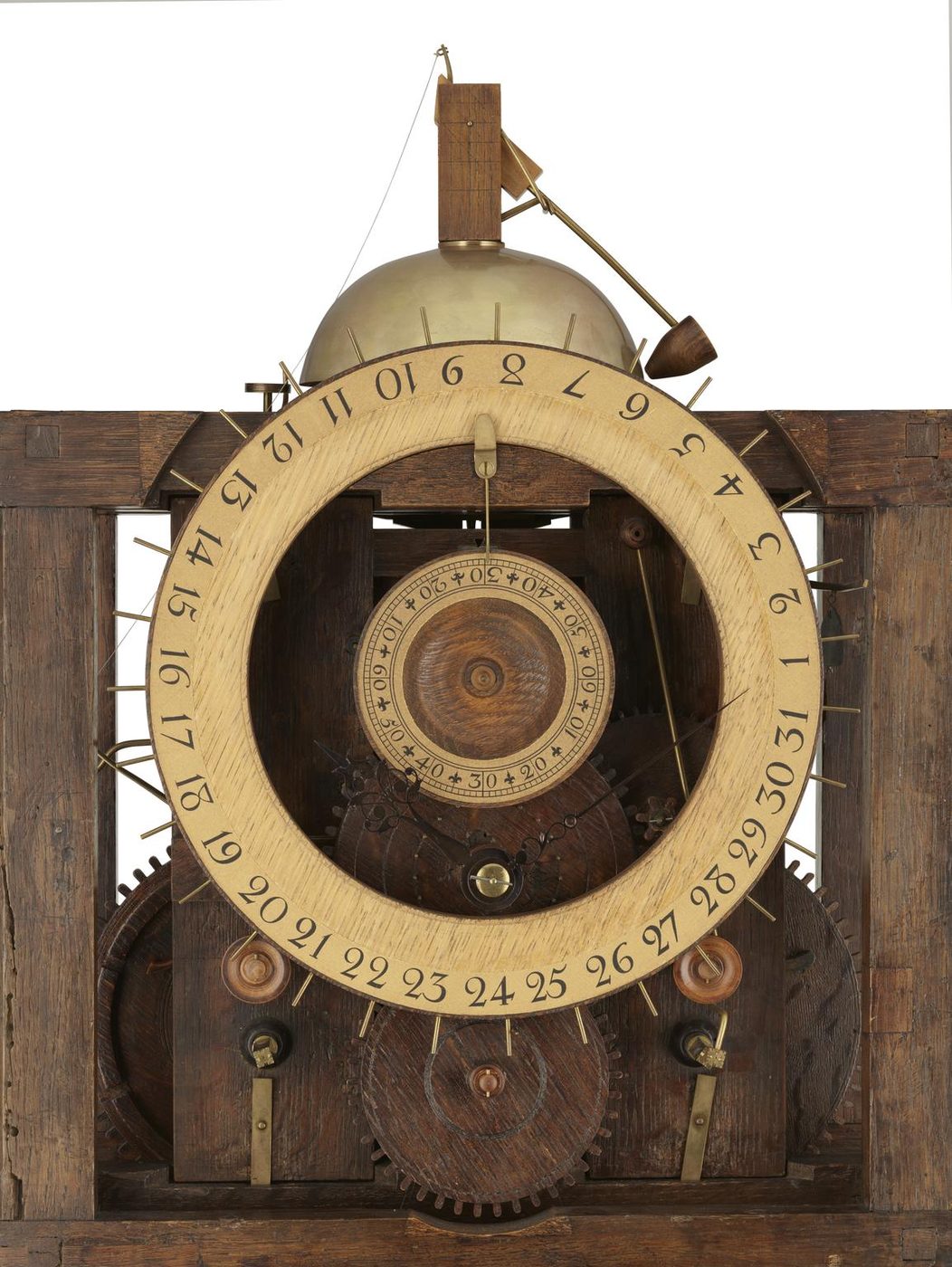
The invention was the verge escapement. A weight on a rope turns a drum; a toothed crown wheel driven by it pushes alternately against two small flags (pallets) on a vertical rod, the verge; at the top of the verge a horizontal bar with adjustable weights, the foliot, swings back and forth. Each swing lets the crown wheel advance by one tooth. The foliot has no natural period of its own, so errors of a quarter of an hour a day were common, and the clocks were reset regularly from a sundial. But they ran day and night, in any weather, and they could strike a bell.
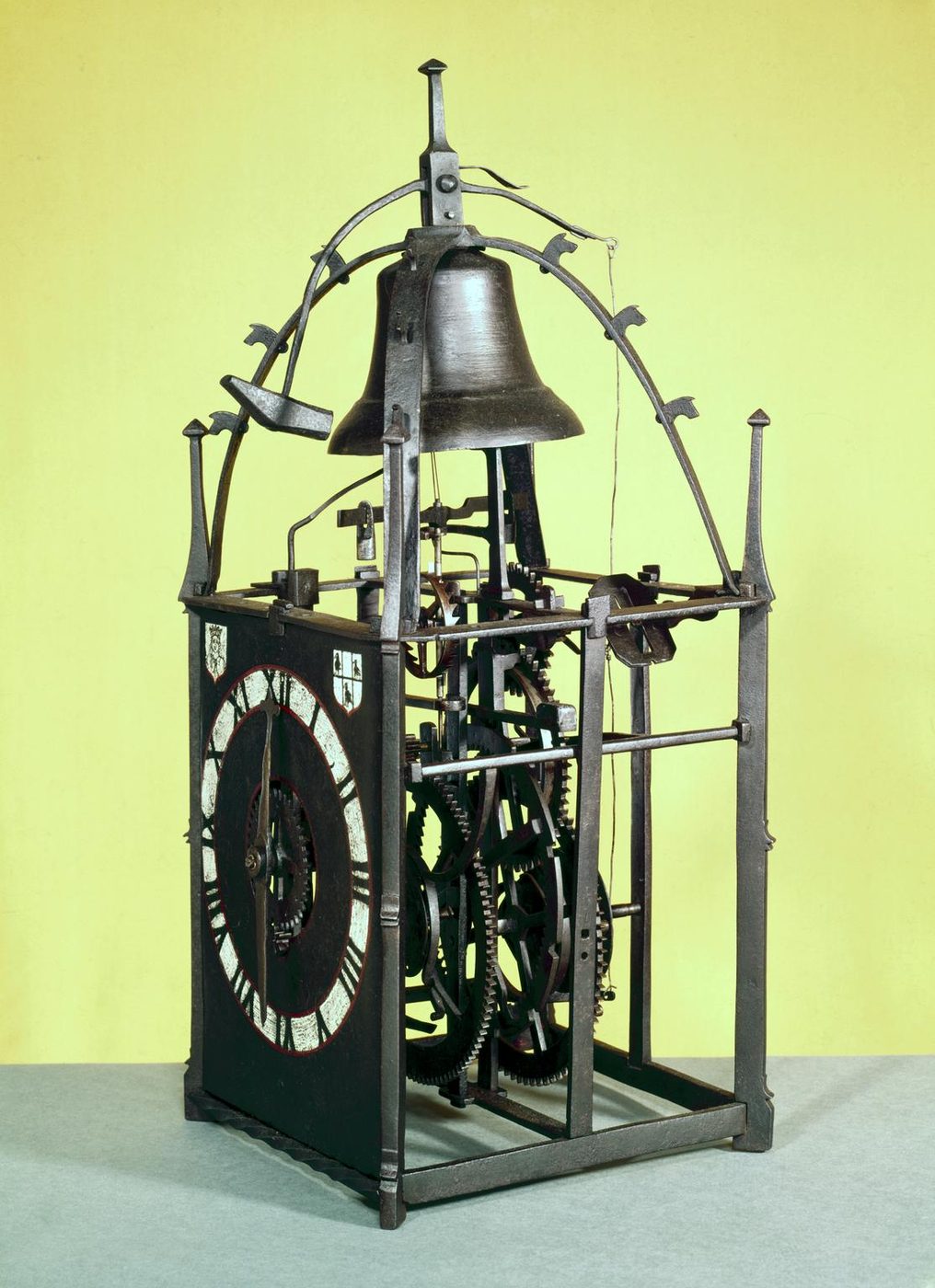
Equal hours followed. A public clock in Milan struck each of the twenty-four hours by about 1336. Giovanni de' Dondi completed his seven-faced astronomical clock, the Astrarium, in Padua in 1364, and wrote a treatise describing it wheel by wheel. The clock at Salisbury Cathedral, of about 1386, is among the oldest surviving mechanical clocks, and the Prague astronomical clock, the Orloj, was installed in 1410. Smaller iron clocks for houses and chambers followed the same design.
Springs and the first portable clocks
A weight-driven clock must stand still. A coiled steel spring can drive a clock in any position, and spring-driven clocks appear in the early fifteenth century: the so-called Burgundy clock of about 1430 is one of the earliest that survives. Because a spring pulls harder when fully wound than when nearly run down, makers added the fusee, a cone-shaped pulley that evens out its pull, or the stackfreed, a cam and spring used in early German work.
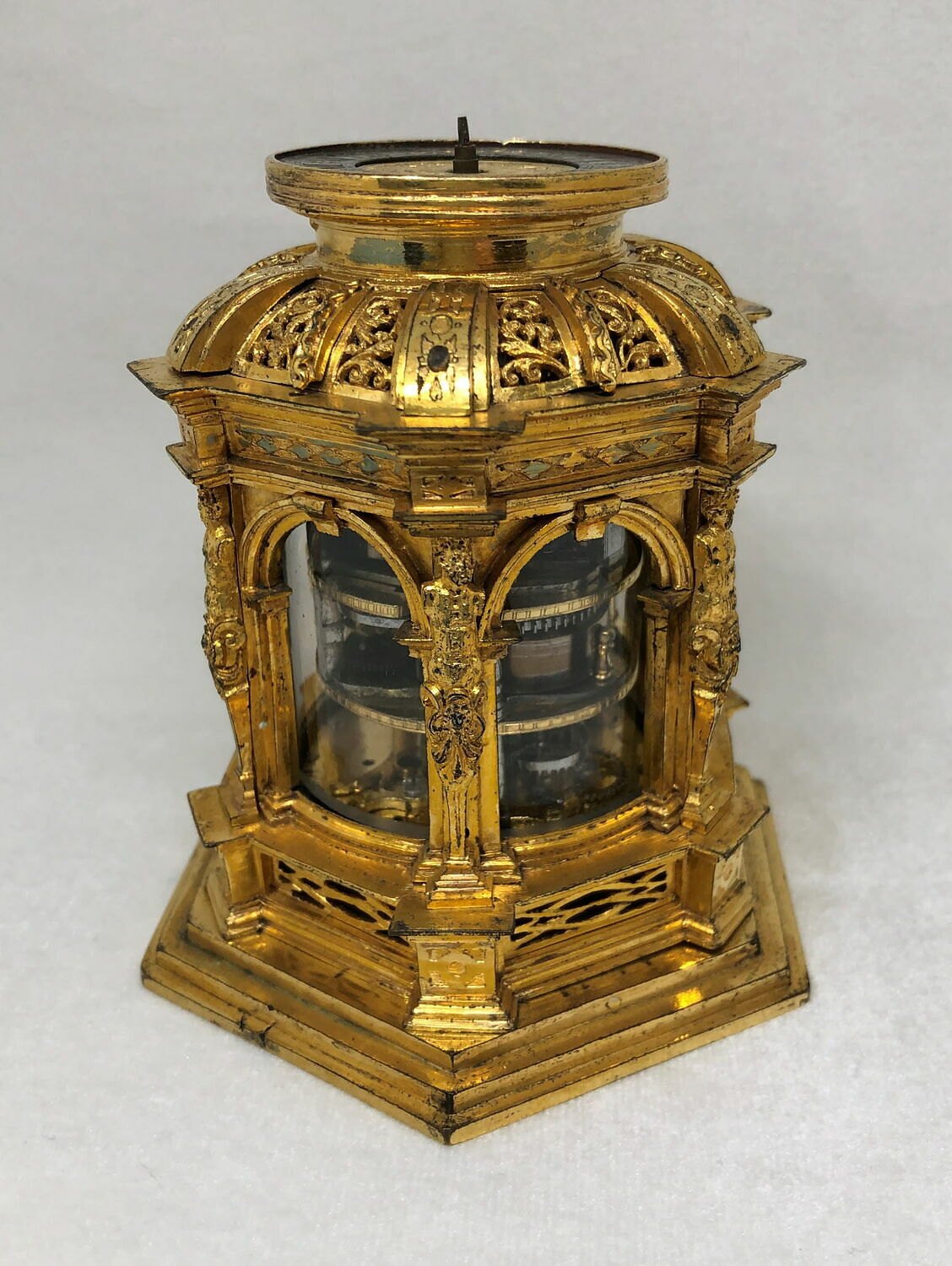
Spring drive made the watch possible. In 1511 the humanist Johannes Cochlaeus described small portable clocks made by Peter Henlein of Nuremberg, which ran for forty hours and could be carried in a purse. This is the source of the popular claim that Henlein invented the watch; it shows that he made early watches, not that he was the first. Our feature on the first watches traces their development.
The pendulum: Huygens, Coster and a leap in accuracy
Galileo is often said to have noticed, around 1583, that a swinging lamp in Pisa cathedral kept the same time whatever its arc, and in 1641 he designed a pendulum clock escapement, which his son Vincenzo partly built. The first working pendulum clock, however, was designed by the Dutch mathematician Christiaan Huygens at the end of 1656. Huygens obtained a privilege for it in 1657 and licensed the Hague clockmaker Salomon Coster to make it. He published the design as Horologium in 1658, and the mathematics of the pendulum in Horologium Oscillatorium in 1673.
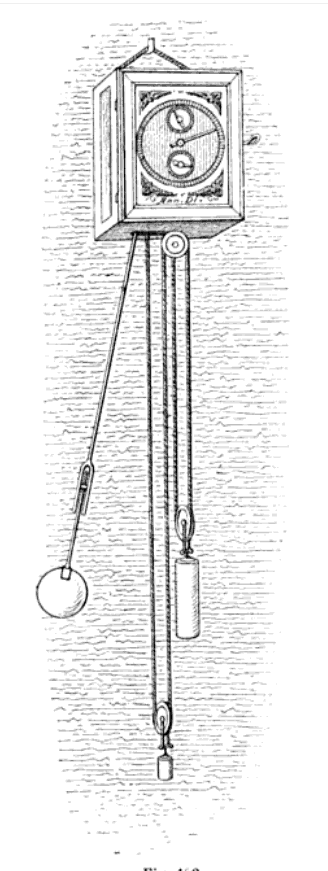
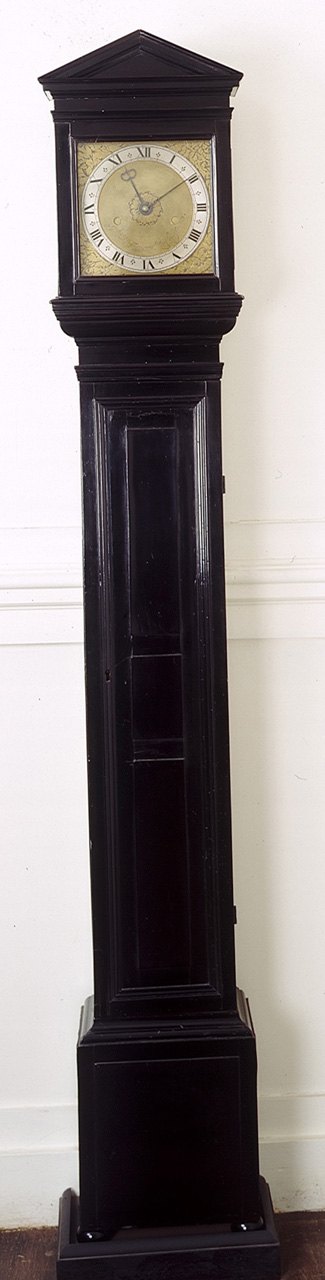
A pendulum has its own natural period, so it controls the clock rather than merely interrupting it. The improvement was immediate: errors fell from minutes a day to seconds. The design spread quickly. John Fromanteel of London worked with Coster in The Hague in 1657, and by late 1658 the Fromanteel family was advertising pendulum clocks in London. Around 1670 the anchor escapement, attributed to Robert Hooke or William Clement, allowed a long pendulum with a small swing, and the long pendulum needed a tall case: the longcase or grandfather clock.
In 1675 a spiral balance spring did for the watch what the pendulum had done for the clock, giving its balance a natural period of its own. Huygens published it, and Robert Hooke claimed priority; the dispute was never settled. With the pendulum and the balance spring, the clock and watch took the forms they kept for three centuries.
Precision: regulators, chronometers and longitude
The eighteenth century made clocks into scientific instruments. George Graham's deadbeat escapement of about 1715 and his mercury pendulum, and John Harrison's gridiron pendulum and grasshopper escapement of about 1726, reduced the errors caused by the escapement and by changes of temperature. Observatories timed the stars with such clocks, and astronomers used the stars to check them.
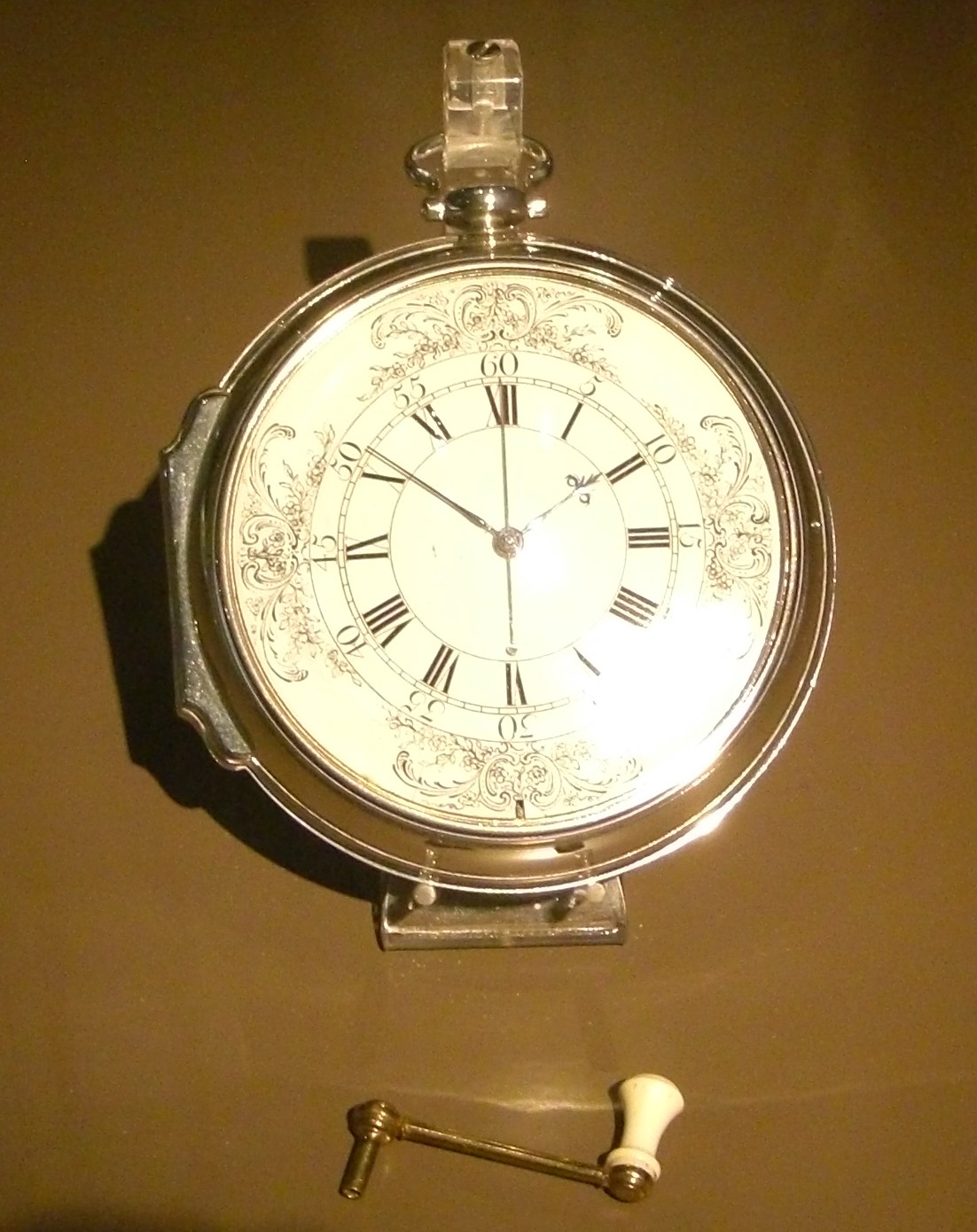
At sea the pendulum was useless, and the problem of finding longitude depended on carrying accurate time. The British Longitude Act of 1714 offered a reward of up to £20,000. Harrison's fourth marine timekeeper, H4, completed in 1759, kept time well enough on a voyage to Jamaica in 1761–1762 to show that the method could work, and the marine chronometer, refined by Pierre Le Roy, John Arnold and Thomas Earnshaw, became standard equipment on ships in the nineteenth century. Our longitude and chronometer features tell that story.
Electricity, quartz and the atom
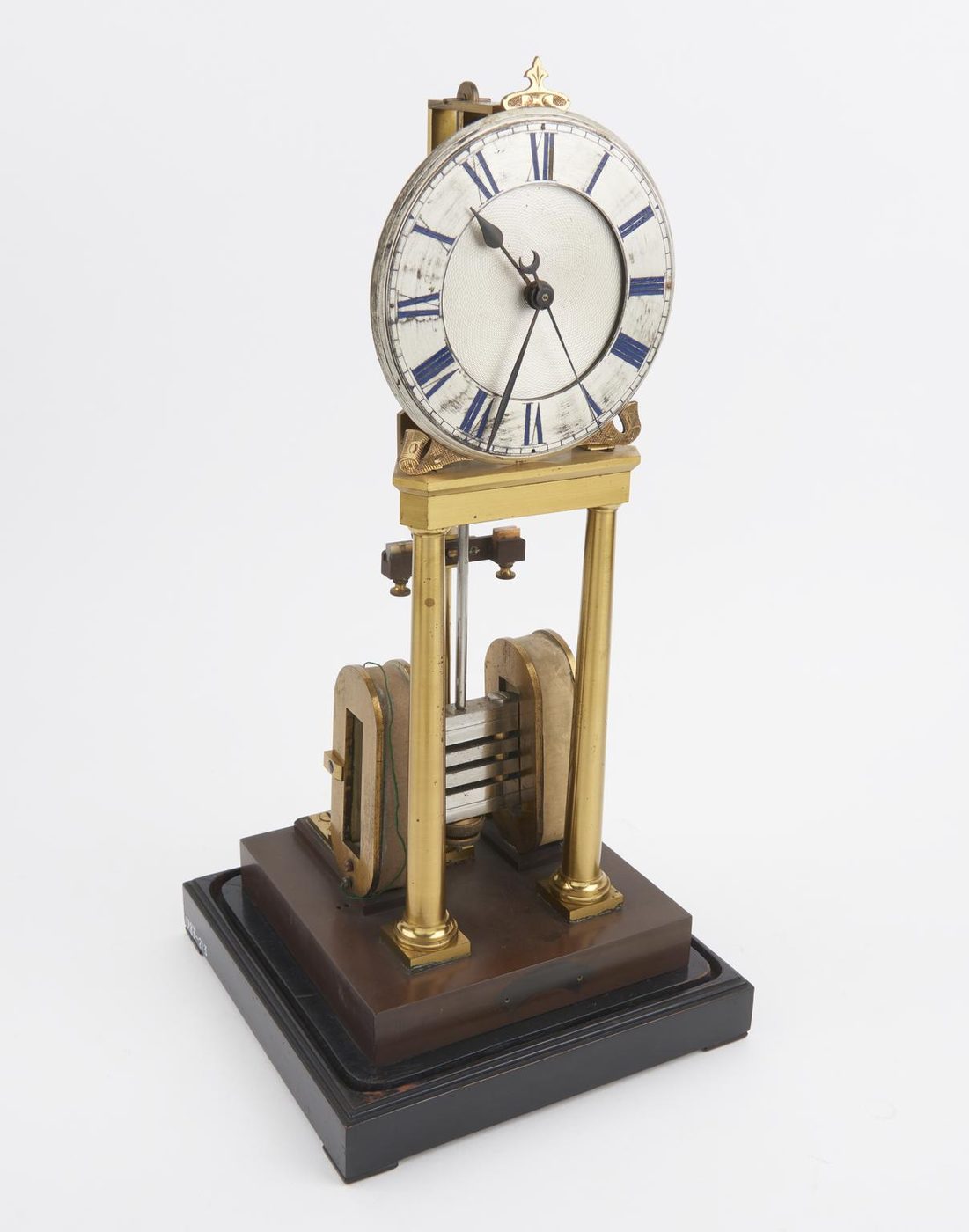
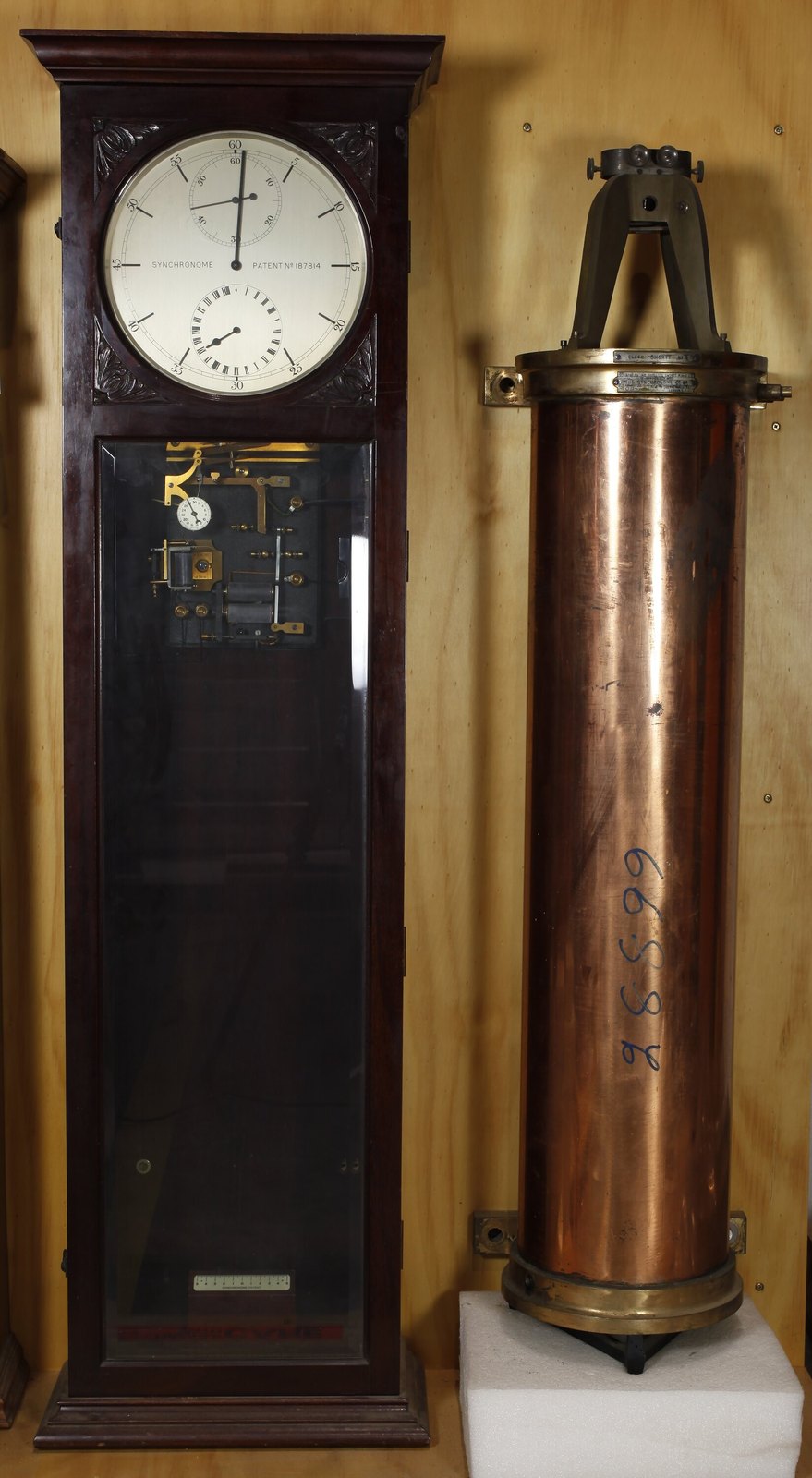
From the 1840s electricity was used to drive and to synchronise clocks. Alexander Bain patented an electric clock in 1840–1841, and by the end of the century master clocks drove networks of dials in offices, factories and railway stations. In 1921 William Hamilton Shortt's free-pendulum clock, made with the Synchronome Company, separated the timekeeping pendulum from almost all work; about a hundred were made, and they kept time in observatories around the world until quartz replaced them.
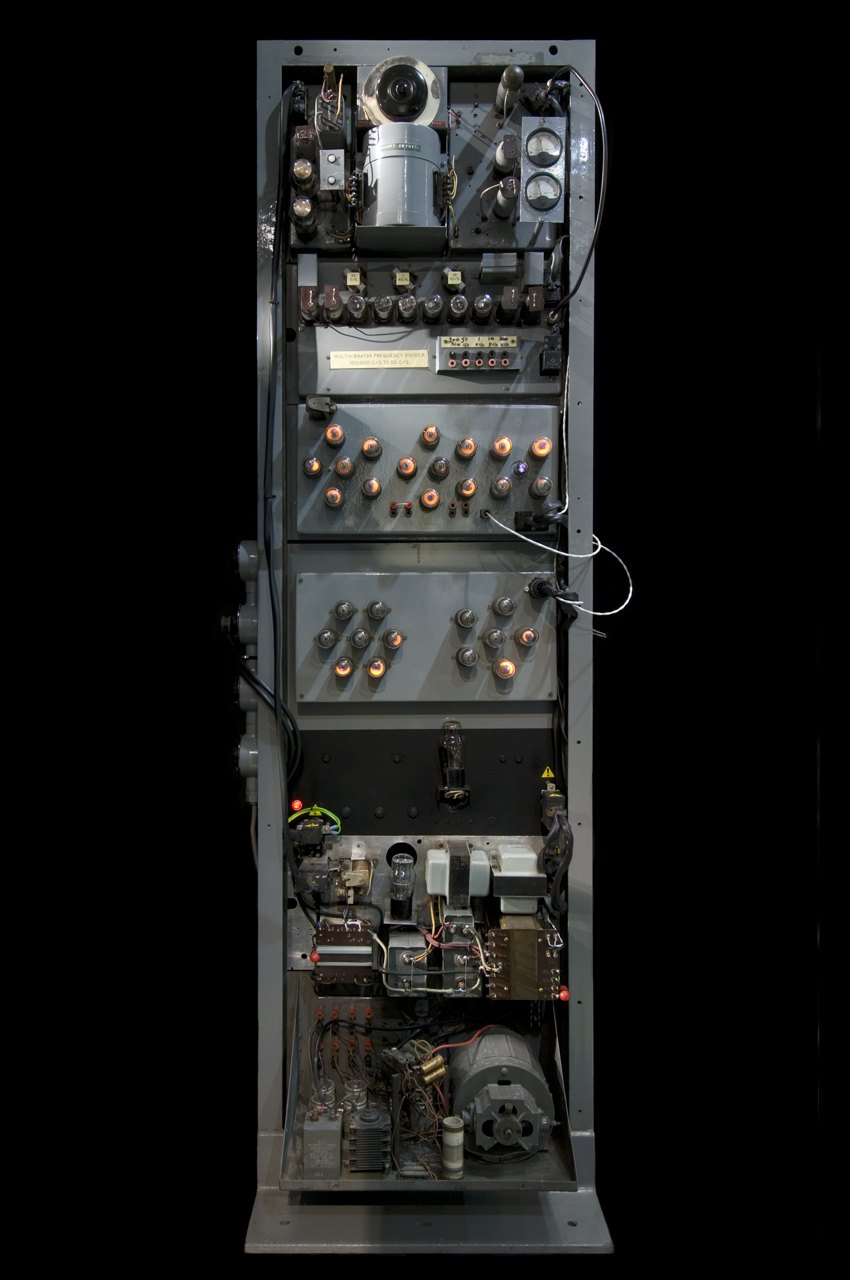
The quartz clock replaced the pendulum altogether. A quartz crystal vibrates at a very stable frequency when an electric current is applied, and in 1927 Warren Marrison and J. W. Horton of Bell Telephone Laboratories built the first quartz clock. By the 1940s, as Royal Museums Greenwich notes, quartz clocks had replaced pendulum regulators in the world's observatories. They were accurate enough to show that the Earth's rotation, the old standard of time, is itself irregular.
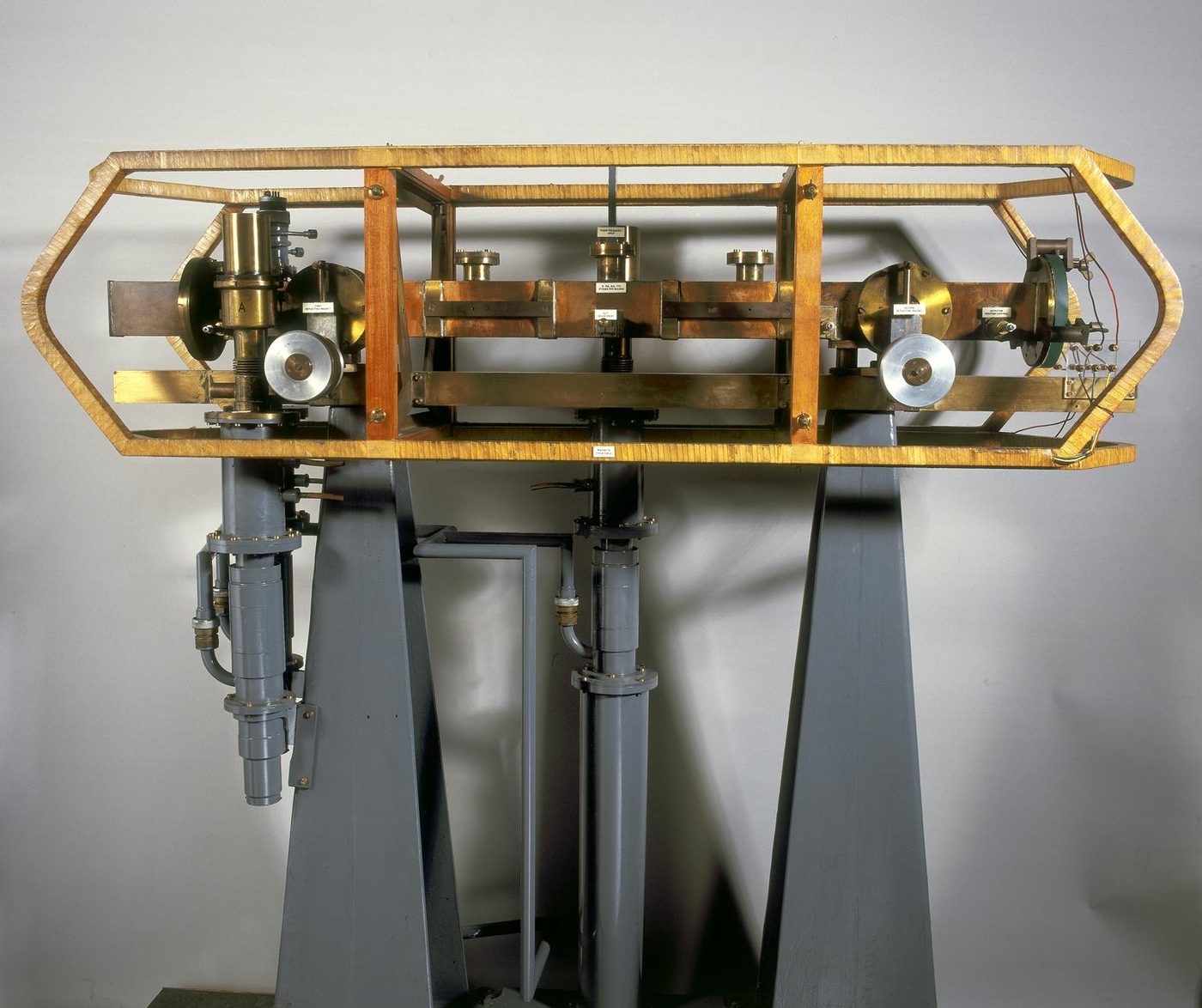
The atomic clock followed. In 1955 Louis Essen and Jack Parry at the National Physical Laboratory in Teddington built the first successful caesium atomic clock, which measured time by a change of state in caesium atoms; the Science Museum describes it as accurate to a second in 300 years. In 1967 the second itself was redefined by the caesium atom, and the world's time has been kept by atomic clocks ever since. In 1969 Seiko brought quartz to the wrist with the Quartz Astron, and by the 1980s quartz watches were made in far greater numbers than mechanical ones.
Who invented what: a summary
| Invention | Date | Where | Credited to |
|---|---|---|---|
| Shadow clock and sundial | c. 1500 BCE | Egypt | Unknown |
| Outflow water clock (oldest surviving) | c. 1380 BCE | Karnak, Egypt | Made for Amenhotep III; maker unknown |
| Float-regulated water clock | c. 270 BCE | Alexandria | Ctesibius |
| Escapement-like water-driven astronomical machine | 725 | China | Yi Xing and Liang Lingzan |
| Astronomical clock tower | 1088–1092 | Kaifeng, China | Su Song and his team |
| Water clocks with automata (described) | 1206 | Diyarbakır | Ismail al-Jazari |
| Weight-driven clock with verge and foliot | late 13th century | Europe | Unknown |
| Spring-driven clock | early 15th century | Europe | Unknown |
| Portable spring-driven watch | early 16th century | Nuremberg and elsewhere | Peter Henlein among the first known makers |
| Pendulum clock | 1656–1657 | The Hague | Christiaan Huygens; made by Salomon Coster |
| Anchor escapement | c. 1670 | England | Robert Hooke or William Clement (debated) |
| Balance spring | 1675 | Netherlands / England | Christiaan Huygens; Robert Hooke claimed priority |
| Practical marine timekeeper | 1759 | London | John Harrison (H4) |
| Electric clock | 1840–1841 | Britain | Alexander Bain (patent) |
| Free-pendulum clock | 1921 | London | William Hamilton Shortt with the Synchronome Co. |
| Quartz clock | 1927 | Bell Laboratories, USA | Warren Marrison and J. W. Horton |
| Caesium atomic clock | 1955 | Teddington, England | Louis Essen and Jack Parry |
| Quartz wristwatch on sale | 1969 | Japan | Seiko (Quartz Astron) |
So, who invented the clock?
- If you mean any device that measures time, the answer is the ancient Egyptians, whose shadow clocks and water clocks are the oldest known; no individual inventor is recorded.
- If you mean a clock regulated by an escapement, the earliest documented ones are Chinese: Yi Xing and Liang Lingzan in 725, and Su Song's clock tower of 1088–1092.
- If you mean the weight-driven mechanical clock — the ancestor of every tower clock, longcase and watch — it appeared in Europe in the late thirteenth century, and its inventor is unknown.
- If you mean the accurate clock, the credit usually goes to Christiaan Huygens for the pendulum clock of 1656–1657.
- If you mean the clocks that keep the world's time today, they are atomic clocks, descended from the caesium clock of Louis Essen and Jack Parry, 1955.
The history of the clock is a history of borrowing. Each new timekeeper took over the hours, the dials and the habits of the one before, and each was judged by how well it agreed with the Sun and the stars until clocks became better than the heavens they imitated. To see these machines in more detail, explore the Atlas timeline, browse the catalogue's sundials, water clocks, tower clocks and regulators, or try the pendulum and escapement simulations in the lab.
Sources & further reading
- History of the Hour: Clocks and Modern Temporal Orders — Gerhard Dohrn-van Rossum, University of Chicago Press, 1996 (German original 1992).
- Revolution in Time: Clocks and the Making of the Modern World — David S. Landes, Harvard University Press, 1983.
- Heavenly Clockwork: The Great Astronomical Clocks of Medieval China — Joseph Needham, Wang Ling, Derek J. de Solla Price, Cambridge University Press, 1960.
- The Book of Knowledge of Ingenious Mechanical Devices — Ibn al-Razzaz al-Jazari, trans. Donald R. Hill, D. Reidel (Dordrecht), 1206 (original); 1974 (translation).
- Arabic Water-Clocks — Donald R. Hill, Institute for the History of Arabic Science (Aleppo), 1981.
- Tractatus astrarii — Giovanni de' Dondi, Manuscript, c. 1364.
- Horologium Oscillatorium — Christiaan Huygens, F. Muguet (Paris), 1673.
- The Evolution of the Quartz Crystal Clock — Warren A. Marrison, Bell System Technical Journal 27 (3): 510–588, 1948.
- An Atomic Standard of Frequency and Time Interval: A Caesium Resonator — L. Essen and J. V. L. Parry, Nature 176: 280–282, 1955.
- Clocks — David Thompson, British Museum Press (London), 2004.
- Time & Timekeepers — Willis I. Milham, Macmillan (New York), 1923.