Component
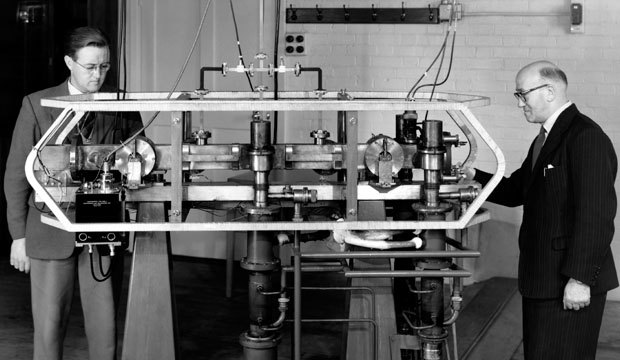
Caesium atomic standard
Also known as: Atomic clock · Cesium clock · Atomuhr
How it works
Caesium-133 atoms are probed with microwaves; when the microwave frequency matches the atoms' hyperfine transition, the number of atoms changing state peaks. A feedback loop locks a quartz oscillator to that atomic resonance.
Why it was invented
Atomic transitions are identical everywhere and do not wear, providing a timekeeping reference far more stable than the Earth's rotation.
- Invented
- 1955
- Credited to
- Louis Essen and Jack Parry (National Physical Laboratory)
- Historical period
- Modern Mechanical Horology
- SI second (since 1967)
- 9,192,631,770 periods of the Cs-133 hyperfine transition
History and development
Essen and Parry operated the first practical caesium standard at the NPL in Teddington in 1955. In 1967 the SI second was redefined as 9,192,631,770 periods of the caesium transition. Optical-lattice clocks of the 21st century are more stable still and may lead to a future redefinition.
Related mechanisms
In the catalogue
Open in the catalogue →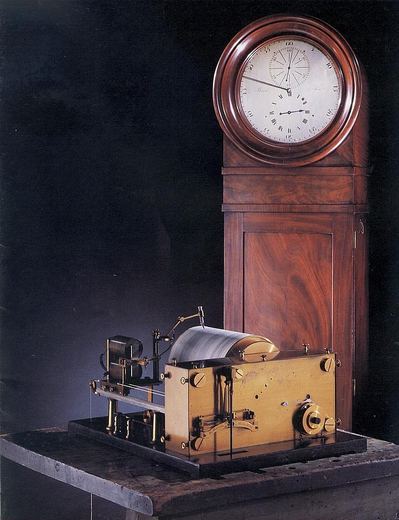
Clocks · ca 1850
Clock by William Bond & Son, United States, ca 1850
National Museum of American History, Smithsonian Institution, Washington DC
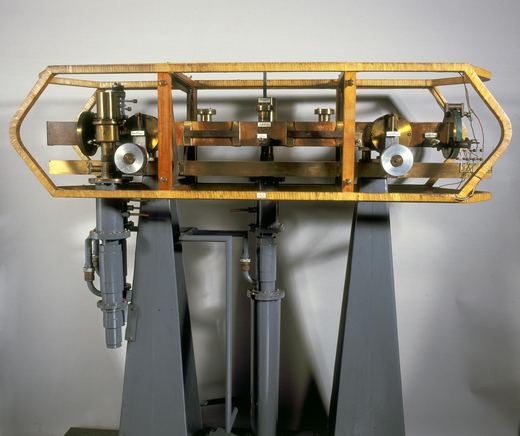
Clocks · 1955
Caesium atomic clock made by Louis Essen and J.V.L. Parry at the National Physical Laboratory, Teddington, London, 1955.
Science Museum Group, London
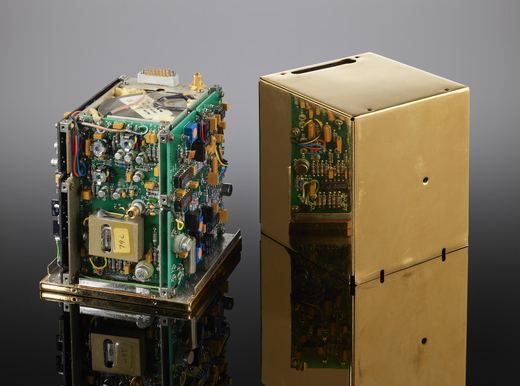
Clocks · 1960-1996
Electric clock by Efratom GmbH, Germany, 1960-1996
Science Museum Group, London
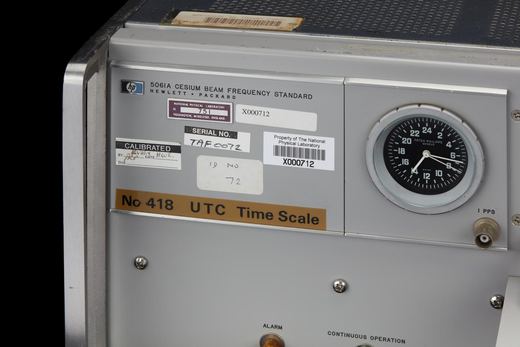
Clocks · 1972
Electric clock by Hewlett Packard Company, 1972
Science Museum Group, London
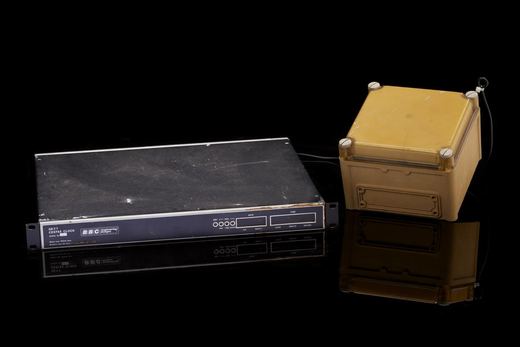
Clocks · 1974
CEEFAX clock Serial No. 1 GE7/7.
Science Museum Group, London
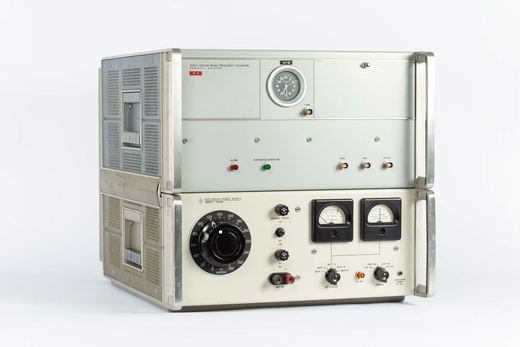
Clocks · 1975
Electric clock, Germany, 1975
German Clock Museum
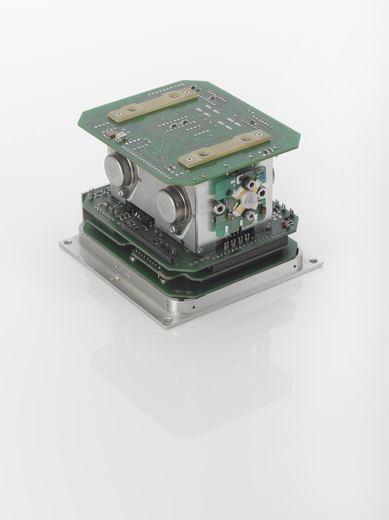
Clocks · 2002
Prototype atomic clock for use with the Galileo communications satellite, manufactured by Temex Neuchâtel Time SA, Switzerland, 2002
Science Museum Group, London
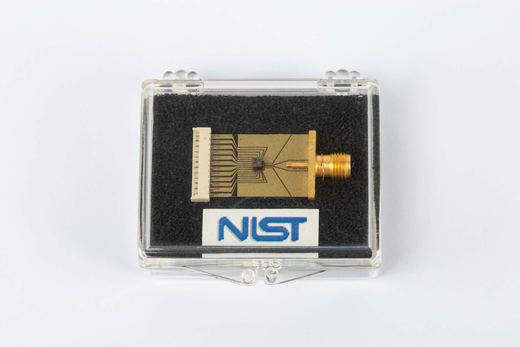
Clocks · 2004
Electric clock by National Institute of Standards and Technology (NIST), United States, 2004
German Clock Museum
Records are linked when the holding institution's description names this mechanism; check each source record for confirmation.