Component
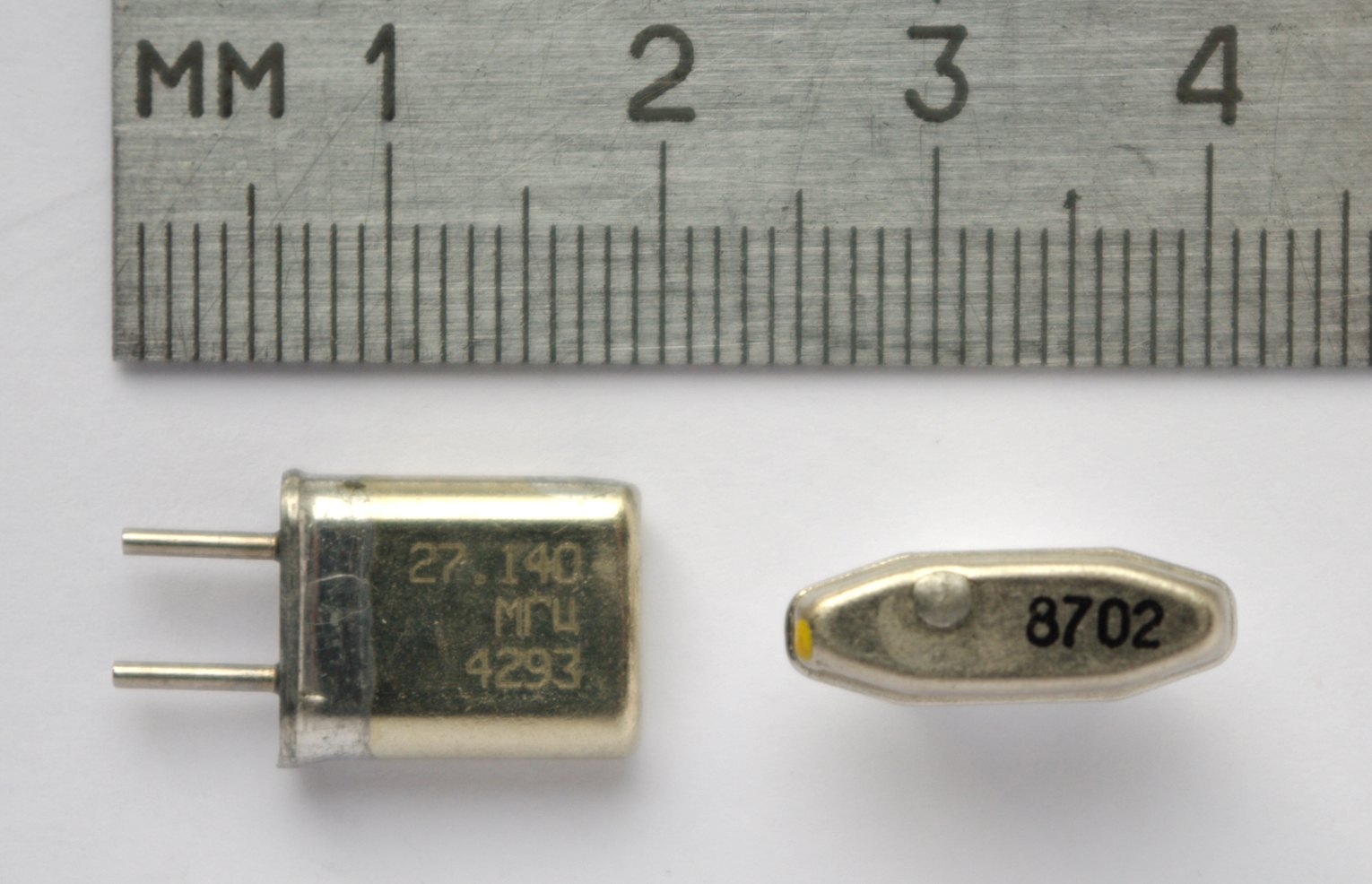
Quartz crystal oscillator
Also known as: Quartz · Quarzoszillator
How it works
A small piece of quartz vibrates when driven by an electric field (the piezoelectric effect). An electronic circuit keeps it oscillating at its resonant frequency — 32,768 Hz (2¹⁵) in most watches — and divides that frequency down to one pulse per second for a stepping motor or display.
Why it was invented
Quartz oscillates thousands of times faster than a balance and is far less affected by position and wear, giving accuracy of a few seconds a month in a wristwatch.
- Invented
- 1927
- Credited to
- Warren Marrison and J. W. Horton (Bell Telephone Laboratories)
- Historical period
- Golden Age of Mechanical Watchmaking
- Watch crystal frequency
- 32,768 Hz
- Typical watch accuracy
- ±15 s/month (standard); ±5–10 s/year (high-accuracy, thermocompensated)
History and development
The first quartz clock was built at Bell Labs in 1927. Quartz clocks replaced pendulum clocks in observatories and time services from the 1940s. Seiko's Astron 35SQ (1969) was the first quartz wristwatch on sale; by the early 1980s mass-produced quartz watches had transformed the industry.
Related mechanisms
Movements using it
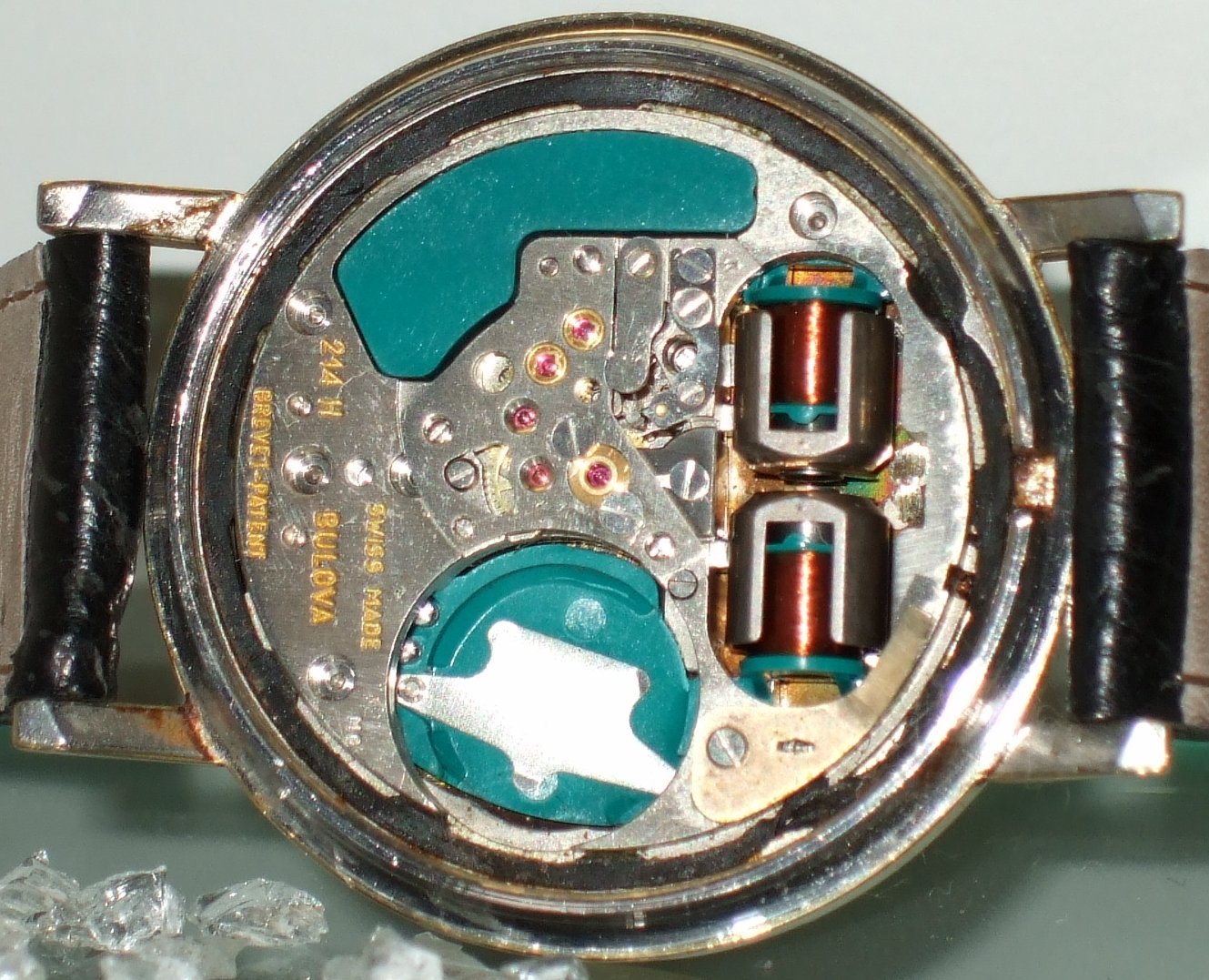
- Seiko calibre 35AQuartz
- Seiko Spring Drive (7R, 9R, 5R families)Spring Drive (mainspring with quartz-regulated glide wheel)
In the catalogue
All 82 records →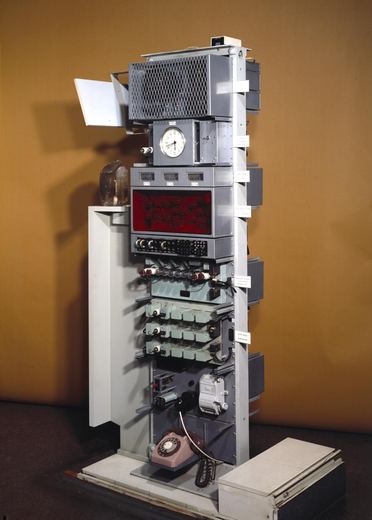
Clocks · 1942
Quartz clock equipment, mounted on 6'6" standard rack, R.3191, with box of accessories and spare frequency divider unit
Science Museum Group, London
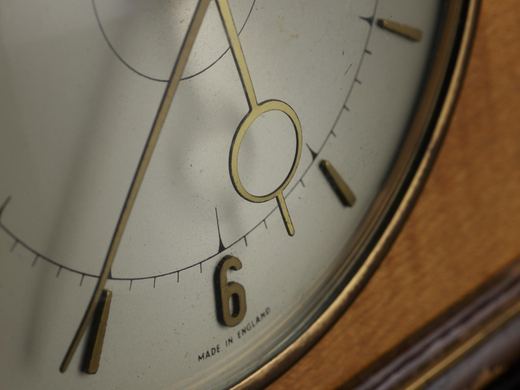
Clocks · 1950-1960
Mantel clock with 8-day mechanical movement, aluminium dial and walnut and sycamore wooden casing. Made by Metamec, East Dereham, Norfolk, 1950-1960.
Science Museum Group, London
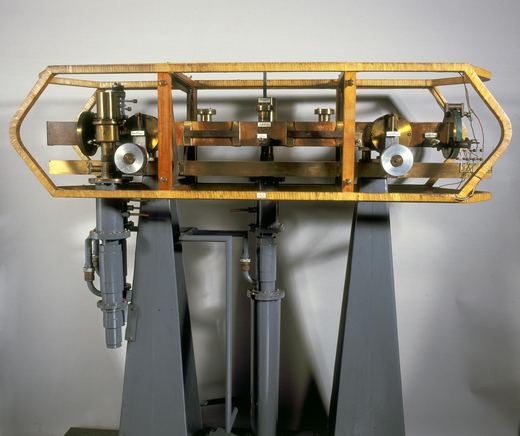
Clocks · 1955
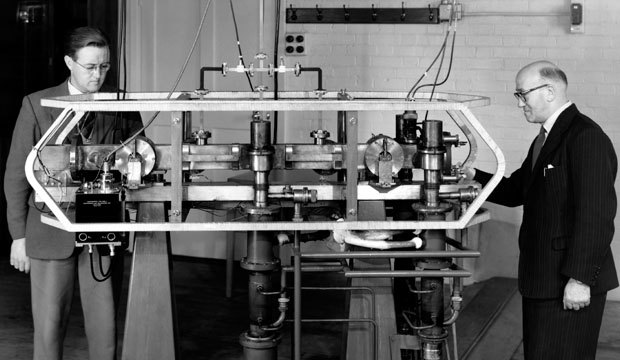
Caesium atomic clock made by Louis Essen and J.V.L. Parry at the National Physical Laboratory, Teddington, London, 1955.
Science Museum Group, London
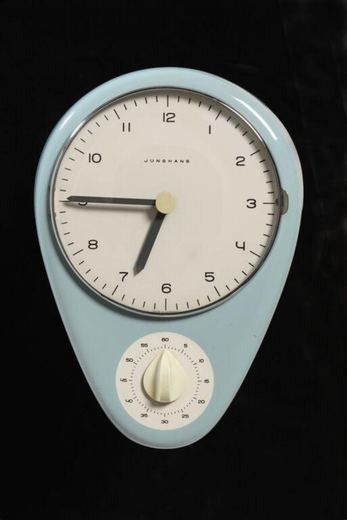
Clocks · 1956
Glazed earthenware, quartz movement, Germany, made by Junghans, designed in 1956 by Max Bill and Ernst Moeckl
Victoria and Albert Museum, London
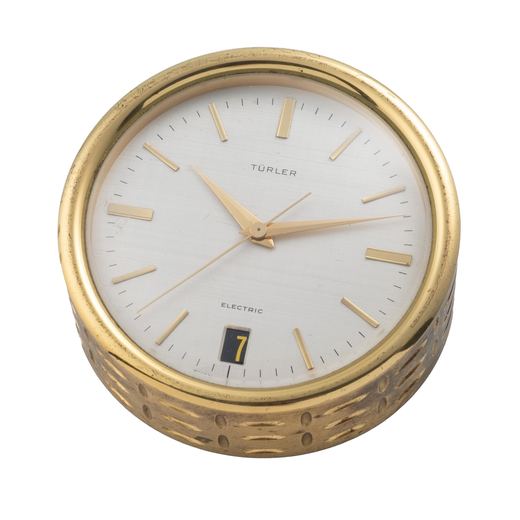
Clocks · circa 1960-1970's
Anonymous clock, circa 1960-1970's
Antiquorum auction archive, Geneva
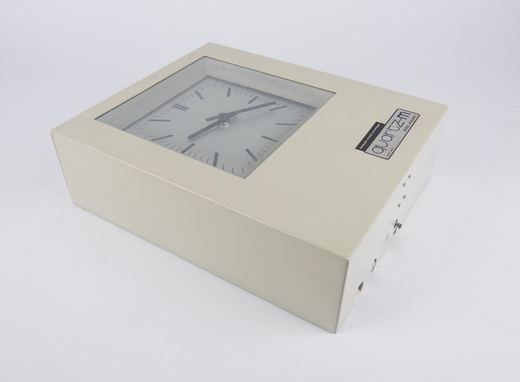
Clocks · 1965-1975
Quartz master clock QM 1, with movement by Patek Phillippe, Switzerland, 1965-1975. Supplied by English Clock Systems.
Science Museum Group, London
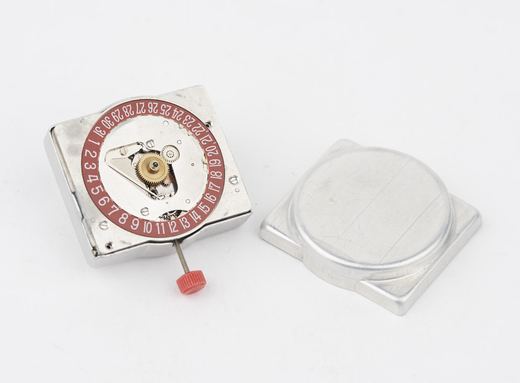
Wristwatches · 1969-1970
Beta 21 Quartz wristwatch movement, made in Switzerland, 1970.
Science Museum Group, London
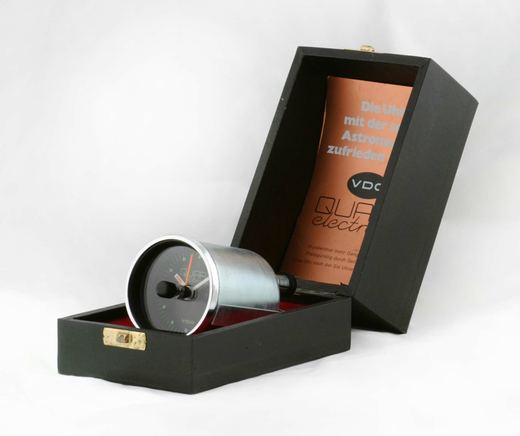
Clocks · 1969
Clock by VDO, Germany, 1969
German Clock Museum
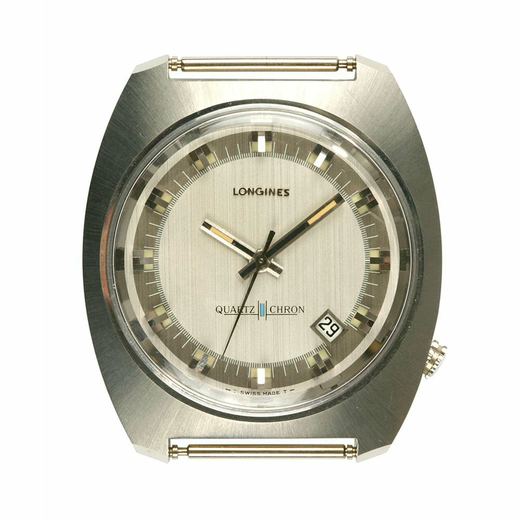
Wristwatches · 1969
Wristwatch by Francillon und Cie (Longines), Switzerland, 1969
German Clock Museum
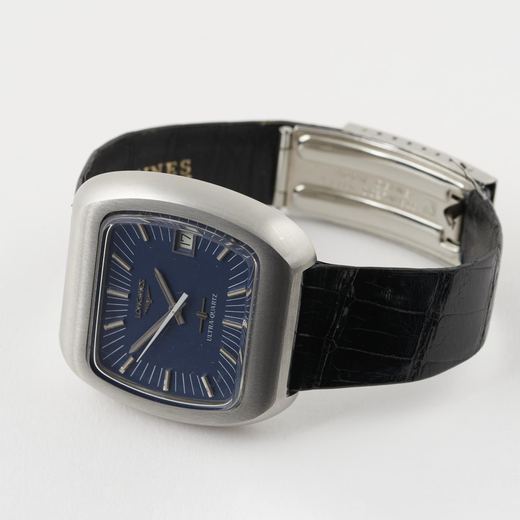
Wristwatches · 1969-1970
Wristwatch by Longines Watch Company, Francillon Ltd, Switzerland, 1969-1970
Science Museum Group, London
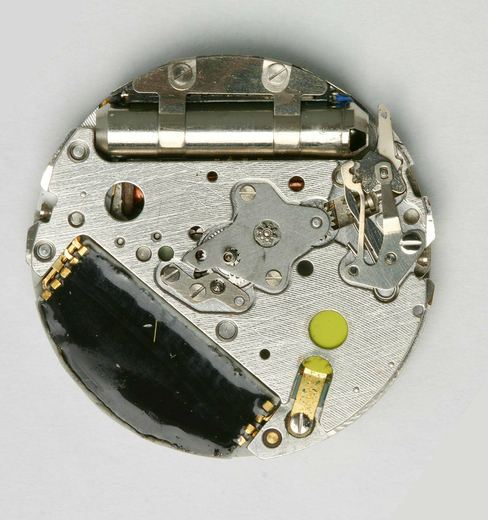
Wristwatches · 1969
Wristwatch, Japan, 1969 (German Clock Museum Museu_ProvidedCHO_museum_digital_29907__technical_number_)
German Clock Museum
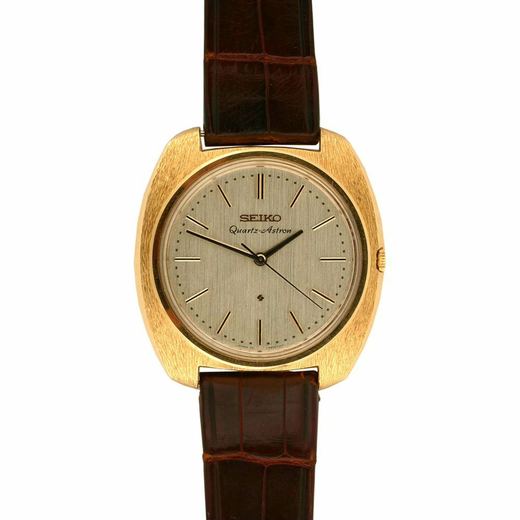
Wristwatches · 1969
Wristwatch, Japan, 1969 (German Clock Museum Museu_ProvidedCHO_museum_digital_29912__technical_number_)
German Clock Museum
Records are linked when the holding institution's description names this mechanism; check each source record for confirmation.
Further reading in the magazine
- Christmas Day, 1969: The Seiko Astron and the Quartz Revolution
How a gold watch released in Tokyo — with a crystal vibrating 8,192 times a second — reshaped the global watch industry within fifteen years.