Clocks · Clock
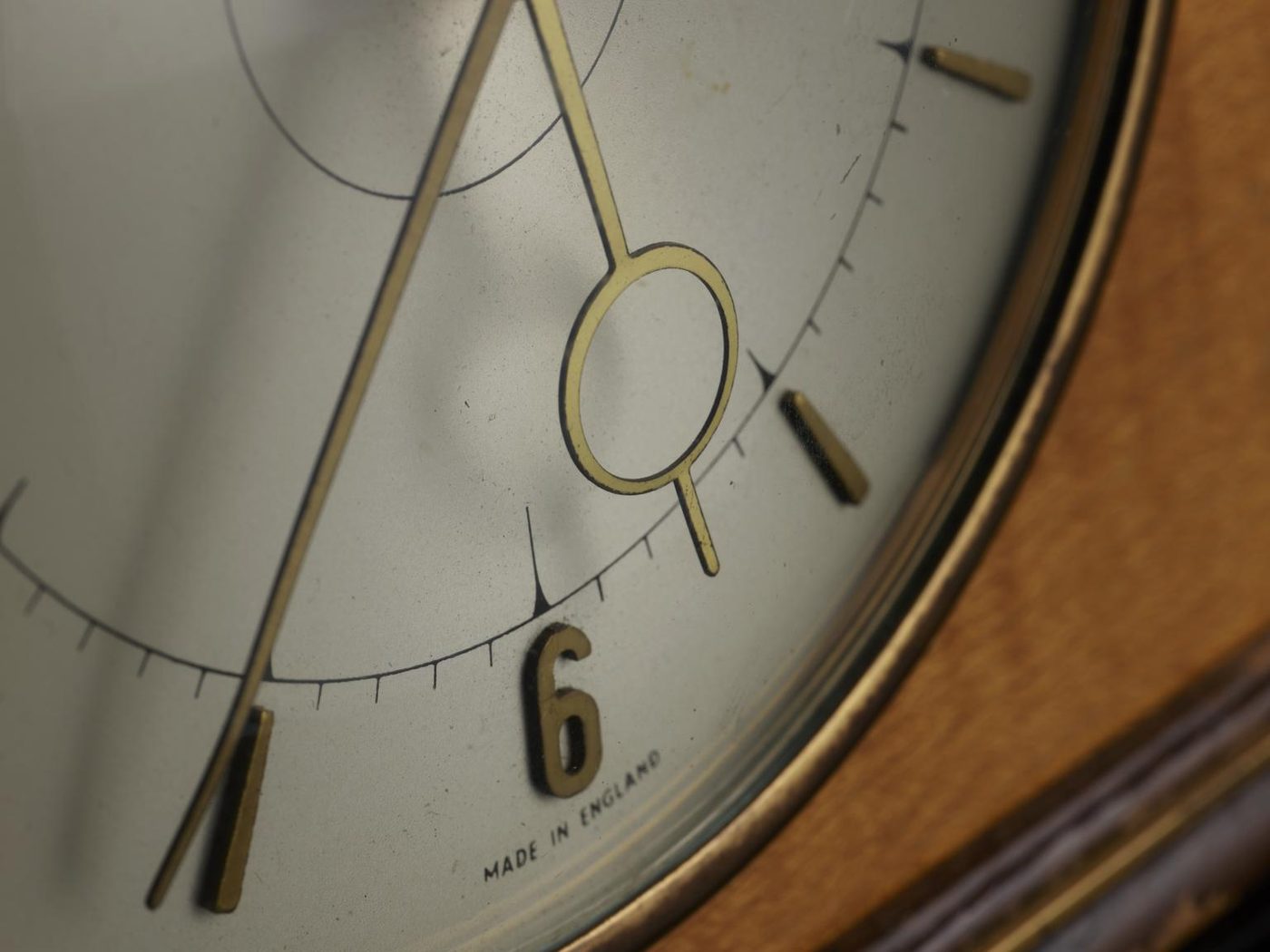
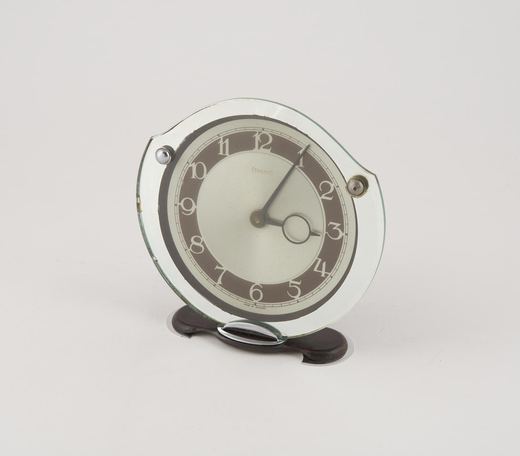
Mantel clock with 8-day mechanical movement, aluminium dial and walnut and sycamore wooden casing. Made by Metamec, East Dereham, Norfolk, 1950-1960.
- Maker / attribution
- Metamec (maker)
- Date
- 1950-1960
- Historical period
- Modern Mechanical Horology (1945 – 1969)
- Country of origin
- England
- Place
- East Dereham, Norfolk, England, United Kingdom, East Dereham
- Object type
- Clock
- Holding institution
- Science Museum Group, London
- Accession / object no.
- 2021-624
- Catalogue title (original)
- Mantel clock by Metamec
Record summary
Held and catalogued by Science Museum Group, London (object number 2021-624), this is a clock by Metamec, made in East Dereham, Norfolk, England, United Kingdom, East Dereham, dated 1950-1960. The Atlas places it in the Modern Mechanical Horology period (1945 – 1969) of its Clocks collection. The record is illustrated with 4 photographs.
Assembled from the source record's structured fields. Dates and attributions are given as the source states them; where a field is missing the Atlas leaves it blank rather than estimating.
Catalogue description
Science Museum Group description
Metamec, whose name was formed by combining the words ‘metalwork’ and ‘mechanics’, was based in East Dereham in Norfolk and played a significant role in the history of the British clockmaking trade. In the late 1940s, when the company was formed, there was a scarcity of new clocks available to buy in the UK, Smiths of London were the only other major manufacturer, so Metamec clocks found a fruitful consumer base. They sold directly to furniture retailers and high street jewellers. By the 1960s Metamec was the largest clock manufacturer in the UK and even employed its own sales department. At its peak in the 1960s the company employed 800 people and produced 25,000 clocks per week. Unlike many English clockmaking firms they kept up with new developments in horology and invested in the manufacture of quartz movements, but were unable to compete with German and Asian factories in the late 1970s and early 1980s. Despite branching out to the American market, the company went into receivership in 1984.
Historical context
Modern Mechanical Horology (1945 – 1969)
Tool watches for divers, pilots and astronauts; electric watches anticipate the electronic age.
Post-war clocks combined new materials and industrial design: plastic and metal cases, battery-powered transistor movements from the late 1950s, and design classics by George Nelson, Max Bill and others. The first caesium atomic clock (1955) moved the definition of time from astronomy to physics.
Read the period in the timelineMore clocks from this periodEarlier: Golden Age of Mechanical Watchmaking
Atlas type guide
Mantel and French pendule clocks
The mantel clock — the French pendule de cheminée — is as much decorative art as timekeeper. From the late seventeenth century Parisian clockmakers worked with cabinet-makers, bronze founders and gilders (ciseleurs-doreurs) to create cases in Boulle marquetry, gilt bronze and marble, while the movements were often supplied by specialist makers. Clocks of the Louis XIV, Louis XV and Louis XVI periods, and Empire clocks with allegorical figures, set fashions copied across Europe.
The nineteenth century industrialised the type. The 'Paris movement', a standardised round movement with silk-thread or Brocot suspension and count-wheel striking, was made in huge numbers by firms such as Japy and Vincenti, and fitted into cases of every style and material.
What to look for
- Round 'Paris' movements with makers' stamps (e.g. Japy Frères, Vincenti, S. Marti) and medal marks from exhibitions.
- Suspension type: silk thread (earlier) or Brocot adjustable suspension (after c. 1840).
- Visible Brocot escapement on the dial in later clocks.
- Fire-gilt (mercury) gilding on bronzes versus later electro-gilding.
- Signed dials naming a retailer rather than the movement maker.
Dating clues
- Silk-suspension Paris movements: c. 1800–1850.
- Brocot suspension and visible escapements: after c. 1840.
- Exhibition medal stamps on movements give dates after the medal year.
General guidance written by the Atlas editors about this kind of object. It is not a statement about this particular piece; for that, rely on the source record above and on physical examination.
Read next:Anchor (recoil) escapement
Related records
Clocks · 1930-1960
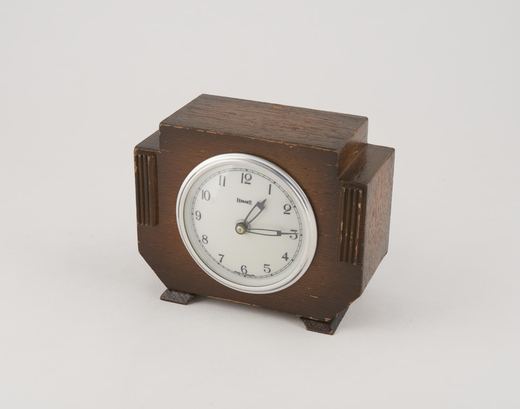
Ferranti electric mantel clock. (Science Museum Group Y1996.10.820)
Science Museum Group, London
Clocks · 1931-1970
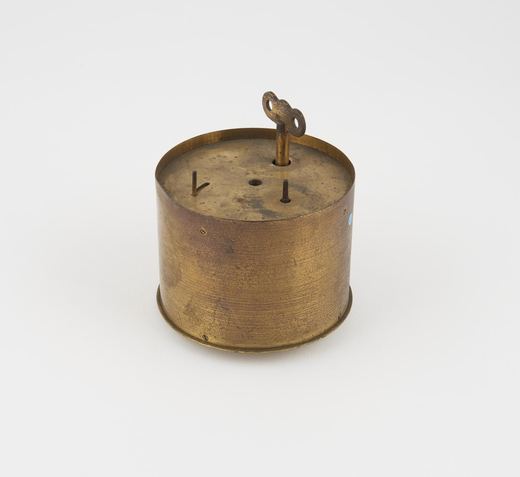
Clock and drum for recorder, 24 hours, English, 1931-1970.
Science Museum Group, London
Clocks · 1940-1967
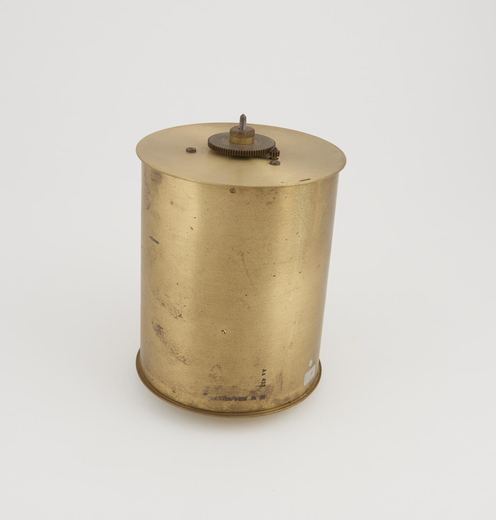
Drum and clock, English, 1940-1947, MO W 5124/ 47/ 57.
Science Museum Group, London
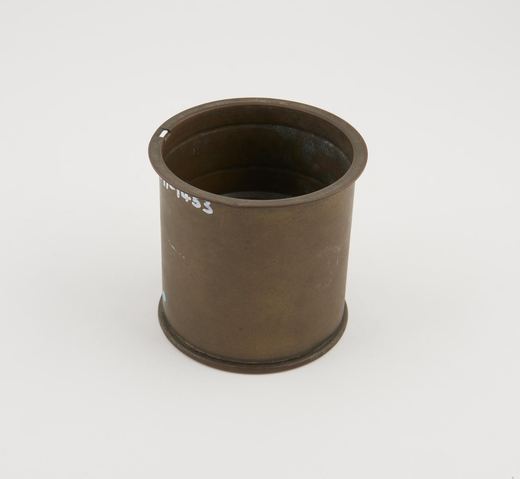
Clocks · 1940-1950
Drum and clock. by Smith's English Clocks Ltd., London, for Air Ministry.
Science Museum Group, London
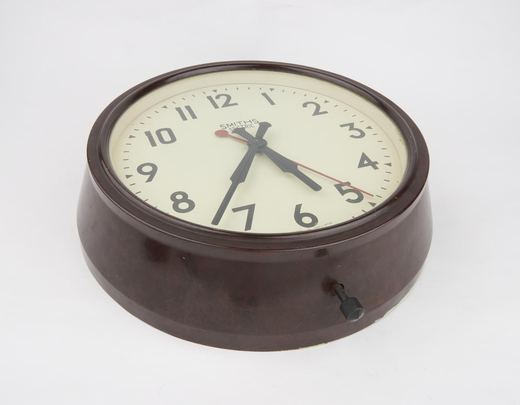
Clocks · circa 1946
Smiths Sectric synchronous motor electric wall clock with centre seconds hand, by Smiths English Clocks Ltd, England c. 1946
Science Museum Group, London
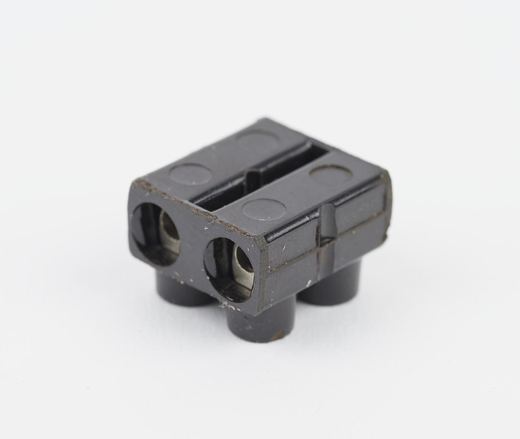
Clocks · 1944-1947
Electrical connector block from the Parriss rolling-ball free pendulum clock, by E. G. Parriss, Nuneaton, England, 1944-1947
Science Museum Group, London
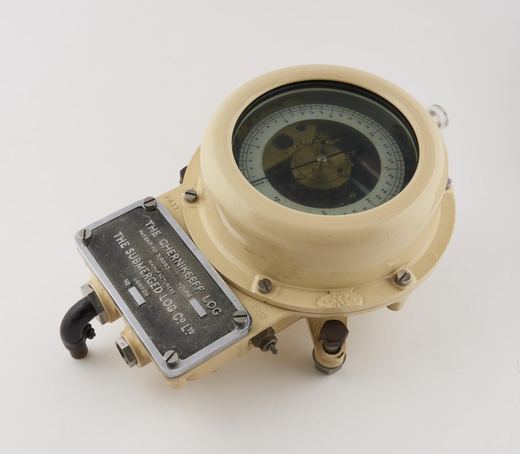
Clocks · 1945-1955
Clock by Submerged Log Company Limited; Chernikeef, Captain B., England, 1945-1955
Science Museum Group, London
Clocks · 1946
Ferranti model 292 electric clock, c.1946.
Science Museum Group, London