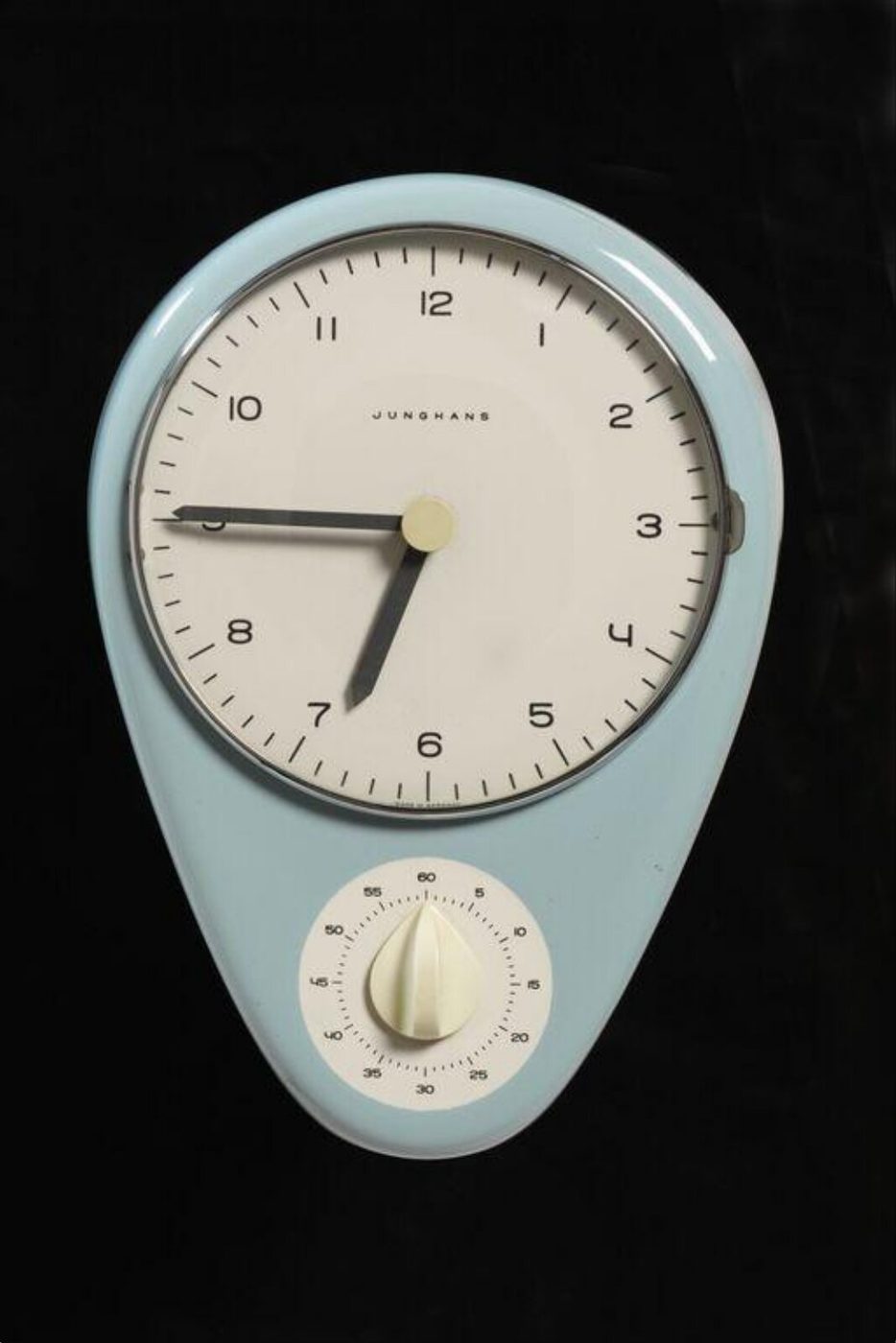
Clocks · Kitchen wall clock
Glazed earthenware, quartz movement, Germany, made by Junghans, designed in 1956 by Max Bill and Ernst Moeckl
- Maker / attribution
- Max Bill (designer); Ernst Moeckl (designer); Junghans (Uhren GmBH) (maker)
- Date
- 1956
- Historical period
- Modern Mechanical Horology (1945 – 1969)
- Country of origin
- Germany
- Place
- Schramberg
- Object type
- Kitchen wall clock
- Materials / technique
- Glazed earthenware, glass, chrome, painted metal, plastic and quartz mechanism
- Dimensions
- Height: 26 cm; Width: 18.7 cm; Depth: 6 cm
- Holding institution
- Victoria and Albert Museum, London
- Accession / object no.
- M.224-2007
- Catalogue title (original)
- Kitchen wall clock
Record summary
Held and catalogued by Victoria and Albert Museum, London (object number M.224-2007), this is a kitchen wall clock by Max Bill, made in Schramberg, Germany, dated 1956. The Atlas places it in the Modern Mechanical Horology period (1945 – 1969) of its Clocks collection. Materials and techniques recorded by the source: Glazed earthenware, glass, chrome, painted metal, plastic and quartz mechanism. Recorded dimensions: Height: 26 cm; Width: 18.7 cm; Depth: 6 cm. The record is illustrated with 2 photographs.
Assembled from the source record's structured fields. Dates and attributions are given as the source states them; where a field is missing the Atlas leaves it blank rather than estimating.
Catalogue description
V&A — Summary
This kitchen clock, which incorporates a mechanical timer, was designed by Max Bill whilst Director of the Hochschule für Gestaltung (HfG Ulm), the experimental design school founded in 1953. The school was established by Inge Aicher-Scholl and Otl Aicher in memory of Scholl’s brother and sister who had been killed in 1943 (they were part of an anti-Nazi resistance group). Schol’s and Aicher’s initial vision for the school had been for an institution of democratic education, devoted to politics and philosophy as well as culture, which would aid in the moral rebuilding of Germany. Plans for the school were redirected more firmly towards design when the founders invited the Swiss artist and designer Max Bill to be Director. Bill was a former Bauhaus student, President of the Swiss Werkbund and a major figure in the cause of modernist architecture and design in Europe. The school became the figurehead of Western German modernism in the post war period, often referred to as a “new Bauhaus”. In terms of product design, Bill and his colleagues pursued an ideal of rationalist modernism, in visual and philosophical opposition to the streamlined styling of post war American design. A totalising vision of design promoted the engagement of the artist with industry, although leading members of the school disagreed about how this should be achieved. The Ulm’s school’s achievements in industrial collaboration with companies such as Junghams and Braun, however, produced an enduring legacy of modernist product design which was highly influential around Europe. This clock is one of the earliest and most notable designs by Bill to be put into production. Everyday objects (kitchen appliances, audio-visual equipment, tools, shelving etc.) were a central focus for the work of Ulm designers, who shared the tradition of “moral purpose through design” and “good form” with the Swiss and German Werkbunds. Bill had spearheaded the Werkbund’s good form campaign (which ran through the 1950s) with his influential travelling exhibition “Gute Form” in 1949.
V&A — Physical description
The body of glazed earthenware, the exterior coloured a pale blue, the interior, white, is moulded in an inverted, triangular "V" shape with a rounded top and bottom clock dial is circular with the numerals and minutes marked in black; the hands of black strip metal with pointed ends, the central spindle is covered by a small, circular white plastic disc. The manufacturer's name, JUNGHANS is printed across the face. The clock face has a circular glass cover with a thin, chromium plated rim, hinged on the left and with a thumb piece retained by a pin on the right. The timer is immediately below the clock face, with back numerals against a plain white background, the minutes unidentified five minute intervals form 0 through to 60. The timer is operated by a white plastic knob. On the back, the letters JUNGHANS, are impressed into the body and run in an arc underneath the curved top. The clock is operated by a battery powering a quartz mechanism housed in a rectangular plastic case to which is attached a brass hook for hanging the clock on a kitchen wall; the clockwork timer mechanism is housed in a cylindrical, plastic box.
V&A — Object history
Historical significance: This kitchen clock, which incorporates a mechanical timer, was designed by Max Bill whilst Director of the Hochschule für Gestaltung (HfG Ulm), the experimental design school founded in 1953. The school was established by Inge Aicher-Scholl and Otl Aicher in memory of Scholl’s brother and sister who had been killed in 1943 (they were part of an anti-Nazi resistance group). School’s and Aicher’s initial vision for the school had been for an institution of democratic education, devoted to politics and philosophy as well as culture, which would aid in the moral rebuilding of Germany. Plans for the school were redirected more firmly towards design when the founders invited the Swiss artist and designer Max Bill to be Director. Bill was a former Bauhaus student, President of the Swiss Werkbund and a major figure in the cause of modernist architecture and design in Europe. The school became the figurehead of Western German modernism in the post war period, often referred to as a “new Bauhaus”. In terms of product design, Bill and his colleagues pursued an ideal of rationalist modernism, in visual and philosophical opposition to the streamlined styling of post war American design. A totalising vision of design promoted the engagement of the artist with industry, although leading members of the school disagreed about how this should be achieved. The ulm’s school’s achievements in industrial collaboration with companies such as Junghams and Braun, however, produced an enduring legacy of modernist product design which was highly influential around Europe. This clock is one of the earliest and most notable designs by Bill to be put into production. Everyday objects (kitchen appliances, audio-visual equipment, tools, shelving etc.) were a central focus for the work of Ulm designers, who shared the tradition of “moral purpose through design” and “good form” with the Swiss and German Werkbunds. Bill had spearheaded the Werkbund’s good form campaign (which ran through the 1950s) with his influential travelling exhibition “Gute Form” in 1949. The clock is the first designed object by Bill (with the exception of posters, such as Bill’s important 1945 poster, “USA Baut”) to be acquired by the Museum, and is a vitally important addition to the 20th century collections, and for the exhibition Cold War Modern, where it will form a part of a display on the early years of the Ulm School. Other recent acquisitions by FTF of objects by Dieter Rams for Braun mean that it is now possible for the Museum to tell the story of post war German modernism.
Inscriptions & marks
JUNGHANS
Historical context
Modern Mechanical Horology (1945 – 1969)
Tool watches for divers, pilots and astronauts; electric watches anticipate the electronic age.
Post-war clocks combined new materials and industrial design: plastic and metal cases, battery-powered transistor movements from the late 1950s, and design classics by George Nelson, Max Bill and others. The first caesium atomic clock (1955) moved the definition of time from astronomy to physics.
Read the period in the timelineMore clocks from this periodEarlier: Golden Age of Mechanical Watchmaking
Atlas type guide
Regulators, wall and Vienna clocks
A regulator is a precision pendulum clock used as a time standard in observatories, workshops and railway offices. Typical features are a deadbeat or Graham escapement, a temperature-compensated pendulum (mercury jar, gridiron or later invar), maintaining power and a regulator dial that separates hours, minutes and seconds. George Graham's deadbeat escapement (c. 1715) and his mercury pendulum, together with Harrison's gridiron, set the pattern for two centuries.
Wall clocks span a much wider range: the elegant Viennese Laterndluhr and Dachluhr of the Biedermeier period, the Dutch stoelklok and staartklok, English 'dial' clocks used in schools, offices and railway stations, and mass-produced spring and weight wall clocks from Germany (Gustav Becker, Junghans, Kienzle) and America.
What to look for
- Deadbeat escapement and compensated pendulum (gridiron rods, mercury jar or wood rod).
- A regulator dial with a large central minute hand and separate hour and seconds dials.
- Vienna regulators: glazed cases, slender pendulum, small weights, enamel two-piece dials.
- German factory trademarks stamped on the backplate (e.g. Gustav Becker anchor and crown, Junghans star).
Dating clues
- Graham-type deadbeat regulators: from c. 1720.
- Viennese Laterndluhr: c. 1800–1850.
- German factory 'Vienna-style' regulators: c. 1870–1930; Gustav Becker serial numbers allow close dating.
General guidance written by the Atlas editors about this kind of object. It is not a statement about this particular piece; for that, rely on the source record above and on physical examination.
Related records
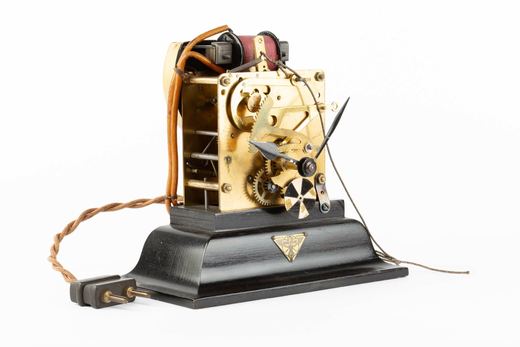
Clocks · 1900–1999
Clock by Friedrich Mauthe, Germany, 1900–1999 (German Clock Museum Museu_ProvidedCHO_museum_digital_59468__technical_number_)
German Clock Museum
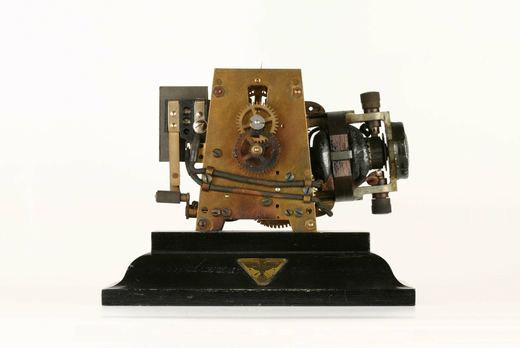
Clocks · 1900–1999
Clock by Friedrich Mauthe, Germany, 1900–1999 (German Clock Museum Museu_ProvidedCHO_museum_digital_59469__technical_number_)
German Clock Museum
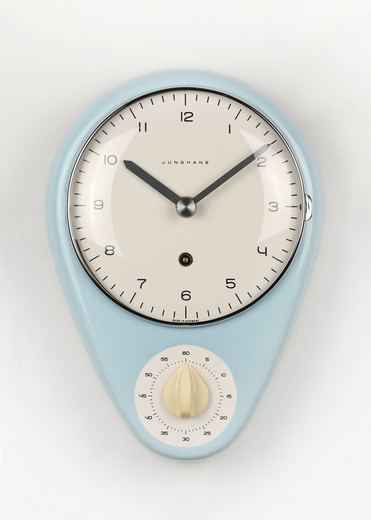
Clocks · 1900–1999
Clock, Germany, 1900–1999 (German Clock Museum Museu_ProvidedCHO_museum_digital_58196__technical_number_)
German Clock Museum
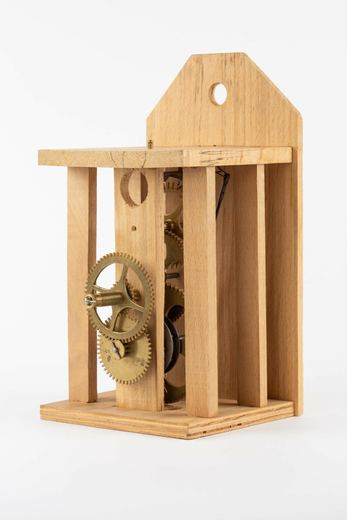
Clocks · 1900–1999
Clock, Germany, 1900–1999 (German Clock Museum Museu_ProvidedCHO_museum_digital_59377__technical_number_)
German Clock Museum
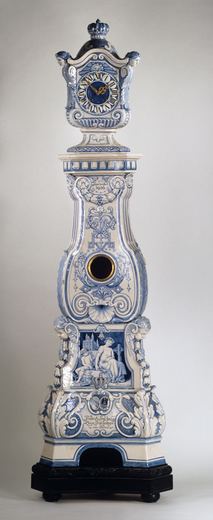
Clocks · 1900–1999
Longcase clock by Staatliche Majolika-Manufaktur Karlsruhe, Germany, 1900–1999
Badisches Landesmuseum Karlsruhe
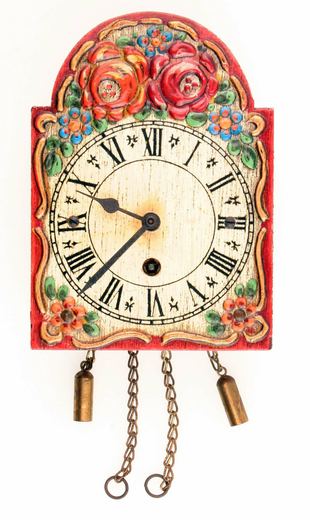
Clocks · 1900–1999
Mantel clock by Wintermantel & Co., Germany, 1900–1999 (German Clock Museum Museu_ProvidedCHO_museum_digital_56059__technical_number_)
German Clock Museum
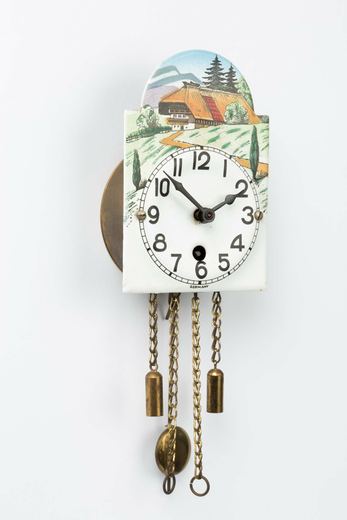
Clocks · 1900–1999
Mantel clock by Wintermantel & Co., Germany, 1900–1999 (German Clock Museum Museu_ProvidedCHO_museum_digital_56060__technical_number_)
German Clock Museum
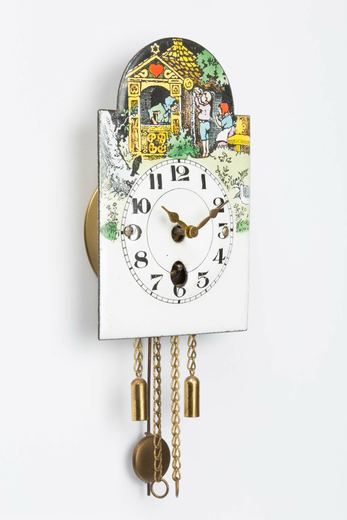
Clocks · 1900–1999
Mantel clock by Wintermantel & Co., Germany, 1900–1999 (German Clock Museum Museu_ProvidedCHO_museum_digital_56061__technical_number_)
German Clock Museum