Clocks · Atomic clock
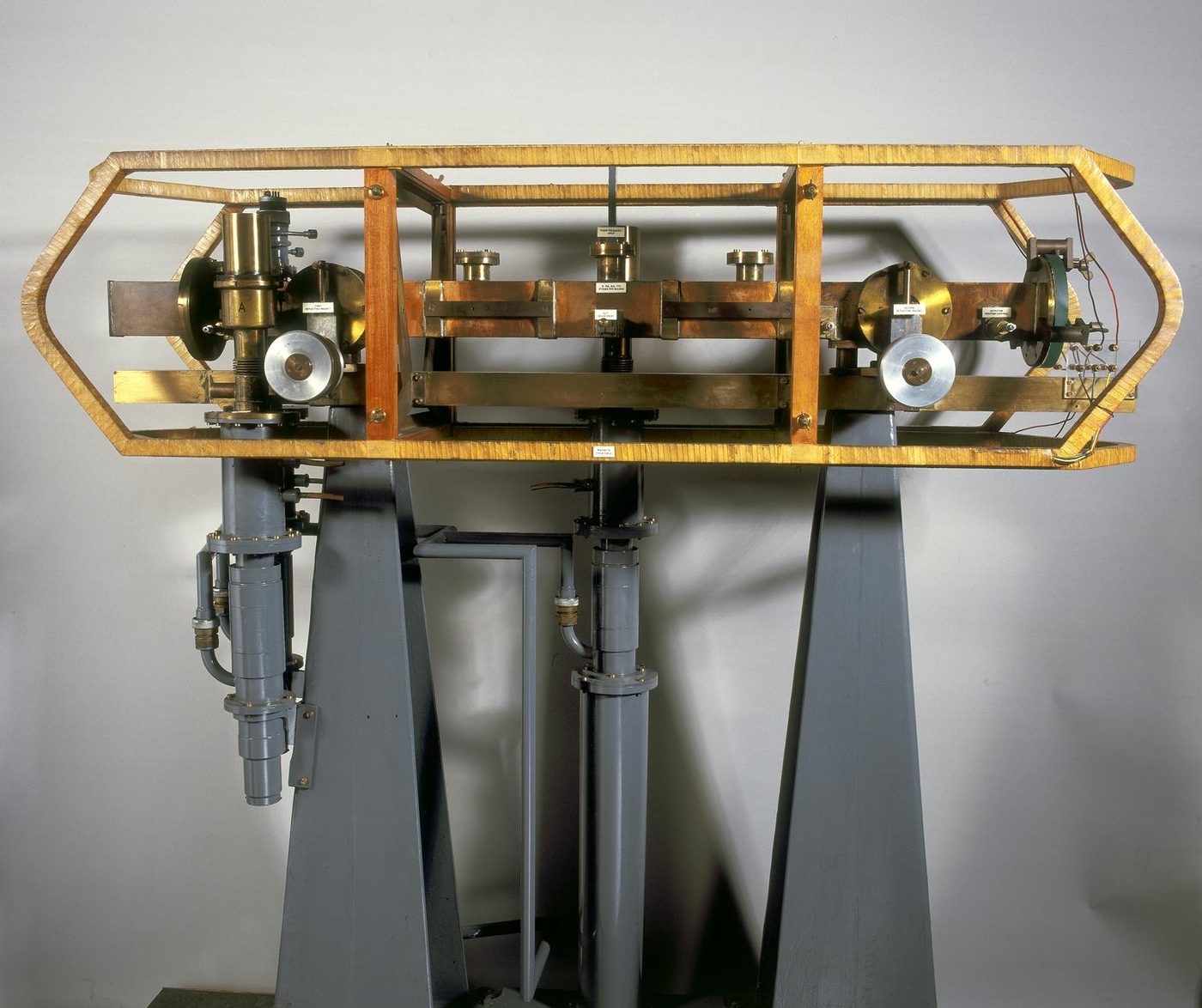
Caesium atomic clock made by Louis Essen and J.V.L. Parry at the National Physical Laboratory, Teddington, London, 1955.
- Maker / attribution
- National Physical Laboratory (Great Britain) (maker)
- Date
- 1955
- Historical period
- Modern Mechanical Horology (1945 – 1969)
- Country of origin
- England
- Place
- London, England, Richmond upon Thames, Teddington, Teddington; Greater London; Richmond upon Thames; England
- Object type
- Atomic clock
- Dimensions
- overall: 1685 mm x 607 mm x 1732 mm, 463 kg
- Holding institution
- Science Museum Group, London
- Accession / object no.
- 1962-59
- Credit line
- National Physical Laboratory
- Catalogue title (original)
- Caesium Atomic Clock, 1955.
Record summary
Held and catalogued by Science Museum Group, London (object number 1962-59), this is an atomic clock by National Physical Laboratory (Great Britain), made in London, England, Richmond upon Thames, Teddington, Teddington; Greater London; Richmond upon Thames; England, dated 1955. The Atlas places it in the Modern Mechanical Horology period (1945 – 1969) of its Clocks collection. Recorded dimensions: overall: 1685 mm x 607 mm x 1732 mm, 463 kg. The record is illustrated with 4 photographs.
Assembled from the source record's structured fields. Dates and attributions are given as the source states them; where a field is missing the Atlas leaves it blank rather than estimating.
Catalogue description
Science Museum Group description
This clock is the first successful atomic clock. It was built by L Essen and J V L Parry at the National Physical Laboratory in England in 1955. It measured time by means of a change of state in atoms of caesium, and was accurate to a second in 300 years - about 30 times better than the quartz crystal clocks introduced in the 1930s and 300 times better than the most accurate pendulum clocks which had been the best timekeepers until then. Atomic clocks are so accurate that they have revealed irregularities in the rotation of the Earth, so time is now defined in terms of measurements with atomic clocks, instead of the astronomical observations which had been used for hundreds of years. The latest atomic clocks are accurate to about one second in a million years.
Historical context
Modern Mechanical Horology (1945 – 1969)
Tool watches for divers, pilots and astronauts; electric watches anticipate the electronic age.
Post-war clocks combined new materials and industrial design: plastic and metal cases, battery-powered transistor movements from the late 1950s, and design classics by George Nelson, Max Bill and others. The first caesium atomic clock (1955) moved the definition of time from astronomy to physics.
Read the period in the timelineMore clocks from this periodEarlier: Golden Age of Mechanical Watchmaking
Atlas type guide
Quartz, atomic and electronic time standards
In 1927 Warren Marrison and J. W. Horton at Bell Telephone Laboratories built the first quartz clock, which used the piezoelectric vibration of a quartz crystal as its oscillator. Quartz clocks replaced pendulum regulators in observatories in the 1930s and 1940s and revealed irregularities in the Earth's rotation. In 1955 Louis Essen and Jack Parry at the National Physical Laboratory in Britain operated the first practical caesium atomic clock; in 1967 the SI second was redefined in terms of the caesium-133 transition.
Atomic and quartz standards are distributed by radio time signals, telephone 'speaking clocks', and today by satellite navigation and network time protocols. Objects in this group — oscillators, frequency dividers, receivers, master clocks — document the transition from mechanical to electronic timekeeping.
What to look for
- Laboratory racks, oscillator ovens and frequency counters rather than dials.
- Makers' labels from national laboratories, observatories or telecom companies.
- Indications of frequency (e.g. 100 kHz, 9,192,631,770 Hz for caesium).
Dating clues
- Quartz observatory clocks: from about 1930.
- Caesium standards: from 1955.
- Radio-controlled consumer clocks: from the 1980s.
General guidance written by the Atlas editors about this kind of object. It is not a statement about this particular piece; for that, rely on the source record above and on physical examination.
Read next:The Quartz Revolution era
Related records
Clocks · 1930-1960
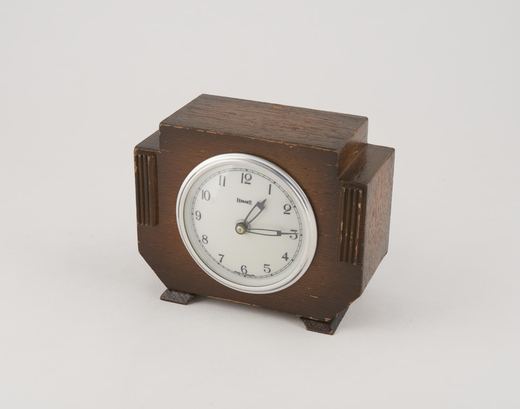
Ferranti electric mantel clock. (Science Museum Group Y1996.10.820)
Science Museum Group, London
Clocks · 1931-1970
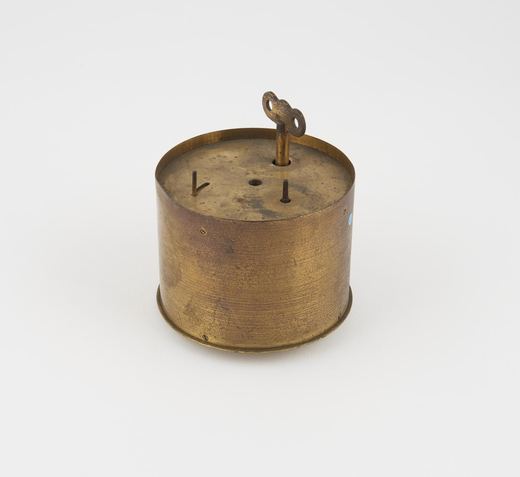
Clock and drum for recorder, 24 hours, English, 1931-1970.
Science Museum Group, London
Clocks · 1940-1967
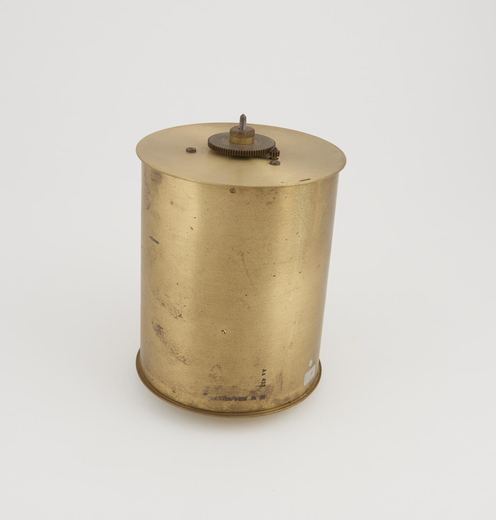
Drum and clock, English, 1940-1947, MO W 5124/ 47/ 57.
Science Museum Group, London
Clocks · 1940-1950
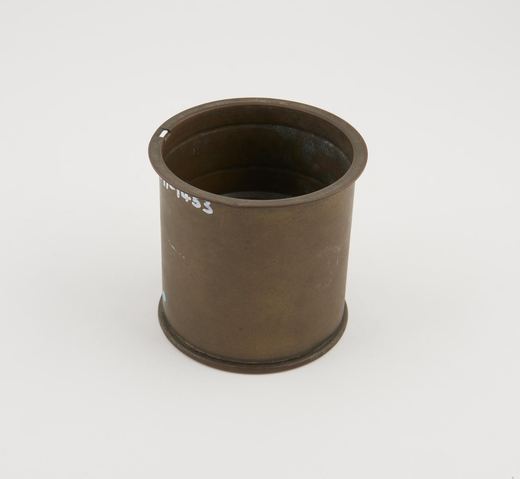
Drum and clock. by Smith's English Clocks Ltd., London, for Air Ministry.
Science Museum Group, London
Clocks · circa 1946
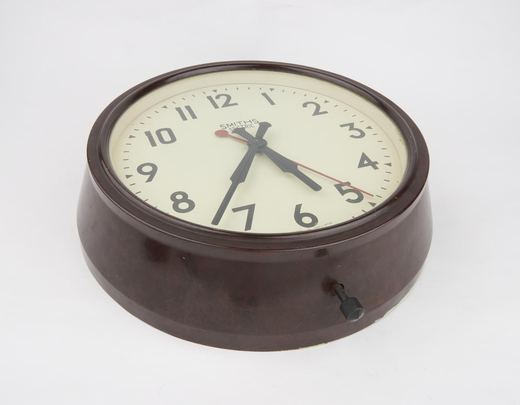
Smiths Sectric synchronous motor electric wall clock with centre seconds hand, by Smiths English Clocks Ltd, England c. 1946
Science Museum Group, London
Clocks · 1944-1947
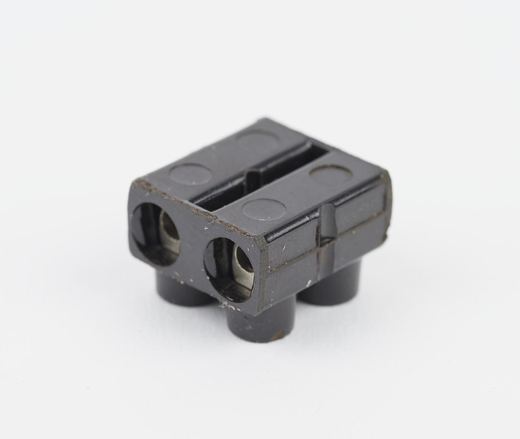
Electrical connector block from the Parriss rolling-ball free pendulum clock, by E. G. Parriss, Nuneaton, England, 1944-1947
Science Museum Group, London
Clocks · 1945-1955
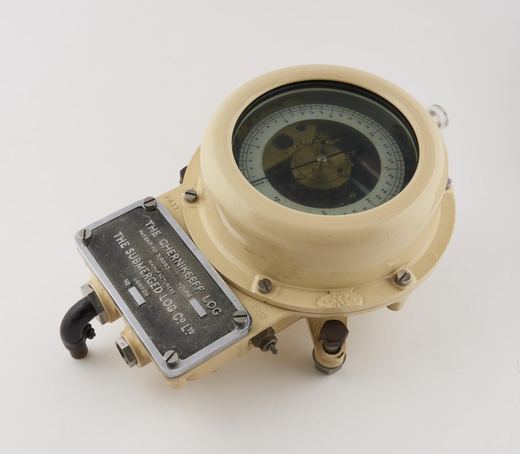
Clock by Submerged Log Company Limited; Chernikeef, Captain B., England, 1945-1955
Science Museum Group, London
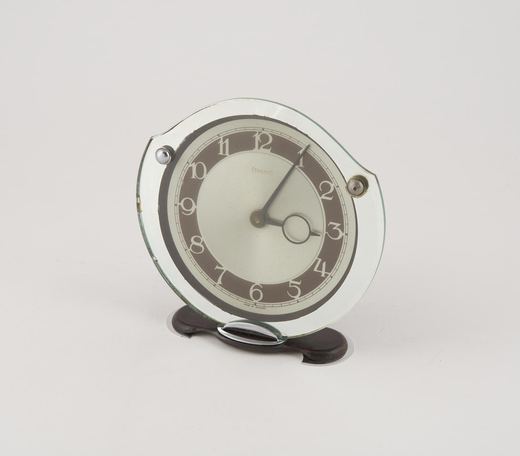
Clocks · 1946
Ferranti model 292 electric clock, c.1946.
Science Museum Group, London