
Clocks · Quartz clock and frequency standard
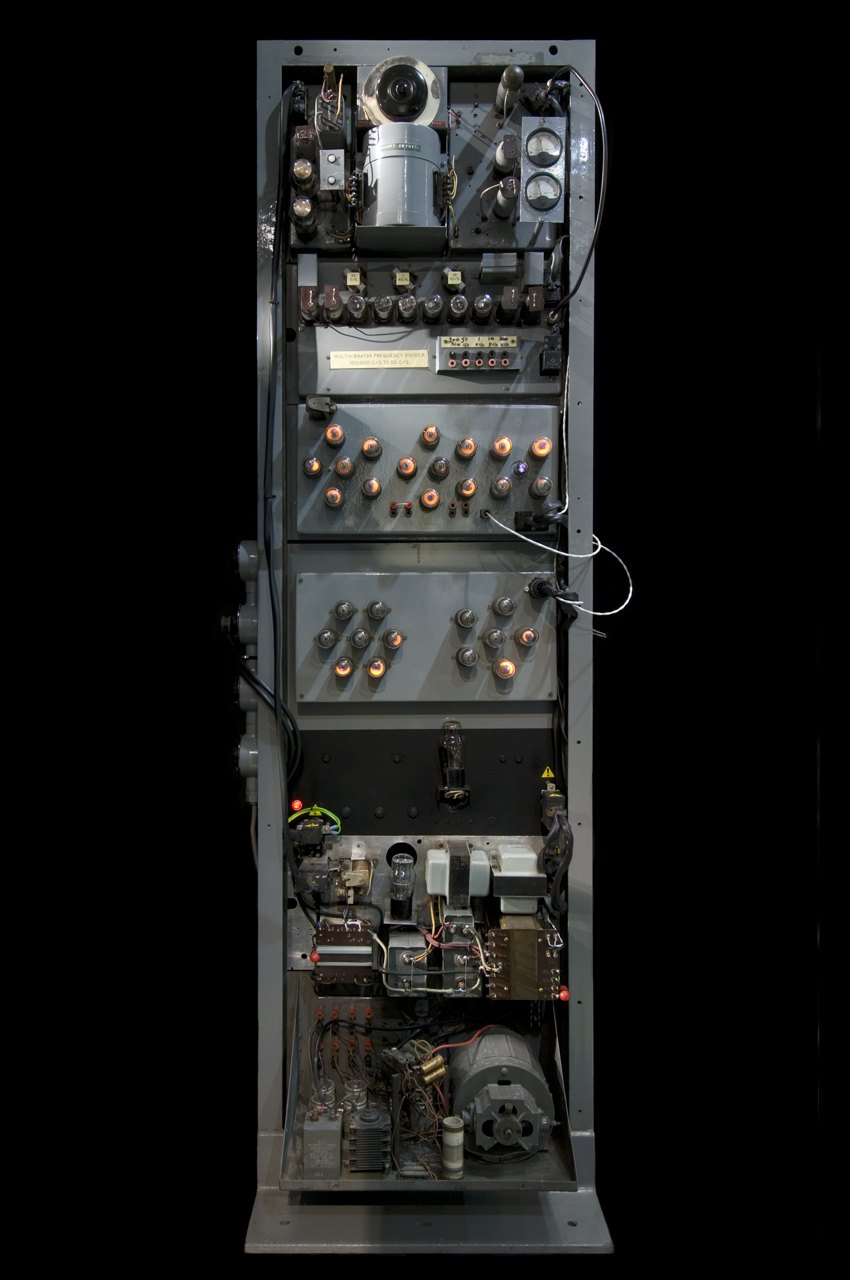
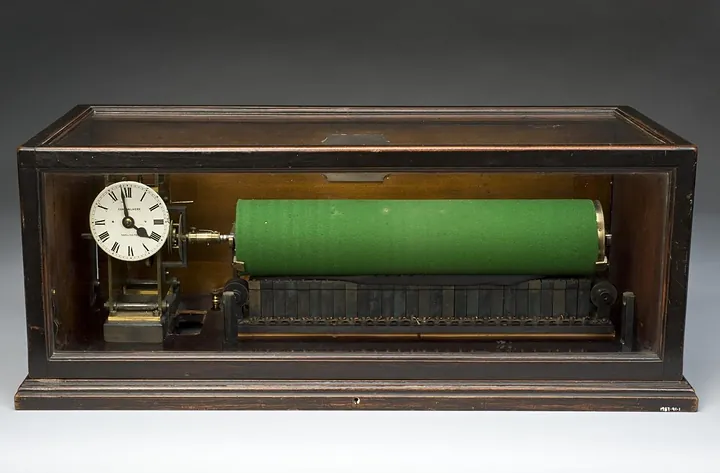
Quartz clock and frequency standard by General Post Office
- Maker / attribution
- General Post Office (maker); General Post Office Engineering Research Station (maker); manufactured by Roberts Designed by General Post Office Engineering Research Station & Armstrong Ltd. Wembley (maker)
- Date
- c. 1944
- Historical period
- Golden Age of Mechanical Watchmaking (1900 – 1945)
- Country of origin
- Unrecorded in source
- Object type
- Quartz clock and frequency standard
- Materials / technique
- steel; glass
- Dimensions
- 1785 x 515 x 410 mm
- Holding institution
- Royal Museums Greenwich
- Accession / object no.
- ZAA0289
- Credit line
- National Maritime Museum, Greenwich, London
- Catalogue title (original)
- Quartz clock and frequency standard (English)
View the source record ↗ (opens another website in a new tab)Suggest a correction
Record summary
Held and catalogued by Royal Museums Greenwich (object number ZAA0289), this is a quartz clock and frequency standard by General Post Office, dated c. 1944. The Atlas places it in the Golden Age of Mechanical Watchmaking period (1900 – 1945) of its Clocks collection. Materials and techniques recorded by the source: steel; glass. Recorded dimensions: 1785 x 515 x 410 mm. The record is illustrated with 6 photographs.
Assembled from the source record's structured fields. Dates and attributions are given as the source states them; where a field is missing the Atlas leaves it blank rather than estimating.
Catalogue description
Catalogue description — Royal Museums Greenwich
Until the 1950s, accurate time measurement was based on the apparent movement of the stars and planets. Today we put crystals and atoms at the heart of our precision timekeepers. When an electric current is applied to a quartz crystal, it vibrates at a very precise frequency and creates a regular pulse for a clock mechanism. Quartz oscillators were first developed in the 1920s by radio engineers searching for accurate frequency sources. By the 1940s, quartz clocks had replaced pendulum regulators in the world's observatories. This early General Post Office clock was used after 1945 for time signal transmissions from Rugby Radio Station and in the 1960s and 1970s was used in technical colleges as a teaching device. In 2006 it was restored to full working order by electrical and horology specialist, George Hammond, as a gift to the Observatory for the benefit of future researchers and visitors.
Historical context
Golden Age of Mechanical Watchmaking (1900 – 1945)
The wristwatch displaces the pocket watch; waterproof cases, self-winding and grand complications.
Between 1900 and 1945 clocks were electrified: master-clock systems ran factories and offices, synchronous mains clocks entered homes, and the Shortt free-pendulum clock set new standards of accuracy before the first quartz clocks (1927). Art Deco design reshaped mantel and table clocks.
Read the period in the timelineMore clocks from this periodEarlier: Industrial Revolution
Atlas type guide
Quartz, atomic and electronic time standards
In 1927 Warren Marrison and J. W. Horton at Bell Telephone Laboratories built the first quartz clock, which used the piezoelectric vibration of a quartz crystal as its oscillator. Quartz clocks replaced pendulum regulators in observatories in the 1930s and 1940s and revealed irregularities in the Earth's rotation. In 1955 Louis Essen and Jack Parry at the National Physical Laboratory in Britain operated the first practical caesium atomic clock; in 1967 the SI second was redefined in terms of the caesium-133 transition.
Atomic and quartz standards are distributed by radio time signals, telephone 'speaking clocks', and today by satellite navigation and network time protocols. Objects in this group — oscillators, frequency dividers, receivers, master clocks — document the transition from mechanical to electronic timekeeping.
What to look for
- Laboratory racks, oscillator ovens and frequency counters rather than dials.
- Makers' labels from national laboratories, observatories or telecom companies.
- Indications of frequency (e.g. 100 kHz, 9,192,631,770 Hz for caesium).
Dating clues
- Quartz observatory clocks: from about 1930.
- Caesium standards: from 1955.
- Radio-controlled consumer clocks: from the 1980s.
General guidance written by the Atlas editors about this kind of object. It is not a statement about this particular piece; for that, rely on the source record above and on physical examination.
Read next:The Quartz Revolution era
Related records
Clocks · c. 1955
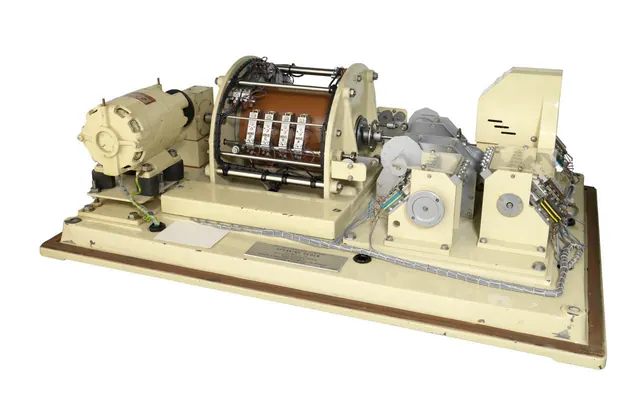
MkIII speaking clock announcer module by General Post Office
Royal Museums Greenwich
Clocks · 1890–1930
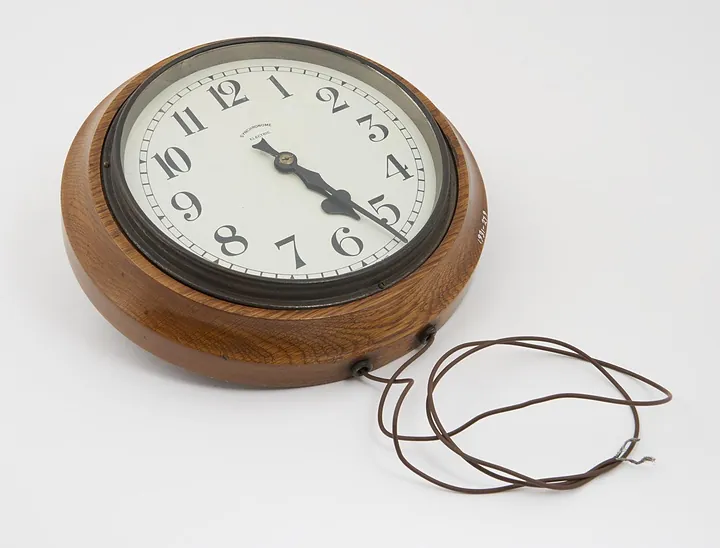
Clock with 8-inch impulse dial, by the Synchronome Company Limited, England, 1890–1930.
Science Museum Group, London
Clocks · c.1900
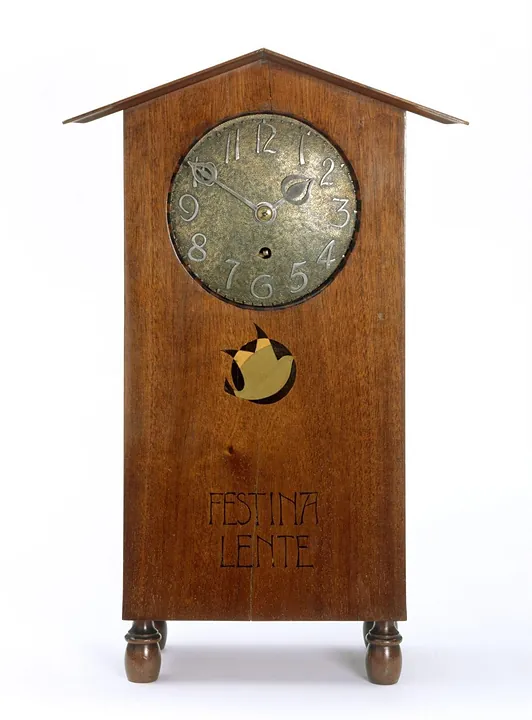
Clock by Mackay Hugh Baillie Scott, Bedfordshire, c.1900
Victoria and Albert Museum, London
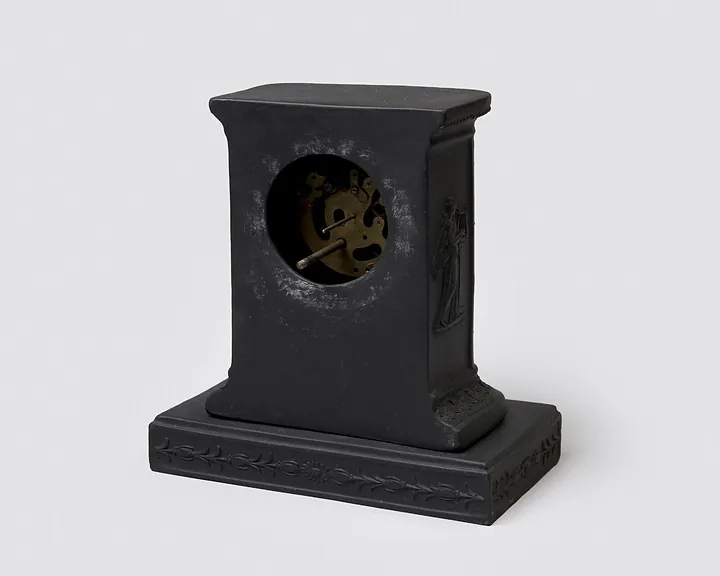
Clocks · c. 1900
Clock, black basalt, brass, Josiah Wedgwood and Sons, Etruria, c. 1900
Victoria and Albert Museum, London
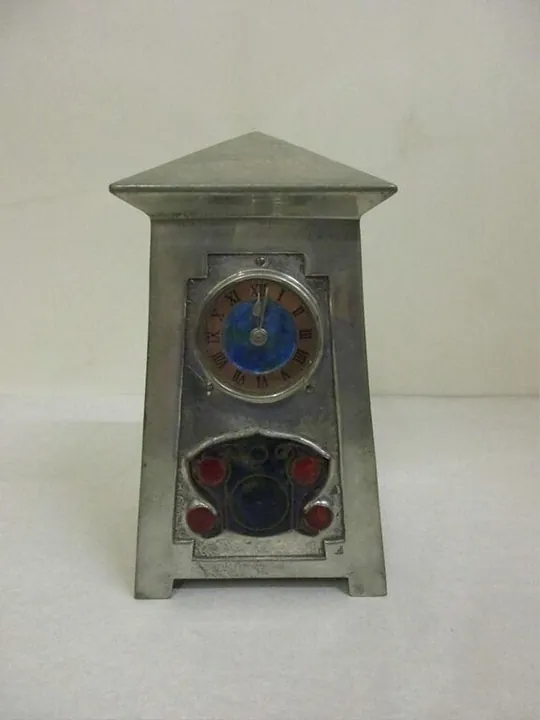
Clocks · c.1903-1904
Clock, pewter, made for Liberty& Co., England. 1903-4.
Victoria and Albert Museum, London
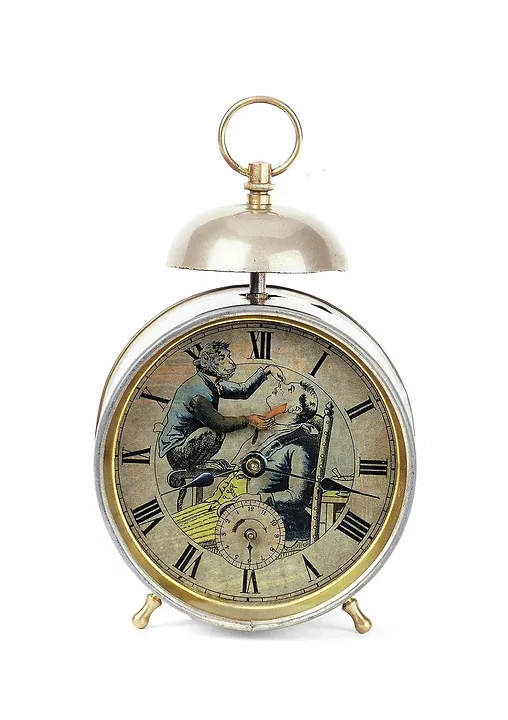
Clocks · c. 1900
Alarm clock by Union Clock Company, Germany, c. 1900
German Clock Museum
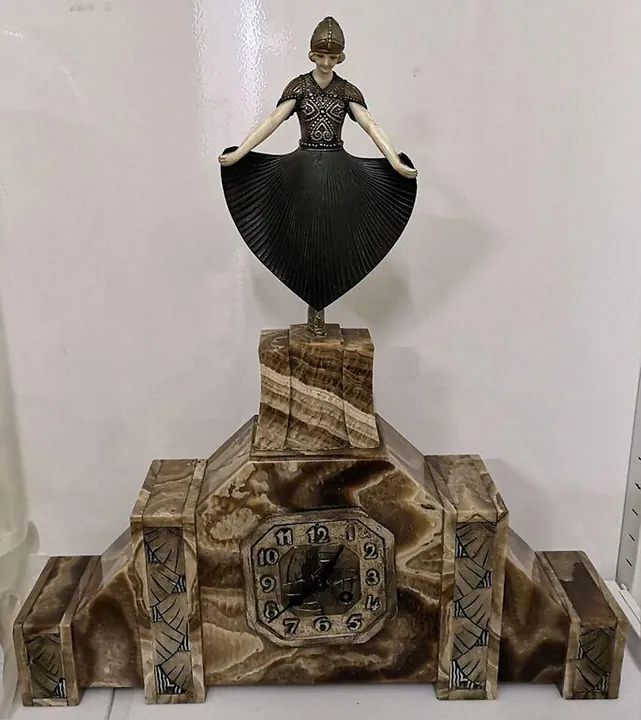
Clocks · 20th century
Base Metal, 20th c. Bronze, marble and ivory clock by Chiparus
Victoria and Albert Museum, London
Clocks · 1900–1939
Clock by Cox-Walkers of Darlington, England, 1900–1939
Science Museum Group, London