
Collecting & Identification · Collector's guide
Old Clock Brands: How to Identify the Maker of an Antique or Vintage Clock
Seth Thomas, Ansonia, Ingraham, Junghans, Gustav Becker, Kienzle, Japy, Smiths, Jaeger-LeCoultre — the clock makers whose names turn up most often on mantelpieces, in attics and at auction, where they worked, what they made, and where to look on a clock for the marks that identify it.
Atlas Editorial · · 9 min read
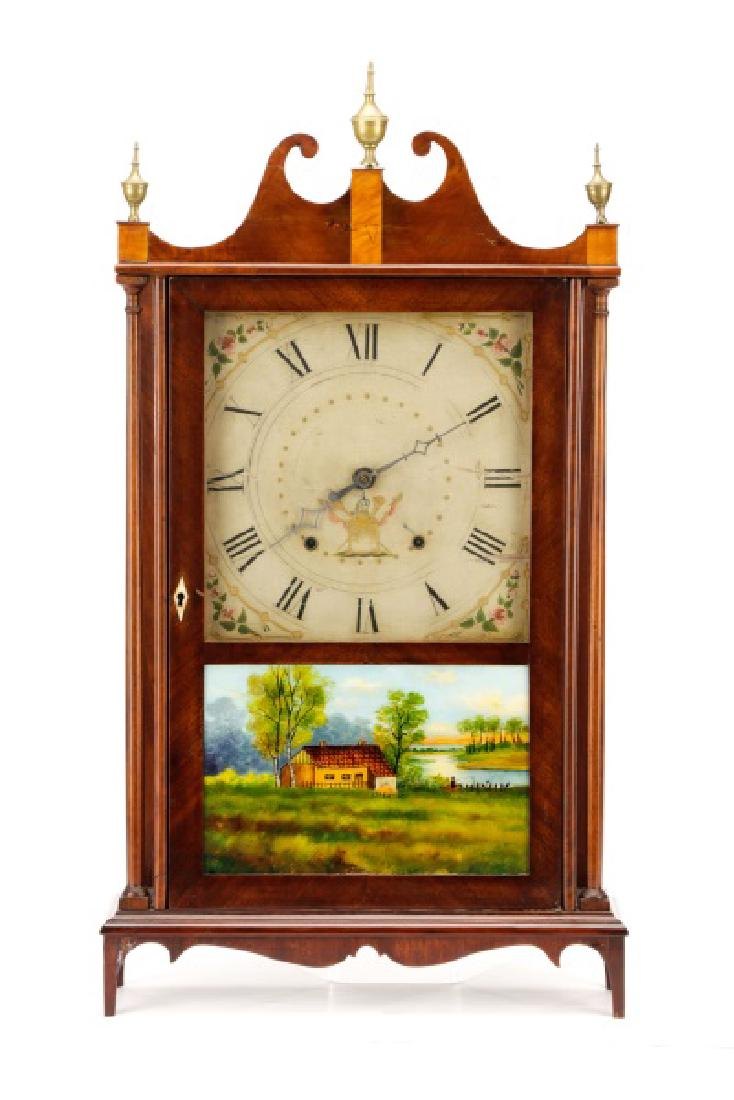
LiveAuctioneers auction archive · © Ahlers & Ogletree Auction Gallery / LiveAuctioneers — permission required · source (opens another website in a new tab)
Most old clocks that come down in families or turn up at sales were not made by a single craftsman but by a factory, and many of those factories put their name somewhere on the clock. Knowing the name tells you where and roughly when a clock was made, what its movement should look like, and what other clocks to compare it with. It does not, on its own, tell you what the clock is worth: every large maker made cheap clocks as well as fine ones, and condition and originality count for more than the name.
This guide covers the makers whose names appear most often on clocks in the Atlas catalogue and on the market — the American factories of Connecticut and Massachusetts, the German factories of the Black Forest and Silesia, the French movement makers, the London firms and a few twentieth-century names. Each is illustrated with a clock from a museum, auction or dealer record.
American factory clocks, 1810s–1960s
American clockmaking was transformed in the early 19th century by Eli Terry of Connecticut, who made wooden-movement clocks in batches with standardised parts. His associate Seth Thomas bought the right to make Terry's shelf clocks and set up his own factory in 1813; the Seth Thomas Clock Company became one of America's largest clockmakers, making shelf, wall, tower and marine clocks. The town of Plymouth Hollow was renamed Thomaston in his honour in 1875.
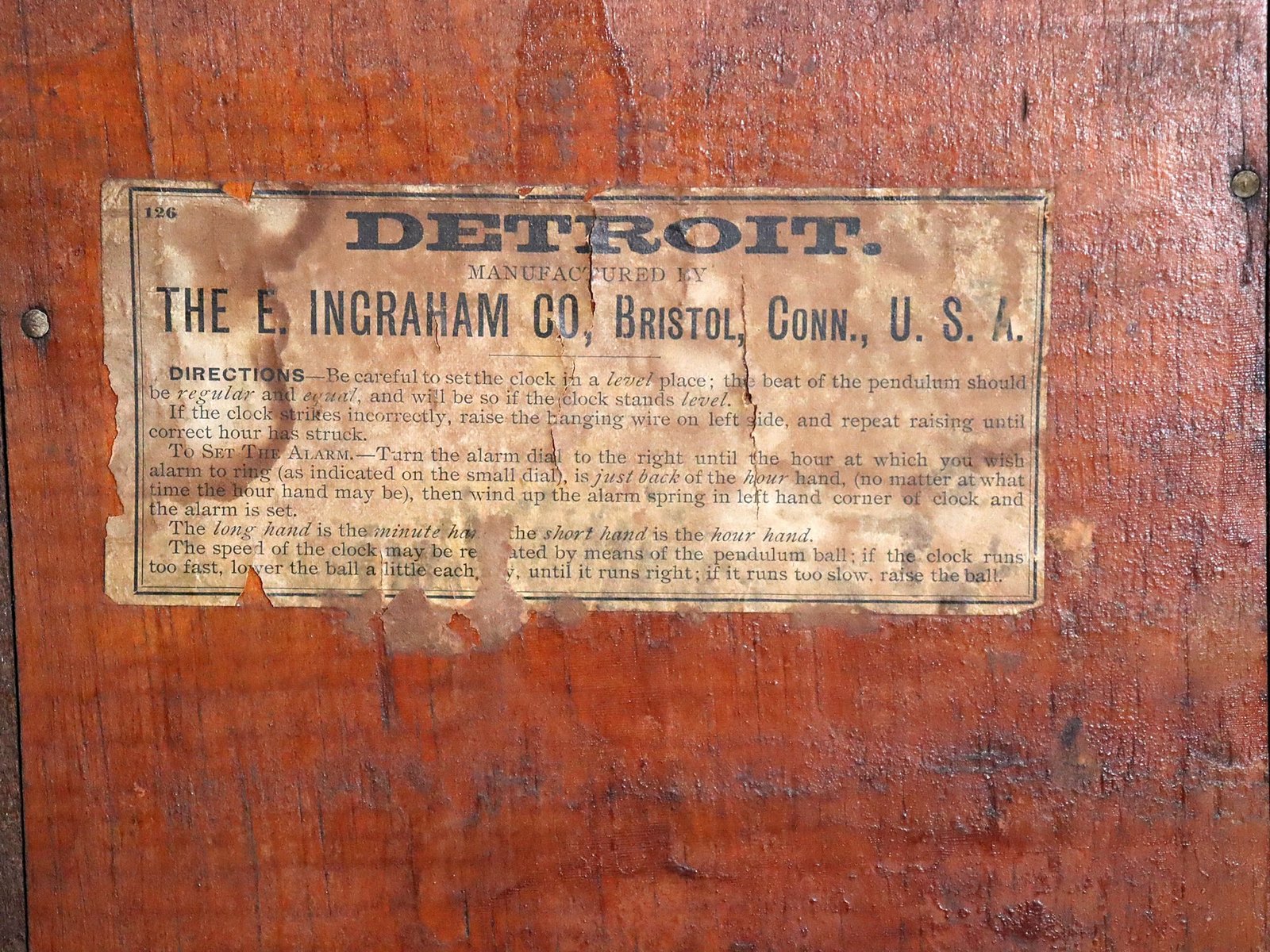
Bristol, Connecticut, was home to the E. Ingraham Company, founded in 1831 by Elias Ingraham, a cabinetmaker and case designer. In the 1840s he designed the 'sharp Gothic' steeple clock, which became perhaps the best-selling distinctively American clock design; by 1885 his firm ran five factories and made about 250,000 clocks a year. Like most American makers, Ingraham pasted a printed label inside the case.
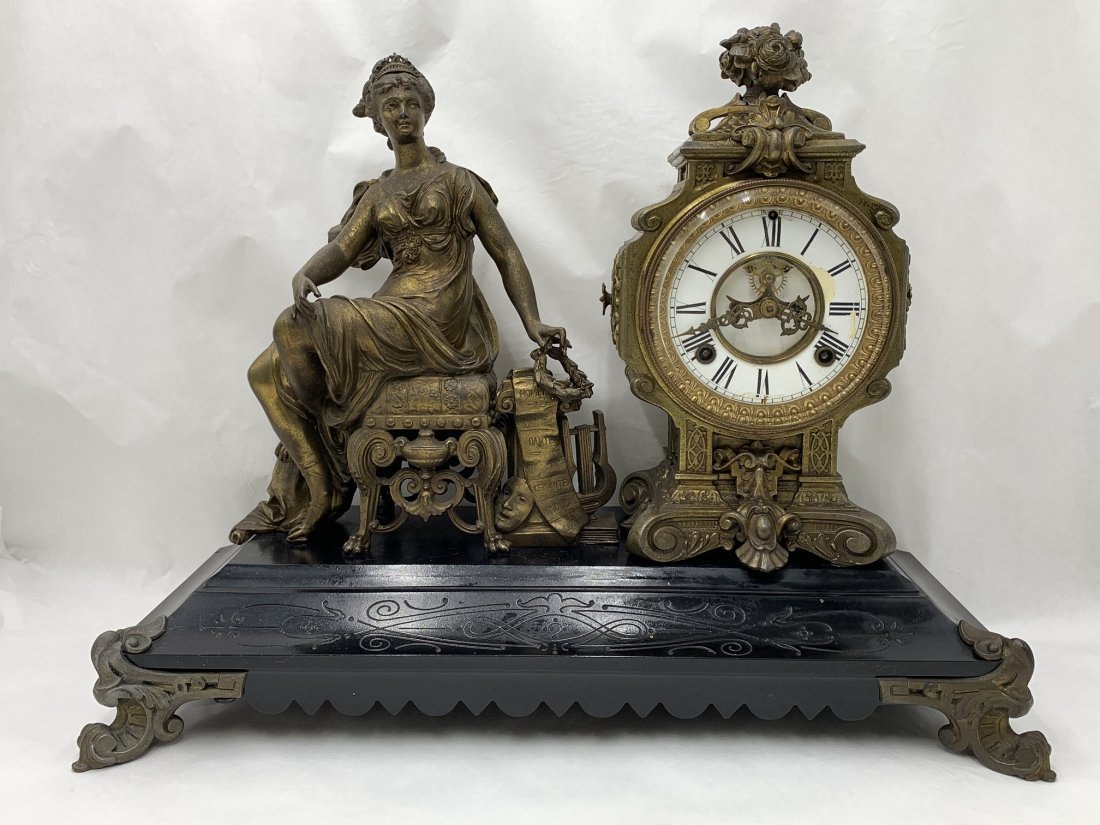
The Ansonia Clock Company was founded in 1851 by the industrialist Anson Greene Phelps and moved to Brooklyn in the late 1870s. It made enormous numbers of mantel and wall clocks and was known for figural and novelty clocks with cast spelter figures; after its decline its machinery was sold to the Soviet Union in 1929. The Waterbury Clock Company, set up by brass makers in Waterbury, Connecticut, in 1857, made inexpensive clocks and, through its sister company, cheap watches.
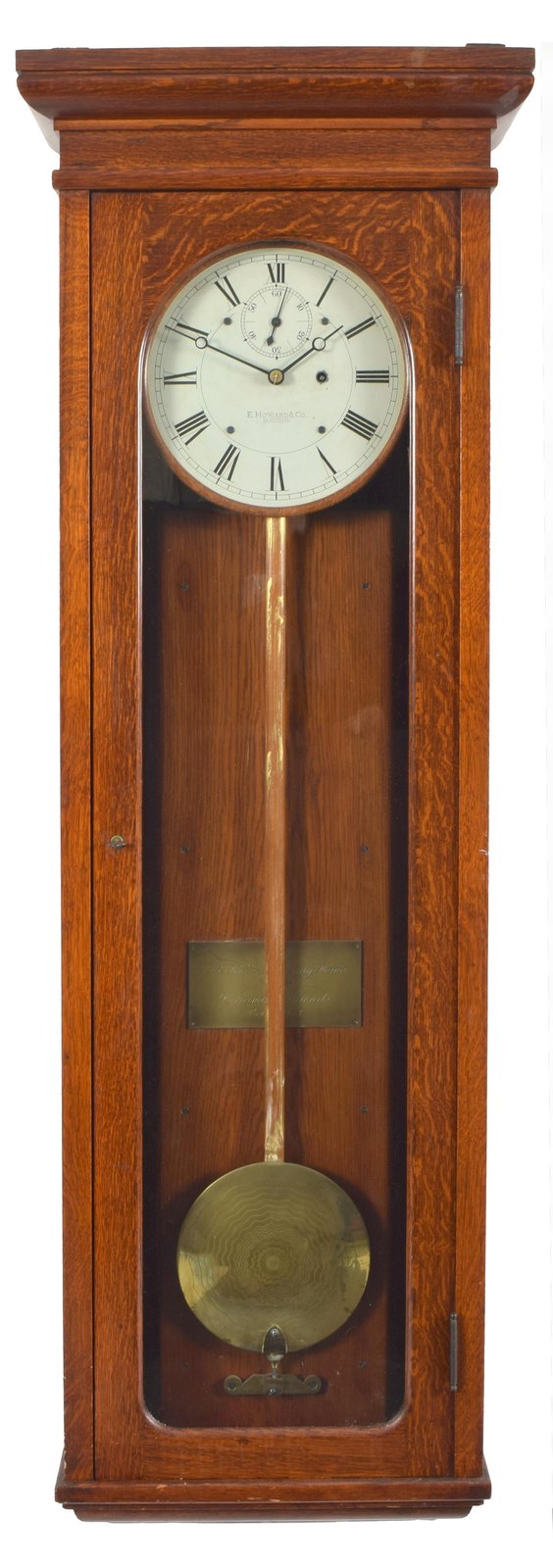
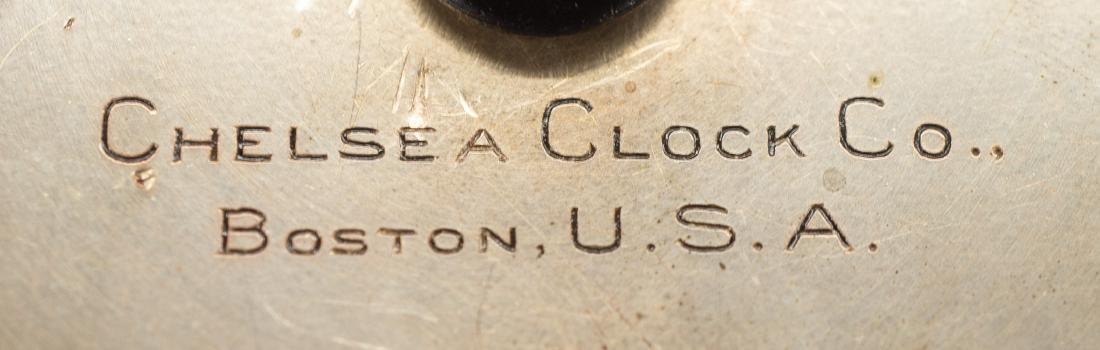
In Massachusetts two firms made higher-grade clocks. E. Howard & Co. of Boston, founded by Edward Howard, made weight-driven wall regulators, tower clocks and, until 1903, fine watches. The Chelsea Clock Company, founded in 1897 at Chelsea, Massachusetts, specialised in brass-cased marine and ship's bell clocks, which strike the half-hours of a ship's watch; the US Navy and government offices were among its customers.
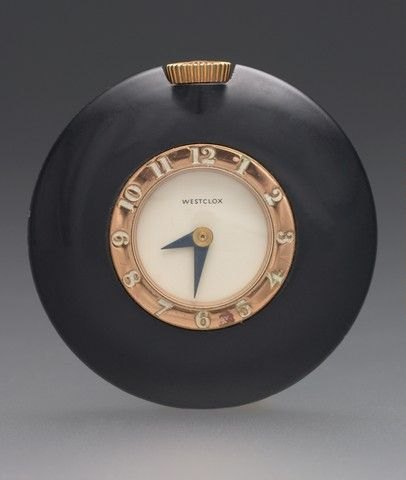
At the inexpensive end, the Western Clock Company of Peru, Illinois — Westclox — made the Big Ben alarm clock from 1909, the first alarm clock advertised nationally in the United States, and cheap watches such as the Pocket Ben. In 1931 it merged with Seth Thomas in the General Time Corporation.
German clocks: the Black Forest and Silesia
The Black Forest had made wooden clocks since the 17th century, mostly in farmhouse workshops. In the 1850s it began to industrialise. The Grand Duchy of Baden founded a clockmaking school at Furtwangen in 1850 to train its clockmakers, and the school's design competition of that year produced the railway-house case of the cuckoo clock. In 1851 Eduard Hauser and partners founded the Lenzkirch factory, which made high-quality wall, mantel and regulator clocks with numbered movements until its takeover by Junghans in 1928.
Junghans, founded at Schramberg by Erhard Junghans in 1861, adopted American-style mass production and by the early 20th century was among the largest clock manufacturers in the world. Kienzle of Schwenningen, built up from 1883 by Jakob Kienzle, and Friedrich Mauthe, also of Schwenningen and founded in 1844, made alarm, mantel and wall clocks in vast numbers, much of it for export, Britain in particular. After Britain's Merchandise Marks Act of 1887 imported goods had to show where they came from, so many German clocks sold in Britain are marked 'Made in Germany' or simply 'Foreign'.
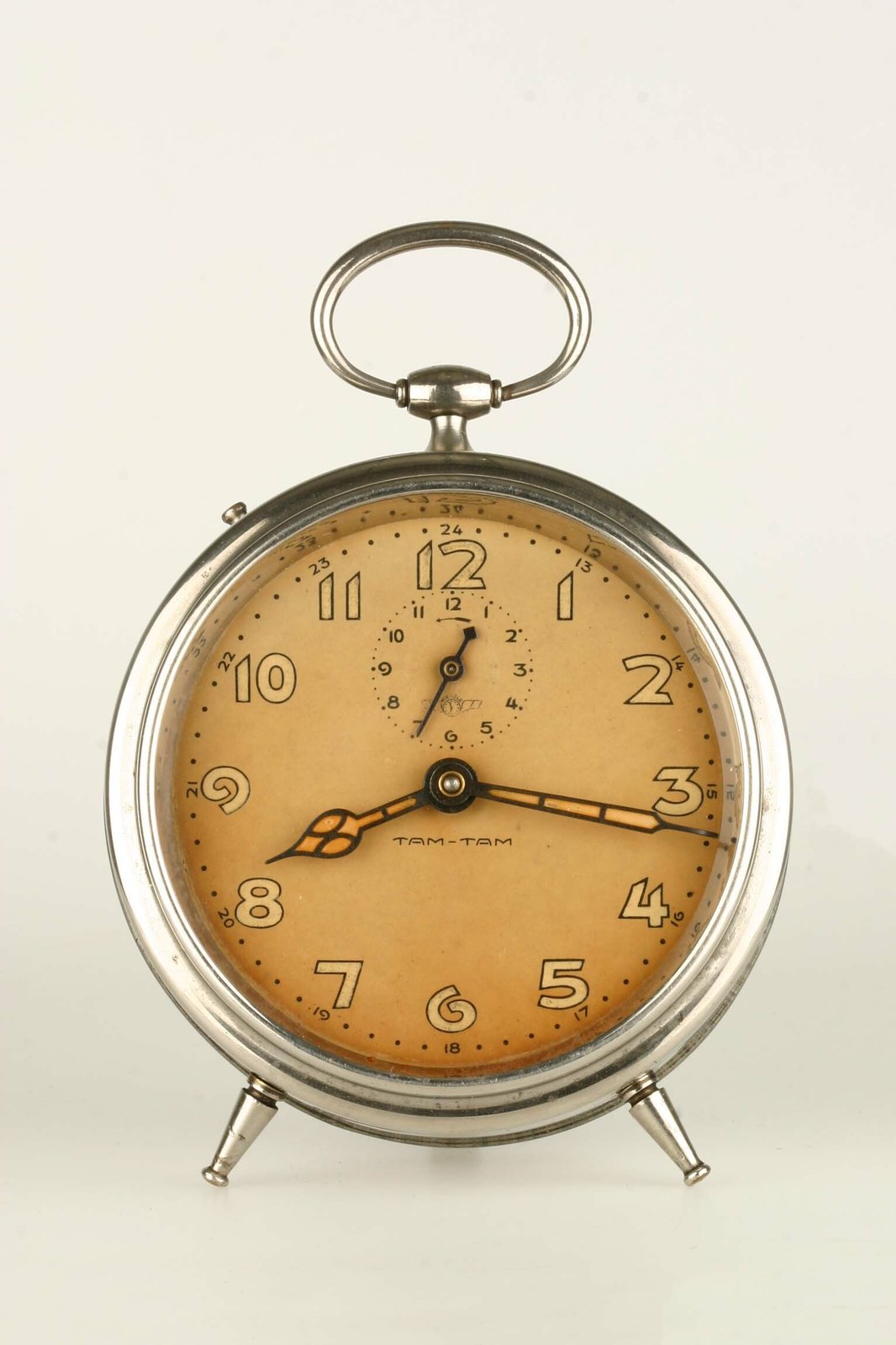
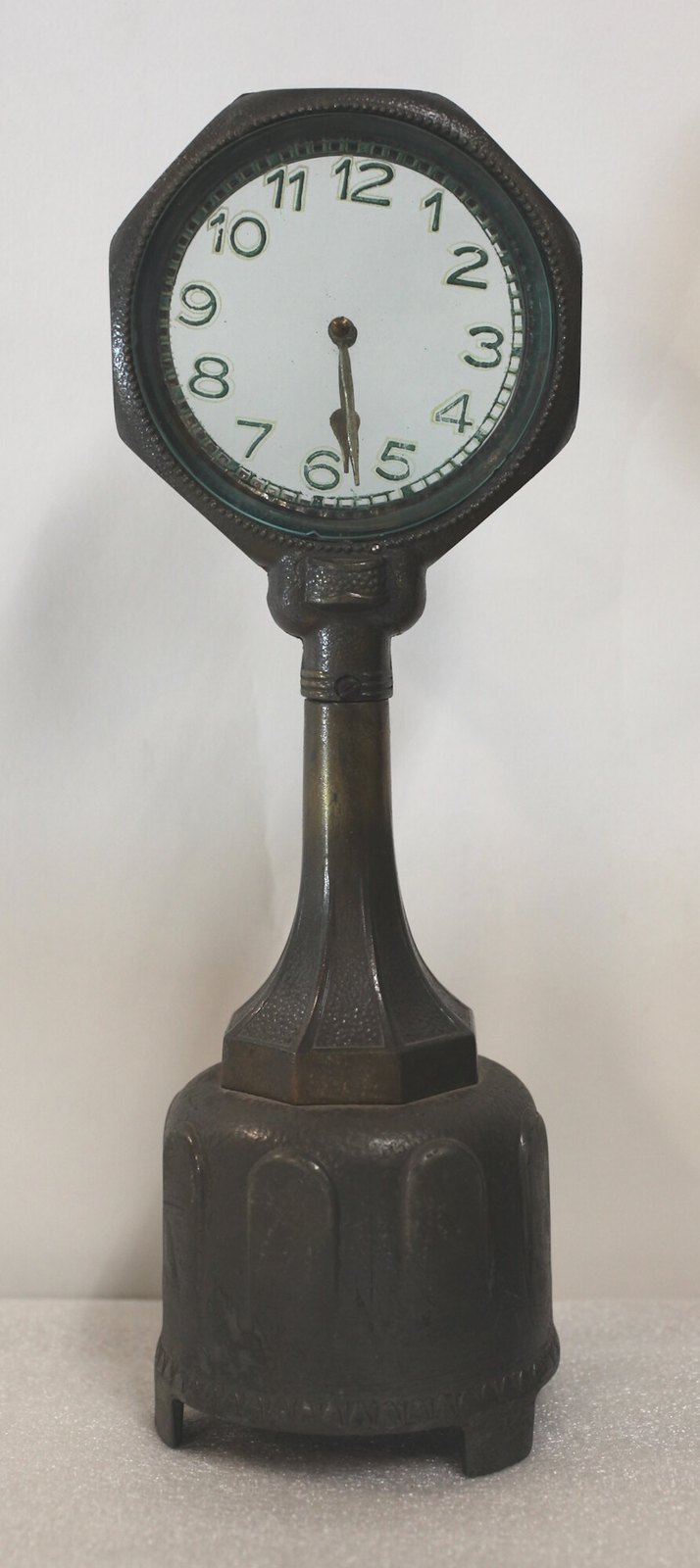
Further east, Gustav Becker opened a workshop at Freiburg in Silesia (today Świebodzice in Poland) in 1847, making weight-driven wall regulators in the Viennese style. The firm grew into one of Germany's largest clock factories, and its 'GB' anchor trademark is found on regulators, wall, mantel and longcase clocks all over central and northern Europe. It came under the control of Junghans around 1930. Becker movements carry serial numbers that help to date them, though the published tables differ.
French clocks: Japy Frères and the Paris trade
French mantel clocks — marble and gilt-bronze pendules, garnitures, carriage clocks — usually carry a Paris retailer's or case maker's name on the dial, while the movement inside came from a specialist movement maker. The largest was Japy Frères of Beaucourt, near Montbéliard, founded by Frédéric Japy in 1777, who used machine tools to make the parts of watch ébauches; under his sons the firm became a mass producer of clock movements. Japy backplates are often stamped with the firm's name and the medals it won at exhibitions. Other French movement makers whose stamps are common include Vincenti, Marti and Mougin.
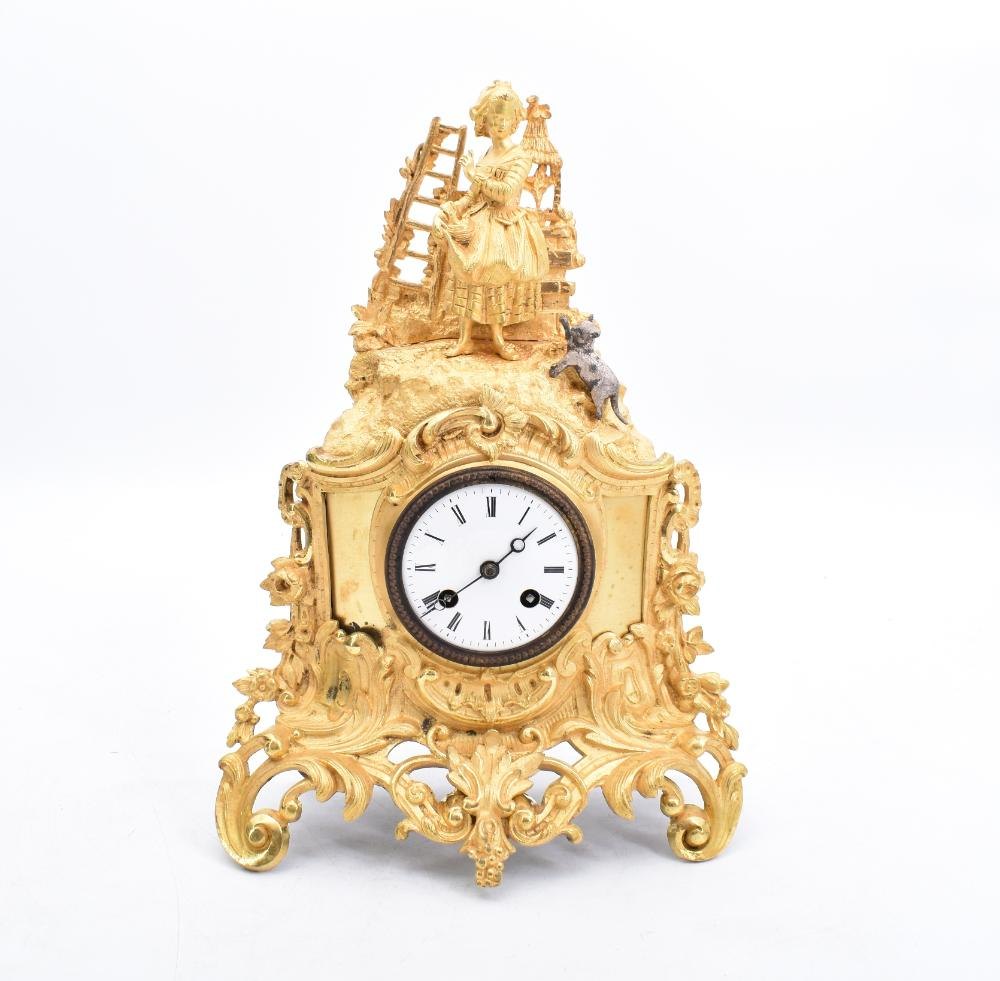
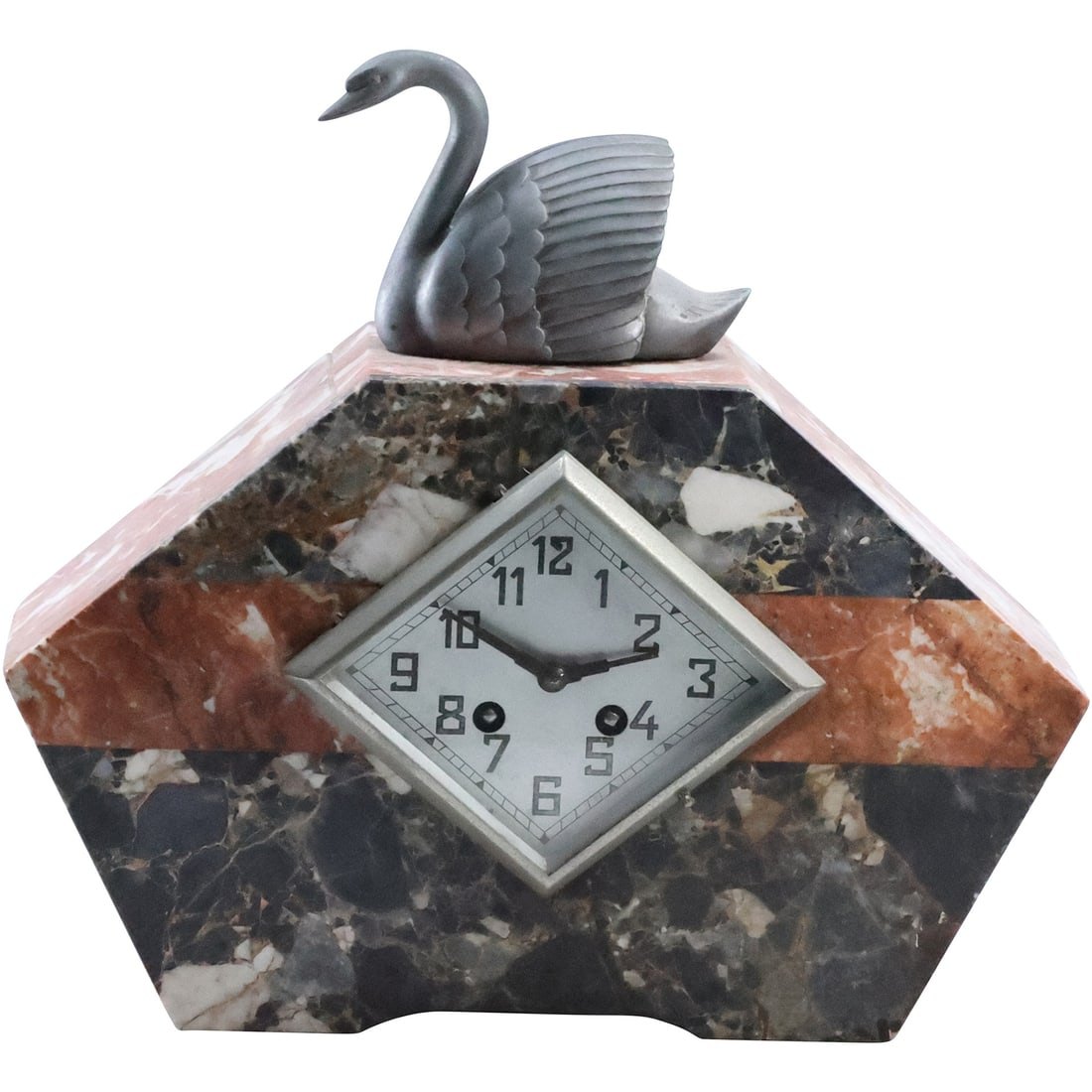
English makers: from London clockmakers to Smiths
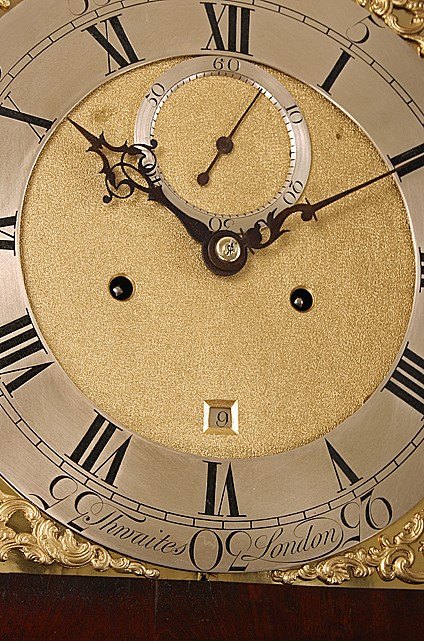
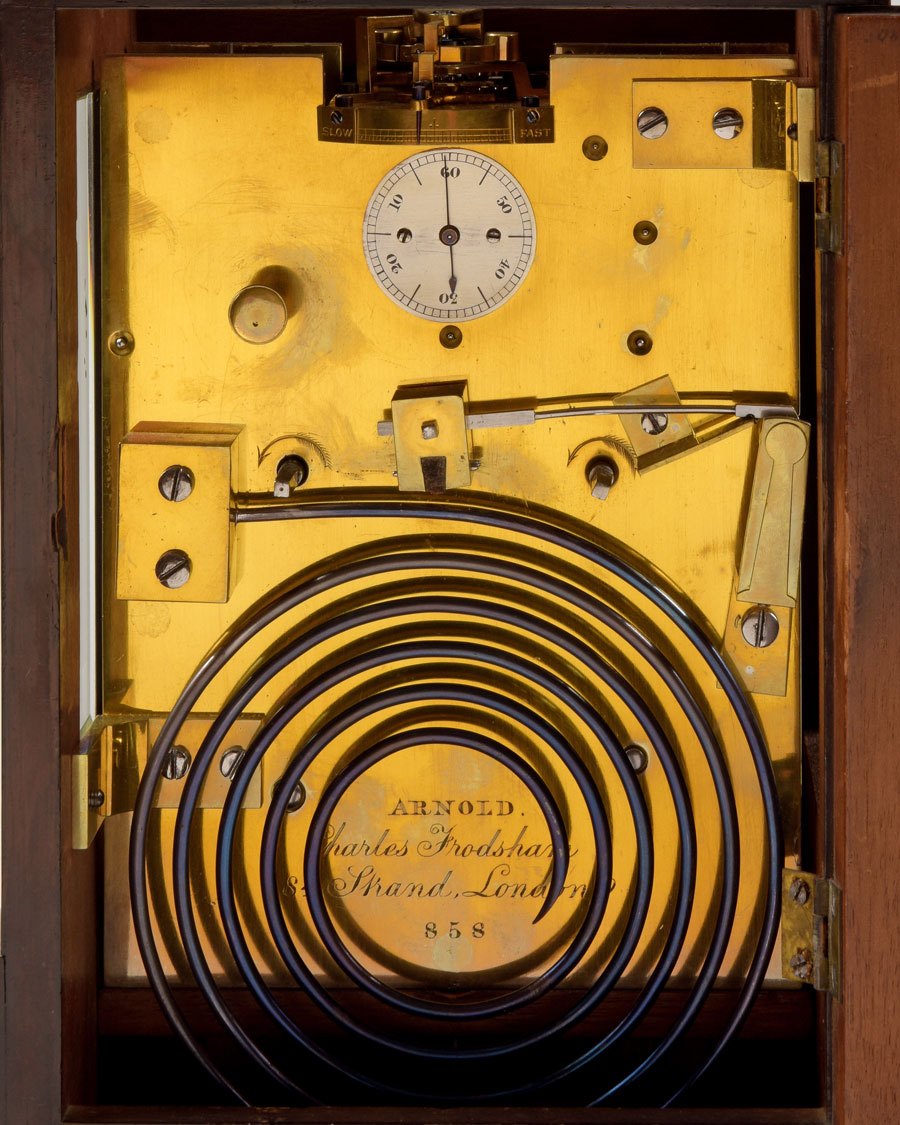
English clocks before the 20th century were mostly made by individual clockmakers and small firms, whose names appear on the dial: the longcase and bracket clocks of London and the provinces are identified by the maker's signature and town. A few firms lasted for generations, such as Thwaites & Reed, whose origins go back to Aynsworth Thwaites in the mid-18th century and which made turret and public clocks, and the chronometer, watch and clock makers E. Dent & Co. and Charles Frodsham & Co.
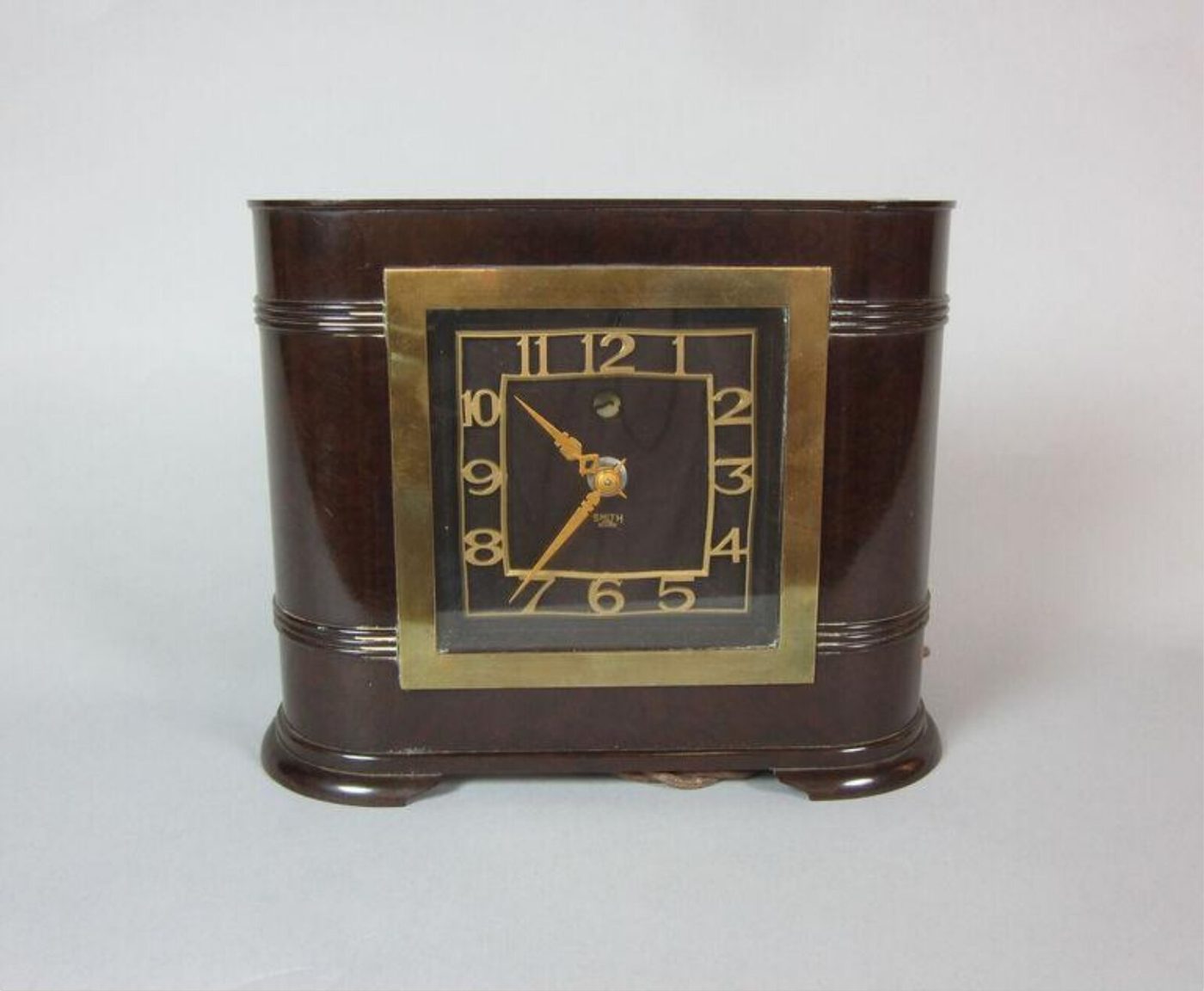
In the 20th century the largest British maker was Smiths. Founded as a London jeweller's shop by Samuel Smith in 1851, it grew into a maker of car and aircraft instruments and, from the 1930s, mass-produced mechanical and electric clocks under the Smiths and Smiths English Clocks names.
Twentieth-century names: Jaeger-LeCoultre's Atmos
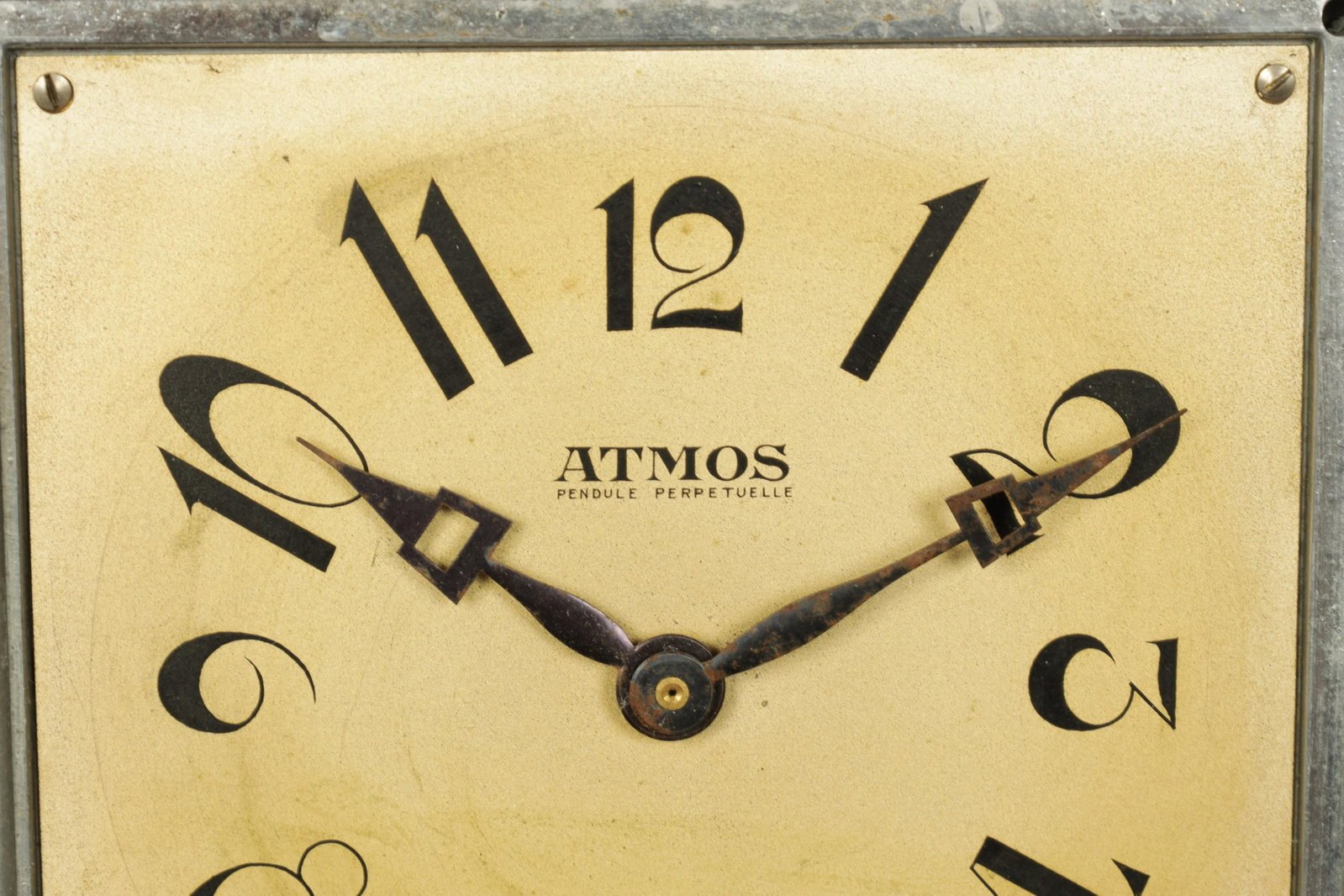
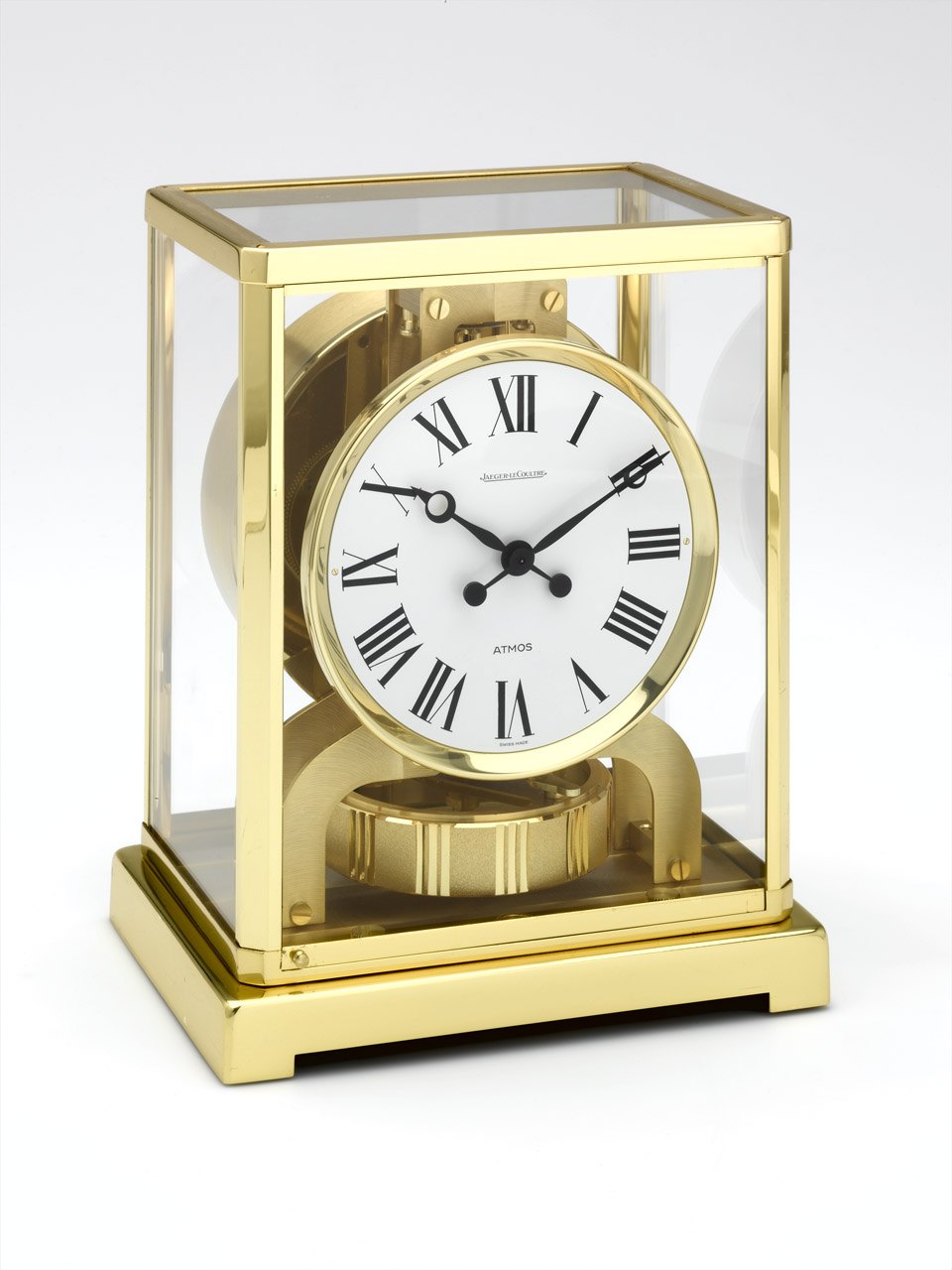
A few makers better known for watches made celebrated clocks. The Atmos, developed in 1928 by the Neuchâtel engineer Jean-Léon Reutter and taken up by Jaeger-LeCoultre in the 1930s, winds itself from small changes in air temperature and pressure and runs a slow torsion pendulum. Some early examples bear Reutter's name; later ones are signed Jaeger-LeCoultre, with a serial number and model number.
The main clock brands at a glance
| Maker | Where | Founded | Typical clocks | Marks to look for |
|---|---|---|---|---|
| Seth Thomas | Thomaston, Connecticut | 1813 | Shelf, wall, tower and marine clocks | Paper label; name on dial and movement |
| E. Ingraham | Bristol, Connecticut | 1831 | Steeple, mantel, wall and alarm clocks | Paper label naming the model |
| Ansonia | Ansonia, Connecticut; Brooklyn | 1851 | Mantel, wall, figural and novelty clocks | Label; name on dial or movement |
| Waterbury | Waterbury, Connecticut | 1857 | Inexpensive shelf and wall clocks | Label; name on dial or movement |
| E. Howard | Boston (Roxbury) | 1842 / 1858 | Wall regulators, tower clocks | Name on dial; model numbers |
| Chelsea | Chelsea, Massachusetts | 1897 | Marine and ship's bell clocks | Signed dial; serial number |
| Westclox | Peru, Illinois | 1885 | Alarm clocks (Big Ben), cheap watches | Westclox name and model on dial |
| Lenzkirch | Lenzkirch, Black Forest | 1851 | Fine wall, mantel and regulator clocks | Firm's mark and serial number on movement |
| Junghans | Schramberg, Black Forest | 1861 | Every kind of factory clock | Junghans name or trademark on movement or dial |
| Gustav Becker | Freiburg in Silesia | 1847 | Vienna-style regulators, wall and longcase clocks | 'GB' anchor trademark; serial number |
| Kienzle | Schwenningen | 1883 | Alarm, mantel and wall clocks | Kienzle name on movement or dial |
| Friedrich Mauthe | Schwenningen | 1844 | Wall, mantel and alarm clocks | Mauthe name or mark on movement |
| Japy Frères | Beaucourt, France | 1777 | Movements for French mantel and carriage clocks | Name and medals stamped on back plate |
| Thwaites & Reed | London | c. 1740 | Turret, public and domestic clocks | Signed dial or movement |
| Smiths | London; Cheltenham | 1851 | Mechanical and electric clocks (from the 1930s) | Smiths or Smiths English Clocks on dial |
| Jaeger-LeCoultre (Atmos) | Le Sentier, Switzerland | 1833 | Atmos self-winding clocks | Signed dial; serial and model numbers underneath |
Pitfalls when reading the marks
- Retailers' names: a name on the dial is often the shop that sold the clock, not the maker. French and English clocks in particular were signed by retailers.
- Replaced parts: a later movement, dial or label can be fitted to an old case. Screw holes that do not match, a dial that does not fit the opening or a label of the wrong period are warnings.
- Copied labels and reproductions: famous models such as pillar-and-scroll and Vienna regulators were reproduced in the 20th century, sometimes with copied labels. Compare the movement with documented examples.
- Trademarks change: factories altered their marks over time, which helps with dating, but marks were also imitated by competitors.
- Unsigned clocks are common: many clocks, especially cheap factory clocks and Black Forest clocks, carry no name at all. The style of the case and the construction of the movement can still show where and roughly when they were made.
A maker's name is the beginning of research, not the end. Once you have one, open the maker's profile in the Atlas for its history and dates, look at the catalogue records listed there for comparable clocks, and use the dating guides in the Identification section to narrow down when your clock was made. Our lesson on what an antique clock or vintage watch is worth explains why two clocks with the same name can differ greatly in value.
Sources & further reading
- Revolution in Time: Clocks and the Making of the Modern World — David S. Landes, Harvard University Press, 1983.
- Manufacturing Time: Global Competition in the Watch Industry, 1795–2000 — Amy K. Glasmeier, Guilford Press (New York), 2000.
- Antiquarian Horology — Antiquarian Horological Society, AHS (London), 1953 – present.