Clock manufacturer
Gustav Becker
Also recorded as: Gustav Becker (GB) · Eduard Gustav Becker (GB) · Gustav Eduard Becker · Gustav Becker, Freiburg i. Schl.
Silesian maker of Vienna-style regulators that grew into one of Germany's largest clock factories.
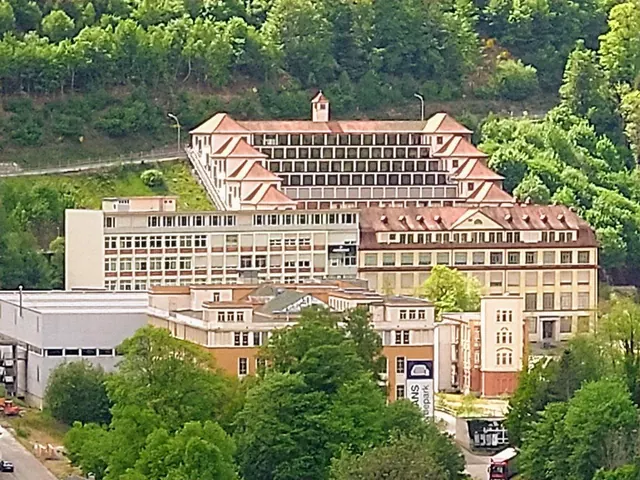
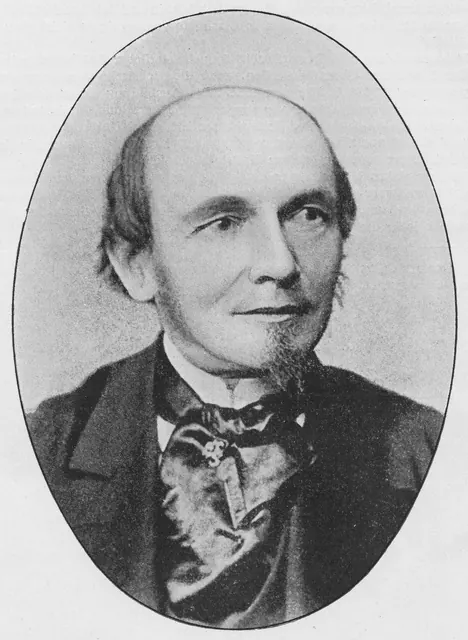
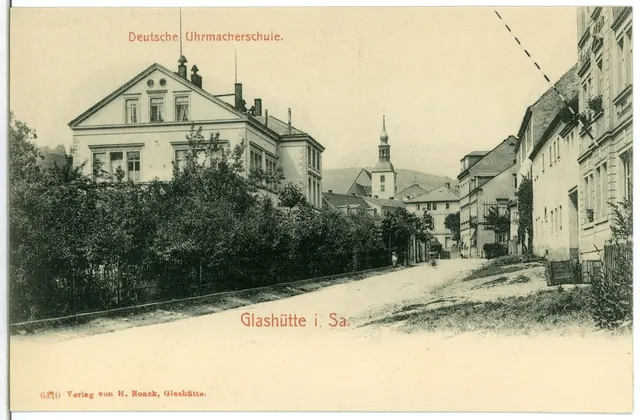
Gustav Eduard Becker (1819–1885) trained as a clockmaker, including in Vienna, and in 1847 opened a workshop in Freiburg in Silesia (today Świebodzice in Poland) making weight-driven wall regulators in the Viennese style. The business grew rapidly in the second half of the nineteenth century, winning medals at international exhibitions and producing regulators, spring-driven wall clocks, mantel clocks and later longcase clocks in large numbers; its 'GB' anchor trademark is common on clocks across central and northern Europe.
In 1899 the firm combined with other Freiburg factories while keeping the Gustav Becker name, and it came under the control of Junghans around 1930. Dates on Becker clocks can often be estimated from the factory's serial numbers, although published serial tables differ.
Becker was born in Oels in Silesia and spent his journeyman years travelling, as German craftsmen then did; in Vienna he came to know the weight-driven wall regulators whose slim cases and seconds pendulums made them the precision clocks of the middle-class home. His workshop in Freiburg in Silesia opened in 1847, and the factory he built there made such regulators affordable by producing their parts in series.
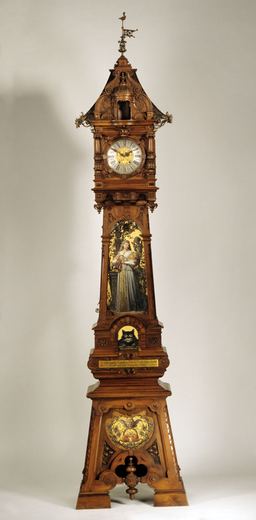
Clocks from the firm's first decades usually have a weight-driven movement with a deadbeat escapement in a glazed wooden case, with one, two or three weights for timekeeping, hour striking and quarter striking. Later the range widened to spring-driven wall clocks (the 'Freischwinger' type, whose pendulum swings freely below the movement), mantel and bracket clocks, alarm clocks and longcase clocks for the German and export markets.
Movements are usually stamped with the 'GB' anchor trademark, often with the words 'Medaille d'Or' — a reference to the gold medal Becker won at an early industrial exhibition, generally given as Breslau in 1852 — and a serial number. Serial numbers are the usual way to estimate a date, but several published tables disagree, so a date taken from them should be given as approximate and checked against the case style.
- Country
- Germany (Silesia; now Poland)
- City / centre
- Freiburg in Schlesien (Świebodzice)
- Founded
- 1847
- Status
- Historical firm
- Key people
- Gustav Eduard Becker (1819–1885)
Innovations & specialities
- Factory production of Vienna-style regulators
- Serial-numbered movements
Timeline
- 1819Gustav Eduard Becker born in Oels, Silesia
- 1847Opens his workshop in Freiburg in Silesia
- 1885Becker dies; the factory continues
- 1899Merges with other Freiburg clock factories, keeping the Gustav Becker name
- c. 1930Comes under the control of Junghans
- 1945Freiburg becomes Świebodzice in Poland; German production ends
Works by Gustav Becker in the catalogue
Open in the catalogue →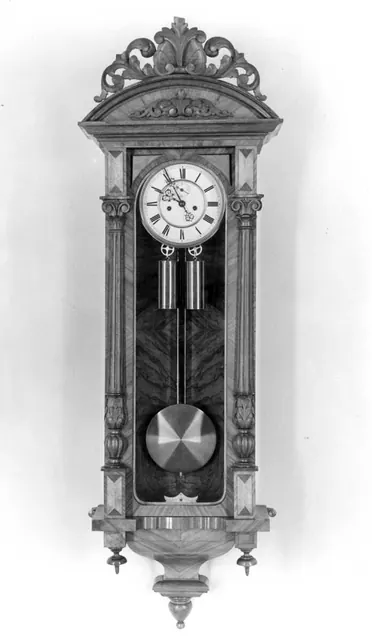
Clocks · 1850–1870
Wall clock by Gustav Becker, Germany, 1850–1870
HKM / Kulttuurihistoriallinen
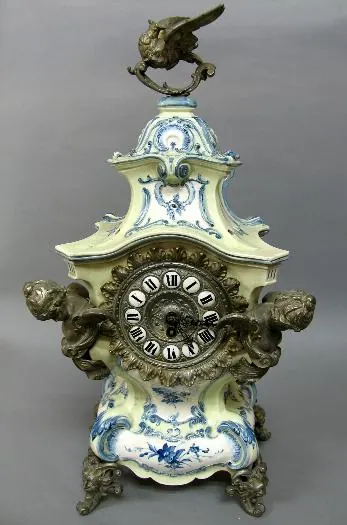
Clocks · 1891–1892
Clock by Gustav Becker, 1891–1892
National Museum of Decorative Arts
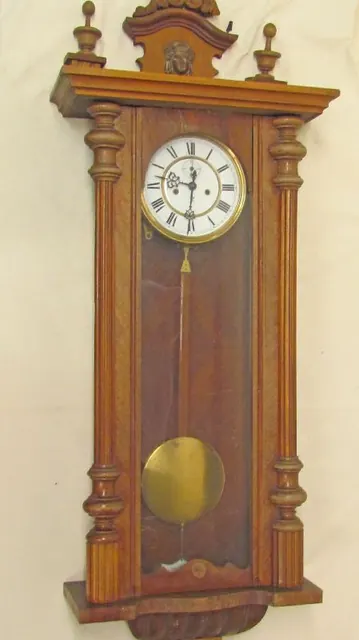
Clocks · 1907
Wall clock by Eduard Gustav Becker (GB), Germany, 1907
Museokeskus Vapriikki
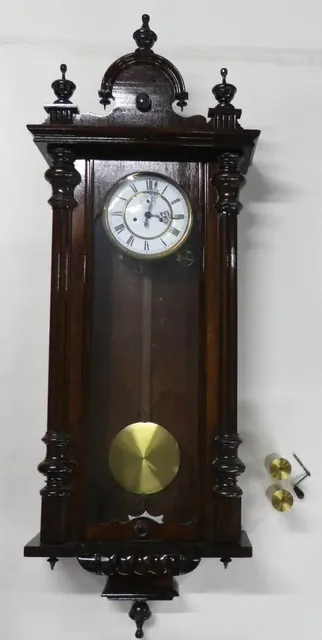
Clocks · 1910–1919
Wall clock by Gustav Becker, 1910–1919
Lahden museot
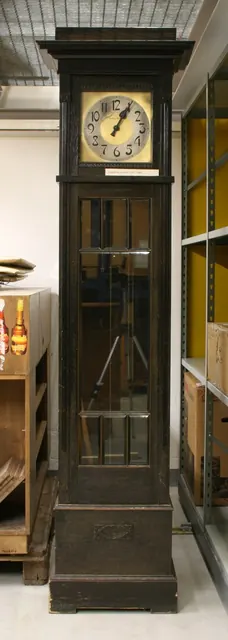
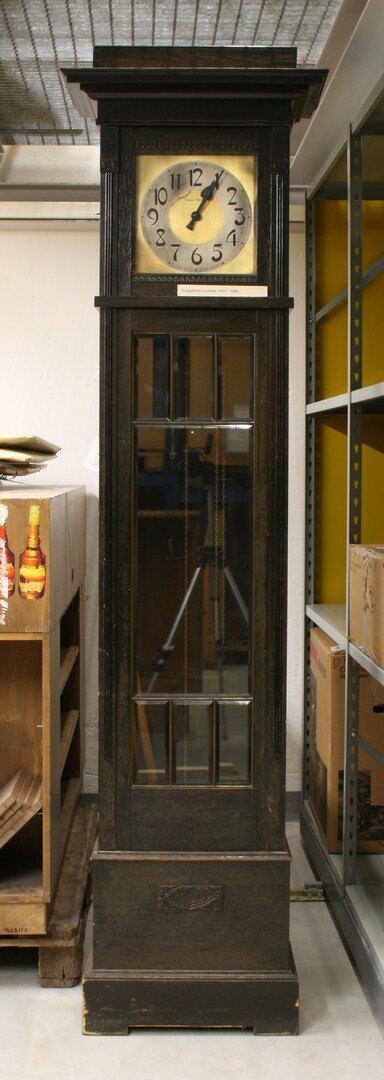
Clocks · 1925
Longcase clock by Gustav Becker, 1925
Työväenmuseo Werstas
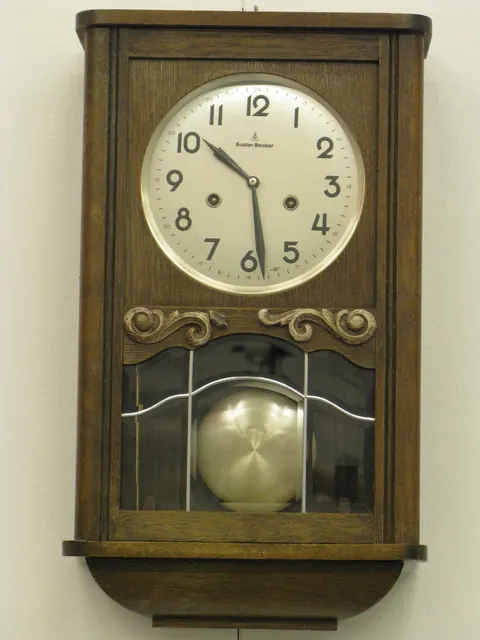
Clocks · 1930s
Wall clock by Gustav Becker, 1930s
HKM / Kulttuurihistoriallinen
Linked through the Atlas maker authority list, which reconciles the spellings used by different institutions. Attributions are as stated by each holding institution or auction house.
Read and see more
Magazine features
- Pendulum Clocks: History, Types and How to Identify an Antique Pendulum Clock
From Galileo's unfinished design and Huygens's first clock of 1657 to the Vienna regulator on the parlour wall and the free pendulum that kept the world's time. How a pendulum clock works, why it was the most accurate machine on earth for 270 years, and how to recognise and date the main types.
- Old Clock Brands: How to Identify the Maker of an Antique or Vintage Clock
Seth Thomas, Ansonia, Ingraham, Junghans, Gustav Becker, Kienzle, Japy, Smiths, Jaeger-LeCoultre — the clock makers whose names turn up most often on mantelpieces, in attics and at auction, where they worked, what they made, and where to look on a clock for the marks that identify it.
Where to see related work
- Uhrenmuseum Wien
Vienna, Austria
Listed because the directory entry names Gustav Becker; displays change, so check with the institution before visiting.