Instrument maker / priest
Georg Hartmann
Also recorded as: Hartmann, Georg · Hartmann, Georg, 1489-1564 · Georgius Hartmann
Nuremberg priest and instrument maker who made astrolabes and sundials in series from standard parts.
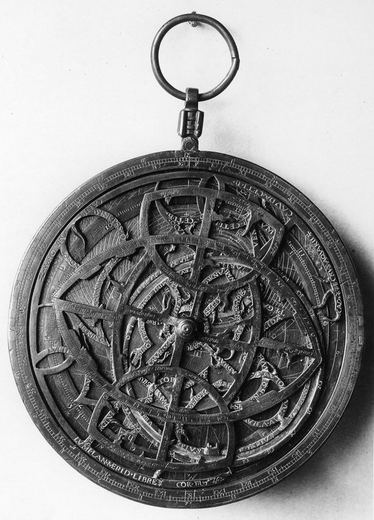
Georg Hartmann studied in Cologne and spent time in Italy before settling in Nuremberg, where he was vicar of St Sebald. Alongside his church duties he made astrolabes, sundials, globe gores and other instruments. Surviving astrolabes by him share near-identical plates and retes, which shows that he produced them in series using standardised, often cast or printed components — an early example of batch production of scientific instruments. He also described the inclination of the magnetic needle in a letter of 1544.
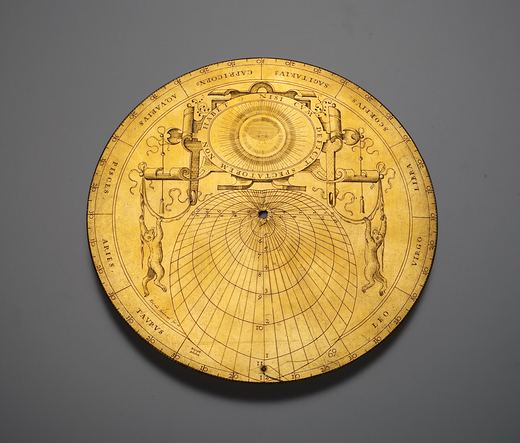
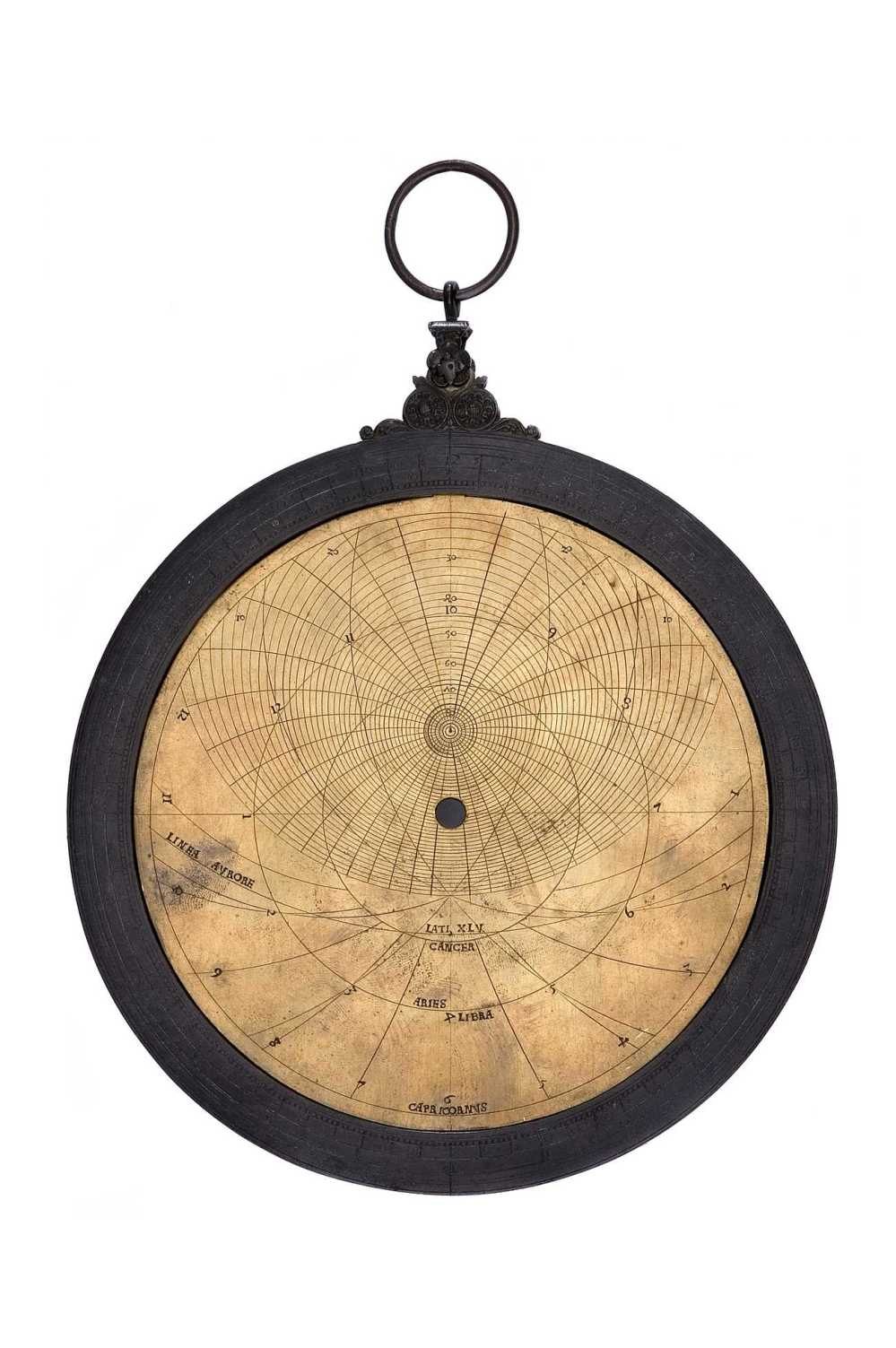
How to recognise the work: his instruments are usually signed, often in the Latin form Georgius Hartmann, and dated to the year, which makes them unusually easy to place. The workshop made brass astrolabes, diptych and other portable sundials, globes and quadrants, and printed instruments on paper to be cut out and assembled; the catalogue includes astrolabes of 1527 and 1548, diptych sundials of 1537 and a paper astrolabe of 1542.
Hartmann's own manual, the Collectanea, records how he made his dials and astrolabes; it was published in English as Hartmann's Practika in 2002. Its range is wide — block, declining, shepherd's, moon, chalice and cylinder dials, as well as gunners' levels and sights — and Levinus Hulsius credited him with inventing the gunner's gauge. All four astrolabes of one 1537 run share the same error in the altitude circles of their plate for latitude 39°, a telltale of batch production from a single pattern.
Before settling in Nuremberg in 1518 he studied theology and mathematics at Cologne and lived for some years in Rome, where he knew Andreas Copernicus, brother of Nicolaus. He noticed there that the compass needle did not point to true north, and in a letter of 1544 to Duke Albrecht of Prussia he described the dip of the needle; the letter was not published until 1831.
- Country
- Germany
- City / centre
- Nuremberg
- Life / active
- 1489–1564
- Status
- Historical individual
- Key people
- Georg Hartmann
Innovations & specialities
- Batch-produced astrolabes with standard parts
- Portable sundials and paper instruments
- Description of magnetic inclination (1544)
Timeline
- 1489Born at Eggolsheim, near Forchheim
- c. 1506Studies at the University of Cologne
- 1518Settles in Nuremberg
- 1527Earliest astrolabe by him in the catalogue
- 1537Batch of astrolabes and diptych dials
- 1544Letter to Duke Albrecht describing magnetic dip
- 1564Dies in Nuremberg
Works by Georg Hartmann in the catalogue
Open in the catalogue →
Instruments · 1527
Astrolabe by Georg Hartmann, Germany, 1527
History of Science Museum, University of Oxford
Instruments · 1532
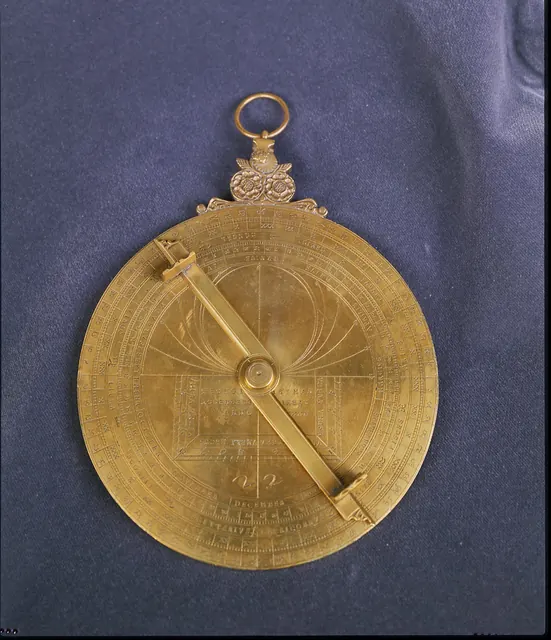
Astrolabe: Western
Adler Planetarium, Chicago
Instruments · 1537
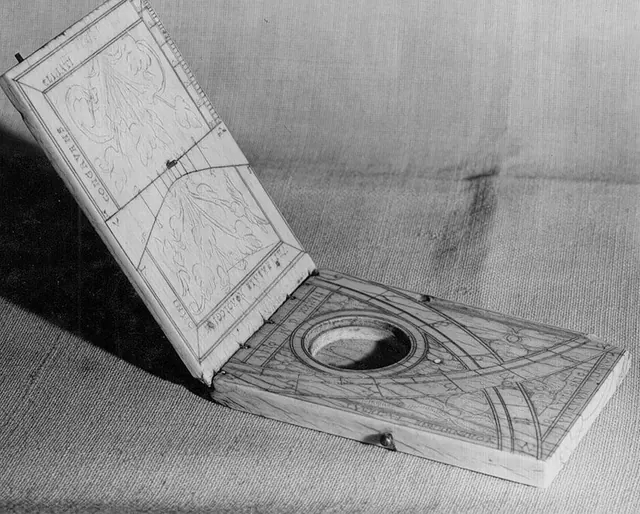
Diptych sundial by Georgius Hartmann, 1537
Royal Institute for Cultural Heritage
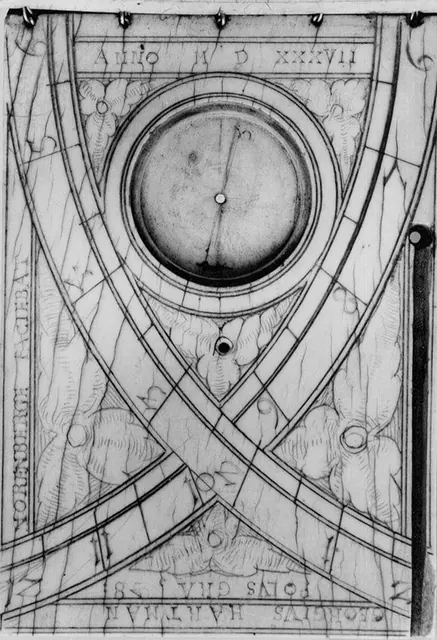
Instruments · 1537
Diptych sundial by Georgius Hartmann, Germany, 1537
Royal Institute for Cultural Heritage
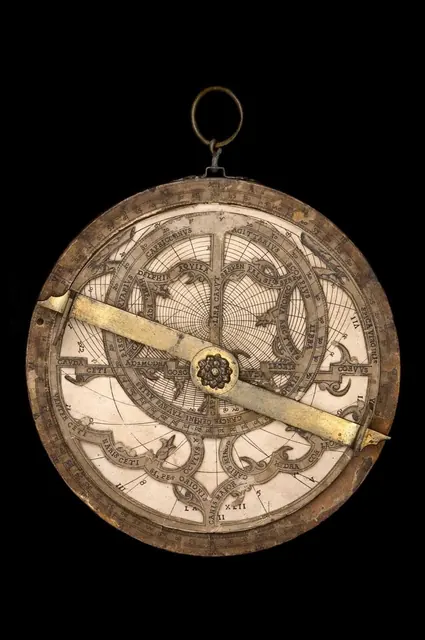
Instruments · 1542
Paper Astrolabe
History of Science Museum, University of Oxford
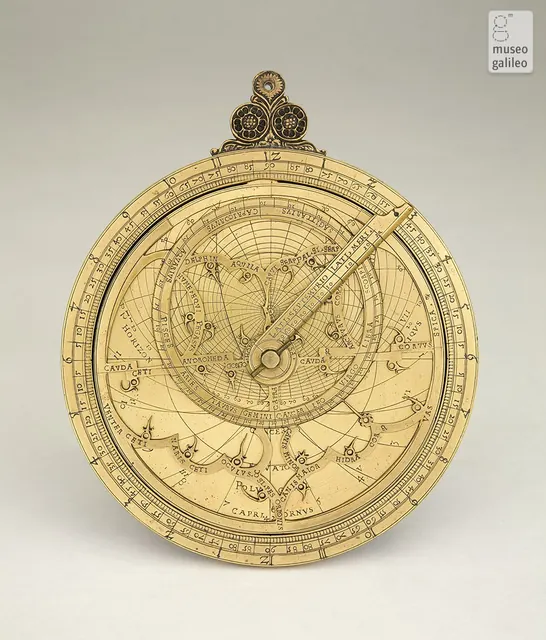
Instruments · 1545
Plane astrolabe (open) by Georg Hartmann, Germany, 1545
Museo Galileo, Florence
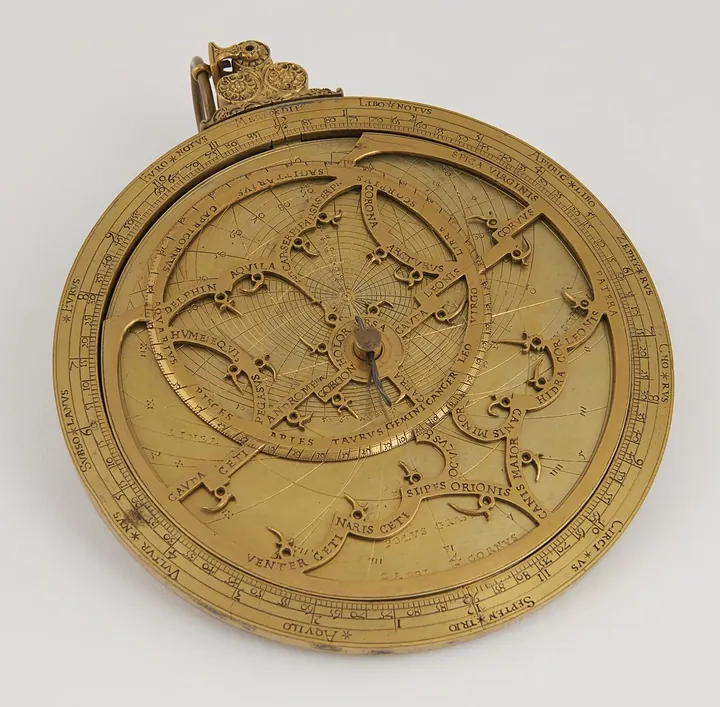
Instruments · 1548
Astrolabe by Georg Hartmann, Germany, 1548
Science Museum Group, London
Linked through the Atlas maker authority list, which reconciles the spellings used by different institutions. Attributions are as stated by each holding institution or auction house.
Read and see more
Magazine features
- The Astrolabe: Telling Time by the Sun and Stars, from Alexandria to Lahore
For a thousand years the astrolabe was the most sophisticated timekeeping instrument in the world. How a flat brass disc models the sky, how it was used to find the hour and the direction of prayer, and how to read the hundreds of surviving examples in museum collections.