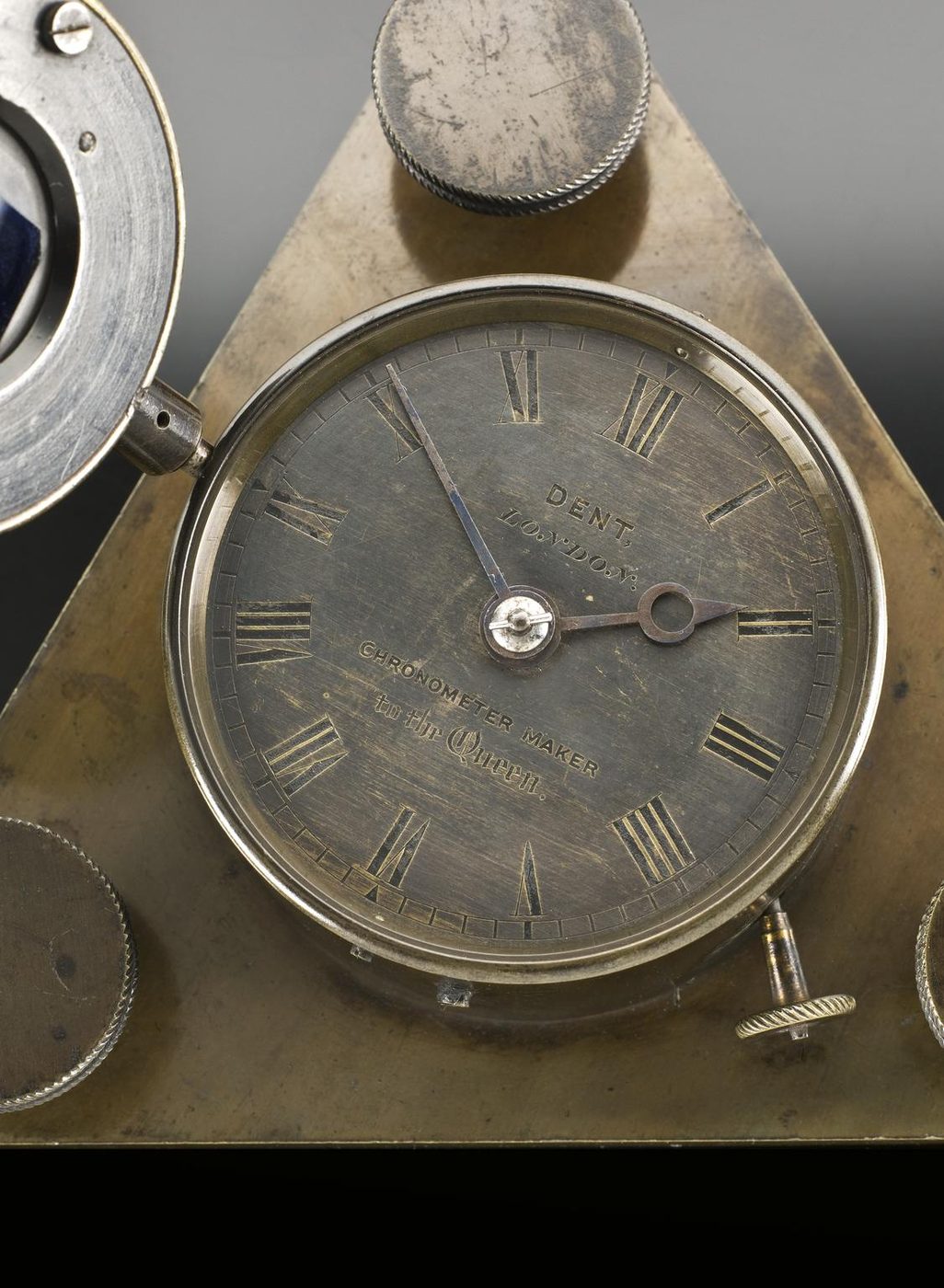
Chronometer, watch and clock maker (firm)
Dent
Also recorded as: E. Dent & Co. · E. Dent & Co. Ltd. · E Dent & Company Limited · E.Dent and Co.Ltd · E. Dent and Co. · Dent & Co. · Edward John Dent · Edward John Dent & Co. · E. J. Dent · Frederick Dent · Arnold & Dent · Arnold and Dent
London chronometer and clock maker whose firm built the Great Clock of the Palace of Westminster.
Edward John Dent (1790–1853) worked in partnership with John Roger Arnold, son of the chronometer maker John Arnold, from 1830 to 1840 as Arnold & Dent, and then set up on his own. His business made marine chronometers, watches, turret clocks and astronomical regulators.
In 1852 Dent was given the contract for the Great Clock of the Palace of Westminster, built to the design of Edmund Beckett Denison (later Lord Grimthorpe) and required by the Astronomer Royal, George Airy, to keep very close time. Dent died in 1853; his stepson Frederick Dent completed the clock, which began keeping time in 1859 with Denison's double three-legged gravity escapement. The firm continued as E. Dent & Co.
- Country
- England
- City / centre
- London
- Founded
- 1840 (partnership with Arnold from 1830)
- Status
- Historical firm
- Key people
- Edward John Dent (1790–1853); Frederick Dent (stepson); John Roger Arnold (partner, 1830–1840); Edmund Beckett Denison (designer of the Westminster clock)
Innovations & specialities
- Great Clock of Westminster (completed 1854, in service 1859)
- Turret clocks with Denison's gravity escapement
- Marine chronometers and regulators
Works by Dent in the catalogue
All 32 records →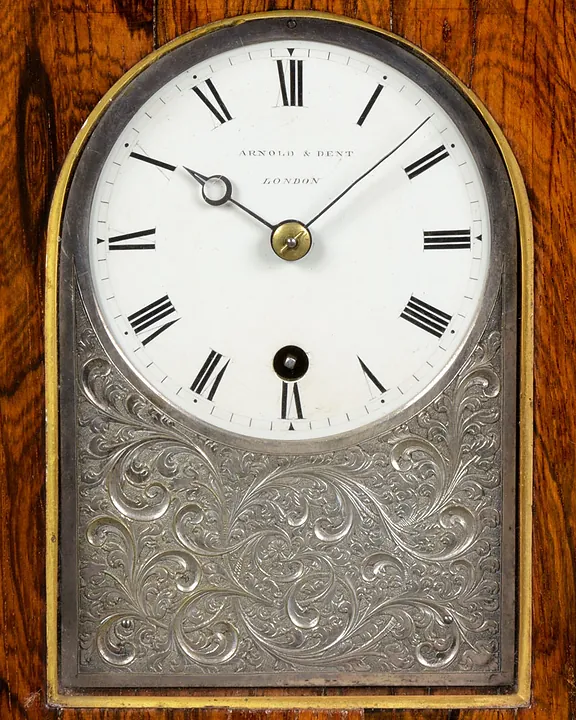
Clocks · c. 1820–1830
Bracket clock by Arnold and Dent, London, c. 1820–1830
Howard Walwyn Fine Antique Clocks (dealer), London
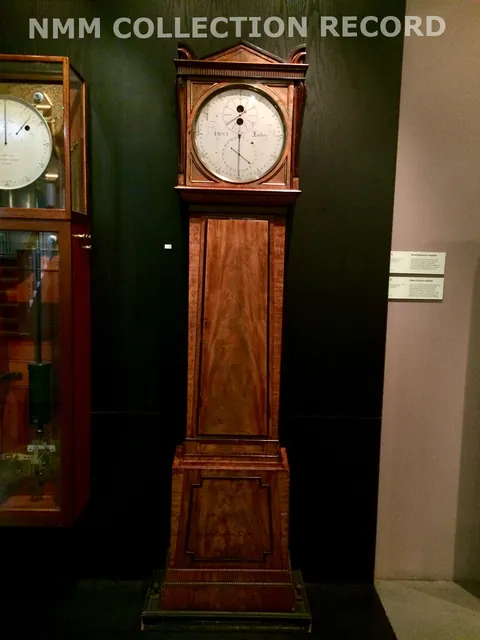
Clocks · 1829
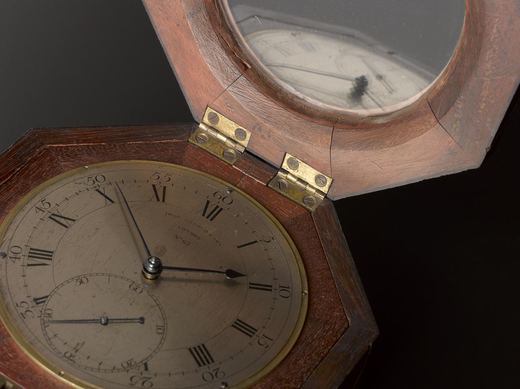
Astronomical regulator dent no. 2 by Edward John Dent
Royal Museums Greenwich
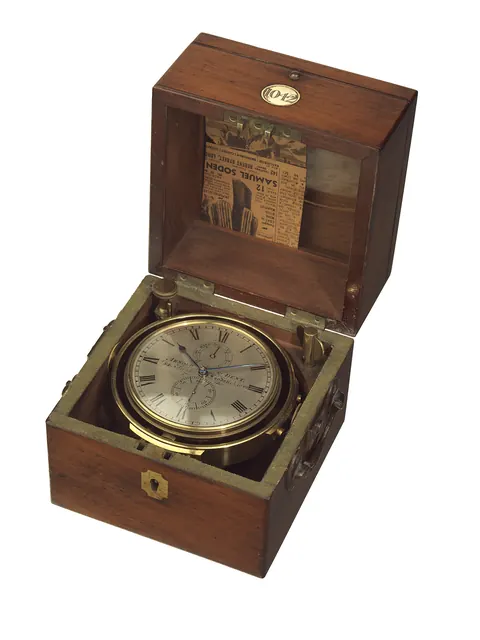
Instruments · c. 1835
Marine chronometer no. 1042 by Arnold & Dent
Royal Museums Greenwich
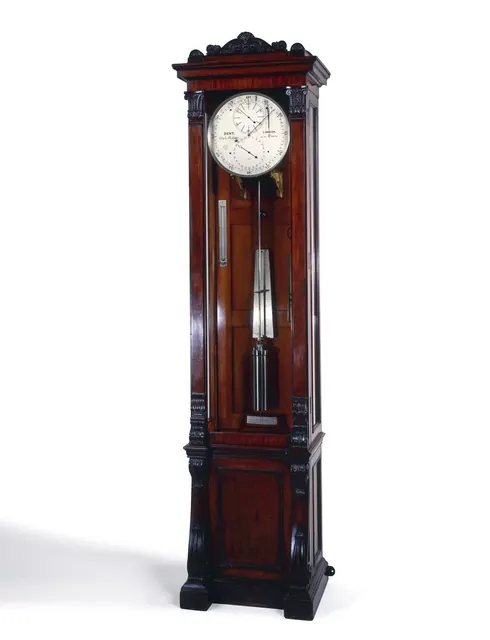
Clocks · c. 1842
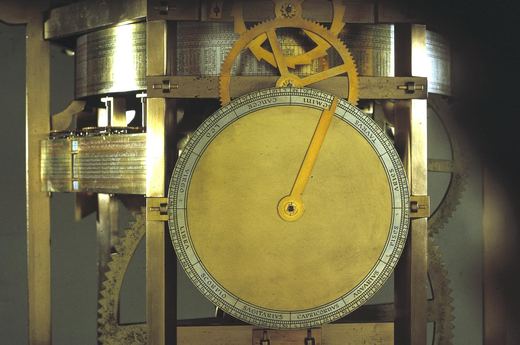
An astronomical longcase regulator by Dent of London, number 587, featuring G.B. Airy’s ‘Remontoir Dead-beat’ escapement, circa 1842
Royal Museums Greenwich
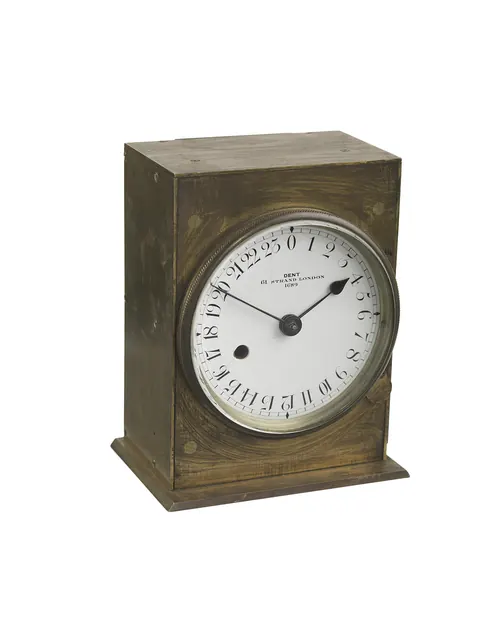
Instruments · Unknown. Second half 19th century.
Chronometer no. 1689 by Edward John Dent & Co
Royal Museums Greenwich
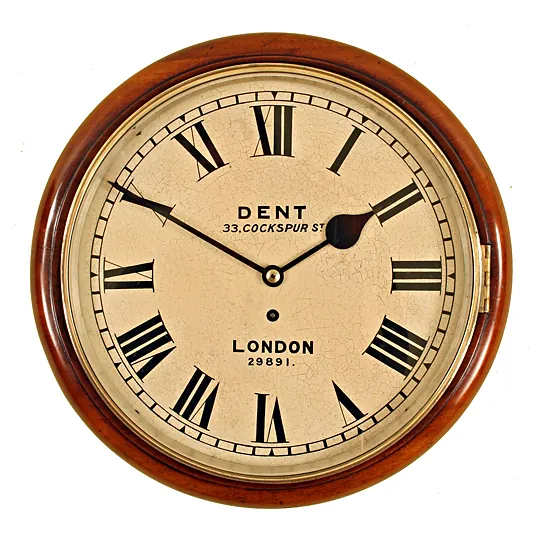
Clocks · c. 1860
Fusee wall clock by Dent, London, c. 1860
P A Oxley (dealer), Wiltshire
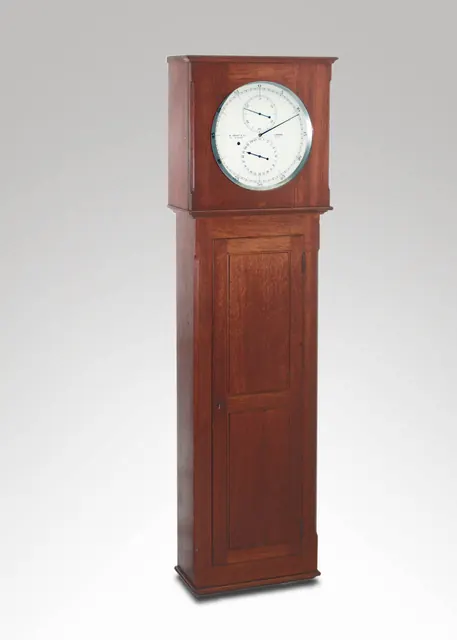
Clocks · c. 1870
Astronomical regulator no. 2011 by Edward John Dent & Co
Royal Museums Greenwich
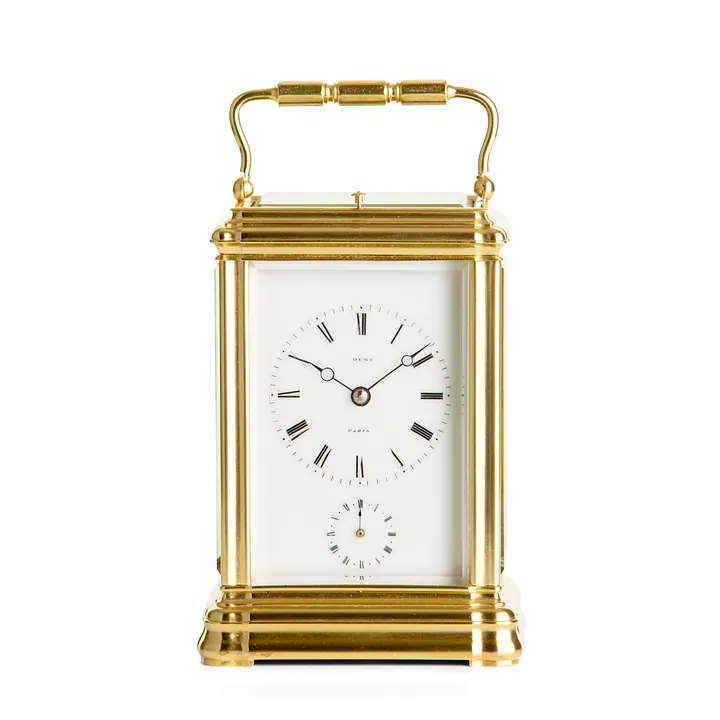
Clocks · c. 1870
French repeating carriage clock with alarm by Dent
The Antique Clock Company (dealer), Dorset
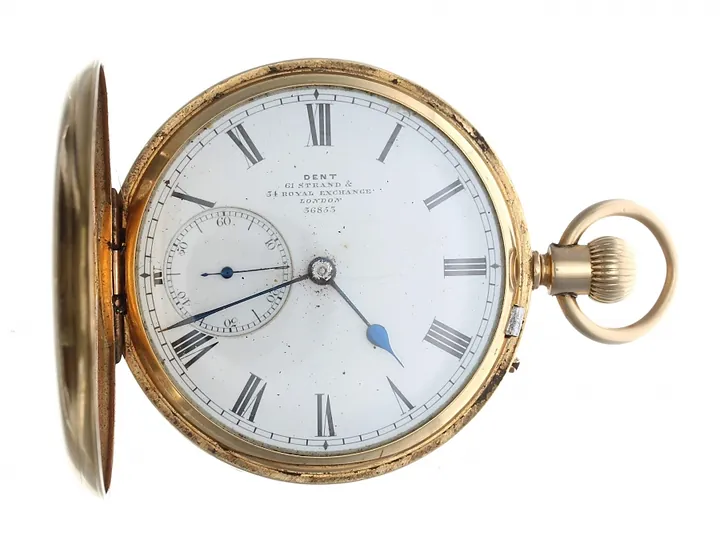
Pocket Watches · 1874 (hallmarked London)
Victorian 18ct lever hunter pocket watch by Dent, hallmarked London 1874
Gardiner Houlgate (auction house), Corsham
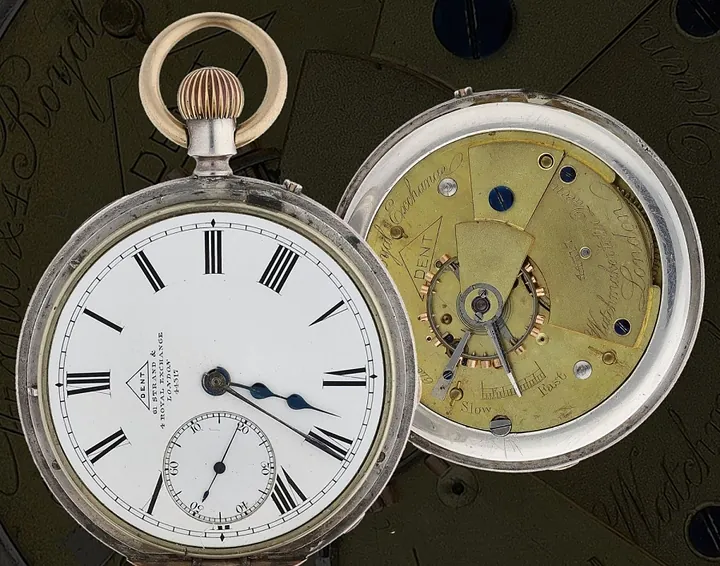
Pocket Watches · 1888 (hallmarked London)
Victorian silver half hunter lever pocket watch by Dent, London, hallmarked London 1888
Gardiner Houlgate (auction house), Corsham
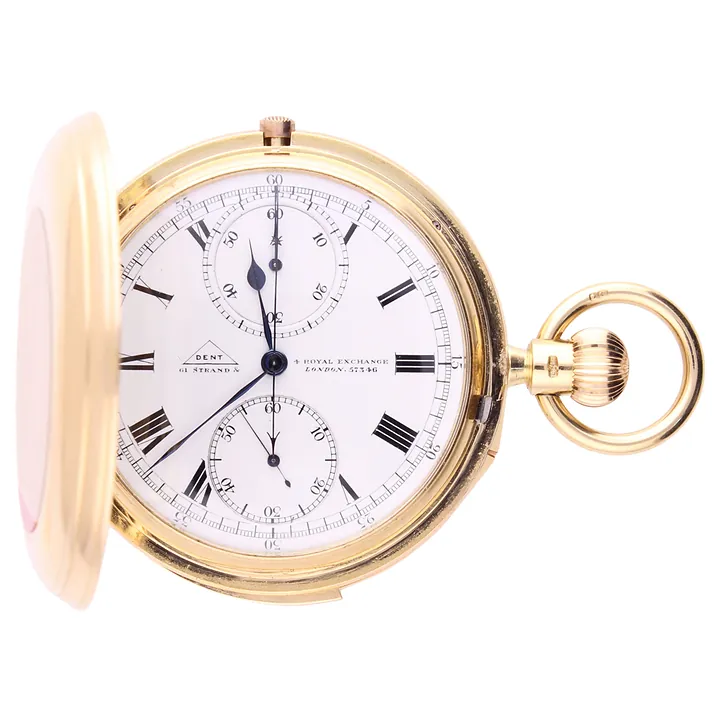
Pocket Watches · 1910
18ct yellow gold Dent Hunter case minute repeating pocket watch, 1910
Somlo Antiques (dealer), London
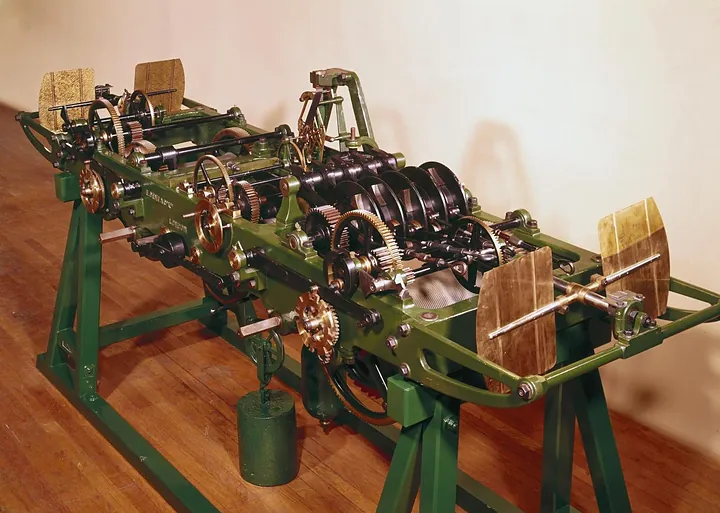
Movements & Components · 1939
Escapement model by E.Dent and Co.Ltd and Baron Grimthorpe Edmund Beckett, England, 1939
Science Museum Group, London
Linked through the Atlas maker authority list, which reconciles the spellings used by different institutions. Attributions are as stated by each holding institution or auction house.
Read and see more
Magazine features
- Old Clock Brands: How to Identify the Maker of an Antique or Vintage Clock
Seth Thomas, Ansonia, Ingraham, Junghans, Gustav Becker, Kienzle, Japy, Smiths, Jaeger-LeCoultre — the clock makers whose names turn up most often on mantelpieces, in attics and at auction, where they worked, what they made, and where to look on a clock for the marks that identify it.
- After Harrison: How Le Roy, Arnold and Earnshaw Turned the Marine Timekeeper into an Industry
Harrison proved that a watch could find longitude. It took another half-century of French and English invention — the detent escapement, the compensation balance and the helical balance spring — to make a timekeeper that navies could buy by the hundred.
- Finding Longitude: Harrison, Arnold, Earnshaw and the Marine Chronometer
How a navigational problem became a horological one — and why the instrument that solved it at sea was not the one that won the prize.