
Pocket Watches · Pocket watch
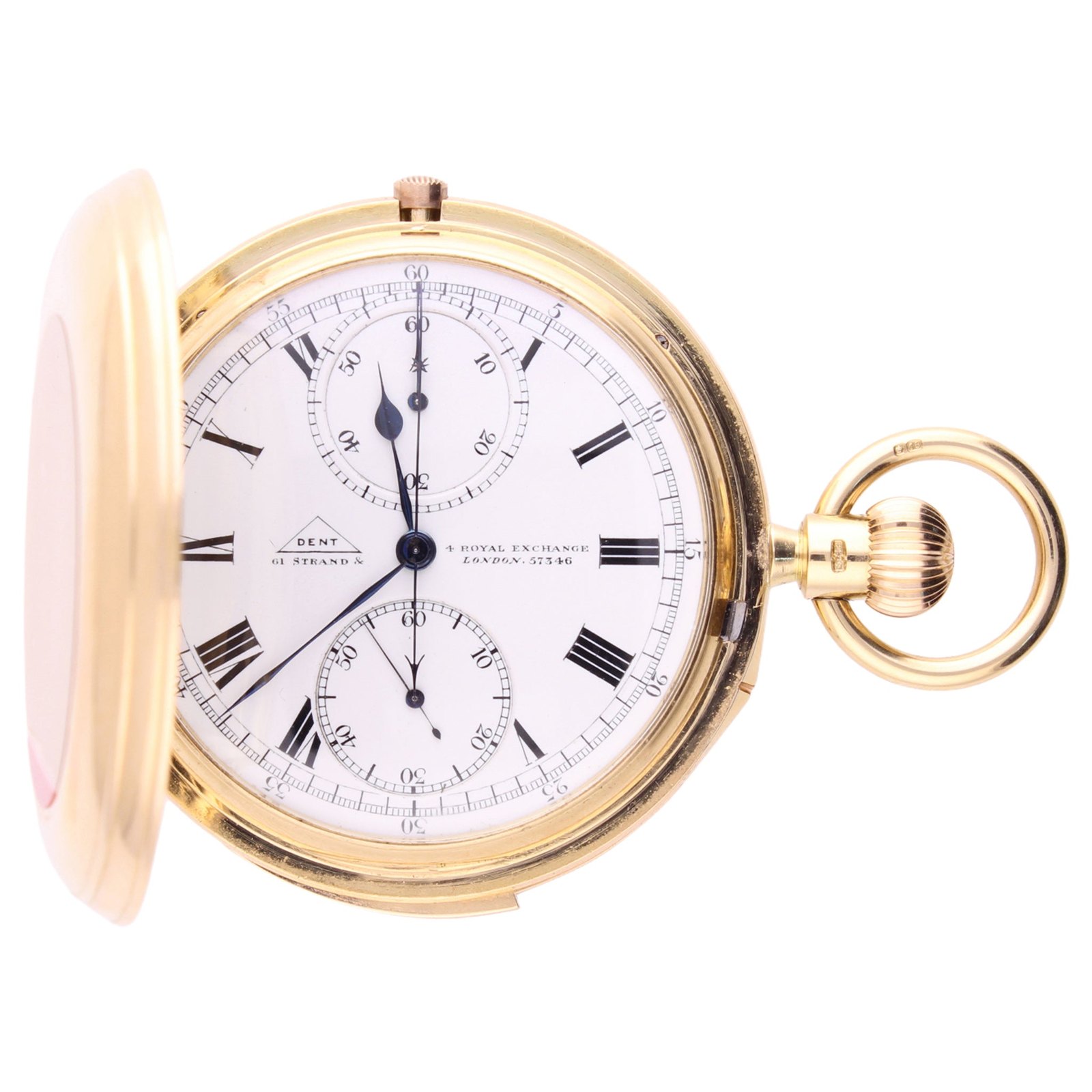
18ct yellow gold Dent Hunter case minute repeating pocket watch, 1910
- Maker / attribution
- Dent (maker)
- Date
- 1910
- Historical period
- Golden Age of Mechanical Watchmaking (1900 – 1945)
- Country of origin
- England
- Object type
- Pocket watch
- Materials / technique
- yellow gold
- Dimensions
- Case 53 mm
- Stock no.
- G3580
- Credit line
- Dealer listing, Somlo Antiques (G3580)
- Catalogue title (original)
- 18ct yellow gold Dent Hunter case minute repeating pocket watch. Made 1910 (English)
View the source record (dealer listing) ↗ (opens another website in a new tab)Suggest a correction
Record summary
Catalogued by Somlo Antiques (dealer), London (stock number G3580), this is a pocket watch by Dent, made in England, dated 1910. The Atlas places it in the Golden Age of Mechanical Watchmaking period (1900 – 1945) of its Pocket Watches collection. Materials and techniques recorded by the source: yellow gold. Recorded dimensions: Case 53 mm. The record is illustrated with 4 photographs.
Assembled from the source record's structured fields. Dates and attributions are given as the source states them; where a field is missing the Atlas leaves it blank rather than estimating.
Catalogue description
Dealer description — Somlo Antiques
Edward John Dent was a passionate and esteemed creator of some of the finest clocks and watches, with Royal Warrants across the globe and creator of one of the world’s most famous clocks, ‘Big Ben’ and yet began his career purely by coincidence. It started when the age of 14 Dent was an apprentice candle maker to his grandfather. The young Dent had bought his grandfather a watch as a gift; probably second hand, however it barely kept time and so it was up to Dent to repair it. Spending hours poring over this watch no doubt began Dent’s appetite for horology. Meanwhile, the terms of his apprenticeship contract meant he had to find residence and thankfully his cousin was willing to have him. His cousin was Richard Rippon, an expert watchmaker who helped Dent become more and more interested in watch repair and less and less interested in candle making - so much so that Dent’s grandfather agreed to transfer his remaining seven years as apprentice to the watchmaker Edward Gaudin. Dent established his own company ten years later in 1814, and developed a reputation as a builder of accurate chronometers. One of his chronometers won the First Premium Award in the 1829 Greenwich Trials. The Royal Navy equipped themselves with Dent’s chronometers. Dent’s chronometers accompanied some of the 19th century’s most influential explorers. Robert FitzRoy took Dent chronometer no. 633 aboard HMS Beagle in 1831 the voyage that eventually led to the publication of The Origin of the Species – Darwin’s revolutionary theory of evolution. Brand: Dent Made: 1910 Model: Minute repeater Reference: - Calibre : - Movement: Manual Material : 18ct yellow gold Features/complications : Minute repeating Dial : Enamel dial featuring an outer minute track with roman numerals and black outer 1/5th second divisions, subdials at 12 & 6 o'clock for seconds and 60 minute divisions Case Dimensions : 53mm Bracelet/Strap: N/A Accessories : N/A SKU: 3580
Historical context
Golden Age of Mechanical Watchmaking (1900 – 1945)
The wristwatch displaces the pocket watch; waterproof cases, self-winding and grand complications.
The pocket watch reached technical maturity and then began to give way to the wristwatch after the First World War. Complicated watches for collectors such as Henry Graves Jr. and James Ward Packard, railroad watches, and slim Art Deco dress watches are characteristic.
Read the period in the timelineMore pocket watches from this periodEarlier: Industrial Revolution
Atlas type guide
Repeating watches
Before electric light, telling the time in the dark was a real problem. Repeating watches strike the time on demand when a slide or push-piece is operated: quarter repeaters sound hours and quarters, minute repeaters hours, quarters and minutes. Edward Barlow and Daniel Quare disputed the invention in London in the 1680s. Early repeaters struck on a bell inside the case; Abraham-Louis Breguet introduced the gong (a coiled steel wire) around 1780, allowing thinner watches.
Repeaters require a separate train with racks, snails and a governor to control the striking speed, and are among the most demanding complications to make and adjust. Swiss makers of the Vallée de Joux specialised in repeating ébauches in the nineteenth century.
What to look for
- A slide on the case band or a push-piece through the pendant.
- Gongs encircling the movement (after c. 1780) or a bell in the case (earlier); pierced case for sound.
- The racks, snails and governor visible under the dial or on the movement.
- Terms such as 'Minutes', 'Quarts' or 'Répétition' on the dial or cuvette.
Dating clues
- Bell-striking quarter repeaters: c. 1690–1800.
- Gong repeaters and dumb repeaters (striking on the case): after c. 1780.
- Minute repeaters became more common after c. 1830 with Vallée de Joux ébauches.
General guidance written by the Atlas editors about this kind of object. It is not a statement about this particular piece; for that, rely on the source record above and on physical examination.
Read next:Minute repeater
Related records
Clocks · c. 1845
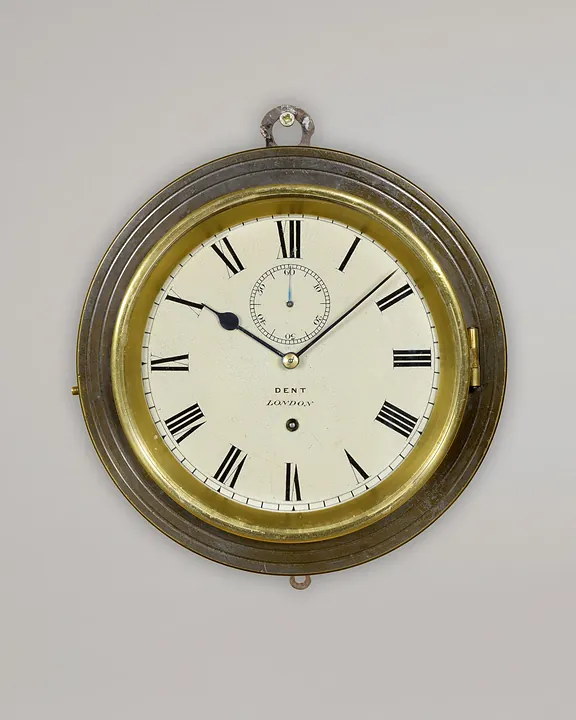
Wall clock by Dent, London, c. 1845
Howard Walwyn Fine Antique Clocks (dealer), London
Pocket Watches · 1853 (hallmarked London)
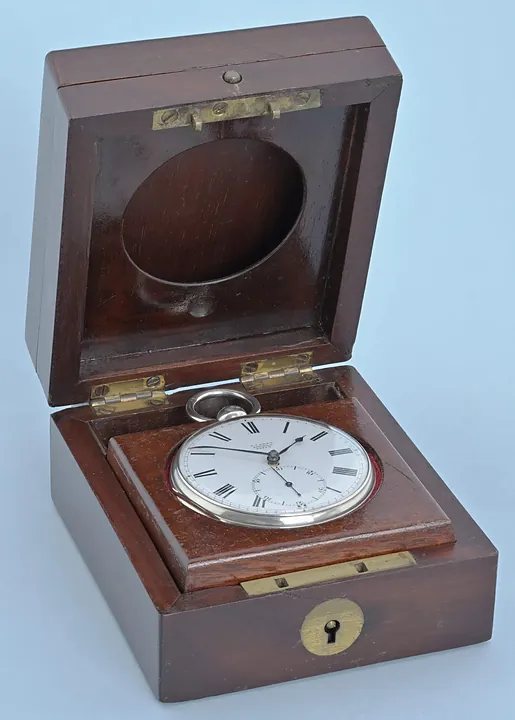
Silver Deck Watch by Dent, 1853
Pieces of Time (dealer), London
Pocket Watches · c. 1910
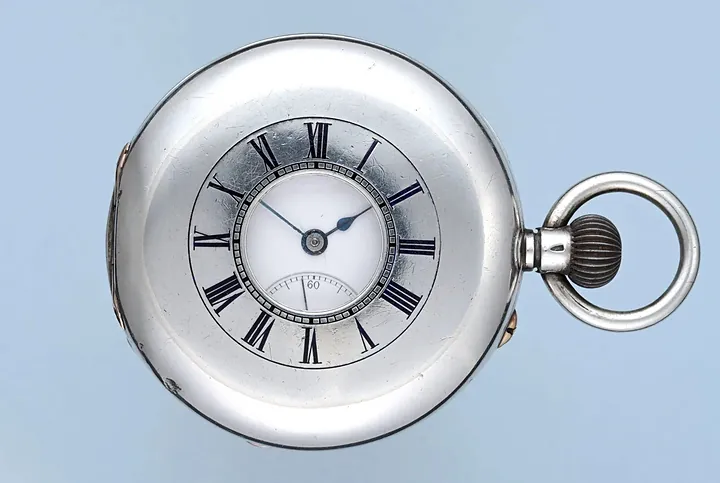
Silver Half Hunter Examined by Dent, circa 1910
Pieces of Time (dealer), London
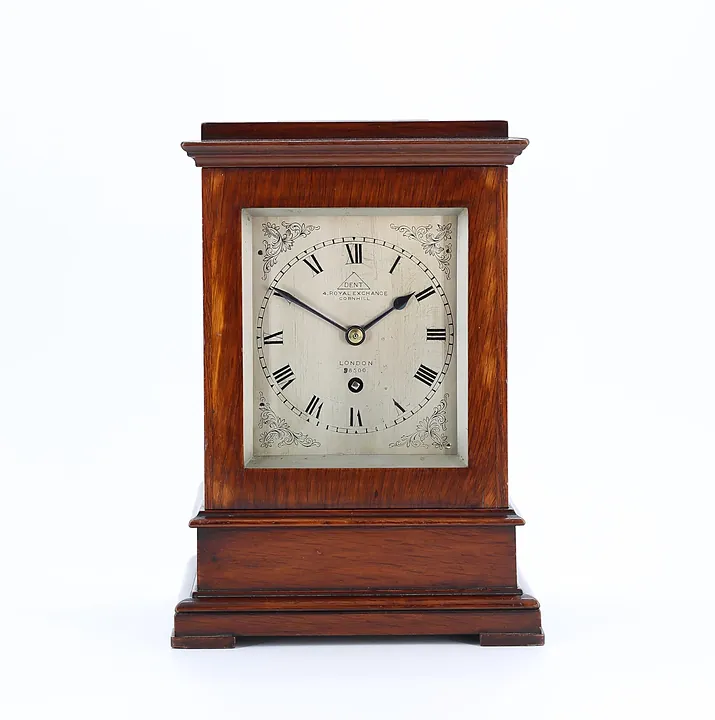
Clocks · c. 1870
Fusee five glass library clock by Dent
The Antique Clock Company (dealer), Dorset
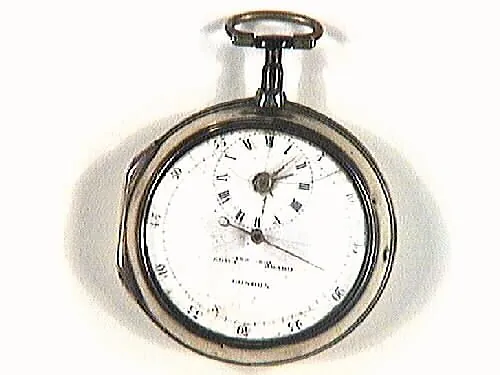
Pocket Watches · 1900–1999
Pocket watch by Edward Howard, England, 1900–1999
Lake Vänern Museum
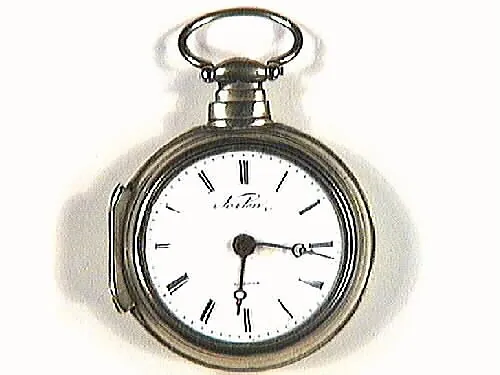
Pocket Watches · 1900–1999
Pocket watch by Norton, England, 1900–1999
Lake Vänern Museum
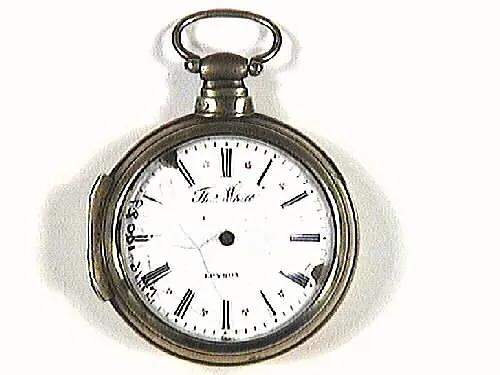
Pocket Watches · 1900–1999
Pocket watch by Ths Whitt, England, 1900–1999
Lake Vänern Museum
Pocket Watches · 1900–1999
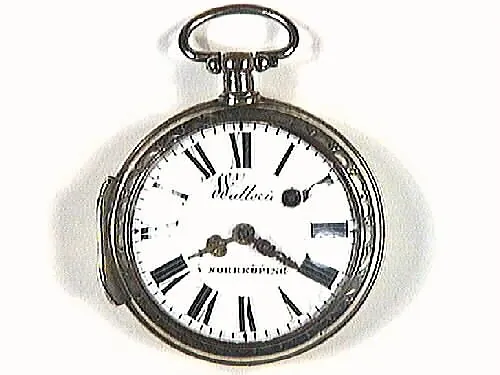
Pocket watch by Wallerius, England, 1900–1999 (no. 60512)
Lake Vänern Museum