
Clocks · Clock
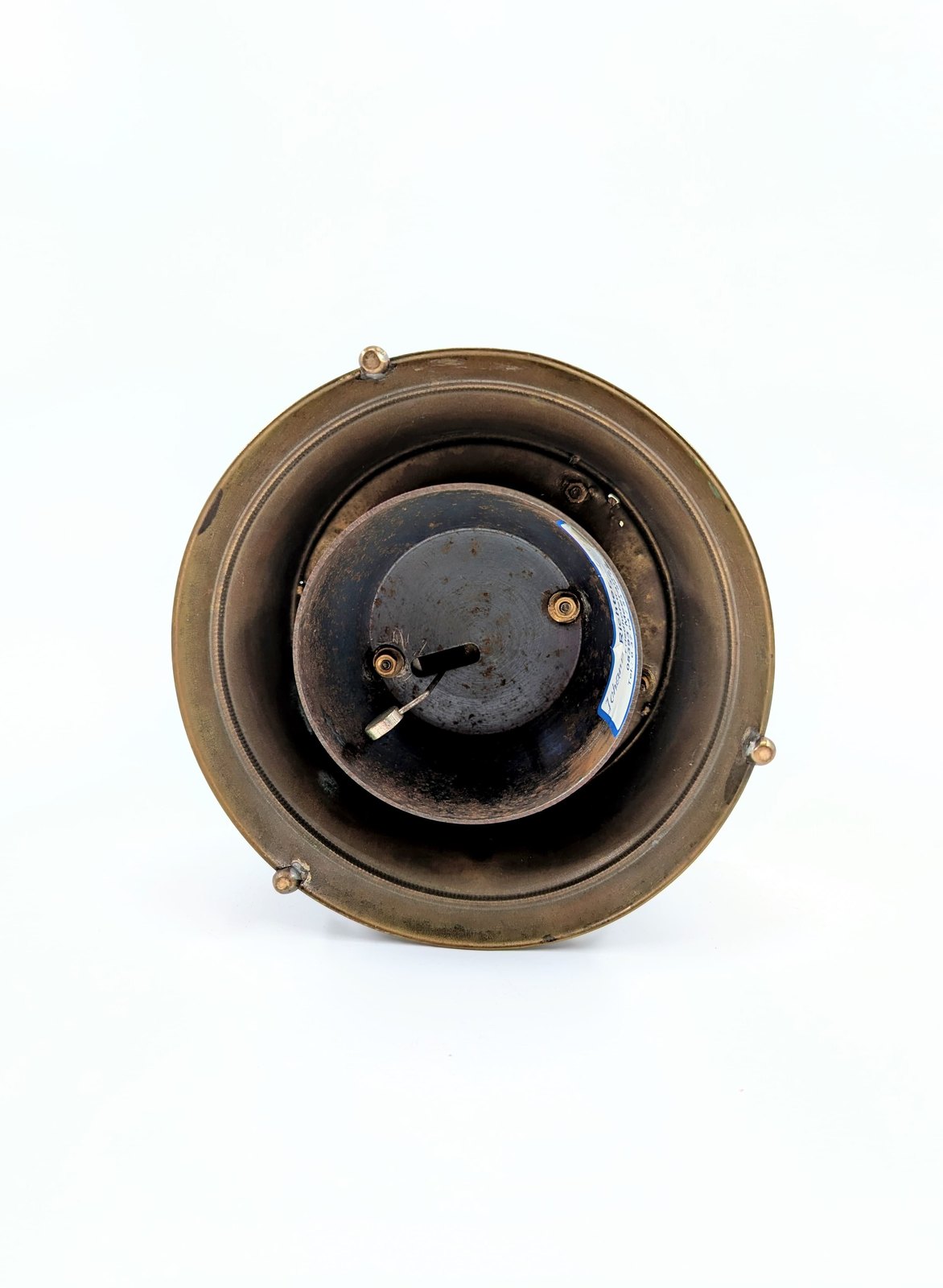
Clock by Junghans, Germany, 1910
- Maker / attribution
- Junghans (Created)
- Date
- 1910
- Historical period
- Golden Age of Mechanical Watchmaking (1900 – 1945)
- Country of origin
- Germany
- Place
- Schramberg
- Object type
- Clock
- Materials / technique
- Messing / Celluloid / Glas / gegossen / getrieben
- Dimensions
- Höhe: 25.7 cm, Gewicht: 772 g, Durchmesser: 13.9 cm, Anzahl von Teilen: 3 Bestandteile
- Holding institution
- Städtisches Museum Meerane
- Accession / object no.
- 0004550-A6
- Credit line
- Städtisches Museum Meerane
- Catalogue title (original)
- Marine-Uhr Gothic der Firma Junghans - 1910 (German)
View the source record ↗ (opens another website in a new tab)Suggest a correction
Record summary
Held and catalogued by Städtisches Museum Meerane (object number 0004550-A6), this is a clock by Junghans, made in Schramberg, Germany, dated 1910. The Atlas places it in the Golden Age of Mechanical Watchmaking period (1900 – 1945) of its Clocks collection. Materials and techniques recorded by the source: Messing / Celluloid / Glas / gegossen / getrieben. Recorded dimensions: Höhe: 25.7 cm, Gewicht: 772 g, Durchmesser: 13.9 cm, Anzahl von Teilen: 3 Bestandteile. The record is illustrated with 6 photographs.
Assembled from the source record's structured fields. Dates and attributions are given as the source states them; where a field is missing the Atlas leaves it blank rather than estimating.
Catalogue description
Catalogue description from Städtisches Museum Meerane (German)
Tischuhr der Firma Junghans aus dem Jahr 1910. Dies lässt sich anhand der digitalisierten Kataloge aus den Archiven der heute noch existierenden Firma Junghans feststellen. Im Katalog des Jahres 1910 wird die Uhr in der Kategorie „Marine-Uhren mit ‚Junghans‘-Werken nach amerikanischem System” sowie mit dem Modellnamen „Gothic” den möglichen Käufern präsentiert. Oberhalb einer bildlichen Darstellung steht folgende Beschreibung: „Messing-Gehäuse mit goldfarbiger Metall-Garnitur, elfenbeinfarbiges Velluloid-Ziffernblatt, ovales Glas”. Das Messinggehäuse unterteilt sich in drei Formteile. Ein hyperbolisch geformtes Standgehäuse. Ein zylinderförmiges Mittelgehäuse, in dem sich das Uhrwerk und das Zifferblatt befinden, sowie eine kelchförmiges Kuppel. Durch die Kombination dieser drei Formen ähnelt die Uhr einer kleinen gotischen Kapelle oder Turmspitze. Der hyperbolisch geformte Fuß ist schlicht gestaltet. Am unteren Rand sind drei einzelne Messingkugeln zu erkennen, die das Objekt umgeben. Auf der glatten Messingoberfläche zeichnet sich zudem ein ringsum laufender, kanelierter Ring sowie eine darunter verlaufende Nut ab. Das mittlere Gehäuse sitzt leicht versetzt nach innen auf dem Fuß des Gesamtobjekts. In der Mitte zeigt sich das schlicht gestaltete Zifferblatt mit zwei Zeigern und dem Firmenzeichen von Jughans. Davor ist ein Glas zu erkennen, über dessen Fläche ein Riss von der linken Mitte nach unten rechts ragt. Abgeschlossen wird dieses wie ein Ausschnitt wirkende Sichtfeld auf das Zifferblatt von einem gotischen Schmuckband an an der Ober- und Unterseite. Das Schmuckband zeigt aneinander gereihte Rundbögen mit einem Dreipass in dessen Mitte. Rechts und links wird das Glas von zwei angedeuteten Bündelsäulen begrenzt. Das Schmuckband setzt sich rechts und links kontinuierlich fort, bis eine rechteckige Klappe mit einem runden Knauf und geometrischen Verzierungen das gotische Dekor unterbricht. Unterhalb dieser Klappe befindet sich das Uhrwerk, welches mithilfe eines in der Kuppel befindlichen Schlüssels aufgezogen werden kann. Die kelchförmige Kuppel besitzt sechs Streben und drei barocke Dekore aus Akanthus. Auf der Kuppel befindet sich eine verkehrt kreiselförmige Spitze, die auf einer Art Nodus sitzt und von einer kleinen Kugel gekrönt wird.
Shown in the original language of the source catalogue. An editor-reviewed English translation has not yet been published; we do not publish machine translations as authoritative text.
Historical context
Golden Age of Mechanical Watchmaking (1900 – 1945)
The wristwatch displaces the pocket watch; waterproof cases, self-winding and grand complications.
Between 1900 and 1945 clocks were electrified: master-clock systems ran factories and offices, synchronous mains clocks entered homes, and the Shortt free-pendulum clock set new standards of accuracy before the first quartz clocks (1927). Art Deco design reshaped mantel and table clocks.
Read the period in the timelineMore clocks from this periodEarlier: Industrial Revolution
Atlas type guide
Domestic clocks
A clock combines four systems: a source of power (falling weight, coiled spring, or later electricity), a gear train that divides time, an escapement and oscillator that regulate it (foliot, pendulum or balance), and an indicating system of dial and hands or a bell. Its history runs from the large iron weight-driven clocks of the late thirteenth century to Renaissance spring-driven table clocks, the pendulum revolution of 1656, the factory clocks of the nineteenth century and electric and quartz clocks of the twentieth.
Domestic clocks also reflect regional furniture and decorative traditions — English longcase and bracket clocks, French pendules, Viennese regulators, Black Forest and American shelf clocks — and therefore record changing tastes as much as technical progress.
What to look for
- How the clock is powered: weights, spring barrel, fusee, electric coil.
- The oscillator: foliot, short pendulum, long seconds pendulum or balance.
- Whether it strikes: hour only (count wheel) or hours and quarters (rack striking).
- The maker or retailer's name on dial and movement, and any factory trademarks.
- Signs of alteration — replaced dials, converted escapements, 'married' cases.
Dating clues
- Before 1656 clocks used foliots or balances; after, most domestic clocks have pendulums.
- Anchor escapements spread after c. 1670; minute hands became common at the same time.
- Factory production in America and Germany transformed prices after c. 1840.
General guidance written by the Atlas editors about this kind of object. It is not a statement about this particular piece; for that, rely on the source record above and on physical examination.
Related records
Clocks · c. 1955
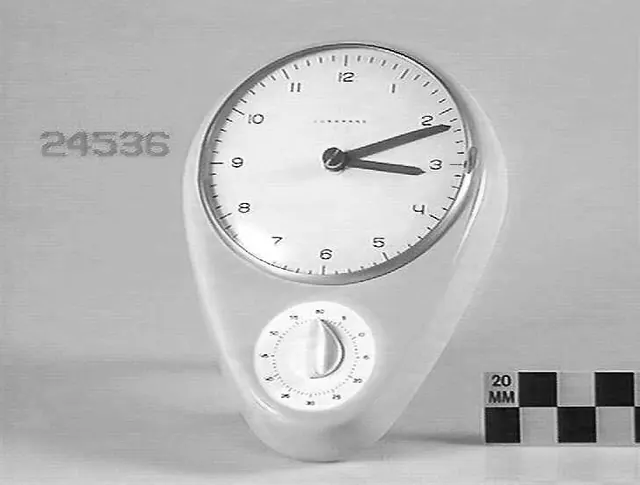
Electric Clock - Junghans, 'Electora', c. 1955
Museums Victoria, Melbourne
Clocks · 1956
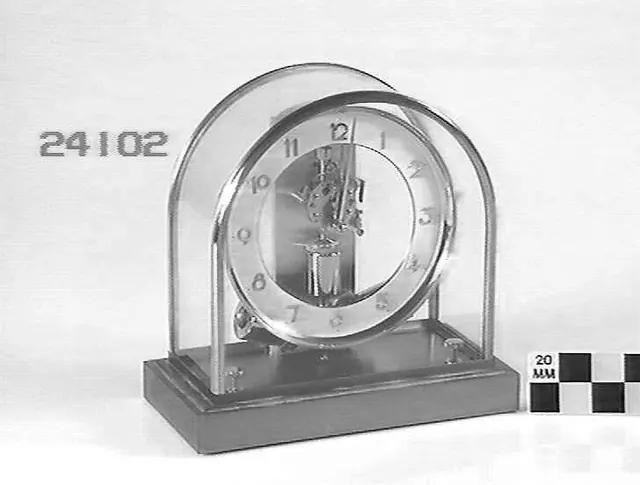
Electric Clock - Junghans, 'ATO, Germany, 1956
Museums Victoria, Melbourne
Clocks · 1888–1900
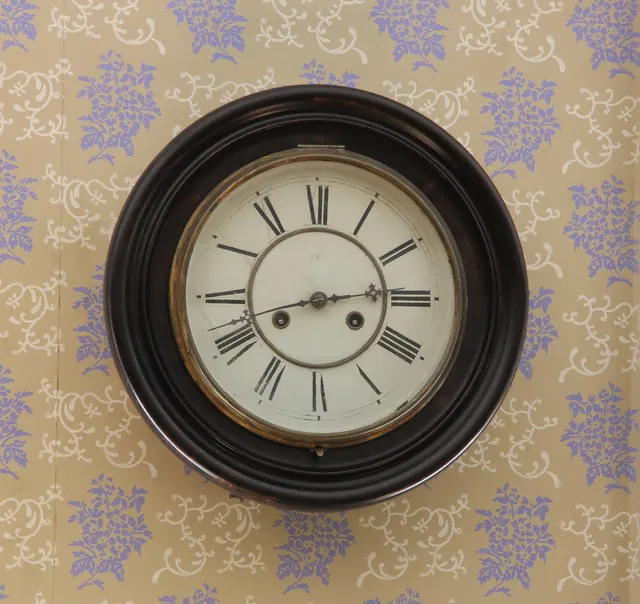
Clock by Junghans, Sweden, 1888–1900
Skansen
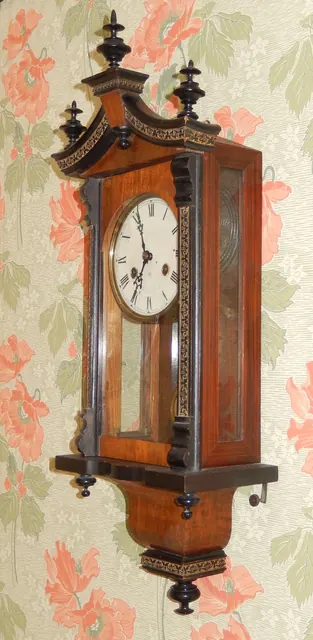
Clocks · 1890–1910
Clock by Junghans, Sweden, 1890–1910
Skansen
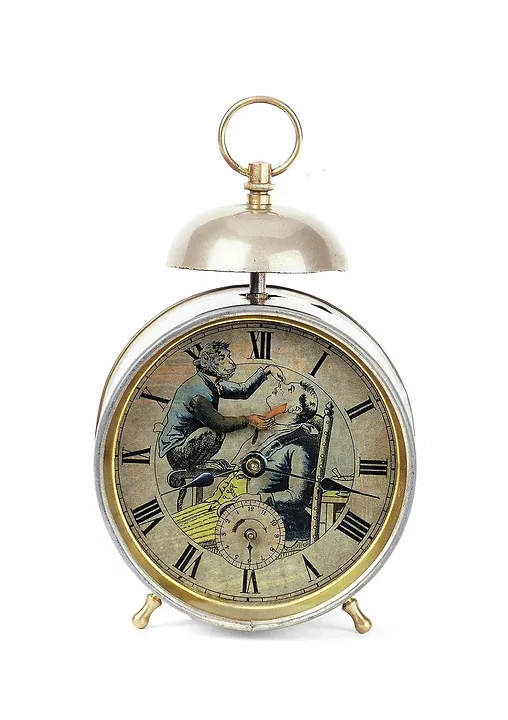
Clocks · c. 1900
Alarm clock by Union Clock Company, Germany, c. 1900
German Clock Museum
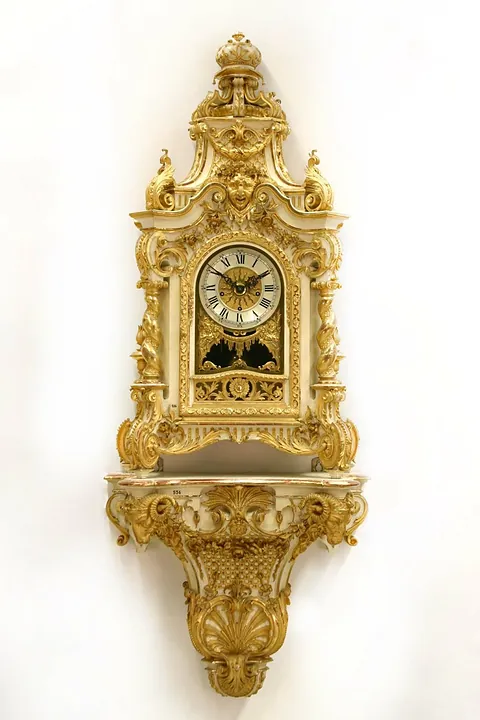
Clocks · 1900
Clock by Josef Münzer, Germany, 1900
German Clock Museum
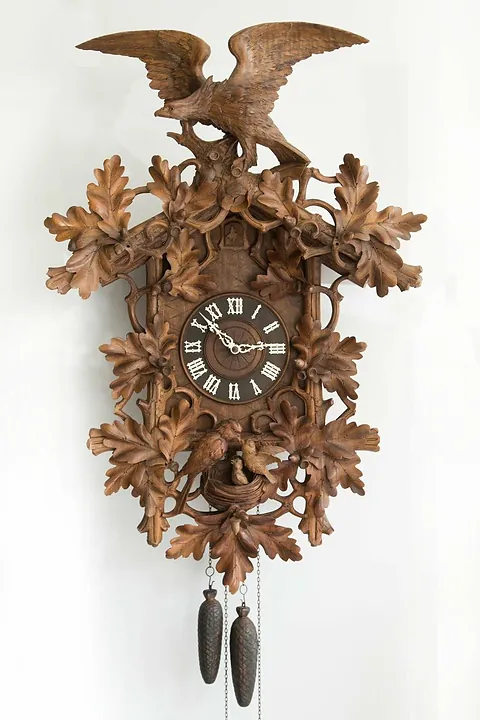
Clocks · c. 1900
Cuckoo / black forest clock by Gebr. Lehnis, Germany, c. 1900
German Clock Museum
Clocks · 1900–1999
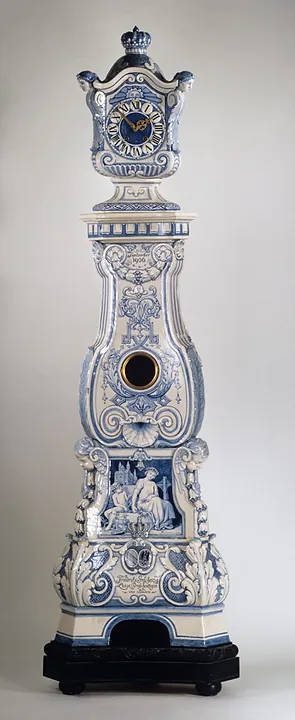
Longcase clock by Staatliche Majolika-Manufaktur Karlsruhe, Germany, 1900–1999
Badisches Landesmuseum Karlsruhe