Manufacturer (clocks and watches)
E. Howard & Co.
Also recorded as: E. Howard and Co. · E. Howard & Co · E. Howard Watch & Clock Co. · E. Howard Watch and Clock Company · Howard Watch & Clock Co. · E. Howard Clock Co. · E. Howard Clock Company · E. Howard Watch Works · E. Howard Watch Co.
Boston maker of wall regulators, tower and banjo clocks and, from 1858 to 1903, of high-grade American watches.
Edward Howard (1813–1904) was apprenticed to the Boston clockmaker Aaron Willard Jr. In 1842 he and David P. Davis began making high-grade wall clocks as Howard & Davis, and from about 1843 tower clocks as well; the partners also made sewing machines, fire engines and precision balances. In 1850 Howard joined Aaron Lufkin Dennison in the venture that became the Boston Watch Company, an early attempt to make watches by machine with interchangeable parts.
When the Boston Watch Company failed in 1857, its factory and machinery went to the investors who founded the Waltham company, and Howard moved to Roxbury. With Charles Rice he finished the watches left in progress, then from December 1858 made watches of his own design signed "E. Howard & Co."; the firm was one of America's leading makers of luxury watches into the 1890s. The clock and watch businesses were combined in 1861, reorganised in 1863 as the Howard Watch & Clock Company and again in 1881 as the E. Howard Watch & Clock Company, and Howard himself retired in 1882.
Regular watchmaking stopped in 1903, when the Howard name for watches was sold to the Keystone Watch Case Company; Keystone's watches signed "E. Howard Watch Co.", made in Waltham, were new designs unlike the earlier Howards. The clock company carried on, best known for weight-driven wall regulators and tower clocks, moved to Waltham in the early 1930s and continued under later owners.
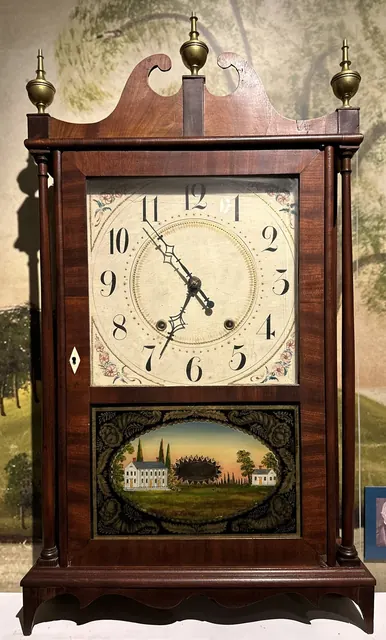
How to recognise the work: watches made by the original firm (1858–1903) are signed E. Howard & Co., Boston, and use Howard's own movement designs; watches signed E. Howard Watch Co. were made from 1903 by the Keystone Watch Case Company in Waltham to new designs. Howard clocks are usually weight-driven wall regulators and 'wall timepieces' in walnut or oak, often numbered by model.
- Country
- United States
- City / centre
- Roxbury (Boston), Massachusetts; later Waltham
- Founded
- 1842 (Howard & Davis); 1858 (E. Howard & Co.)
- Status
- Historical firm (watch name sold 1903; clock company continued)
- Key people
- Edward Howard (1813–1904); David P. Davis; Charles Rice
Innovations & specialities
- High-grade American keywind and stem-wind watches of Howard's own design (1858–1903)
- Weight-driven wall regulators and banjo-style 'wall timepieces'
- Tower clocks (from c. 1843)
Timeline
- 1842Howard & Davis begin making wall clocks
- 1850Howard joins Dennison in the Boston Watch Company venture
- 1858First watches signed E. Howard & Co.
- 1863Howard Watch & Clock Company
- 1881E. Howard Watch & Clock Company
- 1882Edward Howard retires
- 1903Watch name sold to the Keystone Watch Case Company
- early 1930sClock works move from Roxbury to Waltham
Works by E. Howard & Co. in the catalogue
Open in the catalogue →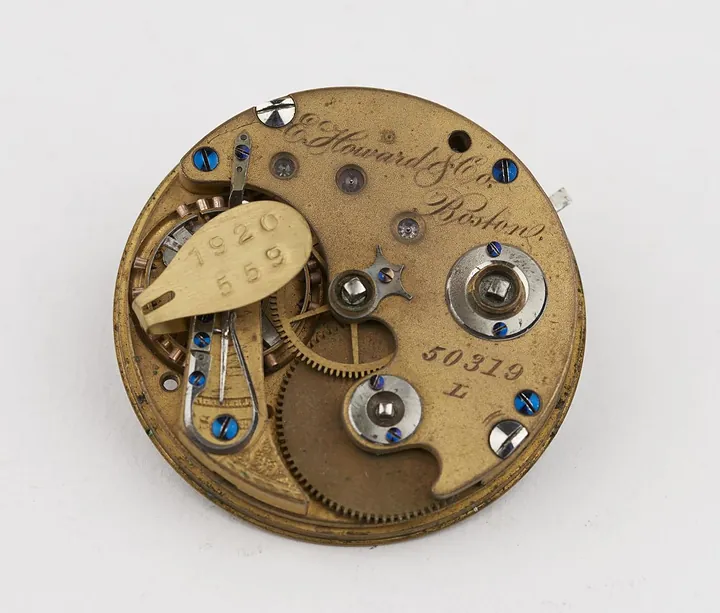
Movements & Components · 1860–1910
Movement by E. Howard and Co., Boston, no.50319: shows a conversion from "Key winding" to "Keyless and keywinding", 1860–1910
Science Museum Group, London
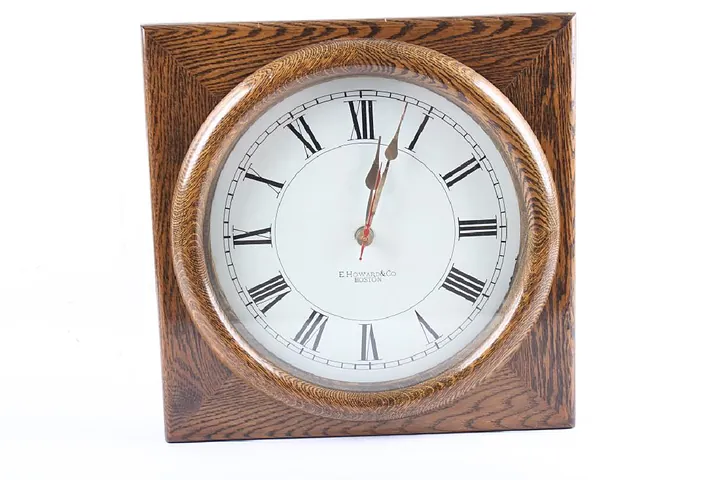
Clocks · 1900s
E Howard & Co Electric Clock circa Late 1900s
LiveAuctioneers auction archive
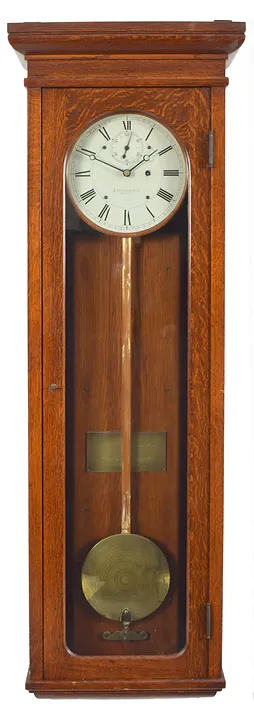
Clocks · c. 1913
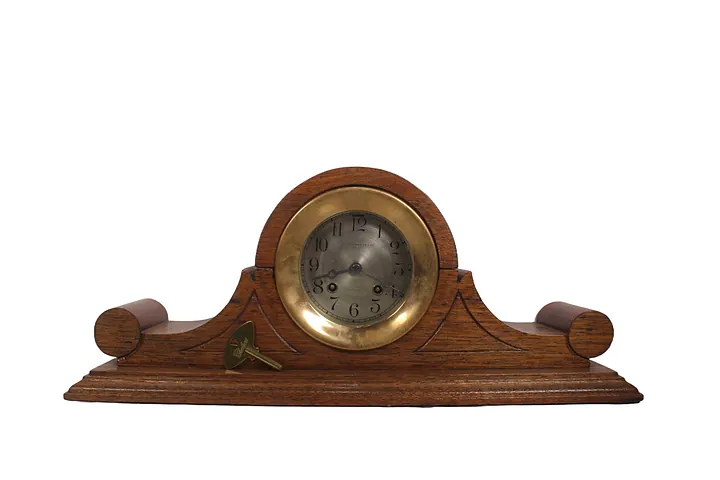
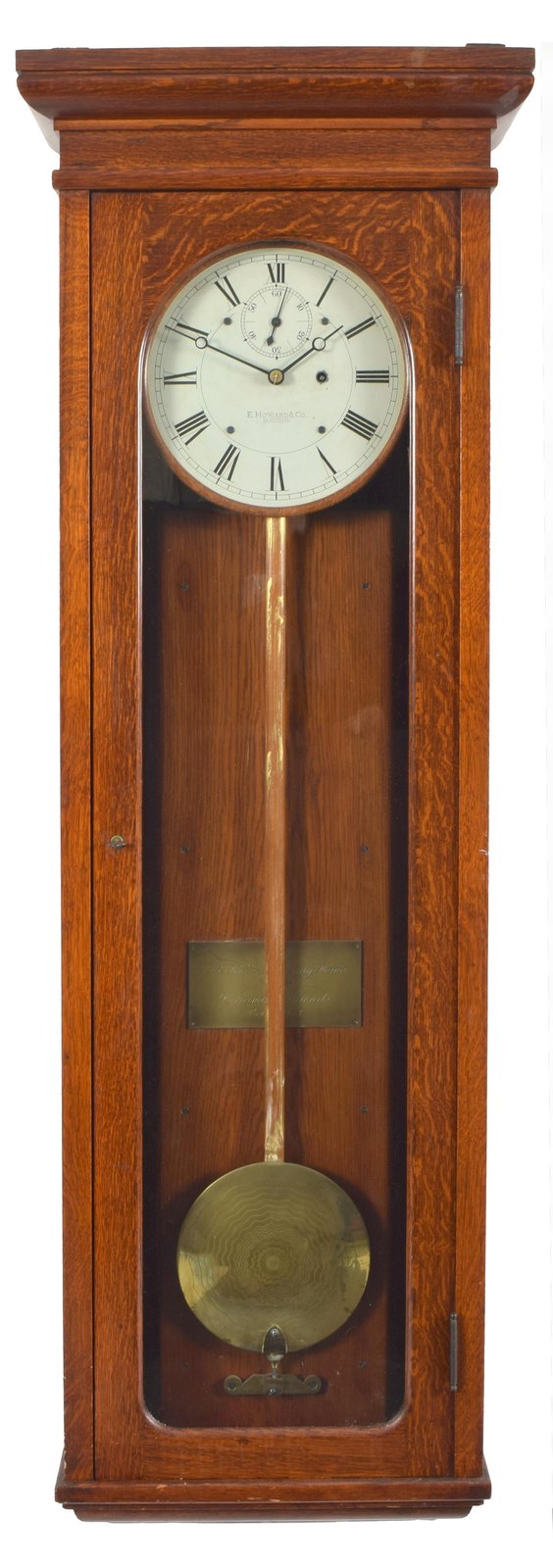
E. Howard and Company oak wall regulator clock, c. 1913
LiveAuctioneers auction archive
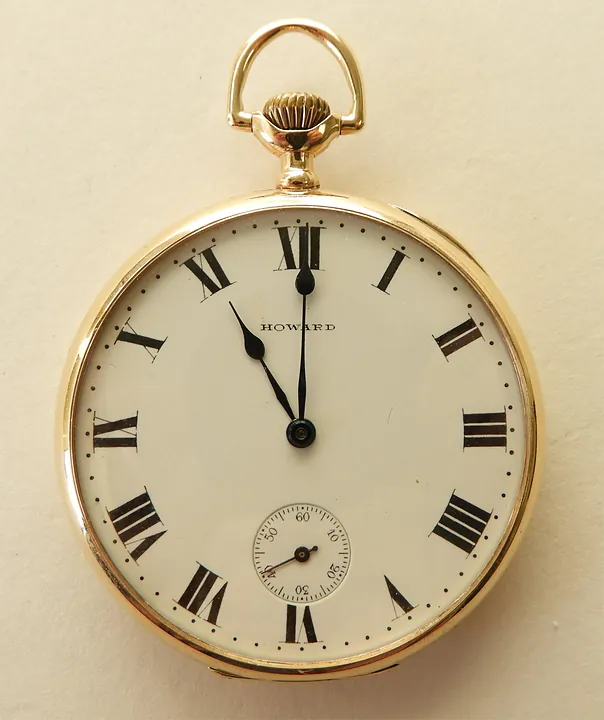
Pocket Watches · c. 1914
E. Howard & Co. 14K and Enamel Pocket Watch, c. 1914
LiveAuctioneers auction archive
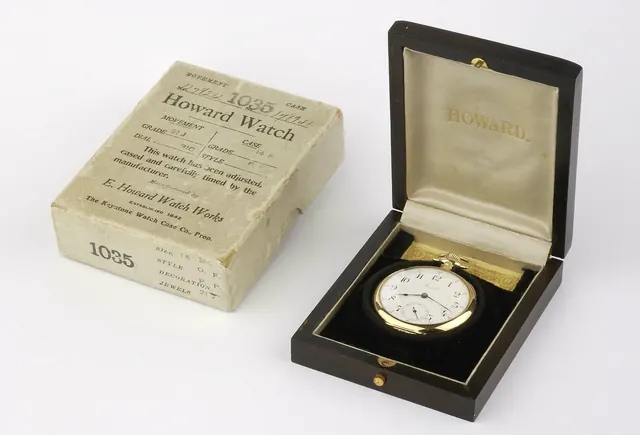
Pocket Watches · c. 1918
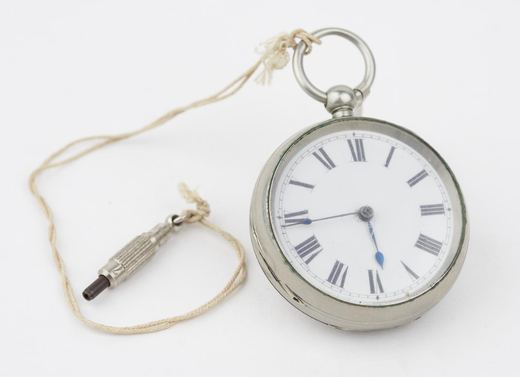
Pocket watch by E. Howard Watch Works, c. 1918
German Clock Museum
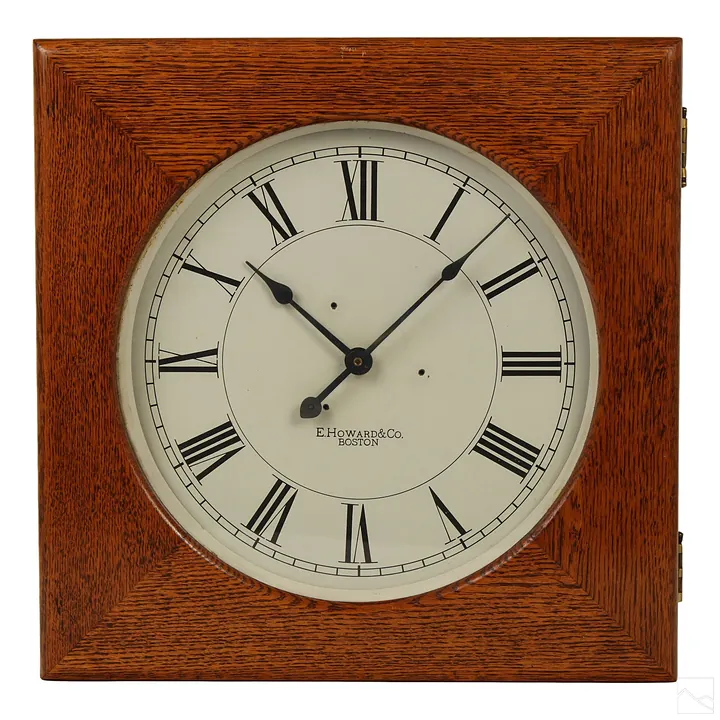
Clocks · 1920s
E. Howard & Co. 1920s Antique 16 Square Oak Clock
LiveAuctioneers auction archive
Linked through the Atlas maker authority list, which reconciles the spellings used by different institutions. Attributions are as stated by each holding institution or auction house.
Read and see more
Magazine features
- Old Clock Brands: How to Identify the Maker of an Antique or Vintage Clock
Seth Thomas, Ansonia, Ingraham, Junghans, Gustav Becker, Kienzle, Japy, Smiths, Jaeger-LeCoultre — the clock makers whose names turn up most often on mantelpieces, in attics and at auction, where they worked, what they made, and where to look on a clock for the marks that identify it.
- Interchangeable Parts: How Waltham, Elgin and Hamilton Industrialised the Watch
In the second half of the 19th century, American factories made watches by machine, with parts that fitted any movement of the same model. The Swiss industry saw the threat in 1876 and changed itself in response.