
Watchmaking Industry · Industry history
Interchangeable Parts: How Waltham, Elgin and Hamilton Industrialised the Watch
In the second half of the 19th century, American factories made watches by machine, with parts that fitted any movement of the same model. The Swiss industry saw the threat in 1876 and changed itself in response.
Atlas Editorial · · 7 min read
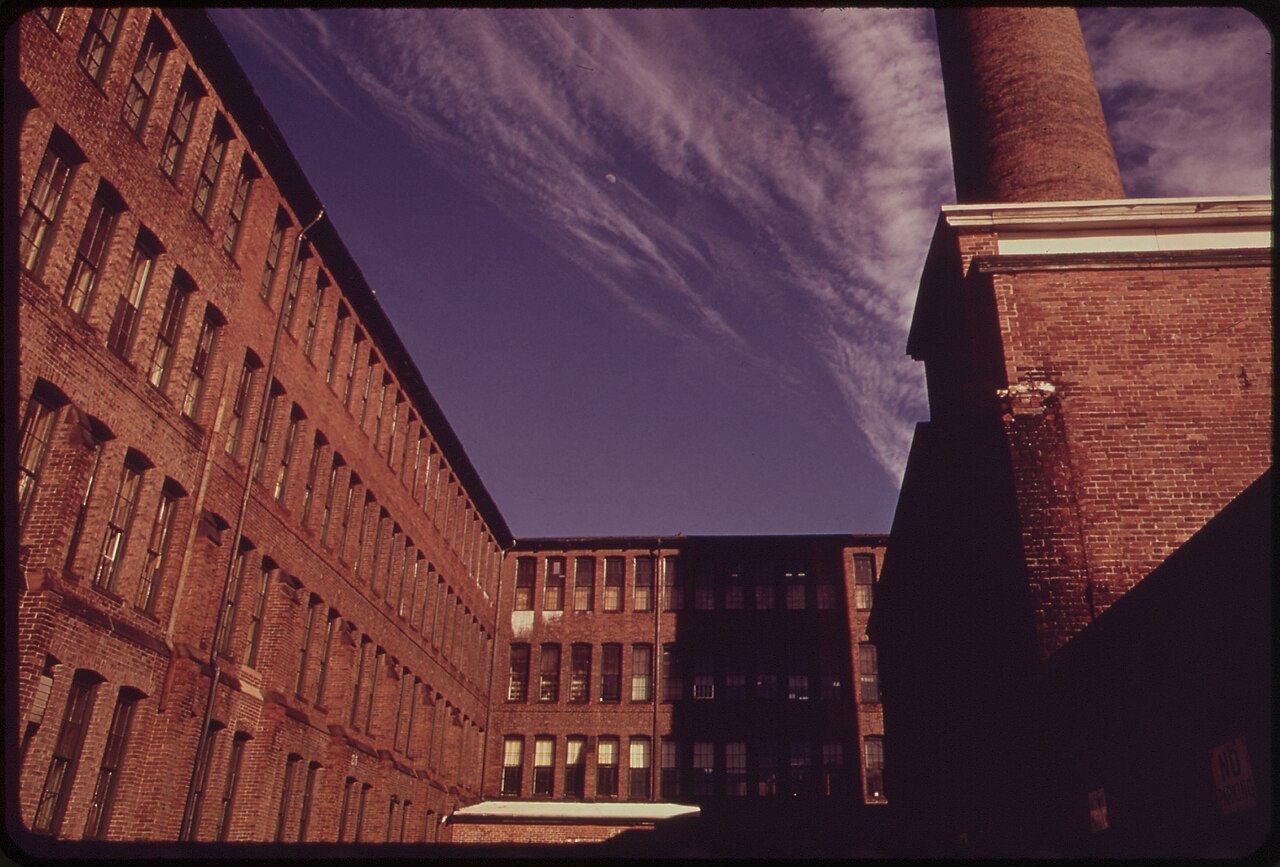
Ernst Halberstadt · Public domain · source (opens another website in a new tab)
In the early 19th century, a pocket watch was the product of dozens of specialists. In Lancashire, the Jura or Geneva, one workshop made rough movements, others made springs, wheels, cases, dials and hands, and a finisher — whose name went on the dial — brought them together, filing and fitting each part by hand until it worked. No two watches were quite alike, and a broken part had to be made or adjusted to fit.
By the end of the century, a factory in Massachusetts or Illinois could make tens of thousands of watches a year of a given model, each built from machine-made parts that fitted any other watch of that model. A railway employee in Ohio could have his watch repaired with a part ordered by number from a catalogue. This was the 'American system of watch manufacture', and it was one of the most important changes in the history of the watch.
Before watches: clocks and the American system
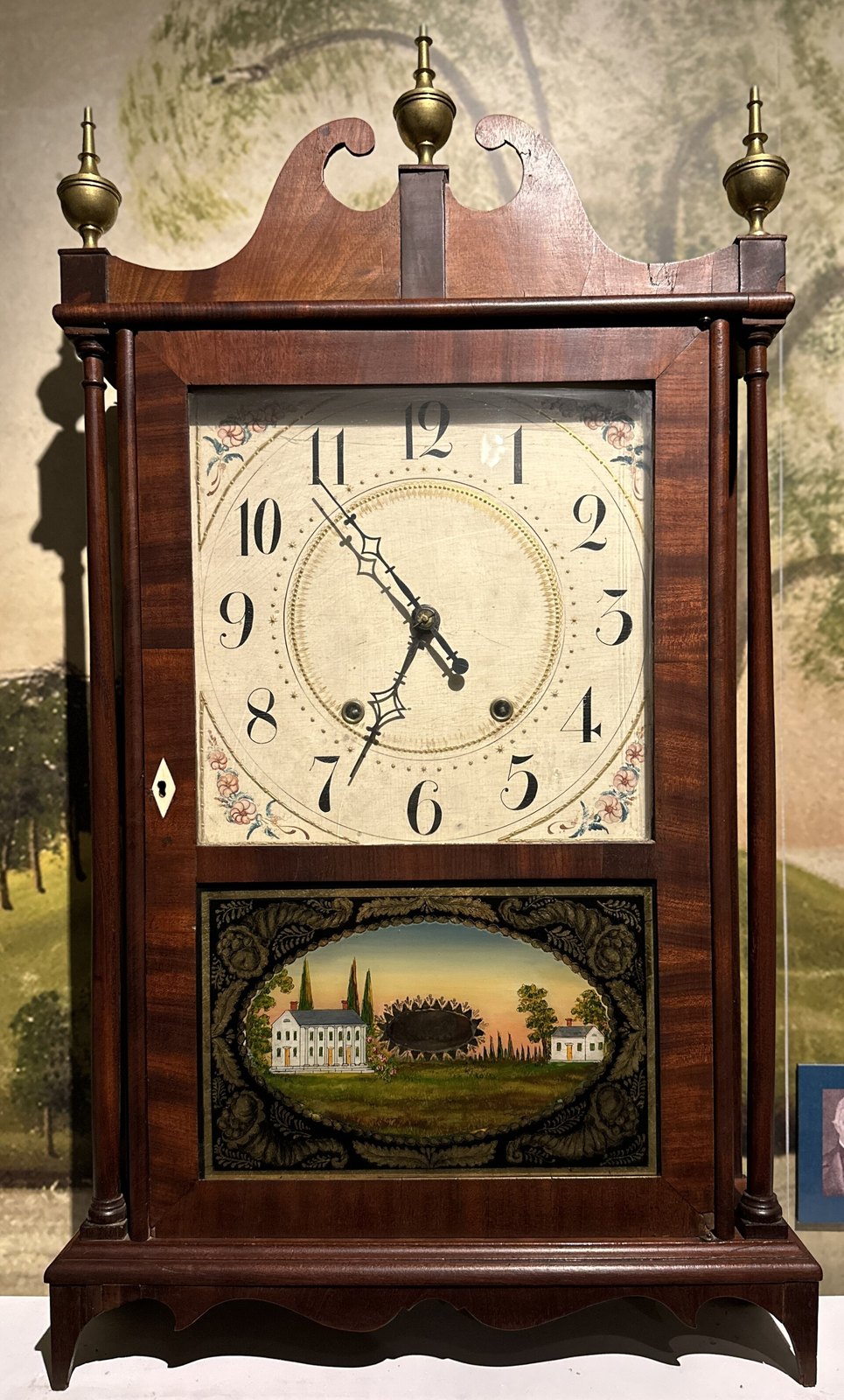
American mass production of timekeepers began with clocks. In the early 1800s, Eli Terry in Connecticut organised the production of wooden-movement shelf clocks in batches, using water-powered machinery and standard parts; his shelf clock of the 1810s became one of the first mass-produced consumer goods in the United States. Seth Thomas and others followed, and by the 1840s brass clock movements stamped from rolled sheet were being made cheaply in very large numbers. The same period saw the 'American system of manufactures' — interchangeable parts made with special-purpose machines and gauges — developed in the federal armouries for firearms.
Waltham: an experiment that survived
The idea of applying these methods to watches is usually credited to Aaron Lufkin Dennison, a Boston watch repairer who had seen the Springfield Armory, and Edward Howard, a clockmaker. With financial backing from Samuel Curtis, they began work in Roxbury, Massachusetts, in 1850. The enterprise went through several names — the American Horologe Company, the Warren Manufacturing Company and the Boston Watch Company — and in 1854 moved to a new factory beside the Charles River at Waltham.
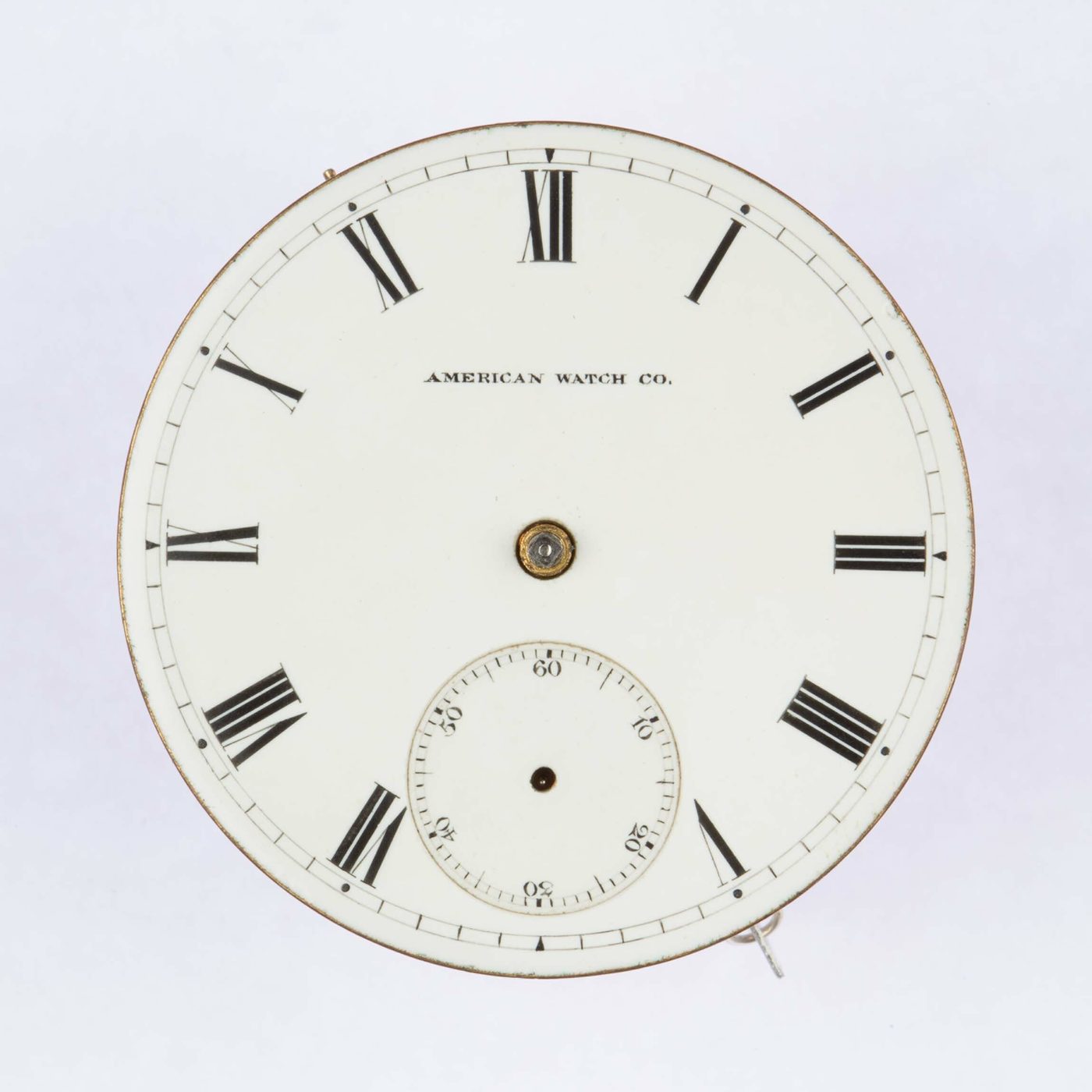
The early years were hard. The machines had to be designed from scratch, and the company failed in 1857. It was bought at auction by Royal E. Robbins, reorganised, and in 1859 became the American Watch Company — known from 1885 as the American Waltham Watch Company. The Civil War created strong demand for inexpensive reliable watches, and Waltham's sales grew rapidly. By the 1870s it was often described as the largest watch factory in the world.
The factory system spreads
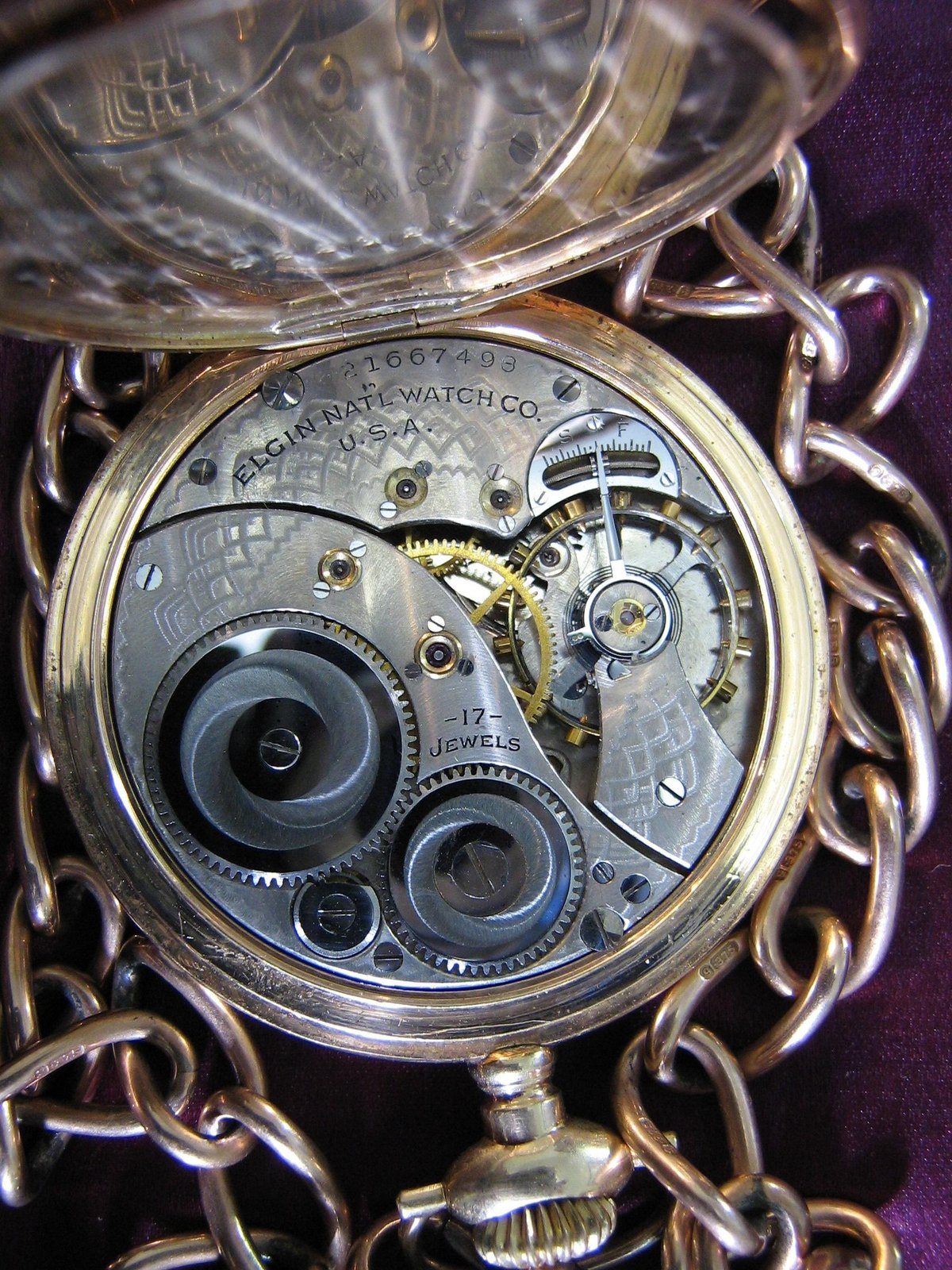
Other companies followed. The Elgin National Watch Company was founded in 1864 in Illinois, recruiting skilled workers from Waltham, and produced its first movement — the B. W. Raymond, named after the company's first president — in 1867. Edward Howard left Waltham to found his own firm in Boston, which made high-grade watches. Dozens of smaller ventures — in Illinois, Ohio, New York, New Jersey and elsewhere — opened in the following decades; many failed or were absorbed. The Hamilton Watch Company was established in Lancaster, Pennsylvania, in 1892 and became known above all for railway-grade watches.
| Company | Founded | Location | Known for |
|---|---|---|---|
| American Waltham Watch Co. (and predecessors) | 1850 (Waltham from 1854) | Waltham, Massachusetts | First successful factory production of watches |
| E. Howard & Co. | 1858 (watches) | Boston, Massachusetts | High-grade watches and tower clocks |
| Elgin National Watch Co. | 1864 | Elgin, Illinois | Very large output; railroad and dress watches |
| Illinois Watch Co. | 1869 | Springfield, Illinois | Railroad grades (e.g. 'Bunn Special') |
| Waterbury Watch Co. | 1880 | Waterbury, Connecticut | Cheap long-wind duplex watches |
| Hamilton Watch Co. | 1892 | Lancaster, Pennsylvania | Railroad watches; 992 series; later the Hamilton Electric |
1876: the Swiss see the future
At the Centennial Exhibition in Philadelphia in 1876, Waltham exhibited not only watches but a working automatic screw-making machine. Swiss visitors were alarmed. Edouard Favre-Perret, a member of the Swiss jury, reported back that American watches were of good quality and could be made more cheaply than Swiss ones; the engineer Jacques David, of the Longines company, studied American factories closely and wrote a detailed report on their methods, published in 1877. Swiss watch exports to the United States had fallen sharply in the preceding years.
The Swiss response took decades but was decisive. Firms invested in mechanisation and in factories that brought processes together under one roof, while retaining the flexibility of their system of specialised suppliers; watchmaking schools were strengthened; and the industry later organised itself in cartels and holding companies. By the early 20th century Swiss factories could match American production methods while offering an unrivalled range of models, and Swiss exports came to dominate world markets again.
Railroad time and the standard watch
American railways depended on accurate timekeeping: most lines were single-track, and trains passed each other at sidings according to the timetable. After a collision at Kipton, Ohio, in 1891 was attributed in the usual accounts to a crew member's watch that had stopped for several minutes and then restarted, the Lake Shore and Michigan Southern Railway appointed the Cleveland jeweller Webb C. Ball to set up a time-inspection service. Rules developed on the railways in the following years, usually summarised as the 'railroad standards', specified the kind of watch employees had to carry.
- Open face, with the winding stem at twelve o'clock.
- Size 16 or 18 (American sizes) and at least 17 jewels.
- Lever setting, so the hands could not be moved accidentally while winding.
- Lever escapement, adjusted for temperature, isochronism and several positions.
- A rate within about 30 seconds a week, checked regularly by an approved inspector.
- Plain Arabic numerals on a white dial, with bold hands.
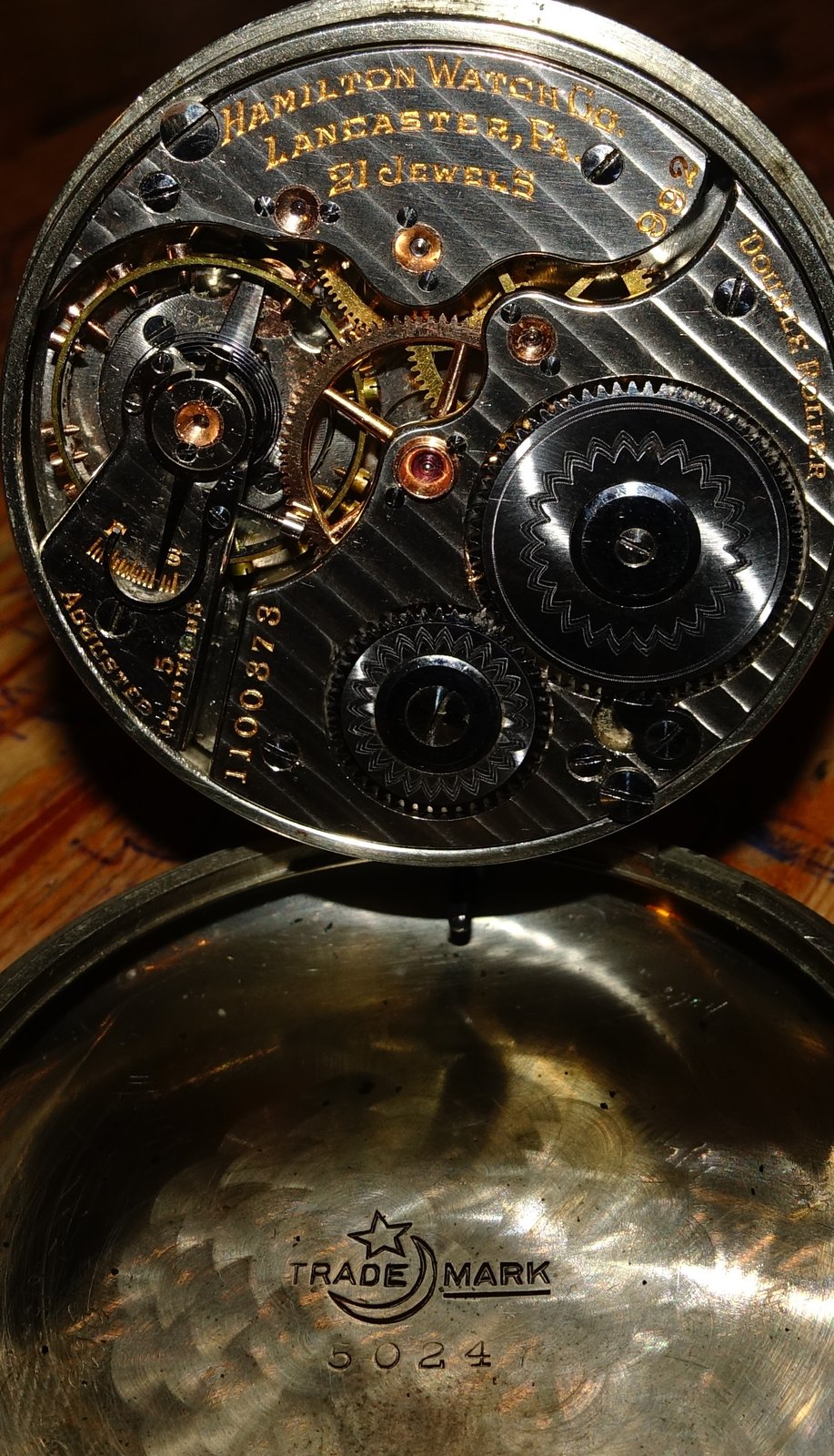
The exact rules varied between railways and changed over time, but the standards created a large market for high-grade American watches. Hamilton's 992 series, introduced in the 1900s and refined over several decades, became one of the most widely used railroad watches in North America.
The dollar watch
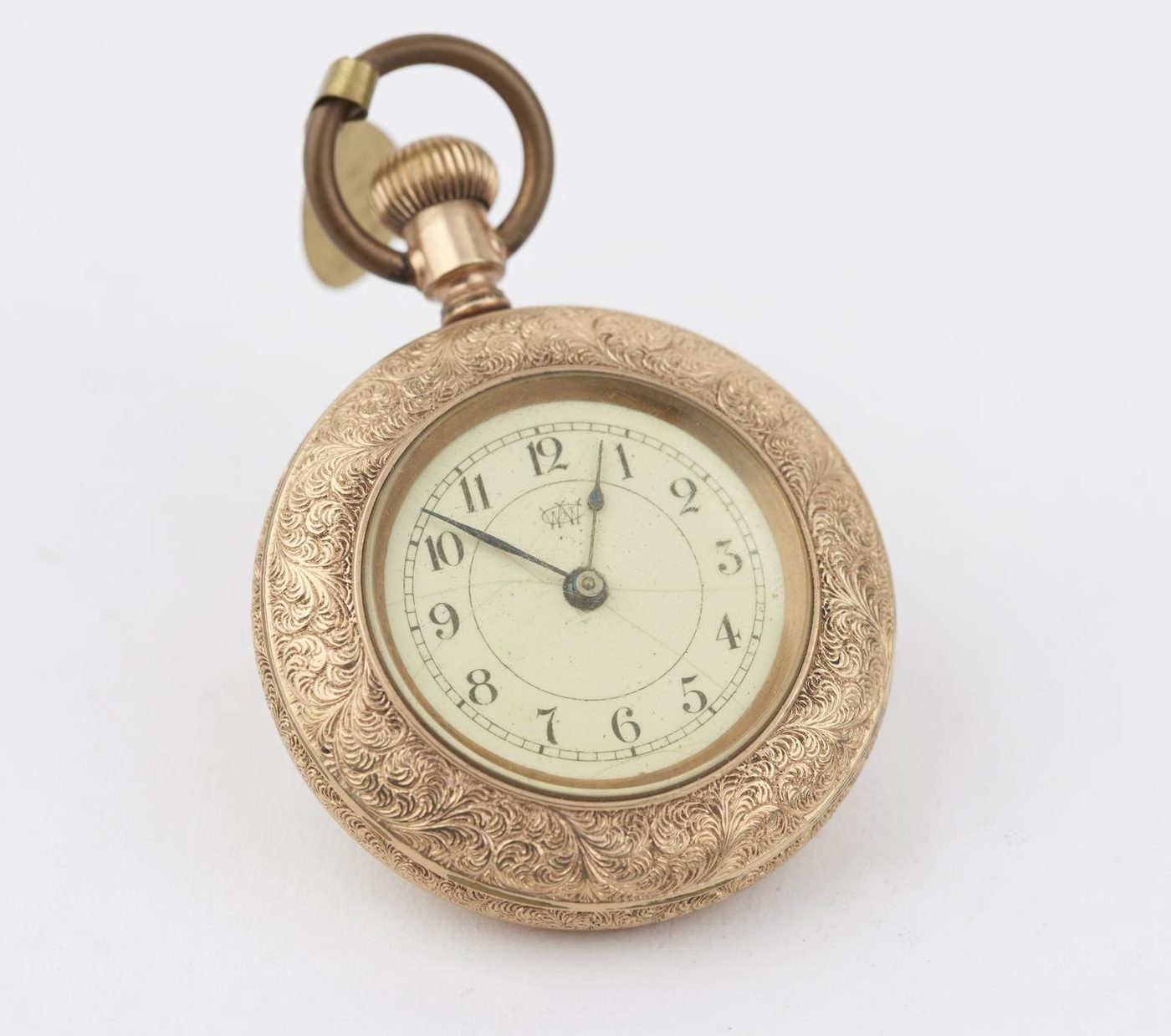
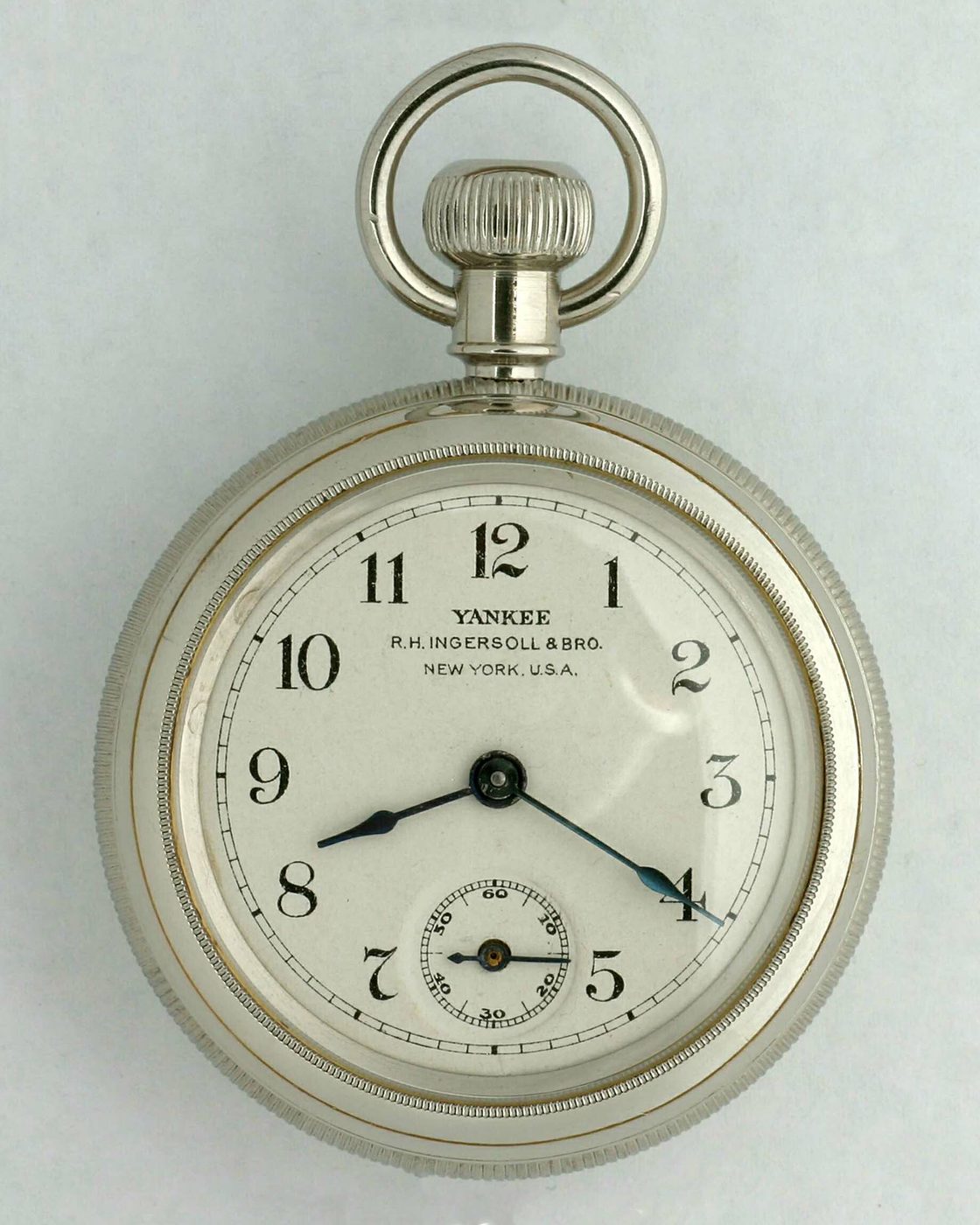
At the other end of the market, American firms made watches cheap enough for almost anyone. The Waterbury Watch Company's watch of 1880 used a mainspring several feet long and a movement that rotated inside its case; it took a long time to wind but cost very little. From the 1890s, Robert H. Ingersoll and his brother marketed inexpensive watches made by the Waterbury Clock Company, and their 'Yankee' of 1896 sold for one dollar. Millions were made. These watches used simple pin-lever or duplex escapements and stamped parts, and they made the watch a mass consumer product.
Reading an American pocket watch
| Marking | Where | What it tells you |
|---|---|---|
| Company name and model | Top plate or bridge | Maker and line (e.g. 'Waltham', 'Elgin', 'Hamilton 992') |
| Serial number | Top plate | Can be compared with published production tables for an approximate year |
| Jewel count | Top plate | '17 jewels', '21 jewels' — not on its own a sign of quality |
| Adjustment | Top plate | 'Adjusted 5 positions', 'temperature' — railway grades |
| Grade name | Top plate | e.g. 'Vanguard', 'Crescent Street', 'B. W. Raymond' |
| Case marks | Inside case back | Case maker and metal; often a different company from the movement |
Use the size converter in the Atlas Tools section to translate American sizes into millimetres. Serial-number tables give approximate production years for a batch of movements, not the date a watch was sold or cased; cases were usually made separately and the combination may not be original.
Decline
The American industry reached its peak in the early 20th century. Wristwatches, which became common after the First World War, favoured smaller movements and a variety of designs where the Swiss excelled; tariffs and competition shaped the market; and during the Second World War American factories turned largely to military production, including chronometers, fuses and instruments. Afterwards, imports of Swiss movements grew. Waltham ended watch production in the United States in 1957, Elgin closed its Illinois factory in the 1960s, and Hamilton was sold to the Swiss SSIH group in 1974. Bulova, Timex and others continued, but the age of the great American watch factories was over.
Sources
Henry G. Abbott's works of the 1880s and 1890s describe American watch factories from the inside, and the factories' own parts catalogues (such as Waltham's Materials Catalogues) document the system of interchangeable parts. Amy Glasmeier's Manufacturing Time and David Landes's Revolution in Time place the American industry in its international context. Company founding dates follow the standard histories; where companies were reorganised several times, the Atlas gives the commonly cited date.
Sources & further reading
- The American Watchmaker and Jeweler — Henry G. Abbott, Geo. K. Hazlitt & Co. (Chicago), 1891 (and later editions).
- The Watch Factories of America, Past and Present — Henry G. Abbott, Geo. K. Hazlitt & Co. (Chicago), 1888.
- Net Price List of the American Waltham Watch Co.'s Materials — Robbins & Appleton, general agents, New York, 1885.
- Manufacturing Time: Global Competition in the Watch Industry, 1795–2000 — Amy K. Glasmeier, Guilford Press (New York), 2000.
- Revolution in Time: Clocks and the Making of the Modern World — David S. Landes, Harvard University Press, 1983.