Chronometer, watch and clock makers (firm)
Charles Frodsham & Co.
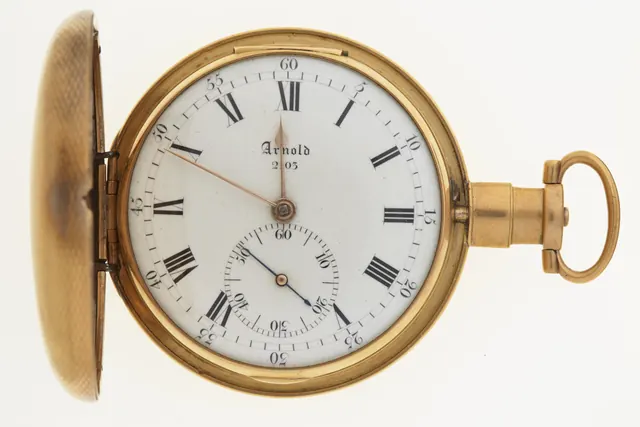
Also recorded as: Charles Frodsham · Cha.s Frodsham · Chas Frodsham · Chas. Frodsham · Charles Frodsham & Co · Charles Frodsham Clockmaker · Charles Frodsham & Arnold · Arnold & Frodsham · Arnold, Chas Frodsham
London chronometer, watch and clock makers founded by Charles Frodsham (1810–1871), successor to the Arnold and Vulliamy businesses.
Charles Frodsham (1810–1871) was apprenticed to his father, William James Frodsham FRS, co-founder of Parkinson & Frodsham. He entered chronometers in the Greenwich premium trials from 1830, winning second prize in that year, and set up on his own at 7 Finsbury Pavement in the 1830s. When John Roger Arnold died in 1843 Frodsham acquired the Arnold business and moved to 84 Strand; watches and clocks of the following years are signed with both names.
Frodsham won the Telford Gold Medal of the Institution of Civil Engineers for an 1847 lecture on isochronism and a first-class medal at the Great Exhibition of 1851, and was a juror at the 1862 International Exhibition. After the death of Benjamin Lewis Vulliamy in 1854 he bought the goodwill of the Vulliamy business and succeeded him as keeper of the royal clocks at Buckingham Palace. He was a founder member of the British Horological Institute, twice Master of the Clockmakers' Company (1855 and 1862), corresponded for years with the Astronomer Royal, George Biddell Airy, and published a history of the marine chronometer in 1871.
His son Harrison Mill Frodsham (1849–1922) continued the firm, which supplied marine chronometers to the Admiralty, high-grade pocket watches, carriage clocks and regulators. Charles Frodsham & Co. still trades in London; in 2018 it launched a wristwatch with the double-impulse chronometer escapement devised by George Daniels.
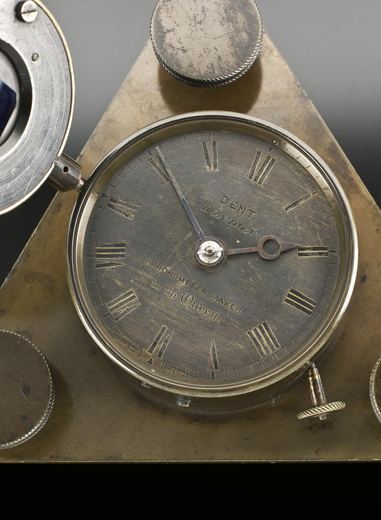
How to recognise the work: dials and movements are signed Charles Frodsham, Chas Frodsham or, in the years after 1843, with both the Arnold and Frodsham names and the address 84 Strand. Gold and silver cases carry London hallmarks, whose date letter gives the year the case was assayed.
Frodsham's output ranged from marine and pocket chronometers to keyless lever watches, minute repeaters, carriage clocks and astronomical regulators. The Admiralty bought sixty Frodsham marine chronometers between 1831 and 1920.
- Country
- England
- City / centre
- London (84 Strand from 1843)
- Founded
- 1830s
- Status
- Active (firm continues)
- Key people
- Charles Frodsham (1810–1871); Harrison Mill Frodsham (1849–1922); William James Frodsham (father)
Innovations & specialities
- Marine and pocket chronometers tested at Greenwich
- High-grade English lever and repeating pocket watches
- Precision regulators and carriage clocks
Timeline
- 1810Charles Frodsham born
- 1830Second prize in the Greenwich chronometer trials
- 1843Acquires the Arnold business; moves to 84 Strand
- 1851First-class medal at the Great Exhibition
- 1854Succeeds Vulliamy as keeper of the royal clocks
- 1855Master of the Clockmakers' Company (again in 1862)
- 1871Publishes a history of the marine chronometer; dies
- 2018Launches a wristwatch with George Daniels's double-impulse escapement
Works by Charles Frodsham & Co. in the catalogue
All 16 records →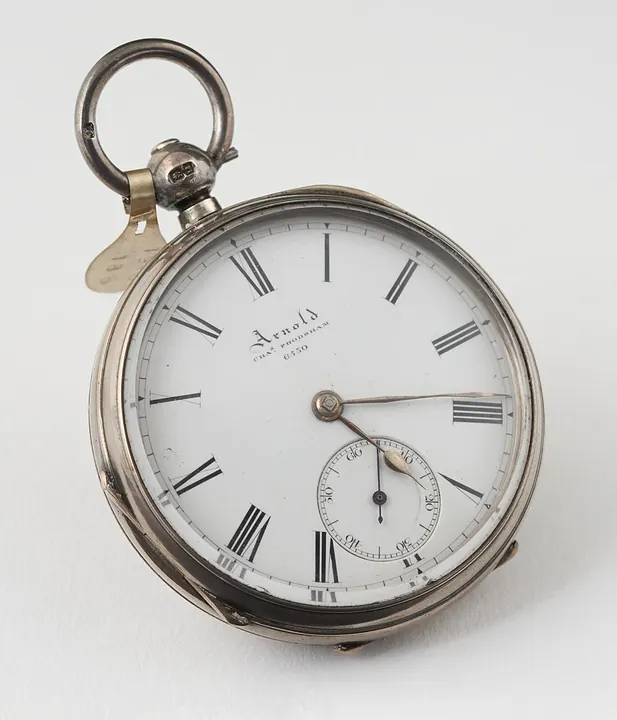
Instruments · hallmarked 1833; 1820-1833
Chronometer watch in silver case by J.R. Arnold, Chas Frodsham, no.6530, 3/4 -plate movement, 1820-1833
Science Museum Group, London
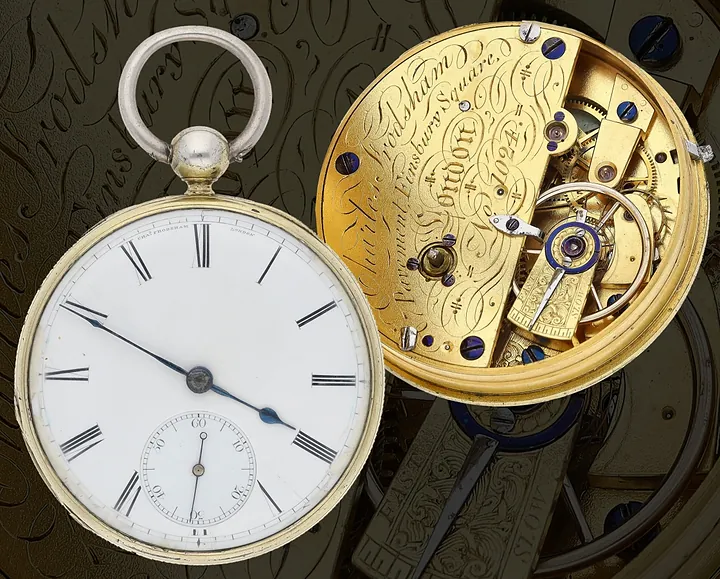
Pocket Watches · 1838 (hallmarked London)
Early Victorian silver gilt fusee lever pocket watch by Charles Frodsham, London, hallmarked London 1838
Gardiner Houlgate (auction house), Corsham
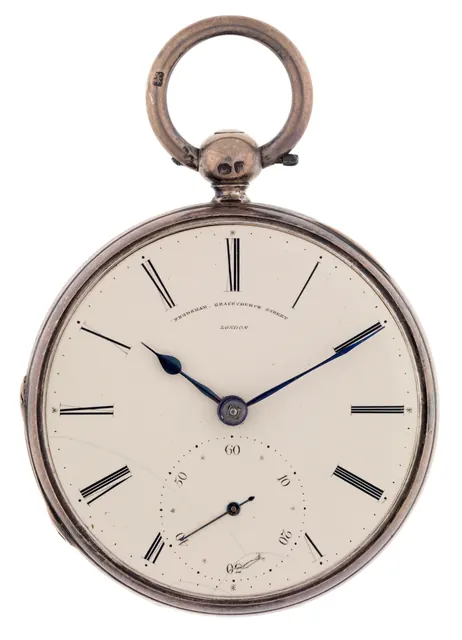
Pocket Watches · c. 1839
Pocket watch no. 3483 by Charles Frodsham
Royal Museums Greenwich
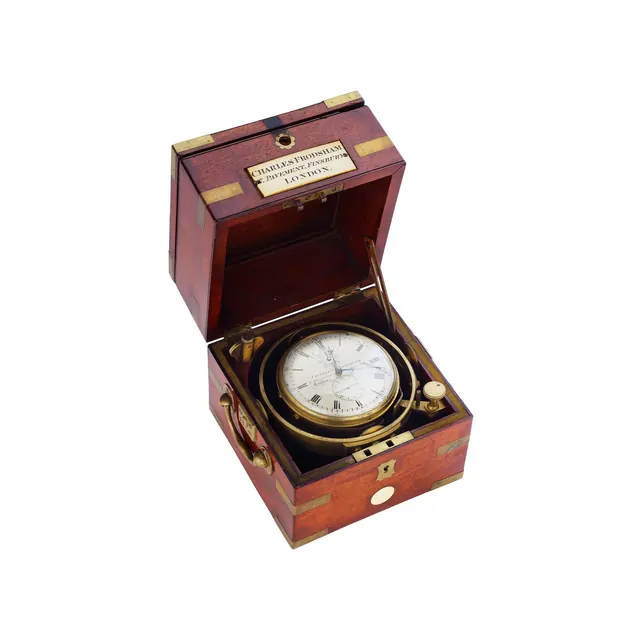
Instruments · c. 1850
Charles Frodsham marine chronometer, Uk Marine Chronometer, circa 1850
Antiquorum auction archive, Geneva
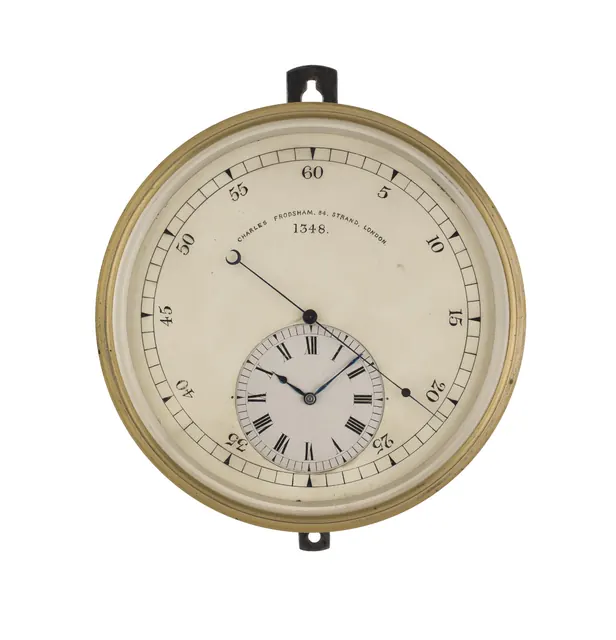
Clocks · c. 1850
Wall clock no. 1348 by Charles Frodsham
Royal Museums Greenwich
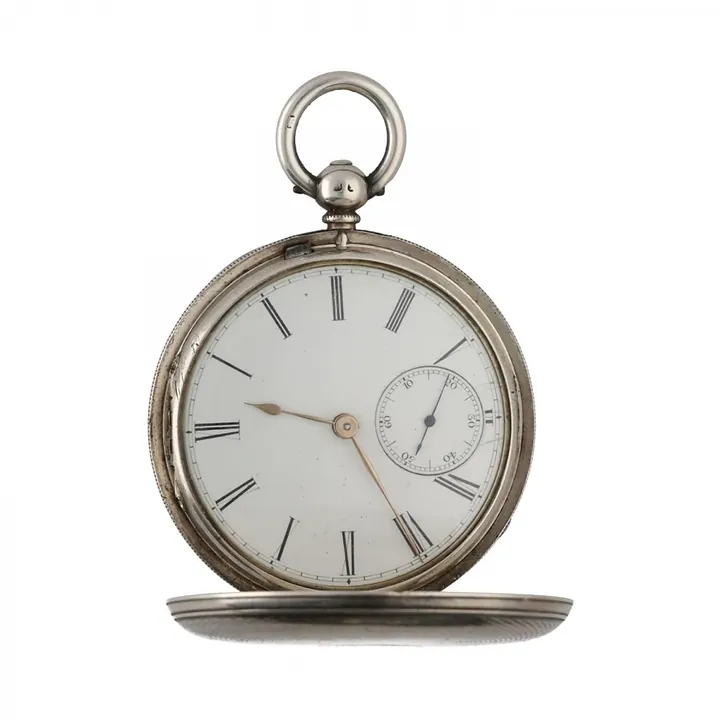
Pocket Watches · 1853 (hallmarked London)
Victorian silver fusee lever hunter pocket watch by Charles Frodsham, London, hallmarked London 1853
Gardiner Houlgate (auction house), Corsham
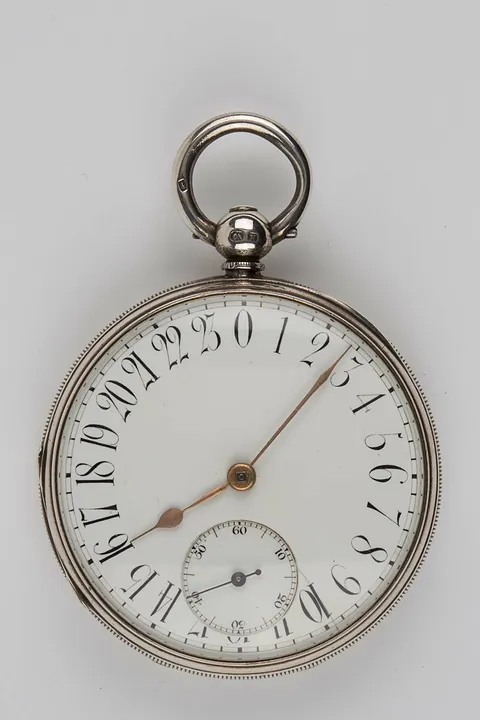
Pocket Watches · 1862
Pocket watch by Cha.s Frodsham, England, 1862
German Clock Museum
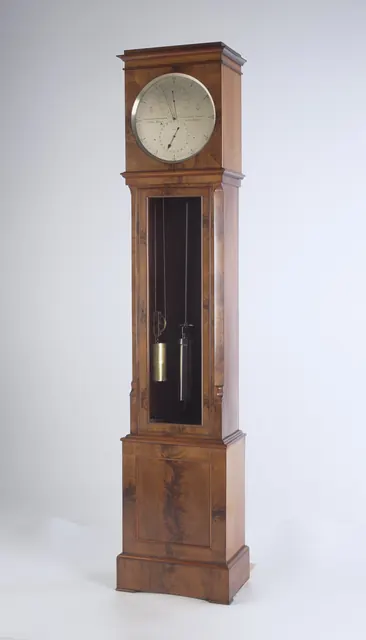
Clocks · 1864
Regulator Clock - Charles Frodsham, Eight Day Astronomical, No.1062, London, England, 1865
Museums Victoria, Melbourne
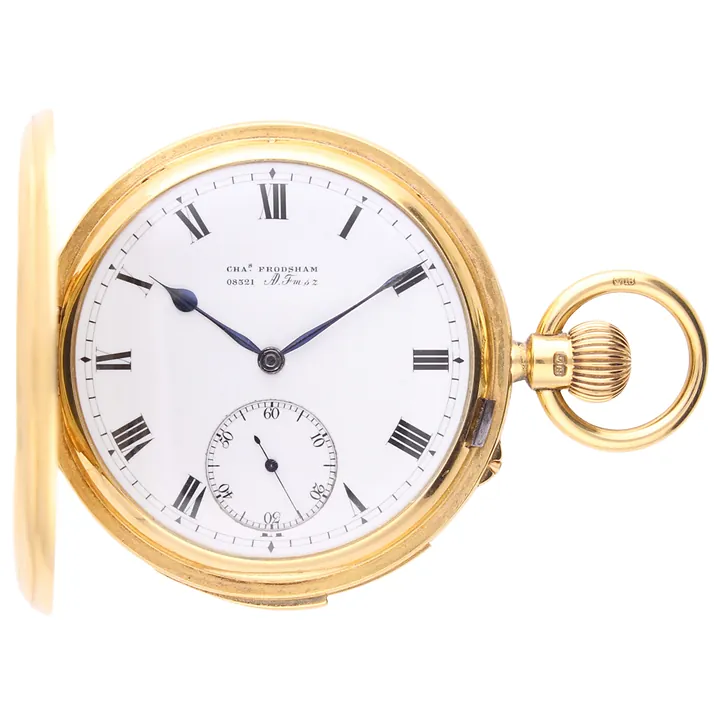
Pocket Watches · 1892
18ct yellow gold Charles Frodsham Full Hunter minute repeating keyless pocket watch, 1892
Somlo Antiques (dealer), London
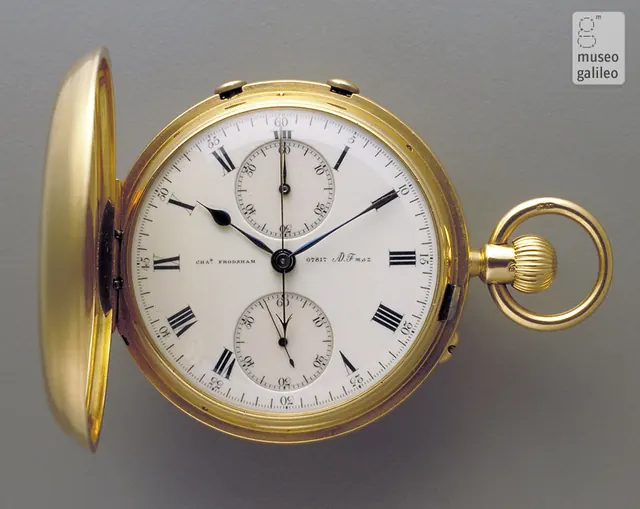
Pocket Watches · 1900
Hunter pocket watch by Charles Frodsham, England, 1900
Museo Galileo, Florence
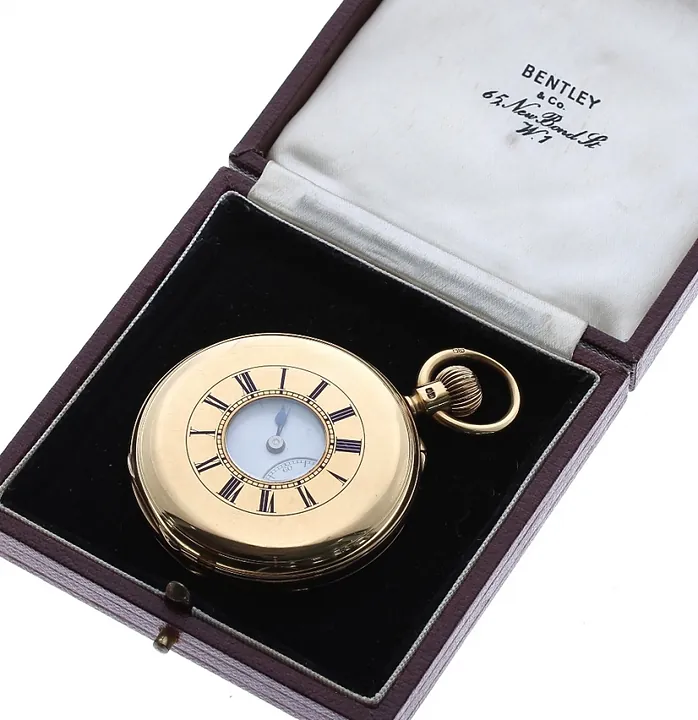
Pocket Watches · 1909 (hallmarked London)
18ct lever half hunter pocket watch by Charles Frodsham, London, hallmarked London 1909
Gardiner Houlgate (auction house), Corsham
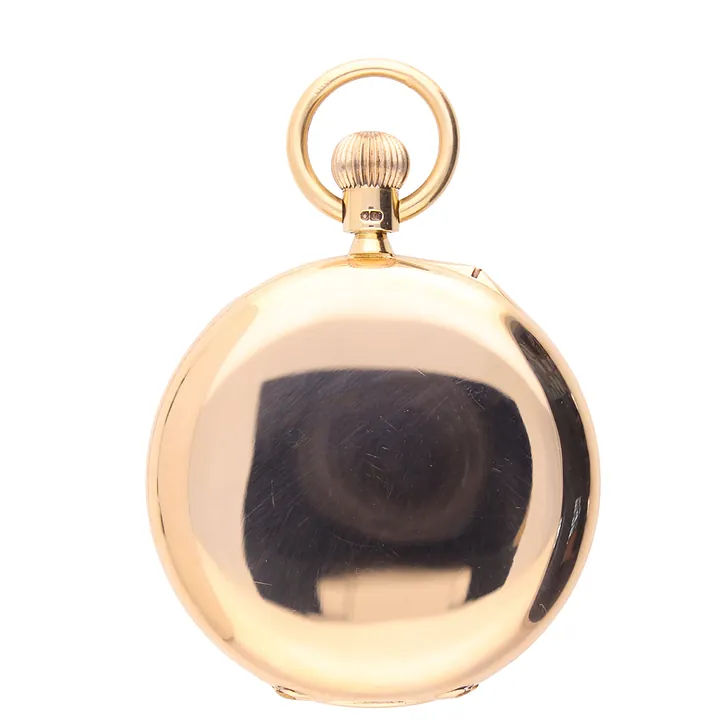
Pocket Watches · 1918
18ct yellow gold Charles Frodsham Full Hunter 'slim' pocket watch, 1918
Somlo Antiques (dealer), London
Linked through the Atlas maker authority list, which reconciles the spellings used by different institutions. Attributions are as stated by each holding institution or auction house.
Read and see more
Magazine features
- Old Clock Brands: How to Identify the Maker of an Antique or Vintage Clock
Seth Thomas, Ansonia, Ingraham, Junghans, Gustav Becker, Kienzle, Japy, Smiths, Jaeger-LeCoultre — the clock makers whose names turn up most often on mantelpieces, in attics and at auction, where they worked, what they made, and where to look on a clock for the marks that identify it.
- The English Pocket Watch, 1650–1900: Pair Cases, Verge to Lever, and the Trade Behind the Name
For a century after the balance spring, London set the standard for the pocket watch. How the English watch changed — from single-hand verge watches in leather pair cases to fusee levers made for railway staff — and how to read the case, dial and movement of one, with examples from seven collections.