
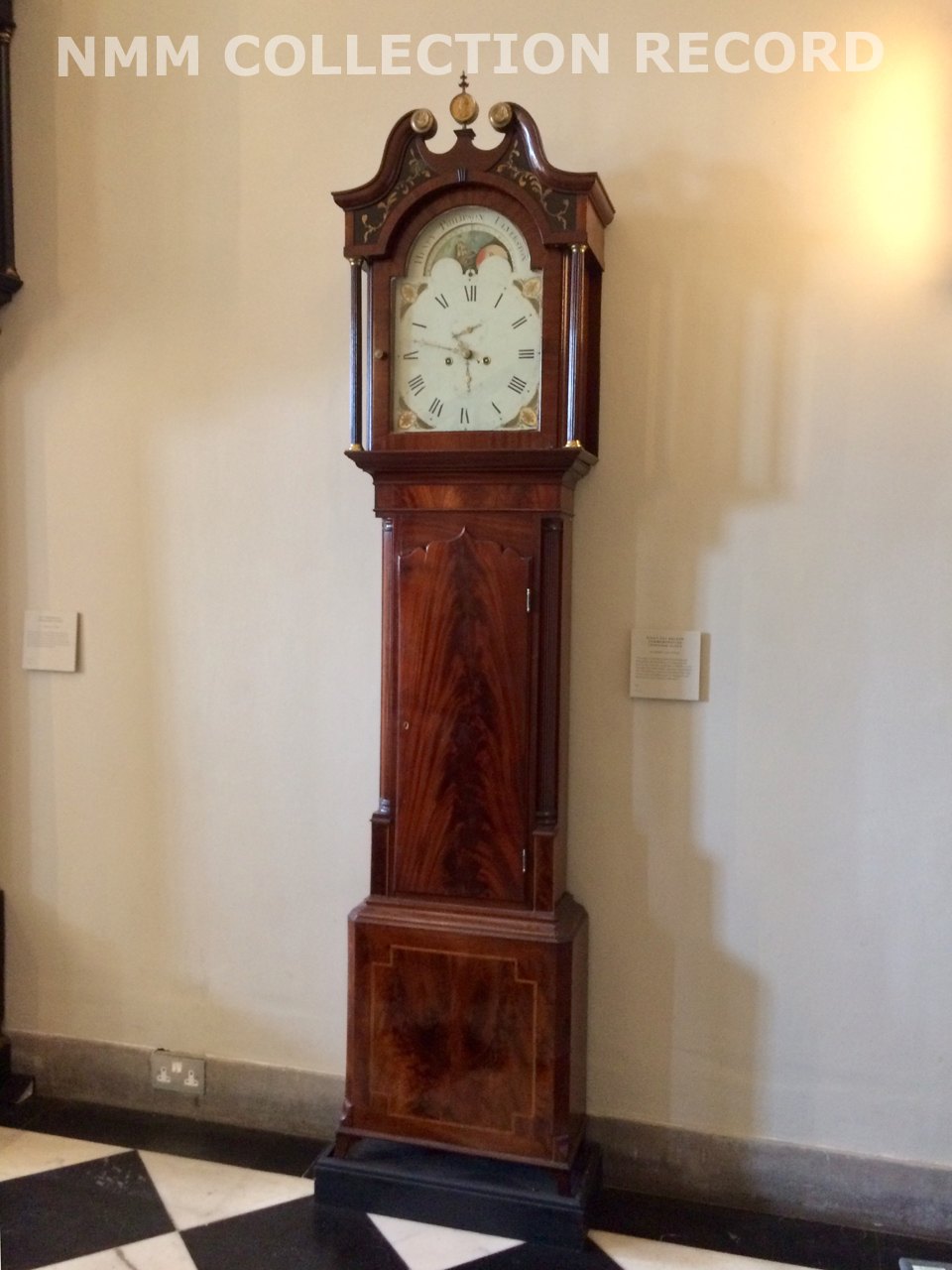
Clocks · Operating object; longcase clock
Eight-day Nelson commemorative mahogany longcase clock, no.1583 by Henry Philipson
- Maker / attribution
- Henry Philipson (maker)
- Date
- 1810
- Historical period
- Precision & Scientific Horology (1750 – 1850)
- Country of origin
- Unrecorded in source
- Object type
- Operating object; longcase clock
- Materials / technique
- wood; glass; brass; steel; lead; iron
- Dimensions
- Overall: 2300 x 510 x 225 mm
- Holding institution
- Royal Museums Greenwich
- Accession / object no.
- ZAA0252
- Credit line
- National Maritime Museum, Greenwich, London
- Catalogue title (original)
- Eight-day Nelson commemorative mahogany longcase clock, no.1583 (English)
View the source record ↗ (opens another website in a new tab)Suggest a correction
Record summary
Held and catalogued by Royal Museums Greenwich (object number ZAA0252), this is an operating object; longcase clock by Henry Philipson, dated 1810. The Atlas places it in the Precision & Scientific Horology period (1750 – 1850) of its Clocks collection. Materials and techniques recorded by the source: wood; glass; brass; steel; lead; iron. Recorded dimensions: Overall: 2300 x 510 x 225 mm. The record is illustrated with 2 photographs.
Assembled from the source record's structured fields. Dates and attributions are given as the source states them; where a field is missing the Atlas leaves it blank rather than estimating.
Catalogue description
Catalogue description — Royal Museums Greenwich
An eight-day Nelson commemorative mahogany longcase clock with moonphase and tidal indication by Henry Philipson, Ulverston, September 1810. The weight driven movement has rectangular brass plates with rounded edges which are united by four knopped pillars. The front plate is engraved with a movement number (1583) and dated 1810. The wheelwork has four curved crossings and even the motion work is also crossed out with three curved crossings to the cocked minute wheel and canon pinion, the calendar drive wheel is solid with double ringing. The going train employs an anchor escapement with seconds beating wire-rod pendulum with brass faced bob. The rack striking system has internal locking (as opposed to the more common locking by the gathering pallet tail) and brass rack. The 13 inch painted dial has a Roman hour numerals, subsidiary seconds and calendar dials, shield and foliate corner decoration and is signed across the arch above the moonphase. The moon dial features Admiral Lord Nelson stood on deck with a drawn sword and a battleship under sail on the opposing side. The outer edge carries tidal indication which is read against a blued steel pointer running vertically across the aperture. The dial is secured to the movement via an iron falseplate which is signed Francis, Birmingham. The hood is surmounted by a scroll pediment which terminates in Nelson commemorative pressed brass roundels depicting an obelisk and trophies of war, marked: 'Sacr’d to Nelson'. The pediment is centred by a medallion finial depicting George III with Greek Key pattern to the sides mounted on a turned spire and is inset with verre eglomisee panels. The crossbanded break arch door is flanked by freestanding reeded columns with brass capitals. The trunk has reeded quarter columns and triple arched door over a strung base with canted corners and bracket feet. This clock is a typical and very fine example of those produced in the northwest of England during the late 18th and early 19th centuries. There were a handful of 19th century clockmakers who numbered their work and Henry Philipson, successor to Jonas Barber of Winster, continued Barber’s numbering sequence. The finial is directly comparable to the Nelson commemorative finials on the clock by Felminhgham of Bungay (AAA3525) as it has the same Greek Key pattern to the outer band and similarly turned spire.
Provenance
Death of Nelson, 1805
Historical context
Precision & Scientific Horology (1750 – 1850)
Harrison solves longitude; Mudge invents the lever; Breguet's Paris workshop defines the modern watch.
The age of the deadbeat escapement, compensated pendulums and observatory regulators. Domestic clocks spread through the middle classes: English longcase and bracket clocks, French gilt-bronze mantel clocks, Viennese Biedermeier wall clocks, Black Forest painted-shield clocks, and the first American shelf clocks.
Read the period in the timelineMore clocks from this periodEarlier: Early Modern Horology
Atlas type guide
Longcase (tall-case or grandfather) clocks
The longcase clock was born from two seventeenth-century innovations: Christiaan Huygens's pendulum (1656–57) and the anchor escapement (c. 1670). A long seconds pendulum, nearly a metre long, swings with a small arc, and enclosing it together with the driving weights in a tall wooden case protected the mechanism and created a new piece of furniture. London makers such as Ahasuerus Fromanteel, Thomas Tompion and Joseph Knibb set the pattern.
By the eighteenth century longcase clocks were made throughout Britain, the Netherlands, Scandinavia (the Swedish Mora clock), France (the Comtoise from the Franche-Comté), Germany and colonial America. Eight-day movements with two weights became standard in better clocks; thirty-hour clocks with one weight and a rope or chain were cheaper alternatives.
What to look for
- Winding holes in the dial: two (eight-day, going and striking) or none (thirty-hour, pulled up by a chain).
- Brass dials with applied chapter rings (earlier) versus painted iron 'white' dials (after c. 1770 in Britain).
- Moon-phase arches, date apertures, seconds dials and maker's name on the dial.
- Case woods and style: ebonised, walnut marquetry, lacquer, oak or mahogany; regional styles from London, Lancashire, Scotland or America.
- Whether the movement and dial match the case — 'marriages' are common.
Dating clues
- Square brass dials suggest c. 1670–1720; arched brass dials c. 1715–1790.
- Painted (white) dials were made by Birmingham dial-makers from about 1772.
- Comtoise clocks with repoussé pendulums are mostly nineteenth century.
General guidance written by the Atlas editors about this kind of object. It is not a statement about this particular piece; for that, rely on the source record above and on physical examination.
Read next:Deadbeat escapementAnchor escapement
Related records
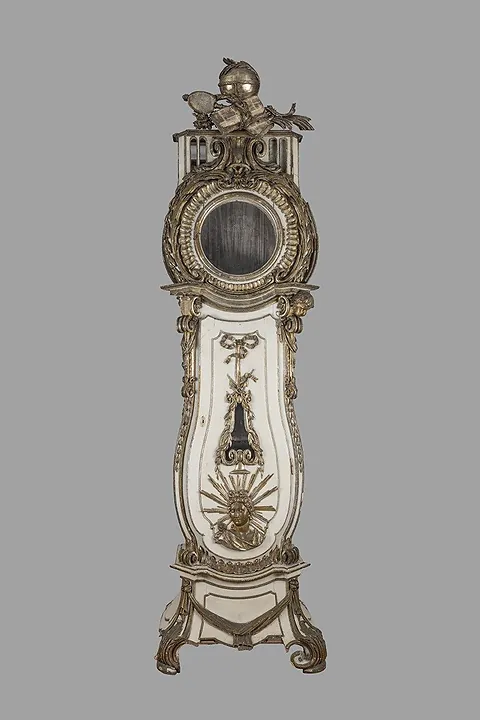
Clocks · c. 1780
Longcase clock by Louis George, Eberswalde, c. 1780
Museum Eberswalde
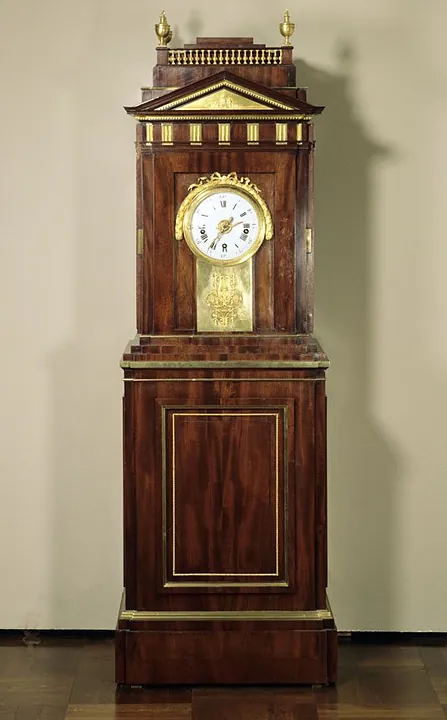
Clocks · 1780s (inferred: the museum dates the style to the 1780s and the music includes Gluck's Iphigénie en Tauride of 1779)
Musical longcase clock, Roentgen workshop, Neuwied, 1780s
Badisches Landesmuseum Karlsruhe
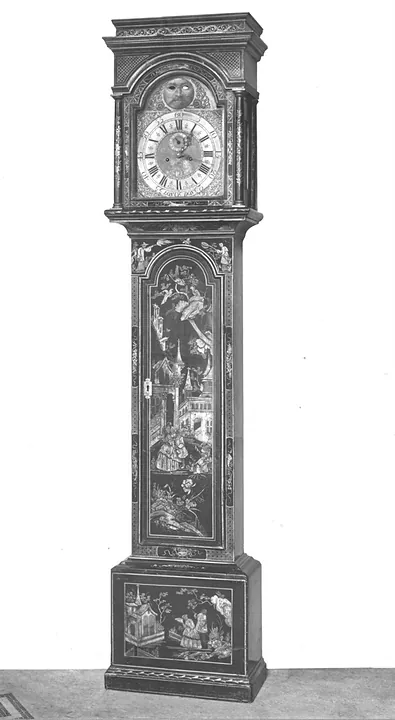
Clocks · 1740–1760
Longcase clock, English, 1740–1760, japanned wood, John Ellicott
Victoria and Albert Museum, London
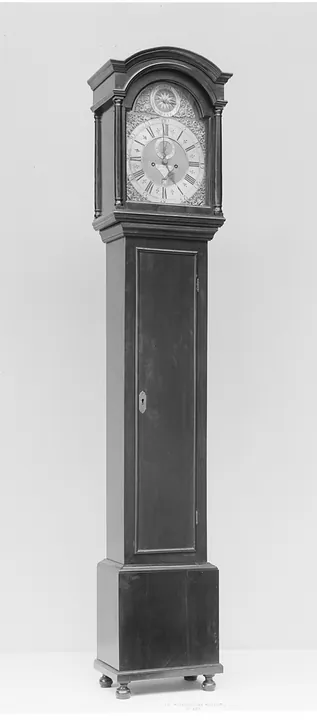
Clocks · 1740–60
Tall clock by Samuel Bagnall, United States, 1740–60
The Metropolitan Museum of Art, New York
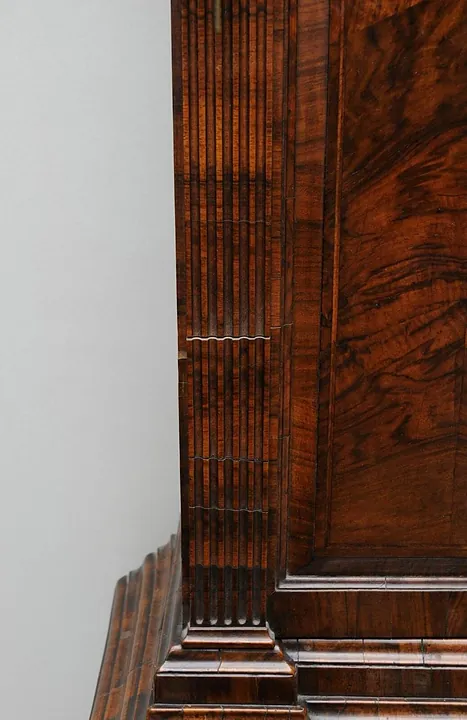
Clocks · c.1750
Long-case clock, English, ca. 1750, by Richard Peyton of Gloucester
Victoria and Albert Museum, London
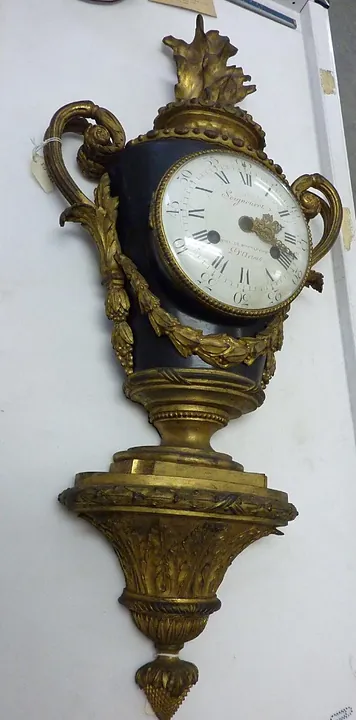
Clocks · 1750–1800
Bracket clock in metal case with scroll handles and flamed-shaped top signed by Pierre Seignoret, Clockmaket to the the Comte d'Artois
Victoria and Albert Museum, London
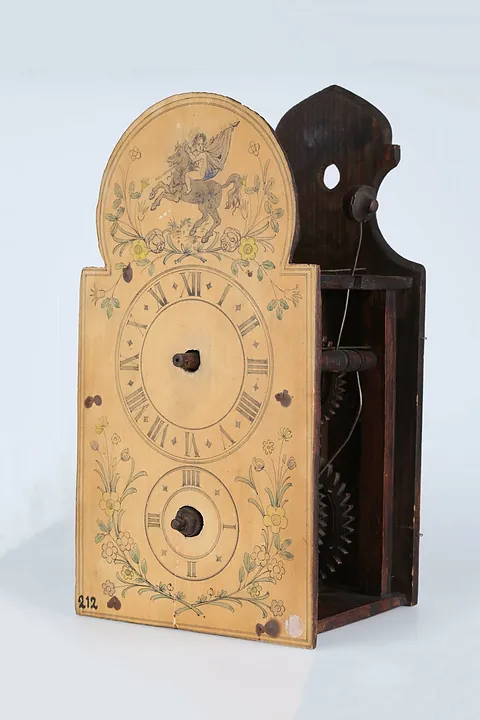
Clocks · c. 1750
Clock by Georg Gfell, Germany, c. 1750
German Clock Museum
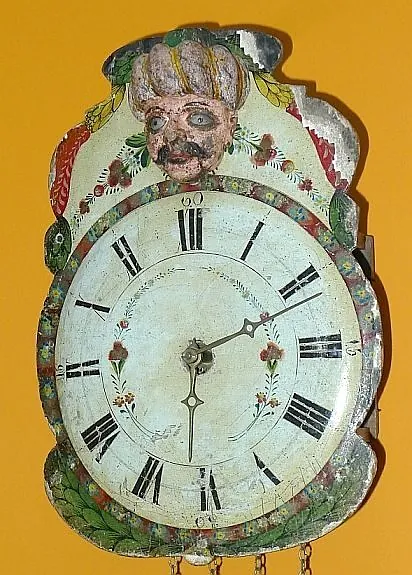
Clocks · 1750–1799
Cuckoo / black forest clock, Germany, 1750–1799
Badisches Landesmuseum Karlsruhe