
Horological History · Historical feature
From Bracelet to Smartwatch: How the Wristwatch Conquered the World, 1800–2018
For three centuries a watch lived in a pocket. Then, within a single lifetime, it moved to the wrist — carried there by jewellers, soldiers, aviators and divers — and became waterproof, self-winding, electric, electronic and finally a computer. A history of the wristwatch told through objects in the Atlas catalogue.
Atlas Editorial · · 11 min read
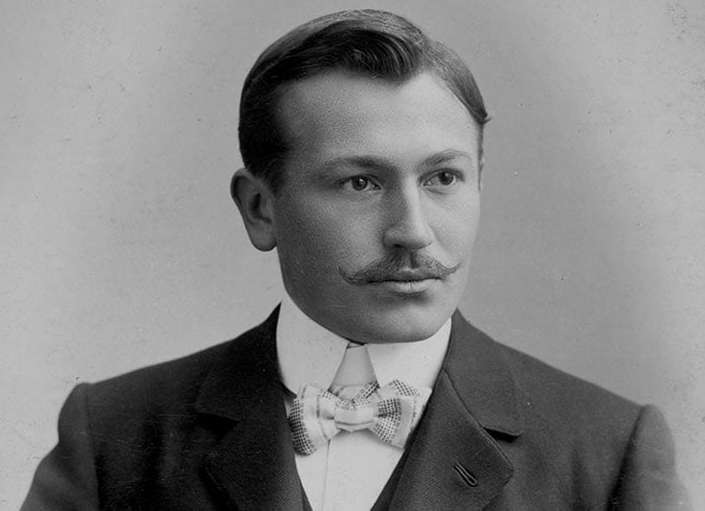
Unknown author · Public domain · source (opens another website in a new tab)
For most of its history the portable watch was not worn on the wrist at all. From the sixteenth century to the end of the nineteenth, watches hung from a chain or a ribbon, sat in a waistcoat pocket or dangled from a chatelaine at the waist. A watch on the wrist was a piece of women's jewellery, small, fragile and more admired for its setting than its timekeeping. Yet by the 1930s the wristwatch was the normal watch for men and women alike, and by the end of the twentieth century it had become one of the most widely owned machines on earth.
This feature follows that change through objects in the Atlas catalogue — from a bracelet watch of about 1800 in the old Clockmakers' Museum collection, through a converted pocket watch, a trench watch and the first self-winding and waterproof designs, to the electric, electronic and quartz watches of the 1950s–1970s, the Swatch, and a smartwatch now held by a museum of technology. Each caption follows the holding institution's own record; where the story depends on dates or claims that the objects themselves do not document, the text says so.
Before 1900: the bracelet watch as jewellery
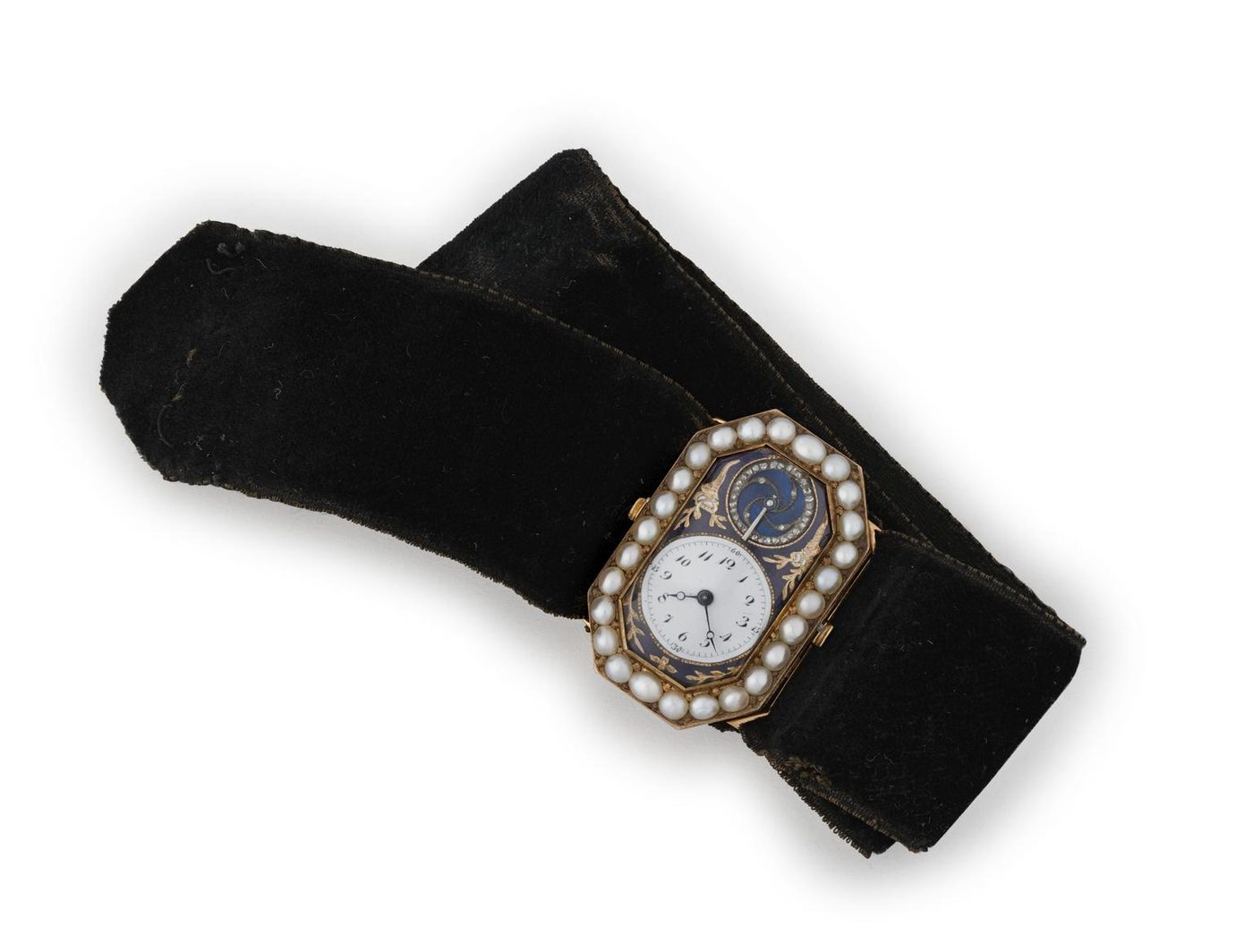
Watches set into bracelets were made for wealthy women from at least the late eighteenth century. The most famous early example is a watch Abraham-Louis Breguet's firm began for Caroline Murat, Queen of Naples, in 1810, which is often described as the first wristwatch; it is known from the firm's records and does not survive. Patek Philippe's archives are likewise cited for a ladies' bracelet watch of 1868. Such pieces show that the idea was old; what was missing was a reason for men, or for anyone who needed accurate time, to wear one.
Soldiers, conversions and the first men's wristwatches
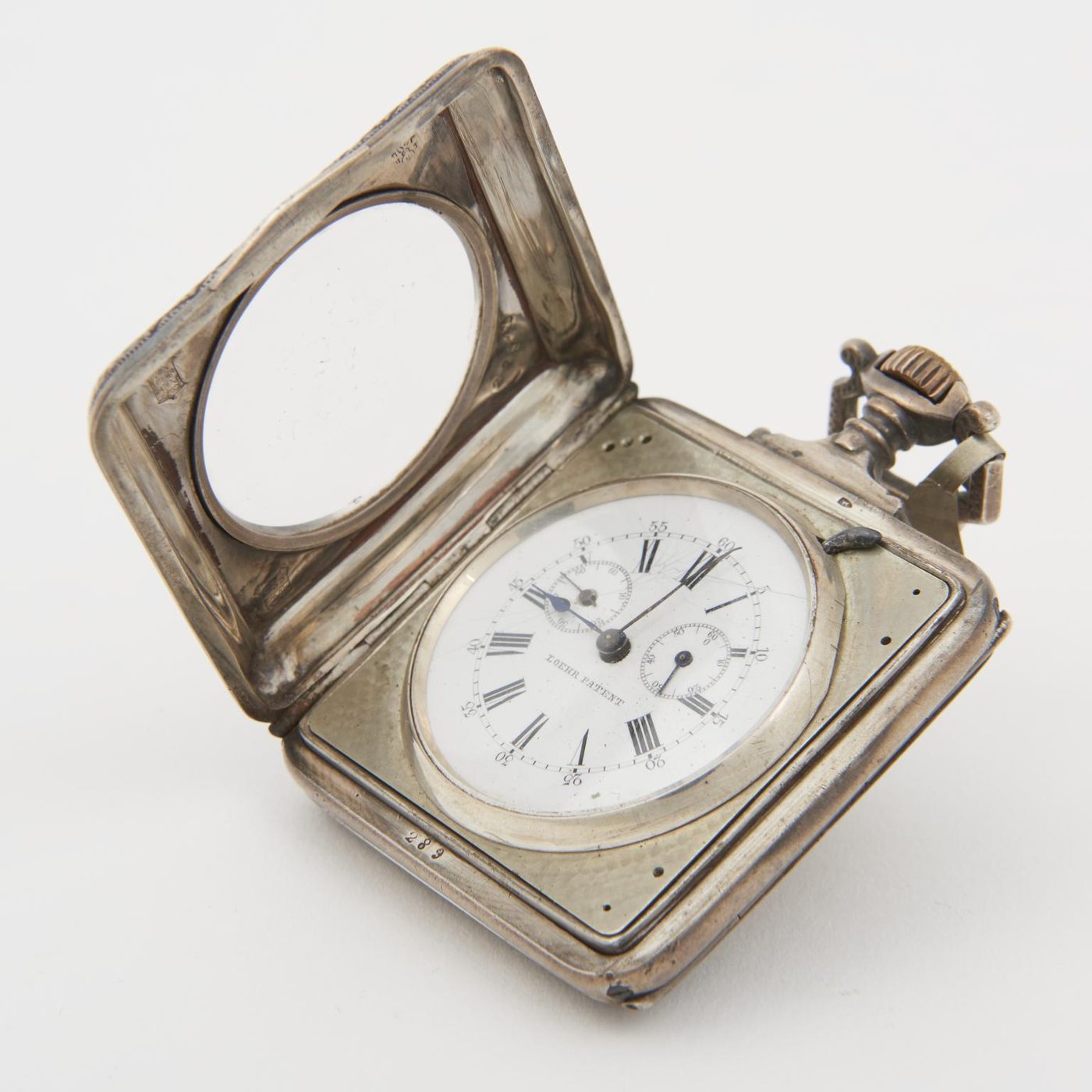
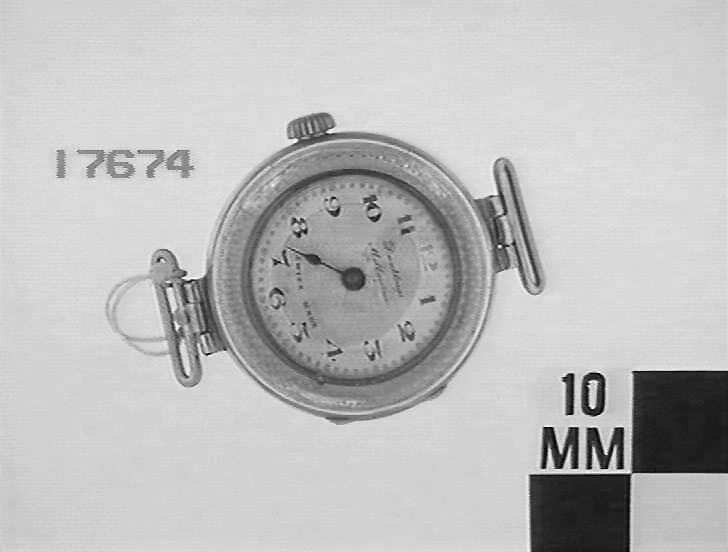
Practical pressure came from people who needed both hands. Cavalry and artillery officers, cyclists, motorists and the first aviators found a pocket watch awkward to consult, and from the 1880s onwards small watches were strapped to the wrist in leather cups or soldered to wire lugs. Many early men's wristwatches were exactly that: small pocket or fob watches converted for the wrist. The Deutsches Uhrenmuseum in Furtwangen catalogues a watch of about 1910 signed Louis Bähler as 'a small pocket watch, converted as a wristwatch' — its crown at twelve o'clock and wire lugs betray its origins.
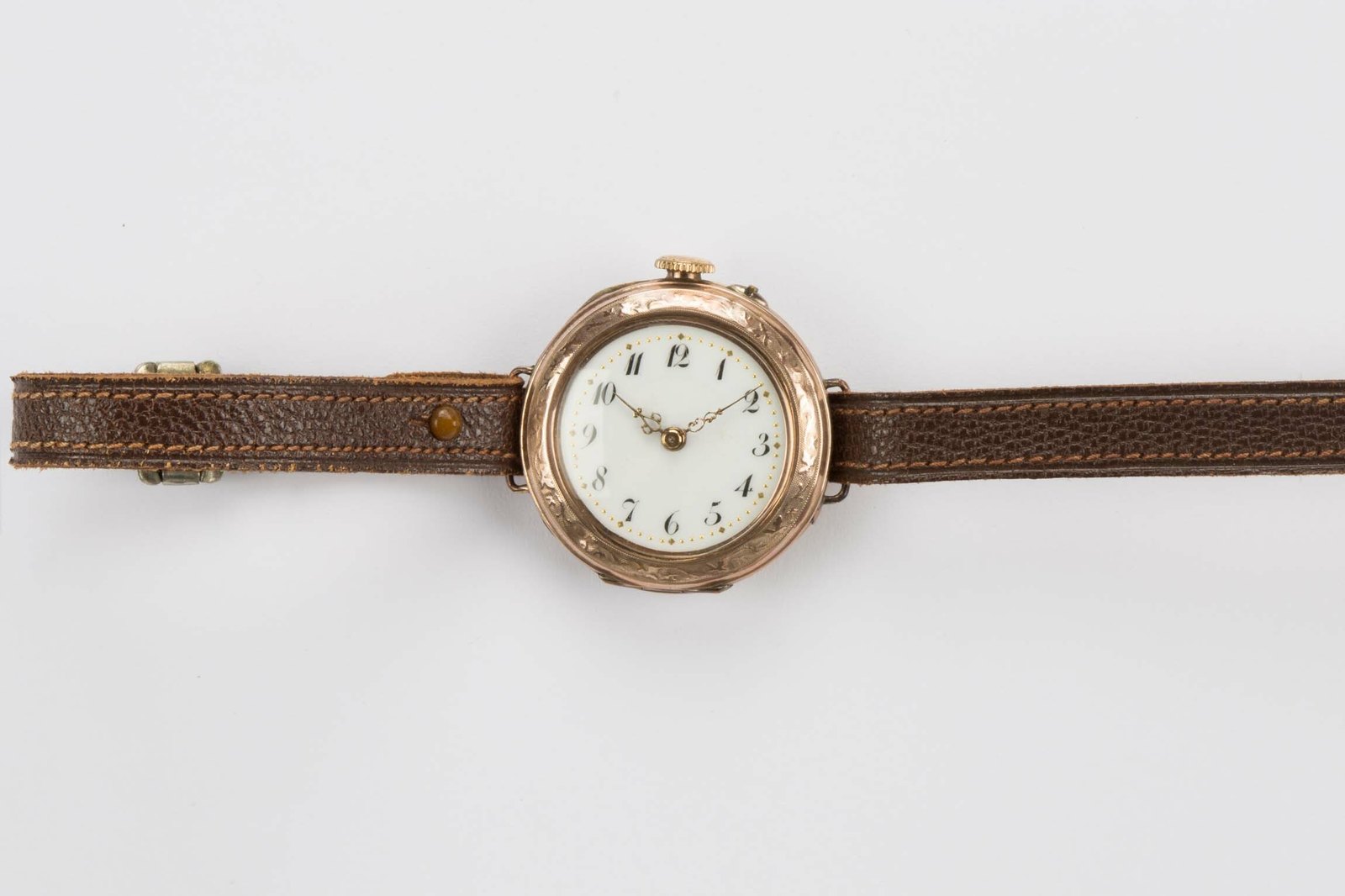
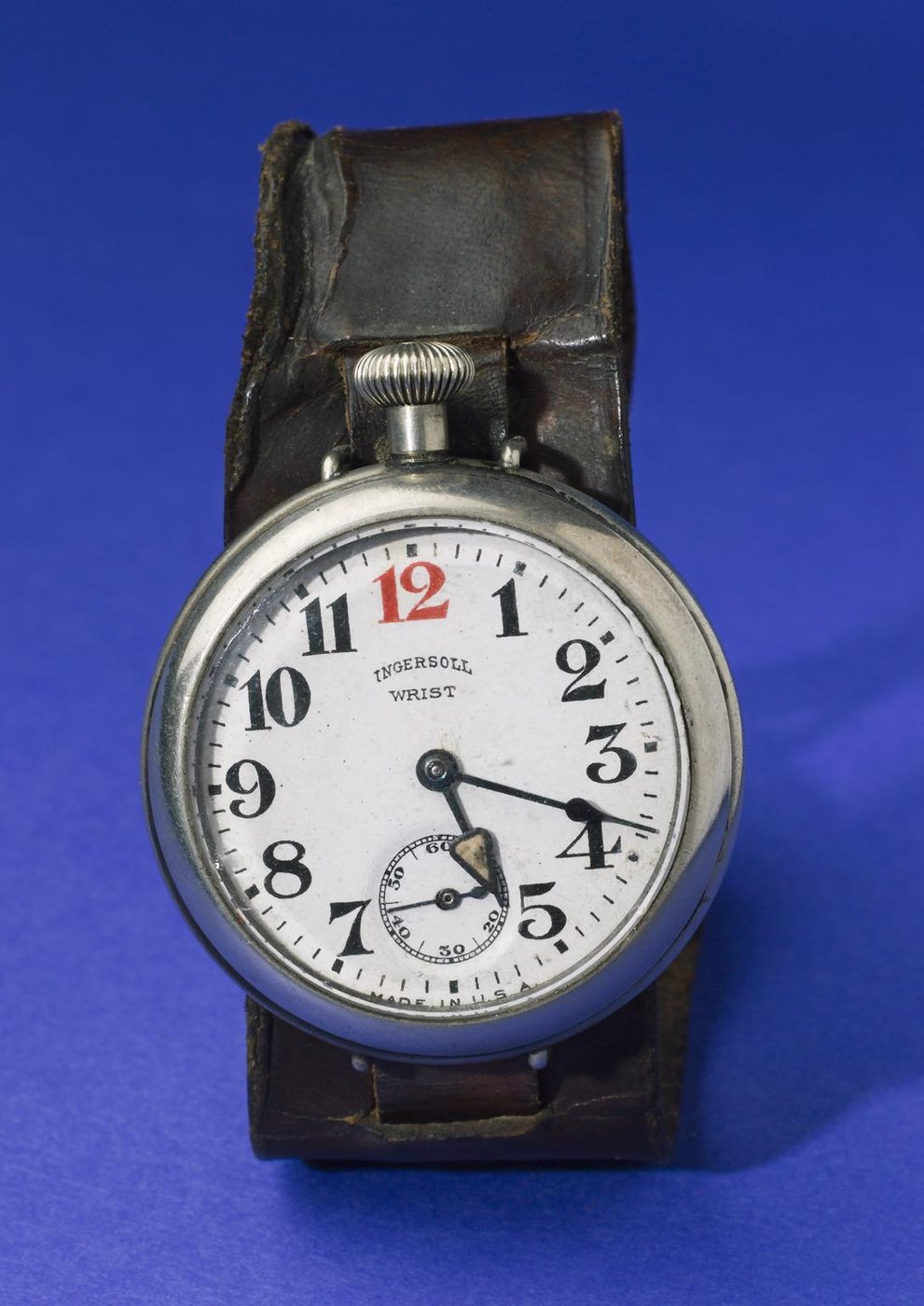
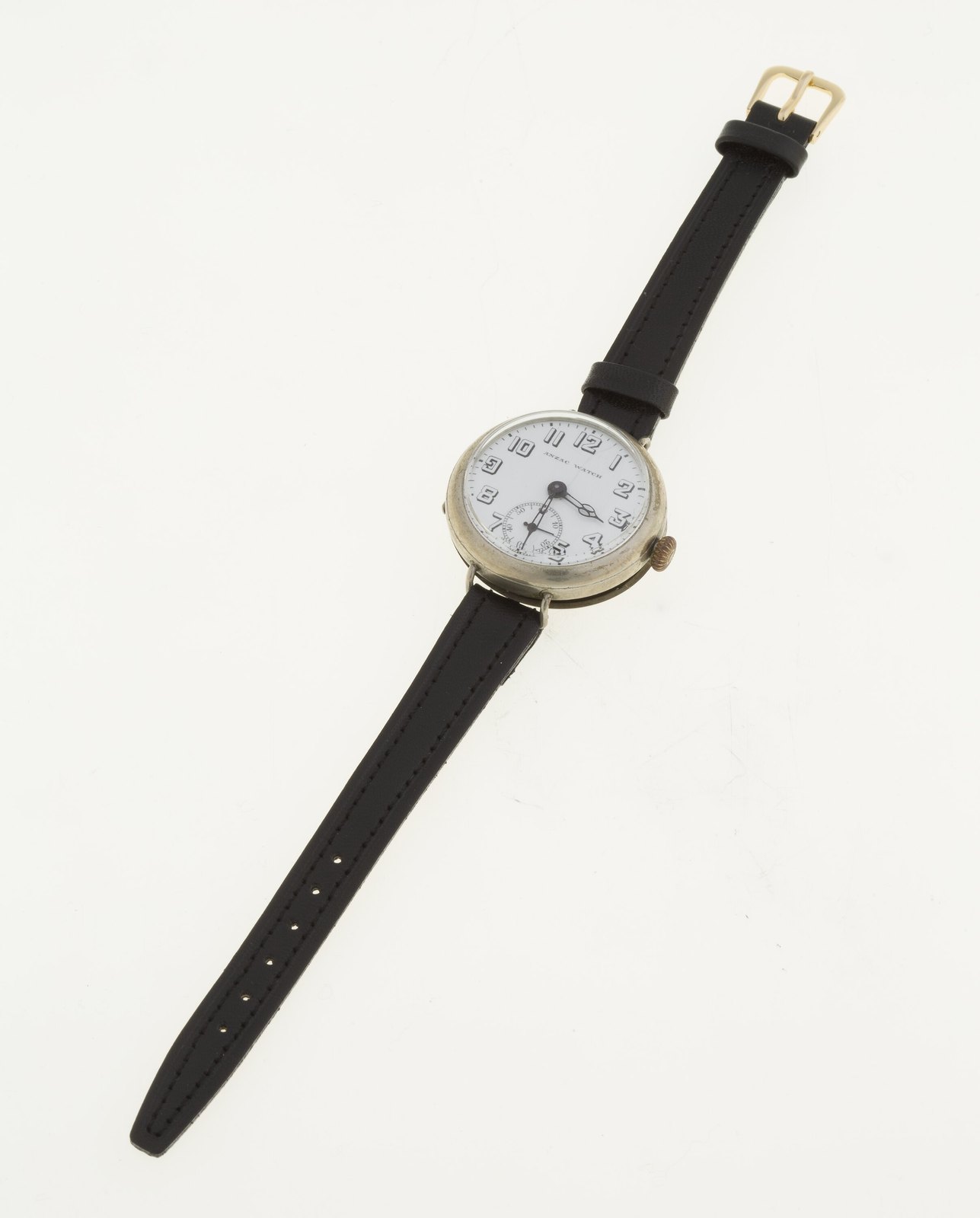
The First World War made the wristwatch a man's object. Coordinated barrages, timed attacks and night operations required officers to read the time instantly, and manufacturers offered purpose-made 'trench watches' with luminous hands and numerals, unbreakable glasses and protective grilles. Inexpensive American makers joined in: the Science Museum Group holds an Ingersoll wristwatch of 1915 with a pin-pallet escapement and a luminous hour hand. After the war the style persisted in civilian life, as a watch catalogued by Museums Victoria shows: a trench-style wristwatch marked 'ANZAC watch', probably of the 1920s, which the museum describes as an attempt to use the Anzac name to sell watches — a use the Australian government had prohibited for commercial purposes in 1916.
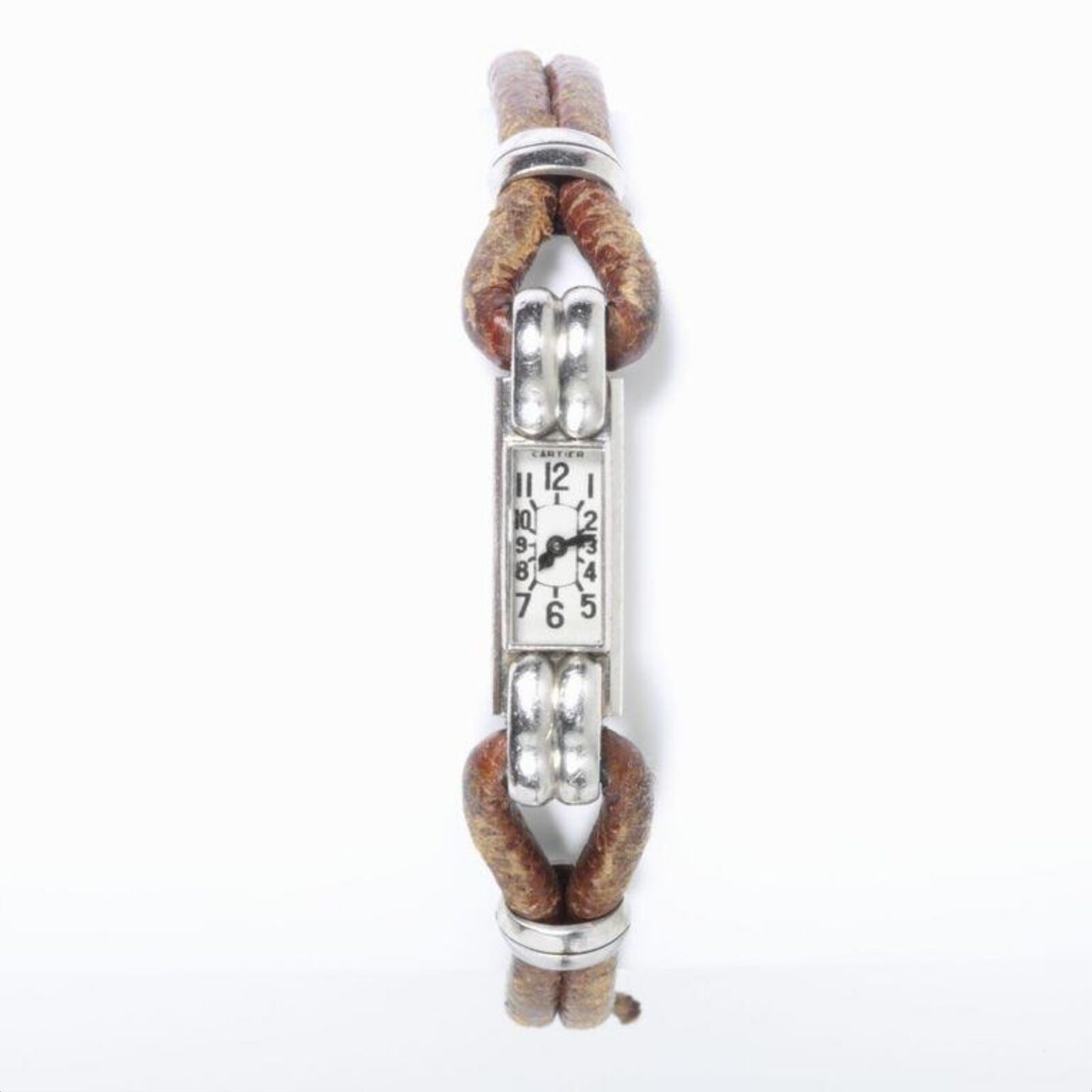
At the luxury end, Paris jewellers made the wristwatch elegant. Cartier's 'Santos', associated with the Brazilian aviator Alberto Santos-Dumont, is usually dated to 1904 and was sold commercially from about 1911; its square case and integrated lugs pointed away from the pocket-watch form. The Victoria and Albert Museum holds a Cartier platinum wristwatch bought in Paris in 1928 by the 5th Duke of Sutherland, possibly as a wedding present; its gold deployant buckle carries the mark of Edmond Jaeger. The museum notes that the wristwatch became 'a pre-eminent item of male jewellery'.
The wrist's enemies: water, dust and the winding crown
A watch on the wrist faced hazards a pocket watch never met: rain, washing, sweat, dust and shocks — and a winding crown that admitted all of them every time it was pulled out. Two inventions of the 1920s answered these problems. In 1926 Rolex patented a screw-down crown and case (the 'Oyster', protected by British patent 260,554 in the Atlas library), and in 1927 the swimmer Mercedes Gleitze wore an Oyster during an attempt to swim the English Channel, a publicity coup the company exploited for decades.
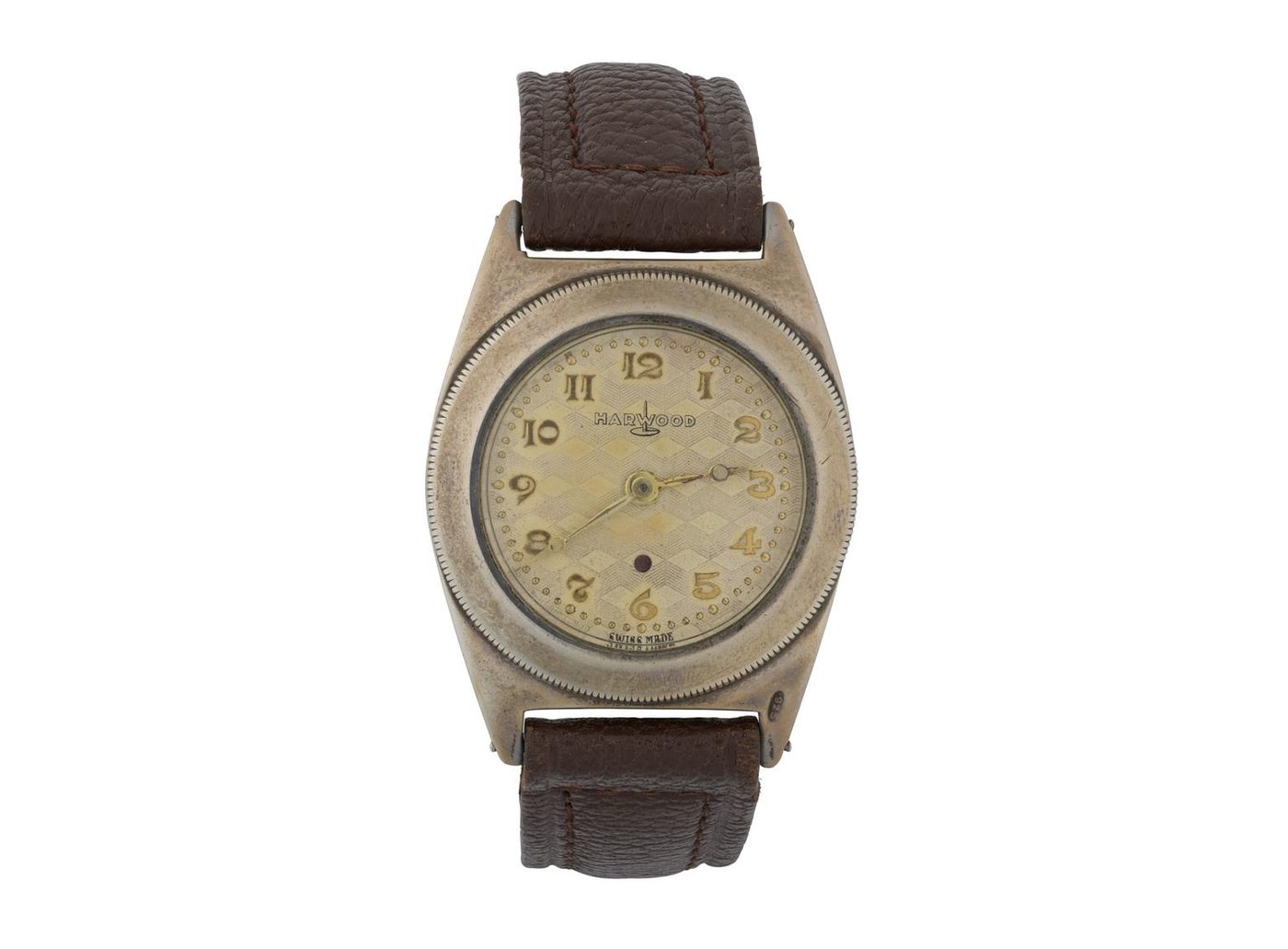
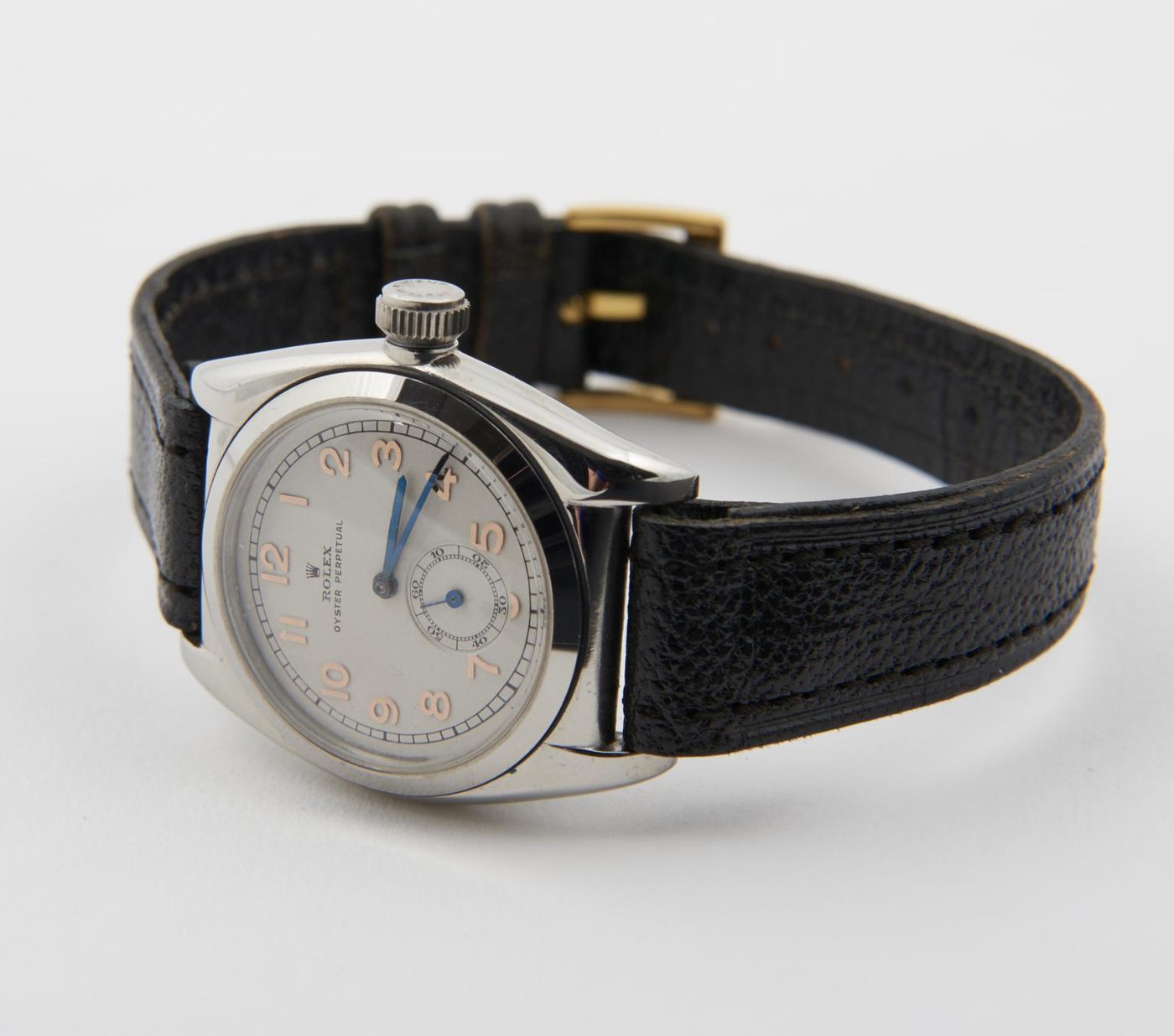
The second answer was not to open the case at all. The English watch repairer John Harwood patented a self-winding wristwatch in the early 1920s, in which a weight swinging through part of a circle wound the mainspring as the wearer moved; the watches went on sale in 1928 and were set by turning the bezel, so there was no crown. The Science Museum Group holds one made by the Harwood Self Winding Watch Co. in 1928. Three years later Rolex introduced the Oyster Perpetual, whose semicircular rotor — the museum notes — revolves fully in either direction to wind the mainspring, and which became the standard form for later automatic wristwatches.
| Date | Development | Example in the Atlas |
|---|---|---|
| 1810 | Breguet's firm begins a bracelet watch for Caroline Murat, Queen of Naples (lost; known from records) | Bracelet watch by Henry Broillat, 1795–1805 |
| 1880s–1918 | Small watches strapped to the wrist by soldiers, cyclists and aviators; First World War trench watches | Louis Bähler conversion, c. 1910; Ingersoll, 1915 |
| 1904–1911 | Cartier's Santos: a square case designed for the wrist | Cartier platinum wristwatch, 1928 |
| 1926–1927 | Rolex Oyster screw-down crown and case; Mercedes Gleitze's Channel swim | Rolex Oyster Perpetual, 1931 |
| 1928 | Harwood self-winding wristwatch on sale | Harwood Self Winding Watch Co., 1928 |
| 1931 | Rolex Oyster Perpetual rotor | Rolex Oyster Perpetual, 1931 |
| 1934 | Incabloc shock protection introduced | — |
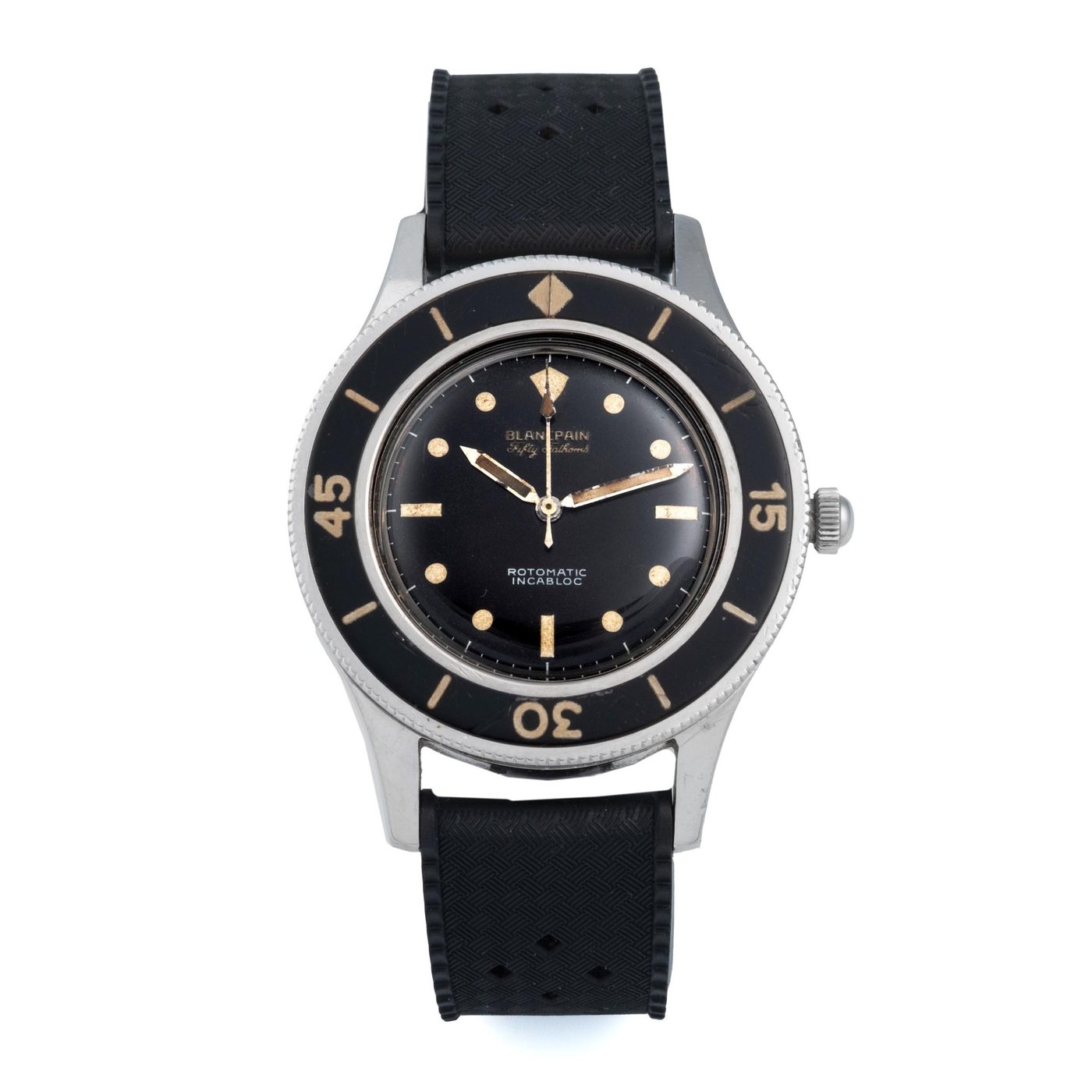
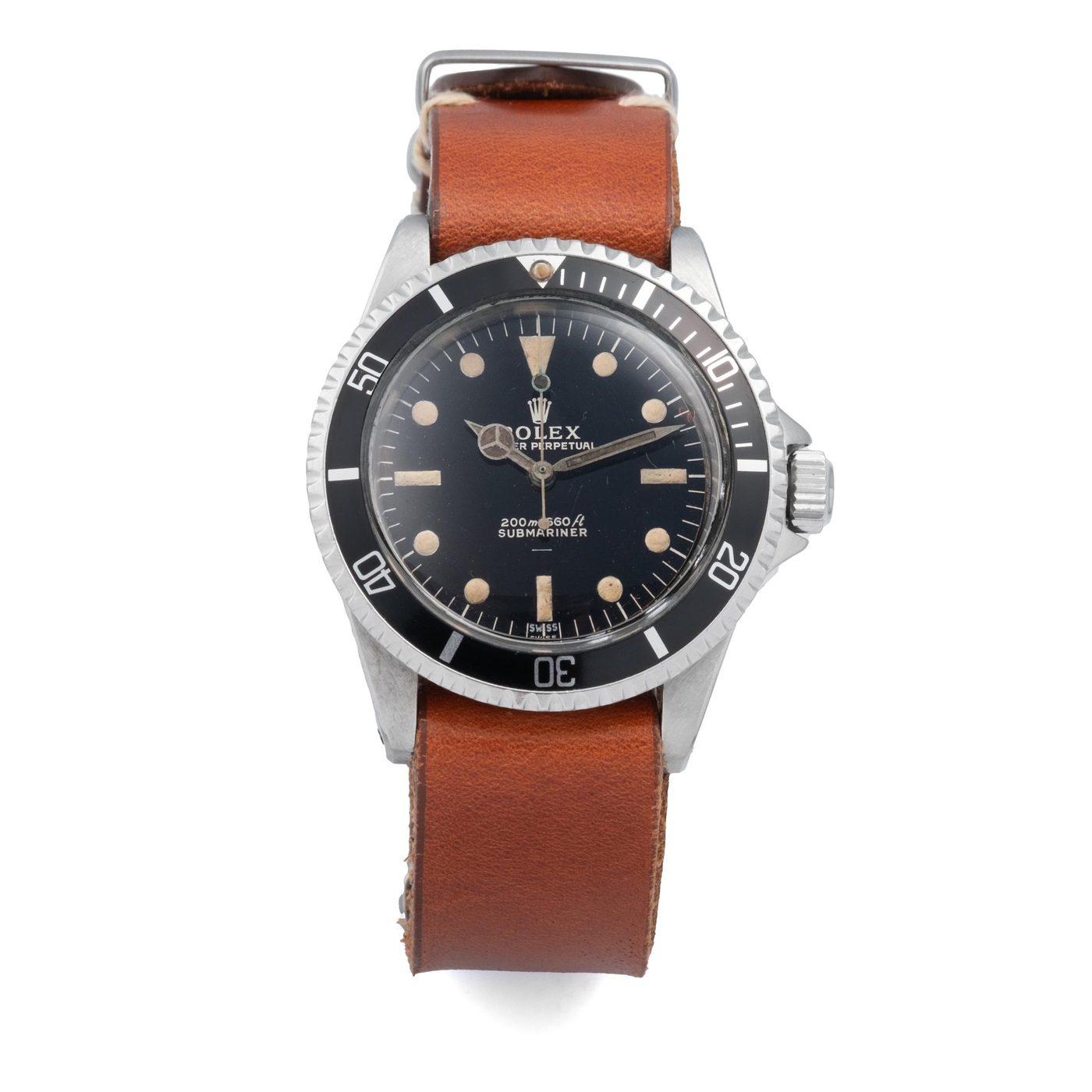
| 1953–1954 | Purpose-built divers' watches (Blancpain Fifty Fathoms, Rolex Submariner) | Blancpain Fifty Fathoms, c. 1955; Submariner ref. 5513, 1963 |
| 1957 | Hamilton Electric 500, first battery-powered wristwatch on sale | Hamilton Electric pilot-lot watch, 1956 |
| 1960 | Bulova Accutron tuning-fork watch | Accutron demonstration stand, 1960–1963 |
| 1965–1969 | Omega Speedmaster qualified by NASA; worn on the Moon | Speedmaster Professional with Velcro straps, 1960s |
| 1969 | Seiko Astron, first quartz wristwatch on sale (Tokyo, December) | — |
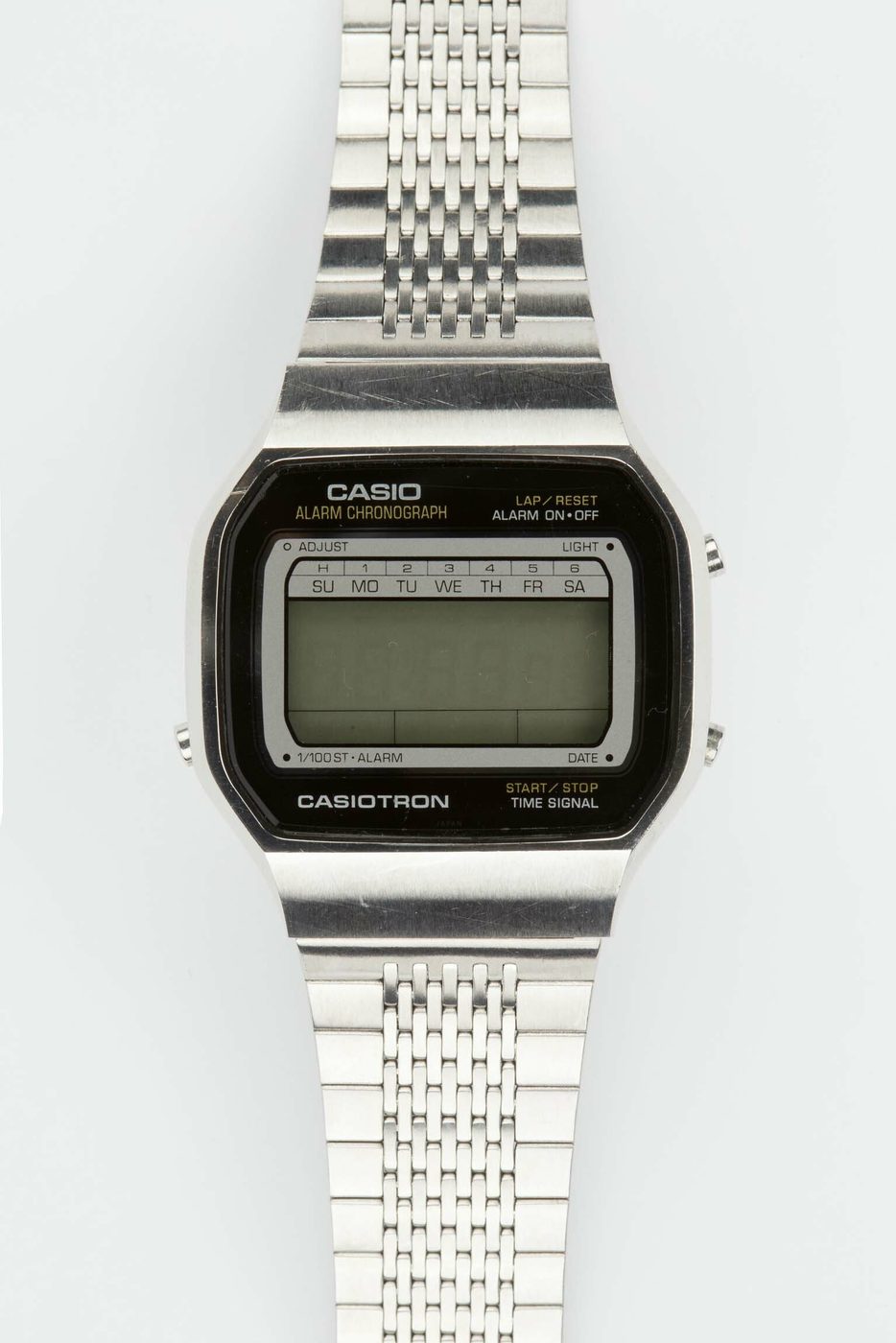
| 1970–1974 | LED and LCD digital watches | Hamilton Pulsar, 1972; AMI LCD watch, 1973–74; Casio Casiotron, c. 1975 |
| 1983 | Swatch launched in Switzerland | Swatch 'Kangaroo', 1994 |
| 1999 | Omega launches the co-axial escapement invented by George Daniels | 'Millennium' co-axial wristwatch, 1999 |
| 2015–2018 | Smartwatches reach a mass market (Apple Watch 2015) | Apple Watch Series 4, 2018 |
Tool watches: divers, pilots and astronauts
After the Second World War the wristwatch acquired a new identity as specialist equipment. Military frogmen and the new sport of scuba diving needed watches that could survive depth and show elapsed time underwater. Blancpain's Fifty Fathoms, developed in the early 1950s for French naval combat divers, and Rolex's Submariner of 1953–54 defined the type: a water-resistant case, a rotating bezel to mark the start of a dive, and bold luminous markings. Both models are well represented in the Antiquorum auction records imported into the Atlas, whose lot descriptions record calibres, case numbers and accessories.
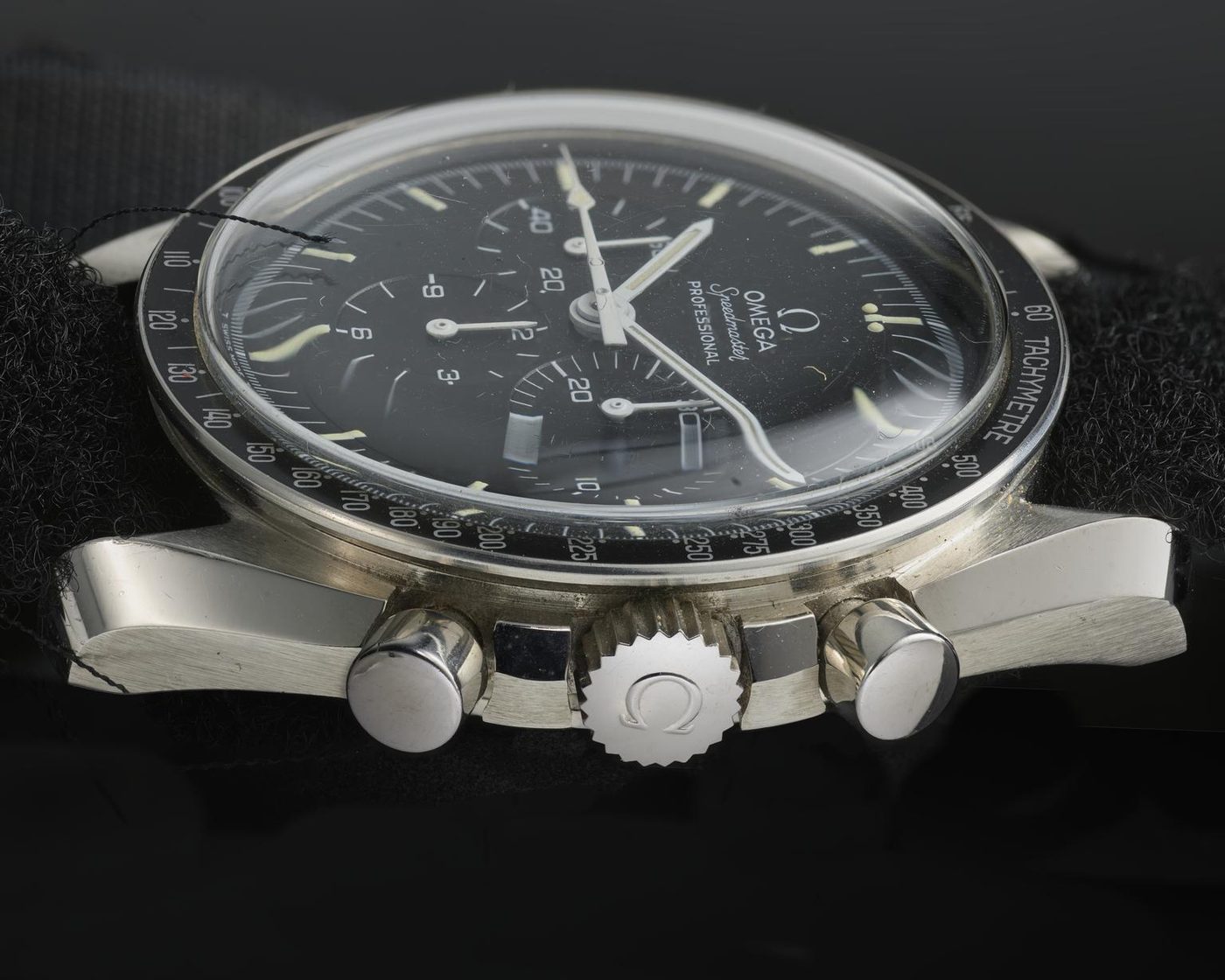
Chronographs followed the aviators and, eventually, the astronauts. The Science Museum Group's record of an Omega Speedmaster Professional with Velcro straps, of the type used on NASA's Apollo programme, notes that the model was first worn in orbit by Wally Schirra on Mercury-Atlas 8 in 1962 and that NASA certified it for its missions from 1965, when the agency was unsure how other mechanical watches would behave in zero gravity. Its manually wound movement, the Omega calibre 321 in the early models, is profiled in the Atlas movements section.
Electric, electronic, quartz
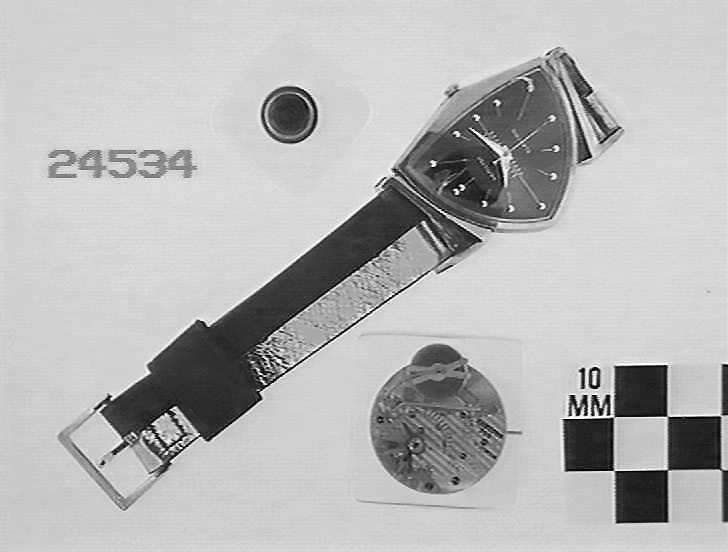
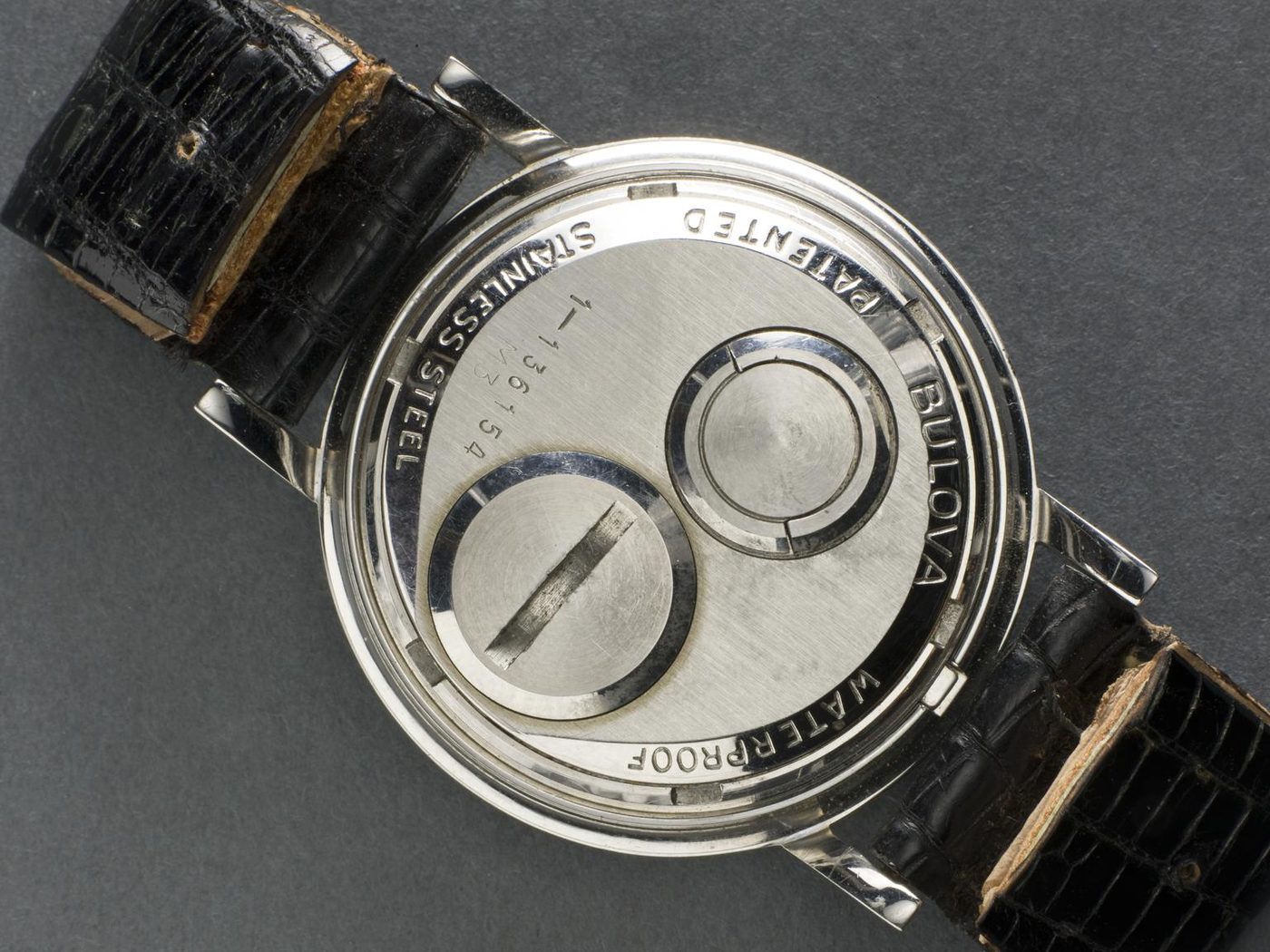
The next revolution replaced the mainspring. On 3 January 1957 the Hamilton Watch Company of Lancaster, Pennsylvania, announced the 'World's First Electric Watch', the Hamilton Electric 500, in which a battery powered a coil on the balance. Museums Victoria holds a watch from one of the small pilot lots made before the commercial release — dated 1956 in its record — which the company gave to museums in 1958; its asymmetric triangular case announced that this was something new. Three years later Bulova's Accutron, developed by the Swiss engineer Max Hetzel, replaced the balance altogether with a tuning fork vibrating 360 times a second; the Science Museum Group holds an Accutron on a demonstration stand with an animated diagram of its operation.
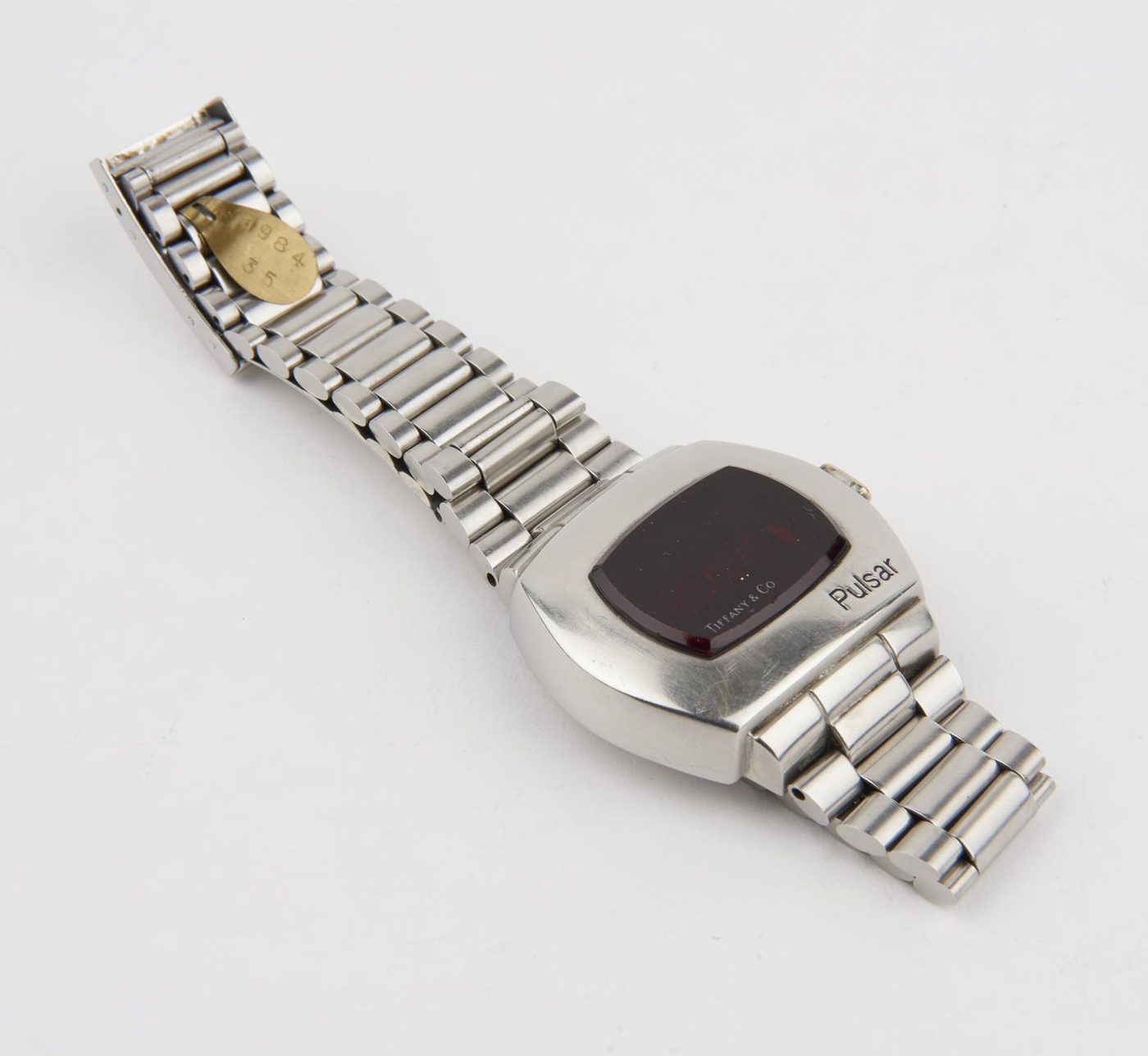
The decisive step came from Japan. On 25 December 1969 Seiko put on sale in Tokyo the Quartz Astron 35SQ, the first quartz wristwatch, regulated by a quartz crystal vibrating 8,192 times a second and driving a stepping motor. Within five years quartz control had been combined with electronic displays: the Hamilton Pulsar, introduced in 1970 and produced in quantity from 1972, was — in the Science Museum Group's words — the first watch without any moving parts, its red light-emitting diodes lit only when the wearer pressed a button. Liquid-crystal displays, which could show the time continuously, followed in the early 1970s; the Atlas has an LCD watch made by American Microsystems in 1973–74 and a Casio Casiotron of about 1975 with a 1/100-second stopwatch and alarm.
Crisis, Swatch and the mechanical revival
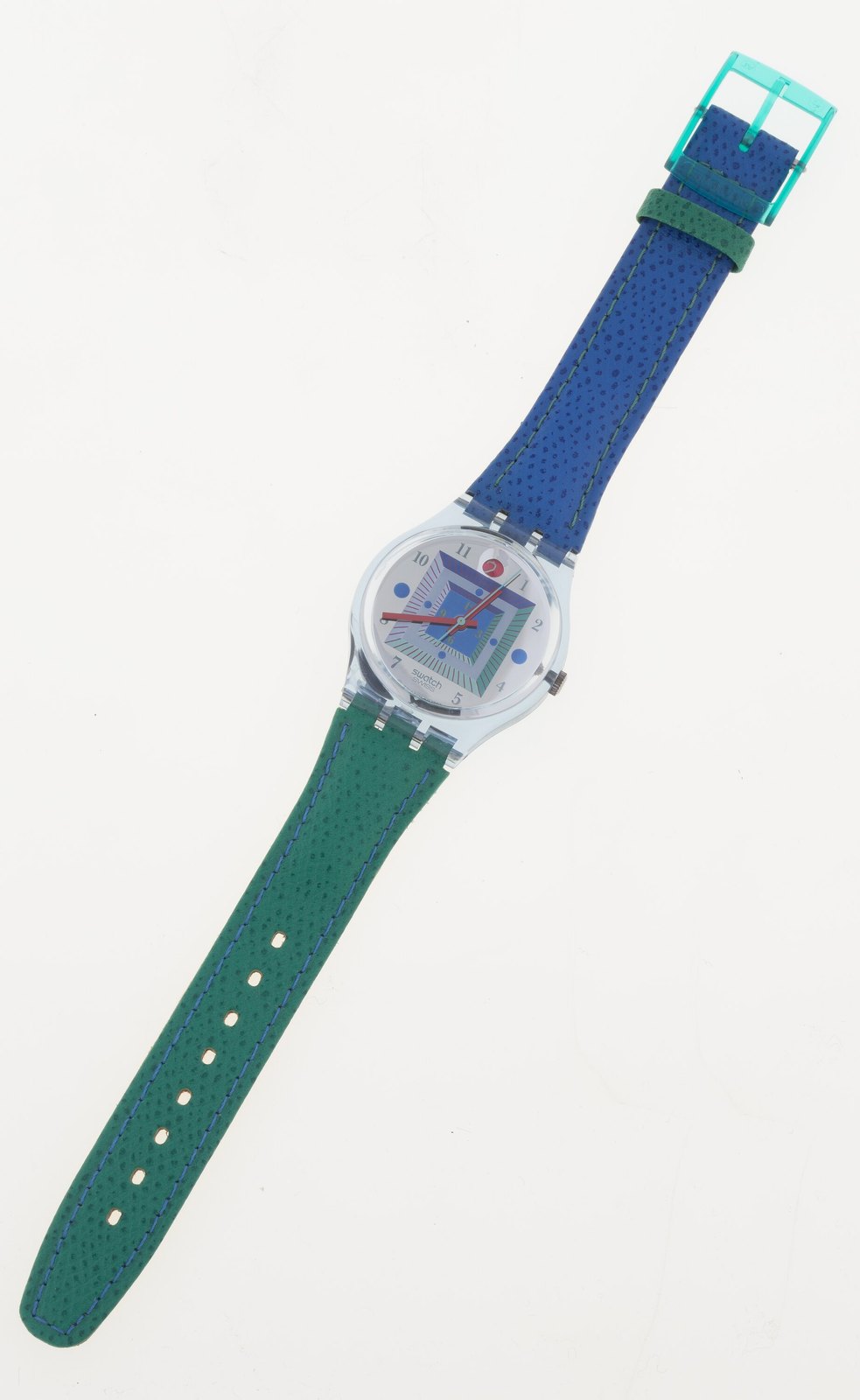
The Swiss watch industry, built around mechanical movements and many small specialist firms, was hit hard by quartz and by the strong Swiss franc in the 1970s; employment fell steeply and many famous names disappeared or merged. Business historians such as Pierre-Yves Donzé and Amy Glasmeier, both in the Atlas library, trace how the industry was restructured. Its most visible answer was the Swatch, launched in 1983: a quartz watch with a plastic case into which the movement was assembled directly, made with far fewer parts than a conventional watch and sold as an inexpensive fashion object in seasonal collections. Museums Victoria bought 91 Swatches from the spring/summer 1994 collection alone; its record notes that Swatches were first created in Biel/Bienne in 1983.
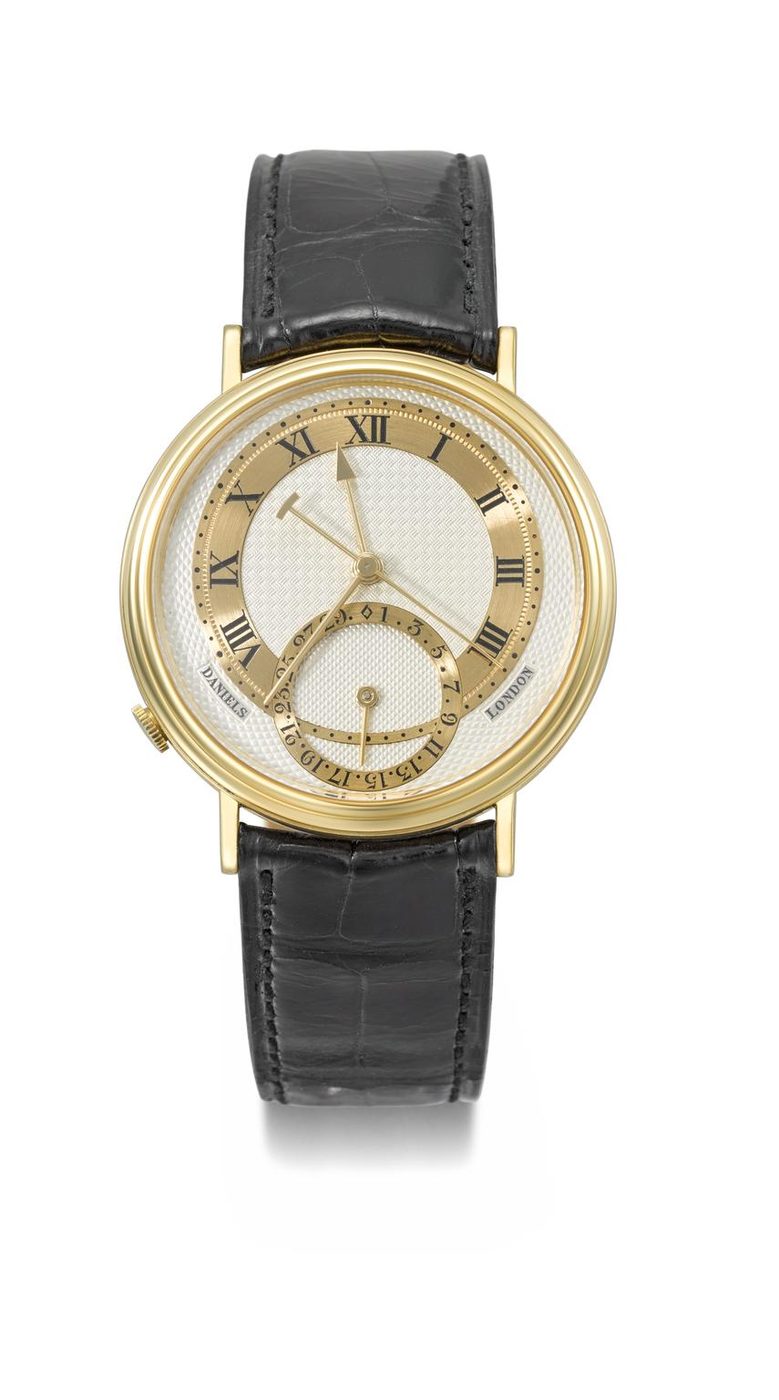
At the same time a minority of buyers rediscovered the mechanical watch as craftsmanship. The English watchmaker George Daniels, who made complete watches by hand, devised the co-axial escapement in the 1970s to reduce the need for lubrication at the pallets; Omega adopted it for series production in 1999. The Science Museum Group holds a 'Millennium' co-axial wristwatch associated with Daniels and Omega from that year.
The smartwatch
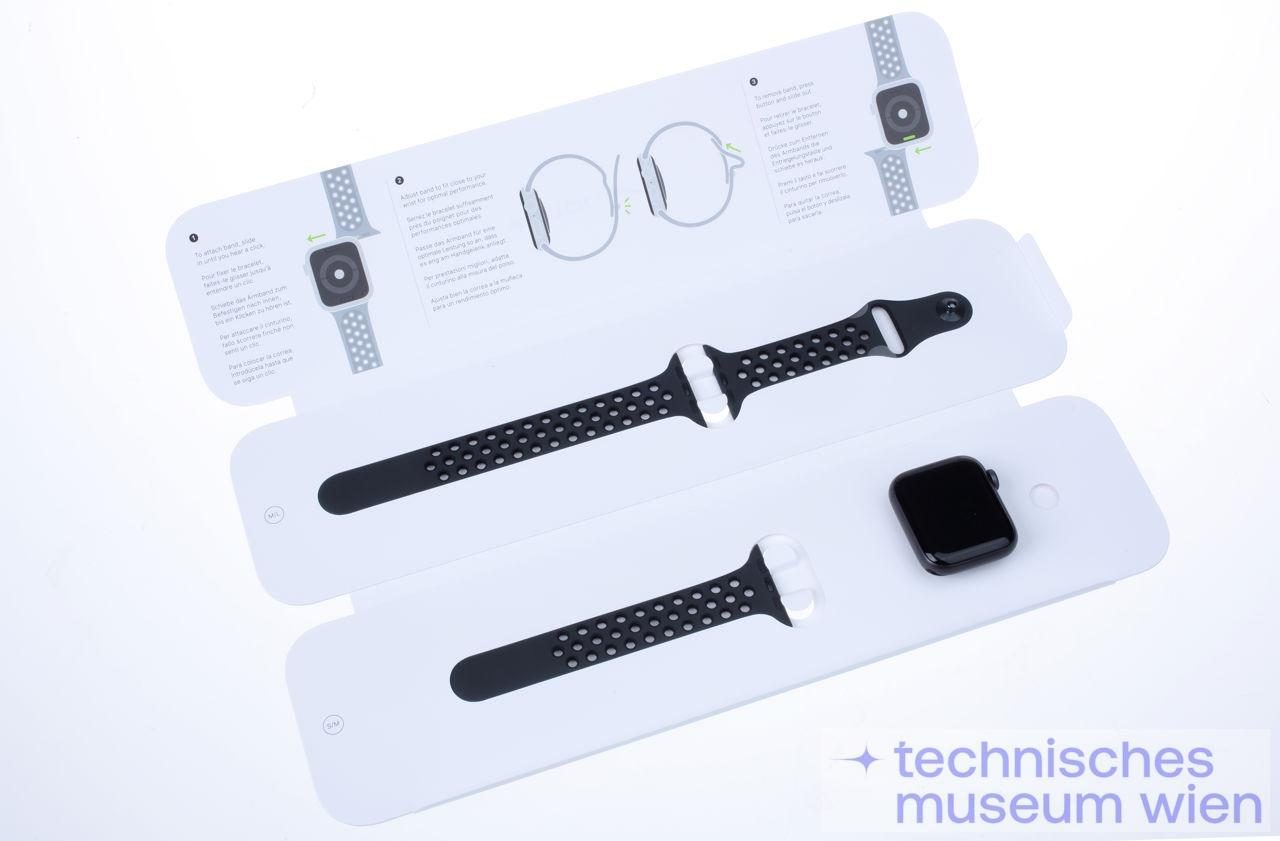
Digital watches had always tempted designers to add functions — calculators, databanks, television remote controls — but the smartwatch proper arrived only when the wristwatch became a networked computer. Apple's first watch went on sale in 2015. The Technisches Museum Wien collected an Apple Watch Series 4 (GPS, 40 mm, model A1977) of 2018, describing the smartwatch as a new type of wristwatch created by integrating digital functions and apps. In barely more than a century the wristwatch had gone from a jeweller's novelty to a soldier's tool to an everyday computer.
How to date a wristwatch
- Wire lugs soldered to a round case, and a crown at twelve o'clock, usually indicate an early conversion or a watch of about 1910–1925.
- Luminous dials: radium paint was used into the 1960s; dials marked 'T' or 'T SWISS T' indicate tritium, used from the 1960s to the late 1990s.
- Shock protection such as Incabloc (introduced in 1934) points to the mid-1930s or later.
- Screw-down crowns and casebacks are typical of water-resistant watches from the late 1920s onwards.
- Reference and serial numbers are the most reliable guide for major brands; auction records often add archive extracts or original sale dates — in the Atlas these appear as 'originally sold … (per the lot record)'.
For the technical background, Chapuis and Jaquet's Technique and History of the Swiss Watch remains a standard account of the Swiss industry to the mid-twentieth century; David Landes's Revolution in Time places the wristwatch in the longer history of timekeeping; and the Atlas movements section profiles several of the calibres mentioned here, from the Hamilton 500 and Accutron 214 to Seiko's quartz calibre 35A.
Sources & further reading
- GB 260,554 — Improvements in keyless watches — Paul Perregaux and Georges Perret; also naming Hans Wilsdorf, UK Patent Office, Filed 1926; published 1927.
- Technique and History of the Swiss Watch — Eugène Jaquet and Alfred Chapuis, Urs Graf (Olten), 1945 (French); English editions from 1953.
- Revolution in Time: Clocks and the Making of the Modern World — David S. Landes, Harvard University Press, 1983.
- Manufacturing Time: Global Competition in the Watch Industry, 1795–2000 — Amy K. Glasmeier, Guilford Press (New York), 2000.
- A Business History of the Swatch Group — Pierre-Yves Donzé, Palgrave Macmillan, 2014.
- Watchmaking — George Daniels, Sotheby Publications (London), 1981.
- The Evolution of the Quartz Crystal Clock — Warren A. Marrison, Bell System Technical Journal 27 (3): 510–588, 1948.