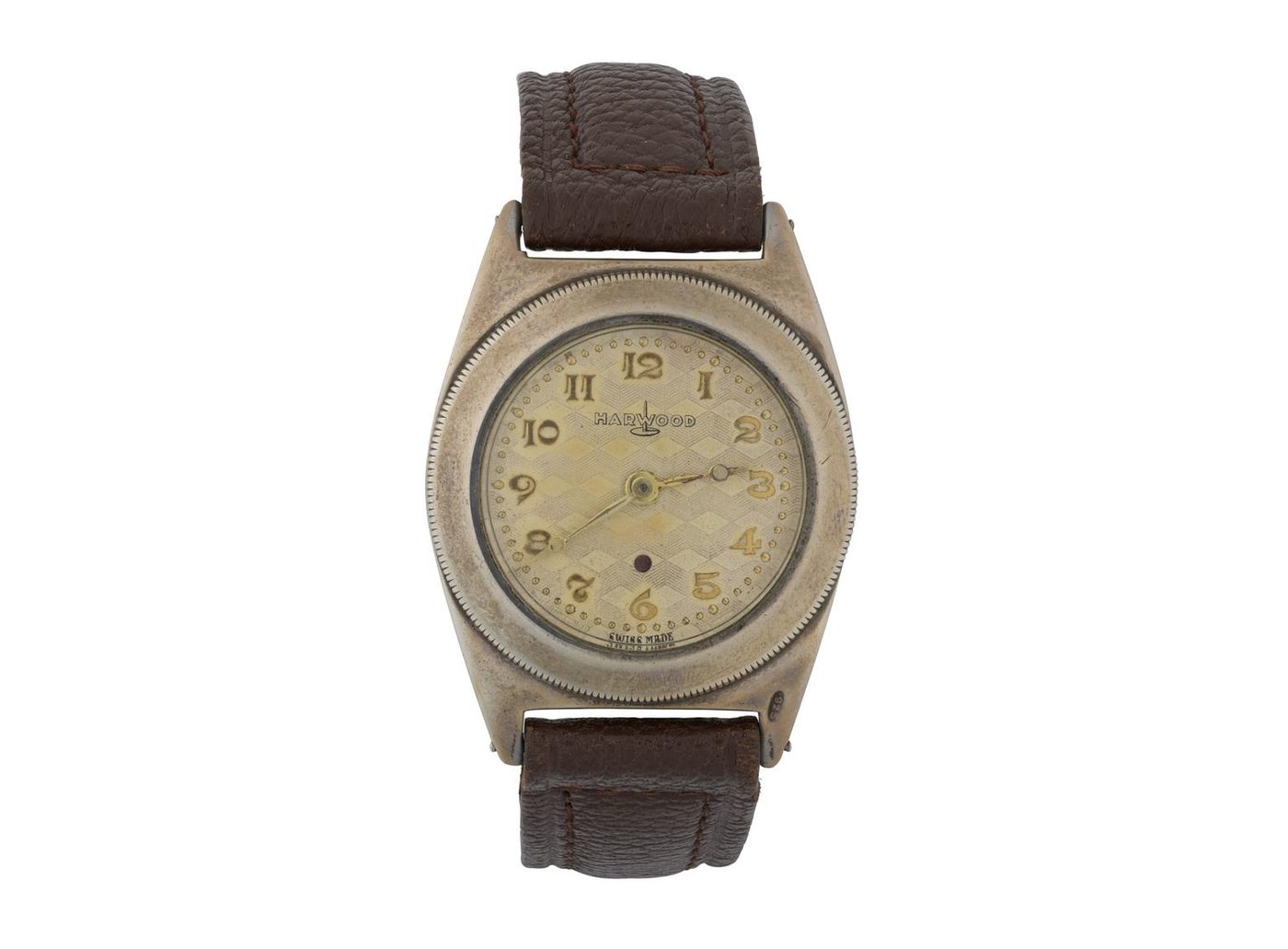
Wristwatches · Wristwatch; lever movement
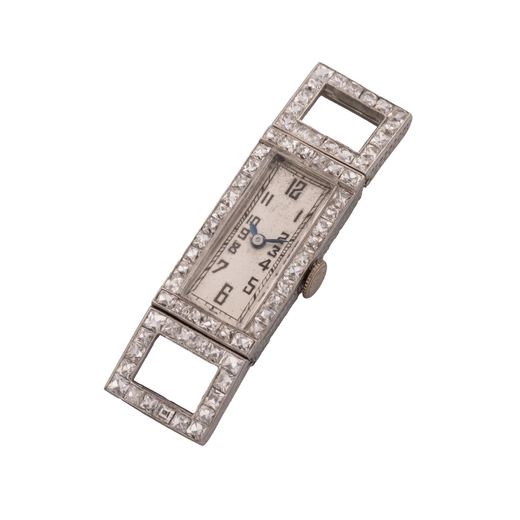
Wristwatch by Harwood Self Winding Watch Co. Ltd, England, 1928
- Maker / attribution
- Harwood Self Winding Watch Co. Ltd (maker)
- Date
- 1928
- Historical period
- Golden Age of Mechanical Watchmaking (1900 – 1945)
- Country of origin
- England
- Place
- London, Greater London, England, United Kingdom, London
- Object type
- Wristwatch; lever movement
- Holding institution
- Science Museum Group, London
- Accession / object no.
- L2015-3403
- Credit line
- Lent by the Worshipful Company of Clockmakers
- Catalogue title (original)
- Self-winding wristwatch by John Harwood
Record summary
Held and catalogued by Science Museum Group, London (object number L2015-3403), this is a wristwatch; lever movement by Harwood Self Winding Watch Co. Ltd, made in London, Greater London, England, United Kingdom, London, dated 1928. The Atlas places it in the Golden Age of Mechanical Watchmaking period (1900 – 1945) of its Wristwatches collection. The record is illustrated with 2 photographs.
Assembled from the source record's structured fields. Dates and attributions are given as the source states them; where a field is missing the Atlas leaves it blank rather than estimating.
Catalogue description
The source record does not include a narrative description. The structured fields above are reproduced from it.
Historical context
Golden Age of Mechanical Watchmaking (1900 – 1945)
The wristwatch displaces the pocket watch; waterproof cases, self-winding and grand complications.
The wristwatch overtook the pocket watch. Military use in the First World War, aviation, water-resistant cases (1926), automatic winding (1923–31), rectangular Art Deco designs and early chronographs and calendars defined the period.
Read the period in the timelineMore wristwatches from this periodEarlier: Industrial Revolution
Atlas type guide
Automatic (self-winding) watches
Self-winding watches use the wearer's motion to wind the mainspring. Abraham-Louis Perrelet and Breguet made 'perpétuelle' pocket watches with oscillating weights in the late eighteenth century, but the principle only became practical in the wristwatch. John Harwood patented a bumper automatic in 1923; Rolex's Perpetual rotor (1931) winding in one direction, and later bidirectional rotors (Eterna, Felsa Bidynator), established the modern form. Micro-rotors (Universal Genève, Buren) and peripheral rotors made automatic watches thinner.
What to look for
- A semicircular rotor turning 360° over the movement, or a 'bumper' weight that rebounds between springs.
- 'Automatic', 'Perpetual' or 'Self-winding' on the dial.
- A sealed screw-back case, since automatic watches are wound less often by the crown.
Dating clues
- Bumper automatics: 1923–c. 1955.
- Full rotors: from 1931 (Rolex); widespread after c. 1950.
- Micro-rotors: from 1954–1958.
General guidance written by the Atlas editors about this kind of object. It is not a statement about this particular piece; for that, rely on the source record above and on physical examination.
Related records
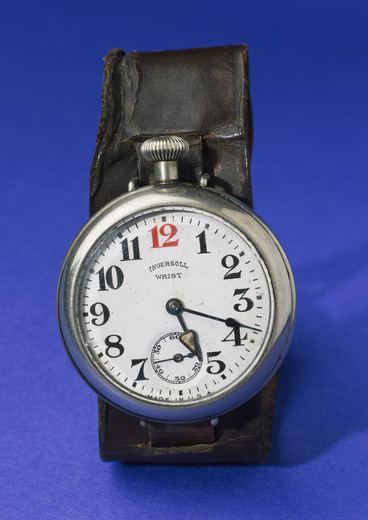
Wristwatches · 1915
"Ingersoll" wrist watch with leather strap, pin pallet escapement and luminous hour hand, 1915
Science Museum Group, London
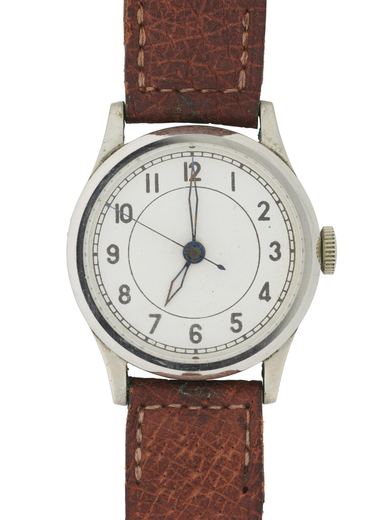
Wristwatches · 1942
Wristwatch by Smith's English Clocks Ltd., England, 1942
Science Museum Group, London
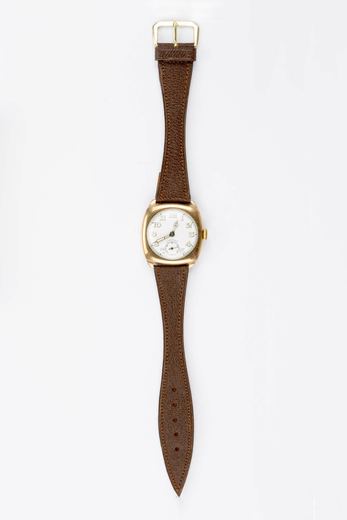
Wristwatches · 1944
Wristwatch by Francillon und Cie (Longines), England, 1944
German Clock Museum
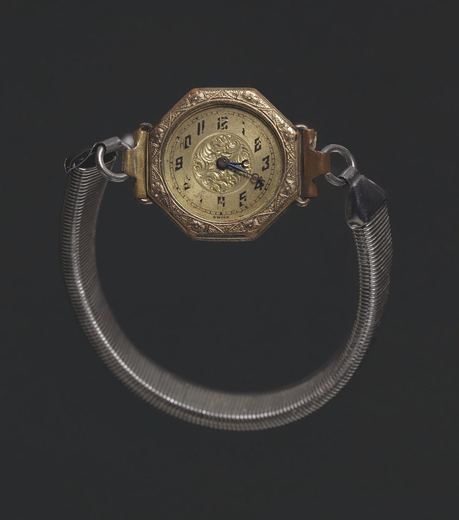
Wristwatches · early to mid 20th century
Wrist watches by Unidentified, United States, early to mid 20th century
National Museum of African American History and Culture, Smithsonian Institution, Washington DC
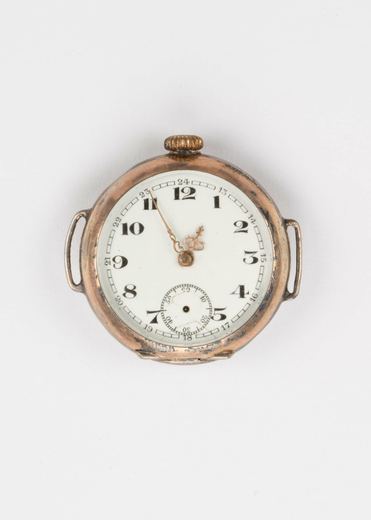
Wristwatches · 1900
Wristwatch, Switzerland, 1900 (German Clock Museum Museu_ProvidedCHO_museum_digital_57124__technical_number_)
German Clock Museum
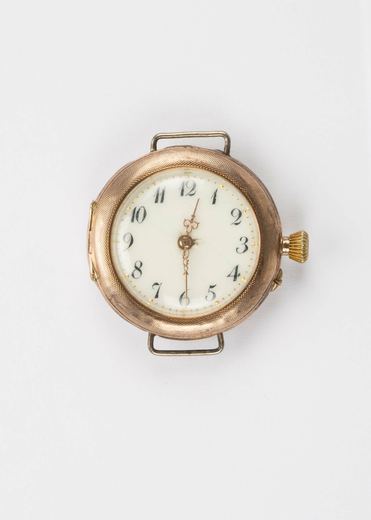
Wristwatches · 1900
Wristwatch, Switzerland, 1900 (German Clock Museum Museu_ProvidedCHO_museum_digital_57216__technical_number_)
German Clock Museum
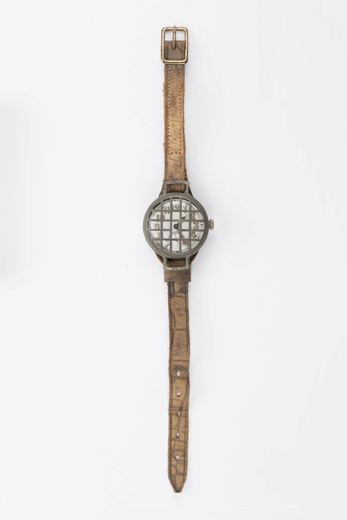
Wristwatches · 1915
Wristwatch by S.S.und Co., Stauffer, Son und Co., Switzerland, 1915
German Clock Museum
Wristwatches · circa 1920's
Anonymous wristwatch, circa 1920's
Antiquorum auction archive, Geneva