
Intermediate · Lesson 7 of 7 · 14 min read
How to set a mechanical watch: time, date, day and moon phase without damaging it
Crown positions, quickset dates and the hours around midnight when you should not use them, hacking seconds, pointer dates, triple, annual and perpetual calendars, and how to set a moon-phase display from the date of the last full moon.
By the end of this lesson you will be able to:
- Use the crown positions of a modern watch in the right order
- Explain why quickset dates should not be used around midnight, and set a date safely
- Set day, pointer-date, triple, annual and perpetual calendars
- Set a moon-phase display and explain how accurate it is
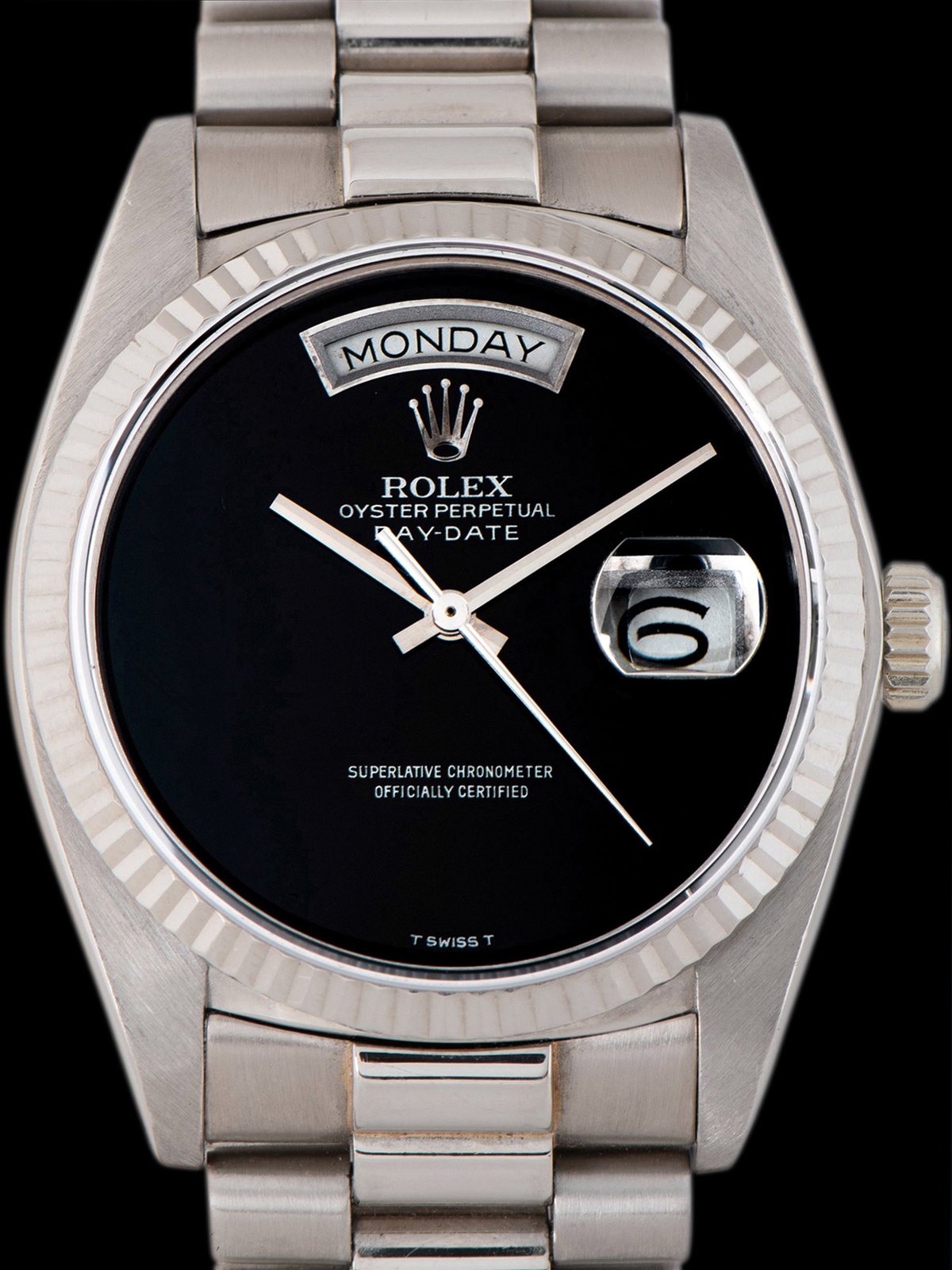
Setting a watch sounds trivial, and for most of the day it is. But calendar mechanisms are driven slowly by the hour wheel and engage over several hours each night, and a quick-correction button pressed at the wrong moment can break a tooth or bend a jumper spring. The commonest repairs on otherwise healthy date watches are caused not by wear but by setting. This lesson explains what happens inside the watch when it changes date, and gives a safe order for setting everything from a plain date window to a perpetual calendar with moon phase.
Crown positions
On most modern mechanical watches the crown has two or three positions. Pushed fully in, it winds the watch. Pulled to the first step, on a date watch, it corrects the date (and on many day-date watches the day, by turning the other way). Pulled to the last step, it sets the hands. Watches without a date usually have only the winding and hand-setting positions. Many sports and diving watches have a screw-down crown: unscrew it anticlockwise until it springs out to the winding position, and when you have finished, push it in and screw it down clockwise while pressing gently, so the thread is not crossed.
| Position | What it does | Notes |
|---|---|---|
| 0 — pushed in | Winding | Screw-down crowns must be unscrewed first |
| 1 — first step | Quick date (and often day) correction | Only on watches with a quickset calendar |
| 2 — last step | Setting the hands | Many modern watches stop the seconds hand here ('hacking') |
Wind first
If the watch has stopped, wind it before setting it, so that it does not stop again while you work. A hand-wound watch is wound until you feel firm resistance; stop there and never force the crown further. An automatic watch can also be wound by the crown, and its mainspring slips inside the barrel when full, so it cannot be overwound; around twenty to forty turns is usually enough to start it, though the number varies by calibre. Wind slowly and evenly, with the crown held between thumb and finger rather than flicked.
The hours around midnight
A date disc does not jump by itself. On most watches the hour wheel drives a date-driving wheel that turns once a day; a finger on that wheel starts pushing against the teeth of the date disc in the late evening, gradually loading a jumper spring, until the disc snaps forward around midnight. While the finger is engaged, the date disc is held between the finger and the jumper. If you use the quickset then, the quick-correction wheel tries to push the disc while the driving finger is in the way, and something has to give.
- Pull the crown to the hand-setting position and turn the hands forward until the date changes. You now know the watch is just after midnight.
- Continue to about 6:30 (morning, by the watch's reckoning). The calendar is now safely disengaged.
- Push the crown to the date position and set the date to the day before today's date.
- Pull the crown out again and turn the hands forward through midnight: the date jumps to today. Continue to the correct time, going round again if it is afternoon or evening.
- Push the crown in (and screw it down if necessary).
Hacking seconds and setting to a time signal
Many modern movements stop the balance when the crown is pulled to the hand-setting position — the so-called hacking or stop-seconds feature. To set the watch exactly, pull the crown when the seconds hand reaches twelve, set the hands a minute ahead of the true time, and push the crown in at the moment the reference clock reaches that minute. Older watches, and many dress watches, do not hack: set the minutes a little ahead and wait, or accept a few seconds' difference.
Whether hands may be turned backwards depends on the watch. On many simple watches it does no harm, but on some calendar, chronograph and older movements it can strain or jam the mechanism, particularly through the hours around midnight. Turning forwards is always safe, so it is the habit to adopt.
Day discs and languages
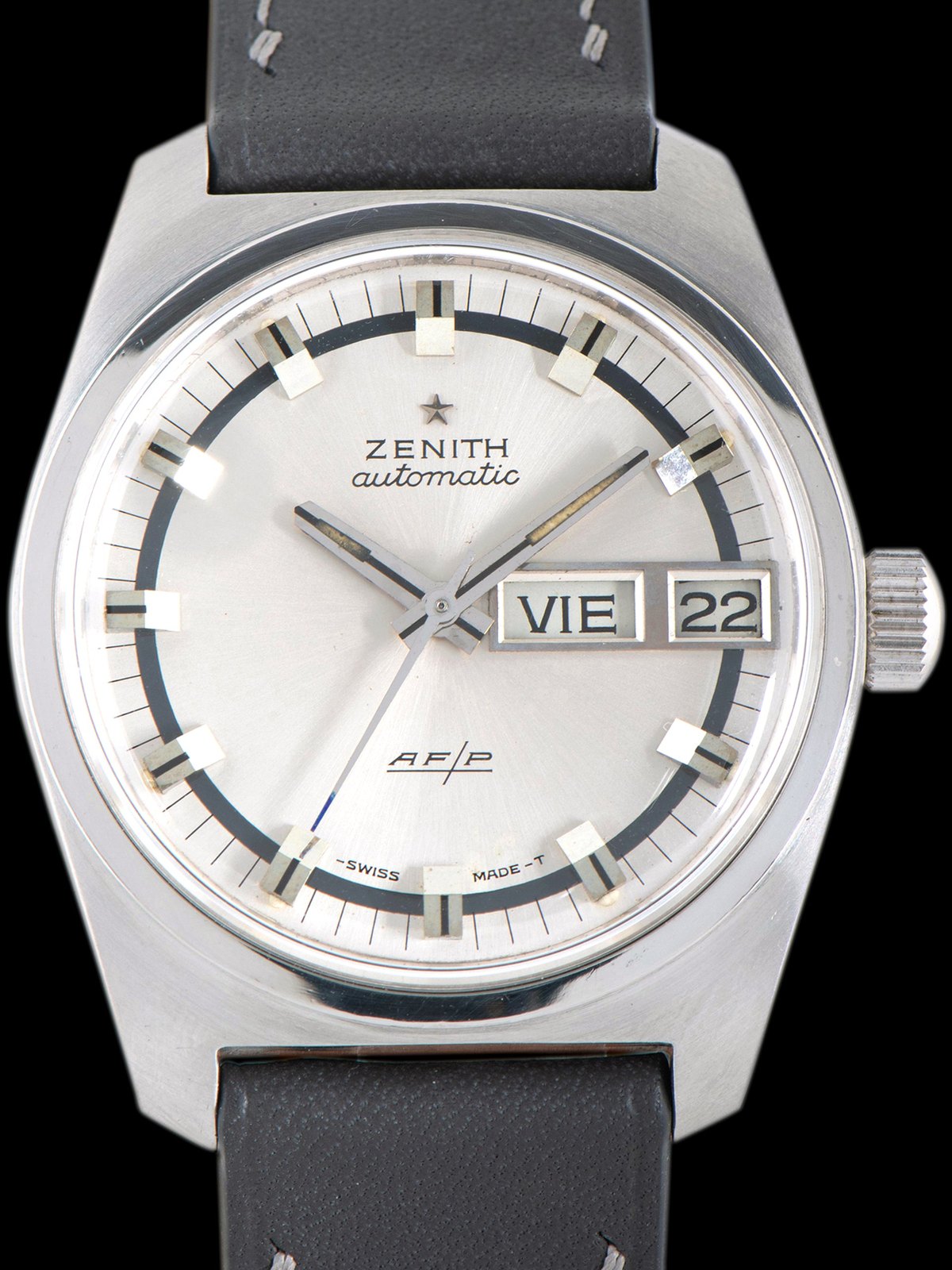
On many day-date watches the day disc is printed in two languages, and the crown or the quickset selects one or the other. A Spanish 'VIE' (viernes) or a French 'VEN' (vendredi) on a Swiss watch is not necessarily a sign of a replaced part; such discs were made for particular markets. Watches without a day quickset change the day only by turning the hands through twenty-four hours, which takes two full turns of the hour hand per day.
Pointer dates and triple calendars
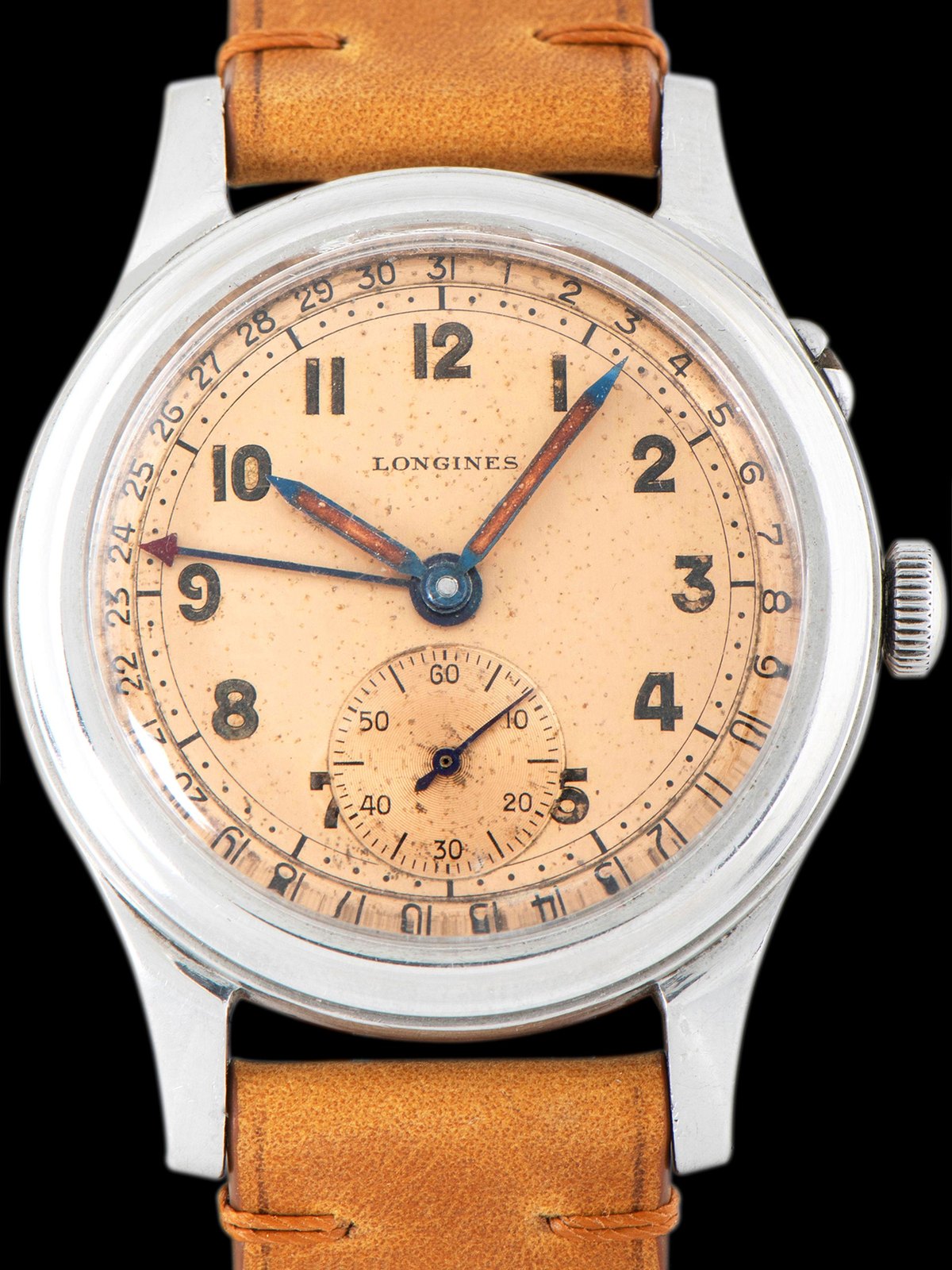
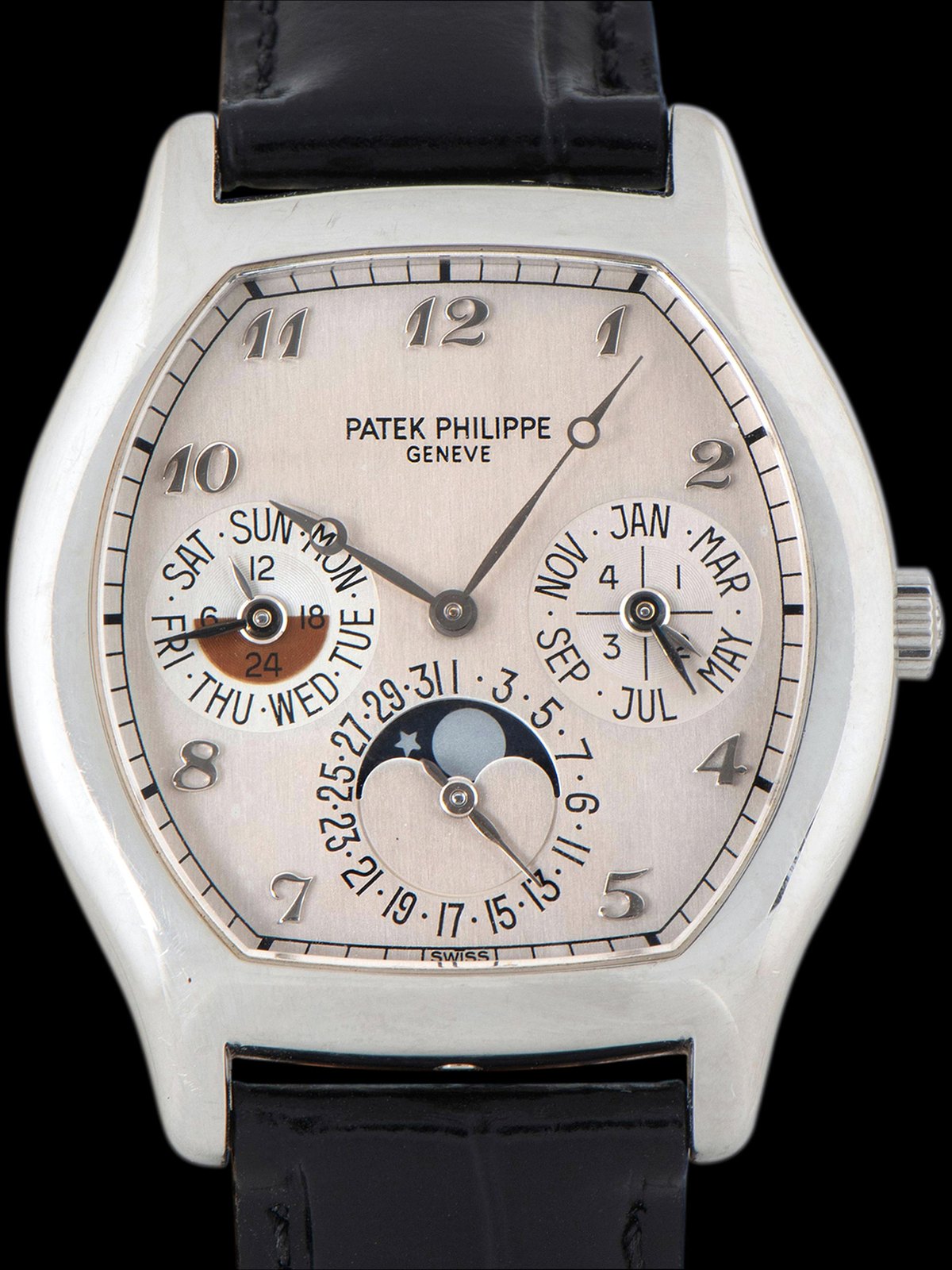
A pointer date uses a central hand that points to numbers from 1 to 31 printed round the edge of the dial, instead of a window. A triple calendar, also called a complete calendar, adds the day and the month, usually in windows below twelve, and often a moon phase. On many vintage examples the date, day and month are corrected by small push-pieces set into the side of the case, pressed with a wooden or plastic stylus or a blunt pencil point. Each press advances the indication by one step. The same midnight rule applies to every corrector.
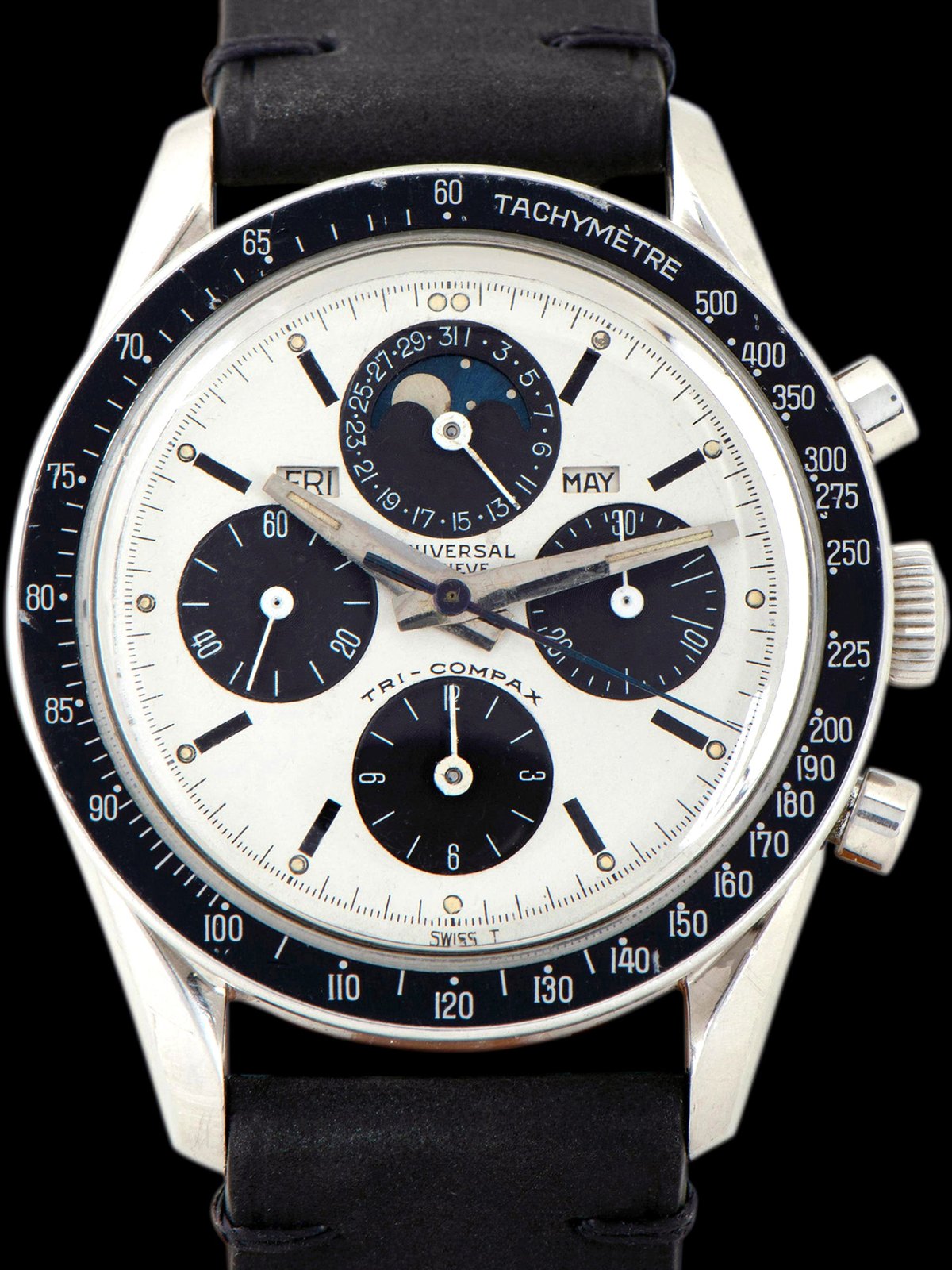
A simple calendar of this kind does not know how long the months are. It counts to 31 every month, so at the end of a 30-day month, and at the end of February, you must advance the date by hand to the first. Set the month only after the date, so that the month does not change unexpectedly when the date passes the 31st.
Annual and perpetual calendars
| Calendar | Knows | Needs correcting |
|---|---|---|
| Simple date | Nothing about months | Five times a year, after each month with fewer than 31 days |
| Triple (complete) calendar | Nothing about months | As for a simple date; day and month set separately |
| Annual calendar | 30- and 31-day months | Once a year, on 1 March |
| Perpetual calendar | All month lengths and leap years | Only if it stops; most also need a correction in 2100, which is not a leap year |
An annual calendar, introduced in its modern wristwatch form in the 1990s, recognises 30- and 31-day months and needs to be corrected only once a year, at the end of February. A perpetual calendar also follows February and the four-year leap-year cycle, so it will show the right date for decades as long as it keeps running. The price of that cleverness is fragility: if a perpetual calendar stops for several days, resetting it means advancing the indications through the right number of days in the right order, usually with recessed correctors, and some cannot be set backwards at all. Many owners leave a perpetual calendar on a winder for this reason, or have a watchmaker reset it.

Setting a moon phase
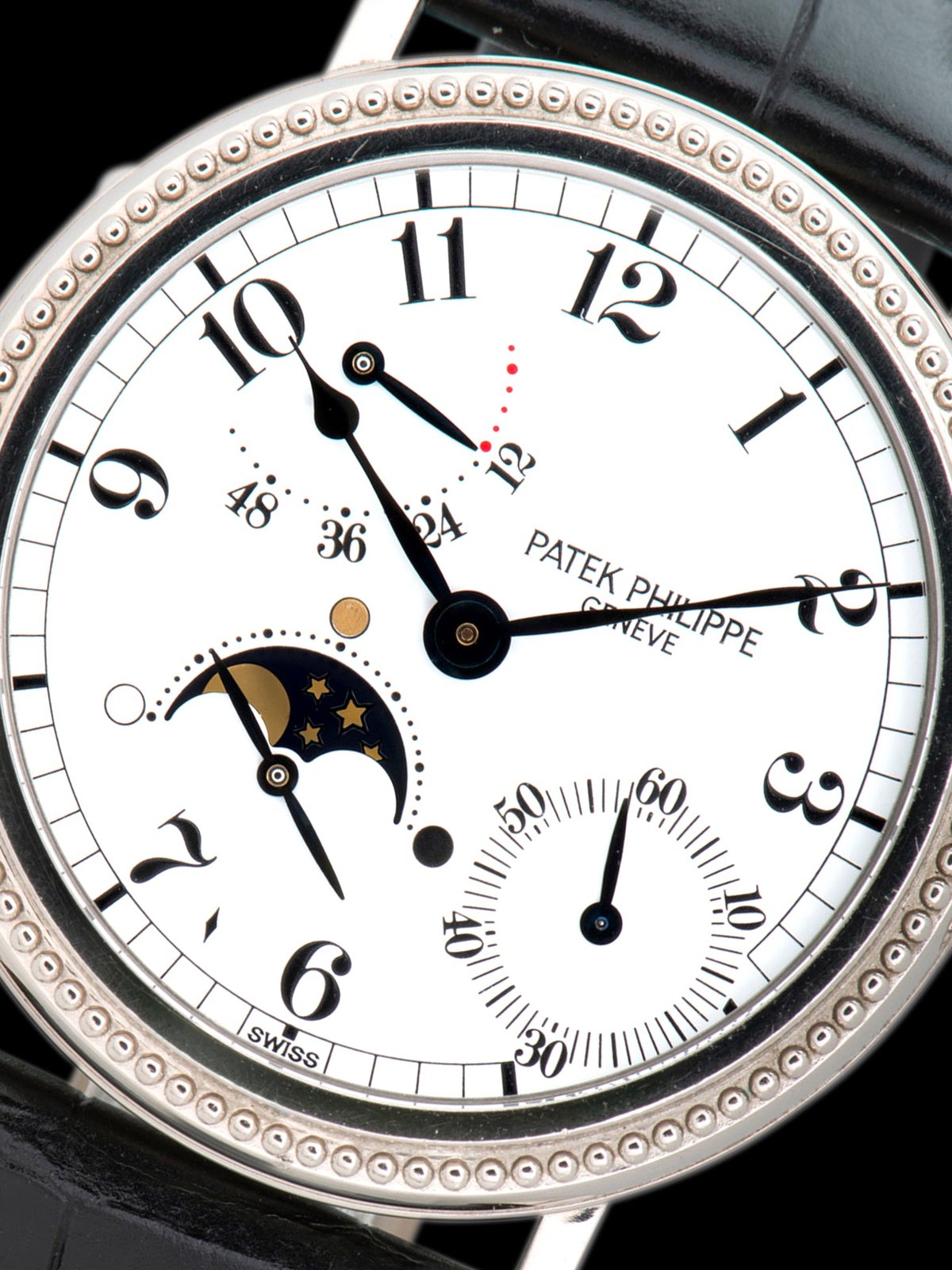
Most moon-phase displays use a disc carrying two moons, with 59 teeth, advanced by one tooth a day: the disc turns once in 59 days, showing two lunations of 29.5 days each. The real average lunation is about 29.53 days, so such a display gains on the moon by about one day every two years and eight months. Some modern watches use finer gearing that keeps within a day for a century or more. Either way, a moon phase has to be set from the real moon.
- Look up the date of the most recent full moon (an almanac, a newspaper or our moon-phase helper in the tools will tell you).
- Using the moon corrector, advance the disc until a full moon is exactly centred in its aperture.
- Count the days from that full moon to today, and advance the corrector that many clicks.
- Then set the date and time as described above. Some watches move the moon disc and the date together; if so, set the moon first.
Common mistakes
- Using the quickset in the evening to 'catch up' the date before bed — the worst possible time.
- Pressing case correctors with a pin or a ballpoint pen, which scratches the case and can bend the corrector.
- Setting the month of a triple calendar before the date, so that it changes again at the next end of month.
- Forgetting to screw down a screw-down crown, which leaves a diving watch open to water.
- Letting a perpetual calendar run down repeatedly; each reset is a chance for an error.
Practise
Find the moon age for any date with the moon-phase helper →
See it in the collection
See calendar and moon-phase watches →
Check your understanding
Lesson quiz
0 of 4 answered