
Clocks · Skeleton clock
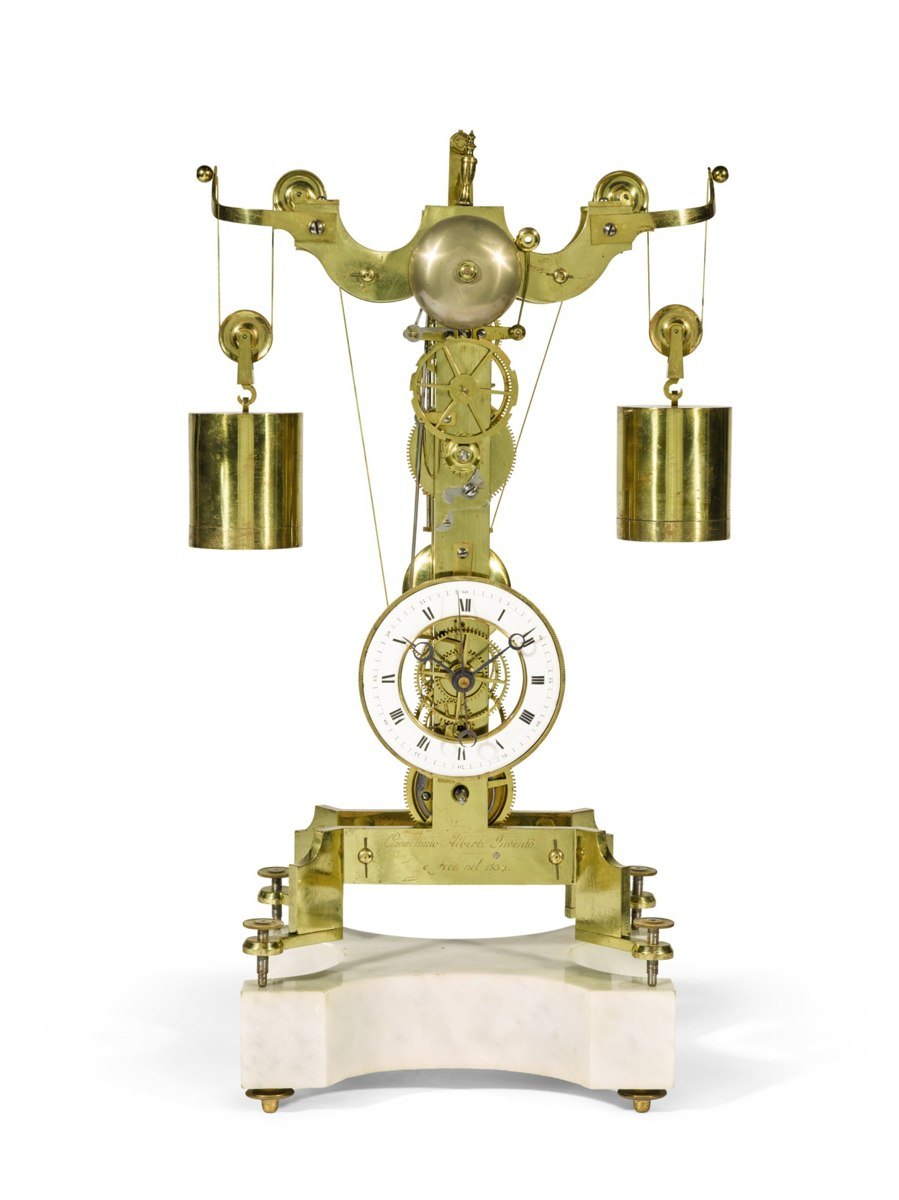
Gioachino Alberti brass skeleton clock with constant force escapement
- Maker / attribution
- Gioachino Alberti (source attribution)
- Date
- 1834
- Historical period
- Precision & Scientific Horology (1750 – 1850)
- Country of origin
- Italy
- Object type
- Skeleton clock
- Dimensions
- Clock 55 cm (21¾ inches) high
- Auction house
- Sotheby's
- Lot
- 136
- Credit line
- Sotheby's
- Catalogue title (original)
- A brass skeleton clock with weight-driven constant force escapement, (English)
View the source record (auction lot) ↗ (opens another website in a new tab)Suggest a correction
Record summary
Catalogued by Sotheby's (lot 136), this is a skeleton clock attributed to Gioachino Alberti, made in Italy, dated 1834. The Atlas places it in the Precision & Scientific Horology period (1750 – 1850) of its Clocks collection. Recorded dimensions: Clock 55 cm (21¾ inches) high. The record is illustrated with 1 photograph.
Assembled from the source record's structured fields. Dates and attributions are given as the source states them; where a field is missing the Atlas leaves it blank rather than estimating.
Catalogue description
Original object description
Inscribed 'Gioachimo Alberti Invento, e Fece nel 1834' along the base of its openwork brass architecture, this 1834 Italian skeleton clock was designed and constructed by Gioachino Alberti of Milan. Formerly held in an Italian private collection, the timepiece stands 55 cm (21¾ inches) tall on a shaped white marble base adjusted by four knurled leveling screws, and is paired with a modern glass dome measuring 62 cm (24¼ inches). The gear train is visible through the center of a white enamel chapter ring displaying Roman numerals. Auction cataloguing describes a two-train movement: the strike train employs an external count wheel, a spring barrel, and a bell, whereas the time train is powered by a single barrel carrying two hanging cylindrical brass weights. Its constant-force escapement incorporates a spring escape detent and a four-leg escape wheel delivering locking and impulse to a half-seconds, five-bar gridiron pendulum.
Historical context
Precision & Scientific Horology (1750 – 1850)
Harrison solves longitude; Mudge invents the lever; Breguet's Paris workshop defines the modern watch.
The age of the deadbeat escapement, compensated pendulums and observatory regulators. Domestic clocks spread through the middle classes: English longcase and bracket clocks, French gilt-bronze mantel clocks, Viennese Biedermeier wall clocks, Black Forest painted-shield clocks, and the first American shelf clocks.
Read the period in the timelineMore clocks from this periodEarlier: Early Modern Horology
Atlas type guide
Skeleton clocks
A skeleton clock displays its movement: the plates are pierced to a minimum so that wheels, escapement and fusee can be seen, usually under a glass dome. French makers produced fine skeleton clocks in the late eighteenth century; in Victorian England they became popular showpieces, with frames in the shapes of cathedrals and famous buildings.
What to look for
- Pierced brass plates in scroll or architectural shapes.
- A glass dome and wooden or marble base.
- Fusee movements and sometimes passing strike on a bell.
Dating clues
- French skeleton clocks: c. 1780–1830.
- English cathedral-style skeleton clocks: c. 1840–1890.
General guidance written by the Atlas editors about this kind of object. It is not a statement about this particular piece; for that, rely on the source record above and on physical examination.
Read next:FuseeAnchor (recoil) escapement
Related records
Clocks · 1766
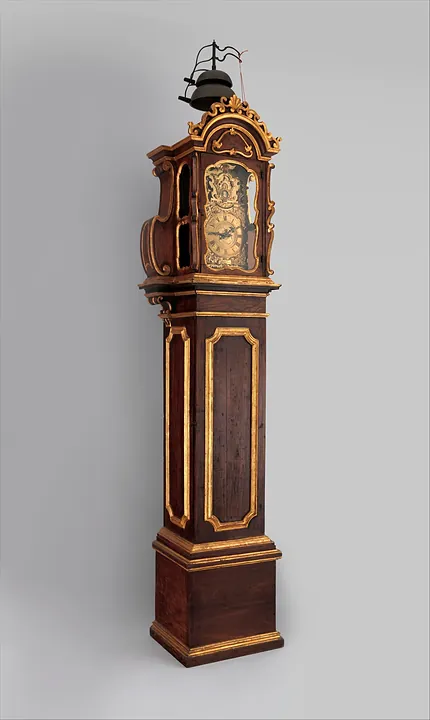
Longcase clock by Mario Gambelli, Italy, 1766
The Metropolitan Museum of Art, New York
Clocks · 1804
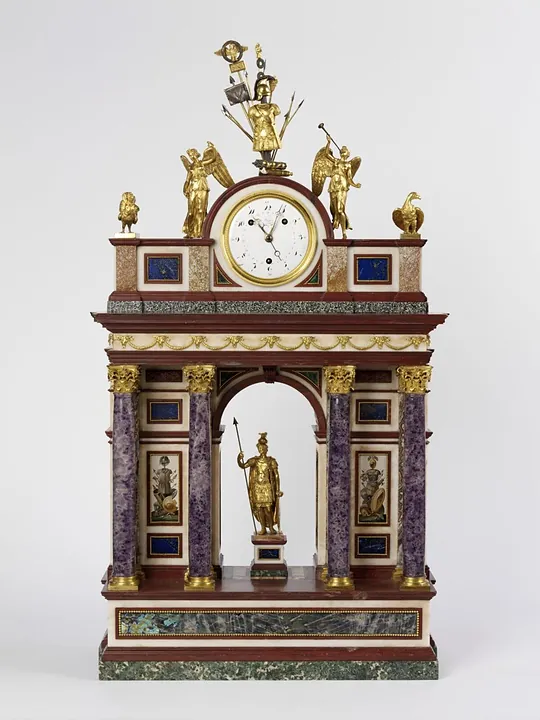
Stones and micromosaic clock in the form of a triumphal arch, 1804. Case: Rome, Giacomo Raffaelli; clock: Paris, Abraham-Louis Breguet.
Victoria and Albert Museum, London
Clocks · c. 1780
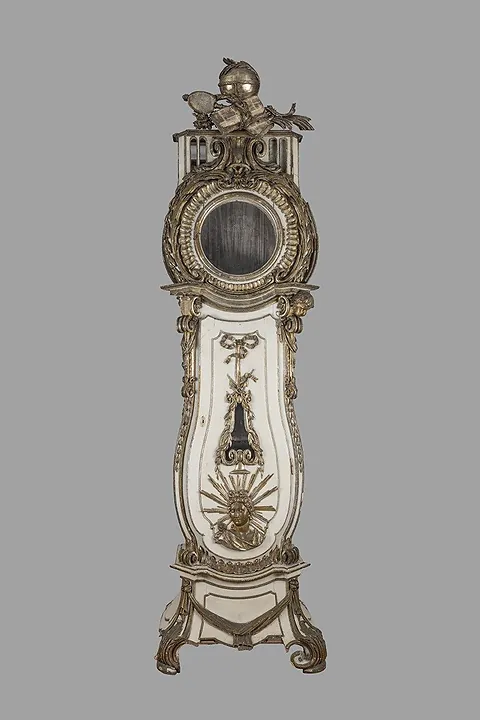
Longcase clock by Louis George, Eberswalde, c. 1780
Museum Eberswalde
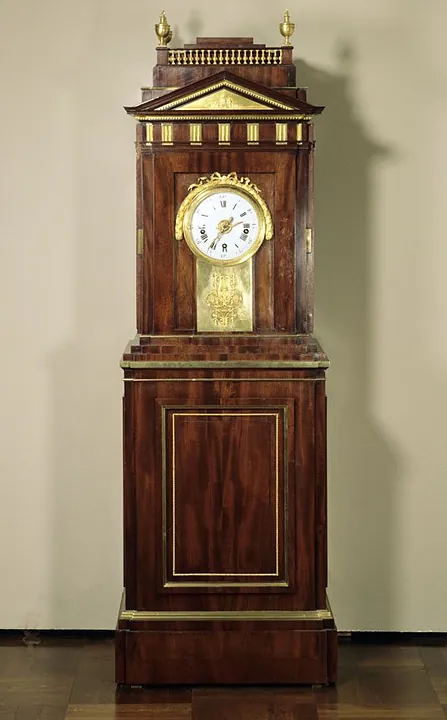
Clocks · 1780s (inferred: the museum dates the style to the 1780s and the music includes Gluck's Iphigénie en Tauride of 1779)
Musical longcase clock, Roentgen workshop, Neuwied, 1780s
Badisches Landesmuseum Karlsruhe
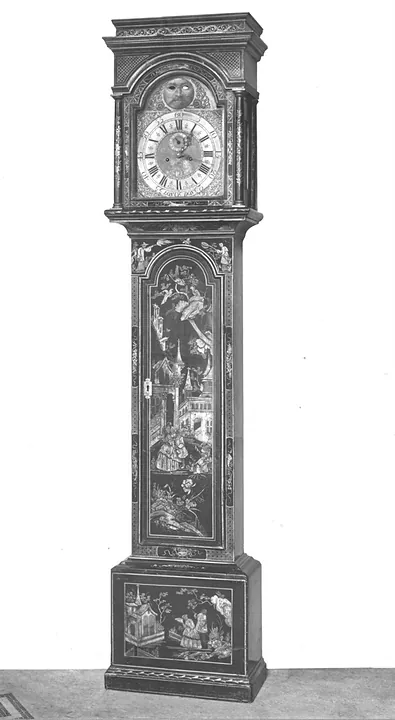
Clocks · 1740–1760
Longcase clock, English, 1740–1760, japanned wood, John Ellicott
Victoria and Albert Museum, London
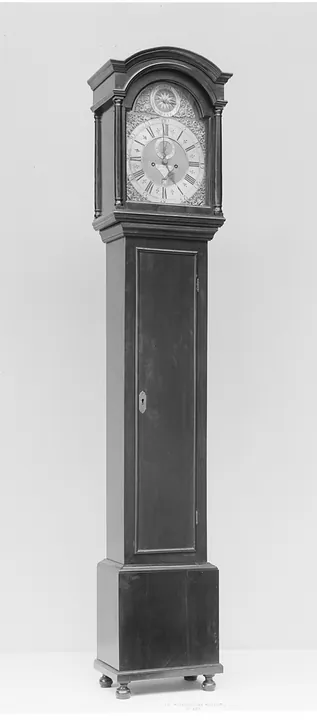
Clocks · 1740–60
Tall clock by Samuel Bagnall, United States, 1740–60
The Metropolitan Museum of Art, New York
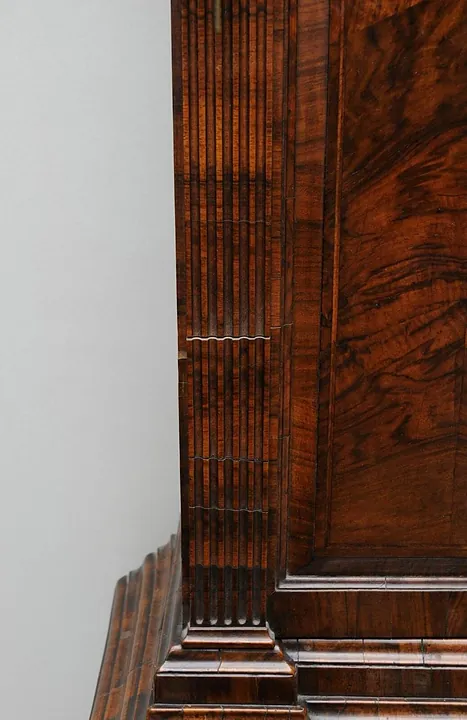
Clocks · c.1750
Long-case clock, English, ca. 1750, by Richard Peyton of Gloucester
Victoria and Albert Museum, London
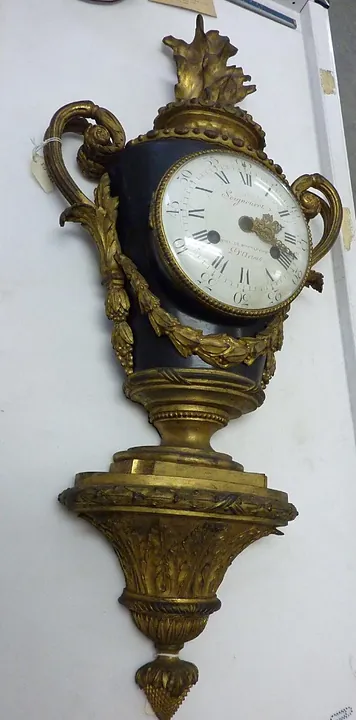
Clocks · 1750–1800
Bracket clock in metal case with scroll handles and flamed-shaped top signed by Pierre Seignoret, Clockmaket to the the Comte d'Artois
Victoria and Albert Museum, London