Component
Remontoire (constant force)
Also known as: Constant-force mechanism · Remontoir
How it works
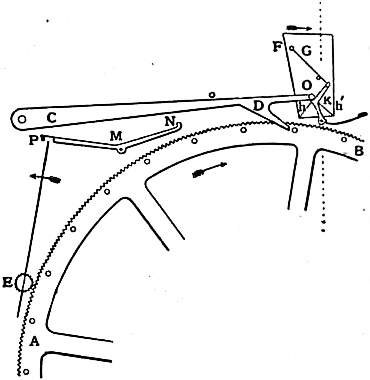
A small secondary spring or weight close to the escapement is rewound at regular intervals — every few seconds, or every minute — by the main power source. The escapement is therefore always driven by the same small, constant force.
Why it was invented
It isolates the oscillator from variations in mainspring torque and from friction in the train.
- Invented
- late 16th century
- Credited to
- Early use by Jost Bürgi
- Historical period
- Renaissance Horology
History and development
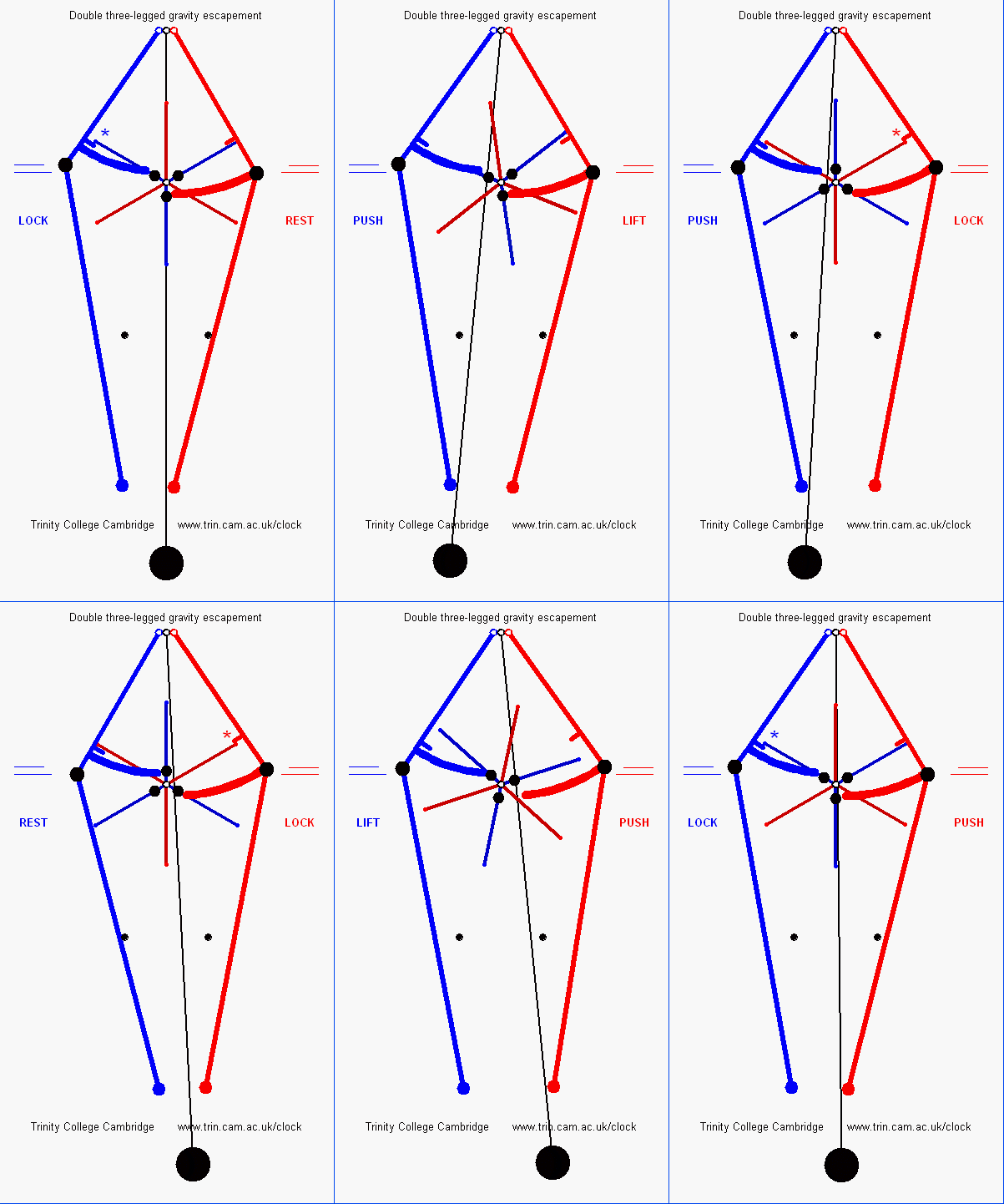
Jost Bürgi used remontoires in his precision clocks around 1580–1600. Harrison built a train remontoire into H4, and Grimthorpe's gravity escapement is a form of escapement remontoire. Contemporary watchmakers use constant-force escapements and remontoires as high-end complications.
Related mechanisms
In the catalogue
Open in the catalogue →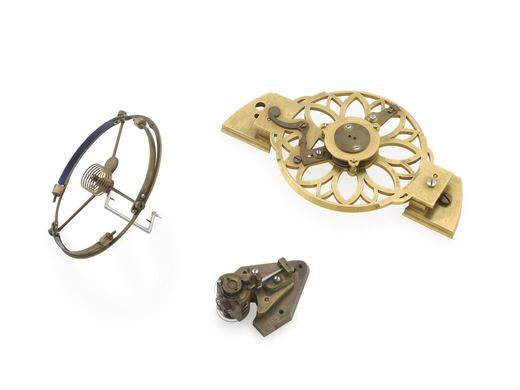
Movements & Components · 1785
Escapement model by Mudge, Thomas, England, 1785
Science Museum Group, London
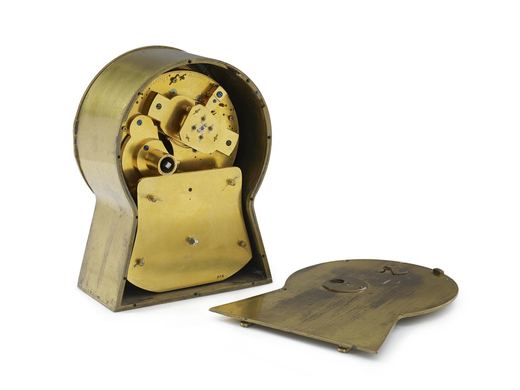
Movements & Components · 1792
Escapement model by Emery, Josiah, England, 1792
Science Museum Group, London
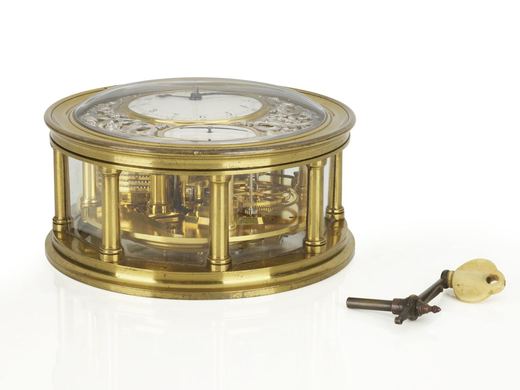
Movements & Components · 1795
Escapement model by Howells & Pennington, England, 1795
Science Museum Group, London
Records are linked when the holding institution's description names this mechanism; check each source record for confirmation.