Escapement
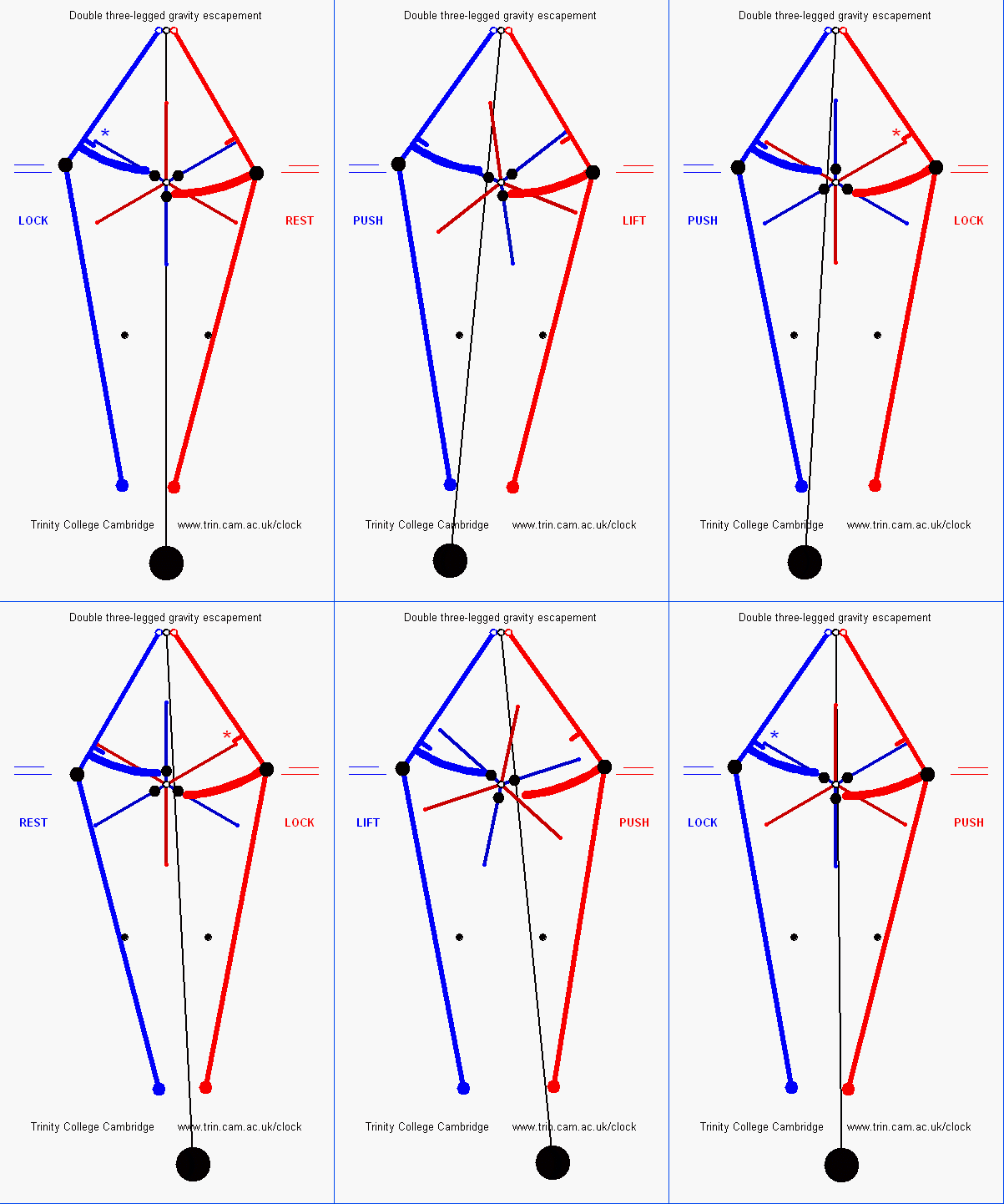
Double three-legged gravity escapement
Also known as: Grimthorpe escapement · Gravity escapement
How it works
Two gravity arms are lifted alternately by a three-legged escape wheel and then released to fall with the pendulum, giving it a constant impulse that does not depend on the force transmitted through the long, variable train of a turret clock. A fly (air brake) slows the escape wheel between beats.
Why it was invented
Turret clocks suffer from wind on the hands, ice and snow; the gravity escapement isolates the pendulum from these loads.
- Invented
- 1854
- Credited to
- Edmund Beckett Denison (later Lord Grimthorpe)
- Historical period
- Industrial Revolution
History and development
Denison designed it for the Great Clock of the Palace of Westminster, built by Edward John Dent and Frederick Dent and running from 1859. It became the standard for quality turret clocks in Britain and the Empire.
Related mechanisms
In the catalogue
Open in the catalogue →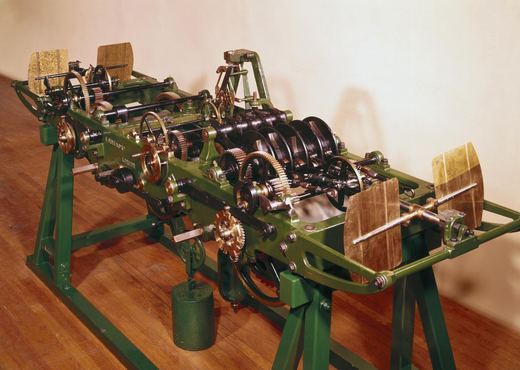
Records are linked when the holding institution's description names this mechanism; check each source record for confirmation.