Component
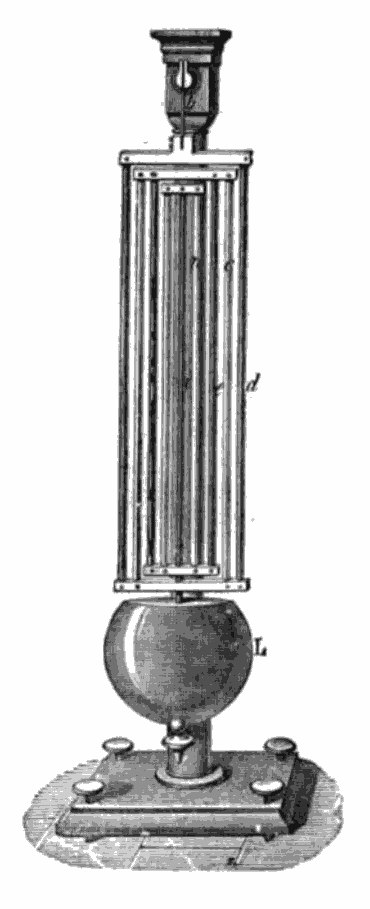
Gridiron pendulum
Also known as: Rostpendel
How it works
Alternating rods of steel and brass are linked so that the steel rods expand downward and the brass rods expand upward. Because brass expands more than steel, the lengths can be chosen so that the bob's effective distance from the pivot stays constant as temperature changes.
Why it was invented
Thermal expansion of a plain pendulum rod makes a clock lose in summer and gain in winter.
- Invented
- c. 1726
- Credited to
- John Harrison
- Historical period
- Early Modern Horology
History and development
Harrison developed the gridiron for his precision regulators in the 1720s. It became the emblematic pendulum of 19th-century regulators — often with decorative 'dummy' rods in cheaper clocks. Invar rods (after 1896) made it obsolete for precision work.
Related mechanisms
In the catalogue
Open in the catalogue →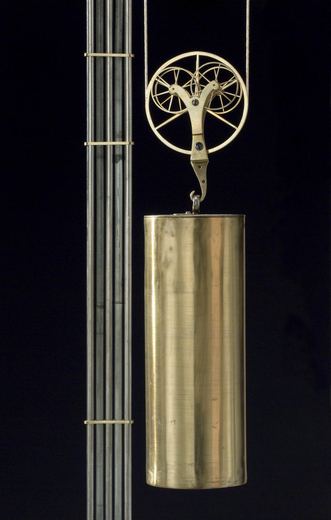
Clocks · 1780
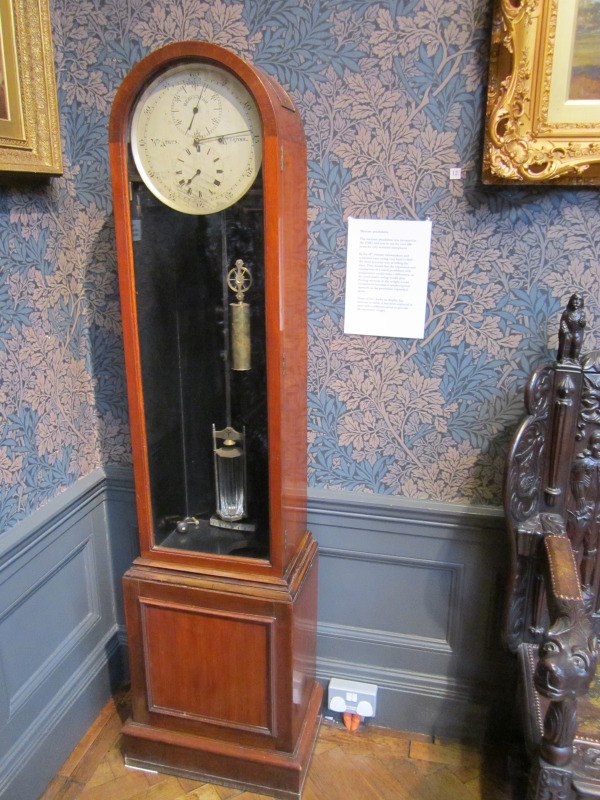
Regulator clock by Vulliamy, Benjamin, 1747-1811, England, 1780
Science Museum Group, London
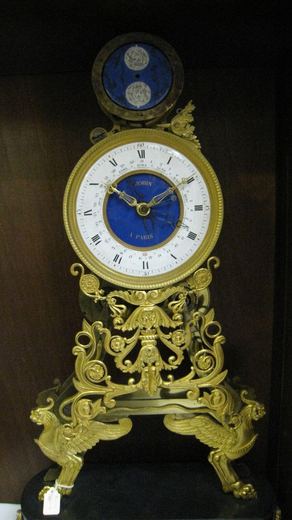
Movements & Components · early 19th century
Skeleton clock with case, signed ROBIN A PARIS, early 19th century
Victoria and Albert Museum, London
Records are linked when the holding institution's description names this mechanism; check each source record for confirmation.