Movements & Components · Clock case
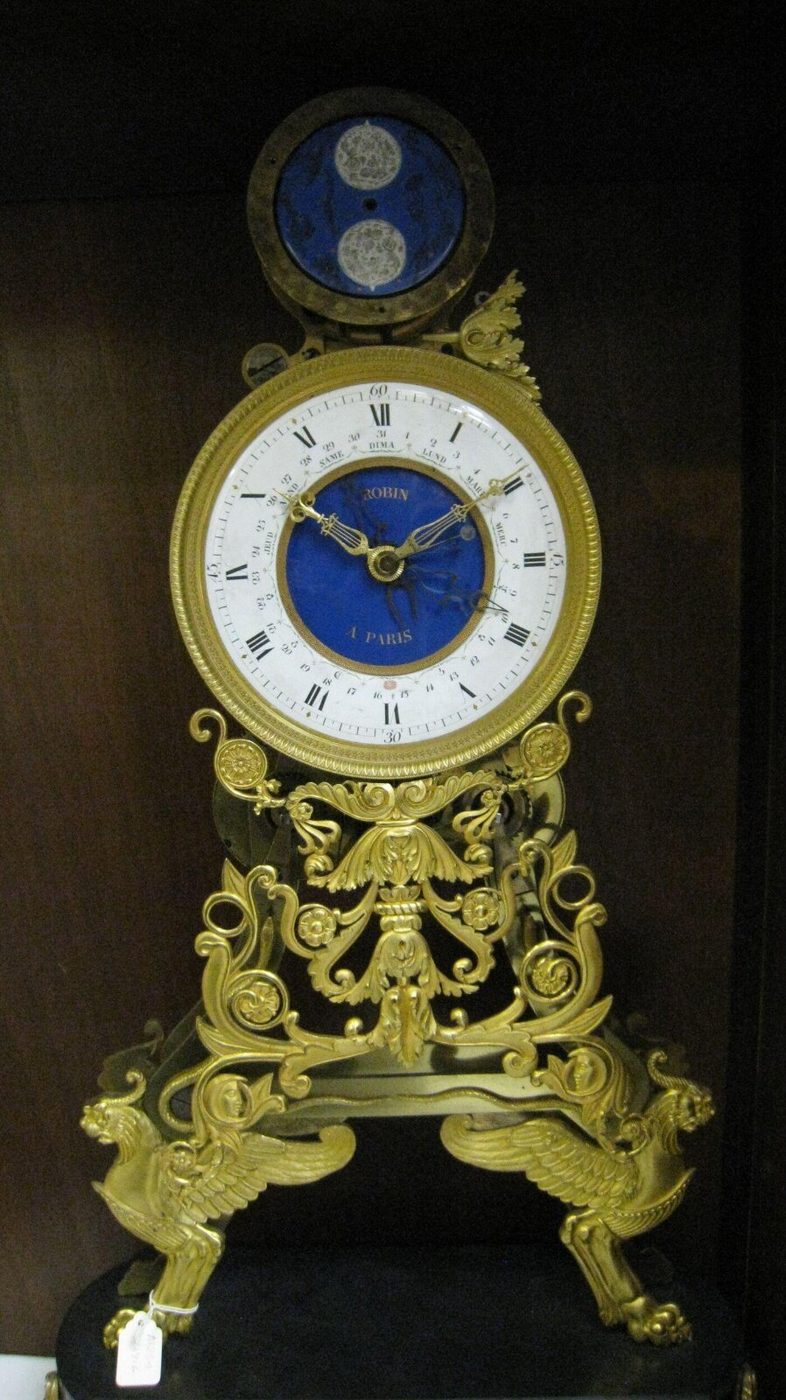
Skeleton clock with case, signed ROBIN A PARIS, early 19th century
- Maker / attribution
- Nicolas Robert and Jean-Joseph Robin (maker)
- Date
- early 19th century
- Historical period
- Precision & Scientific Horology (1750 – 1850)
- Country of origin
- France
- Place
- Paris
- Object type
- Clock case
- Materials / technique
- ormolu, slate, enamel, brass, gold leaf, steel
- Dimensions
- Height: 2, 5.8 ft (Clock); Width: 15 in (Clock); Height: 6 ft (cabinet and pedestal); Weight: 2, 5 ft (cabinet with pedestal); Depth: 9.6 in (cabinet with pedestal)
- Holding institution
- Victoria and Albert Museum, London
- Accession / object no.
- M.234:1 to 8-1916
- Credit line
- Gift from Somers Clarke
Record summary
Held and catalogued by Victoria and Albert Museum, London (object number M.234:1 to 8-1916), this is a clock case by Nicolas Robert and Jean-Joseph Robin, made in Paris, France, dated early 19th century. The Atlas places it in the Precision & Scientific Horology period (1750 – 1850) of its Movements & Components collection. Materials and techniques recorded by the source: ormolu, slate, enamel, brass, gold leaf, steel. Recorded dimensions: Height: 2, 5.8 ft (Clock); Width: 15 in (Clock); Height: 6 ft (cabinet and pedestal); Weight: 2, 5 ft (cabinet with pedestal); Depth: 9.6 in (cabinet with pedestal). The record is illustrated with 4 photographs.
Assembled from the source record's structured fields. Dates and attributions are given as the source states them; where a field is missing the Atlas leaves it blank rather than estimating.
Catalogue description
V&A — Summary
A skeleton clock on an ormolu frame with enamelled dials and mahogany plinth, signed 'Robin a Paris', French, early 19th century. The so called 'skeleton' clock was introduced during the reign of Louis XVI at a time when there was increased interest in the scientific aspects of time keeping. The clock movement was immediately visible whilst reading the time. This clock was made by Nicholas-Robert and Jean-Joseph Robin, sons of Louis XVI's clockmaker Robert Robin, who succeeded to their father's business on his death in 1799.
V&A — Physical description
Case: ormolu clock with polished slate plinth, enamelled dials, and brass skeleton frame. In a glazed cabinet on a mahogany pedestal with ormolu mounts. The frame rises on four lions' legs terminating in winged lions' heads. An openwork plaque of floral design hangs from the large dial; the smaller one above is supported by acanthus leaves; both have moulded ormolu frames. The mahogany pedestal is decorated with an applied openwork plaque of floral design in front with the figure of a nymph holding a garland in a lozenge shaped frame and four swans in circular frames with a festoon at each end and rests on four knob feet. The dial for the phases of the moon is painted with a landscape. The clock strikes hours and half hours. Dial: the steel and gilt brass hands, pierced in the shape of a lyre, show seconds, minutes, hours, day of week, and day of month, and the upper dial the phases of the moon. The main dial is of ormolu, recessed to receive a white-enamel chapter ring. The outer minute-ring also serves as a ring for the centre-seconds, having 60 main divisions and intermediate half-divisions for the half seconds and is numbered in Arabic at 15, 30, 45, and 60. Within this is a set of roman hours I to XII, and two further internal rings: a set of figures 1 to 31 for the date and, within this, a set of abbreviated weekday names in French in the upper half of the dial and a set of corresponding planetary symbols representing the phases of the moon. The clock strikes hours and half-hours, and has a pin-wheel escapement and gridiron pendulum. In glazed cabinet on mahogany pedestal with ormolu mounts, depicted a figure of a nymph holding a garland and four swans in circular frames. The backplate is signed 'ROBIN A PARIS'. French; early 19th century. Movement: both going and striking trains, both with going barrels rotating once in 3 days and giving at least 14 days duration. The going train has an Amant-type of pin-wheel escapement and a gridiron compensation pendulum, with 5 steel and 4 brass rods. The heavy brass-covered lead pendulum bob is supported at its centre and there is a knurled regulating screw. A simple thermometer mechanism is incorporated in the pendulum, part of which is missing, but the indicating pointer survives, also the scale, engraved on a white-enamel arc, ranging from +15 to -15 marked 'Chaud', 'Tempere' and 'Froid', entitled collectively 'Clementa suis propriis annis victo (Clements their own years in defeat). The striking train is of locking-plate type, and the count-wheel permits an extra single stroke at each half-hour. The calendar and lunar mechanisms operate once per day, and are released by a lever projecting from a wheel driven by a 3:1 speed-up from the great wheel of the striking train. The star-wheels for the date and day-of-the-week hands have 31 and 14 teeth respectively, and the ratchet wheel for the lunar dial has 59 teeth.
V&A — Historical context
This is a new form of clock that emerged during the reign of France’s King Louis XVI (1638-1715) with its movement on view; known as ‘skeleton clocks’.
V&A — Object history
Given by Somers Clarke
V&A — Production note
The clock was probably made by one of the sons of Robert Robin (1742-1799), clockmaker to Louis XVI. Both Nicholas-Robert Robin (1775-1812) and his elder brother Jean-Joseph (d.1858) worked for Louis XVIII.
Inscriptions & marks
+15 -15 'Chaud', 'Tempere' 'Froid' 'Clementa suis propriis annis victo'; ROBIN A PARIS
Historical context
Precision & Scientific Horology (1750 – 1850)
Harrison solves longitude; Mudge invents the lever; Breguet's Paris workshop defines the modern watch.
The age of escapement invention: cylinder, duplex, lever, detent and many experimental escapements; compensation balances and fine finishing.
Read the period in the timelineMore movements & components from this periodEarlier: Early Modern Horology
Atlas type guide
Cases, keys and accessories
Clock and watch cases protect the movement and express taste and status. Watch cases were made by separate specialist case-makers whose marks, along with assay hallmarks, help to date and place them. Clock cases were the work of cabinet-makers, bronze founders, ceramic factories and silversmiths, so they belong as much to the history of decorative arts as to horology.
Keys, chatelaines, watch stands, watch papers and winding tools are part of the material culture of timekeeping: they show how timepieces were worn, displayed, wound and maintained.
What to look for
- Case maker's sponsor's marks and assay hallmarks in gold and silver cases.
- Materials: shagreen, tortoiseshell, enamel, porcelain, jasperware, gilt bronze.
- Breguet-style ratchet keys, crank keys and watch-key fobs.
- Engraved names, presentations and dates.
Dating clues
- English hallmark date letters allow exact dating of the case assay.
- Porcelain cases from Meissen and Sèvres: mostly eighteenth century.
General guidance written by the Atlas editors about this kind of object. It is not a statement about this particular piece; for that, rely on the source record above and on physical examination.
Related records
Movements & Components · 1756-1757
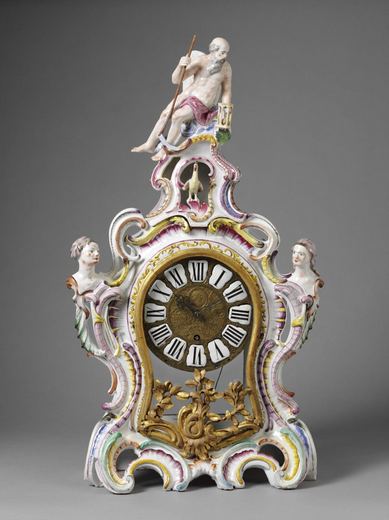
Clock case by Paul Hannong's pottery factory, France, 1756-1757
Victoria and Albert Museum, London
Movements & Components · 1770
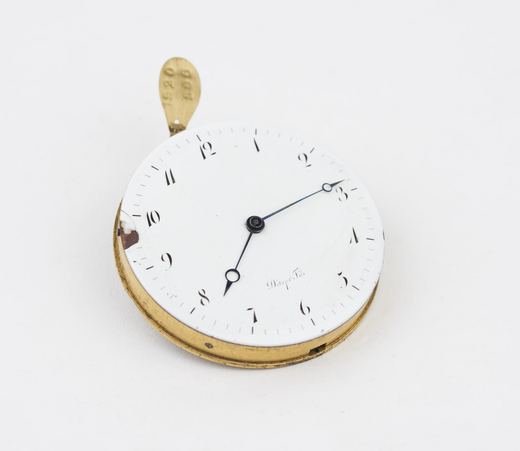
Duplex repeater, about 1770, by Detape Fils, Paris, France
Science Museum Group, London
Movements & Components · 1770-1800
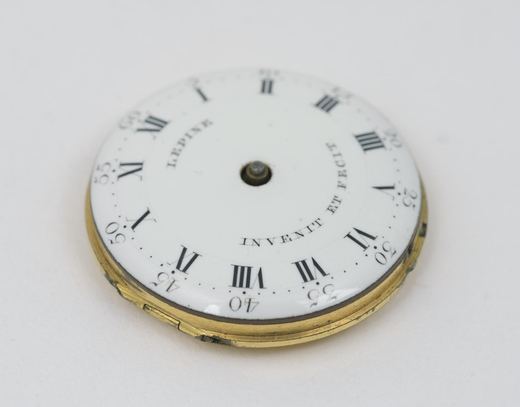
Watch movement made by Jean Antoine Lepine, Paris, France, c. 1770-1800.
Science Museum Group, London
Movements & Components · 1800
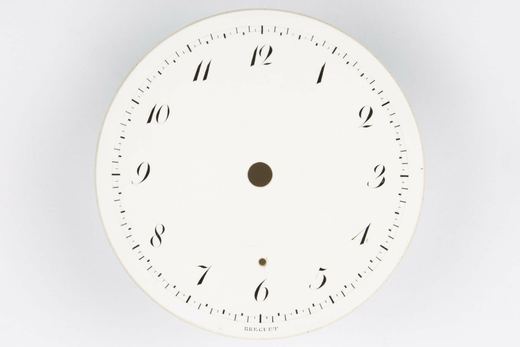
Watch movement by Abraham-Louis Breguet, France, 1800
German Clock Museum
Movements & Components · 1801-1830
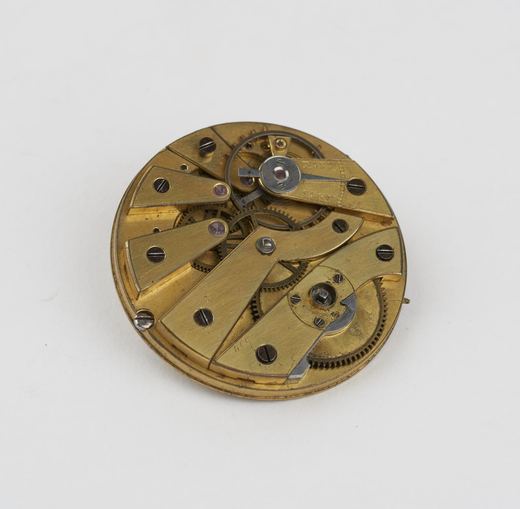
Duplex, French or Swiss, early 19th century
Science Museum Group, London
Movements & Components · case ca. 1728–30, movement ca. 1830–50
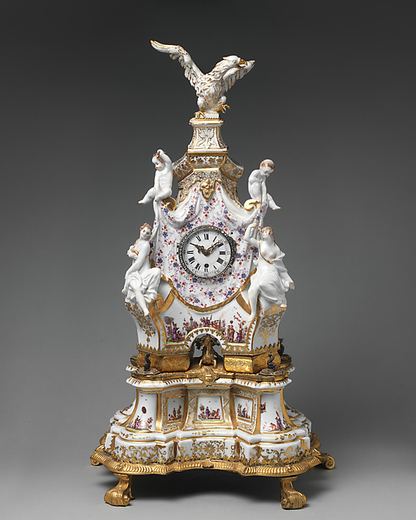
Clock case by Meissen Manufactory, Germany, case ca. 1728–30, movement ca. 1830–50
The Metropolitan Museum of Art, New York
Movements & Components · ca. 1740–60
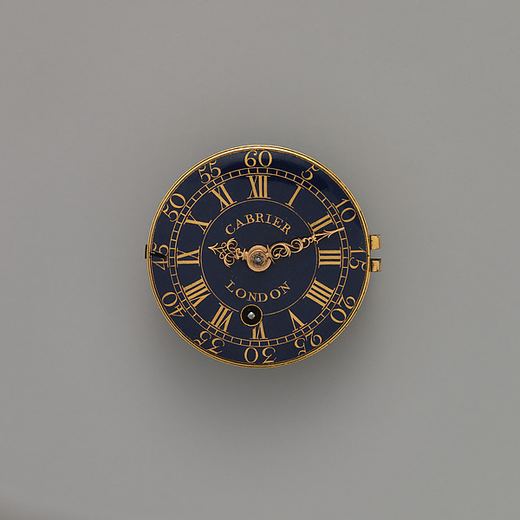
Watch movement by Charles Cabrier II, United Kingdom, ca. 1740–60
The Metropolitan Museum of Art, New York
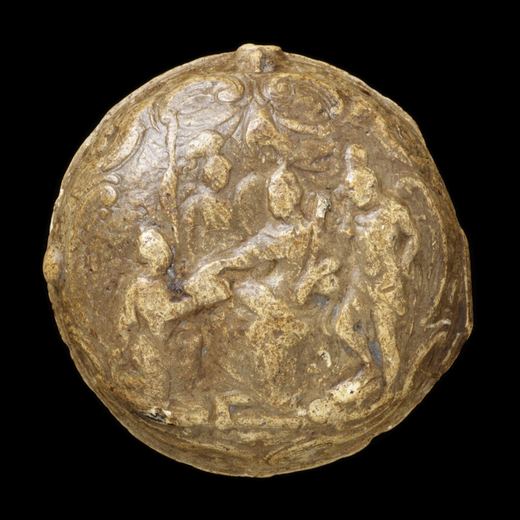
Movements & Components · 1740-70
Plaster cast of a watch case, made in England in 1740-70
Victoria and Albert Museum, London