
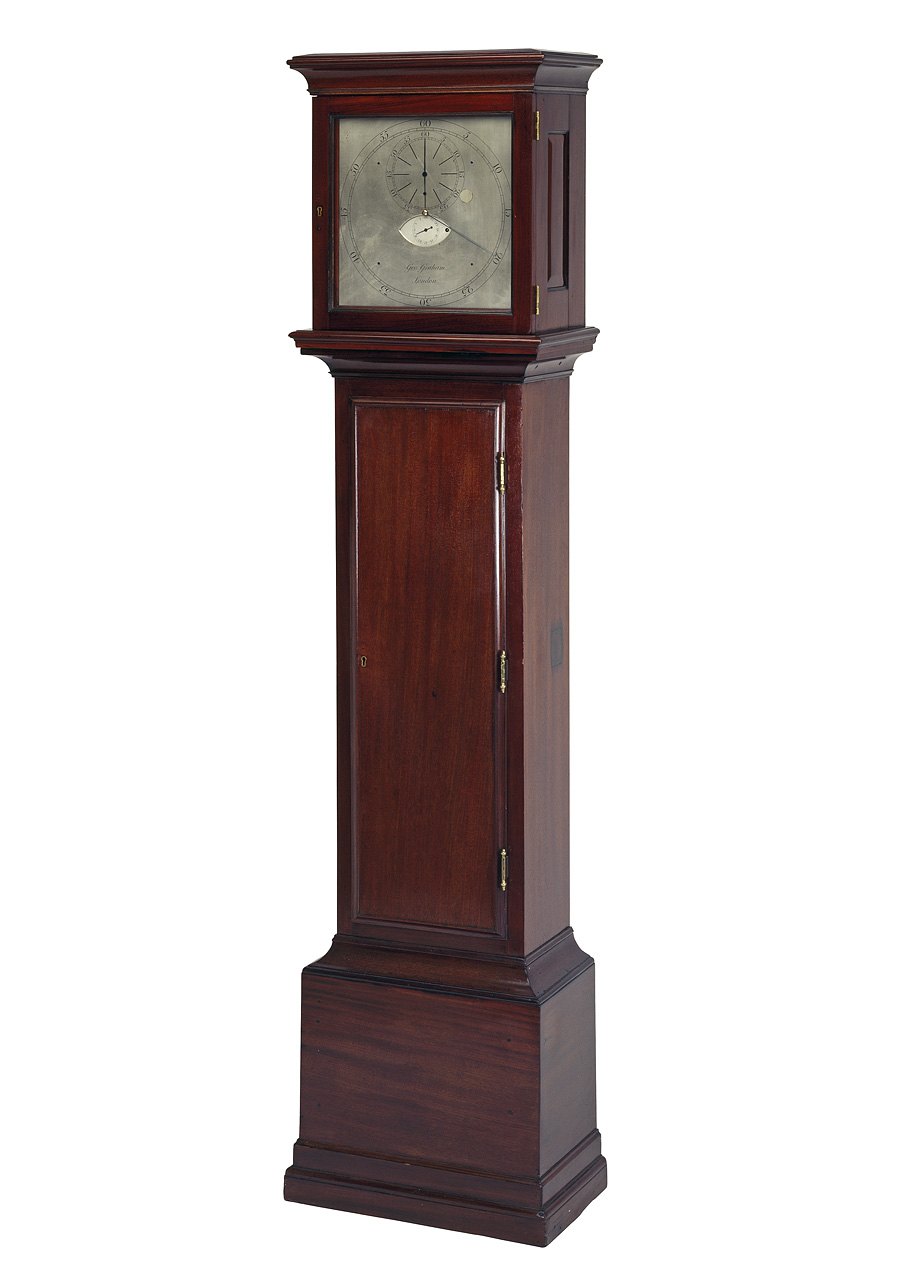
Clocks · Astronomical regulator
An eight-day duration mahogany longcase regulator by George Graham, London, c.1750, known as 'Graham No. 3'
- Maker / attribution
- George Graham (maker)
- Date
- c. 1750
- Historical period
- Precision & Scientific Horology (1750 – 1850)
- Country of origin
- England
- Place
- London
- Object type
- Astronomical regulator
- Dimensions
- Overall: 1840 x 450 x 270 mm
- Holding institution
- Royal Museums Greenwich
- Accession / object no.
- ZBA0709
- Credit line
- National Maritime Museum, Greenwich, London
- Catalogue title (original)
- An eight-day duration mahogany longcase regulator by George Graham, London, c.1750, known as 'Graham No. 3' (English)
View the source record ↗ (opens another website in a new tab)Suggest a correction
Record summary
Held and catalogued by Royal Museums Greenwich (object number ZBA0709), this is an astronomical regulator by George Graham, made in London, England, dated c. 1750. The Atlas places it in the Precision & Scientific Horology period (1750 – 1850) of its Clocks collection. Recorded dimensions: Overall: 1840 x 450 x 270 mm. The record is illustrated with 6 photographs.
Assembled from the source record's structured fields. Dates and attributions are given as the source states them; where a field is missing the Atlas leaves it blank rather than estimating.
Catalogue description
Catalogue description — Royal Museums Greenwich
When the third Astronomer Royal, James Bradley (1692-1762), started work at the Royal Observatory in 1742 he found the instruments to be in poor condition and in 1749 he was granted £1,000 from George II to construct a new observatory building and install new instruments. The money was raised through the sale of old Naval stores and paid by the treasurer of the Navy. Graham 'number 3', as this clock is known, was purchased for £39 in 1750 for use alongside an 8.5 foot transit instrument by John Bird. Though called Graham number 3 it was in fact the fourth clock to be purchased from George Graham for use at the Royal Observatory. The first was of one-week duration, purchased for £5 in 1721, and was initially used by Edmond Halley (1656-1742) as a transit clock but is not recorded after 1818. Graham number 3 had an incredible 174 year working history and during that period it has had many alterations and improvements. When initially supplied to Bradley it was of one-month duration, had a gridiron pendulum suspended from the back cock and the hours would have been displayed on a silvered disk through an upturned lunette. Thomas Earnshaw mentions in his Appeal that John Arnold ‘spent the utmost of his mechanical strength to make the Greenwich clock perfect’. From the observatory records we know that Arnold first fitted ruby pallets in 1771 and in 1779 he fitted Harrison’s maintaining power, jewelled the escapement and later fitted an independent brass suspension when the clock was moved to a stone pier in 1780. Nine years on Larcum Kendall fitted a solid brass pendulum bob and a regulating ball. From the observatory records we know that Thomas Earnshaw adjusted the clock in 1793, reducing the motion work from three wheels to one and also modified the gridiron pendulum. Graham number 3 ceased to be used as the transit clock in 1821 when it was moved to the chronometer room in the equatorial building. This was not the first time the regulator had been used to rate marine chronometers; between 1770 and 1772 it was used to rate K1, Larcum Kendall’s first copy of Harrison’s fourth marine timekeeper. Between 1828 and 1833 this regulator was used in the Quadrant room for pendulum experiments by Captains Sabine and Kater. In 1833 Graham number 3 was adjusted to mean solar time and used for dropping the time ball and in 1856 it was fitted with electro magnetic pendulum control governed by the Shepherd master clock. It was used in this manner until around 1924 when it was used in various offices of the Royal Greenwich Observatory. The movement has typical Graham/Shelton chamfered corners to the tops of the plates which are united by six latched and knopped pillars. The four wheel train is driven by a black painted cylindrical weight suspended on a double line on a narrow diameter going barrel (19 turns) which carries the great wheel and Harrison’s maintaining power. All wheels have four curved crossings except for the light steel escape wheel which has six straight crossings. The escapement is fully jewelled; the long shank pallets have ruby nibs and are attached to the pallet arbor by a long brass collet. The crutch is fitted by a split collet allowing for beat adjustment and runs between two guard pins mounted on a plate screwed to the backplate. All of the rear pivots are fitted with double screwed brass end plates. The movement is screwed down to the seatboard via four brackets, and fixed to the backboard by two further brackets. The large brass suspension block is screwed to the wall with a corresponding cut-out to the backboard of the case. The mercurial temperature compensated pendulum has a steel rod and glass jar held within a stirrup, the lower section of which is signed ‘RICHARDSON, Royal Observatory’ with blued steel pointer to the silvered pendulum scale reading 0-2.5 degrees. The 12 inch square silvered-brass regulator dial has outer minute circle with arabic five-minute marks enclosed by an outer scribe line and inner minute track. The subsidiary seconds dial with observatory marks at five second intervals also has arabic numerals enclosed by an outer line and inner track. Situated above the cursive signature, ‘Geo. Graham, London’, is the twenty-four hour subsidiary dial, recessed within an elliptical aperture, which runs counter clockwise. The blued steel hands to the seconds and hour subsidiaries are counter-poised, the minute hand is round sectioned and tapering and secured by a domed brass collet and taper pin. There is a filled circular hole next to the twenty second mark. The rear of the dial has been refinished, curled and lacquered. The dial is screwed to four dial feet, each riveted to chamfered plates fixed to the front plate by means of a screw and steady pin. The case is veneered in straight grain mahogany. The flat topped hood has a concave moulding to the cornice, panelled sides and locking front door with internal turn buckle locking the hood to the trunk. The trunk has a moulded rectangular door (270 x 845 mm) with three strap hinges, on a rectangular base with moulded double plinth.
Historical context
Precision & Scientific Horology (1750 – 1850)
Harrison solves longitude; Mudge invents the lever; Breguet's Paris workshop defines the modern watch.
The age of the deadbeat escapement, compensated pendulums and observatory regulators. Domestic clocks spread through the middle classes: English longcase and bracket clocks, French gilt-bronze mantel clocks, Viennese Biedermeier wall clocks, Black Forest painted-shield clocks, and the first American shelf clocks.
Read the period in the timelineMore clocks from this periodEarlier: Early Modern Horology
Atlas type guide
Regulators, wall and Vienna clocks
A regulator is a precision pendulum clock used as a time standard in observatories, workshops and railway offices. Typical features are a deadbeat or Graham escapement, a temperature-compensated pendulum (mercury jar, gridiron or later invar), maintaining power and a regulator dial that separates hours, minutes and seconds. George Graham's deadbeat escapement (c. 1715) and his mercury pendulum, together with Harrison's gridiron, set the pattern for two centuries.
Wall clocks span a much wider range: the elegant Viennese Laterndluhr and Dachluhr of the Biedermeier period, the Dutch stoelklok and staartklok, English 'dial' clocks used in schools, offices and railway stations, and mass-produced spring and weight wall clocks from Germany (Gustav Becker, Junghans, Kienzle) and America.
What to look for
- Deadbeat escapement and compensated pendulum (gridiron rods, mercury jar or wood rod).
- A regulator dial with a large central minute hand and separate hour and seconds dials.
- Vienna regulators: glazed cases, slender pendulum, small weights, enamel two-piece dials.
- German factory trademarks stamped on the backplate (e.g. Gustav Becker anchor and crown, Junghans star).
Dating clues
- Graham-type deadbeat regulators: from c. 1720.
- Viennese Laterndluhr: c. 1800–1850.
- German factory 'Vienna-style' regulators: c. 1870–1930; Gustav Becker serial numbers allow close dating.
General guidance written by the Atlas editors about this kind of object. It is not a statement about this particular piece; for that, rely on the source record above and on physical examination.
Read next:Deadbeat escapementAnchor (recoil) escapementGrasshopper escapement
Related records
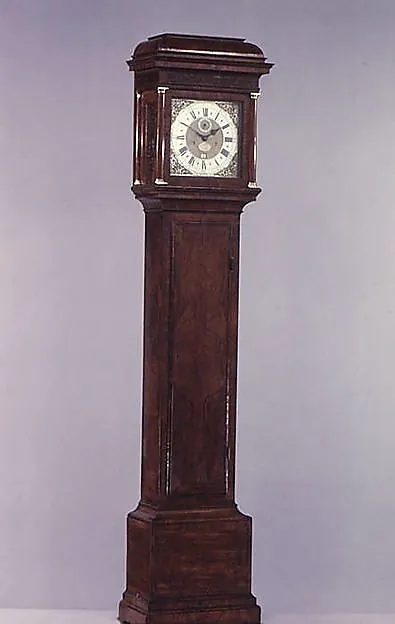
Clocks · c. 1720
Longcase clock by George Graham, England, c. 1720
The Metropolitan Museum of Art, New York
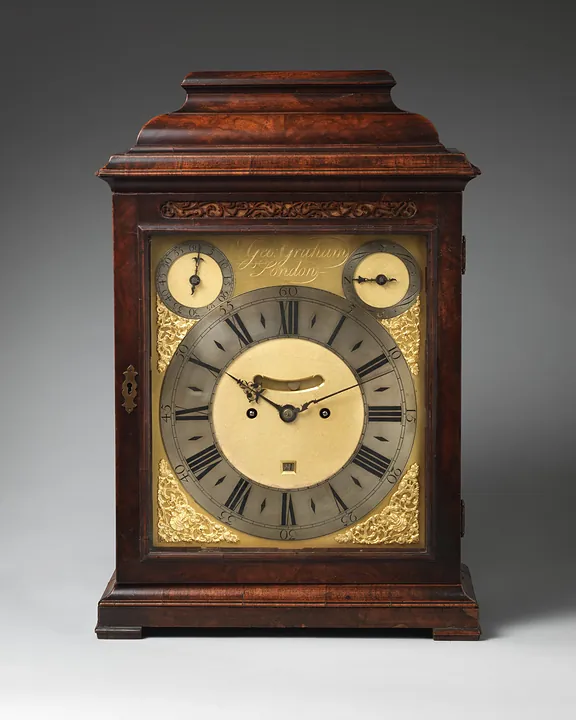
Clocks · c. 1720
Table or bracket clock by George Graham, England, c. 1720
The Metropolitan Museum of Art, New York
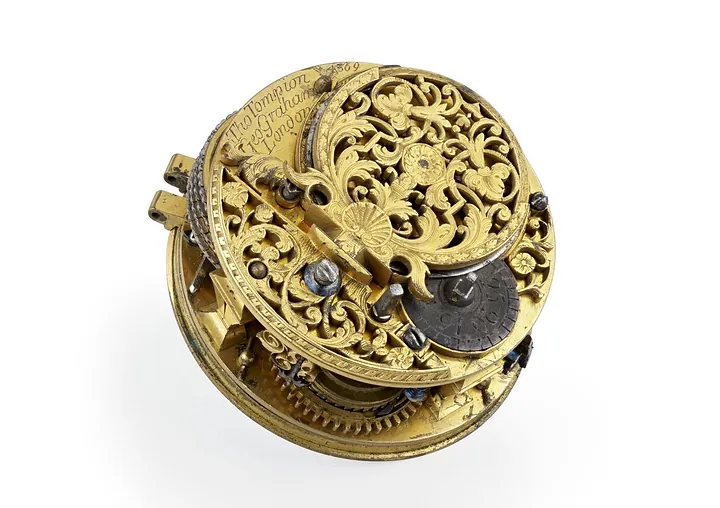
Movements & Components · 1711
Watch movement by Thomas Tompion and George Graham, England, 1711
Science Museum Group, London
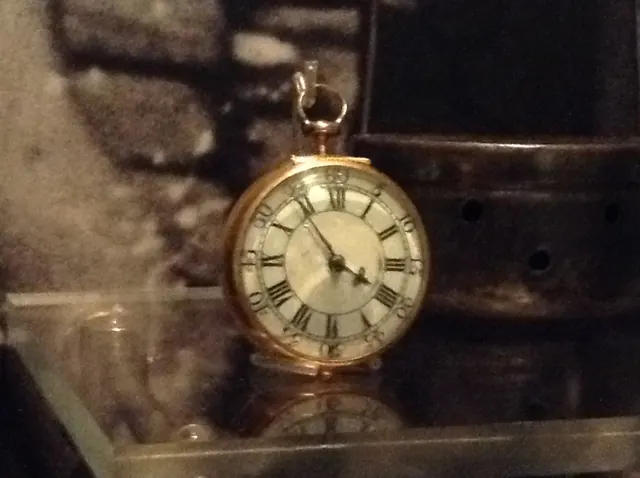
Pocket Watches · c. 1747
Pocket Watch - George Graham, No. 6363, c. 1747
Museums Victoria, Melbourne
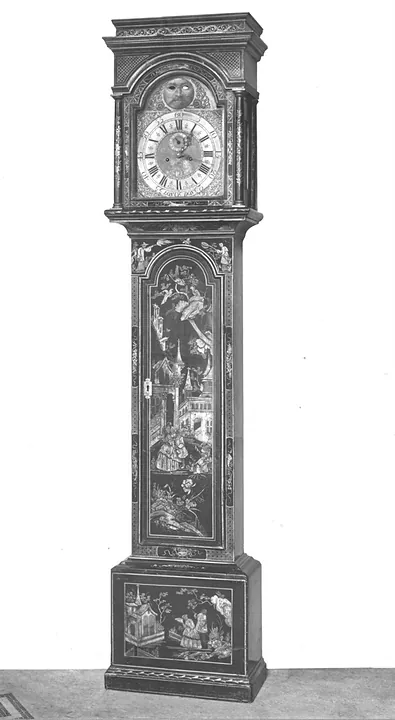
Clocks · 1740–1760
Longcase clock, English, 1740–1760, japanned wood, John Ellicott
Victoria and Albert Museum, London
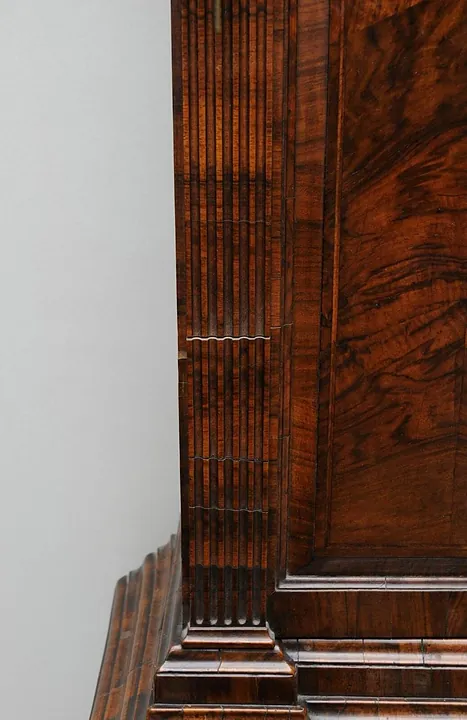
Clocks · c.1750
Long-case clock, English, ca. 1750, by Richard Peyton of Gloucester
Victoria and Albert Museum, London
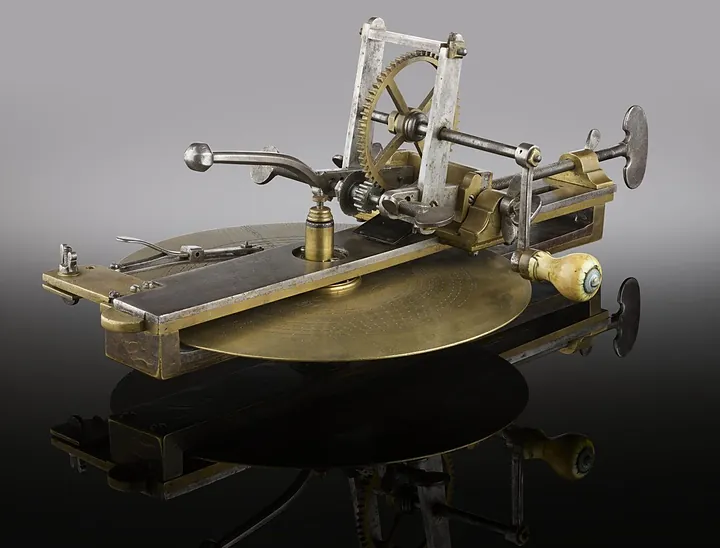
Clocks · 1751
Large wheel engine, signed and dated "John Tipping, Whildon Green, 1751".
Science Museum Group, London
Clocks · 1755
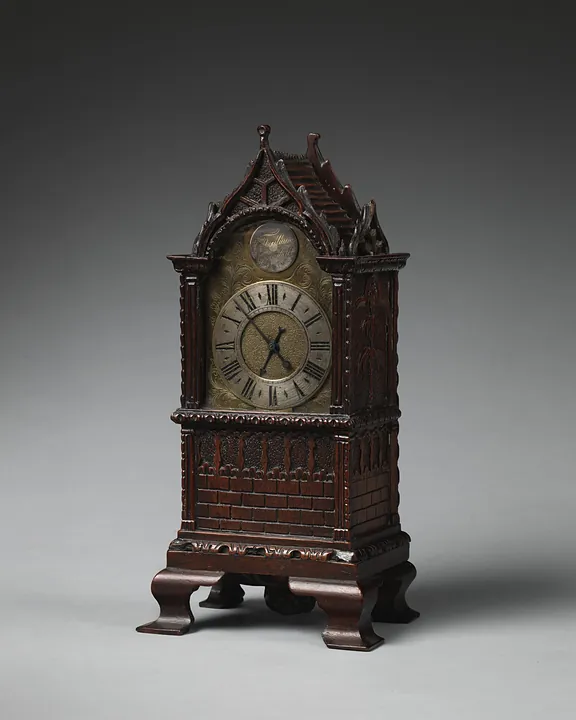
Bracket clock by John Fordham, England, 1755
The Metropolitan Museum of Art, New York