
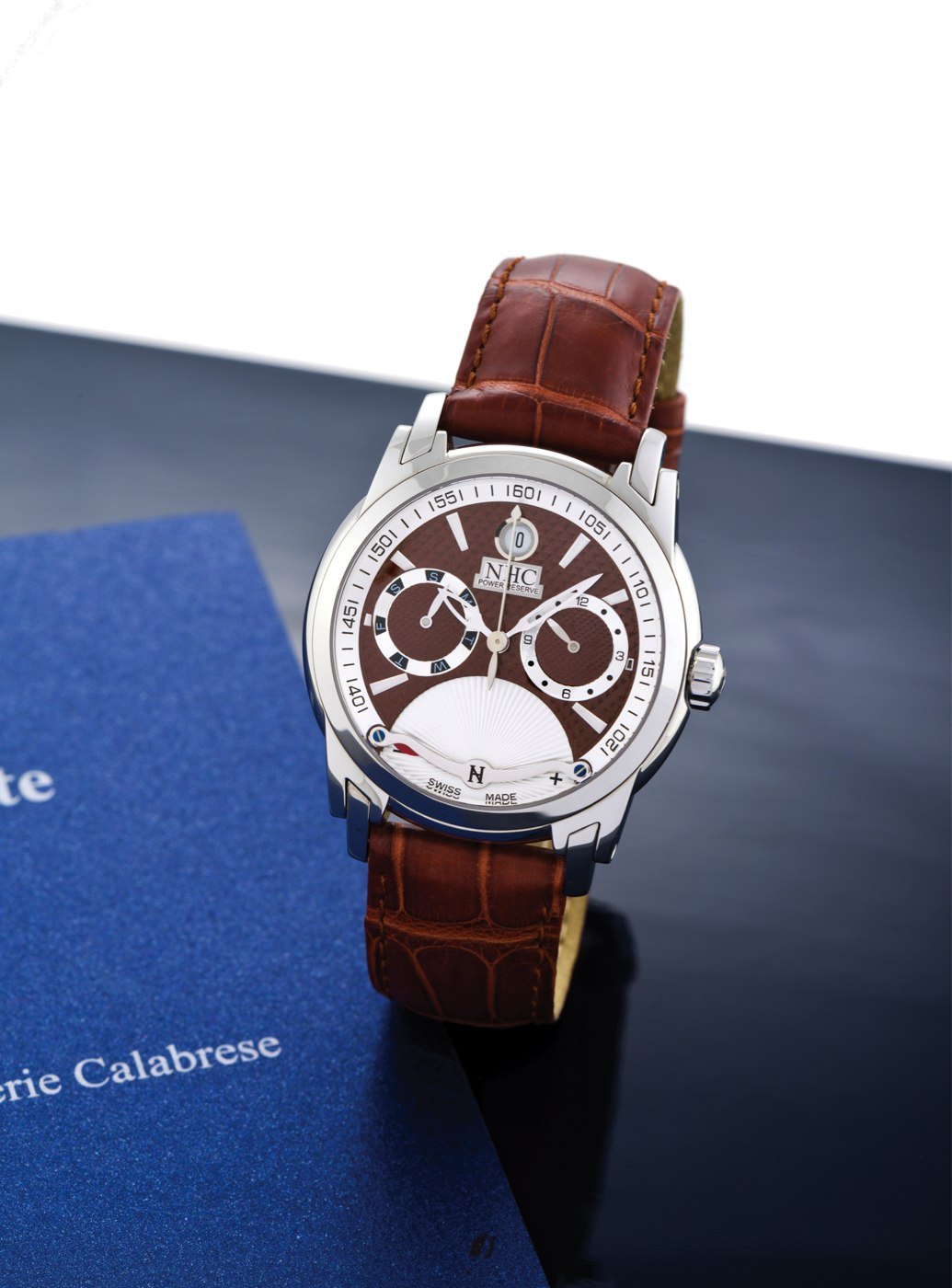
Wristwatches · Self-winding wristwatch with multiple complications
NHC Beauty-Fuel Wristwatch
- Maker / attribution
- Nouvelle Horlogerie Calabrese (NHC) (source attribution)
- Date
- c. 2006
- Historical period
- Mechanical Renaissance (1990 – 2010)
- Country of origin
- Unrecorded in source
- Object type
- Self-winding wristwatch with multiple complications
- Materials / technique
- Stainless steel
- Dimensions
- 40 mm diameter, 12 mm thickness
- Holding institution
- Antiquorum
- Accession / object no.
- 468
- Credit line
- Antiquorum
- Catalogue title (original)
- NHC BEAUTY-FUEL\nNouvelle Horlogerie Calabrese (NHC), \"Beauty-Fuel\", No. BF 0858, Ref. BFS.159. Made \ncirca 2006. \nFine and unusual, self-winding, water-resistant, stainless steel wristwatch with (English)
View the source record ↗ (opens another website in a new tab)Suggest a correction
Record summary
Held and catalogued by Antiquorum (object number 468), this is a self-winding wristwatch with multiple complications attributed to Nouvelle Horlogerie Calabrese (NHC), dated c. 2006. The Atlas places it in the Mechanical Renaissance period (1990 – 2010) of its Wristwatches collection. Materials and techniques recorded by the source: Stainless steel. Recorded dimensions: 40 mm diameter, 12 mm thickness. The record is illustrated with 1 photograph.
Assembled from the source record's structured fields. Dates and attributions are given as the source states them; where a field is missing the Atlas leaves it blank rather than estimating.
Catalogue description
Original object description
Produced around 2006 by Nouvelle Horlogerie Calabrese (NHC), this Beauty-Fuel model bears reference BFS.159 and serial BF 0858. The tripartite stainless steel case measures 40 mm across by 12 mm thick, incorporating stepped screw-set lugs, a curved profile, an angled bezel, and a display back retained by six screws, with sapphire crystals on both faces. Its brown clous de Paris dial features tapered applied steel indices, skeletonized steel hands, a 12 o'clock date aperture, a power reserve display, a sloped outer five-minute/second track with Arabic numerals, and registers for a second time zone and the day of the week. Timekeeping is maintained by an ETA 2892-based automatic movement with 21 jewels, finished with circular graining, Geneva striping, and rhodium plating; the caliber incorporates a straight-line lever escapement, monometallic balance, self-compensating flat hairspring, shock protection, a micrometer regulator, and a stop-seconds mechanism. Preserved with its original presentation box, instruction manual, and blank warranty paperwork, it has been given a Grade A condition grade, citing slight case abrasions alongside a pristine dial.
Inscriptions & marks
BF 0858
Historical context
Mechanical Renaissance (1990 – 2010)
Mechanical watches return as cultural objects; independent watchmaking flourishes.
Mechanical watches returned as cultural and luxury objects. Complications, tourbillons and new materials proliferated; independent watchmakers such as George Daniels, F.P. Journe and Philippe Dufour revived artisanal watchmaking; collecting vintage watches became a major field.
Read the period in the timelineMore wristwatches from this periodEarlier: Quartz Revolution
Atlas type guide
Automatic (self-winding) watches
Self-winding watches use the wearer's motion to wind the mainspring. Abraham-Louis Perrelet and Breguet made 'perpétuelle' pocket watches with oscillating weights in the late eighteenth century, but the principle only became practical in the wristwatch. John Harwood patented a bumper automatic in 1923; Rolex's Perpetual rotor (1931) winding in one direction, and later bidirectional rotors (Eterna, Felsa Bidynator), established the modern form. Micro-rotors (Universal Genève, Buren) and peripheral rotors made automatic watches thinner.
What to look for
- A semicircular rotor turning 360° over the movement, or a 'bumper' weight that rebounds between springs.
- 'Automatic', 'Perpetual' or 'Self-winding' on the dial.
- A sealed screw-back case, since automatic watches are wound less often by the crown.
Dating clues
- Bumper automatics: 1923–c. 1955.
- Full rotors: from 1931 (Rolex); widespread after c. 1950.
- Micro-rotors: from 1954–1958.
General guidance written by the Atlas editors about this kind of object. It is not a statement about this particular piece; for that, rely on the source record above and on physical examination.
Related records
Wristwatches · 1999
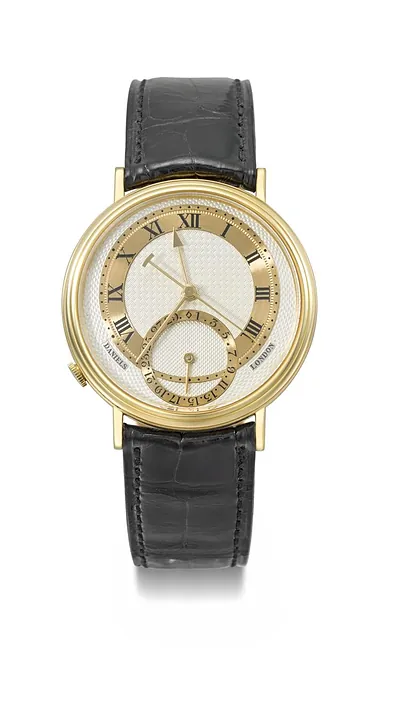
'Millennium' co-axial wristwatch by George Daniels and Omega, England, 1999
Science Museum Group, London
Wristwatches · 1991
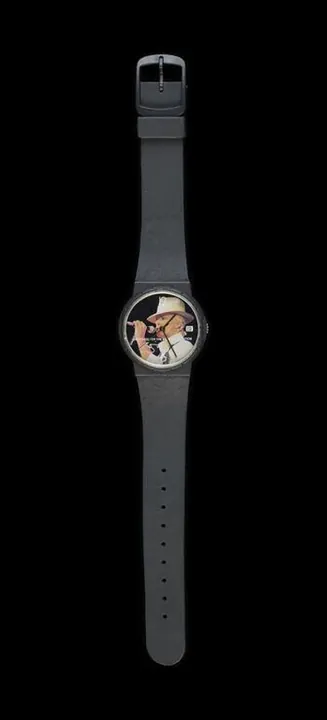
Limited edition watch designed by Eta relating to David Bowie's Serious Moonlight live tour, 1991
Victoria and Albert Museum, London
Wristwatches · 1999
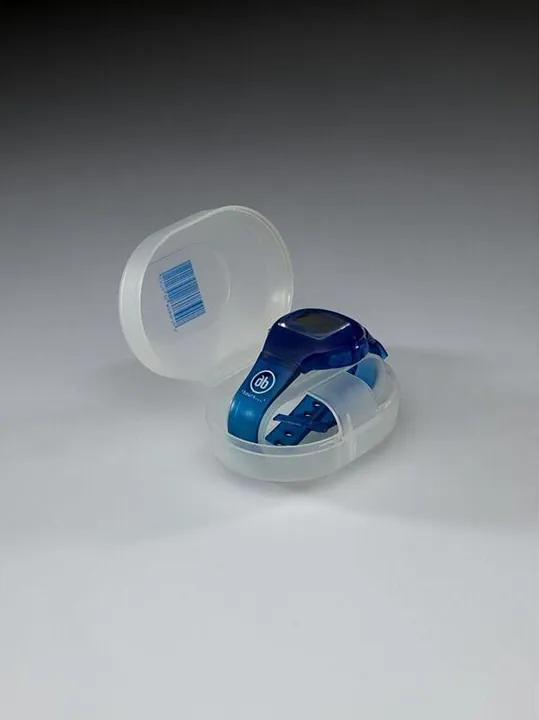
Blue digital talking watch in case, made by Virgin Records to promote the David Bowie album Hours , 1999
Victoria and Albert Museum, London
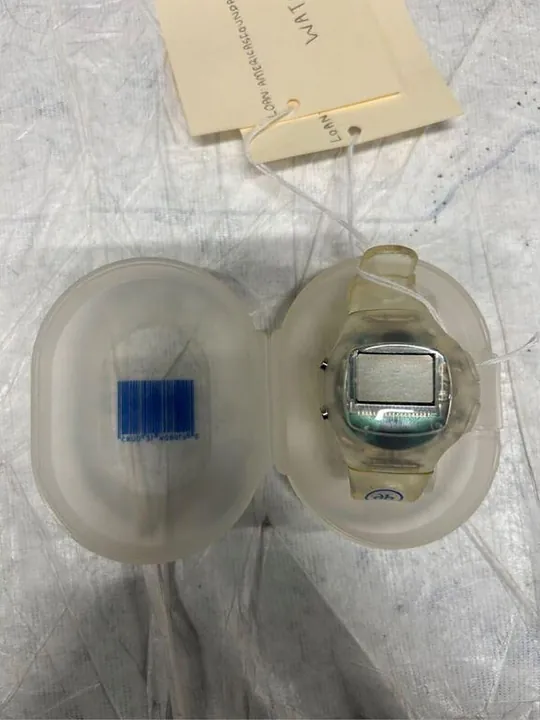
Wristwatches · 1999
Transparent digital talking watch in case, made by Virgin Records to promote the David Bowie album Hours , 1999
Victoria and Albert Museum, London
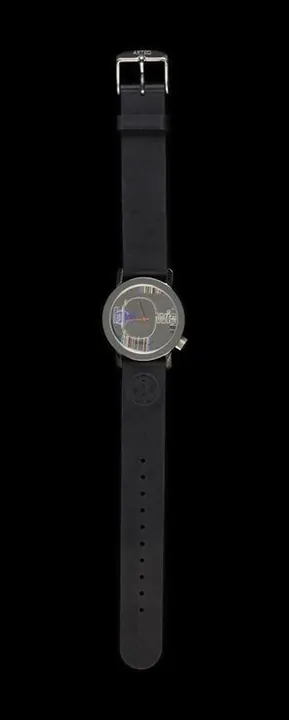
Wristwatches · 1999
Watch made by Akteo/ Canal Productions, to promote David Bowie's show in Paris on the Hours Tour , 1999
Victoria and Albert Museum, London

Wristwatches · 2008
Wristwatch by Breitling?, 2008
Museum Rotterdam
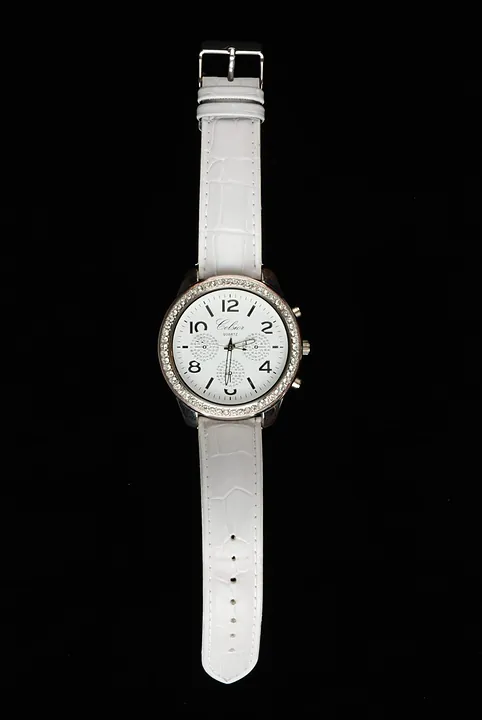
Wristwatches · 2008
Wristwatch by Celsior Quartz, 2008
Museum Rotterdam
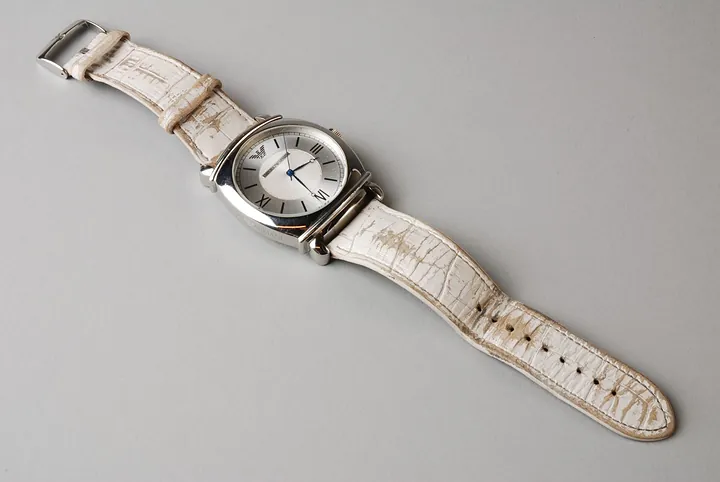
Wristwatches · 2008
Wristwatch possibly by Emporio Armani, 2008
Museum Rotterdam