Component
Jewel bearings
Also known as: Jewels · Steine · Rubis
How it works
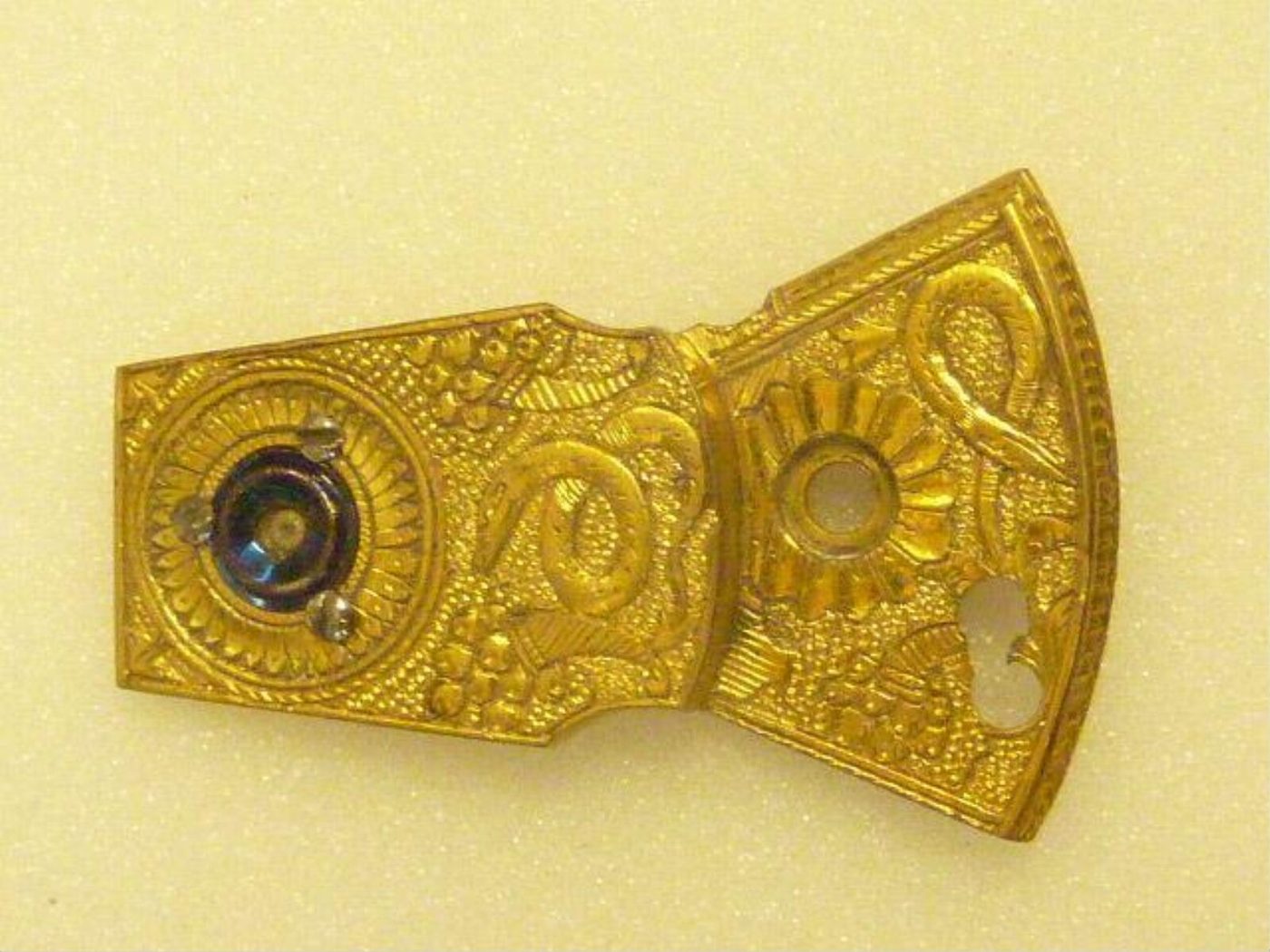
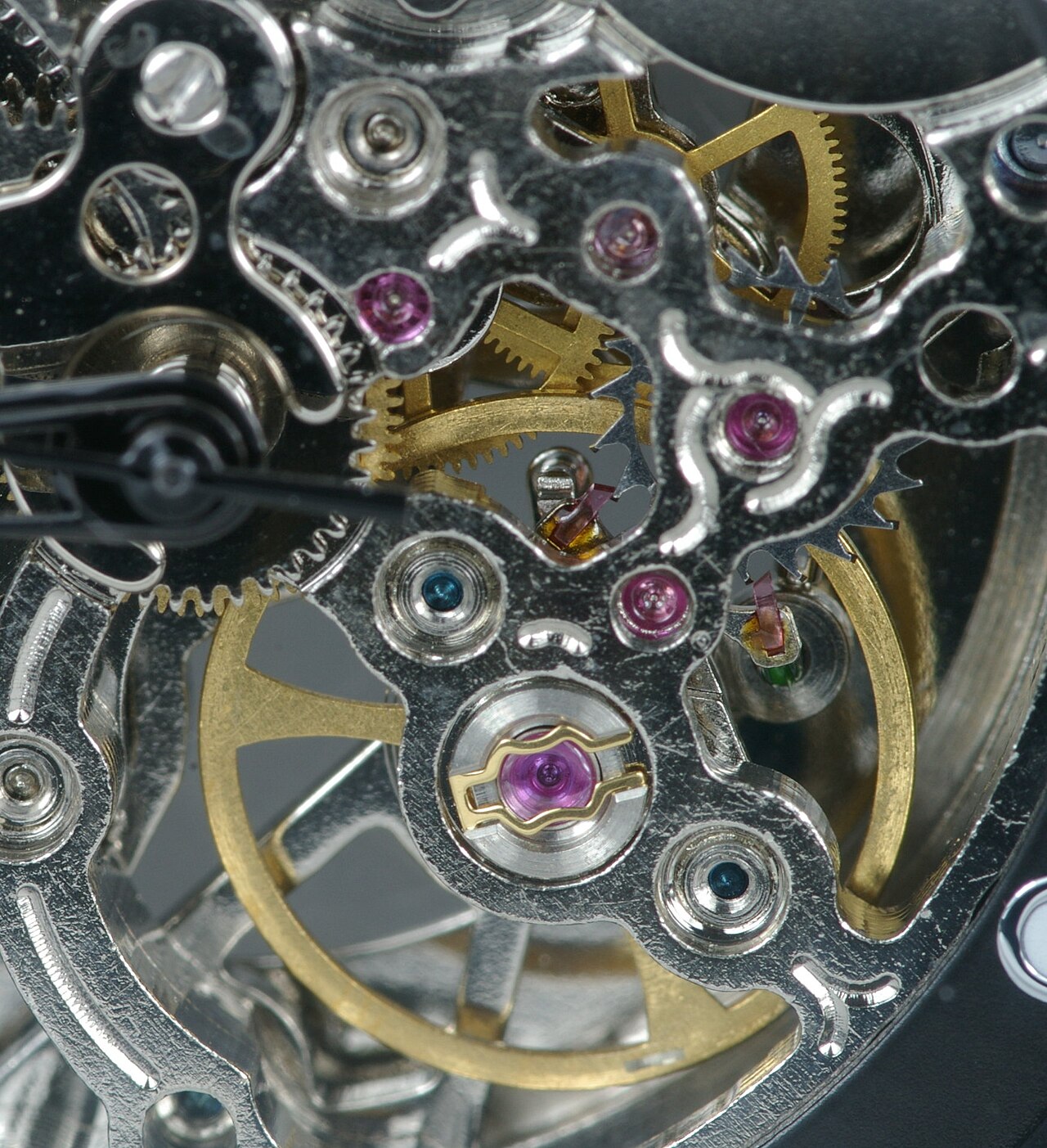
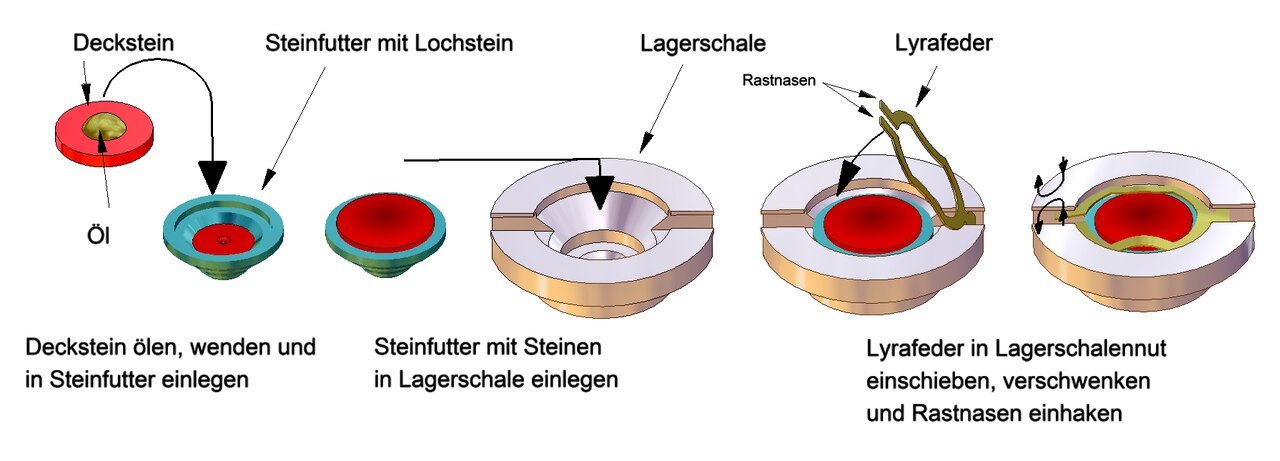
Pivots run in polished holes drilled in hard stones — originally natural ruby, sapphire or garnet, synthetic corundum since the early 20th century — with cap jewels on the balance. Pallet stones and the impulse jewel are also jewels.
Why it was invented
Hard, smooth stones reduce friction and wear at the fastest-moving pivots and hold oil better than brass.
- Invented
- 1704 (English patent)
- Credited to
- Nicolas Fatio de Duillier, Peter and Jacob Debaufre
- Historical period
- Early Modern Horology
History and development
Fatio and the Debaufre brothers patented pierced jewels in London in 1704; for a century the technique was largely an English speciality. Synthetic corundum made by the Verneuil flame-fusion process (published 1902) made jewels cheap. A 'fully jewelled' lever watch has 15–17 jewels; higher counts in automatics and chronographs include jewels for rotor and complication bearings.
Related mechanisms
In the catalogue
All 227 records →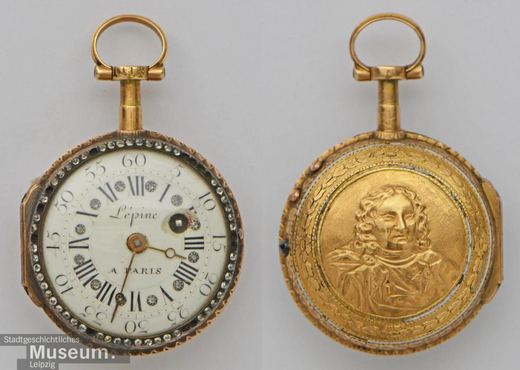
Pocket Watches · 1770–1780
Pocket watch by Lepine, France, 1770–1780
Museum of City History Leipzig
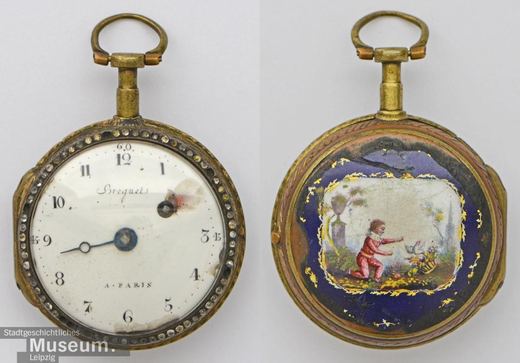
Pocket Watches · 1790
Pocket watch by Breguet (?), France, 1790
Museum of City History Leipzig
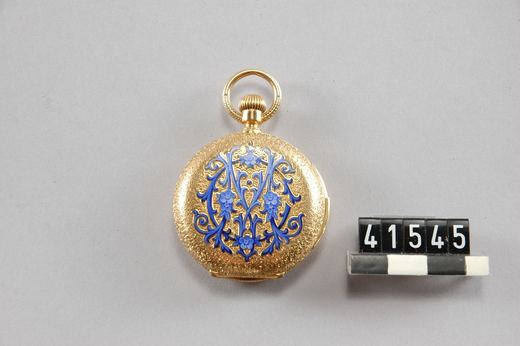
Pocket Watches · 1800–1899
Pocket watch by H.R. Ekegrén, Denmark, 1800–1899
Swedish National Museum of Science and Technology
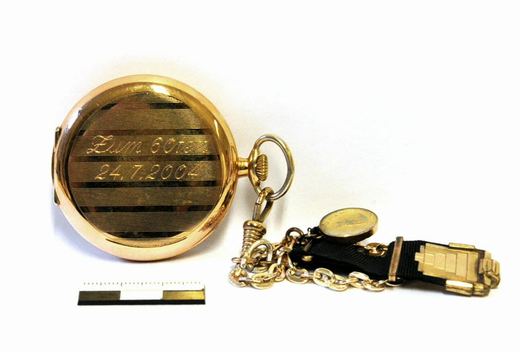
Pocket Watches · 1800–1899
Pocket watch, Germany, 1800–1899 (Montanhistorisches Dokumentationszentrum item_AHR2WWRUSXWB7JLUU5F27MD6R2QWTNL5)
Montanhistorisches Dokumentationszentrum
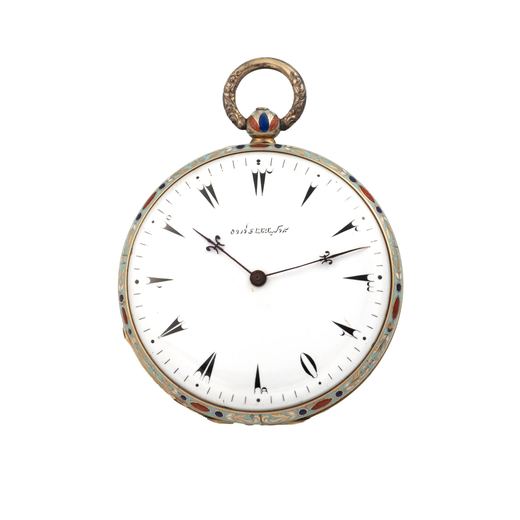
Pocket Watches · circa 1810
Turkish Signature Musical Trophies, circa 1810
Antiquorum auction archive, Geneva
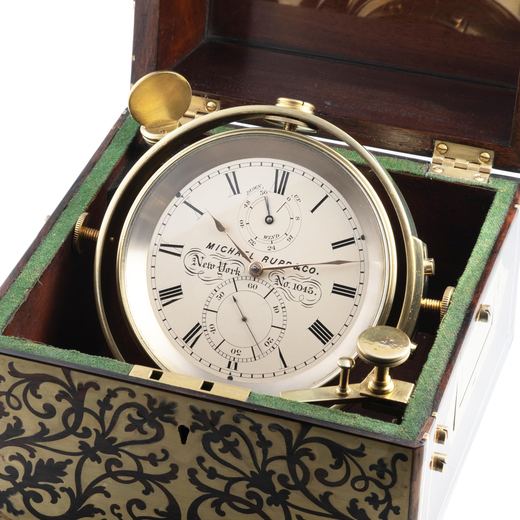
Instruments · circa 1840
Retailed by Michael Rupp & CO in NEW York marine chronometer, circa 1840
Antiquorum auction archive, Geneva
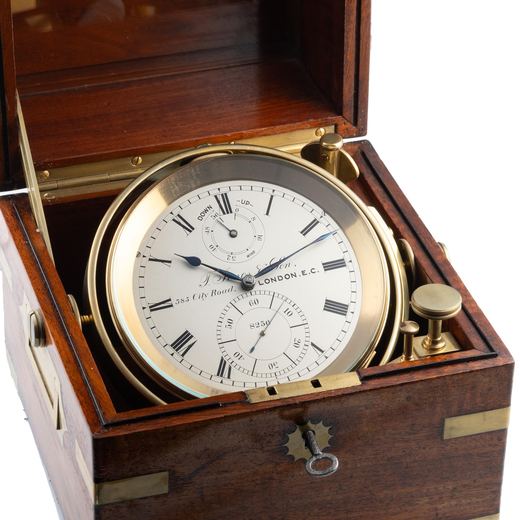
Instruments · circa 1840
T. Jones & Son marine chronometer, circa 1840
Antiquorum auction archive, Geneva
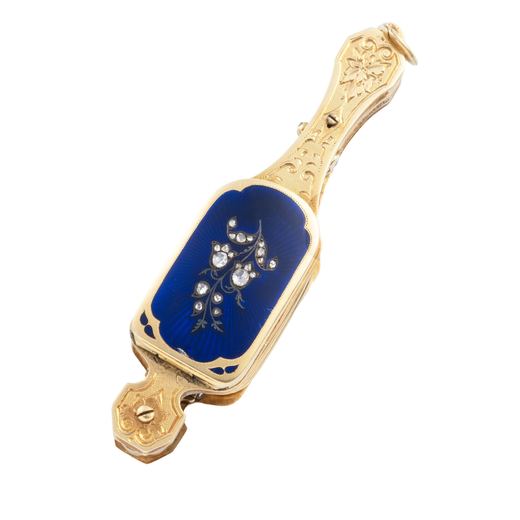
Pocket Watches · circa 1850
Rossel & Fils watch, circa 1850
Antiquorum auction archive, Geneva
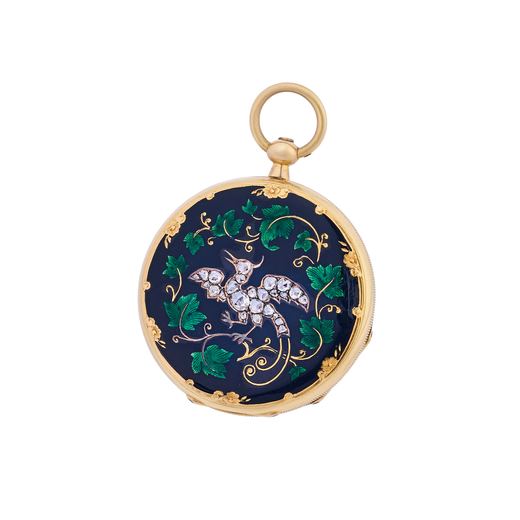
Pocket Watches · circa 1860s
A. Golay Leresche pendant watch, circa 1860s
Antiquorum auction archive, Geneva
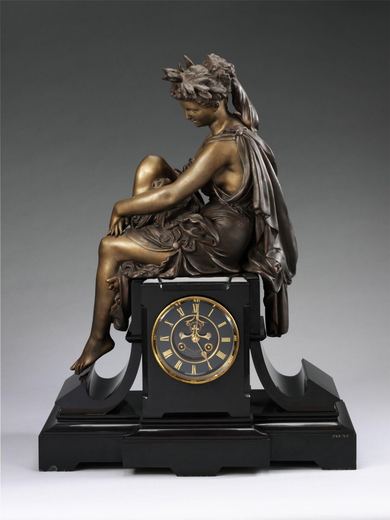
Clocks · 1860-1867
Clock, with seated female figure of Contemplation, designed by Carrier-Belleuse, 1860s
Victoria and Albert Museum, London
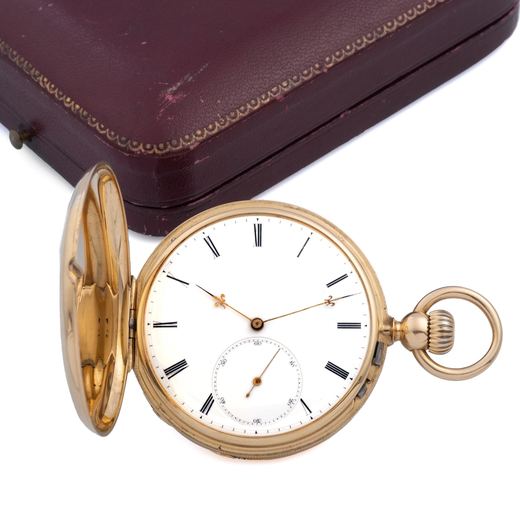
Pocket Watches · circa 1860
James Nardin Chronometer, circa 1860
Antiquorum auction archive, Geneva
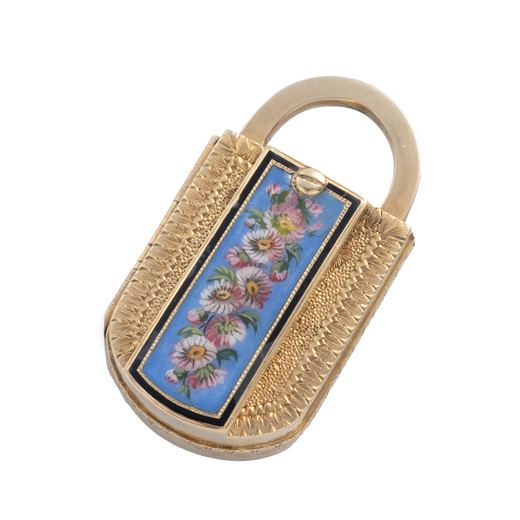
Pocket Watches · circa 1860
Unsigned watch, circa 1860
Antiquorum auction archive, Geneva
Records are linked when the holding institution's description names this mechanism; check each source record for confirmation.