
Clocks · Lantern clock
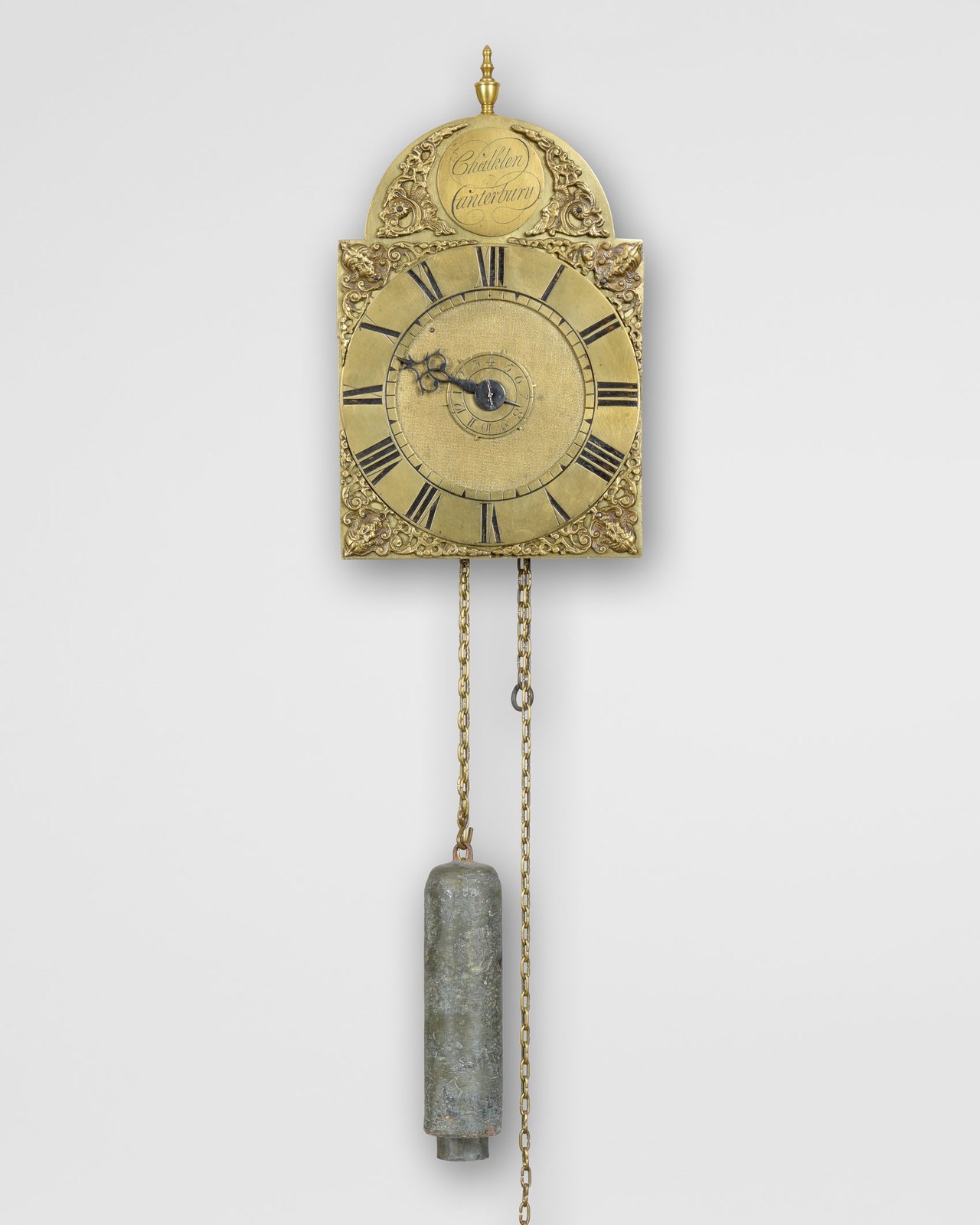
Lantern clock by Chalklen, c. 1760
- Maker / attribution
- Chalklen (maker)
- Date
- c. 1760
- Historical period
- Precision & Scientific Horology (1750 – 1850)
- Country of origin
- Unrecorded in source
- Object type
- Lantern clock
- Materials / technique
- brass
- Dimensions
- Height 18.3 cm
- Stock no.
- Product 4376
- Credit line
- Dealer listing, Howard Walwyn (product 4376)
- Catalogue title (original)
- CHALKLEN. An early George III English brass lantern clock with alarm. (English)
View the source record (dealer listing) ↗ (opens another website in a new tab)Suggest a correction
Record summary
Catalogued by Howard Walwyn Fine Antique Clocks (dealer), London (stock number Product 4376), this is a lantern clock by Chalklen, dated c. 1760. The Atlas places it in the Precision & Scientific Horology period (1750 – 1850) of its Clocks collection. Materials and techniques recorded by the source: brass. Recorded dimensions: Height 18.3 cm. The record is illustrated with 2 photographs.
Assembled from the source record's structured fields. Dates and attributions are given as the source states them; where a field is missing the Atlas leaves it blank rather than estimating.
Catalogue description
Dealer description — Howard Walwyn
An early George III period English brass lantern clock with alarm, signed on the dial by this Canterbury maker. The clock is of classic lantern form, with turned brass finials and corner pillars secured by finned feet. It is surmounted by a tall bell held within a pierced brass bell strap, flanked by four tapering urn finials. The doors are finely fitted and the frame is constructed with latched turned columns while the original frets are delicately pierced in scrolling patterns. The back features traditional hook and spike for wall mounting. The 5-inch brass dial is boldly engraved and displays excellent depth of tone and patination, with a chapter ring bearing large Roman hour numerals, an inner minute track, triangular half-hour markers and a finely matted centre with alarm setting disc. There are four winged brass cherub head spandrels to each corner of the chapter ring. The maker’s name Chalklen, Canterbury is inscribed within a circular cartouche on the raised arch, framed by further foliate spandrels. The finely pierced iron hand is of characteristic early form and appears to be original. The short duration timepiece movement has vertical plates secured by turned baluster pillars, and chain-driven trains. The escapement is verge with a pear-shaped pendulum bob and the alarm hammer strikes against the large bell mounted above the plates. Date : 1760 Height : 7 ¼ in (18.3 cm) excl. finial Height : 8 ¼ in (21 cm) incl. finial Width : 5 in (12.75 cm) Depth : 4 ⅝ in (11.75 cm) *Richard Chalklen is recorded as a clockmaker active in Canterbury during the mid-17th century, specialising in lantern clocks. His surviving clocks, often engraved with his signature, typically feature alarm work and well-executed foliate engraving, in line with the provincial Kentish school of the period. Though few examples survive, they demonstrate high craftsmanship and adherence to early lantern clock construction techniques. See: Brian Loomes, Clockmakers of Britain 1286–1700 (Mayfield Books, 2014), p.114. HW6551
Historical context
Precision & Scientific Horology (1750 – 1850)
Harrison solves longitude; Mudge invents the lever; Breguet's Paris workshop defines the modern watch.
The age of the deadbeat escapement, compensated pendulums and observatory regulators. Domestic clocks spread through the middle classes: English longcase and bracket clocks, French gilt-bronze mantel clocks, Viennese Biedermeier wall clocks, Black Forest painted-shield clocks, and the first American shelf clocks.
Read the period in the timelineMore clocks from this periodEarlier: Early Modern Horology
Atlas type guide
Lantern, chamber and Gothic clocks
Domestic weight-driven clocks were made in southern Germany, Switzerland, Italy and Flanders from the fifteenth century. These 'Gothic' or chamber clocks have an open iron frame with corner posts, a verge escapement controlled by a foliot or balance wheel, and often an alarm or hour striking on a bell mounted above.
In England the lantern clock appeared around 1600: a brass posted-frame clock with a bell on top under decorative frets, hung on a hook or set on a wall bracket. After about 1658 many were converted to pendulum control, so originality of the escapement is a key question for any surviving example.
What to look for
- Iron (continental) or brass (English) posted frames with turned corner pillars and finials.
- A single hour hand — minute hands are rare before the pendulum era.
- Evidence of conversion: plugged holes, replaced escapement wheels or later pendulums.
- Fret designs and engraving on the dial centre, which help date English lantern clocks.
Dating clues
- Continental Gothic chamber clocks: c. 1450–1650.
- English lantern clocks: c. 1600–1720, with provincial examples later.
- Short 'bob' pendulum conversions after 1658; long pendulums with anchor escapement after c. 1670.
General guidance written by the Atlas editors about this kind of object. It is not a statement about this particular piece; for that, rely on the source record above and on physical examination.
Read next:FoliotAnchor (recoil) escapement
Related records
Clocks · c. 1780
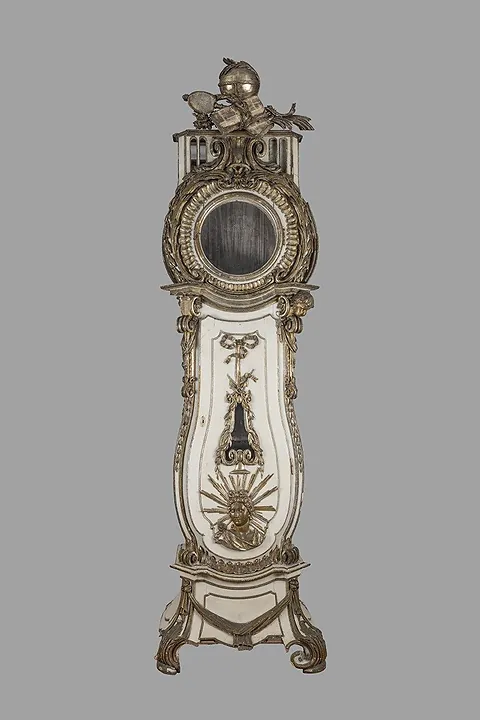
Longcase clock by Louis George, Eberswalde, c. 1780
Museum Eberswalde
Clocks · 1780s (inferred: the museum dates the style to the 1780s and the music includes Gluck's Iphigénie en Tauride of 1779)
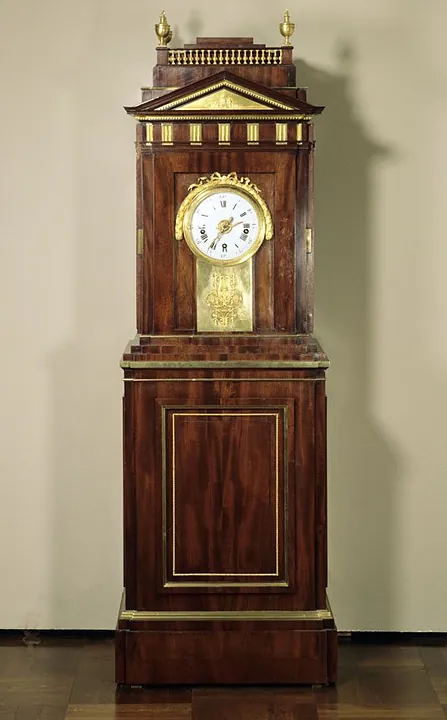
Musical longcase clock, Roentgen workshop, Neuwied, 1780s
Badisches Landesmuseum Karlsruhe
Clocks · 1740–1760
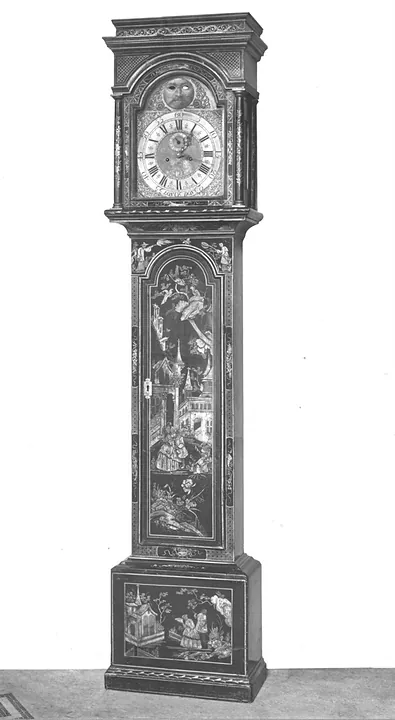
Longcase clock, English, 1740–1760, japanned wood, John Ellicott
Victoria and Albert Museum, London
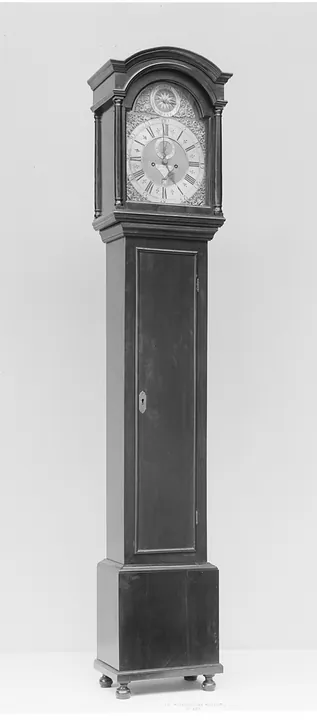
Clocks · 1740–60
Tall clock by Samuel Bagnall, United States, 1740–60
The Metropolitan Museum of Art, New York
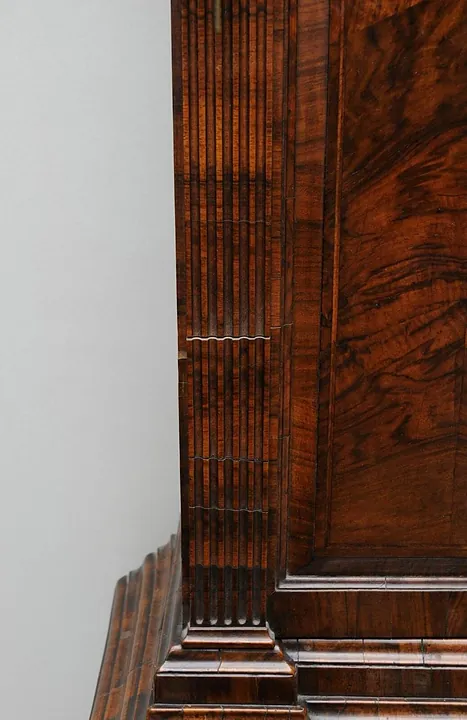
Clocks · c.1750
Long-case clock, English, ca. 1750, by Richard Peyton of Gloucester
Victoria and Albert Museum, London
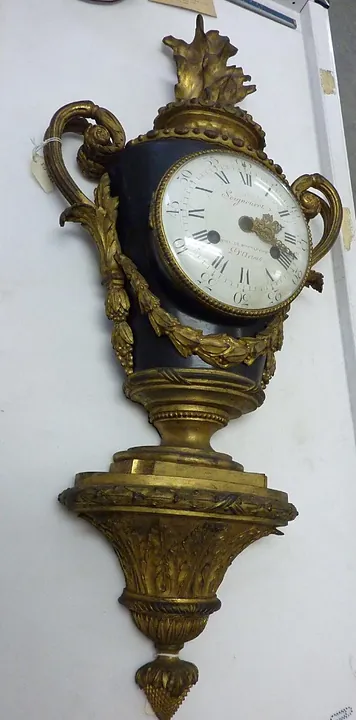
Clocks · 1750–1800
Bracket clock in metal case with scroll handles and flamed-shaped top signed by Pierre Seignoret, Clockmaket to the the Comte d'Artois
Victoria and Albert Museum, London
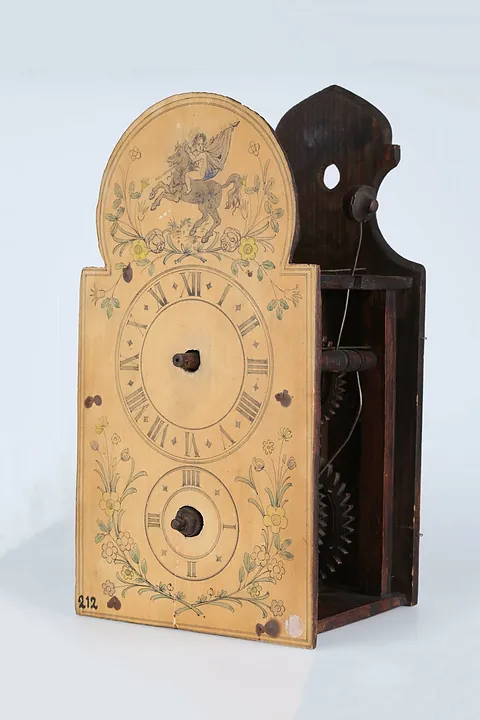
Clocks · c. 1750
Clock by Georg Gfell, Germany, c. 1750
German Clock Museum
Clocks · 1750–1799
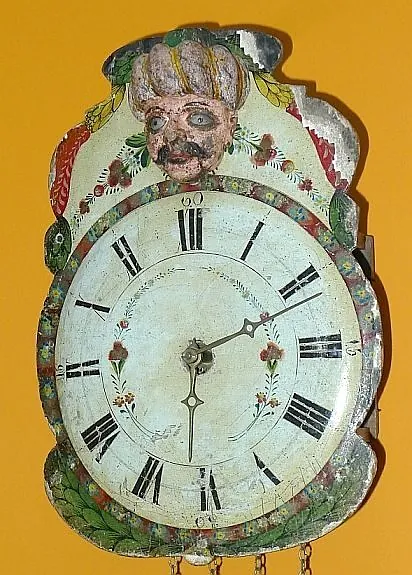
Cuckoo / black forest clock, Germany, 1750–1799
Badisches Landesmuseum Karlsruhe