
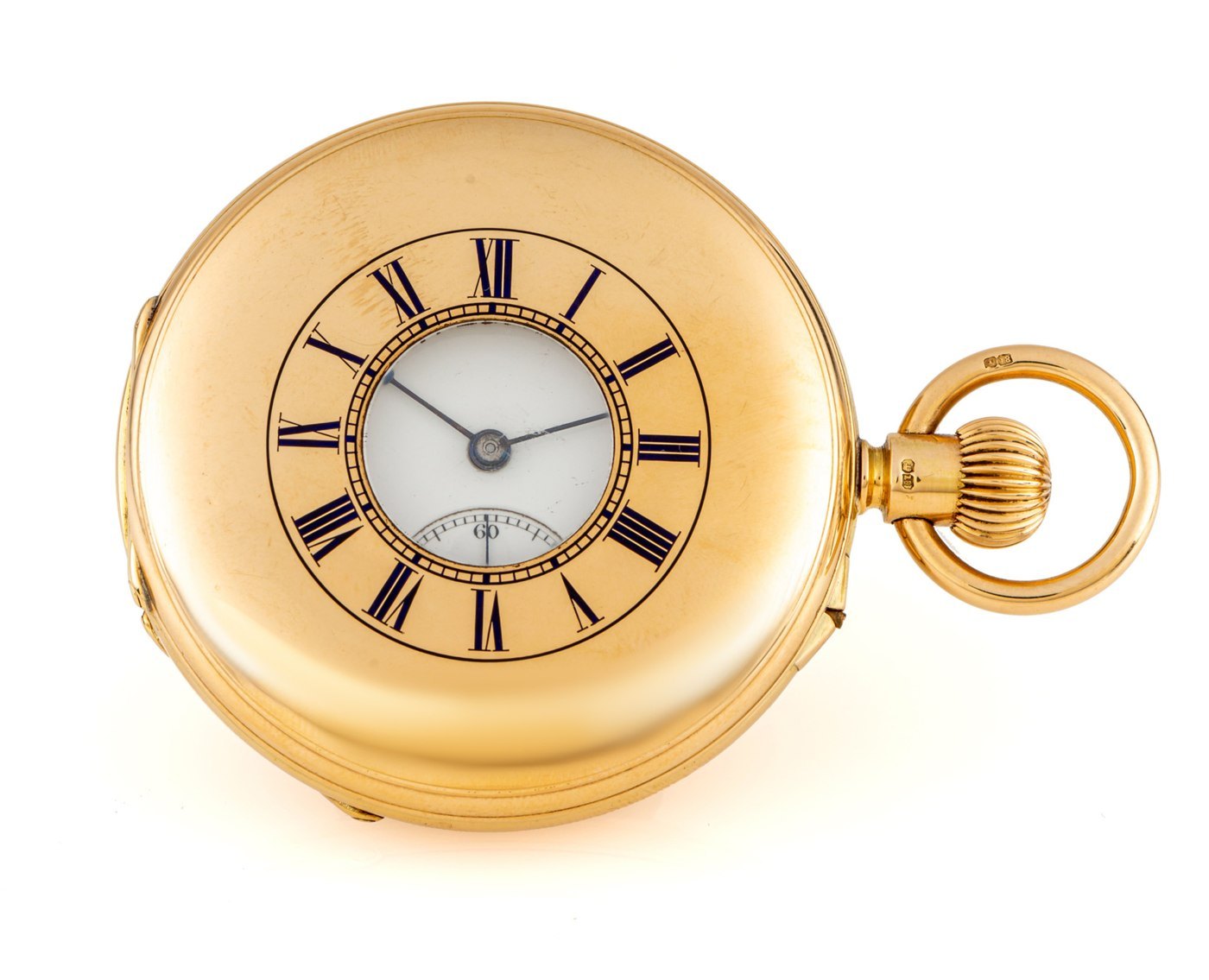
Pocket Watches · Keyless pocket watch with karrusel
I.A. & N.C. Keyless Half Hunting Case Karrusel Pocket Watch
- Maker / attribution
- I.A. & N.C. (source attribution)
- Date
- c. 1900
- Historical period
- Golden Age of Mechanical Watchmaking (1900 – 1945)
- Country of origin
- London
- Object type
- Keyless pocket watch with karrusel
- Holding institution
- Antiquorum
- Accession / object no.
- 235
- Credit line
- Antiquorum
- Catalogue title (original)
- KARRUSEL CLASS A KEW CERTIFICATE (English)
View the source record ↗ (opens another website in a new tab)Suggest a correction
Record summary
Held and catalogued by Antiquorum (object number 235), this is a keyless pocket watch with karrusel attributed to I.A. & N.C., made in London, dated c. 1900. The Atlas places it in the Golden Age of Mechanical Watchmaking period (1900 – 1945) of its Pocket Watches collection. The record is illustrated with 1 photograph.
Assembled from the source record's structured fields. Dates and attributions are given as the source states them; where a field is missing the Atlas leaves it blank rather than estimating.
Catalogue description
Original object description
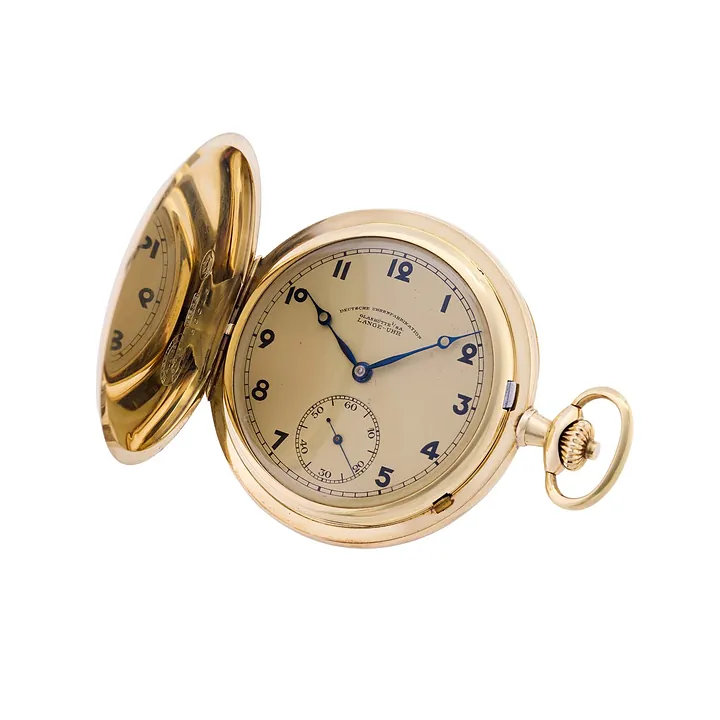
Assigned to I.A. & N.C. and dating to circa 1900, this keyless karrusel pocket watch was produced in London. Its half-hunting case is crafted from 18K gold and incorporates a circular front opening framed by external Roman numerals, enabling the time to be observed even while closed. Powering the timepiece is an 18-ligne, 17-jewel frosted gilt three-quarter plate movement bearing the serial number 125322. The mechanism relies on a going barrel, a lateral lever escapement, and a Bonniksen karrusel carriage that completes a rotation every 52 1/2 minutes around the fourth wheel to counteract positional timing errors. Timekeeping is maintained by a free-sprung bimetallic balance fitted with gold adjustment screws, paired with a blued steel Breguet balance spring featuring a terminal curve, alongside a diamond endstone. Historically tested at Kew Observatory, the watch earned a Class A Certificate with an 82-mark rating. The dial and gold housing are both documented in good condition, carrying an overall assessment of 'AA Very good'.
Inscriptions & marks
5051
Historical context
Golden Age of Mechanical Watchmaking (1900 – 1945)
The wristwatch displaces the pocket watch; waterproof cases, self-winding and grand complications.
The pocket watch reached technical maturity and then began to give way to the wristwatch after the First World War. Complicated watches for collectors such as Henry Graves Jr. and James Ward Packard, railroad watches, and slim Art Deco dress watches are characteristic.
Read the period in the timelineMore pocket watches from this periodEarlier: Industrial Revolution
Atlas type guide
Pocket chronometers and precision watches
A pocket chronometer is a watch built to observatory standards, traditionally with a detent escapement like a marine chronometer. English makers such as John Arnold and Thomas Earnshaw made the first pocket chronometers in the 1780s. In the nineteenth century the term increasingly referred to any watch that had passed official rating trials at observatories in Kew, Neuchâtel, Geneva or Besançon, and the Swiss lever chronometer became dominant.
Tourbillon and karrusel watches belong to the same world of precision. Breguet patented the tourbillon in 1801 to average out positional errors; Bahne Bonniksen's karrusel (1892) was a cheaper English alternative. Rating certificates (bulletins de marche) that accompany such watches are historical documents in their own right.
What to look for
- Detent escapement (no pallets; a fine spring detent locks the escape wheel).
- Observatory certificates, competition results or 'Chronometer' marking on the dial.
- Tourbillon carriage visible through an aperture or on the movement.
- Fine finishing: jewelled holes in gold chatons, diamond endstones.
Dating clues
- English pocket chronometers: c. 1780–1900.
- Observatory trials at Neuchâtel from 1866, Geneva from 1873, Kew from 1884.
- Karrusels: 1892–c. 1915.
General guidance written by the Atlas editors about this kind of object. It is not a statement about this particular piece; for that, rely on the source record above and on physical examination.
Read next:Spring detent (chronometer) escapement
Related records
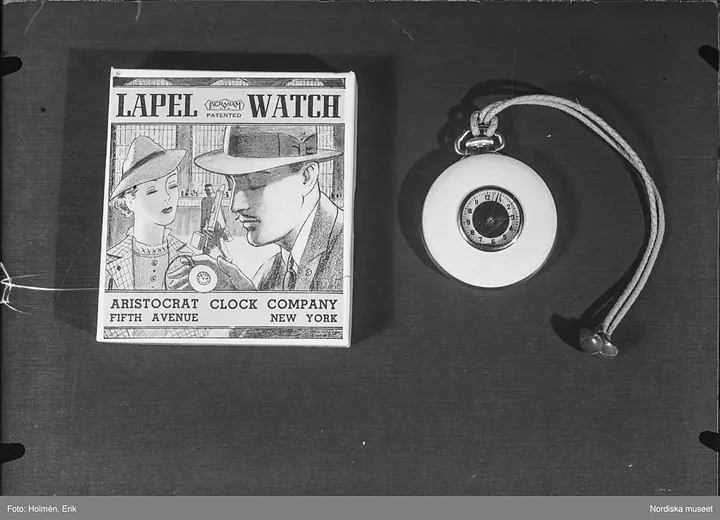
Pocket Watches · 1900–1999
Lapel watch by Erik Holmén, 1900–1999
Nordic Museum Foundation
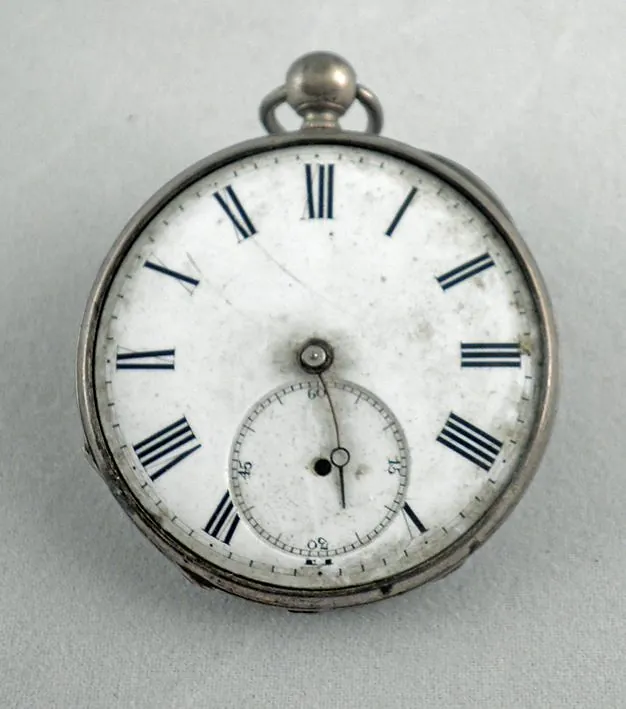
Pocket Watches · 1873–1930
Pocket watch, Lilla Malma socken, 1873–1930
Sörmland Museum
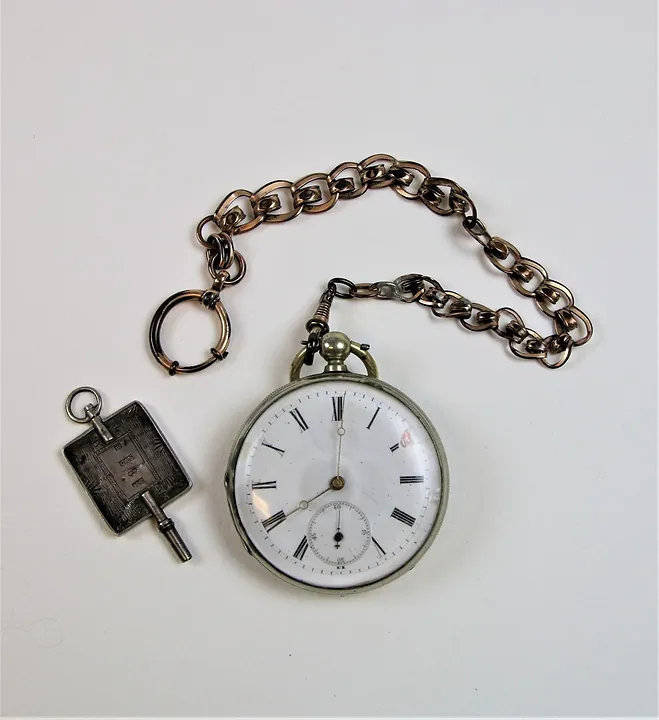
Pocket Watches · 1880–1920
Pocket watch, Sweden, 1880–1920
Sörmland Museum
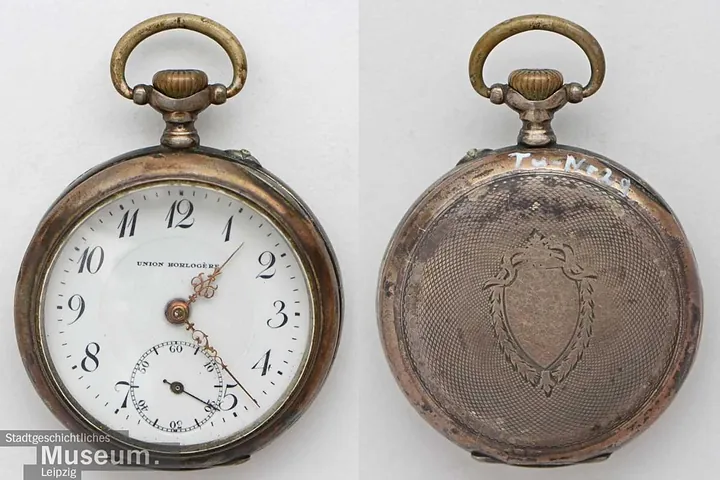
Pocket Watches · 1890–1910
Pocket watch by Union Horlogère, France, 1890–1910
Museum of City History Leipzig
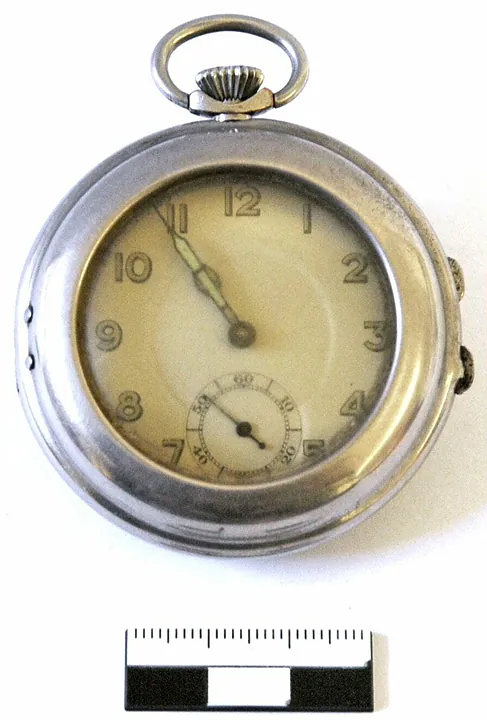
Pocket Watches · 1891–1945
Pocket watch, Germany, 1891–1945
Montanhistorisches Dokumentationszentrum
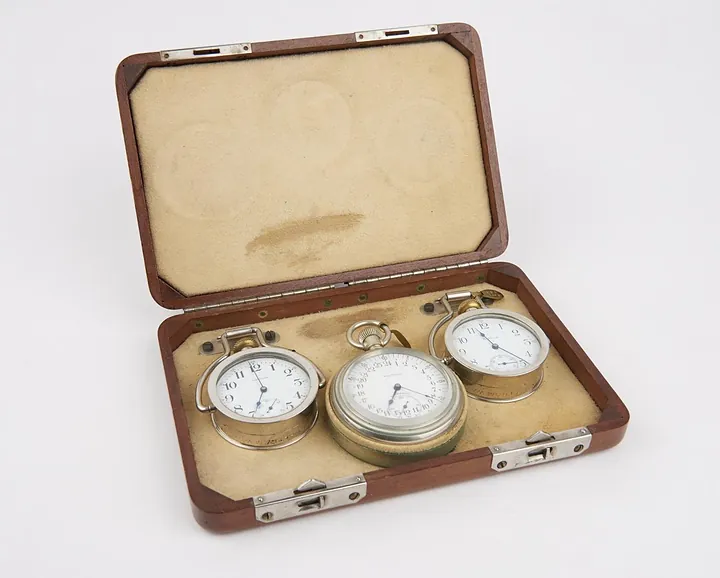
Pocket Watches · c. 1900
Pocket watch by American Waltham Watch Company, United States, c. 1900
Science Museum Group, London
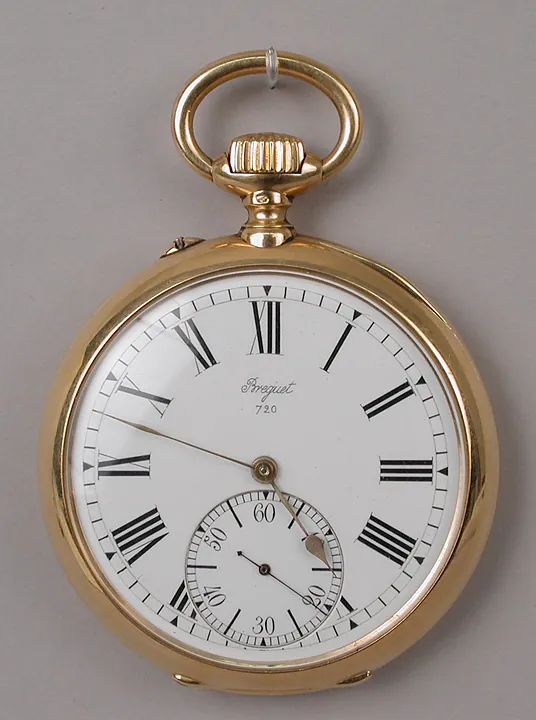
Pocket Watches · c. 1900
Pocket watch by Firm of Breguet et Fils, France, c. 1900
The Metropolitan Museum of Art, New York
Pocket Watches · c. 1900
A.Lange & Söhne pocket watch, c. 1900
Antiquorum auction archive, Geneva