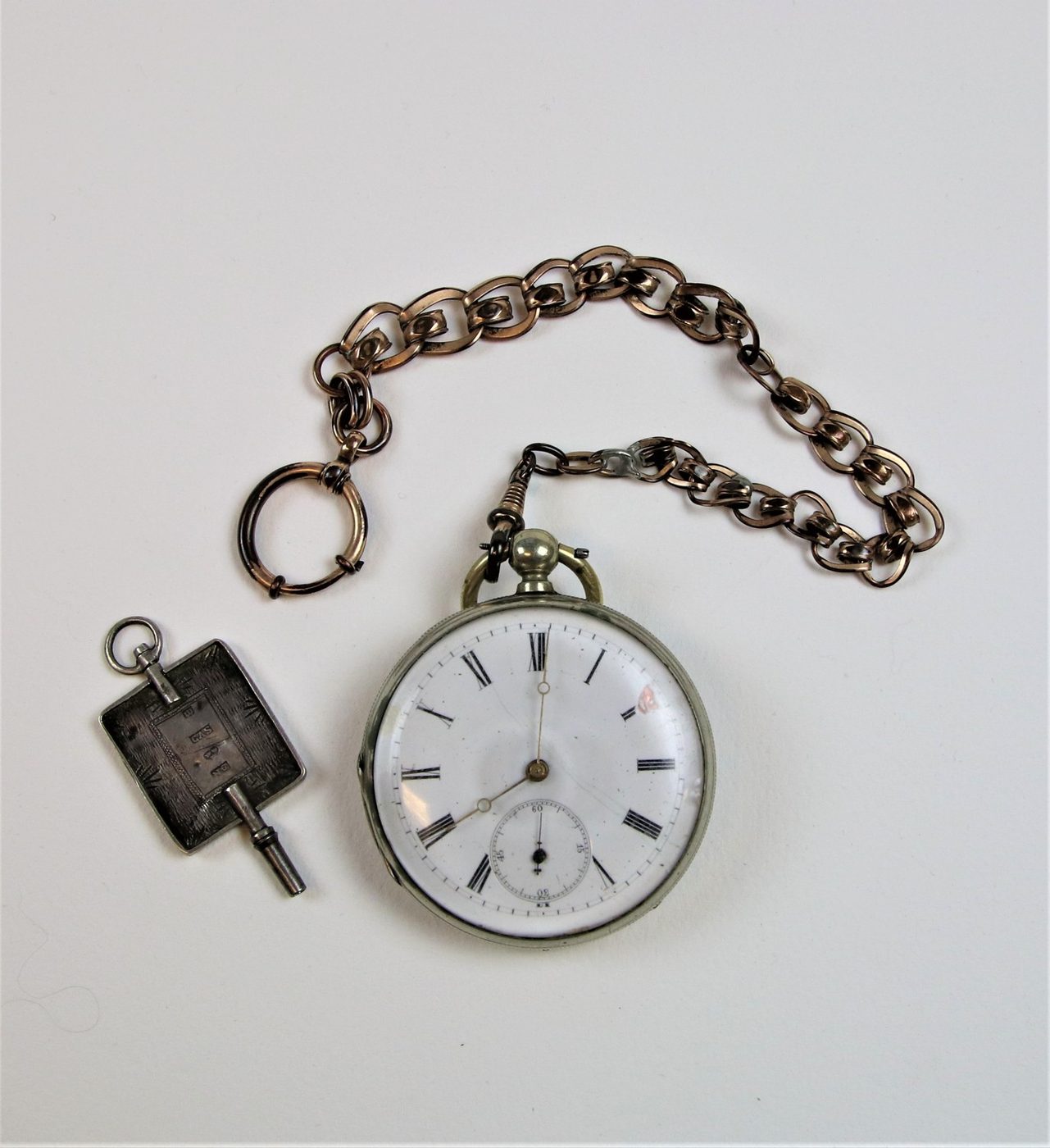
Pocket Watches · Pocket watch
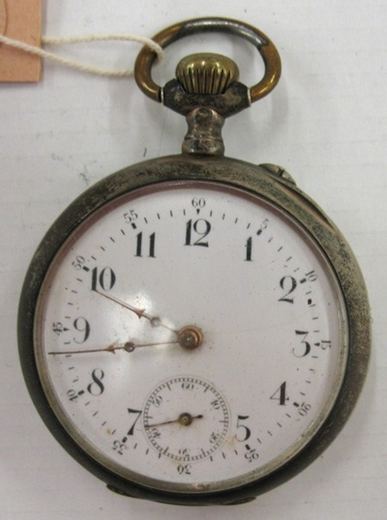
Pocket watch, Sweden, 1880–1920
- Maker / attribution
- Unrecorded in source
- Date
- 1880–1920
- Historical period
- Golden Age of Mechanical Watchmaking (1900 – 1945)
- Country of origin
- Sweden
- Place
- Sweden
- Object type
- Pocket watch
- Holding institution
- Sörmland Museum
- Accession / object no.
- SLM_item_432166
- Catalogue title (original)
- Nymans fickur
Record summary
Held and catalogued by Sörmland Museum (object number SLM_item_432166), this is a pocket watch, made in Sweden, dated 1880–1920. The Atlas places it in the Golden Age of Mechanical Watchmaking period (1900 – 1945) of its Pocket Watches collection. The record is illustrated with 1 photograph.
Assembled from the source record's structured fields. Dates and attributions are given as the source states them; where a field is missing the Atlas leaves it blank rather than estimating.
Catalogue description
Catalogue description from Sörmland Museum (Swedish)
Fickur med kedja i mässing med tillhörande nyckel som tillhört Carl Fredrik Nyman (1854-1926). Till uret hör en liten nyckel för att vrida upp klockan. Urtavlan har romerska siffror och sekundvisare. Fickuret sedan i arv via Nymans hushållerska Lovisa Andersson vidare till Sven Rikard Eriksson.
Shown in the original language of the source catalogue. An editor-reviewed English translation has not yet been published; we do not publish machine translations as authoritative text.
Historical context
Golden Age of Mechanical Watchmaking (1900 – 1945)
The wristwatch displaces the pocket watch; waterproof cases, self-winding and grand complications.
The pocket watch reached technical maturity and then began to give way to the wristwatch after the First World War. Complicated watches for collectors such as Henry Graves Jr. and James Ward Packard, railroad watches, and slim Art Deco dress watches are characteristic.
Read the period in the timelineMore pocket watches from this periodEarlier: Industrial Revolution
Atlas type guide
Pocket watches
The pocket watch was the dominant personal timekeeper from the late seventeenth century until the First World War. Its development tracks the history of the escapement: verge watches with fusees until the late eighteenth century; Thomas Mudge's lever escapement (c. 1755) and the cylinder escapement popularised by George Graham and later by Swiss makers; and the Swiss and English lever watches of the nineteenth century. Lépine's bar-bridge calibre and keyless winding made watches thinner and easier to use.
Industrialisation transformed the trade: American factories such as Waltham (from 1850) and Elgin produced interchangeable parts by machine, and Swiss makers responded with their own mechanisation after the 1876 Philadelphia Exhibition. By 1900 a reliable watch was affordable to millions; the finest makers continued to produce complications and precision watches.
What to look for
- The escapement: verge (crown wheel), cylinder, duplex, English or Swiss lever.
- Key winding (a square arbor in dial or back) or keyless crown winding.
- Signatures and serial numbers on the movement, dial and inside case back.
- Hallmarks, case maker's marks and gold or silver standards stamped in the case.
- Dial material: enamel, silver, gold, later printed metal.
Dating clues
- Verge watches dominate before c. 1800; cylinder watches c. 1770–1900; lever watches after c. 1820.
- Keyless winding: increasingly common after c. 1860.
- Manufacturer serial number lists exist for Waltham, Elgin, Longines, Omega, Patek Philippe and others.
General guidance written by the Atlas editors about this kind of object. It is not a statement about this particular piece; for that, rely on the source record above and on physical examination.
Read next:Verge escapementDetached lever escapementFuseeIdentification Centre
Related records
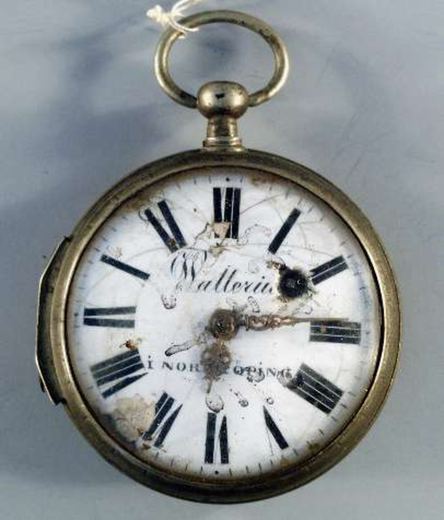
Pocket Watches · 1860–1951
Pocket watch, Sweden, 1860–1951
Upplands Museum
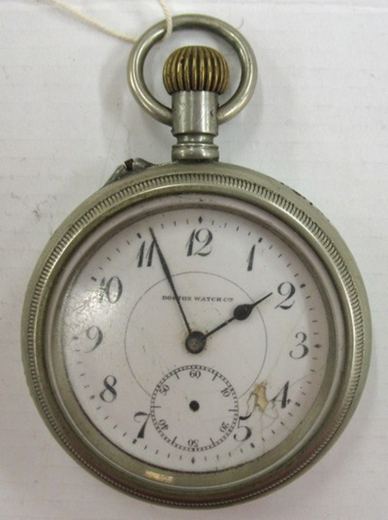
Pocket Watches · 1900–1920
Pocket watch, Sweden, 1900–1920 (Vänersborgs museum vbg_object_VM21549_01)
Vänersborgs museum
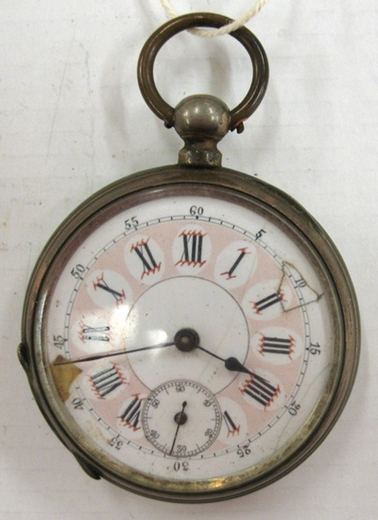
Pocket Watches · 1900–1920
Pocket watch, Sweden, 1900–1920 (Vänersborgs museum vbg_object_VM21549_02)
Vänersborgs museum
Pocket Watches · 1900–1920
Pocket watch, Sweden, 1900–1920 (Vänersborgs museum vbg_object_VM21549_03)
Vänersborgs museum
Pocket Watches · 1900–1920
Pocket watch, Sweden, 1900–1920 (Vänersborgs museum vbg_object_VM21549_05)
Vänersborgs museum
Pocket Watches · 1900–1920
Pocket watch, Sweden, 1900–1920 (Vänersborgs museum vbg_object_VM21549_06)
Vänersborgs museum
Pocket Watches · 1900–1920
Pocket watch, Sweden, 1900–1920 (Vänersborgs museum vbg_object_VM21549_07)
Vänersborgs museum
Pocket Watches · 1900–1925
Pocket watch, Sweden, 1900–1925 (Vänersborgs museum vbg_object_VM21543_1)
Vänersborgs museum