
Wristwatches · Wristwatch
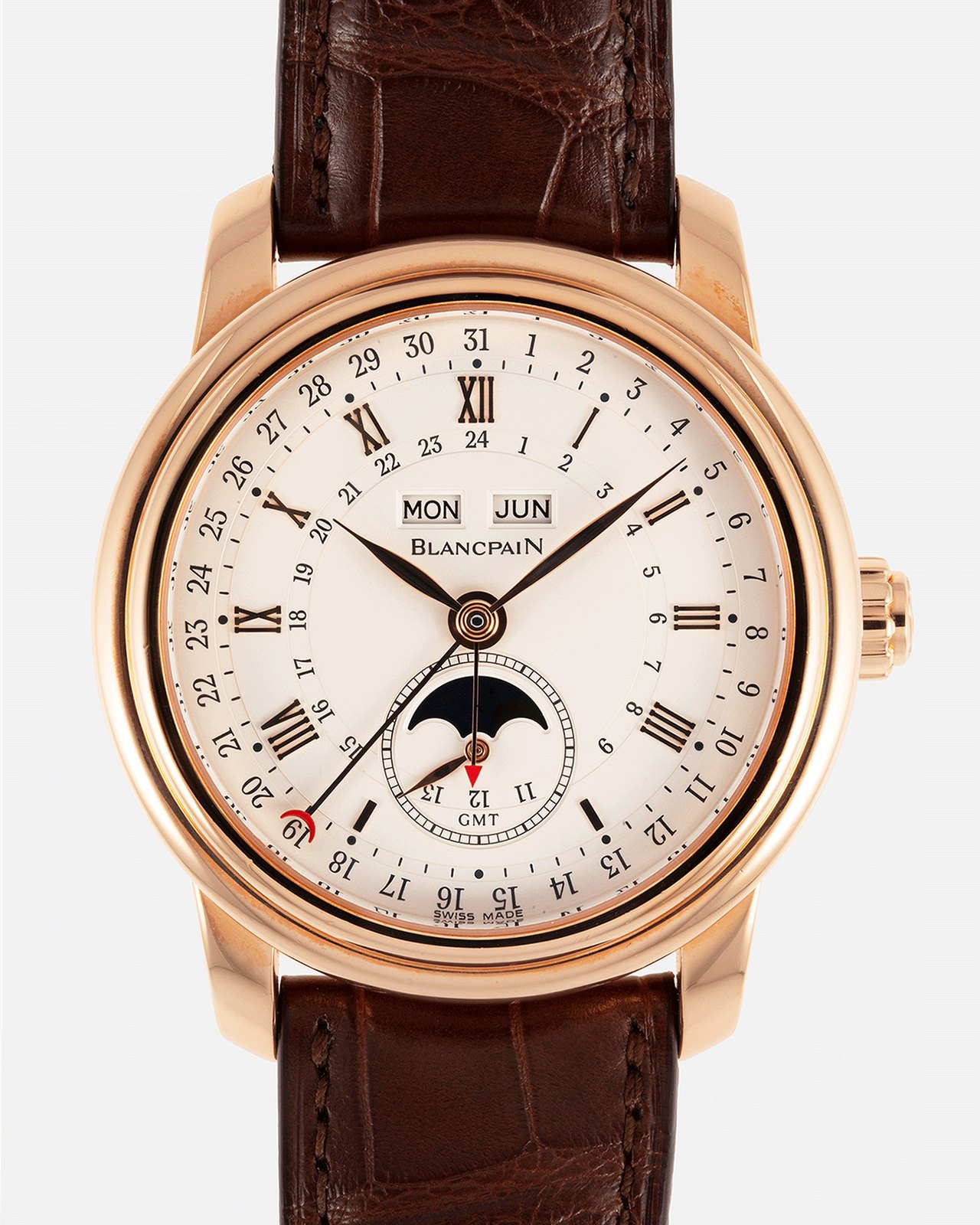
Blancpain Le Brassus Complete Calendar Moon Phase GMT, 2009
- Maker / attribution
- Blancpain (maker)
- Date
- 2009
- Historical period
- Mechanical Renaissance (1990 – 2010)
- Country of origin
- Switzerland
- Object type
- Wristwatch
- Dimensions
- Case 42 mm
- Stock no.
- Product 6573380927575
- Credit line
- Dealer listing, S.Song Watches (product 6573380927575)
- Catalogue title (original)
- Blancpain Le Brassus Complete Calendar Moon Phase GMT (English)
View the source record (dealer listing) ↗ (opens another website in a new tab)Suggest a correction
Record summary
Catalogued by S.Song Watches (dealer), Seattle (stock number Product 6573380927575), this is a wristwatch by Blancpain, made in Switzerland, dated 2009. The Atlas places it in the Mechanical Renaissance period (1990 – 2010) of its Wristwatches collection. Recorded dimensions: Case 42 mm. The record is illustrated with 6 photographs.
Assembled from the source record's structured fields. Dates and attributions are given as the source states them; where a field is missing the Atlas leaves it blank rather than estimating.
Catalogue description
Dealer description — S.Song Watches
While Blancpain initially fell at the hands of the Quartz Crisis, their infamous revival by industry legend Jean-Claude Biver in 1983 has turned the company from a fragment of their former selves into perhaps one of the most prestigious watchmakers in all of Switzerland. While models like the Villeret and Fifty Fathoms are their hero products, Blancpain's traditionalist roots show through best when they get to flex their horological muscles and create timepieces that harken back to the golden era of fine watchmaking. Introduced in the 2000s, the Le Brassus Complete Calendar GMT Ref. 4276-3642-55B is a perfect reminder of just how exquisite Blancpain's timepieces are. Styled like the iconic annual calendars from yesteryear, the Le Brassus Complete Calendar GMT features a silver opaline dial with a red crescent-tipped pointer date arrow, a red arrow-tipped GMT hand, an old-time moon phase at 6 o'clock, and the day and month displayed in apertures found at 12 o'clock. Constructed of 18kt rose gold, this 42mm timepiece offers a rather impressive 50m water resistance, ensuring its Blancpain automatic cal. 67A6 movement is safe from the elements. Beautifully polished throughout, the Le Brassus Complete Calendar GMT's case is as stunning as it is complicated. Thanks to its stepped bezel, the timepiece's complex case provides a visual depth that fits its complicated movement perfectly. Featuring 100 hours of power reserve alongside its plethora of complications, an impressive shock-resistance system, and a silicon hairspring, it is a testament to Blancpain's ingenuity that the Le Brassus Complete Calendar GMT's case is only 13.2mm thick. A wonderfully designed timepiece, with an incredible movement inside of a stunning case, the Le Brassus Complete Calendar GMT is an excellent reminder of just how fantastic Blancpain has been since their founding all those years ago in 1735.
Historical context
Mechanical Renaissance (1990 – 2010)
Mechanical watches return as cultural objects; independent watchmaking flourishes.
Mechanical watches returned as cultural and luxury objects. Complications, tourbillons and new materials proliferated; independent watchmakers such as George Daniels, F.P. Journe and Philippe Dufour revived artisanal watchmaking; collecting vintage watches became a major field.
Read the period in the timelineMore wristwatches from this periodEarlier: Quartz Revolution
Atlas type guide
Military, pilot and travel watches
The wristwatch owes much of its adoption by men to warfare and aviation. Wristlets — small pocket watches soldered with lugs and worn on a strap — were used in colonial campaigns and became standard equipment in the First World War, with protective grilles over the crystal ('shrapnel guards'). Louis Cartier's Santos (1904), designed for the aviator Alberto Santos-Dumont, is often cited as an early purpose-made pilot's watch.
In the Second World War governments specified watches in detail: the German B-Uhr observation watches, the American A-11, and the British 'W.W.W.' (the 'Dirty Dozen' set of 1945). After the war, jet travel brought GMT and world-time watches, which show two or more time zones at once — Louis Cottier's world-time mechanism and the Rolex GMT-Master (1955) are examples.
What to look for
- Military markings on the case back: broad arrow, issue numbers, 'W.W.W.', 'A.T.P.'
- High-legibility black dials with luminous Arabic numerals; oversized crowns for gloved hands.
- 24-hour hands and rotating 24-hour bezels or city rings on GMT/world-time watches.
- Wire lugs on early wristlets converted from pocket watches.
Dating clues
- Wire-lug wristlets: c. 1900–1925.
- Military specifications of the Second World War: 1939–1945.
- GMT and world-time wristwatches: mainly after 1950.
General guidance written by the Atlas editors about this kind of object. It is not a statement about this particular piece; for that, rely on the source record above and on physical examination.
Related records
Clocks · c. 2010
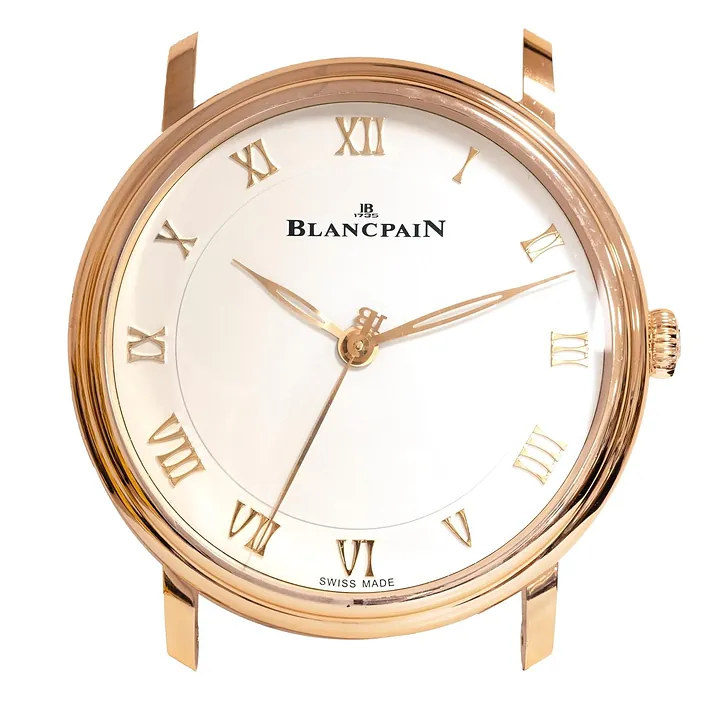
Blancpain clock, c. 2010
Antiquorum auction archive, Geneva
Wristwatches · c. 1930
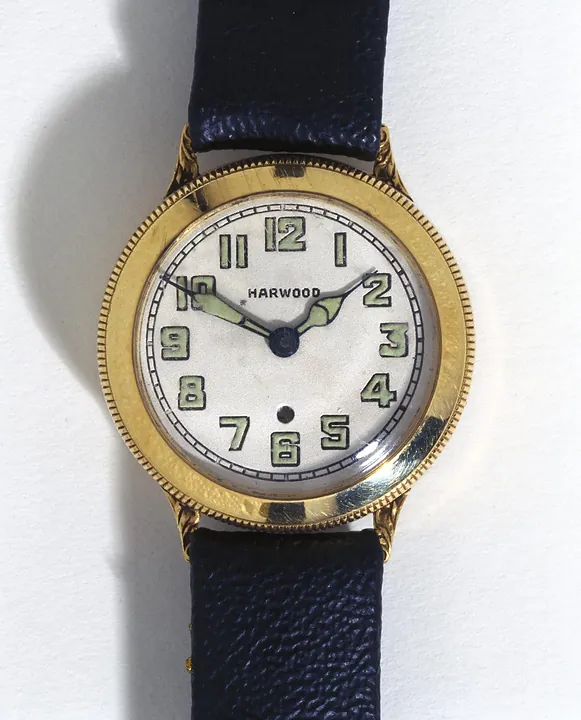
Wristwatch by J. Harwood and Son and Blancpain, Switzerland, c. 1930
Science Museum Group, London
Wristwatches · c. 1930
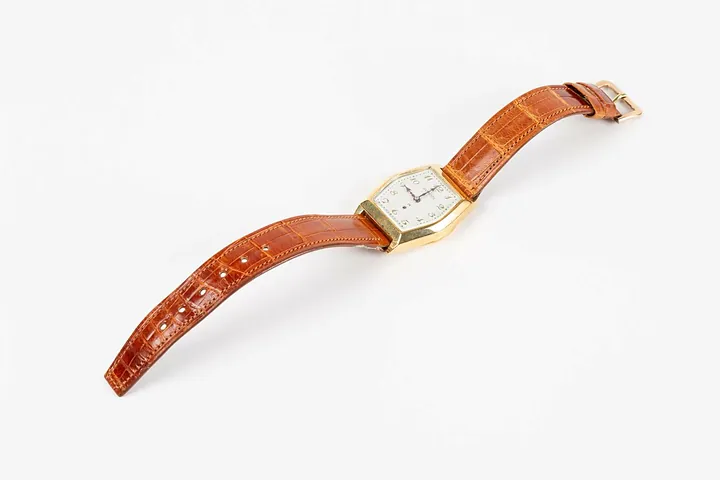
Wristwatch by Harwood (Société Centrale de la Montre Sans Remontoir), Switzerland, c. 1930 (no. 58042)
German Clock Museum
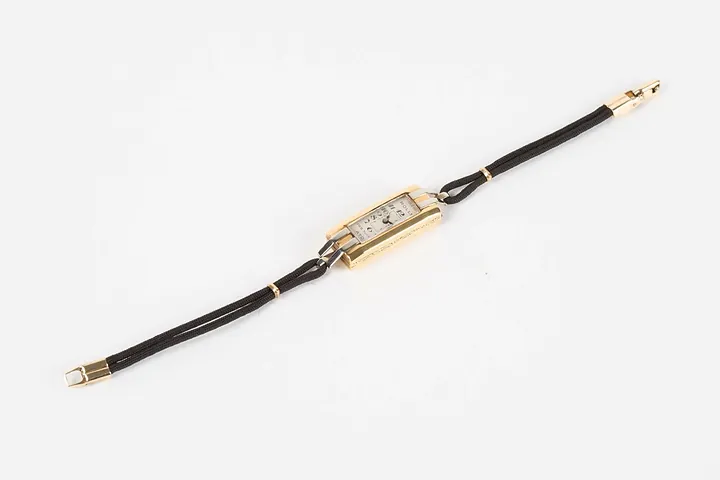
Wristwatches · c. 1932
Wristwatch by Blancpain, Switzerland, c. 1932
German Clock Museum

Wristwatches · 2008
Wristwatch by Breitling?, 2008
Museum Rotterdam

Wristwatches · c. 1990s
Audemars Piguet Bamboo, c. 1990s
Antiquorum auction archive, Geneva

Wristwatches · c. 1990
Audemars Piguet Huitieme Perpetual Calendar, ref. 25696PT, c. 1990
Antiquorum auction archive, Geneva

Wristwatches · c. 1990
Breitling Chronomat, ref. b13050.1, c. 1990
Antiquorum auction archive, Geneva