
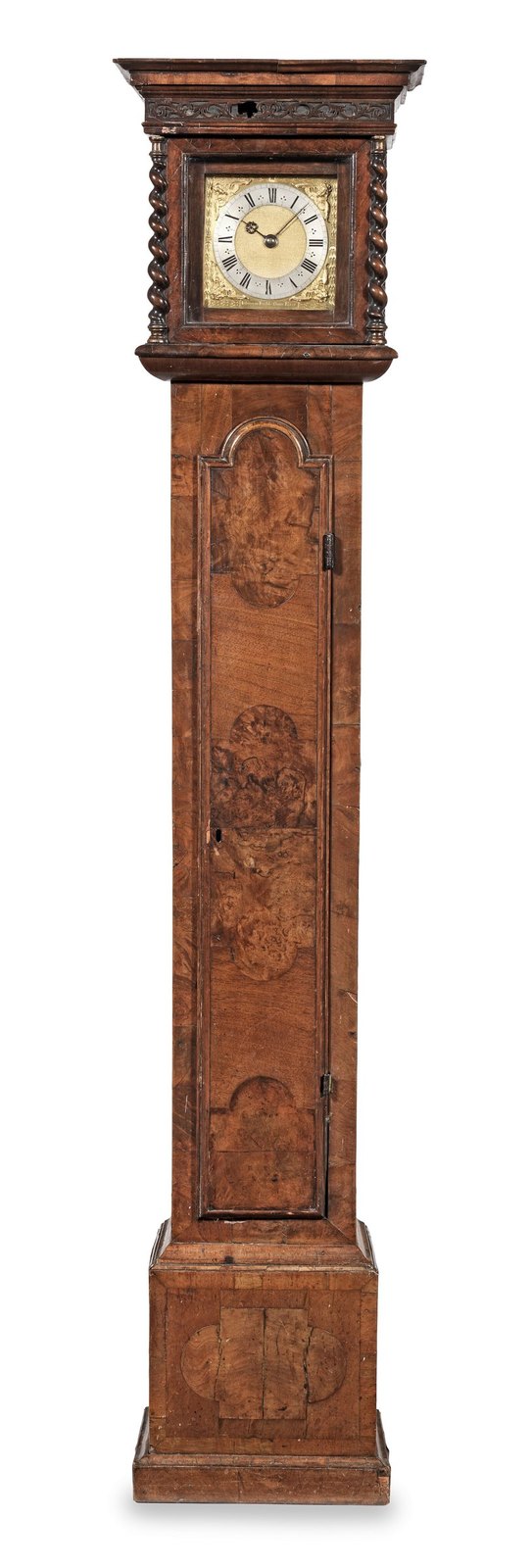
Clocks · Floor-standing clock
A late 17th-century weight-driven wall clock by John Knibb, Oxford (now in a floor-standing case)
- Maker / attribution
- John Knibb (source attribution)
- Date
- late 17th century
- Historical period
- Early Modern Horology (1600 – 1750)
- Country of origin
- United Kingdom
- Object type
- Floor-standing clock
- Auction house
- Bonhams
- Lot
- 22
- Credit line
- Bonhams
- Catalogue title (original)
- Bonhams : A rare late 17th century weight driven wall clock John Knibb, Oxford. Now contained in a floor standing case (English)
View the source record (auction lot) ↗ (opens another website in a new tab)Suggest a correction
Record summary
Catalogued by Bonhams (lot 22), this is a floor-standing clock attributed to John Knibb, made in United Kingdom, dated late 17th century. The Atlas places it in the Early Modern Horology period (1600 – 1750) of its Clocks collection. The record is illustrated with 1 photograph.
Assembled from the source record's structured fields. Dates and attributions are given as the source states them; where a field is missing the Atlas leaves it blank rather than estimating.
Catalogue description
Original object description
Produced in Oxford, United Kingdom, during the late seventeenth century, this weight-driven horological work by John Knibb comprises a dial and movement originally made for a wall clock, currently installed in an associated miniature walnut-veneered floor-standing case standing 1.77 meters tall. Barley-twist columns adorn the hood of the case, while an inlaid panel decorates the base. A paper label displaying "1670" is affixed to the dial mask, and a tag marked "53", thought to represent an inventory number, is preserved on the inner surface of the trunk door. Discrepancies exist across cataloguing records regarding the square dial's measurements, which are variously cited as 6.5 inches, 16.2 cm (6 3/8 inches), or 8.3 cm (3 5/16 inches). The square brass dial plate features winged cherub spandrels set within an engraved wheatear border. Surrounding blued steel hands, the silvered chapter ring encloses a finely matted center, along the lower edge of which appears the signature "Iohannes Knibb Oxon Fecit". Four horizontal dial feet secure the plate to brass movement plates via pins. The movement pillars display integral waisted finials paired with collet feet. Governed by a verge escapement, the timekeeping train is regulated by a bob pendulum hung from a bent brass cock via a knife-edge suspension. The striking mechanism sounds upon a top-mounted bell via an external solid countwheel, incorporating a heavy solid brass fly together with hammer and detent arbors of circular cross-section.
Historical context
Early Modern Horology (1600 – 1750)
Huygens' pendulum and balance spring transform accuracy; English makers develop the anchor and deadbeat escapements.
Huygens's pendulum (1656–57) improved clock accuracy from about a quarter of an hour to under a minute a day. The anchor escapement (c. 1670) and the long seconds pendulum created the longcase clock; London makers such as Fromanteel, Knibb, Tompion and Quare led European clockmaking, and French makers created the Boulle pendule.
Read the period in the timelineMore clocks from this periodEarlier: Renaissance Horology
Atlas type guide
Regulators, wall and Vienna clocks
A regulator is a precision pendulum clock used as a time standard in observatories, workshops and railway offices. Typical features are a deadbeat or Graham escapement, a temperature-compensated pendulum (mercury jar, gridiron or later invar), maintaining power and a regulator dial that separates hours, minutes and seconds. George Graham's deadbeat escapement (c. 1715) and his mercury pendulum, together with Harrison's gridiron, set the pattern for two centuries.
Wall clocks span a much wider range: the elegant Viennese Laterndluhr and Dachluhr of the Biedermeier period, the Dutch stoelklok and staartklok, English 'dial' clocks used in schools, offices and railway stations, and mass-produced spring and weight wall clocks from Germany (Gustav Becker, Junghans, Kienzle) and America.
What to look for
- Deadbeat escapement and compensated pendulum (gridiron rods, mercury jar or wood rod).
- A regulator dial with a large central minute hand and separate hour and seconds dials.
- Vienna regulators: glazed cases, slender pendulum, small weights, enamel two-piece dials.
- German factory trademarks stamped on the backplate (e.g. Gustav Becker anchor and crown, Junghans star).
Dating clues
- Graham-type deadbeat regulators: from c. 1720.
- Viennese Laterndluhr: c. 1800–1850.
- German factory 'Vienna-style' regulators: c. 1870–1930; Gustav Becker serial numbers allow close dating.
General guidance written by the Atlas editors about this kind of object. It is not a statement about this particular piece; for that, rely on the source record above and on physical examination.
Read next:Deadbeat escapementAnchor (recoil) escapementGrasshopper escapement
Related records
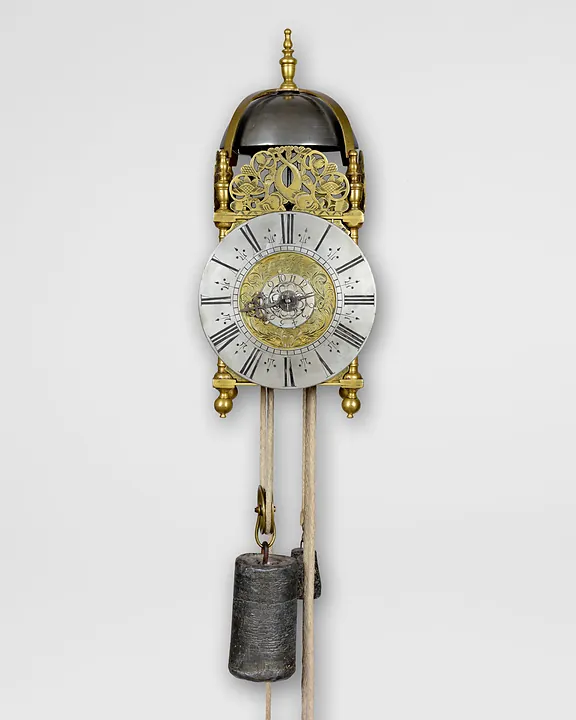
Clocks · c. 1695–1700
Lantern clock by John Knibb, Oxford, c. 1695–1700
Howard Walwyn Fine Antique Clocks (dealer), London
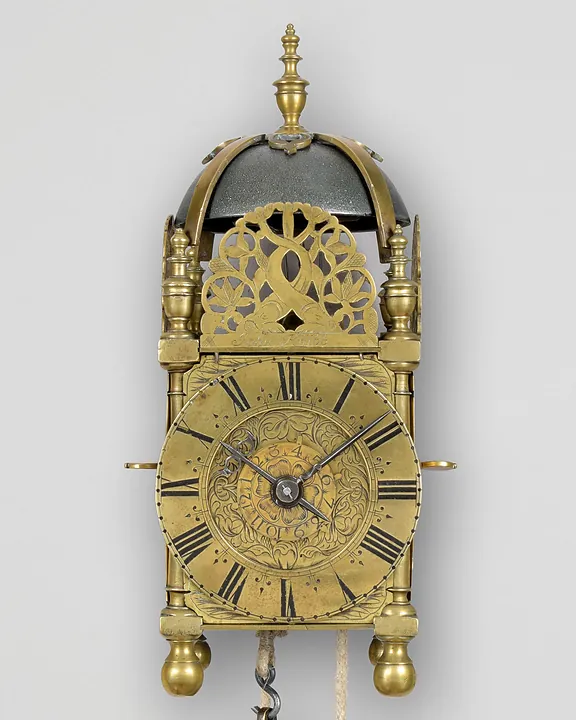
Clocks · c. 1680–1685
Lantern clock by John Knibb, Oxford, c. 1680–1685
Howard Walwyn Fine Antique Clocks (dealer), London
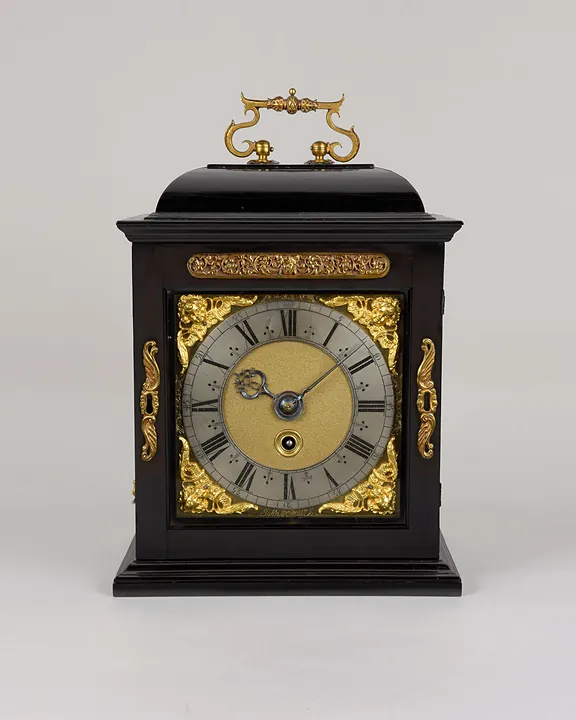
Clocks · c. 1695–1700
Bracket clock by John Knibb, Oxford, c. 1695–1700
Howard Walwyn Fine Antique Clocks (dealer), London
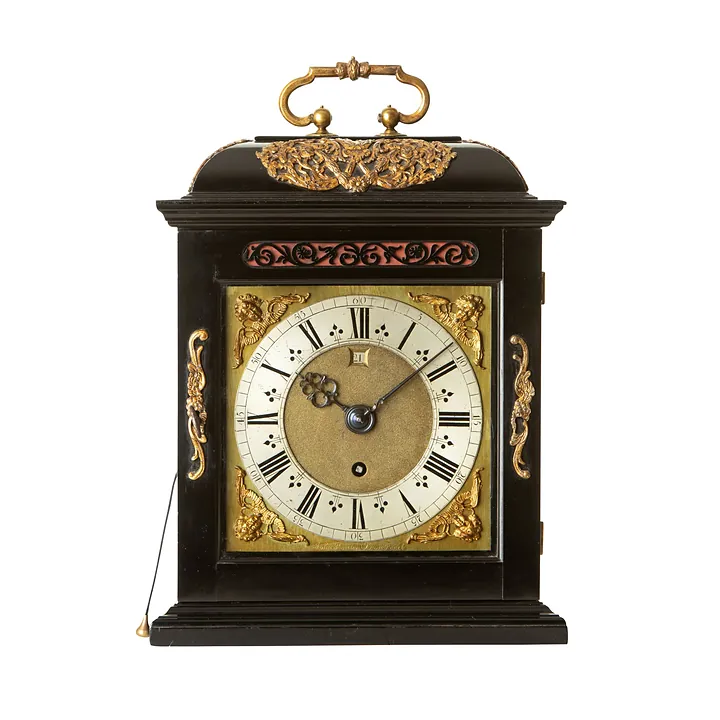
Clocks · c. 1690
Early ebony timepiece with quarter repeat table clock by John Knibb, Oxford
The Antique Clock Company (dealer), Dorset
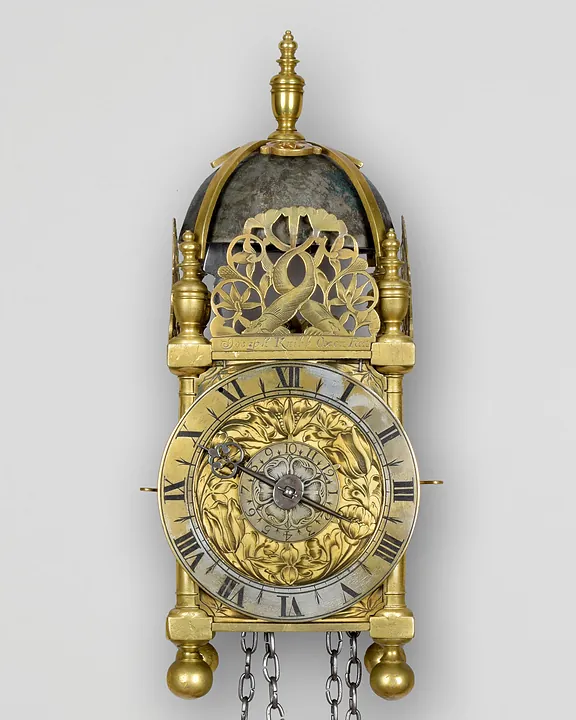
Clocks · c. 1670
Lantern clock by Joseph Knibb, Oxford, c. 1670
Howard Walwyn Fine Antique Clocks (dealer), London
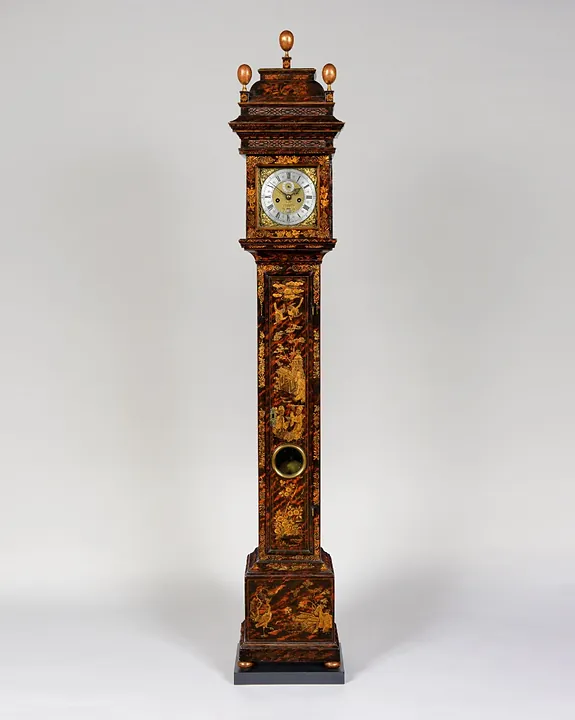
Clocks · c. 1715
Longcase clock by Manley, Norwich
Howard Walwyn Fine Antique Clocks (dealer), London
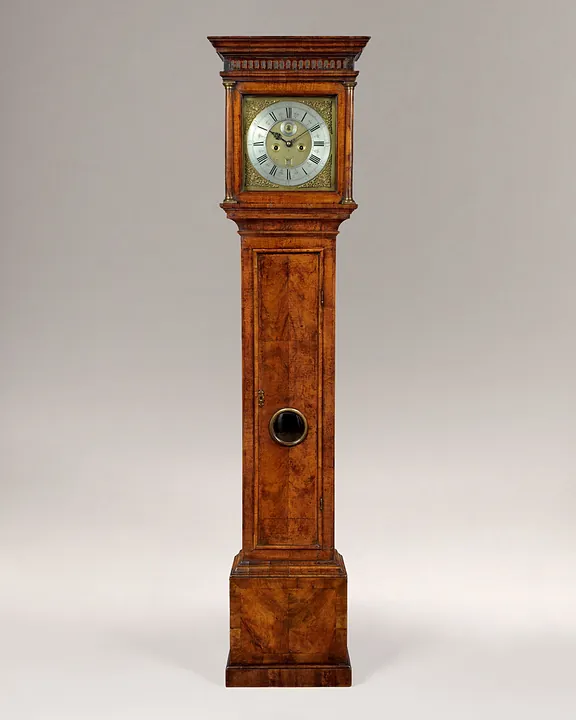
Clocks · c. 1710
Longcase clock by John Witherston, Hereford, c. 1710
Howard Walwyn Fine Antique Clocks (dealer), London
Clocks · c. 1710
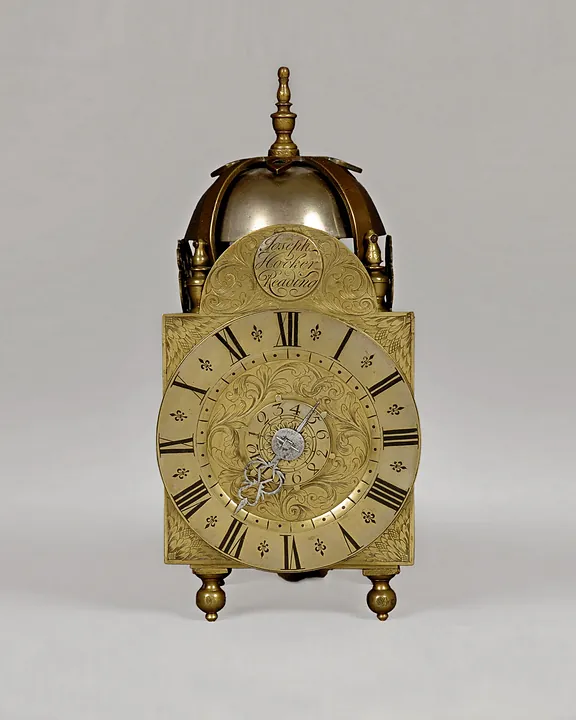
Lantern clock by Joseph Hocker, Reading, c. 1710
Howard Walwyn Fine Antique Clocks (dealer), London